
Understanding the Evolving Landscape of Supply Chain Resilience
As we approach 2025, the global economy faces a complex array of challenges demanding an intensified focus on Supply Chain Resilience. The lingering effects of a global pandemic, escalating geopolitical tensions, and rapid technological advancements are continually reshaping the foundations of global trade. Businesses can no longer prioritize mere efficiency through ‘just-in-time’ models. Instead, the imperative is to build robust, agile, and adaptable supply chains capable of withstanding unforeseen disruptions and capitalizing on new opportunities. This proactive approach is not just a strategic advantage but a fundamental requirement for sustained success in an increasingly unpredictable world.
1. Post-Pandemic and Geopolitical Impacts on Global Trade
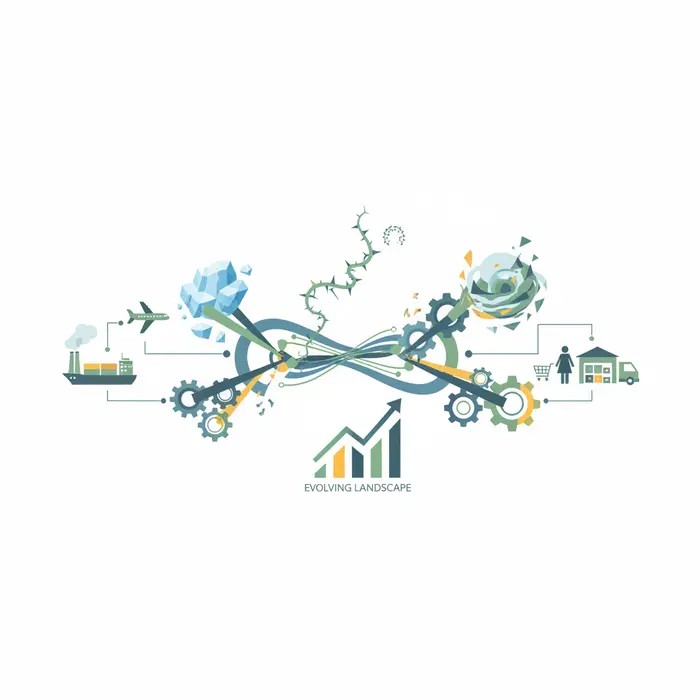
The COVID-19 pandemic served as a stark wake-up call, exposing critical vulnerabilities within highly interconnected global supply chains. Factories shuttered, ports jammed, and material shortages highlighted the dangers of over-reliance on single sourcing. While the immediate crisis has subsided, its lessons compel a fundamental re-evaluation of global trade dynamics and risk management. Concurrently, the geopolitical landscape has grown increasingly volatile. Trade disputes, sanctions, and regional conflicts routinely disrupt established `Global sourcing strategies` and complicate `International trade compliance`. Companies now face pressure to diversify manufacturing footprints, explore nearshoring or reshoring, and meticulously vet supply partners to mitigate risks from political instability and economic nationalism. This shift from purely cost-driven decisions to a balanced approach encompassing security, ethics, and resilience defines the new era of international commerce.
2. Emerging Technologies Shaping Future Supply Chain Models
Enhanced `Supply Chain Resilience` is intrinsically linked with adopting cutting-edge technologies. Artificial Intelligence (AI), Machine Learning (ML), the Internet of Things (IoT), and blockchain are no longer futuristic concepts but essential tools for intelligent, responsive supply networks. AI and ML algorithms process vast data to predict demand, identify disruptions, and optimize inventory with unprecedented accuracy. IoT devices offer real-time visibility into product movement and asset tracking from origin to destination. Blockchain, with its immutable ledger, promises to revolutionize `B2B supplier verification services` and ensure traceability, bolstering trust and accountability. Furthermore, advanced data analytics and predictive modeling are transforming `Logistics optimization solutions`, enabling companies to foresee bottlenecks, reroute shipments, and manage warehouse operations with greater precision. Embracing these technologies creates adaptive, self-learning supply chains that can anticipate, respond to, and even prevent disruptions.
3. The Imperative of Proactive Risk Management and Strategic Diversification
Beyond reactive measures, the future of `Supply Chain Resilience` hinges on proactive risk management and strategic diversification. This multi-faceted approach begins with comprehensive `B2B supplier verification services` to assess partners’ financial stability, operational capacity, and ethical practices. Companies must move from sole sourcing to establish diversified supplier networks, potentially across different geographic regions, reducing dependency on single points of failure. This might involve dual sourcing for critical components or developing robust alternative suppliers. Enhancing inventory management by strategically placing buffer stocks can absorb sudden demand spikes or supply shortages. Building strong collaborative relationships with suppliers, logistics providers, and customers fosters a shared commitment to resilience. Developing robust business continuity plans, conducting regular stress tests, and investing in advanced risk assessment tools are crucial. By embracing these proactive `Global sourcing strategies` and continuously monitoring the global environment, businesses can transform their supply chains into robust, competitive assets, ready for the challenges and opportunities of 2025 and beyond.
Global Sourcing Strategies for Enhanced Agility
In an increasingly interconnected yet unpredictable global marketplace, companies face persistent challenges from geopolitical tensions, trade disputes, natural disasters, and unforeseen disruptions. To navigate this volatility, robust global sourcing strategies are not just advantageous—they are imperative for building Supply Chain Resilience. This section explores how businesses can diversify and optimize their sourcing practices to mitigate risks, improve responsiveness, and maintain a competitive edge.
1. Diversifying Supplier Networks and Regionalization
Traditional single-source or highly concentrated sourcing models have proven vulnerable to disruption. To counter this, companies are increasingly adopting a multi-pronged approach, focusing on geographical diversification and the establishment of regional hubs. This involves identifying and qualifying suppliers across various countries and continents, reducing over-reliance on a single region or provider. The “China+1” or “N-P” (N-country, P-product) strategies exemplify this shift, encouraging businesses to maintain a primary sourcing base while developing alternative suppliers in other regions. This not only spreads risk but also fosters competition among suppliers, potentially leading to better pricing and innovation. Furthermore, regionalization—establishing production and sourcing within specific geographical blocs—allows companies to leverage localized expertise, shorten lead times, and better respond to regional market demands, making their overall sourcing practices more robust against localized shocks. This diversification enhances risk mitigation and improves responsiveness, key aspects of effective global sourcing strategies.
2. Nearshoring and Reshoring Trends and Benefits
The pursuit of cost efficiency often led to extensive offshoring in previous decades. However, recent events have highlighted the hidden costs associated with long, complex supply chains, including increased shipping expenses, extended lead times, and reduced oversight. Consequently, nearshoring (relocating production closer to the destination market, often to neighboring countries) and reshoring (bringing production back to the home country) have gained significant traction. These trends offer numerous benefits: reduced transportation costs and carbon footprint, faster response times to demand fluctuations, improved quality control, and enhanced intellectual property protection. Nearshoring, in particular, can leverage geographical proximity for cultural alignment and easier communication, while reshoring often benefits from government incentives and a skilled domestic workforce. By shortening the physical distance between production and consumption, these approaches contribute directly to logistics optimization solutions, making supply chains more agile and less susceptible to global transit disruptions.
3. Leveraging Technology for Supplier Verification and Compliance
In a diversified and regionalized sourcing landscape, effective management of numerous suppliers across different regulatory environments becomes paramount. This is where advanced technology plays a critical role. Digital platforms and data analytics are transforming B2B supplier verification services, allowing companies to conduct thorough due diligence on potential partners. This includes assessing financial stability, operational capabilities, ethical practices, and sustainability credentials. Artificial intelligence (AI) and machine learning (ML) can analyze vast datasets to identify potential risks, monitor supplier performance in real-time, and predict disruptions before they occur. Furthermore, blockchain technology offers an immutable, transparent ledger for tracking goods and transactions, significantly enhancing traceability and trust within the supply chain. Navigating the complexities of International trade compliance—including customs regulations, tariffs, sanctions, and labor laws—is simplified through specialized software solutions. These tools automate document generation, flag potential compliance issues, and provide up-to-date regulatory intelligence, ensuring that global sourcing remains ethical, legal, and efficient.
Logistics Optimization Solutions for Peak Performance
In today’s dynamic global marketplace, achieving peak performance in logistics is no longer a luxury but a necessity. Businesses face increasing pressures from volatile markets, rising customer expectations, and complex regulatory landscapes. To navigate these challenges and strengthen the delivery framework, advanced Supply Chain Resilience becomes paramount. This involves adopting cutting-edge Logistics optimization solutions that not only enhance efficiency and reduce costs but also build robust, agile supply chains capable of withstanding disruptions. From Global sourcing strategies to meticulous B2B supplier verification services and adherence to International trade compliance, every aspect of logistics demands strategic innovation.

1. Leveraging AI and Automation in Warehouse and Transport
The integration of Artificial intelligence (AI) and automation stands as a cornerstone of modern Logistics optimization solutions. In warehousing, AI-driven analytics refine demand forecasting, leading to optimized inventory levels and reduced carrying costs. Robotic process automation (RPA) streamlines repetitive tasks such as picking, packing, and sorting, significantly boosting operational speed and accuracy. Automated Storage and Retrieval Systems (AS/RS) maximize space utilization and throughput, transforming warehouses into highly efficient, data-driven hubs. For transportation, AI algorithms power sophisticated route optimization software, factoring in real-time traffic, weather conditions, and delivery schedules to minimize fuel consumption and transit times. Predictive maintenance, another AI application, monitors fleet health, preventing breakdowns and ensuring timely deliveries. These advancements not only reduce operational expenses but also contribute directly to stronger Supply Chain Resilience by making physical logistics more robust and less susceptible to human error or delays.
2. Real-time Visibility and Predictive Analytics in Transit
Achieving end-to-end visibility across the supply chain is critical for maintaining peak performance. Real-time visibility, powered by IoT sensors, GPS tracking, and advanced telematics, allows businesses to monitor shipments from origin to destination. This granular data provides precise location, condition (temperature, humidity), and estimated arrival times, empowering logistics managers with unparalleled control. Beyond mere tracking, predictive analytics leverages this real-time data, historical trends, and external factors (like weather patterns or geopolitical events) to forecast potential disruptions. This proactive approach enables companies to identify and mitigate risks before they impact delivery schedules, making informed decisions about alternative routes or modes of transport. Such capabilities are essential for effective Global sourcing strategies, ensuring that goods procured internationally navigate complex transit paths with minimal unforeseen issues and enhance overall delivery framework reliability.
3. Strengthening the Delivery Framework with B2B Supplier Verification and Compliance
While technological advancements streamline operations, the foundation of a resilient delivery framework lies in robust supplier relationships and unwavering adherence to regulations. This is where comprehensive B2B supplier verification services become indispensable. Thorough due diligence ensures that partners meet stringent standards for quality, reliability, financial stability, and ethical practices. Verifying a supplier’s operational capacity and compliance history mitigates risks associated with product quality, delivery failures, and reputational damage. Furthermore, mastering International trade compliance is non-negotiable for businesses engaged in global commerce. Navigating complex customs procedures, tariff classifications, import/export regulations, and sanctions regimes requires specialized knowledge and systems. Non-compliance can lead to severe penalties, delays, and significant financial losses. By integrating these critical elements into their Logistics optimization solutions, companies can build a trustworthy network of partners and ensure seamless cross-border movements, bolstering their ability to deliver on promises even in a highly interconnected and regulated world.
Implementing a holistic approach to logistics optimization, encompassing AI and automation, real-time visibility, and rigorous supplier verification and compliance, is crucial for businesses aiming for peak performance. These advanced methodologies not only drive down operational costs and boost efficiency but also fortify the entire delivery framework, making it more adaptable and reliable. By embracing these integrated Logistics optimization solutions, companies can achieve unparalleled Supply Chain Resilience, ensuring continuous flow, superior customer satisfaction, and a sustainable competitive advantage in an increasingly complex global economy.
B2B Supplier Verification Services for Risk Mitigation
In today’s interconnected global economy, the robustness of a company’s supply chain is paramount to its sustained success and resilience. With companies increasingly relying on a complex web of international suppliers, the potential for disruption, ethical lapses, and non-compliance escalates. Supply Chain Resilience hinges significantly on the caliber and integrity of its upstream partners. This makes robust supplier vetting processes not just a best practice, but a critical imperative for ensuring reliability, promoting ethical practices, and maintaining compliance throughout the entire supply chain. Investing in comprehensive B2B supplier verification services is fundamental to navigating the complexities of global sourcing strategies, safeguarding reputation, and ensuring business continuity.
1. Due Diligence and Third-Party Risk Management
The foundation of a secure and reliable supply chain begins with meticulous due diligence. Third-party risk management is an expansive discipline that requires a deep dive into potential suppliers’ financial health, operational capabilities, legal standing, and past performance. Without rigorous verification, companies expose themselves to a myriad of risks, including financial instability, fraudulent practices, intellectual property theft, and poor product quality that can significantly impact a brand’s integrity. Comprehensive B2B supplier verification services employ a multi-faceted approach, scrutinizing everything from company registration and licensing to financial statements, litigation history, and regulatory compliance records. This process is crucial for partners involved in international trade compliance, ensuring they meet the stringent legal and ethical frameworks of both the exporting and importing countries. By thoroughly vetting potential partners, businesses can proactively identify and mitigate risks, fostering a more secure and predictable supply chain environment. According to research on global supply chain risks, proactive due diligence can significantly reduce exposure to various operational and reputational threats. For instance, the World Economic Forum consistently highlights the importance of risk assessment in maintaining global economic stability, underscoring the necessity of robust vetting practices to build resilience against disruptions. The World Economic Forum emphasizes the critical role of proactive risk management in developing resilient supply chains capable of withstanding unforeseen challenges.
2. Ensuring Ethical Sourcing and Sustainability Standards
Beyond financial and operational stability, modern consumers, regulators, and investors increasingly demand adherence to ethical sourcing and sustainability standards. The global marketplace is rife with potential pitfalls, from exploitative labor practices and unsafe working conditions to environmental degradation. Ensuring that suppliers align with a company’s corporate social responsibility (CSR) values is no longer optional; it’s a business imperative. B2B supplier verification services play a pivotal role in this regard by conducting audits focused on labor practices, human rights, environmental impact, and anti-corruption measures. This includes verifying certifications (e.g., ISO 14001 for environmental management, SA8000 for social accountability) and assessing compliance with international labor laws and environmental regulations. For companies engaged in global sourcing strategies, this is particularly vital to avoid complicity in unethical practices and to protect brand reputation. By upholding high ethical and sustainability standards throughout the supply chain, businesses not only fulfill their moral obligations but also gain a competitive advantage, attracting conscientious consumers and investors while mitigating risks associated with negative publicity and regulatory penalties.
3. Enhancing Operational Efficiency and Quality Control
The benefits of robust supplier verification extend directly to enhancing operational efficiency and ensuring consistent quality control. While risk mitigation and ethical compliance are critical, a thoroughly vetted supplier is also a more reliable and efficient operational partner. Verification processes assess a supplier’s production capabilities, quality management systems, and logistical strengths. This includes evaluating their ability to consistently meet specifications, adhere to delivery schedules, and manage inventory effectively. Such insights are invaluable for optimizing logistics optimization solutions and streamlining the entire procurement process. By partnering with verified, high-performing suppliers, companies can reduce lead times, minimize defects, and lower overall operational costs associated with managing underperforming vendors. Ongoing monitoring and periodic re-verification further ensure that suppliers maintain these high standards, contributing directly to a more agile and responsive supply chain. This proactive approach to supplier management is a cornerstone of building robust Supply Chain Resilience, enabling businesses to react quickly to market changes and maintain uninterrupted operations even in the face of unforeseen challenges.
In conclusion, B2B supplier verification services are indispensable tools for modern businesses striving to achieve true Supply Chain Resilience. By meticulously vetting partners for financial stability, ethical conduct, compliance, and operational excellence, companies can significantly mitigate risks, uphold their values, and ensure the consistent delivery of high-quality products and services. These services transform potential vulnerabilities into strategic advantages, allowing businesses to thrive in an increasingly complex and interconnected global marketplace.
Navigating International Trade Compliance in 2025
The global trade landscape in 2025 is more intricate and dynamic than ever before. Businesses engaged in cross-border commerce face an escalating array of international trade regulations, geopolitical shifts, and technological advancements that demand meticulous adherence. Failure to comply can result in severe penalties, shipment delays, reputational damage, and significant disruptions to the supply chain. Ensuring robust Supply Chain Resilience hinges on proactive and sophisticated compliance strategies that adapt to these evolving demands. From intricate customs procedures to stringent export controls, companies must navigate this labyrinth to maintain operational continuity and competitive advantage. The ability to manage these complexities effectively is paramount for any enterprise aiming for sustainable growth in the global marketplace.
1. Understanding Evolving Customs and Tariff Policies
Customs and tariff policies are in a perpetual state of flux, influenced by bilateral trade agreements, geopolitical tensions, and domestic economic priorities. In 2025, businesses must contend with the continuous re-evaluation of preferential trade agreements, changes in tariff classifications, and the increasing scrutiny of rules of origin. For instance, shifts in World Trade Organization (WTO) agreements or regional blocs like the ASEAN Economic Community can introduce new duties or alter existing ones, directly impacting product cost and market competitiveness. Companies involved in Global sourcing strategies must diligently track these developments, ensuring accurate classification of goods (HS codes) and understanding their eligibility for various tariff programs. This requires access to up-to-date regulatory databases and, often, expert legal counsel. Proactive engagement with customs brokers and a thorough understanding of documentation requirements can prevent costly delays and fines. The emphasis is no longer just on compliance, but on optimized compliance that supports strategic sourcing and market entry without inadvertently incurring higher costs or logistical bottlenecks.
2. Sanctions Screening and Export Controls Management
Managing sanctions and export controls has become a critical, high-stakes component of international trade compliance. Governments worldwide are increasingly using sanctions as a foreign policy tool, leading to complex and frequently updated lists of restricted entities, individuals, and countries. Businesses must implement robust B2B supplier verification services and customer screening processes to ensure they are not inadvertently transacting with sanctioned parties. This includes not only direct parties but also beneficial owners and intermediaries. Furthermore, export controls, particularly concerning dual-use goods (items with both commercial and military applications) and sensitive technologies, demand meticulous attention. Companies need sophisticated systems to classify products correctly, determine appropriate export licenses, and monitor their global supply chains for any potential diversions. The consequences of non-compliance in this area are severe, ranging from hefty financial penalties and criminal charges to export restrictions and irreparable damage to brand reputation. Regular training for staff involved in international transactions and the deployment of automated screening tools are indispensable for mitigating these risks.
3. Leveraging Technology for Enhanced Compliance and Risk Management
The sheer volume and complexity of international trade regulations make manual compliance processes increasingly unsustainable. In 2025, technology is not just an advantage; it’s a necessity for effective compliance and robust risk management. Implementing advanced digital solutions, such as Artificial Intelligence (AI) and machine learning, can automate sanctions screening, tariff classification, and documentation generation, significantly reducing human error and processing times. Blockchain technology offers immutable ledgers for tracking goods and verifying origins, enhancing transparency and trust across the supply chain. Data analytics tools provide real-time insights into compliance performance, identifying potential risk areas before they escalate. For example, integrating compliance software with Enterprise Resource Planning (ERP) systems can provide a holistic view of trade activities, ensuring consistency and adherence across all departments. Furthermore, these technologies support efficient Logistics optimization solutions by streamlining customs declarations and minimizing delays at borders. Investing in these sophisticated platforms allows businesses to build a more resilient and agile international trade framework, transforming compliance from a reactive burden into a strategic enabler for global operations. By embracing digital transformation, companies can not only avoid penalties but also gain a competitive edge through improved efficiency and greater confidence in their their international trade compliance posture.
Navigating international trade compliance in 2025 demands a multi-faceted approach, combining deep regulatory understanding with strategic technological adoption. From understanding evolving customs policies and meticulously managing sanctions screening to leveraging advanced tech for risk management, businesses must prioritize these areas to ensure uninterrupted global operations. Proactive planning, continuous monitoring, and investment in compliance infrastructure are crucial pillars for building true Supply Chain Resilience in an increasingly regulated world.
Partner with Vietnam’s Leading Suppliers
Looking for reliable suppliers in Vietnam? Contact VietnamSuppliers.com today to connect with verified manufacturers and exporters across all industries.
—————————————
References
– global trade: https://www.wto.org/english/news_e/archive_e/glob_e/glob_e.htm
– Deloitte: Future of Supply Chain Resilience: https://www2.deloitte.com/us/en/insights/topics/operations/supply-chain-resilience.html
– McKinsey & Company Supply Chain Management Insights: https://www.mckinsey.com/capabilities/operations/our-insights/supply-chain-management
– The World Economic Forum emphasizes the critical role of proactive risk management: https://www.weforum.org/agenda/2023/01/future-of-supply-chains-risk-resilience/
– World Trade Organization (WTO) agreements: https://www.wto.org/english/thewto_e/whatis_e/tif_e/agrm1_e.htm

