Understanding Global Import Tariffs and Their Impact
Navigating international trade requires understanding financial mechanisms like global import tariffs. These duties directly impact product costs, competitive positioning, and market access. This section defines tariffs, their purpose, and common types, building foundational knowledge for international trade strategies.
1. What are Import Tariffs and Why Do They Exist?
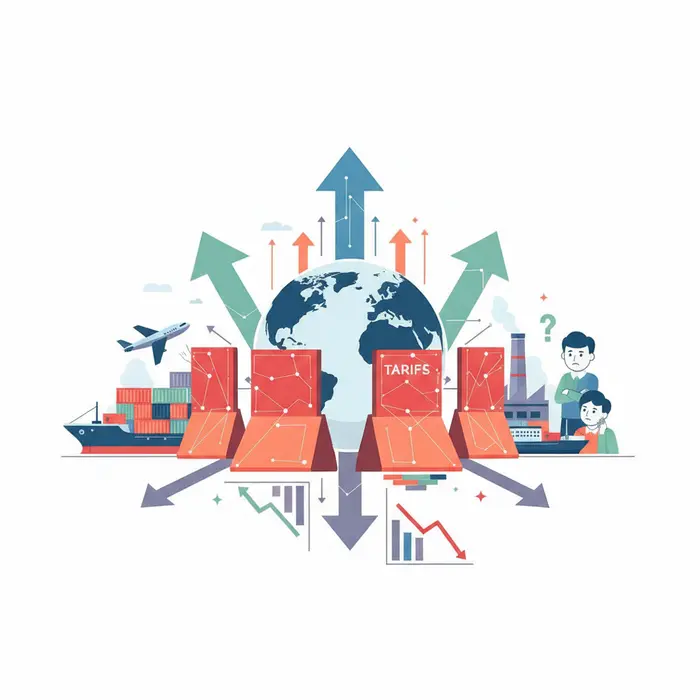
An import tariff, or customs duty, is a tax levied on goods imported into a country, typically collected by customs authorities at the point of entry. Historically a government revenue source, tariffs today primarily serve economic protectionism and market regulation.
Firstly, tariffs protect domestic industries by making imported goods more expensive, incentivizing local purchases and safeguarding jobs. Secondly, they can correct trade imbalances or retaliate against unfair foreign practices, such as subsidized exports or dumping.
Furthermore, tariffs can serve strategic purposes like promoting national security or influencing foreign policy, or regulating specific goods (e.g., discouraging harmful imports). Understanding this ‘why’ is crucial for businesses to anticipate policy shifts and evaluate risks, especially when using an import duty calculator to estimate costs.
2. Types of Tariffs: Ad Valorem, Specific, Compound
Tariffs are generally categorized into three main types, each calculated differently:
- Ad Valorem Tariffs: Calculated as a fixed percentage of the imported good’s value. E.g., 10% on a $1,000 product is $100. Revenue adjusts with price changes, but accurate goods valuation can be challenging.
- Specific Tariffs: A fixed monetary charge per unit, regardless of value. E.g., $2 per kilogram. Simpler to administer and predictable, but protective effect diminishes as product prices rise.
- Compound Tariffs: A hybrid combining both an ad valorem and a specific tariff. E.g., 5% plus $0.50 per unit. Captures benefits of both, offering stable revenue and broad protection, often for manufactured goods.
Importers must identify correct HS code tariff rates for their products. This classification dictates the tariff type and rate, as different countries, like those dealing with Customs duties Vietnam, employ varying combinations.
3. The Role of Customs and Border Protection
Customs and border protection agencies are pivotal in enforcing and collecting import tariffs. These government bodies control the flow of goods, ensuring compliance with trade laws, combating smuggling, enforcing intellectual property rights, and screening for restricted items.
Upon arrival, customs officials inspect documentation and assign the correct Harmonized System (HS) code, which dictates the tariff rate. Misclassification leads to penalties or delays. Customs also verify compliance with free trade agreements impact, reducing or eliminating tariffs for eligible goods. Understanding customs procedures is paramount for smooth, compliant cross-border transactions.
Calculating Your Costs: The Import Duty Calculator
Successfully navigating international trade demands more than just sourcing quality products; it requires a precise understanding of all associated costs. One of the most significant and often underestimated expenses for importers is import duty, along with other taxes and fees. Accurately estimating these costs is crucial for competitive pricing, healthy profit margins, and avoiding unexpected financial burdens. This section will guide you through the practical application of estimating import costs, going beyond just basic tariffs to encompass a comprehensive view of your financial obligations.
1. Key Factors Affecting Import Duty Calculations
Understanding the variables that influence import duties is the first step toward accurate cost estimation. These factors interact in complex ways to determine the final amount you’ll owe:
- HS Code (Harmonized System Code): This is perhaps the most critical determinant. Every product traded internationally is assigned a unique, multi-digit Harmonized System (HS) code, which categorizes goods globally. The first six digits are standardized, with subsequent digits often added by individual countries for further specificity. Each HS code is directly linked to specific HS code tariff rates in the destination country’s tariff schedule. Misclassifying an HS code can lead to incorrect duty calculations, delays, or even penalties.
- Origin of Goods: Where your product is manufactured significantly impacts duties. Preferential tariffs often apply to goods originating from countries with which the importing nation has a Free Trade Agreement (FTA). These agreements can reduce or eliminate duties, making the free trade agreements impact on import costs substantial. Always verify origin rules and certificates.
- Customs Valuation: Duties are typically calculated as a percentage of the goods’ value. The “customs value” is generally based on the transaction value, but can also include costs like packaging and commissions. Incoterms used in your contract (e.g., CIF, FOB) influence what components are included in the declared value for customs.
- Destination Country: Each nation has its own specific tariff schedule and customs regulations. For instance, Customs duties Vietnam will differ from those in the EU or the US, even for the same HS code. National variations necessitate country-specific research.
- Type of Goods: Certain categories, like luxury items, alcohol, tobacco, or sensitive agricultural products, may attract higher tariffs or specific duties. Conversely, essential goods might enjoy lower rates.
2. Using an Import Duty Calculator: Tools and Tips
Once you understand the underlying factors, an import duty calculator becomes an indispensable tool for estimating your costs. These calculators simplify the often-complex process, offering quick estimates.
- How They Work: Most online calculators require you to input the HS code, origin country, destination country, and the customs value of your goods. They then reference tariff databases, apply relevant FTA rules, and provide an estimated duty amount.
- Types of Calculators: Generic online tools are widely available, often provided by logistics companies. Many freight forwarders offer proprietary tools, and some government customs websites provide official tariff lookup tools which are highly accurate for their respective countries.
- Tips for Accuracy:
- Verify HS Codes: Double-check the HS code with your supplier and official resources. Incorrect codes lead to inaccurate estimates.
- Accurate Valuation: Ensure the declared customs value precisely reflects all dutiable components according to your chosen Incoterm and destination country’s rules.
- Factor in FTAs: Don’t overlook applicable free trade agreements; they can significantly reduce or eliminate duties.
- Consult Experts: For complex or high-value shipments, consider consulting a customs broker or trade consultant for expert guidance.
3. Beyond Tariffs: Additional Fees and Taxes (VAT, Excise)
Import duty is just one piece of the puzzle. Several other fees and taxes contribute to your total landed cost, and overlooking these can lead to significant budgetary shortfalls.
- Value Added Tax (VAT) / Goods and Services Tax (GST): Most countries levy a VAT or GST on imported goods. This tax is typically calculated on the total value of the imported goods, which includes the product’s customs value, the import duty, and often freight and insurance costs. For example, Vietnam’s standard VAT rate is 10%, applied to this total.
- Excise Duty: This additional tax is levied on specific goods such as alcohol, tobacco products, and fuel. Excise duties are often very high and apply irrespective of general import tariffs or VAT.
- Anti-Dumping and Countervailing Duties: In rare cases, punitive duties may be imposed if goods are “dumped” (sold at unfairly low prices) or benefit from unfair subsidies in their country of origin.
- Customs Processing Fees: Many customs authorities charge administrative fees for processing declarations and clearing goods.
- Brokerage Fees: If you utilize a customs broker to manage the clearance process, their service fees will be an additional cost.
- Logistics and Handling Costs: While not strictly duties or taxes, freight, cargo insurance, terminal charges, warehousing, and local transportation are all integral parts of your overall Global import tariffs and total import costs that must be factored into your budget.
By meticulously accounting for all these elements, from the intricacies of HS codes and FTAs to the various taxes and administrative fees, you can build a truly comprehensive estimate of your import costs. This proactive approach ensures financial predictability and allows you to make informed decisions when sourcing products internationally.
Navigating Specific Regions: Customs Duties in Vietnam
In the intricate landscape of global trade, understanding and managing customs duties is paramount for successful international business. While the concept of global import tariffs applies universally, their specific application, rates, and compliance requirements vary significantly from one region to another. Vietnam, a rapidly growing economy and a key manufacturing hub in Southeast Asia, presents a compelling case study for navigating these complexities. Its strategic location, burgeoning consumer market, and extensive network of free trade agreements make it an attractive destination for imports, yet success hinges on a thorough understanding of its customs regulations and a meticulous approach to duty management.
Successfully importing into Vietnam demands more than just identifying the right product; it requires a deep dive into local laws, tariff structures, and compliance protocols. This section provides a comprehensive guide to understanding customs duties in Vietnam, offering insights into its regulatory framework, key tariffs, and best practices to ensure a smooth and compliant import process. From leveraging an import duty calculator to deciphering complex HS code tariff rates and understanding the impact of free trade agreements, we will explore how to navigate the specifics of Customs duties Vietnam, minimizing risks and maximizing operational efficiency.

1. Overview of Vietnam’s Import Regulations and Policies
Vietnam’s import regulatory framework is primarily governed by the Customs Law, alongside numerous decrees and circulars issued by the government and the Ministry of Finance. The General Department of Vietnam Customs (GDVC) is the principal authority responsible for implementing these regulations, overseeing customs procedures, and collecting duties. A fundamental aspect of Vietnam’s customs system, like many others, revolves around the Harmonized System (HS) code. Correct classification using the appropriate HS code is critical as it directly determines the applicable import duty rate, as well as any specific licensing, quality inspection, or phytosanitary requirements.
Beyond standard import duties, goods entering Vietnam may be subject to Value Added Tax (VAT), Special Consumption Tax (SCT) for specific items like tobacco, alcohol, and luxury vehicles, and Environmental Protection Tax (EPT) for certain polluting goods. Vietnam’s proactive engagement in global trade has led to its participation in numerous Free Trade Agreements (FTAs), including the Comprehensive and Progressive Agreement for Trans-Pacific Partnership (CPTPP), the EU-Vietnam Free Trade Agreement (EVFTA), and the Regional Comprehensive Economic Partnership (RCEP). These FTAs significantly impact customs duties Vietnam by offering preferential tariff treatment for goods originating from member countries, often reducing or eliminating tariffs altogether. Importers must ensure they meet the specific Rules of Origin criteria to qualify for these reduced rates, which typically requires a valid Certificate of Origin (CO).
2. Key Tariffs and Duties for Common Goods in Vietnam
The calculation of import duties in Vietnam is multifaceted, depending on the goods’ HS code, their origin, and whether any preferential tariff rates apply under an FTA. While an import duty calculator can provide preliminary estimates, a precise understanding of the specific HS code tariff rates is essential. For instance, machinery and equipment often benefit from lower preferential rates to encourage industrial development, whereas luxury goods or items that compete with domestic industries may face higher tariffs. The standard VAT rate in Vietnam is 10%, though certain essential goods and services may be subject to a reduced rate of 5% or be exempt. SCT rates vary widely, from as low as 10% for some cosmetics to over 150% for high-capacity automobiles.
To illustrate, importing a common consumer electronic product from a non-FTA country could incur a significant import duty plus 10% VAT. However, if the same product originates from an EU member state and meets the EVFTA’s rules of origin, its import duty could be zeroed out, leading to substantial cost savings. This highlights the critical importance of verifying the applicable HS code, the product’s origin, and exploring all potential FTA benefits when planning imports into Vietnam. Accurate valuation of goods is also a frequent point of contention with customs, requiring meticulous documentation and adherence to valuation principles set forth by the GDVC.
3. Compliance Challenges and Best Practices for Importing to Vietnam
Despite its open trade policies, importing into Vietnam presents several compliance challenges. One of the most common issues is the misclassification of HS codes, which can lead to incorrect duty payments, penalties, and delays. Documentation errors, including inaccuracies in commercial invoices, packing lists, bills of lading, and certificates of origin, are another frequent stumbling block. Furthermore, the regulatory landscape is subject to periodic updates, requiring importers to stay vigilant and informed.
To navigate these complexities successfully, several best practices are advisable:
- Thorough Due Diligence: Before importing, conduct extensive research into the specific regulations, licensing requirements, and standards for your product.
- Accurate HS Code Classification: Invest time in correctly identifying the HS code for your goods. Consider engaging a professional customs broker or a trade consultant with expertise in Vietnam to avoid costly errors.
- Leverage Free Trade Agreements: Understand the FTAs Vietnam is part of and ascertain if your goods qualify for preferential tariffs. Ensure you have the correct Certificate of Origin.
- Meticulous Documentation: Prepare all required documents accurately and completely. Any discrepancies can lead to delays, inspections, or even seizure of goods.
- Engage Local Expertise: Partnering with experienced local customs brokers, freight forwarders, or legal advisors can provide invaluable guidance and streamline the customs clearance process.
- Stay Updated: Regularly monitor announcements and updates from the GDVC and other relevant Vietnamese government agencies regarding changes in customs laws and tariff schedules.
By adopting a proactive and informed approach, businesses can effectively manage global import tariffs and the nuances of Customs duties Vietnam, ensuring smooth, compliant, and cost-effective operations in this dynamic market.
The Power of HS Codes: Understanding Tariff Rates
In the intricate world of global trade, every product crossing international borders is subject to a complex web of regulations, taxes, and duties. Navigating this labyrinth successfully hinges on one critical element: the Harmonized System (HS) Code. This universally recognized numbering system is the bedrock upon which global import tariffs are determined, directly impacting costs, market access, and compliance for businesses worldwide. Understanding its power and intricacies is not merely good practice; it’s essential for profitability and avoiding severe penalties. From a small e-commerce shipment to large industrial machinery, the correct HS classification dictates the financial landscape of international commerce.
1. What is the Harmonized System (HS Code) and Why It Matters
The Harmonized System (HS) is a standardized numerical method for classifying traded products, developed and maintained by the World Customs Organization (WCO). In effect since 1988, it’s used by over 200 countries and economic unions, providing a uniform international language for goods. This standardization facilitates international trade, simplifies customs procedures, and ensures consistent data collection for global trade statistics.
Each HS Code is typically a six-digit number, structured hierarchically:
- Chapter (first two digits): Identifies the broad category (e.g., Chapter 01 for Live Animals, Chapter 84 for Machinery).
- Heading (next two digits): Narrows the category within the chapter (e.g., within Chapter 84, Heading 8471 could be for Automatic Data Processing Machines).
- Subheading (last two digits): Provides specific detail (e.g., 8471.30 might refer to Portable Automatic Data Processing Machines).
Beyond these initial six digits, individual countries often add further digits for more granular classification, leading to 8-digit, 10-digit, or even 12-digit national tariff codes. This uniformity ensures a product like a “banana” is classified consistently worldwide, despite language barriers. It streamlines negotiations for trade agreements and, most importantly, forms the basis for customs authorities to levy appropriate duties and taxes. Without the HS Code, global trade would face constant disputes over product descriptions and corresponding duties.
2. How HS Codes Determine Global Tariff Rates
The six-digit HS Code is the universal foundation for all national tariff schedules. When a product arrives at a country’s border, customs officials use its HS Code to identify the specific tariff rate. Each country publishes its own tariff schedule, detailing import duties, taxes (like VAT), and other fees for every HS Code.
For example, a product under HS 8471.30 might face 0% duty in one country, 5% in another, and 15% in a third. This variability makes an import duty calculator an essential tool for estimating costs based on the destination and HS Code. Moreover, Free Trade Agreements (FTAs) impact duty applications significantly. Countries in FTAs often grant preferential tariff treatment—sometimes 0% duty—to goods originating from member states, provided they meet specific Rules of Origin criteria linked to their HS classification. For businesses trading with Vietnam, understanding Customs duties Vietnam requires knowledge of applicable FTAs, such as the EVFTA, which can dramatically reduce import costs. Thus, precise HS code tariff rates are dynamic, influenced by destination, origin, and prevailing trade agreements.
3. Avoiding Classification Errors and Penalties
Given the direct link between HS Codes and financial liabilities, accurate classification is paramount. Misclassifying goods can lead to severe consequences:
- Financial Penalties: Customs can levy significant fines for incorrect declarations, often a percentage of underpaid duty.
- Delayed Shipments: Incorrect HS Codes can lead to goods being detained at customs, incurring costly storage fees, missed deadlines, and damaging business reputation.
- Overpayment or Underpayment of Duties: An incorrect code might lead to paying excessive duty, eroding profit, or paying too little, resulting in retroactive claims, penalties, and interest from customs.
- Compliance Risks: Repeated errors can increase customs scrutiny, potentially impacting future trade operations.
To mitigate these risks, businesses should invest in thorough training for their import/export teams, utilize professional customs brokers, or leverage specialized classification software. Regularly reviewing HS code tariff rates and updates, especially for new products or markets, is crucial. The WCO regularly updates the HS, typically every five years, requiring businesses to adapt classifications. Proactive and precise HS classification is not merely a regulatory hurdle; it’s a strategic imperative for seamless, cost-effective, and compliant international trade. Investing in accuracy upfront saves significant time, money, and hassle.
Leveraging Free Trade Agreements to Reduce Costs
In today’s interconnected global economy, businesses constantly seek strategies to optimize costs and enhance competitiveness. One of the most impactful approaches involves strategically navigating global import tariffs through the effective utilization of international trade agreements. Free Trade Agreements (FTAs) have fundamentally reshaped the landscape of global commerce, offering significant opportunities to reduce financial burdens and streamline supply chains.
Understanding the nuances of these agreements, from their overarching impact to the intricate rules governing their application, is paramount for any business engaged in cross-border trade. By leveraging FTAs, companies can minimize import duties, gain preferential market access, and ultimately achieve substantial cost savings, directly contributing to their bottom line.
1. Understanding the Impact of Free Trade Agreements (FTAs)
Free Trade Agreements (FTAs) are legally binding pacts between two or more countries that aim to eliminate or reduce import tariffs, quotas, and other non-tariff barriers to trade between them. The primary objective is to foster economic integration, stimulate trade flows, and create a more predictable and transparent trading environment. The free trade agreements impact is profound, leading to:
- Cost Reduction: The most direct benefit is the reduction or elimination of customs duties, directly lowering the landed cost of imported goods. This allows businesses to either increase profit margins or offer more competitive pricing to consumers.
- Market Access: FTAs open up new markets and expand existing ones by making exports more affordable and attractive. This provides businesses with a wider customer base and greater opportunities for growth.
- Enhanced Competitiveness: Lower input costs from duty-free imports make domestic products more competitive in both local and international markets.
- Supply Chain Optimization: Businesses can strategically source materials and components from FTA partner countries, building more resilient and cost-effective supply chains.
- Increased Investment: A stable and preferential trading environment encourages foreign direct investment, as businesses are more likely to invest in countries with favorable trade relationships.
For companies importing goods, especially from manufacturing hubs like Vietnam, navigating Customs duties Vietnam effectively becomes a critical success factor.

2. Key FTAs and Their Benefits for Global Trade
The global trade landscape is dotted with numerous influential FTAs, each offering unique benefits. Understanding these agreements is key to unlocking potential savings. Some prominent examples include:
- USMCA (United States-Mexico-Canada Agreement): Replaced NAFTA, facilitating duty-free trade for qualifying goods among its members in North America.
- CPTPP (Comprehensive and Progressive Agreement for Trans-Pacific Partnership): A vast agreement involving 11 Pacific Rim countries, including Canada, Australia, Japan, and Vietnam, significantly reducing tariffs across a wide range of products.
- EU-Vietnam Free Trade Agreement (EVFTA): A landmark agreement that has phased out approximately 99% of tariff burdens between the EU and Vietnam, creating immense opportunities for businesses trading between these regions.
- RCEP (Regional Comprehensive Economic Partnership): The world’s largest FTA, encompassing 15 Asia-Pacific nations, including China, Japan, South Korea, Australia, New Zealand, and the ten ASEAN member states. RCEP standardizes many trade rules and significantly reduces customs duties across the region.
These agreements often provide preferential HS code tariff rates, meaning specific product categories identified by their Harmonized System (HS) codes can benefit from reduced or zero tariffs when traded between member countries. For businesses, this translates into tangible financial advantages and enhanced market access.
3. Qualifying for FTA Benefits: Rules of Origin and Documentation
While FTAs offer compelling benefits, accessing them is not automatic. Goods must meet specific criteria, primarily governed by Rules of Origin (ROO). These rules determine the “economic nationality” of a product, ensuring that only goods genuinely produced within the FTA region receive preferential treatment. ROO prevent non-member countries from simply transshipping goods through an FTA member to avoid import duty calculator assessed customs duties.
Common types of Rules of Origin include:
- Wholly Obtained: Products entirely grown, extracted, or manufactured in a single FTA member country (e.g., agricultural products, minerals).
- Change in Tariff Classification (CTC): The non-originating materials used in production undergo a sufficient transformation in the FTA member country to result in a change in their HS code classification.
- Regional Value Content (RVC): A certain percentage of the product’s value must be added within the FTA region.
Beyond understanding ROO, meticulous documentation is crucial. Typically, importers must provide a Certificate of Origin or an origin declaration to customs authorities at the point of entry. This document certifies that the goods meet the origin requirements of the specific FTA. Importers and exporters must maintain accurate records to substantiate origin claims, as incorrect declarations can lead to penalties, retroactive duties, and loss of preferential treatment.
Staying informed about the specific requirements of each FTA, utilizing tools like an import duty calculator to estimate potential savings, and ensuring rigorous compliance with ROO and documentation procedures are vital for successfully leveraging FTAs to reduce costs in global trade.
Free Trade Agreements are powerful instruments for reducing international trade agreement costs and boosting competitiveness. By understanding their impact, identifying relevant agreements, and diligently complying with Rules of Origin and documentation, businesses can unlock substantial savings on global import tariffs, optimize their supply chains, and thrive in the complex world of international commerce. Proactive engagement with these agreements is no longer just an advantage but a necessity for strategic global trade.
Partner with Vietnam’s Leading Suppliers
Looking for reliable suppliers in Vietnam? Contact VietnamSuppliers.com today to connect with verified manufacturers and exporters across all industries.
—————————————
References
– WTO Tariffs: https://www.wto.org/english/tratop_e/tariffs_e/tariffs_e.htm
– EU Tariff Explorer | European Commission: https://trade.ec.europa.eu/access-to-markets/en/content/eu-tariff-explorer
– HS code tariff rates: https://www.vietnam-briefing.com/news/vietnam-customs-duties-taxes-import-export-goods.html
– UK Trade Tariff Tool: https://www.trade-tariff.service.gov.uk/find_commodity
– WTO – Regional trade agreements: https://www.wto.org/english/tratop_e/region_e/region_e.htm