Understanding Global Trade Compliance Fundamentals
In an increasingly interconnected global economy, navigating the complexities of international trade is paramount for businesses seeking to expand their reach and minimize risk. At the heart of successful global operations lies a robust understanding and adherence to global trade compliance. This section introduces the foundational concepts of global trade compliance, highlighting its critical importance in the modern international business landscape.
1. What is Global Trade Compliance?
Global Trade Compliance (GTC) refers to the comprehensive set of laws, regulations, and policies that govern the movement of goods, services, and technology across international borders. It encompasses both import and export controls, ensuring that businesses adhere to legal requirements imposed by national governments and international bodies. This complex framework is designed to prevent illegal trade activities, protect national security, enforce economic sanctions, and safeguard intellectual property rights. For any company engaged in international commerce, whether sourcing components from overseas or selling finished products to new markets, understanding and implementing effective Global Trade Compliance measures is not merely a legal obligation but a strategic imperative. It involves meticulous attention to product classification, origin determination, valuation, and adherence to specific regulations of both the exporting and importing countries, forming the bedrock of secure and ethical global transactions.
2. Why Compliance Matters for International Businesses
The significance of global trade compliance extends far beyond merely avoiding penalties; it directly impacts a company’s reputation, operational continuity, and market access. Non-compliance can lead to severe consequences, including substantial fines, imprisonment of executives, seizure of goods, loss of export privileges, and irreparable damage to a company’s brand and market standing. In today’s scrutiny-heavy environment, a single lapse in compliance can trigger cascading effects, disrupting supply chains and alienating business partners. For instance, failing to conduct proper restricted party screening can result in transactions with sanctioned entities, leading to severe legal repercussions and potential blacklisting. Conversely, a strong commitment to compliance fosters trust among customers, suppliers, and regulatory bodies, enabling smoother customs clearance, faster market entry, and enhanced competitive advantage. It demonstrates a company’s ethical commitment and professionalism, opening doors to new opportunities and bolstering long-term growth in the global marketplace.
3. Key Pillars of an Effective Compliance Program
Building an effective global trade compliance program requires a systematic approach, integrating various elements to create a robust and resilient framework. The core pillars typically include: documented policies and procedures, comprehensive employee training, diligent due diligence, meticulous record-keeping, and regular internal audits. Businesses must clearly define their internal policies, outlining their commitment to compliance and detailing processes for managing import and export activities. Crucially, understanding export license requirements is fundamental, as many products, technologies, and services require specific government authorization before being shipped internationally. Companies need to know how to identify if a license is needed and how to obtain an export license, which often involves complex application processes and stringent conditions. This also extends to regional specifics, such as navigating Vietnam export regulations, which can differ significantly from those in other countries. Continuous training ensures that all relevant personnel are aware of their compliance responsibilities and the latest regulatory changes. Furthermore, implementing robust due diligence processes, including thorough vetting of all parties involved in a transaction, is essential to mitigate risks. Regular internal audits and reviews help identify potential weaknesses and ensure the program remains current and effective in the face of evolving global trade landscapes.

Export License Requirements: Navigating the Complexities
In the intricate landscape of international commerce, understanding Global Trade Compliance is paramount for businesses engaged in exporting goods and technologies. Navigating export license requirements is one of the most critical aspects, determining when and why specific governmental approval is necessary. Ignoring these mandates can lead to severe penalties, including fines, imprisonment, and revocation of export privileges, underscoring the necessity of diligent adherence to international and national trade laws.
1. Identifying Goods Requiring an Export License
Not all goods require an export license, but a significant portion, particularly those deemed sensitive, do. The necessity for a license typically hinges on four key factors: the item itself, its destination, the end-user, and the end-use. Governments impose these controls primarily for national security, foreign policy, anti-terrorism, and non-proliferation objectives.
Controlled items generally fall into categories such as military articles and defense services (often regulated by agencies like the Directorate of Defense Trade Controls, or DDTC, under ITAR in the U.S.), and “dual-use” items, which have both commercial and potential military applications (regulated by agencies like the Bureau of Industry and Security, or BIS, under EAR in the U.S.). Other categories include nuclear materials, certain chemicals, biological agents, and advanced technologies.
Businesses must accurately classify their products using systems like the Export Control Classification Number (ECCN) found on the Commerce Control List (CCL) for dual-use items or the U.S. Munitions List (USML) for defense articles. This classification is the foundational step in determining if an item is controlled. Furthermore, comprehensive restricted party screening is essential to ensure that the intended recipient or any party involved in the transaction is not listed on government denied parties, unverified lists, or sanctioned entity lists, which would automatically trigger a license requirement or outright prohibition, regardless of the item’s classification. For companies operating internationally, understanding country-specific rules, such as Vietnam export regulations, is also crucial as these can vary significantly.
2. Types of Export Licenses: General, Specific, and Strategic
Once an item is identified as controlled, the next step is to determine the appropriate type of export license, if any. Licensing structures vary between countries and regulatory bodies, but typically fall into broad categories:
- General Licenses or License Exceptions: These permit the export of certain controlled items without a specific application, provided specific conditions are met. They are generally applicable for lower-risk items, destinations, or end-uses. Exporters must meticulously ensure that their transaction fully qualifies for the exception, as any deviation can render the export illegal. These exceptions often have strict reporting requirements and limitations on value, quantity, or technological sophistication.
- Specific or Validated Licenses: When a general license or exception does not apply, exporters must apply for a specific license for each transaction. This involves submitting a detailed application to the relevant government agency, outlining the goods, destination, end-user, and end-use. The application process can be complex, requiring extensive documentation and justification. Understanding how to obtain an an export license in this context involves thorough preparation, often including end-user statements, technical specifications, and a clear rationale for the export.
- Strategic or Special Licenses: For highly sensitive goods, such as advanced military technology, nuclear-related items, or items destined for embargoed countries, special licenses may be required. These are subject to heightened scrutiny and often involve inter-agency review and approval at the highest levels of government.
The chosen license type dictates the administrative burden and the level of governmental oversight for the export transaction.
3. Understanding Dual-Use Regulations and Technology Transfers
The concept of “dual-use” is central to modern export controls. These are goods, software, and technology that can be used for both civilian and military applications. Examples range from high-performance computers and encryption software to certain chemicals and machine tools. Because of their potential for diversion to illicit uses, dual-use items are heavily regulated by international agreements like the Wassenaar Arrangement and implemented through national laws such as the Export Administration Regulations (EAR) in the U.S. and EU Dual-Use Regulation.
Crucially, export controls extend beyond the physical shipment of goods to include “technology transfers.” This encompasses not only sending technical data abroad but also transferring it to foreign nationals within your own country (known as a “deemed export”). Technology transfers can occur through various means: email, cloud storage, presentations, visual inspection of facilities, or even informal discussions. For instance, sharing design specifications for a controlled component with an overseas partner, even if done electronically, constitutes an export and may require a license.
Businesses must implement robust compliance programs to manage these intangible transfers. This includes training employees on what constitutes a controlled technology and when a license might be needed before any information is shared. Understanding these nuances is vital for adhering to Export Administration Regulations and preventing inadvertent violations, making compliance a continuous and evolving process.
The Process: How to Obtain an Export License Efficiently
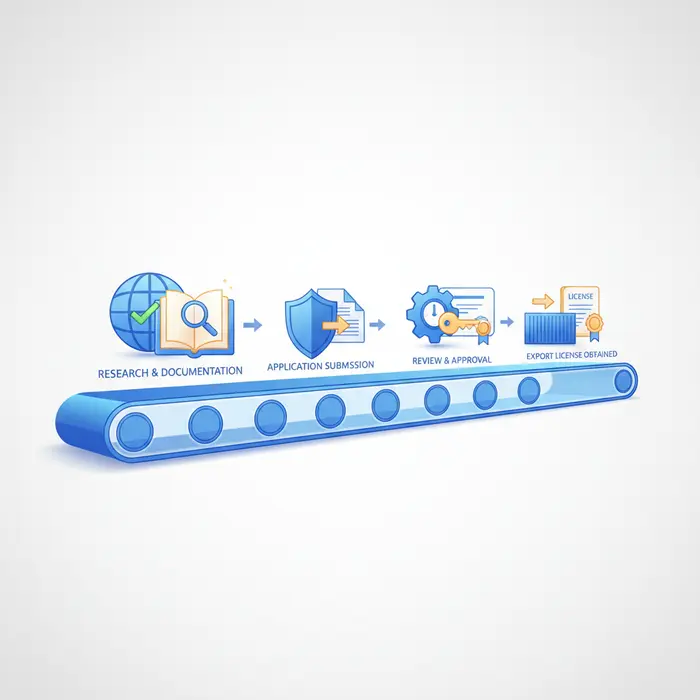
Navigating the complexities of global trade can be daunting, but securing an export license doesn’t have to be. This practical guide provides a step-by-step roadmap to efficiently obtain an export license, ensuring you remain compliant with international and national regulations. Mastering Global Trade Compliance is crucial for businesses looking to expand their reach, and understanding the nuances of export licensing is a cornerstone of this endeavor, especially when dealing with specific regulations like Vietnam export regulations.
1. Pre-Application Checklist: Essential Preparations
Before even thinking about filling out an application, thorough due diligence is paramount. This initial phase sets the foundation for a smooth application process and minimizes the risk of delays or rejections. Understanding your specific Export license requirements starts here.
- Classify Your Goods/Technology: The first critical step is to accurately classify your item. This involves determining its Export Control Classification Number (ECCN) or its equivalent under your country’s regulations. The ECCN dictates whether your product requires a license based on its technical characteristics, destination, end-user, and end-use. Misclassification is a common pitfall and can lead to serious compliance issues.
- Identify the Destination Country: Know precisely where your goods are headed. Different countries have varying restrictions, and some destinations may be embargoed or subject to stricter controls, regardless of the product.
- Perform Restricted Party Screening: This is a non-negotiable step. You must screen all parties involved in the transaction – the end-user, consignee, intermediate consignee, and even the freight forwarder – against various government denied and restricted party lists. Failure to do so can result in severe penalties. Reliable screening tools and databases are essential. For U.S. companies, resources like the Consolidated Screening List are vital. Understanding the Denied Persons List is a key aspect of this screening.
- Determine End-User and End-Use: Understand who will ultimately use your product and for what purpose. Export licenses are often required if the end-use is for military, proliferation (nuclear, chemical, biological weapons, or missile technology), or other sensitive applications, even if the item itself is generally unrestricted.
- Assess License Requirements: Based on the ECCN, destination, end-user, and end-use, determine if a license is required. Many exports can proceed without a license under various exceptions or “No License Required” (NLR) designations, but this determination must be documented.
2. Step-by-Step Guide to the Export License Application
Once your pre-application checklist is complete, you’re ready to tackle the application itself. This section details How to obtain an export license by guiding you through the submission process.
- Gather All Required Documentation: Prepare a comprehensive package of supporting documents. This typically includes commercial invoices, proforma invoices, purchase orders, shipping documents, technical specifications, end-user statements (EUS), and any other relevant contracts or agreements. Ensure all documents are consistent and accurate.
- Identify the Correct Licensing Authority: Different countries have different agencies responsible for export licensing. For example, in the United States, the Bureau of Industry and Security (BIS) handles most commercial and dual-use items, while the Directorate of Defense Trade Controls (DDTC) handles defense articles. For businesses operating in or with Vietnam, understanding the specific Vietnamese government bodies (e.g., Ministry of Industry and Trade) responsible for export approvals is crucial for adherence to Vietnam export regulations.
- Complete the Application Form: Access the appropriate application portal (e.g., SNAP-R for BIS in the US) and meticulously fill out all sections. Be precise with details such as ECCNs, values, parties involved, and technical descriptions. Any discrepancies can lead to immediate rejection or requests for more information, prolonging the process.
- Submit the Application: Once reviewed for accuracy and completeness, submit your application. Keep a record of your submission, including any reference numbers.
- Follow-Up and Respond to Queries: Licensing authorities may have questions or require additional information. Be prepared to respond promptly and thoroughly. Timely communication can significantly expedite the approval process.
3. Common Pitfalls and Strategies for Success
Even with careful preparation, the export licensing process can present challenges. Being aware of common pitfalls and implementing proactive strategies can ensure a smoother journey towards Global Trade Compliance.
- Incomplete or Inaccurate Documentation: This is the most frequent reason for delays or denials. Strategy: Create a detailed documentation checklist and have a second person review all submissions for accuracy and completeness before submission.
- Incorrect Classification (ECCN): Mistakes in classifying your goods can lead to applying for the wrong license or not applying when one is required. Strategy: Invest in training for classification specialists or consult with trade compliance experts. Utilize government classification tools and resources.
- Failure to Conduct Thorough Restricted Party Screening: Inadequate screening poses significant legal and reputational risks. Strategy: Implement automated screening software and regularly update your screening lists. Document all screening activities.
- Misunderstanding End-Use/End-User Restrictions: Assuming a general license applies without fully vetting the end-user or end-use can lead to violations. Strategy: Develop a robust internal due diligence process for all customers and transactions, including specific questionnaires for high-risk scenarios.
- Lack of Internal Compliance Program: A reactive approach to compliance is risky. Strategy: Establish a comprehensive Export Management and Compliance Program (EMCP) that includes policies, procedures, training, and regular audits. This proactive approach ensures consistent adherence to Vietnam export regulations and international standards.
- Ignoring Post-Approval Obligations: Obtaining the license is not the end. Many licenses come with conditions and reporting requirements. Strategy: Designate a compliance officer responsible for monitoring and fulfilling post-approval obligations, maintaining meticulous records for future audits.
By diligently following these steps and proactively addressing potential challenges, businesses can efficiently navigate the export license application process, ensuring seamless operations and robust Global Trade Compliance.
Crucial Role of Restricted Party Screening in Trade
Navigating the complexities of Global Trade Compliance is a monumental task for businesses operating internationally. Among the myriad regulations, one critical process stands out for its importance in preventing illicit activities and protecting national security: Restricted Party Screening (RPS). This essential practice safeguards companies from inadvertent dealings with sanctioned entities, terrorists, and other prohibited parties, thereby mitigating severe financial, legal, and reputational risks. Understanding and implementing robust RPS protocols is not just a matter of adherence but a cornerstone of ethical and secure international commerce.
1. What is Restricted Party Screening (RPS) and Why is it Essential?
Restricted Party Screening (RPS), also known as Denied Party Screening (DPS), is the process of checking potential customers, partners, suppliers, and employees against various government-issued lists of individuals and entities with whom it is prohibited or restricted to do business. These lists are compiled by regulatory bodies worldwide, such as the U.S. Department of the Treasury’s Office of Foreign Assets Control (OFAC), the European Union, the United Nations, and many national governments. The prohibitions can stem from concerns related to terrorism financing, weapons proliferation, human rights abuses, drug trafficking, and other threats to international security and foreign policy.
The essential nature of RPS lies in its direct impact on a company’s legal standing and ethical responsibility. Without thorough screening, businesses risk facilitating illegal trade, contributing to criminal enterprises, or violating international sanctions. Such violations can lead to colossal fines, imprisonment, loss of export privileges, and irreparable damage to a company’s brand and market access. Moreover, for businesses involved in international transactions, understanding and meeting specific export license requirements is often intrinsically linked to RPS. If a party is on a restricted list, obtaining an export license, or even knowing how to obtain an export license for a particular transaction, becomes irrelevant as the trade itself is prohibited.
2. Tools and Technologies for Effective Screening
While manual checks against publicly available government lists are possible, they are highly inefficient, prone to human error, and impractical for businesses with a high volume of transactions. Modern global trade demands sophisticated tools and technologies for effective Restricted Party Screening. Automated screening software solutions leverage vast databases that aggregate multiple international denied party lists, including those from OFAC, the EU, UN, and various national authorities.
These advanced tools offer several key functionalities: real-time screening capabilities, batch screening for existing databases, fuzzy logic matching to account for variations in names and addresses, and comprehensive audit trails. Many integrate directly with Enterprise Resource Planning (ERP) or Customer Relationship Management (CRM) systems, allowing for seamless and automated screening at various points in the business process – from lead generation to order fulfillment. Artificial intelligence (AI) and machine learning (ML) are further enhancing these tools, improving accuracy by reducing false positives and identifying complex relationships or shell companies that might otherwise evade detection. Continuous monitoring features ensure that even after an initial screening, parties are re-evaluated against updated lists, providing ongoing compliance assurance.
3. Consequences of Failing to Conduct Adequate Screening
The ramifications of inadequate or non-existent Restricted Party Screening can be devastating for any organization. Primarily, companies face significant financial penalties. Governments impose substantial fines for sanctions violations, often amounting to millions of dollars per incident, depending on the severity and nature of the breach. For instance, violations of U.S. sanctions administered by OFAC can result in civil penalties ranging into the hundreds of thousands or even millions of dollars per violation, and criminal penalties for willful violations can include multi-million dollar fines and lengthy prison sentences for individuals.
Beyond monetary repercussions, companies risk severe reputational damage. Public exposure of a sanctions violation can erode customer trust, alienate investors, and harm relationships with banking partners and insurers, potentially leading to a loss of market share. Furthermore, persistent non-compliance can lead to the loss of export privileges, effectively barring a company from international trade. Legal consequences can extend to criminal charges against corporate executives, demonstrating the gravity with which governments view these regulations. Even specific regional mandates, such as Vietnam export regulations, typically incorporate or align with international restricted party lists, meaning local non-compliance can stem from a failure to perform adequate RPS. Therefore, investing in robust RPS protocols is not merely a cost but a vital investment in a company’s future viability and integrity in the global marketplace.
Regional Focus: Navigating Vietnam Export Regulations
Venturing into the dynamic Vietnamese market offers immense opportunities for global businesses, yet success hinges on a thorough understanding of its complex export regulations. This section provides an in-depth look at specific export regulations for Vietnam, offering insights into local customs, licensing, and the compliance challenges unique to this vibrant economy. Mastering Global Trade Compliance is paramount for seamless operations and avoiding costly delays or penalties.

1. Overview of Key Vietnamese Export Laws and Policies
Vietnam’s export framework is primarily governed by a combination of laws, decrees, and circulars issued by various government bodies, most notably the Ministry of Industry and Trade (MOIT) and the General Department of Vietnam Customs. Exporters must be aware of the overarching principles enshrined in the Law on Customs and the Law on Foreign Trade Management. These foundational documents outline the general rules for goods movement, customs declarations, and prohibited or restricted items. Understanding the nuances of these Vietnam export regulations is crucial, as they dictate everything from product classification to the procedures for resolving disputes. Key policies often focus on promoting exports, diversifying markets, and ensuring compliance with international trade commitments, while also protecting domestic industries and consumer health and safety. Staying updated with these evolving policies is a continuous challenge that demands diligent Global Trade Compliance efforts.
2. Specific Licensing and Documentation for Exporting to Vietnam
Exporting to Vietnam is not a one-size-fits-all process; many goods require specific licenses and extensive documentation. The type of license depends heavily on the nature of the product. For instance, goods classified as chemicals, pharmaceuticals, food products, cosmetics, or certain agricultural items often fall under stricter control and necessitate permits from relevant ministries (e.g., Ministry of Health for pharmaceuticals, Ministry of Agriculture and Rural Development for agricultural products). Navigating these export license requirements can be complex, involving multiple agencies and strict application procedures. Typically, the process to obtain an export license involves submitting detailed product specifications, safety certifications, and sometimes even factory audits. Furthermore, rigorous restricted party screening is essential to ensure that your trading partners are not on any international sanction lists, preventing severe legal repercussions and reputational damage. Due diligence in preparing all required paperwork accurately and timely is non-negotiable for smooth customs clearance.
3. Impact of Recent Trade Agreements on Vietnam Exports
Vietnam has actively pursued and signed numerous Free Trade Agreements (FTAs) in recent years, significantly reshaping its export landscape. Key agreements like the Comprehensive and Progressive Agreement for Trans-Pacific Partnership (CPTPP), the European Union-Vietnam Free Trade Agreement (EVFTA), and the Regional Comprehensive Economic Partnership (RCEP) have profound implications for exporters. These agreements typically lead to reduced or eliminated tariffs for a wide range of goods, making Vietnamese products more competitive in destination markets and, conversely, making imports into Vietnam cheaper. Exporters can leverage these FTAs to gain preferential market access, provided their goods meet the specified Rules of Origin (ROO). Adhering to these ROO can be intricate, often requiring detailed documentation of material sourcing and manufacturing processes. Beyond tariff reductions, these agreements also aim to streamline customs procedures, enhance transparency, and standardize regulations, potentially reducing non-tariff barriers. However, they also introduce new compliance requirements, such as stricter labor and environmental standards under the EVFTA, which exporters must integrate into their supply chains. Businesses must proactively analyze how these agreements affect their specific products and target markets to fully capitalize on the benefits while meticulously managing the expanded compliance obligations. Understanding and adapting to these evolving frameworks are critical for maintaining a competitive edge and ensuring sustained success in the global marketplace, underscoring the dynamic nature of international trade regulations.
Partner with Vietnam’s Leading Suppliers
Looking for reliable suppliers in Vietnam? Contact VietnamSuppliers.com today to connect with verified manufacturers and exporters across all industries.
—————————————
References
– Bureau of Industry and Security (BIS) Guidance on Restricted Party Screening: https://www.bis.doc.gov/index.php/documents/guidance-for-exporting/2324-restricted-party-screening-how-to-spot-the-red-flags/file
– adhering to Export Administration Regulations: https://www.bis.doc.gov/index.php/documents/regulations-docs/2330-export-administration-regulations-ear-2023-bis-compilation/file
– Understanding the Denied Persons List: https://www.bis.doc.gov/index.php/documents/regulations-docs/2347-denied-persons-list-1/file
– :
– Vietnam – Trade Regulations and Standards: https://www.trade.gov/country-commercial-guides/vietnam-trade-regulations-and-standards