In an increasingly interconnected yet volatile global economy, the landscape of supply chain vulnerabilities is undergoing a profound transformation. As we look towards 2025, businesses face a complex web of challenges that demand sophisticated and agile Supply Chain Risk Management strategies. The era of predictable supply chains is unequivocally over, replaced by an environment where disruptions are not exceptions but rather integral components of the operational reality. This section delves into the current state and future predictions for supply chain resilience, laying the groundwork for comprehensive and proactive risk mitigation approaches.

1. Key Global Trends Impacting Supply Chains
The convergence of several powerful global trends is redefining supply chain risk. Firstly, persistent geopolitical tensions and trade disputes continue to fragment global commerce. Nations are increasingly prioritizing national security and economic sovereignty, leading to a surge in protectionist policies, export controls, and import tariffs. This necessitates meticulous geopolitical trade risk analysis to navigate complex international relations and their implications for sourcing, manufacturing, and distribution networks. Furthermore, the volatility in energy markets and raw material availability contributes significantly to unstable pricing, making robust Commodity Price Volatility Reports essential for financial planning and procurement strategies.
Secondly, climate change is no longer a distant threat but a tangible force disrupting logistics and production. Extreme weather events, from floods to droughts and severe storms, directly impact transportation routes, agricultural yields, and manufacturing capabilities. Companies must consider the physical risks of climate change when designing resilient supply chain networks. Lastly, rapid technological advancements, while offering immense opportunities for efficiency and visibility, also introduce new vulnerabilities. The increasing reliance on digital platforms means that cybersecurity threats are now a top-tier concern, potentially crippling operations if not adequately addressed. Moreover, evolving global regulations demand constant vigilance regarding International Trade Compliance Risk, ensuring adherence to diverse and often conflicting legal frameworks.
2. Emerging Threats and Unforeseen Disruptions
Beyond the well-documented global trends, new and emerging threats are constantly challenging the efficacy of traditional risk management frameworks. Cyberattacks are becoming more sophisticated, targeting not just corporate data but also operational technology (OT) within factories and logistics infrastructure, posing significant threats to continuous operation. A breach in a single supplier’s system can have a cascading effect across an entire ecosystem. Furthermore, the lessons from the COVID-19 pandemic underscore the need for preparedness against biological threats and other large-scale public health crises that can abruptly halt production and severely restrict labor mobility.
The rapid pace of technological innovation, including AI and quantum computing, presents a double-edged sword. While these technologies offer solutions for predictive analytics and automation, they also introduce new vectors for attack and ethical considerations that demand careful governance. Market dynamics are also subject to unforeseen shifts; for instance, sudden changes in consumer preferences, economic downturns in key markets, or unexpected competitor actions can quickly alter the viability of existing supply chain models. Assessing B2B Market Entry Risk Assessment for new regions or product lines requires foresight into these dynamic and often unpredictable variables, pushing companies to think beyond conventional market analyses.
3. Proactive vs. Reactive Risk Mitigation Approaches
The traditional reactive approach to supply chain disruptions—responding only after an event occurs—is no longer sustainable in 2025. Businesses must pivot towards proactive and predictive Supply Chain Risk Management. This paradigm shift involves several critical components. Firstly, advanced data analytics and artificial intelligence are indispensable for identifying early warning signs, forecasting potential disruptions, and simulating various scenarios. This allows organizations to move from simply monitoring risks to actively predicting and preventing them.
Secondly, diversifying supply bases, manufacturing locations, and logistics routes is paramount. Relying heavily on single sources or geographies significantly amplifies vulnerability. Strategic multi-sourcing and regionalization can buffer against localized disruptions, whether they stem from geopolitical events, natural disasters, or labor issues. Thirdly, fostering transparency and collaboration across the entire supply chain, from raw material suppliers to end-point distributors, is vital. Shared information and integrated systems enable quicker identification of issues and more coordinated responses. Implementing robust contractual agreements with clear contingency plans also reinforces resilience. Finally, continuous stress testing and scenario planning—simulating high-impact, low-probability events—allow companies to test the robustness of their supply chains and refine their mitigation strategies before real-world disruptions occur. Embracing these proactive measures is not just about avoiding losses; it’s about building a competitive advantage through enhanced resilience and adaptability in a perpetually changing global environment.
Navigating Commodity Price Volatility & Economic Shifts
In today’s interconnected global economy, businesses face a constant barrage of challenges, none more persistent than the unpredictable shifts in commodity prices and broader economic landscapes. From raw materials to finished goods, the cost foundations of supply chains are subject to rapid and significant fluctuations driven by geopolitical events, supply-demand imbalances, and monetary policy changes. Effective Supply Chain Risk Management is no longer just about optimizing logistics; it demands a proactive approach to understanding, anticipating, and mitigating the financial impact of these volatilities to safeguard profitability and ensure operational continuity.
1. Leveraging Commodity Price Volatility Reports for Foresight
At the forefront of proactive risk mitigation are robust Commodity Price Volatility Reports. These detailed analyses go beyond simple price tracking, offering deep insights into the factors influencing market movements, including production forecasts, inventory levels, and consumption trends across various sectors. By incorporating Geopolitical Trade Risk Analysis, these reports can highlight potential disruptions arising from international relations, trade policies, and regional instabilities that could impact critical supply routes or material availability. Businesses that regularly consult and internalize these reports gain a significant strategic advantage, enabling them to identify emerging threats and opportunities well in advance. This foresight allows for timely adjustments in procurement strategies, inventory management, and even product development, transforming potential crises into manageable challenges. Understanding the historical volatility and future projections for key commodities empowers organizations to make data-driven decisions, fostering resilience against market shocks.
2. Hedging Strategies and Procurement Best Practices
Once armed with insights from volatility reports, the next crucial step is to implement effective hedging strategies and refine procurement best practices. Hedging involves using financial instruments, such as futures contracts, options, or forward contracts, to lock in prices for future purchases or sales of commodities, thereby insulating against adverse price movements. While these instruments come with their own complexities and costs, they provide a vital layer of financial protection. Complementing hedging, procurement best practices involve diversifying the supplier base, entering into long-term contracts with staggered pricing mechanisms, and optimizing inventory levels to balance cost efficiency with risk mitigation. For global enterprises, navigating International Trade Compliance Risk is paramount when diversifying suppliers, ensuring adherence to regulations and avoiding costly delays or penalties. Additionally, engaging in careful B2B Market Entry Risk Assessment before onboarding new international suppliers can prevent unforeseen logistical or quality control issues. Strategic partnerships and collaboration with suppliers can also foster greater transparency and stability in pricing agreements, creating a more resilient supply chain ecosystem.
3. Impact of Inflation and Interest Rates on Supply Costs
Beyond direct commodity price swings, broader macroeconomic forces like inflation and interest rates exert significant pressure on supply chain costs. Inflation erodes purchasing power, driving up the cost of raw materials, labor, and transportation. This persistent upward pressure necessitates constant re-evaluation of pricing structures and supplier agreements. Similarly, changes in interest rates directly impact the cost of capital for businesses, affecting everything from inventory financing to the funding of new infrastructure projects. Higher interest rates can increase the carrying costs of inventory, making just-in-time (JIT) strategies even more appealing, while also increasing the cost of trade financing and credit. To counter these impacts, companies must employ agile financial planning, explore alternative financing options, and engage in scenario planning to understand the potential effects of various inflation and interest rate trajectories. Negotiating flexible payment terms, optimizing cash flow, and investing in efficiency-boosting technologies can help absorb some of these economic shocks, ensuring that the supply chain remains cost-effective and competitive despite a challenging economic backdrop.
Effectively navigating commodity price volatility and economic shifts is a continuous, dynamic challenge for modern businesses. It requires a blend of sophisticated data analysis through Commodity Price Volatility Reports, strategic financial hedging, and robust procurement best practices. By embracing these strategies and maintaining a keen awareness of both micro and macroeconomic indicators, companies can transform supply chain vulnerabilities into sources of competitive advantage, securing their resilience in an ever-changing global marketplace.
Geopolitical Dynamics and International Trade Risks
The intricate web of global commerce is increasingly susceptible to geopolitical shifts, making Geopolitical Trade Risk Analysis an indispensable component of modern business strategy. From escalating political instability to the friction of trade wars, these dynamics profoundly impact global supply chains and the overall resilience of international operations. Effective Supply Chain Risk Management demands a proactive approach to identify, assess, and mitigate these complex threats, ensuring continuity and safeguarding profitability in an ever-changing world. Businesses must navigate not just market fluctuations, but also the turbulent waters of international relations, where a single policy change or conflict can trigger widespread disruptions, affecting everything from raw material sourcing to final product delivery.

1. Conducting Comprehensive Geopolitical Trade Risk Analysis
A robust framework for Geopolitical Trade Risk Analysis is crucial for businesses operating across borders. This involves evaluating a spectrum of factors, including political stability, regulatory environments, and potential for civil unrest or international conflict in key sourcing and market regions. Thorough analysis goes beyond surface-level observations, delving into the underlying causes of geopolitical tensions, such as resource scarcity, ideological differences, or historical grievances. Companies must develop detailed Commodity Price Volatility Reports to understand how geopolitical events can trigger price swings in essential raw materials, directly impacting production costs and profitability. Furthermore, assessing International Trade Compliance Risk is paramount, as new sanctions or tariffs can quickly render existing trade routes or partners non-compliant, leading to costly delays and legal penalties. For businesses considering expansion, a comprehensive B2B Market Entry Risk Assessment must integrate geopolitical considerations, gauging the long-term viability and stability of target markets against a backdrop of potential political upheaval or protectionist policies. Tools like scenario planning and predictive analytics are invaluable in anticipating potential flashpoints and their cascading effects on global trade.
2. Impact of Sanctions and Trade Disputes on Operations
The imposition of economic sanctions and the escalation of trade disputes represent direct and immediate threats to international business operations. Sanctions, whether targeted at specific entities, sectors, or entire countries, can disrupt supply chains by blocking access to critical components, limiting financial transactions, or restricting market access. Businesses must constantly monitor the evolving landscape of global sanctions regimes to ensure adherence and avoid severe penalties. Similarly, trade wars, characterized by retaliatory tariffs and non-tariff barriers, inflate costs, reduce market access, and compel companies to re-evaluate their entire global footprint. These measures can lead to significant shifts in manufacturing locations and sourcing strategies, often necessitating quick pivots to maintain competitiveness. The impact extends beyond direct financial costs, affecting brand reputation, investor confidence, and the ability to fulfill contractual obligations. Staying abreast of these developments and understanding their potential repercussions is a core aspect of effective Supply Chain Risk Management. Proactive monitoring and the development of contingency plans are essential to mitigate the fallout from such disputes, maintaining operational resilience.
3. Diversification and Nearshoring Strategies for Stability
In response to heightened geopolitical uncertainties, many companies are re-evaluating their traditional just-in-time, single-source supply chain models in favor of strategies that prioritize resilience and stability. Diversification of suppliers and manufacturing locations is a cornerstone of this approach, spreading risk across multiple geographies rather than concentrating it in a single, potentially volatile region. This strategy minimizes exposure to localized political instability, natural disasters, or trade restrictions, ensuring that if one node in the supply chain is disrupted, alternatives are readily available. Another increasingly popular strategy is nearshoring, which involves relocating production or sourcing closer to end markets, often within the same continent or economic bloc. This reduces lead times, transportation costs, and vulnerability to long-distance geopolitical disruptions. While nearshoring may sometimes entail higher labor costs, the benefits of reduced risk, improved responsiveness, and greater control over the supply chain often outweigh these disadvantages. The World Economic Forum Global Risks Report consistently highlights geopolitical fragmentation as a significant threat, reinforcing the need for these adaptive strategies. Implementing these strategies requires careful planning and a thorough understanding of the specific risks associated with each potential location, balancing cost efficiencies with long-term security and operational agility.
Ensuring International Trade Compliance & Ethical Sourcing
In an increasingly interconnected yet volatile global marketplace, businesses face a complex web of challenges in navigating international trade. Ensuring robust Supply Chain Risk Management is paramount, especially when it comes to international trade compliance and ethical sourcing. Companies must proactively address evolving regulatory landscapes, mitigate the dangers of illicit trade, and adhere to stringent ethical and sustainability standards to avoid legal pitfalls, protect brand reputation, and maintain market access. This section delves into the critical aspects of International Trade Compliance Risk, providing insights into safeguarding operations in a globalized economy.
1. Monitoring Evolving Trade Regulations and Tariffs
The global trade environment is in a constant state of flux, characterized by rapid changes in trade policies, sanctions regimes, and tariff structures. Businesses engaged in cross-border trade must maintain vigilance to avoid significant disruptions, penalties, and unexpected costs. Factors such as shifts in political alliances, new bilateral or multilateral agreements, and rising protectionist sentiments contribute to significant global trade policy updates. For instance, the imposition of new tariffs can drastically alter the cost-effectiveness of sourcing from particular regions, impacting Commodity Price Volatility Reports and necessitating rapid adjustments to sourcing strategies. Moreover, geopolitical tensions often translate into swift regulatory changes, demanding expert Geopolitical Trade Risk Analysis to anticipate and respond to potential disruptions.
Effective compliance involves establishing a sophisticated system for real-time monitoring of regulatory developments across all relevant jurisdictions. This includes tracking changes in customs regulations, export controls, import restrictions, and sanctions programs administered by bodies like the UN, EU, and OFAC. Failure to comply can result in substantial fines, criminal charges, seizure of goods, and severe reputational damage. Therefore, companies need dedicated resources or expert partners to interpret these complex changes and translate them into actionable compliance strategies, ensuring their international operations remain compliant and resilient against unforeseen regulatory shifts. This proactive approach is vital for any successful B2B Market Entry Risk Assessment.
2. Combatting Counterfeiting and Illicit Trade
The proliferation of counterfeit goods and engagement in illicit trade channels pose a significant threat to businesses, consumers, and global economies. Counterfeiting not only results in billions of dollars in lost revenue for legitimate businesses but also undermines brand integrity, compromises product safety, and can fund criminal enterprises. Illicit trade, which includes smuggling, piracy, and tax evasion, further complicates the global supply chain, creating an environment ripe for International Trade Compliance Risk.
To effectively combat these challenges, companies must implement multi-layered defense strategies. This begins with robust due diligence on all supply chain partners, extending beyond direct suppliers to sub-contractors and logistics providers. Enhanced supply chain visibility, leveraging technologies like blockchain or advanced tracking systems, can help identify suspicious activities and potential diversion points. Furthermore, brands should invest in anti-counterfeiting measures such as unique product identifiers, tamper-evident packaging, and secure authentication technologies. Collaborative efforts with customs authorities, law enforcement agencies, and industry associations are also crucial for sharing intelligence, conducting investigations, and enforcing intellectual property rights globally. Educating consumers about the dangers of counterfeit products and providing clear channels for reporting suspicious goods can also contribute to a stronger defense against illicit trade practices.
3. Ethical Sourcing and Sustainability Compliance Requirements
Beyond legal compliance, the demand for ethical sourcing and sustainable business practices has become a non-negotiable imperative for modern enterprises. Consumers, investors, and regulatory bodies are increasingly scrutinizing companies’ environmental, social, and governance (ESG) performance throughout their supply chains. Ethical sourcing encompasses fair labor practices, safe working conditions, human rights, and the absence of forced or child labor. Sustainability compliance, meanwhile, addresses environmental impacts, including carbon footprint, waste reduction, responsible resource management (e.g., preventing deforestation), and adherence to chemical restrictions.
Meeting these comprehensive requirements necessitates a proactive and transparent approach. Companies must conduct thorough risk assessments of their supply chains to identify potential ethical and environmental hotspots. This involves regular supplier audits, engagement with local communities, and the implementation of strong codes of conduct that extend to all tiers of the supply chain. New regulations, such as the EU’s Corporate Sustainability Due Diligence Directive (CSDDD), are making these ethical and sustainability obligations legally binding, holding companies accountable for adverse human rights and environmental impacts throughout their value chains. Establishing clear metrics, reporting mechanisms, and continuous improvement programs are essential to demonstrate commitment and progress. Embracing ethical sourcing and sustainability is not merely about compliance; it’s about building long-term resilience, enhancing brand value, and fostering positive social and environmental impact, thereby significantly reducing overall Supply Chain Risk Management.
Strategic B2B Market Entry and Resilience Building
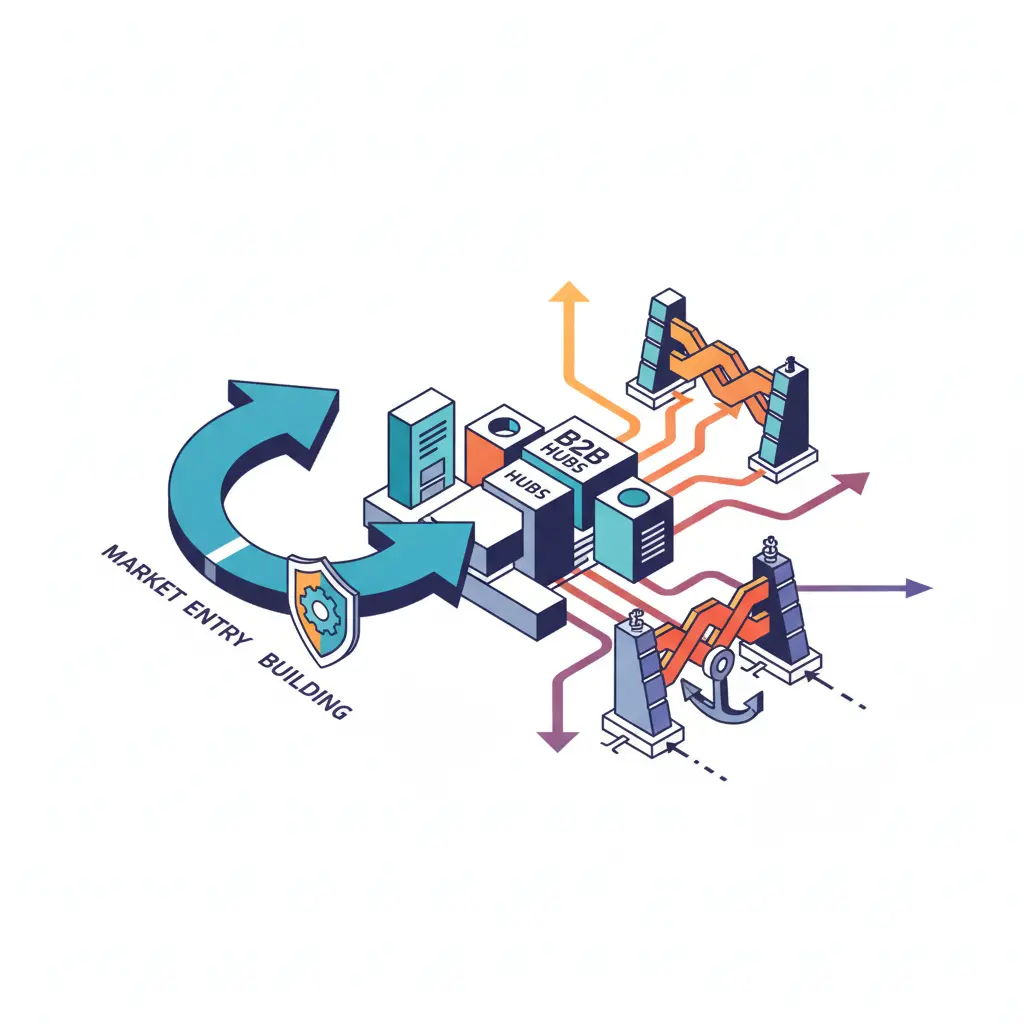
Expanding into new B2B markets presents both immense opportunities and significant challenges. For businesses aiming to grow their global footprint, a methodical approach to market entry is paramount. This section delves into crucial strategies for navigating the complexities of new market penetration, focusing specifically on robust B2B Market Entry Risk Assessment. Simultaneously, it emphasizes the critical need to build and maintain resilient supply chains that can withstand unforeseen disruptions, thereby enhancing overall adaptability and long-term sustainability. Effective Supply Chain Risk Management is not just about avoiding pitfalls but about creating an agile framework that can pivot and adapt in a dynamic global economic landscape.
1. Performing Robust B2B Market Entry Risk Assessment
A thorough B2B Market Entry Risk Assessment is the cornerstone of a successful international expansion. This process involves a comprehensive evaluation of potential challenges and opportunities in target markets. It extends beyond basic market research, diving deep into operational, financial, legal, and political landscapes. Key considerations include analyzing market demand, competitive intensity, and the regulatory environment. Businesses must carefully assess factors such as Commodity Price Volatility Reports to understand potential cost fluctuations, which can significantly impact profitability and operational stability. Furthermore, a detailed Geopolitical Trade Risk Analysis is essential, particularly in regions prone to political instability, trade disputes, or policy shifts that could disrupt supply chains or market access. Understanding the nuances of local business culture, infrastructure quality, and labor market dynamics also plays a crucial role. For instance, navigating International Trade Compliance Risk requires expert knowledge of import/export regulations, tariffs, customs procedures, and intellectual property laws, which vary significantly across jurisdictions. Failing to conduct this due diligence can lead to costly delays, legal battles, and reputational damage, undermining the entire market entry strategy. According to a report by McKinsey & Company on global supply chain resilience, proactive risk identification is paramount for sustainable growth in new territories.
2. Building Resilient Supply Chain Networks and Partnerships
Beyond market entry, the long-term success of any B2B venture hinges on the resilience and adaptability of its supply chain. Building resilient networks involves diversifying suppliers, production locations, and distribution channels to mitigate single points of failure. This strategy moves beyond traditional just-in-time models, embracing a more “just-in-case” philosophy that incorporates buffer stocks, alternative sourcing options, and flexible manufacturing capabilities. Establishing strong, collaborative partnerships with local suppliers, distributors, and logistics providers is vital. These partnerships not only provide crucial market insights but also act as shock absorbers during disruptions. For example, in the face of unexpected events like natural disasters or pandemics, robust partnerships can enable quicker recovery and adaptation. Investing in supplier relationship management (SRM) and fostering transparent communication channels helps build trust and shared risk mitigation strategies. This proactive approach to Supply Chain Risk Management ensures that the business can maintain continuity of supply and service delivery, even in volatile environments. Emphasizing regionalization or nearshoring certain supply chain components can also reduce transit times and exposure to distant geopolitical risks.
3. Technology’s Role in Predictive Risk Analytics and Monitoring
In today’s interconnected world, technology is an indispensable tool for enhancing both market entry assessments and ongoing supply chain resilience. Advanced analytics, artificial intelligence (AI), and machine learning (ML) can process vast amounts of data to provide predictive insights into potential risks. This includes real-time monitoring of global events, such as weather patterns, political developments, and economic indicators, to anticipate disruptions before they occur. Predictive risk analytics can analyze potential supply chain risks to forecast future cost impacts, allowing businesses to hedge against price swings or adjust procurement strategies. Similarly, AI-driven platforms can perform sophisticated Geopolitical Trade Risk Analysis, identifying emerging trade barriers or regulatory changes that might affect market operations. Digital twins of supply chains can simulate various disruption scenarios, helping companies stress-test their networks and develop contingency plans. Furthermore, blockchain technology offers enhanced transparency and traceability across the supply chain, reducing instances of fraud and improving compliance, especially with complex International Trade Compliance Risk requirements. By leveraging these technological advancements, businesses can move from reactive problem-solving to proactive risk mitigation strategies, ensuring more secure B2B market entries and robust supply chain operations.
Partner with Vietnam’s Leading Suppliers
Looking for reliable suppliers in Vietnam? Contact VietnamSuppliers.com today to connect with verified manufacturers and exporters across all industries.
—————————————
References
– The Global Risks Report 2024: https://www.weforum.org/publications/global-risks-report-2024/
– World Bank Commodity Markets: https://www.worldbank.org/en/research/commodity-markets
– World Economic Forum Global Risks Report 2024: https://www.weforum.org/publications/global-risks-report-2024/
– World Trade Organization (WTO) – General Agreement on Trade in Services: https://www.wto.org/english/thewto_e/whatis_e/tif_e/gats1_e.htm
– McKinsey & Company on global supply chain resilience: https://www.mckinsey.com/capabilities/operations/our-insights/supply-chain-risk