Understanding ASEAN Trade Integration: A Strategic Overview
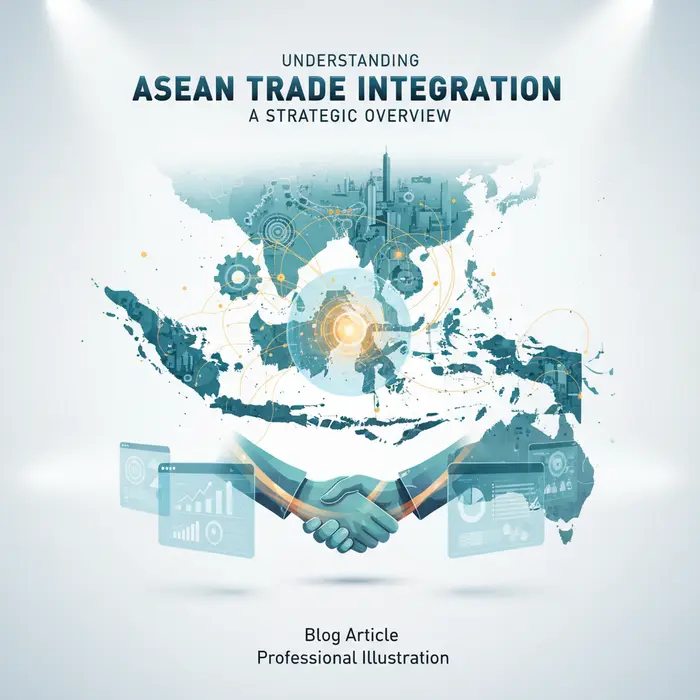
The Association of Southeast Asian Nations (ASEAN) stands as a beacon of regional cooperation, its journey towards deeper economic integration significantly reshaping the global trade landscape. This strategic overview delves into the foundational aspects of ASEAN’s economic integration, its historical progress, and the ambitious vision propelling its continued evolution. For businesses eyeing growth in dynamic markets, understanding the profound ASEAN trade integration impact on exports is crucial. The region, home to over 660 million people and a collective GDP exceeding US$3.6 trillion, represents a formidable economic bloc, fostering an environment ripe for international commerce and investment. Its commitment to integration not only enhances intra-regional trade but also solidifies ASEAN’s position as a vital hub in global supply chains.
1. Evolution and goals of the ASEAN Economic Community (AEC)
ASEAN was established in 1967, initially as a political and security cooperation bloc. However, economic cooperation quickly gained prominence, leading to various agreements aimed at fostering regional prosperity. The most significant milestone in this economic journey was the establishment of the ASEAN Economic Community (AEC) in 2015. The AEC’s overarching goal is to transform ASEAN into a single market and production base, making the region more competitive and integrated with the global economy. This vision encompasses four key characteristics: a single market and production base, a highly competitive economic region, a region of equitable economic development, and a region fully integrated into the global economy. By working towards these goals, the AEC seeks to reduce disparities among member states, create a more attractive investment destination, and enhance the overall welfare of its populace. The AEC Blueprint 2025 continues to guide the region’s efforts towards deeper economic integration, emphasizing innovation, sustainability, and inclusiveness.
2. Key pillars of integration: goods, services, investment, capital, skilled labor
The ambition of the AEC is realized through the progressive liberalization and integration across five critical pillars:
- Free Flow of Goods: This involves the elimination of intra-ASEAN tariffs and the reduction of non-tariff barriers, making it significantly easier and cheaper to move products across member states. This pillar directly impacts Free trade agreements market access, expanding opportunities for businesses within the bloc and for international entities looking to leverage ASEAN’s unified market.
- Free Flow of Services: ASEAN aims to liberalize various service sectors, including financial services, tourism, logistics, and telecommunications. This fosters greater competition, improves service quality, and enables businesses to operate seamlessly across borders.
- Free Flow of Investment: Creating a transparent and predictable investment environment is paramount. Measures include providing national treatment to ASEAN investors, streamlining investment procedures, and protecting investments, thereby attracting more foreign direct investment (FDI) into the region.
- Freer Flow of Capital: While full capital account liberalization is a long-term goal, ASEAN is working towards facilitating the freer movement of capital to support regional trade and investment, enhancing financial market stability and integration.
- Free Flow of Skilled Labor: Recognizing the importance of human capital, ASEAN facilitates the movement of skilled professionals in specific sectors like engineering, nursing, and tourism. This addresses labor shortages, promotes knowledge transfer, and enhances regional competitiveness.
Collectively, these pillars contribute to a stronger Regional supply chain resilience Asia by allowing companies to optimize production bases, source inputs efficiently, and distribute products more effectively across the region.
3. The role of ASEAN in the global economic landscape
ASEAN’s strategic geographic location, coupled with its robust economic integration efforts, positions it as a pivotal player in the global economic landscape. It is the fifth-largest economy in the world, and its influence is growing. The bloc actively pursues and engages in numerous free trade agreements (FTAs) with key partners outside the region, notably through the Regional Comprehensive Economic Partnership (RCEP). RCEP, the world’s largest free trade agreement, brings together ASEAN and its five FTA partners (Australia, China, Japan, New Zealand, and South Korea), creating unprecedented RCEP trade opportunities for businesses. This mega-deal further integrates regional supply chains and provides enhanced market access for goods, services, and investment across the Indo-Pacific.
Countries like Vietnam, a vibrant member of ASEAN, exemplify the dynamic growth within the bloc. With its strategic reforms and active participation in FTAs, the Vietnam export market potential ASEAN continues to expand, offering significant prospects for manufacturers and exporters. The ongoing commitment to regional integration, as detailed in the ASEAN Economic Community Blueprint 2025, solidifies ASEAN’s role not just as a consumer market, but as a crucial production base and a driver of global economic growth. For a deeper understanding of ASEAN’s comprehensive economic integration framework, refer to the official ASEAN Secretariat website. This continued progress reinforces the significant ASEAN trade integration impact on exports for both intra-regional and global trade.
Direct Impact on Exports and Expanded Market Access
ASEAN’s journey towards deeper economic integration is fundamentally reshaping the export landscape for businesses operating within and exporting from the region. The ASEAN trade integration impact on exports is profound, fostering an environment where goods move more freely, markets become more accessible, and competitive advantages are sharpened. This integration goes beyond simple market opening; it cultivates a robust ecosystem that supports higher export volumes, diversified market penetration, and enhanced resilience against global economic fluctuations. For businesses, particularly those looking to capitalize on the dynamic growth of Southeast Asia, understanding these direct impacts is crucial for strategic planning and unlocking significant RCEP trade opportunities for businesses.
1. Tariff reductions and elimination of non-tariff barriers
One of the most immediate and tangible benefits of ASEAN integration is the progressive reduction and eventual elimination of tariffs on intra-regional trade. This process, primarily driven by the ASEAN Free Trade Area (AFTA) and expanded through broader agreements like the ASEAN Economic Community (AEC), makes goods produced within ASEAN significantly more competitive. Lower tariffs directly translate into reduced costs for importers and consumers, stimulating demand and boosting export volumes for member states.
Beyond tariffs, a critical focus of ASEAN integration has been on dismantling non-tariff barriers (NTBs), which often pose even greater obstacles to trade. These include complex customs procedures, inconsistent product standards, restrictive import licensing, and arbitrary quotas. By harmonizing standards, simplifying regulations, and promoting mutual recognition agreements, ASEAN aims to create a level playing field. For instance, a Vietnamese manufacturer exporting textiles to the Philippines now faces fewer bureaucratic hurdles and lower costs, directly enhancing Vietnam export market potential ASEAN. This commitment to reducing NTBs is a continuous effort, making cross-border trade more predictable and efficient. The broader Regional Comprehensive Economic Partnership (RCEP), which includes ASEAN members plus Australia, China, Japan, Korea, and New Zealand, further amplifies these benefits, extending tariff reductions and NTB streamlining across an even larger economic bloc, creating unparalleled free trade agreements market access for goods originating in the region.
2. Streamlined customs procedures and trade facilitation measures
Efficient trade facilitation is the backbone of robust export growth. ASEAN integration has placed a strong emphasis on streamlining customs procedures, digitalizing documentation, and improving logistics infrastructure to ensure goods flow seamlessly across borders. Initiatives such as the ASEAN Single Window (ASW) are pivotal in this regard. The ASW allows for the electronic exchange of trade-related documents, including customs declarations, permits, and certificates, through a single submission point. This significantly reduces processing times, minimizes errors, and enhances transparency.
The impact of these measures is multifold. Faster clearance times mean reduced lead times for deliveries, lower inventory costs for businesses, and greater responsiveness to market demands. This contributes directly to regional supply chain resilience Asia, as disruptions are mitigated by efficient administrative processes. For exporters, this translates into increased competitiveness in global markets, as they can deliver products more quickly and reliably. Furthermore, improved trade facilitation fosters greater trust among trading partners, encouraging more intra-regional trade and attracting foreign direct investment (FDI) into the ASEAN bloc, further solidifying the ASEAN trade integration impact on exports. Companies can leverage these efficiencies to optimize their supply chains, perhaps sourcing components from one ASEAN country and assembling them in another before exporting to a third, creating complex and efficient regional production networks.
3. Opportunities for SMEs in integrated ASEAN markets
While large multinational corporations often have the resources to navigate complex trade landscapes, ASEAN integration offers particularly significant opportunities for Small and Medium-sized Enterprises (SMEs). Historically, SMEs have faced disproportionately high costs and barriers when attempting to export due to limited resources for navigating regulations, customs, and logistics in multiple countries. However, the harmonized standards, reduced tariffs, and simplified procedures under ASEAN’s integrated framework drastically lower the entry barriers for these smaller players.
For an SME in Thailand, for example, exporting artisanal goods to Malaysia or Singapore is now more viable due to standardized documentation and lower duties. This expanded free trade agreements market access within ASEAN allows SMEs to scale their operations by tapping into a combined market of over 660 million people, rather than being confined to their domestic market. The availability of online platforms for trade facilitation and e-commerce further empowers SMEs to reach regional consumers directly. Furthermore, integration encourages cross-border partnerships and value chain participation. SMEs can become crucial suppliers of components or services to larger regional firms, thereby integrating into broader regional supply chain resilience Asia. This access to a larger market and participation in regional value chains helps SMEs grow, innovate, and ultimately become more competitive on a global scale. Organizations like the WTO emphasize that regional integration, coupled with trade facilitation, can significantly boost SME participation in global value chains. The overarching framework of RCEP further extends these opportunities, opening up massive new markets for ASEAN-based SMEs, driving economic growth and diversification across the entire region.
Leveraging RCEP Opportunities and Vietnam’s Export Potential
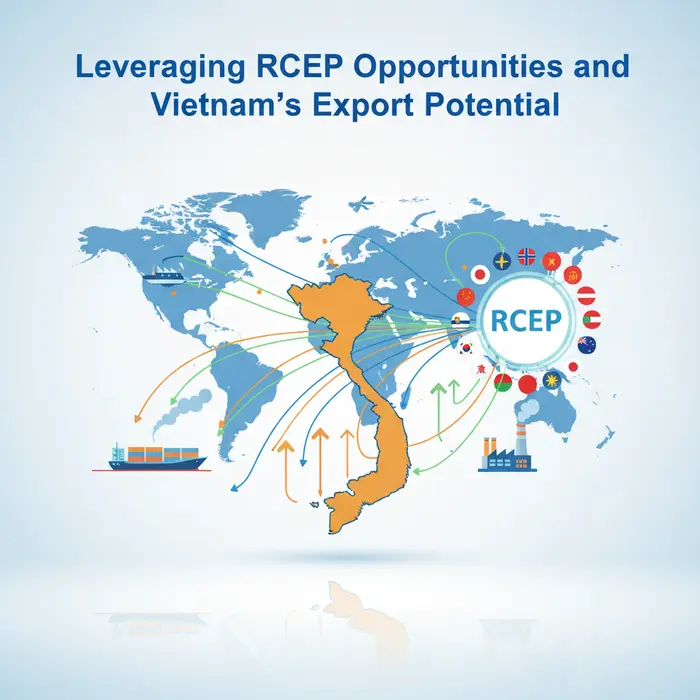
The global trade landscape is continuously reshaped by ambitious multilateral agreements. Among these, the Regional Comprehensive Economic Partnership (RCEP) stands as a monumental free trade agreement, encompassing fifteen Asia-Pacific economies. Representing nearly 30% of the world’s population and global GDP, RCEP is poised to be a significant catalyst for regional trade, opening unprecedented avenues for businesses and profoundly influencing ASEAN trade integration impact on exports. Within this dynamic environment, Vietnam is rapidly asserting its position as a burgeoning export powerhouse, leveraging its strategic advantages and proactive engagement in regional economic frameworks to maximize its export potential.
1. RCEP’s provisions and their implications for businesses
RCEP’s comprehensive framework streamlines commerce and enhances market accessibility. A cornerstone is its commitment to tariff reduction, with members pledging to eliminate tariffs on up to 92% of goods traded within the bloc over time. This significant reduction in trade costs provides substantial RCEP trade opportunities for businesses, allowing for more competitive pricing and expanded market reach. Crucially, RCEP introduces a common set of Rules of Origin (ROO) for all fifteen member states. This single ROO simplifies sourcing and manufacturing, as businesses can procure raw materials or intermediate goods from any RCEP member, and the final product still qualifies for preferential tariffs when exported within the bloc, promoting integrated regional production.
Beyond tariffs, RCEP streamlines customs procedures, aiming for faster clearance of goods, often within 6 hours for express consignments. This efficiency reduces lead times and logistics costs. The agreement also includes robust provisions on services and investment, promising greater market access for service providers and enhanced protections for investors, fostering a more predictable business environment. Furthermore, RCEP lays down a modern framework for e-commerce, vital for digital trade growth, addressing electronic transactions and cross-border data flows. These free trade agreements market access provisions collectively empower businesses to operate more efficiently, reduce operational costs, and explore new markets with greater confidence.
2. Strategic advantages of RCEP for regional supply chains
The RCEP agreement presents profound strategic advantages for developing more robust and resilient regional supply chain resilience Asia. The unified Rules of Origin are perhaps the most impactful feature. With a common ROO, companies have greater flexibility to establish production networks across multiple RCEP countries without jeopardizing tariff benefits. This encourages businesses to diversify their sourcing and manufacturing bases within the bloc, reducing over-reliance on a single country and thus enhancing resilience against disruptions.
The simplified trade procedures and reduced tariffs inherent in RCEP make it easier and more cost-effective to move components and finished products across borders. This fosters deeper integration of regional manufacturing processes, allowing companies to leverage the comparative advantages of different RCEP members. For instance, a product might be designed in one member country, have components manufactured in another, assembled in a third, and then exported, all while benefiting from preferential tariffs throughout the value chain. This increased operational flexibility not only optimizes costs but also strengthens the region’s ability to respond to global demand shifts and external shocks, making supply chains more agile and resistant to disruption.
3. Vietnam’s booming export market: key sectors and growth drivers
Vietnam has emerged as a beacon of growth within ASEAN, significantly bolstering its Vietnam export market potential ASEAN through a combination of strategic policies, competitive advantages, and active participation in global trade agreements. The country’s export market has witnessed remarkable expansion, driven by its strategic geographical location, a young and increasingly skilled workforce, and a government committed to fostering an attractive investment climate.
Key sectors contributing to Vietnam’s export boom include electronics and machinery, which have seen exponential growth fueled by significant foreign direct investment (FDI) from tech giants. Textiles and garments, along with footwear, remain traditional strongholds, continually adapting to global trends. Agricultural products, such as coffee, rice, and seafood, continue to be vital export commodities. Furthermore, the furniture and wood products sector has carved out a significant niche, capitalizing on Vietnam’s resources and craftsmanship.
Several growth drivers underpin this success. The ongoing shift in global supply chains, often termed the “China+1” strategy, has seen numerous multinational corporations diversify their manufacturing operations into Vietnam. Vietnam’s proactive pursuit of free trade agreements has opened doors to vast consumer markets, reducing trade barriers and creating a favorable environment for export-oriented industries. The government’s consistent efforts to improve infrastructure, streamline administrative procedures, and promote digital transformation further enhance the country’s appeal as a manufacturing and export hub. With RCEP now in effect, Vietnam’s integration into the world’s largest free trade area is set to supercharge its export trajectory, cementing its role as a critical node in Asian and global supply chains.
Strengthening Regional Supply Chain Resilience Across Asia
The global economic landscape has underscored the critical importance of robust and adaptable supply chains. For Asia, a region characterized by its dynamic economies and extensive trade networks, ongoing integration efforts are proving instrumental in building resilience, fostering stability, and mitigating inherent risks. These initiatives, driven by significant agreements like the Association of Southeast Asian Nations (ASEAN) and the Regional Comprehensive Economic Partnership (RCEP), are strategically designed to create more diversified, efficient, and interconnected supply chains across the continent. This proactive approach not only guards against future disruptions but also unlocks new growth opportunities, solidifying Asia’s position as a vital hub for global trade and production. The ASEAN trade integration impact on exports, for instance, has been a significant driver of economic growth and diversification for member states.
Diversification of production hubs and sourcing strategies
A cornerstone of building resilient supply chains is the strategic diversification of production hubs and sourcing strategies. The ongoing economic integration within Asia actively encourages businesses to spread their manufacturing bases and raw material sourcing across multiple countries, reducing over-reliance on any single location. This approach is particularly evident with the emergence of regional trade statistics showcasing increased intra-regional commerce. For instance, the expansion facilitated by the RCEP agreement has opened up significant RCEP trade opportunities for businesses, allowing them to tap into a broader consumer base and a wider array of suppliers without incurring prohibitive tariffs or complex customs procedures. Countries like Vietnam, with its rapidly developing industrial base and strategic location, exemplify the growing Vietnam export market potential ASEAN. By diversifying, companies can better absorb shocks from localized disruptions – be it natural disasters, geopolitical tensions, or health crises – by shifting production or sourcing to alternative locations within the integrated region. This geographical spread of capabilities ensures a more stable flow of goods and components, preventing bottlenecks that can cripple global operations.
Infrastructure development and digital transformation in logistics
The backbone of any efficient supply chain is robust infrastructure and cutting-edge logistics. Recognizing this, regional integration efforts are consistently driving significant investments in physical and digital infrastructure across Asia. This includes upgrading port facilities, expanding road and rail networks, and enhancing cross-border connectivity. These improvements are crucial for optimizing the movement of goods, reducing transit times, and lowering logistical costs. Beyond physical infrastructure, digital transformation is playing an increasingly pivotal role. The adoption of technologies like blockchain for supply chain transparency, AI for demand forecasting, and advanced analytics for route optimization are streamlining processes and boosting efficiency. These digital advancements are not just about speed; they enhance visibility, traceability, and responsiveness, all of which are critical components for strengthening Regional supply chain resilience Asia. By creating a seamlessly integrated logistical ecosystem, Asia is building a network that can more effectively manage complex supply chains and respond swiftly to changing market conditions.
Building resilience against global disruptions and geopolitical shifts
In an era marked by frequent global disruptions and evolving geopolitical landscapes, the ability of supply chains to withstand external shocks is paramount. Asia’s concerted efforts towards regional integration, particularly through frameworks that promote Free trade agreements market access, serve as a powerful buffer against such volatility. By deepening economic interdependencies and fostering greater trust among member states, these agreements create a more predictable and stable trading environment. They establish clear rules and mechanisms for trade, investment, and dispute resolution, minimizing uncertainties that could otherwise deter businesses. Furthermore, by fostering a collective approach to economic challenges, the region is better equipped to respond to global crises, such as pandemics or protectionist policies, through coordinated efforts rather than isolated responses. This collective strength not only secures the flow of essential goods but also protects the livelihoods of millions, ensuring continued economic stability and growth even amidst turbulent global conditions. This strategic foresight in building regional resilience is essential for safeguarding Asia’s long-term economic prosperity and its pivotal role in the global economy.
Future Outlook and Strategic Recommendations for 2025

The ASEAN region stands at a pivotal juncture, poised for continued economic dynamism and deeper integration as 2025 approaches. The trajectory of ASEAN trade integration impact on exports is set to be profoundly shaped by evolving geopolitical landscapes, technological advancements, and a renewed focus on sustainability. For businesses, understanding these shifts is not merely beneficial but essential for crafting resilient and growth-oriented strategies. This section provides a forward-looking perspective on ASEAN’s economic future and offers actionable recommendations for capitalizing on emerging opportunities, underscoring the significant ASEAN trade integration impact on exports.
1. Emerging trends in ASEAN trade, investment, and digital economy
The ASEAN bloc is cementing its role as a global growth engine, driven by robust domestic demand, expanding middle classes, and strategic geographical positioning. A significant trend is the deepening of intra-ASEAN trade, which continues to reduce reliance on external markets and fosters regional supply chain resilience. The full implementation and utilization of the Regional Comprehensive Economic Partnership (RCEP) agreement are expected to unlock substantial RCEP trade opportunities for businesses, particularly for SMEs looking to access a larger, integrated market stretching across 15 Asia-Pacific economies. This comprehensive free trade agreement streamlines customs procedures, harmonizes rules of origin, and provides preferential market access, significantly lowering barriers for goods and services.
Furthermore, foreign direct investment (FDI) inflows into ASEAN remain strong, diversifying beyond traditional manufacturing into high-tech sectors, renewable energy, and digital infrastructure. The digital economy is a transformational force, with rapid adoption of e-commerce, digital payments, and cloud services. Governments across the region are actively promoting digital transformation initiatives, creating a fertile ground for tech-savvy businesses and fostering innovation. This digital leap is fundamentally altering how trade is conducted, offering new avenues for market penetration and operational efficiency. The push towards a circular economy and green investments is also gaining momentum, driven by both consumer demand and regional policy frameworks. This shift underscores the growing importance of sustainability as a competitive differentiator.
2. Policy recommendations for businesses navigating the integrated market
To effectively navigate the increasingly integrated ASEAN market, businesses must adopt proactive and informed strategies. A primary recommendation is to master the intricacies of free trade agreements market access, especially RCEP and existing ASEAN FTAs. Understanding rules of origin, tariff schedules, and non-tariff barriers is crucial for maximizing cost efficiencies and competitive advantages. Businesses should invest in compliance expertise and leverage digital tools to manage cross-border transactions seamlessly.
Secondly, embracing digital transformation is no longer optional. Companies should prioritize the adoption of e-commerce platforms, digital marketing strategies, and supply chain digitization to enhance visibility, reduce lead times, and improve customer engagement. This includes exploring blockchain technology for transparent and efficient trade finance and logistics. Building Regional supply chain resilience Asia is another critical policy focus. Diversifying sourcing locations within ASEAN, establishing redundant supply routes, and collaborating with local partners can mitigate disruptions from geopolitical events, natural disasters, or pandemics. Businesses should also actively engage with local industry associations and government agencies to stay abreast of policy changes and advocate for favorable trade environments. For instance, businesses eyeing the Vietnam export market potential ASEAN should be aware of specific regulatory nuances and government incentives to maximize their entry and growth strategies.
3. Strategies for enhancing competitiveness and sustainable growth
For sustained competitiveness, businesses in ASEAN must commit to innovation and continuous improvement. Investing in research and development, adopting advanced manufacturing technologies (e.g., Industry 4.0), and fostering a culture of innovation will be key differentiators. Human capital development is equally vital; upskilling workforces to meet the demands of the digital economy and future industries will be critical. This includes training in digital literacy, data analytics, and green technologies.
Furthermore, integrating environmental, social, and governance (ESG) principles into core business operations is becoming indispensable. Consumers and investors alike are increasingly prioritizing sustainable practices. Businesses that demonstrate strong commitments to ethical sourcing, reduced carbon footprints, and social responsibility will build stronger brands and gain preferential market access. Strategic partnerships and joint ventures within ASEAN can also unlock significant growth opportunities, allowing companies to pool resources, share expertise, and expand their regional footprint more efficiently. Leveraging the strengths of individual ASEAN member states, such as the growing Vietnam export market potential ASEAN driven by its robust manufacturing base and favorable investment climate, can significantly enhance regional export strategies. By strategically adapting to these trends and implementing these recommendations, businesses can not only capitalize on the evolving ASEAN trade integration impact on exports but also contribute to the region’s sustainable and inclusive economic development. The continued deepening of ASEAN trade integration impact on exports will require agile and forward-thinking strategies to succeed in this dynamic environment.
Partner with Vietnam’s Leading Suppliers
Looking for reliable suppliers in Vietnam? Contact VietnamSuppliers.com today to connect with verified manufacturers and exporters across all industries.
—————————————
References
– ASEAN Secretariat website: https://asean.org/our-communities/asean-economic-community/economic-integration-framework/
– Small and Medium-sized Enterprises (SMEs) – World Trade Organization: https://www.wto.org/english/tratop_e/sme_e/sme_e.htm
– Regional Comprehensive Economic Partnership (RCEP): https://asean.org/economy/rcep/
– regional trade statistics: https://www.worldbank.org/en/topic/trade/overview
– RCEP Agreement: https://asean.org/asean-economic-community/regional-comprehensive-economic-partnership-rcep-agreement/