
What Are Exporter of Record Services?
In the complex landscape of international trade, businesses frequently encounter a myriad of regulations, tariffs, and customs procedures that can hinder their global expansion. Navigating these intricacies successfully often requires specialized expertise. This is where Exporter of Record services become an indispensable asset. An Exporter of Record (EOR) acts as the legally responsible party for ensuring that goods being shipped out of a country comply with all export laws and regulations. For companies engaged in global commerce, particularly those without a physical presence or comprehensive understanding of local export requirements in every market, leveraging an EOR provider can significantly streamline operations, mitigate risks, and ensure seamless cross-border transactions.
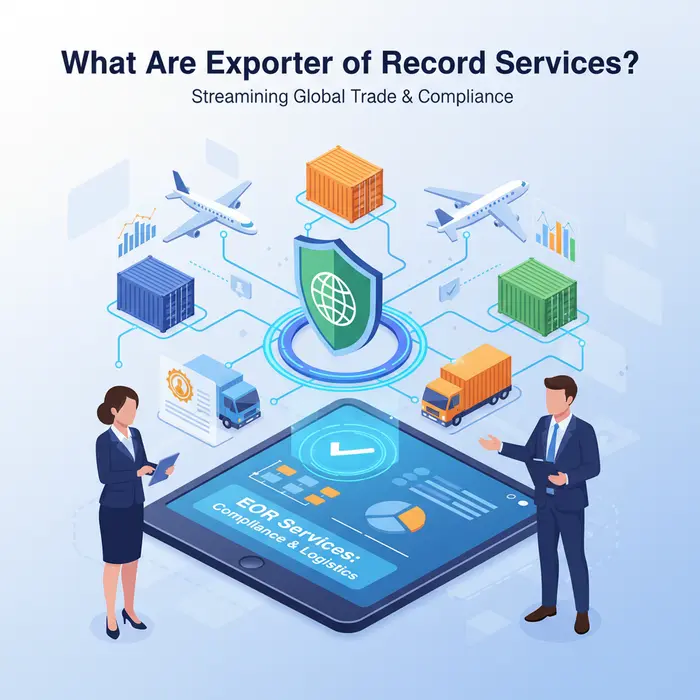
1. Defining the Exporter of Record (EOR)
The Exporter of Record (EOR) is the legal entity or individual responsible for ensuring that goods exported from a country comply with all local export laws, regulations, and customs requirements. This responsibility extends across various critical aspects of the export process. The EOR typically handles the preparation and submission of all necessary export documentation, including export licenses, permits, and declarations to the relevant government authorities. They are accountable for the accuracy of product classifications (such as HS codes), valuation, and origin, which directly impact duties, taxes, and potential trade restrictions. Furthermore, the EOR ensures compliance with sanctions lists, export controls, and any specific commodity-related regulations. By assuming these Exporter of Record responsibilities, an EOR provider effectively offloads a significant compliance burden from the actual seller or shipper, allowing them to focus on core business activities while navigating global markets with confidence and reduced risk.
2. Key Differences: EOR vs. Shipper vs. Seller
While often conflated, the roles of Exporter of Record, shipper, and seller are distinct and play unique parts in international logistics. The Seller is the company or individual that manufactures or sells the goods. Their primary responsibility is the commercial transaction itself, often encompassing product quality, pricing, and marketing. The Shipper, on the other hand, is the party responsible for the physical movement of the goods. This typically involves arranging transportation, packaging, and often customs clearance at the import destination (if they are also the Importer of Record). The shipper’s focus is on the logistics and timely delivery of the product.
The Exporter of Record stands apart as the legal entity primarily responsible for export compliance. Unlike the shipper who moves the goods, or the seller who sells them, the EOR’s mandate is legal accountability to the exporting government. This means they bear the risk of fines, penalties, or delays if export regulations are not met. For instance, a seller might sell a product from the USA to a buyer in Europe, and a logistics company might act as the shipper. However, if the seller lacks a legal entity in the USA or the expertise to handle US export declarations and licensing, an EOR provider would step in to take on that specific legal compliance burden, ensuring the goods legally exit the USA without issue. This clear demarcation of roles is crucial for operational efficiency and legal clarity in global trade.
3. Why EOR is Crucial for Global Expansion
For businesses eyeing international markets, engaging Exporter of Record services is not just a convenience; it’s a strategic necessity. The primary reason is risk mitigation. Non-compliance with export regulations can lead to substantial fines, shipment delays, product seizures, and even blacklisting from certain markets, severely damaging a company’s reputation and bottom line. An EOR, especially those offering Global EOR solutions, possesses the localized knowledge and expertise to navigate the constantly evolving regulatory landscapes of various countries, ensuring stringent customs compliance EOR. This expertise is particularly valuable for businesses expanding into new territories where local laws are unfamiliar and complex.
Beyond compliance, EOR services foster operational efficiency. By outsourcing export compliance, businesses can free up internal resources, reduce administrative overheads, and expedite their shipping processes. This allows companies to focus on their core competencies, such as product development, sales, and market penetration, rather than getting entangled in bureaucratic red tape. Furthermore, an EOR provider can offer scalability, enabling businesses to effortlessly expand their reach without needing to establish a legal entity in every exporting country. This flexibility and cost-effectiveness make EOR services a critical component for any company aspiring to achieve sustainable growth and competitiveness in the global marketplace, simplifying what would otherwise be a daunting export process.
Exporter of Record Responsibilities & Legalities
The role of an Exporter of Record (EOR) is pivotal in international trade, serving as the legally responsible entity for ensuring that goods comply with all export regulations of the originating country. This comprehensive role demands meticulous attention to detail, a deep understanding of international trade laws, and proactive management of potential risks. An EOR assumes significant duties and legal obligations, underscoring the critical need for expertise in Exporter of Record services. From navigating complex customs procedures to adhering to stringent export controls, the EOR’s responsibilities directly impact the legality, efficiency, and financial viability of global shipments. Missteps can lead to severe penalties, delays, and reputational damage, making the selection of a competent EOR provider an indispensable aspect of international logistics strategy. This section will delve into the comprehensive list of duties and legal obligations an Exporter of Record assumes, emphasizing customs compliance EOR requirements and potential liabilities.
1. Navigating Customs Declarations & Documentation
One of the primary responsibilities of an Exporter of Record is the meticulous preparation and submission of accurate customs declarations and all supporting documentation. This involves much more than simply filling out forms; it requires a deep understanding of product classification, valuation, and origin rules. The EOR must correctly classify goods according to the Harmonized System (HS) codes, which dictate applicable duties, taxes, and regulatory requirements. Errors in classification can result in incorrect duty payments, delays, or even seizure of goods by customs authorities. Furthermore, the EOR is responsible for establishing the correct valuation of goods for customs purposes, often requiring detailed transaction records and adherence to specific valuation methodologies. Proving the origin of goods, especially under free trade agreements, also falls within the EOR’s purview, necessitating comprehensive Certificates of Origin and supporting documentation. Any inaccuracies or omissions in these documents can lead to significant financial penalties, customs audits, and disruptions to the supply chain. Consequently, robust internal processes or reliance on specialized Global EOR solutions are essential to ensure precision and compliance in this critical area.
2. Ensuring Export Compliance & Trade Regulations Adherence
Beyond documentation, an Exporter of Record is legally bound to ensure full adherence to all export compliance and trade regulations of the exporting country. This encompasses a wide array of laws, including those governing product safety, environmental standards, and intellectual property rights. The EOR must verify that the goods meet all relevant industry standards and certifications required for export. For instance, certain electronics might require specific certifications for electromagnetic compatibility, while food products must meet stringent health and safety standards. Failure to comply can result in goods being held at the border, fines, or even prohibitions on future exports. Moreover, the EOR is responsible for understanding and applying the specific trade agreements and preferential tariffs that may apply to a shipment, potentially reducing costs for the importer. This requires continuous monitoring of evolving trade policies and regulations to maintain customs compliance EOR standards. Engaging with a seasoned EOR provider can mitigate these risks by leveraging their up-to-date knowledge and systems for comprehensive compliance management.
3. Managing Export Control, Sanctions, and Licensing
Perhaps one of the most complex and high-stakes responsibilities of an Exporter of Record involves managing export controls, economic sanctions, and obtaining necessary export licenses. Export controls are government regulations designed to restrict the outflow of certain goods, technologies, and services for national security, foreign policy, or non-proliferation reasons. The EOR must accurately determine if the goods being exported are subject to these controls, often requiring an analysis against specific control lists (e.g., the U.S. Export Administration Regulations or EU Dual-Use Regulations). This often involves evaluating the item’s technical specifications, its end-use, and the ultimate end-user. Simultaneously, the EOR must rigorously screen against various international sanctions lists (e.g., OFAC, UN, EU) to ensure that shipments are not destined for prohibited countries, entities, or individuals. Engaging in trade with sanctioned parties, even inadvertently, can lead to severe legal penalties, including massive fines and imprisonment. Obtaining the correct export licenses, where required, is another critical duty, involving detailed applications, justifications, and adherence to specific license conditions. The complexity and potential liabilities associated with these areas make expert Exporter of Record responsibilities crucial. For businesses navigating these intricate global regulations, seeking guidance from authoritative sources like the U.S. Customs and Border Protection or partnering with an experienced EOR provider offering Global EOR solutions is not merely advisable but often essential to ensure legitimate and compliant international trade operations.
Benefits of Partnering with an EOR Provider
In today’s interconnected global economy, businesses are constantly seeking efficient ways to expand their reach and penetrate new markets. However, the complexities of international trade, logistics, and regulatory compliance often pose significant hurdles. This is where partnering with an Exporter of Record (EOR) provider becomes a strategic imperative. Outsourcing EOR functions offers a clear pathway to streamline operations, mitigate risks, and foster sustainable growth by expertly navigating the intricate landscape of cross-border commerce.
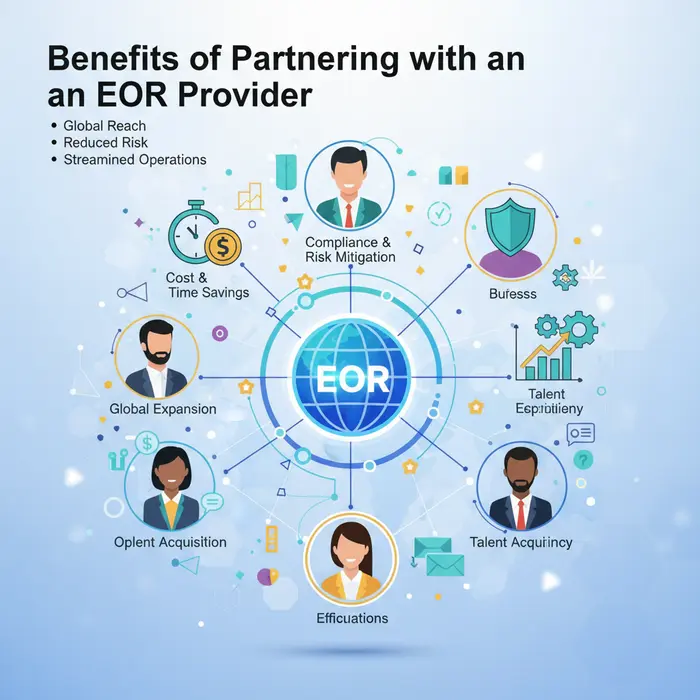
1. Streamlining Global Logistics & Customs Clearance
One of the most immediate and tangible benefits of engaging an EOR provider is the significant streamlining of global logistics and customs clearance processes. For companies venturing into international markets, acting as the Exporter of Record means shouldering the full legal responsibility for ensuring goods comply with the export laws of the originating country. This includes meticulous preparation of documentation, accurate classification of goods, and adherence to specific packaging and labeling requirements. An EOR provider takes on these critical Exporter of Record responsibilities, handling everything from export declarations to managing tariffs, duties, and taxes.
Their expertise in various jurisdictions ensures that shipments move smoothly across borders, avoiding costly delays and potential seizures. By leveraging an EOR’s established networks and deep understanding of local customs regulations, businesses can optimize their supply chain, reduce transit times, and enhance overall efficiency. This specialized knowledge is crucial for achieving seamless customs compliance EOR, turning what could be a complex administrative nightmare into a smooth, predictable process.
2. Mitigating Trade Compliance Risks & Penalties
The landscape of international trade is fraught with complex and ever-changing regulations, making trade compliance a daunting challenge for even seasoned businesses. Non-compliance can lead to severe consequences, including hefty fines, shipment delays, goods confiscation, and irreparable damage to a company’s reputation. An EOR provider serves as an indispensable shield against these risks by ensuring rigorous adherence to international trade laws, export controls, and sanctions programs.
These specialized partners possess up-to-date knowledge of global trade agreements, licensing requirements, and restricted party lists across various countries. They proactively manage the compliance framework, ensuring that all export activities, from commodity classification (HTS/Schedule B codes) to end-use verification, meet stringent legal standards. This proactive risk management, facilitated by comprehensive Global EOR solutions, significantly reduces the likelihood of costly penalties and legal entanglements. For instance, understanding and complying with Export Administration Regulations (EAR) is paramount for many U.S. exporters, and an EOR provider ensures this intricate compliance is handled professionally, safeguarding the business from potential violations.
3. Reducing Operational Costs and Administrative Burden
Beyond compliance and logistics, partnering with an EOR provider offers substantial financial and operational benefits. Establishing an in-house team with the necessary expertise for global export compliance and logistics can be incredibly expensive. It requires hiring specialists, investing in training, subscribing to costly trade compliance software, and constantly monitoring regulatory changes. An EOR provider eliminates the need for these significant capital expenditures and ongoing operational costs.
By outsourcing these functions, businesses can transform fixed costs into variable costs, paying only for the services they use. This model also frees up internal resources, allowing employees to focus on core competencies such as product development, sales, and market strategy. The administrative burden associated with managing complex export documentation, licensing, and communications with customs agencies is entirely offloaded. This not only reduces overheads but also enhances organizational agility, enabling businesses to pivot quickly and capitalize on new market opportunities without being bogged down by the intricacies of Exporter of Record responsibilities. Ultimately, an EOR partnership optimizes resource allocation, leading to greater efficiency and profitability.
In conclusion, partnering with an EOR provider is a strategic move for any business looking to navigate the complexities of international trade with confidence. From streamlining global logistics and mitigating critical compliance risks to significantly reducing operational costs and administrative overhead, the advantages are clear. By entrusting their Exporter of Record services to experts, companies can unlock new growth opportunities, expand their global footprint efficiently, and focus on what they do best: innovating and delivering value to their customers worldwide.
Choosing the Right Global EOR Solutions
Navigating the complexities of international trade and customs regulations can be a formidable challenge for businesses aiming to expand globally. The success of international shipments hinges significantly on efficient customs clearance and adherence to diverse regulatory frameworks. This is where Exporter of Record services (EOR) become indispensable, offloading critical compliance responsibilities from the shipper. Selecting the right Global EOR solutions provider is not merely a logistical decision; it’s a strategic partnership that ensures your goods move seamlessly across borders, minimizing delays, penalties, and unexpected costs. An effective EOR provider acts as your legal entity in the destination country, handling all customs declarations, duties, taxes, and import/export licenses, allowing you to focus on your core business.
1. Key Considerations for Selecting an EOR Provider
When embarking on the search for an EOR partner, a thorough evaluation of several key factors is paramount. First and foremost, scrutinize the provider’s expertise in handling the specific types of goods you ship and the industries you operate within. Different products, especially those with dual-use applications, sensitive technologies, or specific certifications (like medical devices or electronics), require specialized knowledge. Ensure the EOR provider possesses a deep understanding of customs compliance EOR regulations, trade agreements, and local legal requirements in your target markets. Ask about their track record, client testimonials, and case studies that demonstrate their ability to manage complex scenarios and mitigate risks. Understanding their scope of Exporter of Record responsibilities is crucial—do they cover all aspects from classification to post-import audits? Transparency in pricing, fee structures, and potential surcharges is also vital. A reputable EOR will offer clear, predictable costs, helping you budget accurately and avoid unforeseen expenses that can erode profit margins.
2. Assessing Geographic Coverage and Network Capabilities
The global reach and network capabilities of your chosen EOR provider directly impact your ability to enter new markets and scale operations efficiently. A truly global EOR should offer extensive coverage across your current and prospective markets, possessing not just a broad footprint but also deep local expertise. This often translates to a network of local partners, legal entities, or direct offices that understand the nuances of each country’s customs procedures, cultural business practices, and language. Verify their ability to handle diverse trade lanes, from established major markets to emerging economies, which often present unique logistical and regulatory challenges. Investigate their network’s resilience and redundancy, ensuring they can maintain service continuity even in the face of disruptions. A strong global network means the EOR can provide consistent service levels, streamlined communication, and unified reporting across all your international shipments, consolidating complex operations under a single, reliable point of contact for all your Global EOR solutions needs.
3. The Role of Technology in Modern EOR Services
In today’s fast-paced global trade environment, technology is no longer a luxury but a necessity for effective EOR services. Modern EOR providers leverage advanced technological platforms to enhance efficiency, visibility, and compliance. Look for an EOR provider that offers robust, user-friendly portals or dashboards providing real-time tracking of shipments, digital documentation management, and comprehensive reporting. Automation plays a critical role in streamlining customs declarations, duty and tax calculations, and license applications, significantly reducing human error and processing times. Integration capabilities are also key—can their system seamlessly connect with your existing ERP, supply chain management, or e-commerce platforms? This integration facilitates data exchange, minimizes manual data entry, and provides a holistic view of your international trade operations. Advanced analytics can also offer valuable insights into your supply chain performance, identify potential bottlenecks, and optimize future strategies, ultimately transforming your Exporter of Record services from a compliance obligation into a strategic asset.
Future Trends in Customs Compliance EOR for 2025
As the global trade landscape continues its rapid evolution, businesses engaged in international commerce are increasingly grappling with complex customs regulations, technological advancements, and shifting geopolitical dynamics. For 2025 and beyond, the role of an Exporter of Record services (EOR) provider will become even more critical, moving beyond mere transactional compliance to strategic partnership. EOR services will be instrumental in helping companies navigate these challenges, ensuring seamless cross-border movements, mitigating risks, and maintaining supply chain efficiency. The future demands a proactive and adaptable approach to customs compliance, with EORs at the forefront of this transformation.
The evolving landscape will see three key areas profoundly influencing how Exporter of Record services operate and how businesses leverage them:
1. Impact of Digitalization & AI on EOR Operations
The digital revolution is set to redefine customs compliance and Exporter of Record responsibilities. Artificial Intelligence (AI), Machine Learning (ML), and blockchain technologies will no longer be niche tools but essential components of modern EOR operations. AI-powered platforms will enhance data accuracy, automate declaration processes, and provide predictive analytics for potential compliance issues. This means EOR providers can process vast amounts of trade data faster and with fewer errors, identifying discrepancies before they lead to costly delays or penalties. Automation will streamline document preparation, classification, and duty/tax calculations, significantly reducing manual effort and improving efficiency. Blockchain, on the other hand, offers an immutable and transparent ledger for tracking goods and verifying compliance information across the supply chain, enhancing trust and reducing fraud. EOR solutions leveraging these technologies will offer unparalleled speed, precision, and risk management capabilities, transforming the traditional role into a data-driven strategic function.
2. Evolving Global Trade Agreements & Regulatory Changes
The geopolitical landscape remains volatile, with new trade agreements, tariffs, sanctions, and environmental regulations constantly emerging. For businesses involved in international trade, keeping pace with these changes is a monumental task. This is where customs compliance EOR expertise becomes indispensable. EOR providers must possess deep, up-to-the-minute knowledge of various Free Trade Agreements (FTAs), preferential trade programs, and country-specific import/export laws. For example, understanding the intricacies of rules of origin, product classification changes, or new restricted party screening requirements will be crucial. The trend indicates a move towards more granular and region-specific regulations, requiring EORs to offer tailored and adaptable Global EOR solutions. Their ability to proactively monitor and interpret regulatory shifts will enable clients to avoid disruptions, capitalize on trade benefits, and maintain unbroken supply chains. Authoritative sources like the World Trade Organization (WTO) frequently update their frameworks, emphasizing the dynamic nature of international trade law that EORs must navigate.
3. Sustainability and Ethical Sourcing in EOR
Increasingly, consumers, governments, and investors are demanding greater transparency and accountability regarding environmental and social governance (ESG) practices in supply chains. This trend will directly impact Exporter of Record services. EOR providers will need to assist clients not only with traditional customs compliance but also with demonstrating adherence to sustainable sourcing, ethical labor practices, and carbon footprint reduction initiatives. This might involve verifying that goods comply with environmental standards, ensuring fair trade certifications are in place, or helping to report on Scope 3 emissions related to transportation. The EOR’s role will extend to validating that suppliers and products meet specific ethical and environmental criteria mandated by importing countries or corporate policies. Choosing an EOR provider that can integrate these sustainability checks into their customs processes will become a significant differentiator, helping businesses build a resilient and reputation-proof supply chain for the future.
Partner with Vietnam’s Leading Suppliers
Looking for reliable suppliers in Vietnam? Contact VietnamSuppliers.com today to connect with verified manufacturers and exporters across all industries.
—————————————
References
– :
– U.S. Customs and Border Protection: https://www.cbp.gov/trade/basic-import-export/export-docs/export_process
– Export Administration Regulations (EAR) – Bureau of Industry and Security (BIS): https://www.bis.doc.gov/index.php/regulations/export-administration-regulations-ear
– World Customs Organization Trade Facilitation: https://www.wcoomd.org/en/topics/facilitation.aspx
– World Trade Organization (WTO): https://www.wto.org/english/thewto_e/whatis_e/tif_e/gats_e.htm

