
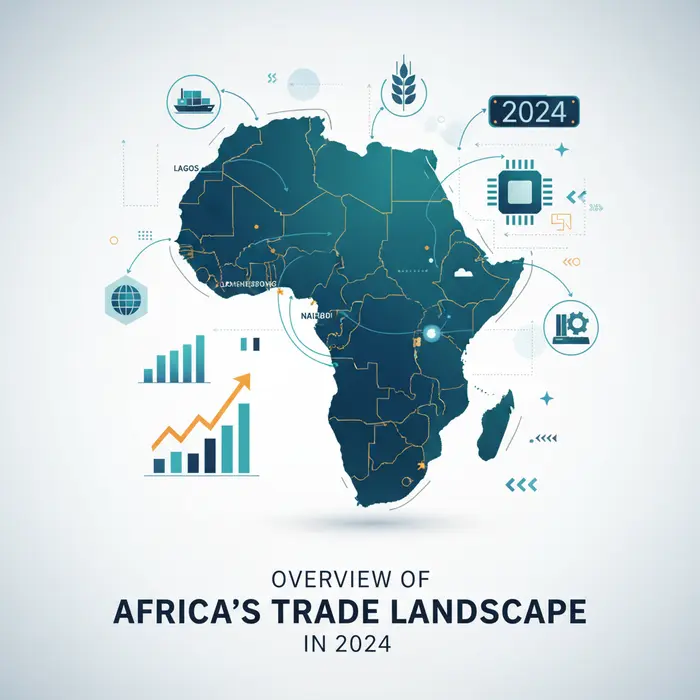
Overview of Africa’s Trade Landscape in 2024
In 2024, Africa’s trade landscape continues to demonstrate remarkable resilience and dynamic shifts, despite persistent global economic volatility. Following a challenging yet growth-oriented period in 2023, the continent’s economies are navigating a complex environment characterized by commodity price fluctuations, evolving geopolitical dynamics, and the accelerating implementation of regional integration initiatives. The overall trade performance has seen a diversified trend, with some regions leveraging increased demand for specific raw materials, while others are making strides in value-added manufacturing and services. This Africa Trade Report 2024 aims to provide a comprehensive Africa market analysis, highlighting key economic indicators, emerging opportunities, and the strategic imperatives for sustainable growth. While commodity exports remain a cornerstone of African trade, there’s a growing emphasis on diversifying export baskets and enhancing intra-African trade through the African Continental Free Trade Area (AfCFTA).
1. Key Economic Growth Drivers Across the Continent
Africa’s economic momentum in 2024 is propelled by several intrinsic growth drivers. Domestically, robust private consumption, fueled by a growing middle class and rapid urbanization, continues to be a significant engine. Furthermore, strategic public and private investments in critical infrastructure—such as energy, transport, and digital connectivity—are enhancing productivity and facilitating trade flows both within and beyond borders. The continent is also experiencing a technological boom, with increasing adoption of mobile technology, fintech, and e-commerce platforms, which are creating new African export opportunities and streamlining business operations. Diversification efforts beyond traditional African commodity trade, particularly into manufacturing, agro-processing, and services, are slowly gaining traction, promising more resilient and inclusive growth models. Countries focusing on human capital development and governance reforms are also better positioned to attract foreign direct investment and foster a more competitive business environment.
2. Regional Disparities and Emerging Hubs
While the continent shows overall progress, the trade landscape is marked by significant regional disparities. East Africa, for instance, continues its impressive growth trajectory, driven by strong service sectors, infrastructure projects, and a burgeoning tech ecosystem, positioning cities like Nairobi and Addis Ababa as emerging trade hubs. West Africa benefits from a blend of commodity exports, particularly oil and gas, alongside an expanding digital economy and consumer market in powerhouses like Nigeria and Ghana. Southern Africa, despite facing some structural challenges, maintains a significant industrial base and plays a crucial role in regional value chains. North Africa, with its proximity to Europe and established manufacturing capabilities, leverages trade agreements and tourism. These regional nuances underscore the importance of tailored trade policies and targeted investment strategies. The rise of new industrial parks and Special Economic Zones across various regions further signifies a deliberate push to create competitive manufacturing and logistics hubs, attracting diverse investments and fostering regional trade integration.
3. Global Economic Headwinds and Tailwinds
Africa’s trade performance in 2024 is inherently linked to the broader global economic climate. Persistent headwinds include elevated global inflation, which impacts import costs, particularly for food and fuel, and the lingering effects of geopolitical tensions that can disrupt supply chains and commodity markets. Climate change remains a significant long-term headwind, threatening agricultural output and infrastructure. However, there are also notable tailwinds. The global push for green energy and critical minerals presents immense African export opportunities for countries rich in resources like cobalt, lithium, and copper. Furthermore, the operationalization and expansion of the AfCFTA impact report indicate a significant internal tailwind, aiming to create the world’s largest free trade area. This agreement is expected to boost intra-African trade, diversify economies, and enhance the continent’s bargaining power on the global stage, fostering regional value chains and reducing reliance on external markets. Navigating these global dynamics requires strategic foresight and adaptive policy frameworks to harness opportunities and mitigate risks effectively.
African Export Opportunities: Key Sectors & Markets
Africa’s economic landscape is dynamically shifting, presenting a myriad of African export opportunities for businesses worldwide. As highlighted in various Africa Trade Report 2024 analyses, the continent is moving beyond its traditional role, driven by initiatives like the African Continental Free Trade Area (AfCFTA). A thorough Africa market analysis reveals specific sectors and markets poised for significant growth, transforming the outlook for global trade partners. Understanding these shifts is crucial for leveraging the immense potential within Africa’s diverse economies.
1. Growth in Raw Materials vs. Value-Added Exports
Historically, Africa’s exports have been dominated by raw materials – minerals, crude oil, and agricultural commodities. While the African commodity trade remains significant, there’s a growing imperative and opportunity for African nations to transition towards value-added exports. This involves processing raw materials into finished or semi-finished goods before export, thereby capturing a larger share of the value chain. For instance, instead of exporting raw cocoa beans, countries are increasingly investing in chocolate production or cocoa processing for cosmetics. Similarly, mineral-rich nations are exploring downstream industries to produce metals, alloys, or components. This shift not only creates jobs and stimulates local economies but also enhances export earnings and diversifies product offerings. The AfCFTA, with its goal of creating a single market of 1.3 billion people, is a powerful catalyst for this transformation, encouraging regional industrialization and making it easier to trade processed goods across borders. The potential for processed agricultural products, textiles, and light manufactured goods represents a substantial segment of future African export opportunities.
2. Emerging Non-Traditional Export Markets
While Europe and North America have long been the primary destinations for African exports, the continent is actively diversifying its trade partners and exploring new markets. Intra-African trade is at the forefront of this diversification, heavily bolstered by the AfCFTA. The AfCFTA impact report predicts a significant boost in trade between African countries, creating robust regional supply chains and demand for a wider range of goods and services. Beyond the continent, Asian economies, particularly China, India, and Southeast Asian nations, are emerging as crucial non-traditional markets for both raw materials and increasingly, value-added products. These markets offer immense consumer bases and growing middle classes. Additionally, countries in South America and the Middle East are also being targeted for expanded trade relations. African nations are finding success exporting niche products like specialized organic produce, artisanal crafts, and even services such as IT and BPO to these emerging markets. This strategic shift reduces dependency on traditional partners and builds resilience in the face of global economic fluctuations.
3. Leveraging Digitalization for Export Growth
The digital revolution is profoundly transforming how African businesses engage with global markets, unlocking new African export opportunities. E-commerce platforms, both global giants and localized African platforms, provide unprecedented access to international buyers, enabling small and medium-sized enterprises (SMEs) to bypass traditional export complexities. Digital marketing tools allow businesses to reach target audiences cost-effectively, promoting their unique products directly. Beyond direct sales, digitalization is streamlining logistics and supply chain management. Real-time tracking, digital customs clearance, and data analytics are improving efficiency, reducing costs, and enhancing transparency in the export process. Furthermore, fintech innovations are addressing long-standing challenges in trade finance, offering more accessible and affordable payment and credit solutions for exporters. From digital payment gateways facilitating cross-border transactions to blockchain for supply chain traceability, technology is democratizing access to global trade. For instance, digital platforms are being used to export specialty coffees, unique textiles, and handmade goods from remote African regions directly to consumers worldwide, illustrating the profound impact of digitalization on African trade.
The path forward for African exports is characterized by innovation, strategic partnerships, and a deep understanding of evolving global demands. By focusing on value addition, diversifying markets, and embracing digital transformation, African nations are well-positioned to unlock their full export potential and secure a more prominent role in the global economy, as consistently highlighted in any comprehensive Africa market analysis.
Deep Dive into African Commodity Trade Trends
Africa, a continent rich in natural resources, continues to be a pivotal player in global commodity markets. Understanding the dynamics of its dominant commodity sectors – from energy to critical minerals and agricultural products – is essential for stakeholders looking to engage with this vibrant economy. This section provides an in-depth Africa market analysis, examining price fluctuations, production shifts, and demand changes that shape the continent’s economic landscape, offering insights into African export opportunities and the evolving nature of African commodity trade. The insights presented here align with broader findings often highlighted in comprehensive assessments like the Africa Trade Report 2024, emphasizing the continent’s strategic importance.

1. Oil & Gas Market Outlook and Green Transition Impact
Africa’s oil and gas sector remains a cornerstone of many national economies, with major producers like Nigeria, Angola, Algeria, and Libya influencing global supply. The market has experienced significant volatility, driven by geopolitical events, global demand fluctuations, and shifting investment patterns. While traditional fossil fuel exports have historically generated substantial revenue, the accelerating global green transition presents both challenges and opportunities. International pressure and policy shifts towards decarbonization are leading to reduced foreign direct investment in new exploration and production projects across the continent. This necessitates African nations to diversify their energy matrices and explore avenues for cleaner energy production. However, natural gas, often seen as a crucial transition fuel, could still play a significant role. Countries with substantial gas reserves, such as Mozambique and Tanzania, are positioned to potentially capitalize on increasing demand for liquefied natural gas (LNG) as the world seeks to move away from coal. This balancing act between leveraging existing fossil fuel assets for development and strategically transitioning to renewable energy sources defines the current Africa market analysis for this sector.
2. Mineral Resources: Critical Minerals and Investment
Africa holds an immense wealth of mineral resources, particularly those deemed “critical” for the global energy transition. The continent is a leading source of cobalt (Democratic Republic of Congo), manganese (South Africa), chromium (South Africa), and significant deposits of lithium, graphite, and rare earth elements crucial for electric vehicle batteries, renewable energy technologies, and advanced electronics. Global demand for these minerals is surging, driving up prices and attracting considerable international investment. However, this increased interest comes with the imperative for African nations to ensure sustainable and equitable extraction practices. Challenges include improving governance, developing robust infrastructure, and fostering local value addition rather than merely exporting raw materials. The potential for African export opportunities in this domain is vast, but realizing it requires strategic partnerships, technology transfer, and policies that encourage processing and manufacturing within Africa. According to a recent report by the African Development Bank, “Africa’s mineral resources can be a game-changer for the continent’s industrialization and green transition, provided that countries strengthen institutional capacity, improve governance, and attract responsible investment.” This highlights the importance of strategic planning in harnessing this wealth.
3. Agricultural Commodities: Food Security and Export Potential
Agriculture is the backbone of many African economies, employing a large percentage of the population and contributing significantly to GDP. The continent is a major producer and exporter of cash crops such as cocoa (Côte d’Ivoire, Ghana), coffee (Ethiopia, Uganda), tea (Kenya), cotton, and various fruits and vegetables. The sector faces complex challenges including climate change impacts, land degradation, limited access to modern farming techniques, and post-harvest losses. These issues directly threaten food security for a rapidly growing population while also impacting export volumes and quality. Nevertheless, immense African export opportunities exist through increased productivity, value-added processing, and enhanced market access. The implementation of the African Continental Free Trade Area (AfCFTA) is a game-changer, aiming to create a single market for goods and services. The AfCFTA impact report suggests it could significantly boost intra-African agricultural trade, reducing reliance on external markets and strengthening regional food supply chains. By investing in agricultural infrastructure, research, and farmer support programs, African nations can transform their agricultural sector from merely meeting subsistence needs to becoming a powerful engine for economic growth and a key contributor to global food supply, while simultaneously addressing domestic food security concerns. For a comprehensive overview of these developments, detailed reports, such as those found on sites like Africa Trade Report 2024, offer deeper insights into these critical trends and opportunities.
The AfCFTA’s Transformative Impact & Future Outlook
The African Continental Free Trade Area (AfCFTA) represents a monumental step towards unlocking Africa’s economic potential, aiming to create the world’s largest free trade area by number of participating countries. Launched in 2019 and operationalized progressively, its core objective is to significantly boost intra-African trade, foster industrialization, and spur sustainable development across the continent. While the journey is complex, marked by varying levels of implementation readiness among member states, the long-term projections highlight its immense transformative capacity. This section examines the critical progress made, persistent challenges, and the anticipated profound effects on the continent’s trade dynamics, as detailed in various analyses, including insights relevant to the Africa Trade Report 2024.
1. Progress on Tariff Reductions and Non-Tariff Barriers
Progress on Tariff Reductions and Non-Tariff Barriers refers to the ongoing efforts by AfCFTA State Parties to eliminate duties on 90% of tariff lines and address non-tariff barriers (NTBs) that hinder the free movement of goods and services. Significant strides have been made in securing tariff concessions, with numerous countries submitting their tariff offers. The Guided Trade Initiative (GTI), launched in late 2022, serves as a crucial pilot program facilitating trade under AfCFTA preferential terms for selected products across eight participating countries. This initiative is instrumental in demonstrating the tangible benefits of reduced tariffs and streamlined customs procedures. However, challenges persist, particularly in finalizing rules of origin for all products and ensuring uniform implementation of agreed-upon tariff schedules. Non-tariff barriers, encompassing a range of issues from cumbersome customs procedures and differing regulatory standards to inadequate infrastructure, remain a formidable obstacle. Addressing these requires substantial investment in trade facilitation measures, harmonization of standards, and robust dispute resolution mechanisms to truly unlock African export opportunities. The continued commitment to transparent reporting and effective enforcement will be key to overcoming these hurdles and maximizing the benefits outlined in any comprehensive AfCFTA impact report.
2. Impact on Regional Value Chains and Industrialization
Impact on Regional Value Chains and Industrialization focuses on how the AfCFTA is designed to shift Africa’s economic structure from raw material exports towards diversified, value-added production within the continent. By removing trade barriers, the agreement incentivizes the development of cross-border supply chains, allowing inputs from one country to be processed and finished in another before being sold across the expanded African market. This integration is crucial for fostering industrialization, reducing reliance on external markets, and enhancing the competitiveness of African goods. For instance, textile industries could source cotton from East Africa, process it in West Africa, and distribute finished garments across the continent, creating jobs and transferring skills at each stage. This reorientation of African commodity trade away from purely extractive practices towards integrated manufacturing is a long-term goal. While still in nascent stages, early indicators suggest growing interest in leveraging the larger market size to attract foreign direct investment into manufacturing and processing facilities. A deeper Africa market analysis reveals that fostering these regional value chains is critical for job creation, technology transfer, and achieving sustainable economic growth, ultimately transforming Africa from a fragmented market into a powerful manufacturing hub.
3. Opportunities for SMEs and Cross-Border Investment
Opportunities for SMEs and Cross-Border Investment highlights the AfCFTA’s potential to empower small and medium-sized enterprises (SMEs) and attract significant investment flows both within and into Africa. SMEs, which constitute the backbone of most African economies, traditionally face disproportionate challenges when engaging in cross-border trade due to high tariffs, complex regulations, and limited access to finance and market information. The AfCFTA, by simplifying trade procedures and reducing costs, creates a more accessible environment for these businesses to expand their reach beyond national borders. This enables them to access new markets, grow their customer base, and participate more effectively in regional value chains. Furthermore, the creation of a single continental market of 1.3 billion people, with a combined GDP of approximately $3.4 trillion, significantly enhances Africa’s attractiveness as an investment destination. This large, unified market provides a compelling case for both intra-African and foreign direct investment (FDI) in sectors ranging from manufacturing and logistics to services and digital technologies. Initiatives like the AfCFTA Protocol on Investment, currently under negotiation, aim to create a predictable and investor-friendly environment, fostering greater capital flows. This will lead to increased competition, innovation, and ultimately, greater prosperity across the continent. According to the Economic Commission for Africa (UNECA), the AfCFTA could lift 30 million people out of extreme poverty and boost Africa’s income by $450 billion by 2035.
Conclusion:
The AfCFTA’s journey is a marathon, not a sprint. While implementation challenges, particularly related to infrastructure deficits, diverse regulatory landscapes, and political will, require persistent attention, the overarching vision remains powerful. The agreement’s potential to fundamentally reshape Africa’s economic landscape, foster industrialization, create millions of jobs, and elevate living standards is undeniable. Continued momentum in addressing implementation bottlenecks, strengthening institutional frameworks, and promoting widespread awareness will be crucial for the AfCFTA to fully realize its promise as a catalyst for genuine African economic transformation, making future Africa Trade Report 2024 analyses increasingly positive.
Strategic Market Analysis & Investment Outlook 2025
As the global economic landscape continues to evolve, Africa stands out as a continent of immense potential, poised for significant growth and investment in 2025 and beyond. This forward-looking analysis provides a comprehensive overview of key African markets, highlighting strategic considerations for international investors and businesses seeking to capitalize on emerging opportunities. Leveraging insights from the Africa Trade Report 2024, this section delves into the continent’s dynamic economic environment, identifying high-growth sectors, assessing inherent risks, and proposing actionable policy recommendations for fostering sustainable trade growth.

1. Identifying High-Growth Markets and Sectors
The year 2025 is projected to see continued robust economic performance across various African regions, driven by factors such as burgeoning young populations, rapid urbanization, and digital transformation. East Africa, particularly Kenya, Tanzania, and Ethiopia, is set to maintain its strong growth trajectory, fueled by infrastructure development, expanding digital economies, and agricultural innovation. West Africa, with powerhouses like Nigeria and Ghana, offers substantial opportunities in fintech, e-commerce, and renewable energy, despite facing some infrastructure challenges. North African economies, notably Egypt and Morocco, continue to attract investment in manufacturing, logistics, and tourism due to strategic geographical locations and improving business environments. Southern Africa, led by South Africa, remains a crucial hub for advanced manufacturing and financial services, with significant potential in green energy initiatives.
Key sectors presenting significant African export opportunities include renewable energy (solar, wind, hydropower), agro-processing (value addition to raw agricultural commodities), digital services (fintech, e-learning, healthcare tech), and light manufacturing (textiles, automotive components). The increasing focus on local content and value chains, especially under the African Continental Free Trade Area (AfCFTA), further amplifies these prospects. Investors conducting a thorough Africa market analysis should prioritize these sectors, aligning their strategies with the continent’s long-term developmental goals and consumer trends.
2. Risk Assessment and Mitigation Strategies
While Africa presents compelling investment prospects, navigating its markets requires a clear understanding of potential risks. Political instability and governance challenges, though declining in many areas, remain a concern in select regions. Currency volatility, often linked to global commodity prices and domestic economic policies, can impact profitability. Infrastructure gaps, particularly in transport and energy, can increase operational costs and logistics complexities. Regulatory frameworks, though improving, can still be fragmented and unpredictable across different jurisdictions. Moreover, global economic slowdowns and climate change-related events pose external vulnerabilities to African commodity trade and overall economic stability.
Effective mitigation strategies are paramount. Diversification across countries and sectors can hedge against localized risks. Comprehensive due diligence, including political and economic risk assessments, is essential before committing capital. Establishing strong local partnerships provides invaluable insights and facilitates smoother market entry and operation. Utilizing political risk insurance and engaging with multilateral development banks (e.g., AfDB, World Bank) can offer financial protection and support. Furthermore, adopting robust environmental, social, and governance (ESG) frameworks not only aligns with global best practices but also builds resilience against various operational and reputational risks, ensuring long-term sustainable engagement in the African market.
3. Policy Recommendations for Sustainable Trade Growth
To fully unlock Africa’s trade and investment potential, a concerted effort from both African governments and international partners is required. Paramount among policy recommendations is the accelerated implementation of the AfCFTA. Strengthening intra-African trade through streamlined customs procedures, reduced non-tariff barriers, and harmonized standards will be critical. The AfCFTA’s success hinges on practical application and the resolution of remaining logistical and administrative hurdles, as highlighted in numerous AfCFTA impact report analyses.
Governments must prioritize investment in critical infrastructure, including digital connectivity, energy grids, and transport networks (roads, railways, ports) to reduce the cost of doing business and enhance competitiveness. Efforts to improve the ease of doing business – simplifying regulations, protecting property rights, and strengthening judicial systems – will significantly attract and retain foreign direct investment. Furthermore, policies promoting skills development and education, particularly in STEM fields and vocational training, are crucial for creating a skilled workforce capable of supporting modern industries. Finally, fostering a stable macroeconomic environment through prudent fiscal and monetary policies will build investor confidence, ensuring that the continent’s vast resources and dynamic human capital can be effectively harnessed for sustainable and inclusive economic prosperity.
Partner with Vietnam’s Leading Suppliers
Looking for reliable suppliers in Vietnam? Contact VietnamSuppliers.com today to connect with verified manufacturers and exporters across all industries.
—————————————
References
– African Economic Outlook | African Development Bank: https://www.afdb.org/en/documents/african-economic-outlook
– African Economic Outlook 2023 – African Development Bank Group: https://www.afdb.org/en/documents/african-economic-outlook-2023
– report by the African Development Bank: https://www.afdb.org/en/documents/african-economic-outlook-2024
– Economic Commission for Africa (UNECA): https://www.uneca.org/stories/afcfta-could-lift-30-million-people-out-extreme-poverty-and-boost-africas-income-450-billion
– African Economic Outlook: https://www.afdb.org/en/documents/african-economic-outlook

