
Introduction to Export Compliance Regulations
International trade is a dynamic and complex arena, offering immense opportunities for businesses to expand their reach and diversify markets. However, navigating this global landscape requires more than just logistical prowess and market insight; it demands a deep understanding and strict adherence to Export Compliance Regulations. These regulations are not mere bureaucratic hurdles; they are fundamental safeguards designed to protect national security, advance foreign policy objectives, and prevent sensitive items from falling into unauthorized hands. For any entity engaged in cross-border transactions, from manufacturers and distributors to researchers and software developers, grasping the nuances of export controls is paramount to ensuring legal operations, mitigating risks, and maintaining a positive global standing.
1. What are Export Compliance Regulations?
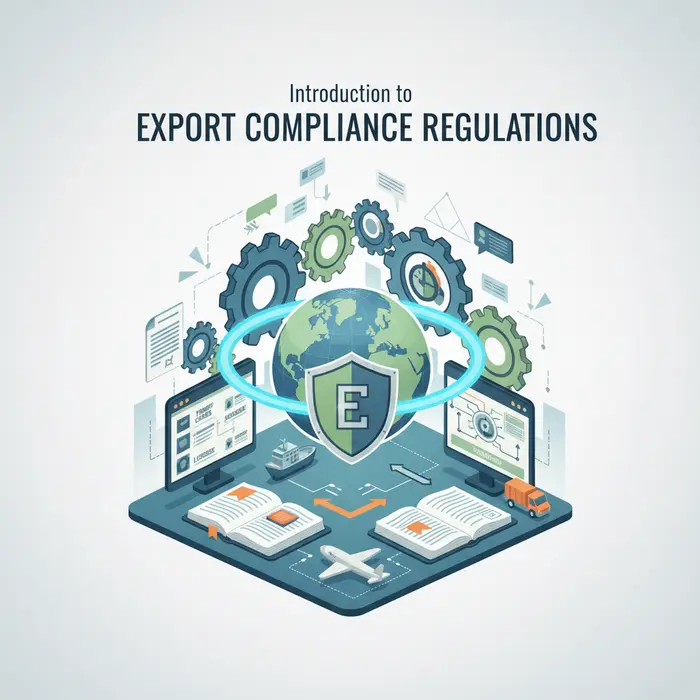
Export Compliance Regulations are a comprehensive set of laws and rules governing the transfer of goods, technology, software, and services across international borders. Their primary purpose is to control the export of items that could contribute to the proliferation of weapons of mass destruction, support terrorism, or undermine national security and foreign policy interests. These regulations are enforced by various government agencies worldwide, with prominent examples in the United States being the Bureau of Industry and Security (BIS) for the Export Administration Regulations (EAR) and the Directorate of Defense Trade Controls (DDTC) for the International Traffic in Arms Regulations (ITAR).
The EAR primarily governs commercial and “dual-use items export control” – items that have both commercial and potential military applications, such as certain electronics, chemicals, or software. The ITAR, on the other hand, specifically controls defense articles and defense services, including weapons, military aircraft, and related technology. Understanding the distinction between these frameworks, often referred to as “EAR ITAR regulations explained,” is crucial, as the classification of an item dictates the specific rules, licensing requirements, and potential restrictions that apply. Beyond these, other regulations may cover sanctions and embargoes, further complicating the landscape for international trade export controls.
2. Why is Export Compliance Important for Businesses?
For businesses operating in the global marketplace, strict adherence to export compliance is not just a legal obligation; it’s a strategic imperative. Firstly, it ensures uninterrupted access to international markets. Non-compliance can lead to severe operational disruptions, including denied export privileges, blacklisting, and the inability to ship products or share technology with foreign partners. Secondly, effective compliance acts as a robust risk management tool. It mitigates the financial, legal, and reputational risks associated with violations, preventing costly fines, criminal charges, and damage to a company’s brand and market trust.
Moreover, a strong compliance program fosters ethical business practices and demonstrates corporate responsibility. It protects a company’s intellectual property and sensitive technologies from unauthorized transfer, safeguarding competitive advantages. Preparing for potential “export license requirements guide” scenarios proactively helps businesses streamline their processes, avoid delays, and reliably meet customer demands globally. In essence, prioritizing export compliance safeguards a business’s long-term viability and competitive edge in the complex arena of international trade.
3. Consequences of Non-Compliance and Penalties
The penalties for violating export compliance regulations are exceptionally severe and can impact individuals and corporations alike. For companies, non-compliance can result in substantial civil fines, often running into millions of dollars per violation, and can include the permanent revocation of export privileges, effectively barring the company from participating in international trade. Such a ban can lead to business closure, significant financial losses, and widespread layoffs.
Individuals found guilty of violations face criminal charges, which can include hefty personal fines and lengthy prison sentences. Beyond the direct legal and financial repercussions, non-compliance inflicts severe reputational damage. A company implicated in export control violations may lose customer trust, face investor skepticism, and struggle to attract and retain talent. The long-term impact on brand image and market standing can be devastating, often outweighing the immediate financial penalties. Establishing a robust internal compliance program, conducting regular audits, and providing ongoing training are essential steps to avoid these dire consequences and ensure lawful participation in global commerce.
Understanding EAR and ITAR Regulations Explained
Navigating the complex landscape of international trade requires a deep understanding of export controls. In the United States, two primary sets of regulations govern the export of goods, software, and technology: the Export Administration Regulations (EAR) and the International Traffic in Arms Regulations (ITAR). These regulations are crucial for protecting U.S. national security, foreign policy interests, and preventing the proliferation of sensitive items. Non-compliance can lead to severe penalties, including hefty fines, imprisonment, and loss of export privileges. Therefore, for any business engaged in global commerce, deciphering the scope and requirements of these rules is not merely a legal obligation but a strategic imperative for seamless and secure Export Compliance Regulations.
1. Export Administration Regulations (EAR): Scope and Control List
The Export Administration Regulations (EAR), administered by the U.S. Department of Commerce’s Bureau of Industry and Security (BIS), primarily control “dual-use” items. These are commercial goods, software, and technology that can have both civilian and military applications. The EAR also covers certain purely commercial items and, in some cases, items developed with U.S.-origin technology or manufactured in the U.S., regardless of their end-use. The scope is broad, encompassing everything from computers and telecommunications equipment to chemicals and advanced materials.
A cornerstone of the EAR is the Commerce Control List (CCL). The CCL categorizes items into ten broad categories and assigns them an Export Control Classification Number (ECCN). This alphanumeric code is vital for determining if an item requires an export license based on its technical characteristics, the destination country, the end-user, and the ultimate end-use. Not all items on the CCL require a license for every destination; many can be exported under “No License Required” (NLR) status to certain countries. However, even if an item is not explicitly listed on the CCL, it may still be subject to the EAR’s “catch-all” clauses, such as those related to proliferation concerns (e.g., nuclear, missile technology, chemical/biological weapons) or human rights. Adhering to these provisions is key for effective Dual-use items export control and understanding specific Export license requirements guide processes.
2. International Traffic in Arms Regulations (ITAR): Military Items and Services
In contrast to the EAR, the International Traffic in Arms Regulations (ITAR) are significantly stricter and are administered by the Directorate of Defense Trade Controls (DDTC) within the U.S. Department of State. ITAR’s primary focus is on controlling “defense articles” and “defense services” specifically designed, developed, configured, adapted, or modified for military application. These items are enumerated on the U.S. Munitions List (USML), which includes everything from firearms and ammunition to spacecraft, military electronics, chemical agents, and associated technical data and defense services.
The fundamental principle of ITAR is that anything on the USML, or designed to be, is inherently sensitive and strictly controlled. This includes not just the physical articles but also the related technical data and services provided to foreign persons, even within U.S. borders (known as “deemed exports”). Generally, a license or other approval from DDTC is required for any export, temporary import, or retransfer of ITAR-controlled items, unless a specific exemption applies. The regulatory framework under ITAR emphasizes a “no foreign national” rule, requiring strict controls over access to ITAR-controlled technology by non-U.S. persons, even employees, within the United States. Compliance with ITAR is a critical component of broader International trade export controls and directly addresses advanced EAR ITAR regulations explained scenarios involving defense articles.
3. Key Differences and Overlap Between EAR and ITAR
Understanding the fundamental differences between EAR and ITAR is paramount for accurate classification and compliance. The most significant distinction lies in the type of items each regulation controls and their respective licensing philosophies. EAR governs dual-use and commercial items, with licensing decisions often based on a risk assessment involving the ECCN, destination, end-user, and end-use. ITAR, on the other hand, strictly controls items specifically designed for military application, with a general presumption that a license is required for nearly all exports and transfers of USML items, irrespective of destination or end-user, unless an exemption is met.
Jurisdiction is another key differentiator: BIS (Commerce) for EAR versus DDTC (State) for ITAR. While the intent of both regulations is to protect U.S. national security, their enforcement approaches and penalty structures differ. ITAR is widely considered the more stringent of the two, with more restrictive interpretations of what constitutes an export and who can access controlled information.
Despite their clear distinctions, there can be areas of overlap or ambiguity. For instance, a commercial-off-the-shelf (COTS) item that falls under EAR could be integrated into an ITAR-controlled defense system, making the entire system ITAR-controlled. Recent reforms, particularly those relating to the U.S. Export Control Reform (ECR) initiative, have sought to clarify the jurisdictional “bright line” between the USML and the CCL by refining the “specially designed” definition. However, classifying items correctly remains a complex process, often requiring technical expertise and a thorough understanding of an item’s design intent, capabilities, and modifications. Proper classification is the first and most critical step in determining which set of regulations applies, ensuring adherence to the correct export procedures, and avoiding severe legal repercussions.
Identifying Dual-Use Items and Controlled Technologies
In the complex landscape of international trade, navigating Export Compliance Regulations is paramount for businesses operating globally. A significant challenge lies in identifying and properly classifying ‘dual-use items’ and controlled technologies, which are subject to stringent International trade export controls. Understanding these classifications is not merely a bureaucratic exercise; it’s a critical component of national security, foreign policy, and preventing the proliferation of weapons of mass destruction.
This section will explain what dual-use items are, why they are controlled, and how to classify them effectively, encompassing goods, software, and services under various export control regimes, including key insights into Export Compliance Regulations.
1.
What are Dual-Use Items and Why Are They Controlled?
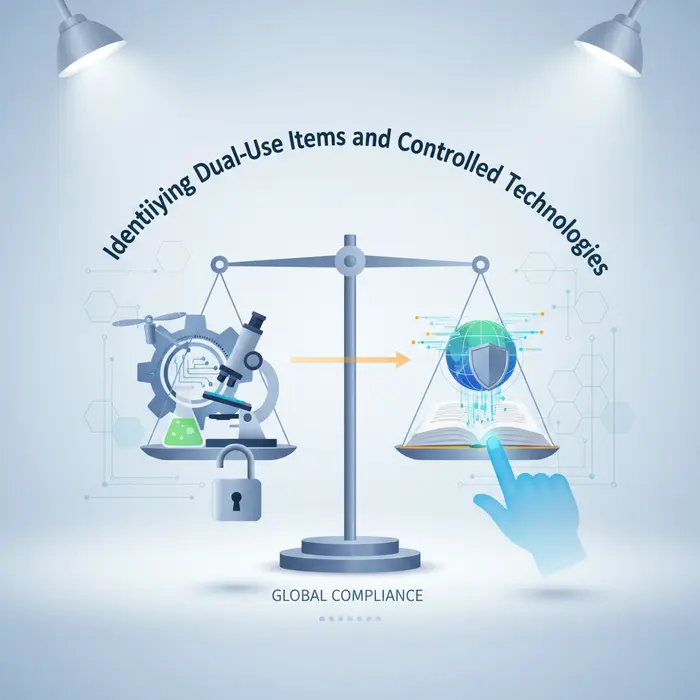
Dual-use items are products, software, and technology that can be used for both commercial (civilian) applications and military or proliferation-sensitive purposes. Unlike items purely designed for military use (which fall under regimes like the International Traffic in Arms Regulations, ITAR), dual-use items have legitimate civilian applications, making their control more nuanced. Examples range from advanced sensors, chemicals, and machine tools to sophisticated software and even the technical data used to develop them.
The primary reason for controlling dual-use items is to prevent their diversion to unauthorized end-users or for prohibited end-uses. Governments implement these controls to:
- Safeguard National Security: Prevent adversaries from acquiring technologies that could enhance their military capabilities or aid in hostile acts.
- Prevent Proliferation: Stop the spread of weapons of mass destruction (nuclear, chemical, biological) and their delivery systems.
- Support Foreign Policy Objectives: Restrict trade with certain countries or entities based on international sanctions or diplomatic considerations.
- Maintain Regional Stability: Control access to items that could exacerbate conflicts or destabilize regions.
Misclassifying or failing to identify dual-use items can lead to severe penalties, including hefty fines, imprisonment, loss of export privileges, and reputational damage. Therefore, a robust understanding of Dual-use items export control is indispensable.
2.
Classifying Goods, Software, and Technology for Export
Effective Export Compliance Regulations begin with accurate classification. This process determines which set of rules applies to your item and whether an Export license requirements guide is necessary. Classification encompasses not only physical goods but also software, technology, and services:
- Goods: Tangible products, components, assemblies, materials, and equipment.
- Software: Programs, applications, and operating systems, including source code, object code, and underlying algorithms.
- Technology: Technical data (blueprints, manuals, specifications), technical assistance (instruction, skills training), and design services required for the development, production, or use of an item.
- Services: Activities such as installation, repair, maintenance, or training related to controlled items.
In the United States, the primary regulations governing dual-use items are the Export Administration Regulations (EAR), administered by the Department of Commerce’s Bureau of Industry and Security (BIS). For purely military items, the International Traffic in Arms Regulations (ITAR), administered by the Department of State’s Directorate of Defense Trade Controls (DDTC), apply. Understanding the distinctions and overlaps between EAR ITAR regulations explained is crucial for any exporter.
The classification process is multifaceted, often requiring detailed technical specifications, end-user information, and an understanding of the potential applications of the item. It is the exporter’s responsibility to correctly classify their items before export, which directly impacts the Export license requirements guide.
3.
The Commerce Control List (CCL) and Export Control Classification Number (ECCN)
For items falling under the EAR, the primary tool for classification is the Commerce Control List (CCL). The CCL categorizes dual-use items into ten broad categories (0-9), which are then further divided into five product groups (A-E):
- Category 0: Nuclear Materials, Facilities & Equipment (and Miscellaneous Items)
- Category 1: Materials, Chemicals, Microorganisms, and Toxins
- Category 2: Materials Processing
- Category 3: Electronics Design, Development and Production
- Category 4: Computers
- Category 5: Telecommunications and Information Security
- Category 6: Lasers and Sensors
- Category 7: Navigation and Avionics
- Category 8: Marine
- Category 9: Propulsion Systems, Space Vehicles, and Related Equipment
Within these categories and product groups, each controlled item is assigned an Export Control Classification Number (ECCN). An ECCN is a five-character alphanumeric designation (e.g., 3A001) that describes the item and indicates the reason(s) for control (e.g., national security, missile technology, chemical weapons). The ECCN is critical because it, along with the destination, end-user, and end-use, determines if an Export license requirements guide is needed.
Exporters can determine an ECCN in several ways:
- Manufacturer: Often, the manufacturer of the item can provide the correct ECCN.
- Self-Classification: By reviewing the CCL and matching the item’s technical characteristics to the descriptions. This requires expertise and careful analysis.
- BIS Ruling: Companies can request an official ECCN determination from BIS for complex items.
Properly identifying the ECCN is a foundational step in ensuring adherence to International trade export controls. Without it, determining licensing requirements, conducting restricted party screenings, and complying with recordkeeping obligations becomes impossible.
Mastering the identification and classification of dual-use items and controlled technologies is not just about avoiding penalties; it’s about responsible global commerce. Businesses committed to robust Export Compliance Regulations contribute to international security and maintain their integrity in the global marketplace.
Navigating Export License Requirements Guide
In the complex world of international trade, understanding and adhering to export compliance regulations is paramount. Businesses must navigate a labyrinth of rules designed to protect national security and foreign policy interests. A misstep in determining or obtaining an export license can lead to severe penalties, including hefty fines, loss of export privileges, and reputational damage. This guide aims to demystify the process, helping businesses determine when an export license is needed, understand license types, and confidently navigate application procedures.
1. When is an Export License Required? (EAR, ITAR)
The first critical step is assessing whether your export requires a license. Not all exports necessitate one, but many do, especially with certain items, destinations, end-users, or end-uses. In the U.S., two primary sets of regulations govern most export activities: the Export Administration Regulations (EAR) and the International Traffic in Arms Regulations (ITAR).
- Export Administration Regulations (EAR): Administered by the Bureau of Industry and Security (BIS), U.S. Department of Commerce. The EAR primarily governs “dual-use” items (commercial goods with potential military applications), commercial items, and some less sensitive military items. Businesses classify products using the Commerce Control List (CCL) to assign an Export Control Classification Number (ECCN) and determine license requirements.
- International Traffic in Arms Regulations (ITAR): Overseen by the Directorate of Defense Trade Controls (DDTC), U.S. Department of State. ITAR governs defense articles and services specifically designed for military applications, listed on the U.S. Munitions List (USML). ITAR regulations are generally stricter, reflecting the sensitive nature of defense-related exports.
Determining license requirements involves a multi-factor analysis: the “What, Where, Who, and How”:
- What: The item’s classification (ECCN or USML category).
- Where: The ultimate destination country.
- Who: All parties involved, screened against denied party lists.
- How: The intended end-use, particularly concerns about proliferation or prohibited activities.
Understanding these factors is key to navigating international trade export controls and avoiding violations. Proper classification and due diligence are foundational.
2. Types of Export Licenses: Specific vs. Blanket
Once a license is determined necessary, identify the appropriate type. Export licenses generally fall into two broad categories: specific (individual) licenses and blanket authorizations (license exceptions/exemptions).
- Specific (Individual) Licenses: These are the most common type, issued for a particular export transaction involving specific items, quantities, end-users, and destination countries. They are typically required for high-risk items or sensitive destinations. Examples include a BIS individual validated license (for EAR) or a DDTC DSP-5 form (for permanent export of unclassified defense articles under ITAR).
- Blanket Authorizations (License Exceptions/Exemptions): These allow multiple exports over a period, under predefined conditions, without requiring a separate license for each shipment. They are not universally applicable.
- EAR License Exceptions: The EAR offers various “License Exceptions” (e.g., LVS, STA) permitting certain exports or reexports without an individual license, provided all specified conditions are met.
- ITAR Exemptions: ITAR contains specific “Exemptions” allowing defense articles or services to be exported without a license under strict circumstances (e.g., for U.S. government use, specific exports to Canada).
The choice between license types depends on your specific circumstances. Misuse or misunderstanding can lead to significant penalties, making thorough comprehension of EAR ITAR regulations explained crucial.
3. The Export License Application Process: Documentation and Steps
Applying for an export license requires careful preparation and attention to detail. The process generally involves several key steps:
- Item Classification and License Determination: Accurately classify your item (ECCN or USML) and determine if a license is required.
- Denied Party Screening: Screen all parties (consignees, ultimate consignees, freight forwarders) against various denied party lists (BIS Entity List, DDTC Debarred List, OFAC SDN List).
- Registration: For ITAR, register with DDTC. For EAR, a BIS SNAP-R account is needed for electronic applications.
- Gathering Documentation: Prepare necessary supporting documents, including:
- End-User Statement (EUS).
- Detailed technical specifications.
- Purchase order or contract.
- Letter of explanation for purpose and end-use.
- Company profiles.
- Online Application Submission: Submit applications electronically via BIS’s SNAP-R system (for EAR) or DDTC’s DECCS (for ITAR). Ensure all information is accurate and complete.
- Agency Review and Follow-up: The agency reviews the application; be prepared to respond promptly to requests for additional information.
- Post-Approval Compliance: Obtaining a license is not the final step. Adhere to all license conditions, maintain accurate records (typically five years), and understand post-shipment reporting. Ongoing diligence is essential for sustained export compliance regulations and mitigating risks associated with dual-use items export control.
Navigating export license requirements guide businesses toward successful and compliant international trade. Staying informed about regulatory changes and seeking expert advice are vital components of effective export compliance.
Best Practices for Ongoing Export Compliance
Maintaining a robust export compliance program is not a one-time task but an ongoing commitment critical for any organization involved in global trade. The dynamic landscape of International trade export controls, coupled with severe penalties for non-compliance, necessitates a proactive and adaptive approach. This section offers practical advice and strategies to ensure continuous adherence to Export Compliance Regulations, safeguarding your business from legal repercussions and reputational damage.
1. Developing an Export Management and Compliance Program (EMCP)
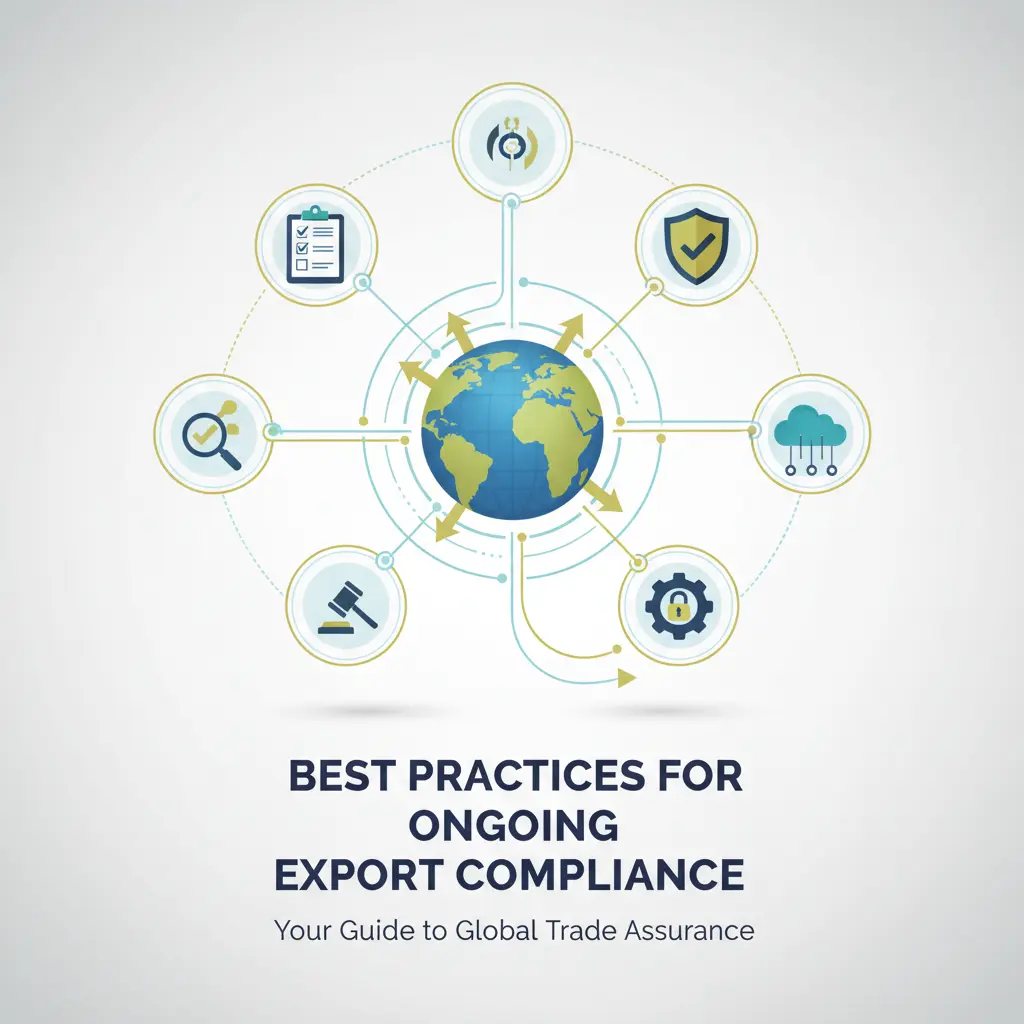
The foundation of effective ongoing export compliance lies in a well-structured Export Management and Compliance Program (EMCP). This formal, documented system ensures adherence to all applicable export laws, like the Export Administration Regulations (EAR) and the International Traffic in Arms Regulations (ITAR). A comprehensive EMCP should encompass:
- Policy Statement: A clear declaration of the organization’s commitment to export compliance, endorsed by senior management.
- Compliance Officer: Appointing a knowledgeable individual or team responsible for overseeing the EMCP, with clear authority.
- Screening Procedures: Robust processes for screening all parties (customers, end-users, freight forwarders) against denied party lists (e.g., Consolidated Screening List) and for diversion risk.
- Classification Protocols: Procedures for accurately classifying items (goods, software, technology) with their correct Export Control Classification Number (ECCN) under the EAR or U.S. Munitions List (USML) category under ITAR. This is crucial for understanding Dual-use items export control implications.
- Licensing Determination: A clear process for determining when an Export license requirements guide is necessary and for applying for such licenses.
- Record-Keeping: Requirements for maintaining all export-related documentation for the legally mandated period.
- Training Program: Outlining the scope and frequency of export compliance training for all relevant personnel.
- Internal Audit Plan: A schedule and methodology for regularly reviewing the EMCP’s effectiveness.
An actively managed EMCP provides the framework for consistent compliance and helps mitigate risks.
2. Internal Audits, Training, and Record-Keeping
Even the most meticulously designed EMCP requires continuous validation. Regular internal audits serve as vital health checks, identifying potential weaknesses and non-compliance issues. These audits, conducted periodically by independent personnel or external experts, meticulously review export transactions, documentation, and operational procedures against regulatory requirements and the organization’s EMCP. Findings should be documented, corrective actions implemented, and follow-up reviews conducted.
Furthermore, an ongoing, comprehensive training program is indispensable. Export regulations, such as EAR ITAR regulations explained, are complex and subject to change. All employees involved in the export process, from sales to shipping, must receive tailored training appropriate to their roles. This training should cover topics like export classification, prohibited parties, embargoed destinations, red flags, and the consequences of non-compliance. Regular refresher courses and updates ensure knowledge remains current and risks are minimized.
Finally, meticulous record-keeping is not merely a best practice; it is a legal requirement. Organizations must retain all documentation related to export transactions – including purchase orders, invoices, shipping documents, end-user statements, export license applications, classification determinations, and internal compliance reviews – for a minimum of five years from the date of export or the last compliance activity. These records serve as critical evidence of due diligence and compliance during inquiries or audits by regulatory authorities like the Bureau of Industry and Security (BIS).
3. Staying Updated on Regulatory Changes and International Trade Agreements
The global trade environment is in constant flux, with new regulations, sanctions, and trade agreements emerging regularly. Proactive monitoring of these changes is paramount to maintaining ongoing export compliance. Organizations must establish mechanisms to stay informed about amendments to key regulations such as the EAR, ITAR, and sanctions programs administered by the Office of Foreign Assets Control (OFAC). Subscribing to government agency newsletters, participating in industry associations, and consulting with experts are effective strategies for keeping abreast of developments.
Changes in geopolitics, national security priorities, and technological advancements frequently lead to revisions in export control lists (e.g., ECCNs or USML categories), updates to embargoed countries, or new restrictions. Failing to adapt can quickly render an otherwise robust compliance program obsolete, leading to inadvertent violations. Special attention should be paid to new international trade agreements, which might alter duties, quotas, or even permissible end-uses. Regularly updating the organization’s EMCP, internal procedures, and training materials based on the latest regulatory intelligence is a continuous process that underpins successful, long-term export compliance.
Partner with Vietnam’s Leading Suppliers
Looking for reliable suppliers in Vietnam? Contact VietnamSuppliers.com today to connect with verified manufacturers and exporters across all industries.
—————————————
References
– Bureau of Industry and Security: https://www.bis.doc.gov/
– Commerce Control List (CCL): https://www.bis.doc.gov/index.php/regulations/commerce-control-list-ccl
– :
– Bureau of Industry and Security (BIS): https://www.bis.doc.gov/
– Bureau of Industry and Security (BIS): https://www.bis.doc.gov/

