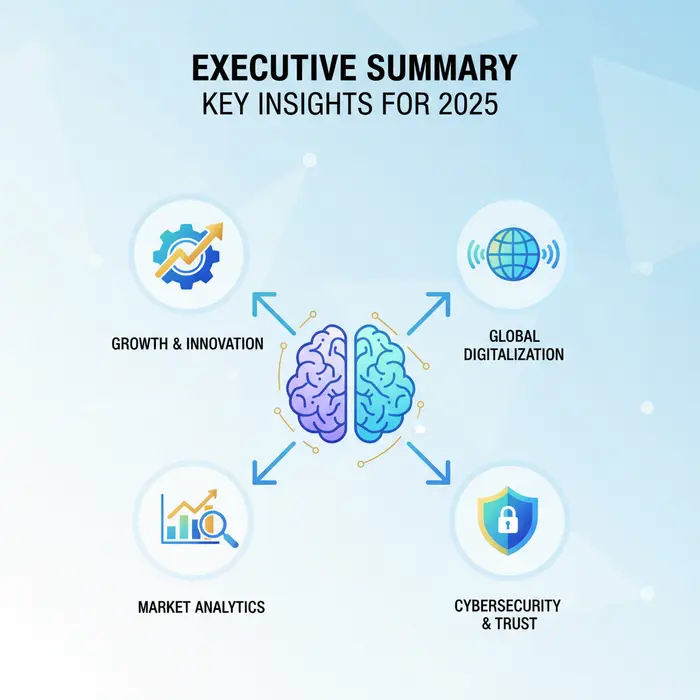
Executive Summary: Key Insights for 2025
As the global economy navigates a complex interplay of geopolitical shifts, technological advancements, and persistent economic pressures, the 2025 Global Trade Trends Report provides a critical compass for businesses and policymakers alike. This executive summary distills the report’s most salient findings and projections, setting the stage for a deeper analysis of evolving global trade dynamics. From the imperative of supply chain resilience to the burgeoning opportunities in digital B2B commerce, 2025 promises a landscape of both significant challenges and transformative potential.
1. Top 5 Global Trade Projections
The coming year is anticipated to be shaped by several defining trends:
- Continued Supply Chain Restructuring: A comprehensive supply chain disruptions analysis reveals an ongoing pivot towards diversification and regionalization. Businesses are increasingly nearshoring or friend-shoring production to mitigate risks exposed during recent global crises, prioritizing resilience over sheer cost efficiency.
- Volatile Commodity Price Forecasts: Geopolitical tensions, climate change impacts, and shifts in demand will continue to drive significant volatility across key commodity markets. Energy, critical minerals, and agricultural products are particularly susceptible, necessitating proactive hedging strategies and diversified sourcing.
- Accelerated Digital Transformation in B2B Trade: The digitalization of trade processes, from e-documentation to AI-driven logistics, will gain further momentum. B2B trade insights indicate a growing adoption of blockchain for transparency and efficiency, alongside the proliferation of online marketplaces facilitating cross-border transactions.
- Geopolitical Realignment and Trade Blocs: The global trade architecture will continue to evolve with the strengthening of existing trade blocs and the formation of new alliances. Regional agreements will likely take precedence, influencing market access and investment flows, making an understanding of these political currents vital for strategic planning.
- Green Trade Initiatives and Sustainability Mandates: Environmental, Social, and Governance (ESG) considerations will move from peripheral concerns to core drivers of trade policy and corporate strategy. Expect increased regulatory pressure for sustainable sourcing, reduced carbon footprints in logistics, and a rise in demand for eco-friendly products and services, fostering new trade opportunities in green technologies.
2. Impact on Business Strategy and Policy
These projections necessitate a proactive and adaptive approach from businesses and governments alike:
- Enhanced Supply Chain Resilience: Companies must invest in robust risk management frameworks, mapping their supply chains to identify vulnerabilities and implementing multi-sourcing strategies. Diversification of manufacturing hubs and inventory management will be crucial.
- Strategic Market Diversification: Relying on single markets for exports or imports will become increasingly risky. Businesses should explore new growth avenues, leveraging detailed market data to identify underserved regions and emerging economies.
- Digital Integration and Cybersecurity: Embracing advanced digital tools for trade operations is no longer optional. This includes investing in secure digital platforms, data analytics, and robust cybersecurity measures to protect sensitive trade information and facilitate seamless transactions.
- Adaptive Policy Frameworks: Governments will need to develop agile trade policies that can respond quickly to global shifts. This includes fostering competitive domestic industries, negotiating favorable trade agreements, and investing in infrastructure that supports efficient global commerce.
- Sustainability as a Core Competence: Integrating sustainability into every facet of operations, from product design to logistics, will not only meet regulatory requirements but also unlock new market opportunities and enhance brand reputation.
3. Emerging Opportunities and Regional Focus
Amidst the challenges, 2025 presents distinct opportunities, particularly within dynamic regional markets:
- ASEAN’s Growing Influence: The Association of Southeast Asian Nations (ASEAN) bloc continues to emerge as a powerhouse, driven by a young population, growing middle class, and strategic geographical location. ASEAN export market data highlights significant growth potential across various sectors, from electronics to consumer goods. Businesses looking for diversification and new market entry should prioritize this region.
- Africa’s Untapped Potential: The African Continental Free Trade Area (AfCFTA) promises to unlock immense intra-African trade and attract foreign direct investment. While infrastructure and logistical challenges persist, early movers will be well-positioned to capitalize on long-term growth.
- Niche Market Development: Specialized segments, particularly those driven by sustainability, personalized products, and advanced technology, will offer high-value trade opportunities. Identifying and targeting these niches can provide a competitive edge.
- Technological Innovation as a Trade Enabler: Beyond digitalizing existing processes, emerging technologies like IoT, AI-driven predictive analytics, and advanced robotics will not only optimize logistics and production but also create entirely new categories of tradable goods and services, fostering new global supply chains.
Unpacking Supply Chain Resilience & Disruptions
The global supply chain landscape is in a perpetual state of flux, continuously challenged by an array of unprecedented events. From unforeseen geopolitical tensions to the increasing frequency and intensity of climate-related disasters, businesses worldwide are grappling with complex disruptions that threaten stability and profitability. Understanding these challenges and developing robust strategies for resilience and adaptability is paramount for navigating the contemporary trade environment. This in-depth analysis delves into the major drivers of current supply chain instability and outlines practical approaches for building more resilient systems, drawing insights from the latest Global Trade Trends Report.
Geopolitical Tensions and Trade Route Shifts
Geopolitical events have emerged as a dominant force reshaping global trade routes and supply chain dynamics. Conflicts, trade wars, and shifting diplomatic alliances create significant volatility, impacting everything from shipping costs to the availability of critical raw materials. Recent examples, such as the disruptions in the Red Sea or the ongoing geopolitical competition between major economic powers, highlight how traditional, efficient trade corridors can become suddenly unviable, forcing businesses to seek alternative, often more expensive and time-consuming, routes. This phenomenon underscores the inherent fragility of global value chains, as highlighted by reports from institutions like the World Bank on the future of global value chains.
Such shifts necessitate a re-evaluation of sourcing strategies, driving trends like nearshoring and friend-shoring to reduce dependency on potentially unstable regions. For instance, an in-depth supply chain disruptions analysis often reveals that diversification of suppliers and manufacturing locations, particularly within stable economic blocs like those represented in ASEAN export market data, can significantly mitigate risks associated with geopolitical volatility. Companies must continuously monitor international relations and build agile contingency plans to adapt to rapidly changing geopolitical realities, ensuring continuity and minimizing exposure to sudden shocks.
Technology’s Role in Supply Chain Visibility
A critical weakness exposed by recent disruptions has been the pervasive lack of end-to-end visibility within complex supply chains. Without real-time insight into the movement of goods, inventory levels, and potential bottlenecks, businesses struggle to react effectively to unforeseen events. Fortunately, technological advancements are revolutionizing the way supply chains are managed, offering unprecedented levels of transparency and control. Innovations such as Artificial Intelligence (AI), the Internet of Things (IoT), blockchain, and predictive analytics are now indispensable tools for building resilience.
IoT sensors embedded in cargo provide real-time tracking data, offering precise locations and conditions of shipments. AI-driven platforms analyze vast datasets to forecast demand more accurately, identify potential disruptions before they escalate, and optimize inventory management. Blockchain technology offers immutable and transparent records of transactions and movements, enhancing trust and traceability across complex networks. These technologies empower businesses with superior B2B trade insights, enabling proactive decision-making rather than reactive problem-solving. By integrating these tools, companies can transform their supply chain disruptions analysis from a post-mortem exercise into a predictive capability, allowing for quicker adaptation and mitigation strategies.
Mitigating Logistical Bottlenecks
Logistical bottlenecks represent tangible choke points that can cripple supply chains, leading to delays, increased costs, and frustrated customers. Common bottlenecks include port congestion, labor shortages (e.g., truckers, warehouse workers), inadequate infrastructure, and customs complexities. Addressing these issues requires a multi-faceted approach centered on optimization, collaboration, and strategic planning.
Strategies for mitigation include diversifying transportation modes (e.g., shifting from solely ocean freight to a combination of rail and air when necessary), optimizing inventory strategies (moving beyond strict Just-In-Time to a more adaptive Just-In-Case approach for critical components), and strategically positioning warehouses closer to key markets. Investing in automation at ports and warehouses can alleviate labor-related bottlenecks, while digitalizing customs processes can accelerate cross-border movements. Furthermore, fostering greater collaboration among all supply chain stakeholders – from suppliers and manufacturers to logistics providers and distributors – can create a more cohesive and responsive network. Effective mitigation strategies are crucial not just for operational efficiency but also for stabilizing the Commodity price forecast, as reduced delays and increased flow can prevent price spikes due to scarcity or heightened transportation costs.
In conclusion, building a resilient supply chain in today’s unpredictable world demands a strategic blend of foresight, technological adoption, and collaborative planning. As global trade continues to evolve, businesses that embrace adaptability and leverage comprehensive insights from resources like the Global Trade Trends Report will be best positioned to not only withstand disruptions but also to thrive in the face of uncertainty.
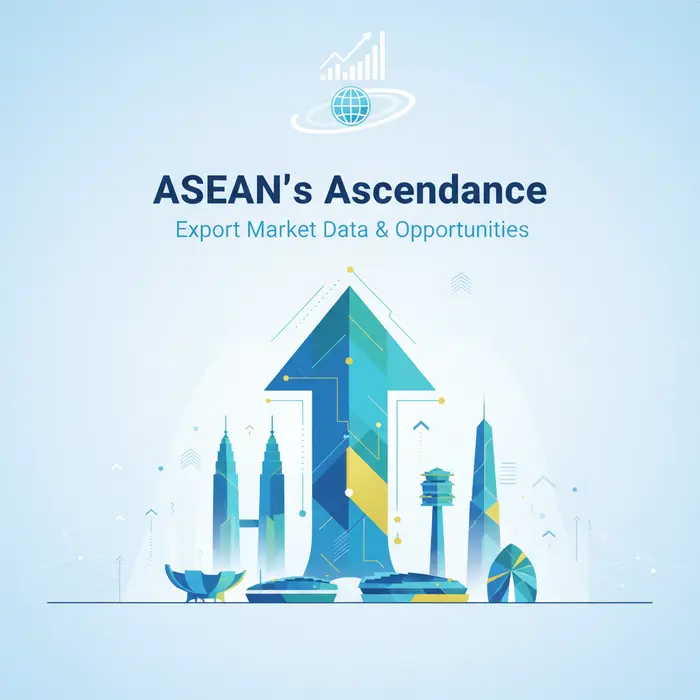
ASEAN’s Ascendance: Export Market Data & Opportunities
The Association of Southeast Asian Nations (ASEAN) has emerged as a formidable force in the global economy, demonstrating remarkable resilience and dynamism amidst evolving Global Trade Trends Report. Far from merely recovering from recent geopolitical and economic headwinds, the region is actively redefining its role in international commerce. This section delves into ASEAN’s robust export performance, dissecting key growth sectors, analyzing current supply chain disruptions, and identifying lucrative emerging trade opportunities that beckon international businesses and investors.
1. Sector-Specific Export Growth Analysis
ASEAN’s export growth is not monolithic; rather, it is characterized by diverse and rapidly expanding sectors. A deep dive into World Trade Organization data reveals a sustained upward trajectory in manufacturing and high-tech exports. Electronics, particularly semiconductors and components, remain a cornerstone, driven by global demand for digital devices and the ongoing expansion of 5G infrastructure and AI technologies. Countries like Vietnam, Malaysia, and Singapore have solidified their positions as vital hubs in the global electronics supply chain.
Beyond electronics, the automotive sector, including electric vehicles (EVs) and their components, is experiencing significant growth, with Thailand and Indonesia leading regional production. Textiles and apparel continue to be strong performers, adapting to global fashion trends and sustainable production demands. Furthermore, agro-food products, ranging from palm oil and rubber to specialized fruits and seafood, underpin a substantial portion of the region’s export value, benefiting from increasing global food demand and improved agricultural practices. Despite widespread **supply chain disruptions analysis** stemming from geopolitical tensions and logistical bottlenecks, ASEAN’s diversified manufacturing base and strategic geographic location have allowed it to mitigate some impacts, often positioning it as an alternative or supplementary source for international buyers. This resilience underscores the robust nature of **ASEAN export market data**.
2. Intra-ASEAN Trade Dynamics and Integration
A significant driver of ASEAN’s overall economic strength and export prowess is the increasing dynamism of intra-ASEAN trade. The region’s commitment to economic integration, primarily through the ASEAN Economic Community (AEC), has fostered a more interconnected and resilient marketplace. Initiatives aimed at reducing non-tariff barriers, streamlining customs procedures, and harmonizing standards have significantly boosted cross-border commerce among member states. Regional Comprehensive Economic Partnership (RCEP), which includes all ten ASEAN members along with five other Asia-Pacific nations, further amplifies this trend, creating the world’s largest free trade area. This integration not only facilitates the movement of goods and services but also encourages regional value chains, where intermediate goods are processed across multiple ASEAN countries before final assembly and export. Such robust internal trade dynamics provide a crucial buffer against external market volatilities and strengthen ASEAN’s collective bargaining power on the global stage. It also allows smaller economies within the bloc to leverage the larger market and infrastructure of their neighbors, fostering more balanced regional development.
3. Investment and Partnership Prospects
The attractive **B2B trade insights** emerging from ASEAN are drawing substantial foreign direct investment (FDI), signaling strong confidence in the region’s long-term growth trajectory. Investors are keen on sectors beyond traditional manufacturing, including digital services, renewable energy, healthcare, and infrastructure development. The region’s young, growing, and increasingly affluent middle class represents a burgeoning consumer market, offering significant opportunities for businesses to expand their reach. Governments across ASEAN are actively implementing policies to improve the ease of doing business, offering incentives, and developing specialized economic zones to attract high-value investments. Furthermore, strategic partnerships, including joint ventures and technology transfers, are becoming increasingly common as international firms seek to leverage local expertise and access regional markets. Understanding the **commodity price forecast** is also crucial for investors, as stability in key resource prices can enhance predictability for long-term manufacturing and trade operations. For companies looking to diversify their supply chains or tap into new growth markets, ASEAN presents a compelling proposition, driven by favorable demographics, supportive government policies, and a steadily improving business environment.
In an increasingly interconnected global economy, understanding Global Trade Trends Report, particularly concerning essential commodities, is paramount for businesses, investors, and policymakers. This section provides critical commodity price forecasts for energy, metals, and agriculture, alongside an in-depth supply chain disruptions analysis, shedding light on the factors driving market volatility and outlining effective risk mitigation strategies. The dynamics of commodity markets are constantly shifting, influenced by geopolitical events, climate change, technological advancements, and evolving global demand, necessitating robust B2B trade insights.
1. Energy Market Outlook and Transition Impacts
The energy market remains a cornerstone of the global economy, characterized by its inherent volatility and profound impact on industrial output and consumer prices. Our Energy Market Outlook anticipates continued price fluctuations for crude oil and natural gas, driven by a confluence of supply-side management (e.g., OPEC+ decisions), geopolitical tensions in key producing regions, and the pace of global economic recovery. Demand projections indicate a gradual increase, albeit tempered by the accelerating global energy transition towards cleaner sources. The shift towards renewables (solar, wind, hydropower) introduces new layers of complexity, influencing traditional fossil fuel investments and creating emerging markets for critical minerals essential for green technologies. Businesses should closely monitor regulatory changes and technological breakthroughs in renewable energy, as these will significantly reshape future energy landscapes and provide valuable B2B trade insights.
2. Agricultural Commodities and Food Security
Agricultural commodities – including grains (wheat, corn, rice), oilseeds, and soft commodities (coffee, sugar) – are fundamental to global food security and subject to unique market dynamics. Our agricultural commodities forecast highlights the critical influence of weather patterns, climate change, and evolving farming practices on supply. Geopolitical conflicts, such as the war in Ukraine, continue to exert upward pressure on prices by disrupting major supply routes and reducing export capabilities, leading to widespread concerns over food security, particularly in import-dependent nations. Furthermore, the rising costs of inputs like fertilizers and fuel exacerbate production challenges. Businesses engaged in the food supply chain must focus on diversifying sourcing strategies, investing in resilient logistics, and leveraging detailed ASEAN export market data to navigate these complexities and mitigate risks associated with sudden price spikes and supply shortages.
3. Industrial Metals: Demand, Supply, and Green Transition
Industrial metals, encompassing base metals like copper, aluminum, nickel, and critical minerals such as lithium and cobalt, are indispensable for manufacturing, infrastructure development, and the burgeoning green technology sector. The Industrial Metals Outlook points to robust demand, particularly driven by the global push for decarbonization. The electric vehicle (EV) revolution, expansion of renewable energy infrastructure, and advancements in digital technologies are creating unprecedented demand for these materials. However, supply chains face significant challenges, including mining production bottlenecks, geopolitical risks in resource-rich regions, and increasing environmental regulations. The green transition, while a demand driver, also demands responsible sourcing and sustainable production practices. Analyzing supply chain disruptions analysis for these metals is crucial for industries ranging from automotive to electronics, requiring forward-looking commodity price forecast data to ensure stable production and competitive pricing.
Overall, market volatility across energy, agricultural, and industrial commodity sectors is a persistent challenge. Factors such as geopolitical instability, extreme weather events, and global economic shifts continue to create unpredictable price movements. Businesses are advised to implement robust risk mitigation strategies, including hedging, inventory management, and developing flexible supply networks. Staying informed through comprehensive Global Trade Trends Report and detailed B2B trade insights is vital for navigating these dynamic markets successfully and maintaining competitive advantage.
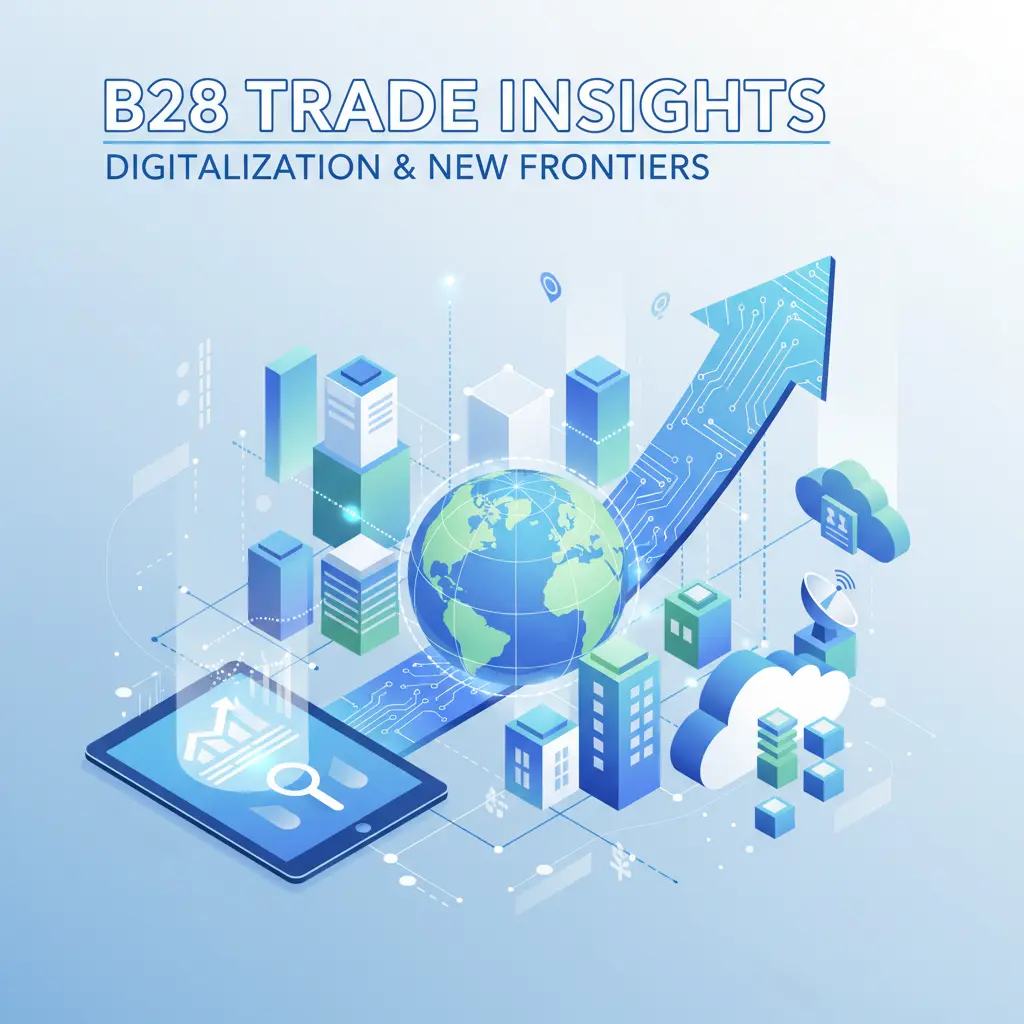
B2B Trade Insights: Digitalization & New Frontiers
The global business-to-business (B2B) trade landscape is undergoing a profound transformation, driven by rapid technological advancements, evolving consumer expectations, and an increasing focus on sustainability. What was once a predominantly manual, relationship-driven domain is now embracing digitalization, redefining processes from procurement to logistics. Understanding these shifts is crucial for businesses aiming to maintain competitiveness and expand their reach in an interconnected world. This section explores the significant trends shaping modern B2B trade, offering essential Global Trade Trends Report insights into how digital transformation, e-commerce platforms, and sustainability initiatives are impacting global commerce.
1. Rise of B2B E-commerce Platforms
The proliferation of B2B e-commerce platforms marks one of the most significant shifts in global trade. Moving beyond traditional catalogs and direct sales, businesses are now leveraging sophisticated online marketplaces to streamline transactions, discover new suppliers, and reach a broader customer base. These platforms offer unparalleled efficiency, transparency, and scalability, reducing geographical barriers and accelerating the sales cycle. Features such as personalized dashboards, real-time inventory updates, automated order processing, and secure payment gateways are becoming standard, enabling seamless interactions between buyers and sellers globally. This digital evolution is not merely about replicating offline processes online; it’s about creating entirely new ecosystems that foster greater collaboration and market access. For companies looking for timely B2B trade insights, understanding the nuances of platform selection and optimization is paramount.
2. AI and Automation in Trade Facilitation
Artificial Intelligence (AI) and automation are revolutionizing trade facilitation, addressing long-standing challenges related to efficiency, accuracy, and risk management. AI-powered analytics can process vast amounts of data to provide predictive insights into market demand, supply chain disruptions analysis, and optimal routing. Automation, encompassing robotic process automation (RPA) and intelligent document processing, is streamlining tasks such as customs declarations, logistics planning, and compliance checks. This not only reduces human error and operational costs but also significantly speeds up the movement of goods across borders. Furthermore, AI is enhancing fraud detection, improving security, and enabling more accurate forecasting, equipping businesses with the tools to navigate complex global regulations and unforeseen events more effectively. The integration of AI and automation is not just a technological upgrade; it’s a strategic imperative for resilient and responsive trade operations. For a deeper dive into how AI is reshaping international trade, explore insights from organizations like the World Trade Organization on the digital transformation of trade.
3. Sustainability and ESG Factors in Global Sourcing
The imperative for sustainability and Environmental, Social, and Governance (ESG) considerations has moved from the periphery to the forefront of global sourcing strategies. Consumers, investors, and regulators are increasingly demanding transparency and accountability from businesses regarding their environmental footprint, labor practices, and ethical conduct. This trend is compelling companies to scrutinize their entire supply chain, from raw material extraction to end-of-life product management. Sustainable sourcing involves not only minimizing environmental impact through reduced emissions and waste but also ensuring fair labor practices, human rights, and community welfare. For instance, businesses engaging with ASEAN export market data are increasingly looking for suppliers who meet stringent ESG criteria, understanding that a strong sustainability profile enhances brand reputation, mitigates risks, and unlocks new market opportunities. Integrating ESG factors into global sourcing is no longer optional; it’s a critical component of long-term business viability and competitive advantage, shaping the future direction of global commerce.
In conclusion, the B2B trade landscape is dynamically evolving, driven by digital innovation and a heightened sense of global responsibility. The rise of e-commerce platforms, the transformative power of AI and automation, and the non-negotiable emphasis on sustainability are not isolated trends but interconnected forces shaping the future of global commerce. Businesses that embrace these changes, leverage technology for efficiency, and commit to ethical and sustainable practices will be best positioned to thrive in this new era, navigating challenges and seizing opportunities.
Partner with Vietnam’s Leading Suppliers
Looking for reliable suppliers in Vietnam? Contact VietnamSuppliers.com today to connect with verified manufacturers and exporters across all industries.
—————————————
References
– WTO Trade Statistics: https://www.wto.org/english/res_e/statis_e/statis_e.htm
– World Bank on the future of global value chains: https://www.worldbank.org/en/topic/trade/publication/the-future-of-global-value-chains-supply-chain-disruptions-and-reshoring
– World Trade Organization data: https://www.wto.org/english/res_e/statis_e/wts2023_e/wts2023_e.pdf
– global energy transition: https://www.imf.org/en/Topics/commodities
– World Trade Organization on the digital transformation of trade: https://www.wto.org/english/news_e/news23_e/go_03oct23_e.htm