
Introduction to HTS Codes
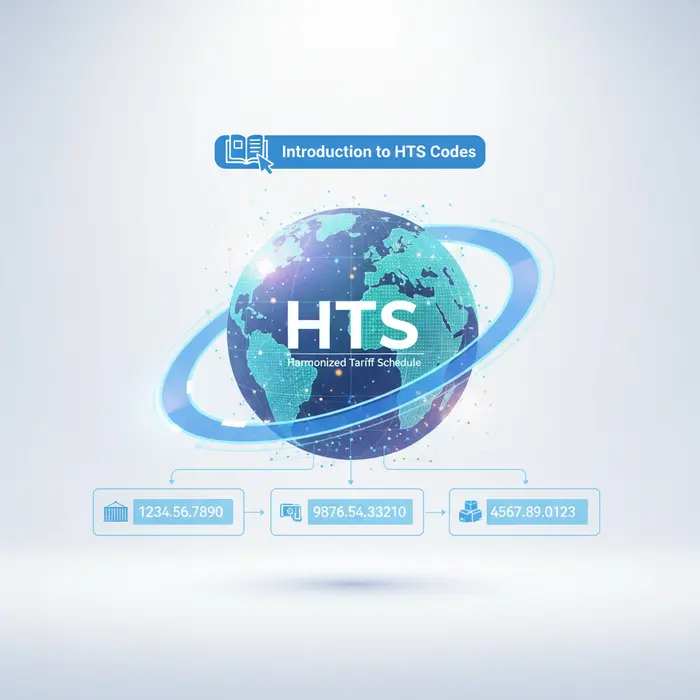
In the complex and ever-evolving world of international trade, precision and standardization are paramount. Navigating customs regulations, ensuring accurate duties, and facilitating smooth cross-border movement of goods all hinge on a seemingly simple yet profoundly powerful tool: the HTS Code. But What is HTS Code, and why does it hold such significance for businesses engaged in global commerce?
This section delves into the fundamental definition, purpose, and global impact of the Harmonized Tariff Schedule (HTS) Codes. Understanding these numerical classifications is not merely a matter of compliance; it is a strategic imperative that directly influences costs, logistics, and market access for importers and exporters worldwide. From small businesses looking to source materials internationally to multinational corporations managing vast global supply chains, an accurate grasp of HTS codes is indispensable for operational efficiency and legal adherence.
1. Defining HTS: Harmonized Tariff Schedule
The term HTS Code stands for Harmonized Tariff Schedule Code. At its core, it is a standardized numerical classification system used by customs authorities around the globe to classify traded products. The foundation of the HTS is the Harmonized System (HS), officially known as the Harmonized Commodity Description and Coding System. Developed and maintained by the World Customs Organization (WCO), the HS provides a multilateral nomenclature for goods, encompassing over 5,000 commodity groups, each identified by a six-digit code.
While the first six digits of an HS code are globally uniform, individual countries or economic blocs often extend this base with additional digits to create their own country-specific tariff schedules, providing further granularity. This is where the distinction between an HS code and HTS code becomes clear. For instance, the United States uses the 10-digit Harmonized Tariff Schedule of the United States (HTSUS), which builds upon the international HS framework by adding four more digits for U.S.-specific statistical and tariff purposes. Other countries have similar extensions, but they all originate from the same international six-digit HS structure. This intricate system allows for a universally recognized language of trade, enabling customs officials, statisticians, and traders worldwide to identify products consistently.
2. Purpose in International Trade
The fundamental purpose of HTS Codes in international trade is multifaceted and critical. Primarily, these codes serve as a universal language for goods, enabling consistent identification and classification across borders. This consistency is vital for several key functions:
- Duty and Tax Assessment: One of the most significant roles of HTS codes is to determine the correct import duties and taxes applicable to goods. Each code corresponds to a specific tariff rate, which can vary significantly depending on the product, its country of origin, and existing trade agreements.
- Trade Statistics Collection: Governments use HTS data to collect and analyze international trade statistics. This information is crucial for economic policy-making, market analysis, and tracking global trade flows.
- Regulatory Compliance: HTS codes help enforce a myriad of import and export regulations, including quotas, embargoes, anti-dumping measures, and product-specific restrictions (e.g., health, safety, environmental standards).
- Security: Accurate classification aids customs authorities in risk assessment, helping to identify and interdict prohibited or dangerous goods more effectively.
For businesses, understanding how to perform a Harmonized System codes lookup is essential for accurate budgeting, avoiding costly delays, and ensuring compliance. Misclassification can lead to incorrect duties, penalties, and even seizure of goods, highlighting the commercial imperative of precise HTS coding.
3. The Role of Customs and Duties
The impact of HTS Codes on customs procedures and import duties is arguably their most direct and tangible effect on international commerce. When goods arrive at a border, customs officials rely heavily on the declared HTS code to process the shipment. This code is the primary determinant for calculating the applicable tariff, which is often a percentage of the goods’ value. Therefore, the HTS code impact on import duties cannot be overstated; an incorrect code, even if off by a single digit, can result in overpaying or underpaying duties, both of which carry significant consequences.
Underpayment can lead to hefty fines, retroactive duty assessments, and potential legal issues for the importer. Overpayment, while less penal, represents a direct loss of profit or increased cost that could have been avoided. To mitigate these risks, many businesses rely on an HTS classification guide or seek expert advice to ensure their products are categorized correctly. Customs agencies also provide resources, such as binding ruling requests, where importers can obtain official, legally binding classifications for their specific products before shipment. This proactive approach is vital for maintaining compliance, managing costs, and facilitating predictable trade operations in a globalized economy.
HTS Code vs. HS Code: Key Differences
Navigating the complexities of international trade requires a precise language for classifying goods. Among the most crucial tools are the Harmonized System (HS) Code and the Harmonized Tariff Schedule (HTS) Code. While often used interchangeably, understanding the nuanced relationship and distinctions between them is paramount for accurate customs declarations, duty assessment, and efficient global supply chains. Misclassifying goods can lead to significant penalties, delays, and unexpected costs, highlighting why these differences truly matter for importers and exporters alike.
1. Understanding the Harmonized System (HS)
The Harmonized System (HS) is an internationally standardized system of names and numbers for classifying traded products. Developed and maintained by the World Customs Organization (WCO), the HS provides a uniform basis for customs tariffs, the collection of international trade statistics, rules of origin, and many other customs-related procedures. Adopted by over 200 countries and economic or customs unions, the HS covers virtually all goods in international trade.
At its core, the HS code is a 6-digit numeric identifier. It’s structured into 21 sections, which are further divided into 97 chapters. Within each chapter, there are specific headings and subheadings. For example, ’01’ refers to Live Animals (a chapter), ‘01.01’ refers to Live horses, asses, mules and hinnies (a heading), and ‘0101.21’ might specify Pure-bred breeding animals (a subheading). This 6-digit structure, known as the HS subheadings, provides a universal language for goods, ensuring that a product classified under, say, 0101.21 in one country is recognized under the same code globally for the first six digits. This global consistency is fundamental to facilitating international trade and statistical analysis of commodity flows.
2. HTS Code: A U.S. Specific Extension
While the HS code provides a global foundation, individual countries often require more detailed classification for their specific tariff and statistical needs. This is where the Harmonized Tariff Schedule (HTS) Code comes into play, specifically for the United States. The HTS Code is essentially an extended, 10-digit version of the international 6-digit HS code, providing granular detail necessary for determining import duties, eligibility for special programs, and collecting trade statistics within the U.S. If you’re wondering what is HTS Code, it’s the U.S. government’s classification system for all products imported into the U.S.
Maintained by the U.S. International Trade Commission (USITC), the HTS is a comprehensive listing of tariff rates and product categories. It builds directly upon the HS, meaning the first six digits of any HTS code will always be an internationally recognized HS code. The subsequent digits, however, are unique to the U.S. tariff schedule. This distinction is vital because these additional digits directly dictate the specific duty rates that will be applied to imported goods. The HTS code impact on import duties is immediate and significant; even a slight variation in the 7th through 10th digits can result in a different tariff rate, potentially altering the cost-effectiveness of an import. Many other countries also have their own national extensions of the HS, such as the Harmonized Tariff Schedule of Canada or the European Union’s TARIC codes, all designed to serve their unique import duty and statistical requirements.
3. Structural Differences and Code Length
The primary difference between an HS code and an HTS code lies in their length and specificity. An HS code is a 6-digit international standard, universal across participating countries. It defines the general category of a product: XX.XX.XX.
An HTS code, on the other hand, is a 10-digit code used specifically in the United States. It takes the 6-digit HS code and adds four more digits for further specificity:
- Digits 1-6: These constitute the international HS code (Chapter, Heading, Subheading). For instance, 6403.99 for other footwear with outer soles of rubber, plastics, leather or composition leather. These first six digits are globally consistent.
- Digits 7-8: These provide U.S. specific tariff subheadings. They further break down the product category to assign a particular duty rate. Following our example, 6403.99.60 might specify certain types of athletic footwear.
- Digits 9-10: These are U.S. statistical suffixes, offering even finer detail for data collection purposes. For instance, 6403.99.60.20 could designate specific men’s athletic footwear.
The practical implications of these structural differences are immense. While an exporter might refer to the HS code for global consistency, a U.S. importer must use the correct 10-digit HTS code to ensure proper customs clearance and duty assessment. Incorrect use of the HTS code can lead to significant overpayment or underpayment of duties, potential fines, and delays at the border. Therefore, understanding the nuances between an HS code vs HTS code is crucial for compliance. Utilizing a reliable Harmonized System codes lookup or an HTS classification guide is essential for accurate classification, helping businesses avoid costly mistakes and streamline their import processes.
The Impact of HTS Codes on Import Duties
Navigating the complexities of international trade requires a meticulous understanding of various regulations and classifications. At the heart of this intricate web lies the Harmonized Tariff Schedule, or What is HTS Code, a critical system that directly dictates the financial landscape for importers. Accurate HTS classification is not merely a bureaucratic hurdle; it’s a fundamental determinant of customs duties, taxes, and overall trade compliance costs. Missteps in this crucial area can lead to significant financial penalties, shipment delays, and reputational damage. This section explores how precise HTS classification profoundly influences an importer’s bottom line, highlighting its far-reaching financial implications.
Understanding the distinction between an HS code vs HTS code is essential. While the HS code (Harmonized System code) is a globally standardized six-digit number used by over 200 countries to classify traded products, the HTS code builds upon this by adding further country-specific digits for more granular classification and tariff application. For example, in the United States, the HTS code extends to ten digits, providing the exact tariff rates and statistical data required by U.S. Customs and Border Protection (CBP). This precise Harmonized System codes lookup is indispensable for accurate duty calculation.

1. Calculating Tariffs and Duties
The most direct HTS code impact on import duties is its role in calculating tariffs. Every HTS code is associated with a specific duty rate, which is a percentage applied to the declared value of the imported goods. An incorrect HTS classification𠅎ven by a single digit�n lead to an entirely different and potentially higher duty rate. For instance, a product mistakenly classified under a general category with a 10% duty instead of a specific one with a 2% duty can result in a significant overpayment. Over time, these seemingly small misclassifications can accumulate into substantial financial losses for businesses that import frequently or in large volumes. Beyond tariffs, HTS codes also influence other taxes and fees, such as excise taxes, anti-dumping duties, or countervailing duties, which are designed to protect domestic industries from unfair trade practices. Importers must therefore prioritize a thorough HTS classification guide and process to ensure financial accuracy.
2. Avoiding Penalties and Delays
Accurate HTS classification is not just about managing costs; it’s also about mitigating risks. Customs authorities worldwide are vigilant about ensuring compliance. Intentional or even unintentional misclassification can trigger severe penalties. These penalties can range from monetary fines, often calculated as a percentage of the underpaid duties, to seizure of goods, and even criminal prosecution in cases of deliberate fraud. Furthermore, incorrect HTS codes can cause significant delays at customs. When customs officers identify discrepancies, they may hold shipments for further inspection, requiring additional documentation and potentially leading to demurrage and storage fees. Such delays disrupt supply chains, impact delivery schedules, and can erode customer trust, all of which have indirect but substantial financial repercussions for the importer. A robust internal HTS classification process, potentially involving customs brokers or specialized software, is crucial for avoiding these costly pitfalls.
3. Free Trade Agreements and HTS
Another powerful financial benefit of accurate HTS classification lies in leveraging Free Trade Agreements (FTAs). Many countries have bilateral or multilateral FTAs that allow goods meeting specific rules of origin to be imported at reduced or even zero duty rates. However, accessing these preferential tariffs hinges entirely on correct HTS classification. The HTS code defines the product, and that definition is then used to determine if the product qualifies under an FTA’s rules of origin. For example, a product originating from a signatory country might be eligible for a 0% duty rate if its HTS code aligns with the agreement’s terms, while the same product from a non-signatory country might incur a 5% duty. Misclassifying goods can lead to an importer missing out on these significant cost-saving opportunities, thereby paying higher duties unnecessarily. Conversely, correctly applying an HTS code that qualifies for an FTA can provide a substantial competitive advantage by lowering landed costs. Therefore, understanding the interplay between HTS codes and FTA rules is paramount for strategic cost management in international trade.
In conclusion, the HTS code impact on import duties extends far beyond a simple numerical assignment. It directly influences tariff calculations, determines eligibility for preferential trade agreements, and plays a critical role in preventing costly penalties and shipment delays. For any importer, investing in accurate Harmonized System codes lookup and robust classification processes is not just about compliance; it’s a strategic imperative that safeguards financial stability and enhances operational efficiency in the global marketplace.
Navigating HTS Classification and Lookup
Accurately classifying your products using the Harmonized Tariff Schedule (HTS) is not merely a bureaucratic step; it’s a critical component of successful international trade. Understanding what is HTS Code and how to correctly apply it directly impacts your import duties, compliance, and overall supply chain efficiency. While the global standard is the Harmonized System (HS) code, each country adapts it into its own national tariff schedule, such as the HTS code in the United States. This distinction between HS code vs HTS code is vital: HS codes are generally 6 digits, while HTS codes extend to 10 digits for U.S. imports, adding country-specific subheadings and statistical suffixes. Getting it wrong can lead to delays, penalties, and unexpected costs, highlighting the significant HTS code impact on import duties.
1. Step-by-Step Classification Process
The journey to accurate HTS classification begins with a methodical approach. This HTS classification guide outlines the essential steps:
- Understand Your Product Thoroughly: Before you can classify, you must know everything about your product. What is it? What is it made of? How does it function? What is its primary use? For example, classifying a bicycle requires knowing if it’s a children’s bike, an electric bike, or a racing bike, and its materials (steel, carbon fiber).
- Consult the General Rules of Interpretation (GRIs): The GRIs are the foundational rules for interpreting the Harmonized System. They provide a logical framework for classification, guiding you on how to use section notes, chapter notes, and heading texts. There are six GRIs, and they must be applied in sequential order.
- Navigate the HTS Schedule: With a good understanding of your product and the GRIs, begin to search the HTS schedule. Start at the section and chapter level that seems most relevant. For instance, textiles might be in Section XI, while machinery is in Section XVI.
- Identify Potential Headings and Subheadings: Read the descriptions of potential headings (4-digit codes) and subheadings (6-digit codes) carefully. Look for terms that specifically describe your product.
- Apply Legal Notes: Pay close attention to section and chapter notes. These notes can expand, restrict, or define the scope of a heading or subheading, often providing crucial exclusions or inclusions.
- Determine the 8-Digit and 10-Digit Code: Once you’ve established the 6-digit HS code based on the GRIs and legal notes, proceed to the national subheadings (8-digit for most countries, including the U.S. HTS) and then the statistical suffixes (10-digit for U.S. HTS). These final digits often differentiate products based on specific characteristics, materials, or end-use that are relevant to national trade statistics or policy.
- Document Your Classification Rationale: Always keep a record of your classification process, including the GRIs applied, relevant chapter/section notes, and any supporting documentation. This is crucial for audit purposes and ensures consistency.
2. Official HTS Lookup Tools (e.g., USITC)
Performing a reliable Harmonized System codes lookup is essential. While many third-party tools exist, the most accurate and authoritative source will always be the official government portals of the importing country. For imports into the United States, the ultimate resource is the U.S. International Trade Commission (USITC) HTS Search tool. This free, online database contains the most current version of the U.S. Harmonized Tariff Schedule, including general notes, section notes, chapter notes, and all legal text necessary for correct classification. Other countries will have their own similar official customs websites (e.g., the EU’s TARIC database, Canada Border Services Agency). Always prioritize these official government sources for your HTS code lookup to ensure compliance and avoid misinterpretation. Remember, while the first six digits (HS code) are internationally harmonized, the subsequent digits are specific to each country’s tariff schedule, making country-specific official tools indispensable.
3. Seeking Expert Classification Assistance
Despite the available tools and guides, classifying certain products can be incredibly complex. Products with multiple components, new technologies, or unclear descriptions often pose significant challenges. In such cases, or when the value of the goods and potential HTS code impact on import duties is substantial, seeking expert classification assistance is a wise investment. Customs brokers, trade consultants, and international trade attorneys specialize in HTS classification. They possess in-depth knowledge of trade regulations, GRIs, and previous rulings, and they can provide binding rulings or official opinions from customs authorities, offering legal certainty. Leveraging their expertise minimizes the risk of errors, avoids costly penalties, and streamlines the customs clearance process, allowing your business to focus on its core operations while ensuring full compliance.
The global supply chain continues to evolve, making accurate trade compliance more critical than ever. For businesses engaged in international trade, understanding and correctly applying the Harmonized Tariff Schedule (HTS) codes is paramount. But what is HTS Code? It’s a global system for classifying traded products, used by customs worldwide to identify products and assess duties. Misclassifying goods can lead to significant penalties, delays, and unexpected costs. As we approach 2025, proactive measures are essential to ensure seamless operations and avoid costly compliance pitfalls. This section offers actionable advice for maintaining accurate HTS code usage, adapting to changes, and ensuring ongoing compliance.

1. Regular Code Review and Updates
The Harmonized System, foundational to HTS codes, undergoes revisions every five years, with more frequent national-level updates. This means your 2024 HTS codes might not be entirely accurate or optimized for 2025. Regular review is not merely a recommendation; it’s a necessity. Establish a systematic schedule for reviewing product classifications. This process isn’t just about ensuring current codes are valid; it’s also about identifying reclassification opportunities. Start by auditing your top 20-30 imported and exported products, which account for the bulk of your trade volume and potential risk. Utilize official government HTS classification guides and Harmonized System codes lookup tools to verify current classifications. Consider specialized trade compliance software that can flag potential changes or discrepancies, offering a robust HTS classification guide. Always account for new product introductions or modifications, which invariably require fresh classification analysis.
2. Training and Internal Processes
Even the most sophisticated software relies on a well-trained team. Effective HTS code compliance hinges on informed personnel and clearly defined internal processes. Many companies often overlook the subtle but significant difference when considering HS code vs HTS code—understanding these nuances is crucial for accurate classification. Ensure all personnel involved in procurement, logistics, sales, and compliance receive regular training on HTS classification principles and system changes relevant to your industry. Develop and document a comprehensive classification process outlining responsibilities, resources (e.g., product specifications), and the review hierarchy. Implement an internal audit program to periodically test classification accuracy. Cross-functional collaboration is vital; product development teams should communicate changes early to allow compliance teams to assess HTS classification before products hit the market. A strong internal process creates a robust, institutionalized approach to compliance.
3. Staying Informed on Tariff Changes
The global trade landscape is in constant flux, influenced by geopolitical events, trade agreements, and economic policies. These factors frequently lead to changes in tariff rates, import regulations, and HTS code interpretations. Proactively staying informed is critical to avoiding unexpected duties or compliance penalties. Designate a team or individual responsible for monitoring trade news, updates from customs authorities, and international trade organizations. Subscribe to newsletters from customs brokers, trade associations, and government agencies like U.S. Customs and Border Protection. Regularly consult official government websites for the latest Harmonized Tariff Schedule updates. For example, the United States International Trade Commission (USITC) provides a searchable database of the Harmonized Tariff Schedule of the United States. Leverage industry-specific groups where members share insights on upcoming changes. Being proactive allows your business to adapt its classification strategies before new regulations take effect, ensuring smooth transitions.
Achieving and maintaining HTS code compliance in 2025 requires a multi-faceted approach. By implementing regular code reviews, investing in robust training and internal processes, and proactively staying informed about changes, businesses can navigate the complexities of international trade with confidence. Accurate HTS classification is not just about avoiding penalties; it’s a strategic imperative that optimizes supply chain efficiency, enhances cost predictability, and ultimately strengthens your position in the global market. The HTS code impact on import duties alone makes this diligence worthwhile.
Partner with Vietnam’s Leading Suppliers
Looking for reliable suppliers in Vietnam? Contact VietnamSuppliers.com today to connect with verified manufacturers and exporters across all industries.
—————————————
References
– The Harmonized System – World Customs Organization: https://www.wcoomd.org/en/topics/nomenclature/instrument-and-tools/harmonized_system.aspx
– World Customs Organization (WCO) Harmonized System: https://www.wcoomd.org/en/topics/nomenclature/instrument-and-tools/harmonized_system_nomenclature.aspx
– HS code vs HTS code: https://www.usitc.gov/harmonized_tariff_schedule
– U.S. International Trade Commission (USITC) HTS Search: https://hts.usitc.gov/
– United States International Trade Commission (USITC): https://hts.usitc.gov/