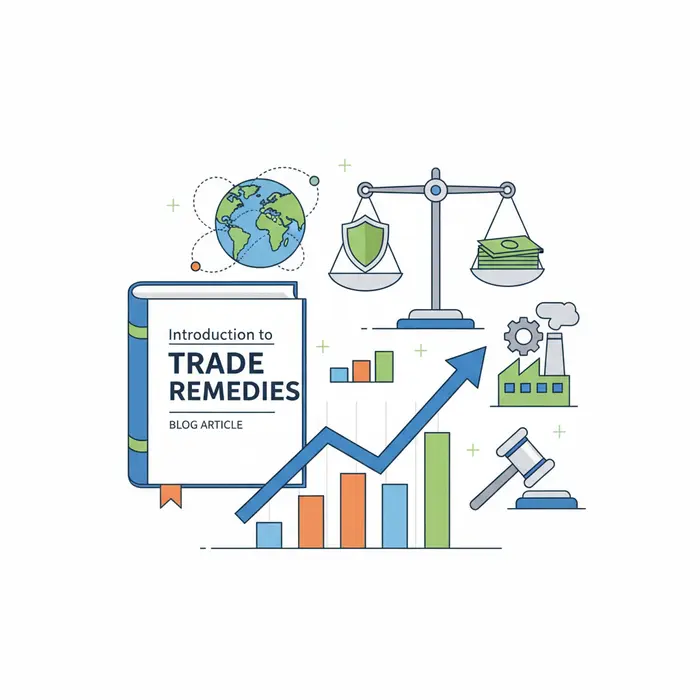
Introduction to Trade Remedies
This section defines trade remedies, explaining their fundamental purpose and significance in maintaining fairness and balance within international trade.
In the complex and ever-evolving landscape of global commerce, the pursuit of fair competition is paramount. While open markets foster economic growth and innovation, they can also be vulnerable to unfair trade practices that disadvantage domestic industries. This is where trade remedies come into play. These are a set of tools and legal measures designed to restore balance and ensure a level playing field, protecting domestic producers from the adverse effects of certain import practices. Understanding trade remedies is crucial for businesses, policymakers, and anyone involved in international trade, as they represent the bedrock of a predictable and equitable global trading system.
1. What are Trade Remedies?
Trade remedies are specific measures allowed under international trade law, primarily governed by the World Trade Organization (WTO) agreements, that countries can impose to mitigate the harm caused by unfair or injurious import practices. They are not intended to be arbitrary barriers to trade, but rather defensive actions taken under clearly defined circumstances. The three primary types of trade remedies are:
- Anti-Dumping Duties: These are tariffs imposed on imported goods that are priced below their “normal value” in the exporting country’s domestic market, or below their cost of production. Such a practice, known as dumping, can severely injure domestic industries by undercutting their prices and unfairly capturing market share. Anti-dumping duties aim to neutralize this price disadvantage.
- Countervailing Measures: Also known as anti-subsidy duties, these are imposed on imported goods that have benefited from specific subsidies provided by the government of the exporting country. These subsidies can give foreign producers an unfair cost advantage, making their products artificially cheaper. Countervailing measures seek to offset the impact of such subsidies.
- Safeguard Measures: Unlike anti-dumping and countervailing duties, safeguard measures do not target unfair trade practices. Instead, they are temporary restrictions on imports of a particular product that are causing or threatening to cause serious injury to a domestic industry, even if the imports are fairly traded. These measures provide a brief period for the domestic industry to adjust to increased import competition.
These mechanisms are vital for ensuring that countries adhere to agreed-upon rules of engagement in global trade, preventing the erosion of market fairness due to aggressive or state-supported foreign competition.
2. The Role of Fair Trade in Global Commerce
Fair trade is the bedrock upon which a stable and prosperous global economy is built. It implies that goods and services are exchanged on terms that are transparent, equitable, and free from distortions caused by predatory pricing or government intervention. When trade is fair, countries can specialize in what they do best, leading to greater efficiency, innovation, and consumer choice worldwide. However, the absence of robust enforcement mechanisms against unfair practices can quickly undermine these benefits.
Unfair trade practices disrupt market equilibrium, leading to a cascade of negative effects. For instance, when foreign products are dumped into a market, domestic producers, who operate under market-driven costs, struggle to compete. This can force them to reduce production, lay off workers, or even shut down entirely. Similarly, unchecked foreign subsidies can provide an insurmountable advantage, distorting investment decisions and stifling domestic innovation. The international trade framework, particularly the rules set forth by the World Trade Organization (WTO), establishes a system where fair competition is encouraged, and remedies are available to address violations. These rules are designed not to stop trade, but to ensure it occurs under conditions that benefit all participants in the long run, fostering trust and predictability in global commerce.
3. Why Trade Remedies Matter for Domestic Industries
For domestic industries, trade remedies are more than just legal instruments; they are critical tools for survival and growth in an increasingly interconnected global economy. Without the ability to impose trade remedies, local businesses would be vulnerable to the unchecked predatory practices of foreign competitors, leading to significant economic dislocation.
Firstly, they protect jobs. When domestic industries are harmed by unfair imports, jobs are lost, wages may stagnate, and local economies suffer. Trade remedies provide a crucial buffer, allowing industries to retain their workforce and continue operations. Secondly, they safeguard innovation and investment. Companies are less likely to invest in research and development or expand their facilities if they constantly face the threat of unfairly priced imports undermining their market. By leveling the playing field, trade remedies encourage domestic investment and foster a competitive environment where innovation can thrive.
While some critics may label trade remedies as a form of trade protectionism, it’s important to distinguish between legitimate defensive actions and arbitrary barriers. True protectionism aims to shield inefficient domestic industries from all forms of foreign competition, fair or unfair. Trade remedies, conversely, are specifically designed to address *unfair* trade practices or situations of severe market disruption, providing a temporary respite or corrective action. Their judicious application is essential for maintaining the integrity of the international trading system, ensuring that domestic industries can compete fairly and contribute to national economic prosperity, without resorting to isolationist policies.
Anti-Dumping Duties Explained
In the complex landscape of international commerce, fair competition is paramount. However, certain unfair pricing practices can distort markets, harm domestic industries, and threaten economic stability. To counter such imbalances, countries employ various trade remedies, with anti-dumping duties being among the most frequently utilized. These measures are critical tools designed to level the playing field, ensuring that imported goods compete fairly with domestically produced products.
1. What is Dumping in International Trade?
At its core, ‘dumping’ refers to an international trade practice where a company exports a product at a price lower than the price it normally charges in its own domestic market, or lower than its cost of production. The World Trade Organization (WTO) Agreement on Anti-Dumping defines dumping as occurring when a product is introduced into the commerce of another country at less than its normal value. This ‘normal value’ is typically determined by the price of the like product in the ordinary course of trade in the exporting country’s domestic market. If that’s not possible, it can be based on the highest comparable price to a third country or the cost of production in the country of origin plus a reasonable amount for administrative, selling, and general costs and for profits.
The primary concern with dumping is not merely low prices, but the potential ‘material injury’ it can inflict upon the domestic industry of the importing country. Such injury can manifest as reduced sales, lower profits, decreased market share, suppressed wages, unemployment, or even the closure of domestic businesses that cannot compete with the artificially low prices of dumped imports. While consumers might initially benefit from cheaper goods, the long-term impact can be detrimental, leading to a loss of domestic productive capacity and increased reliance on foreign suppliers.
2. How Anti-Dumping Duties are Imposed
The imposition of anti-dumping duties is a multi-stage, evidence-based process initiated by a complaint from a domestic industry. Typically, a domestic industry (or a significant portion thereof) files a petition with the relevant national investigative authority (e.g., the Department of Commerce and International Trade Commission in the U.S., or the Directorate General of Trade Remedies in India). The petition must provide evidence of dumping, material injury to the domestic industry, and a causal link between the dumped imports and the injury suffered.
Upon receiving a petition, the investigating authority conducts a thorough investigation. This involves collecting data from the domestic industry, importers, and foreign exporters to determine:
- Whether dumping has occurred and to what extent (the ‘dumping margin’).
- Whether the domestic industry has suffered material injury.
- Whether there is a causal link between the dumped imports and the alleged injury.
If all three criteria are met, the investigating authority can recommend the imposition of anti-dumping duties. These duties are typically in the form of an additional customs duty, equivalent to the dumping margin, applied to the imported product. They are product-specific and often exporter-specific. These duties are not punitive; their purpose is to offset the price advantage gained through dumping, thereby restoring fair competition. Anti-dumping duties are usually imposed for a fixed period (e.g., five years) and are subject to ‘sunset reviews,’ where authorities re-evaluate their necessity.
It’s important to differentiate anti-dumping duties from other trade protectionism measures like countervailing measures (which target subsidized imports) and safeguard measures (which address a sudden surge in imports causing serious injury, regardless of unfair practice).
3. Key Cases and Examples of Anti-Dumping Measures
The application of anti-dumping duties has been a recurring feature in global trade disputes across various sectors. For instance, the steel industry is a frequent arena for such measures, with numerous cases involving steel products from various countries facing anti-dumping duties in markets like the United States, European Union, and India. These cases often highlight the challenges domestic steel producers face from what they perceive as unfairly priced imports, impacting thousands of jobs and significant investments.
Another notable sector is renewable energy, particularly solar panels. Countries like the U.S. and E.U. have previously imposed anti-dumping duties on solar panels and cells from China, citing concerns that state-supported Chinese companies were selling products below cost, thereby disadvantaging their domestic solar industries. While such measures aim to protect local manufacturing, they can also increase costs for consumers and downstream industries that rely on affordable components.
Chemicals, textiles, agriculture, and consumer electronics have also seen their share of anti-dumping duties. Each case, while unique in its specifics, underscores the continuous tension between open trade and the need for fair competition. These measures, though often controversial, are vital mechanisms for countries to address specific instances of market distortion and prevent severe harm to their domestic industries, aligning with the broader objectives of maintaining equitable trade remedies.
Understanding Countervailing Measures
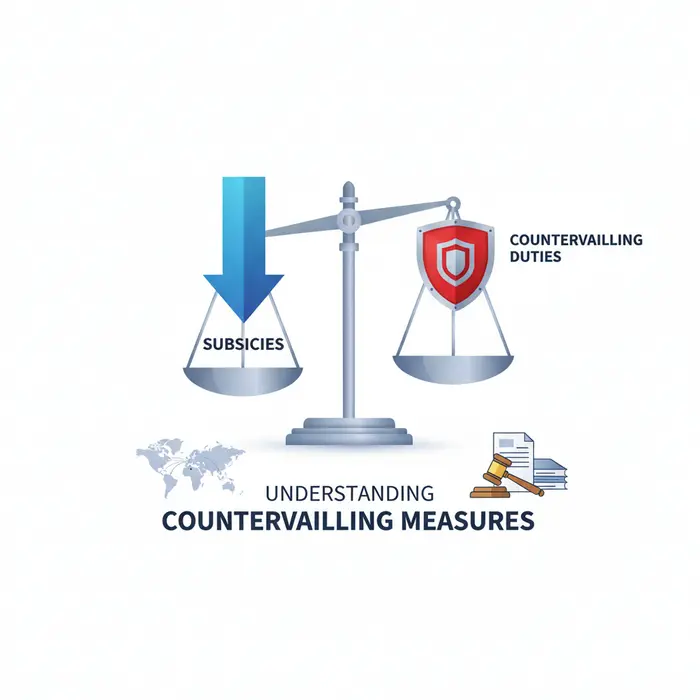
In the complex landscape of international commerce, fair competition is paramount. However, this ideal is often challenged by government interventions that distort market dynamics. Among the various tools designed to restore balance, trade remedies play a crucial role. Specifically, countervailing measures are a vital defense mechanism employed by importing countries to address and offset the unfair competitive advantage conferred upon foreign industries or products by their home governments’ subsidies. These measures are distinct from, though often discussed alongside, anti-dumping duties, which tackle predatory pricing. Countervailing measures aim to neutralize the financial contributions or benefits provided by foreign governments that enable their domestic producers to sell goods at artificially low prices, thereby harming competing domestic industries in the importing country. They are a cornerstone of modern trade protectionism, designed to ensure global trade operates on a level playing field, preventing economic harm to industries unable to compete against subsidized foreign rivals.
1. Identifying Prohibited and Actionable Subsidies
The foundation of any countervailing measures investigation lies in correctly identifying and classifying the foreign government subsidy. A subsidy involves a financial contribution by a government or public body, or income/price support, that confers a benefit. Not all subsidies are actionable; international trade law, primarily governed by the WTO Agreement on Subsidies and Countervailing Measures (ASCM), distinguishes between types. Prohibited subsidies are inherently trade-distorting and banned, typically including export subsidies or those contingent on domestic over imported goods. Actionable subsidies, conversely, are not banned but can be subject to countervailing measures if they cause adverse effects. For a subsidy to be actionable, it must be “specific,” targeting a particular enterprise, industry, or group. General infrastructure or broadly available R&D funding are usually not specific. Once a specific subsidy is identified, the authority must determine if it confers a benefit, giving an unfair advantage in international trade.
2. The Process of Applying Countervailing Duties
The application of countervailing duties is a structured and often lengthy legal process, typically initiated by a petition from a domestic industry alleging injury from subsidized imports. This petition must demonstrate reasonable grounds that a specific, actionable subsidy exists and that it is causing material injury or threat of material injury to the domestic industry. Upon acceptance, investigating authorities – often a trade department (e.g., U.S. Department of Commerce) and an injury-determining body (e.g., U.S. International Trade Commission) – launch parallel investigations. The trade department investigates the existence and amount of the foreign government subsidy, while the injury body assesses harm to the domestic industry. If both affirmative preliminary findings are made, provisional duties may be imposed. Should final affirmative determinations be reached on both subsidy and injury, definitive countervailing duties are levied. These duties are calculated to precisely offset the subsidy’s benefit, restoring fair competition. The process also includes opportunities for all interested parties, including foreign producers and governments, to present arguments.
3. Impact on Domestic Producers and Importing Countries
The implementation of countervailing measures has multi-faceted impacts, primarily aiming to safeguard domestic industries while potentially influencing broader trade relations. For domestic producers in the importing country, these duties offer a crucial shield against unfair competition. By neutralizing the cost advantage from foreign subsidies, countervailing duties allow local firms to compete on price, protect market share, and ensure long-term viability. This can lead to job preservation, investment in domestic production, and a more resilient national economy. Without such measures, subsidized imports could drive domestic industries out of business, leading to deindustrialization and reliance on foreign supply chains. However, the impact on the broader importing country can be mixed. While beneficial for the specific industry, consumers might face higher prices for imported goods if duties are passed on. Importers might also see increased costs. For the exporting country, imposing countervailing measures can lead to reduced market access, pressure to reform subsidy programs, and potentially ignite trade disputes. These measures, alongside safeguard measures and anti-dumping duties, underscore the tension between promoting free trade and ensuring fair trade, with countervailing duties serving as a critical instrument for maintaining equilibrium.
Safeguard Measures: Emergency Protection
In the intricate landscape of global commerce, countries occasionally face economic disruptions that necessitate swift and decisive action. Among the various tools available for national economic defense, trade remedies stand out as crucial mechanisms. While anti-dumping duties and countervailing measures address unfair trade practices, safeguard measures serve a distinct and vital role: providing emergency protection to a domestic industry seriously injured or threatened with serious injury by a sudden, unforeseen surge in imports. These measures are a form of temporary trade protectionism, designed not to penalize unfair behavior, but to allow a domestic industry time to adjust to increased competition.
Unlike other trade defense instruments, safeguards do not require a finding of unfair trade practices. Instead, their application hinges on the sheer volume or value of imports, irrespective of whether those imports are being dumped or subsidized. This distinction underscores their nature as an emergency brake, pulled only when a market is genuinely overwhelmed. The intent is not to foster long-term protection but to facilitate the industry’s adaptation, ensuring its viability in the face of unexpected market shifts.
1. When Are Safeguards Applied?
Safeguard measures are invoked under very specific and stringent conditions, primarily when a domestic industry experiences serious injury, or a threat thereof, due to an unforeseen and sharp increase in imports. The critical elements for their application include: a substantial increase in imports (either in absolute terms or relative to domestic production), a demonstration of serious injury or threat of serious injury to the competing domestic industry, and a clear causal link between the increased imports and the injury. “Serious injury” is typically defined as a significant overall impairment in the position of a domestic industry, encompassing factors such as declining output, sales, market share, profits, productivity, and employment. The unforeseen nature of the import surge is also paramount; it implies a development that could not have been reasonably anticipated at the time of the trade agreement or liberalization. For instance, a sudden shift in global supply chains, an unexpected technological breakthrough by foreign competitors, or a rapid currency fluctuation could all contribute to an unforeseen import surge. The purpose here is not to shield an inefficient industry indefinitely but to provide a temporary respite for an otherwise competitive industry blindsided by external shocks, giving it a chance to restructure and become more resilient.
2. Temporary Nature and Duration of Safeguard Measures
A defining characteristic of safeguard measures is their inherently temporary nature. Unlike permanent tariffs, safeguards are explicitly designed to be short-term interventions. This temporary application is crucial for several reasons: it prevents industries from becoming overly reliant on protection, encourages necessary adjustments and modernization, and upholds the overall principle of trade liberalization. Typically, an initial safeguard measure can be applied for a period of up to four years. Under certain circumstances, and following a thorough review, this period can be extended, but the total duration must not exceed eight years. Furthermore, if a safeguard measure is applied for more than one year, it must be progressively liberalized over its period of application, meaning the level of protection should gradually decrease. This degressivity ensures that the domestic industry is continuously incentivized to improve its competitiveness and not become complacent. The underlying philosophy is to offer breathing room for adaptation, not a permanent shield. Once the industry has adjusted, or the maximum allowable period expires, the measures are expected to be removed, allowing for a return to open market conditions.
3. WTO Rules and Conditions for Invoking Safeguards
The application of safeguard measures is meticulously governed by the World Trade Organization (WTO) Agreement on Safeguards, ensuring that their use remains an exception rather than the norm and is subject to strict multilateral discipline. This agreement establishes comprehensive rules and conditions that WTO members must adhere to when invoking safeguards to prevent their arbitrary or protectionist abuse. Key conditions include: conducting a thorough and transparent investigation by competent authorities, making a public finding of serious injury or threat thereof, proving the causal link to increased imports, and demonstrating that the increase in imports resulted from unforeseen developments and the effect of GATT obligations. Unlike anti-dumping duties or countervailing measures, safeguard measures must generally be applied on a non-discriminatory basis, meaning they should apply to imports from all sources (most-favoured-nation principle), although certain exceptions exist for developing countries. Furthermore, any country imposing a safeguard measure is required to notify the WTO and consult with affected exporting members. If affected members are not offered adequate compensation for the trade impairment, they retain the right to suspend substantially equivalent concessions (i.e., retaliate) within specified limits. These rigorous WTO rules on safeguards ensure transparency, fairness, and minimize the potential for disruptive trade wars, making them a legitimate but carefully controlled instrument of trade policy.
Trade Protectionism and the Future of Remedies 2025
The global economic landscape continues to be shaped by evolving political priorities, supply chain vulnerabilities, and geopolitical tensions. In this context, trade protectionism has resurfaced as a significant force, influencing national policies and international trade relations. This section will delve into the broader context of trade protectionism, analyzing its intricate relationship with trade remedies and forecasting their evolution and impact in 2025 and beyond.

1. Trade Remedies as Tools of Protectionism
While designed to offer a legitimate defense against unfair trade practices, trade remedies such as anti-dumping duties, countervailing measures, and safeguard measures are increasingly perceived and utilized as instruments of trade protectionism. Anti-dumping duties are imposed when foreign products are sold below their fair value, harming domestic industries. Countervailing measures address subsidies provided by foreign governments that give an unfair advantage to their exporters. Safeguard measures, on the other hand, offer temporary protection to a domestic industry seriously injured or threatened with serious injury by a surge in imports.
The distinction between legitimate defense and protectionist intent often blurs. Nations facing economic downturns or seeking to bolster strategic industries may lean on these tools more aggressively, citing national security or domestic employment concerns. This trend complicates international trade relations, as what one country deems a necessary defensive measure, another might interpret as an unjustified barrier to market access. Understanding the legitimate application of trade remedies under WTO rules is crucial, yet their frequent deployment raises questions about their true purpose in the current geopolitical climate.
2. Global Trends and Shifts in Trade Policy
The landscape of international trade policy is undergoing significant shifts, driven by a confluence of factors. Geopolitical rivalries, particularly between major economic powers, have spurred a drive for supply chain resilience and strategic autonomy, leading many countries to prioritize domestic production over global efficiency. This shift often manifests in industrial policies that indirectly, or sometimes directly, support local industries, increasing the likelihood of invoking countervailing duties. Furthermore, the push for green transitions and sustainable manufacturing could introduce new forms of trade barriers, as countries impose carbon border adjustment mechanisms or environmental standards, potentially leading to new types of trade disputes.
By 2025, we anticipate an intensified focus on critical sectors such as semiconductors, rare earths, and renewable energy technologies. Governments will continue to deploy trade remedies to protect nascent domestic industries or to prevent reliance on single foreign suppliers. The evolution of digital trade and the increasing debate around data localization and digital services taxes may also see traditional trade remedies adapted or new forms of protectionist measures emerge, adding layers of complexity to cross-border commerce.
3. Navigating International Trade Disputes in 2025
For businesses and governments, navigating the intricate web of international trade disputes in 2025 will require heightened vigilance and strategic foresight. The World Trade Organization (WTO), while still the foundational body for multilateral trade rules, faces ongoing challenges in its dispute settlement mechanism, particularly with the Appellate Body’s operational status. This situation can lead to greater unilateral action or bilateral dispute resolution efforts, potentially fragmenting the global trading system and increasing uncertainty.
Companies involved in international trade must enhance their compliance programs, closely monitor trade policy developments in key markets, and anticipate potential investigations related to anti-dumping, subsidies, or import surges. Investing in robust legal and trade intelligence capabilities will be paramount. Moreover, governments will need to balance domestic political pressures with their international commitments, seeking diplomatic solutions while reserving the right to implement legitimate trade remedies. The future will likely see a more assertive application of these tools, requiring all stakeholders to adapt to a more volatile and protectionism-prone trading environment.
Partner with Vietnam’s Leading Suppliers
Looking for reliable suppliers in Vietnam? Contact VietnamSuppliers.com today to connect with verified manufacturers and exporters across all industries.
—————————————
References
– Understanding the WTO: https://www.wto.org/english/thewto_e/whatis_e/whatis_e.htm
– WTO Agreement on Subsidies and Countervailing Measures: https://www.wto.org/english/thewto_e/whatis_e/tif_e/agrm8_e.htm
– WTO Agreement on Subsidies and Countervailing Measures: https://www.wto.org/english/docs_e/legal_e/19-scm_e.htm
– WTO Agreement on Safeguards: https://www.wto.org/english/docs_e/legal_e/25-sg_e.htm
– WTO Agreement on Anti-Dumping: https://www.wto.org/english/thewto_e/whatis_e/tif_e/agrm8_e.htm