The Fundamentals of Import Quotas
Import quotas are a critical tool in international trade policy, representing a quantitative restriction on the amount of a specific good that can be imported into a country during a given period. Unlike tariffs, which tax imports, quotas directly limit volume, making them a potent instrument for managing trade flows. Understanding Import Quotas in Global Trade is essential for businesses, policymakers, and consumers alike, as these measures significantly influence market dynamics, pricing, and the availability of goods. This section delves into the definition of import quotas, their primary objectives, and the intricate economic and political rationales driving their implementation in the complex landscape of international commerce.

1. What Exactly is an Import Quota?
At its core, an import quota is a non-tariff barrier that imposes an upper limit on the quantity (e.g., units, weight, or value) of certain goods that can be imported over a specified timeframe, usually a year. Once this quantitative limit is reached, no further imports of that good are permitted until the next quota period begins. This differs fundamentally from a tariff, which allows unlimited imports as long as the duty is paid. A common variant is the Tariff-rate quota explained (TRQ), where a specified quantity of goods can be imported at a lower duty rate, but any imports exceeding that quantity face a substantially higher duty rate. Such mechanisms provide a dual-layered approach to regulating import volumes and revenues. Import quotas are typically administered through licenses, which are allocated to domestic importers or foreign exporters, often based on historical import levels or through competitive bidding processes.
2. Why Nations Implement Trade Quotas
Nations implement trade quotas for a variety of strategic economic and political reasons, often aiming to protect domestic industries and achieve specific policy goals. One primary objective is to safeguard nascent or vulnerable domestic industries from intense foreign competition. By limiting imports, governments hope to give local producers a competitive advantage, allowing them to grow, achieve economies of scale, and eventually compete globally without protection. This is often framed as a measure to protect domestic jobs and ensure industrial stability. Another significant reason is to address balance of payments deficits. If a country is importing significantly more than it exports, imposing quotas can reduce the outflow of domestic currency, helping to stabilize its external accounts.
Beyond economic protection, import quotas can also serve political and security interests. For instance, a country might restrict imports of certain strategic goods to reduce dependency on foreign suppliers during times of geopolitical uncertainty. Quotas can also be used as a retaliatory measure against countries that have implemented unfair trade practices or as a bargaining chip in international trade negotiations. Furthermore, they might be employed to manage supply or demand for specific products, particularly in agriculture, to stabilize domestic prices and incomes for farmers. The Impact of import quotas on international sourcing is profound, forcing global companies to reconsider their supply chains, potentially leading to diversification of sourcing locations or investment in domestic production within the importing country.
3. Economic Impact and Consequences of Import Quotas
While import quotas can offer protection to domestic industries, their economic consequences are far-reaching and often debated. One immediate effect is the Import quota effects on market prices. By limiting the supply of imported goods, quotas tend to drive up the domestic price of the restricted product, benefiting domestic producers through higher revenues and potentially increased profits. However, this comes at the expense of domestic consumers, who face higher prices and reduced product choice. This “quota rent” often accrues to the holders of import licenses, who can purchase goods at lower international prices and sell them at higher domestic prices.
The scarcity created by quotas can also lead to inefficiencies. Domestic producers, insulated from foreign competition, may have less incentive to innovate or improve efficiency, potentially leading to stagnation in product quality and technological advancement. For exporters, Managing trade quotas for exporters becomes a complex challenge, requiring careful planning and strategy to secure limited access to foreign markets. They might have to lobby for quota allocations, form joint ventures, or even establish production facilities within the importing country to circumvent the restrictions. Moreover, quotas can distort global trade patterns, leading to trade diversion where imports are sourced from less efficient, non-quota-restricted countries. Overall, while quotas offer short-term protection and achieve specific policy aims, their long-term economic costs in terms of higher consumer prices, reduced efficiency, and potential trade retaliation often outweigh the benefits, fostering a less competitive and dynamic global trade environment.
Deconstructing Tariff-Rate Quotas
In the complex landscape of international trade, Understanding Import Quotas in Global Trade is crucial, particularly the nuanced instrument known as the Tariff-Rate Quota (TRQ). Unlike simpler tariffs or absolute quotas, TRQs represent a sophisticated hybrid mechanism designed to balance protection for domestic industries with limited market access for imports, playing a pivotal role in global sourcing and market dynamics.
1. Tariff-Rate Quota (TRQ) Explained
At its core, a Tariff-Rate Quota operates on a distinctive two-tiered tariff structure. This means that a specific quantity of an imported product, known as the “in-quota” volume, is permitted to enter a country at a relatively lower, often preferential, tariff rate. Once imports exceed this predetermined volume, any additional quantity, termed the “out-of-quota” volume, becomes subject to a significantly higher, frequently prohibitive, tariff rate. This tiered system aims to regulate the volume of goods entering a market without imposing an outright ban, thereby providing a controlled level of market access while still offering substantial protection to domestic producers.
The allocation of in-quota volumes can vary widely, depending on the trade agreements and administrative policies of the importing country. Common methods include a “first-come, first-served” basis, historical import shares, direct licensing to specific importers, or even auctions. The primary objective, as outlined by the tariff-rate quota mechanism, is to manage the supply of certain goods, often those deemed sensitive or critical to national interests, such as agricultural products, textiles, or steel. Effectively, TRQs create a two-tiered pricing system where importers benefit from lower costs up to the quota limit, after which their costs dramatically increase, influencing purchasing decisions and market supply.
2. TRQs vs. Absolute Quotas and Standard Tariffs
To fully grasp the strategic implications of TRQs, it’s essential to differentiate them from other common trade barriers: absolute quotas and standard tariffs. An absolute quota imposes a strict, hard ceiling on the quantity of a specific good that can be imported within a given period. Once this limit is reached, no further imports are allowed, regardless of demand or price. This mechanism is highly restrictive and often used for critical industries or to enforce embargoes, creating a binary ‘on-off’ switch for imports.
In contrast, a standard tariff is a uniform tax levied on all imported goods, typically calculated as a percentage of their value or per unit. While tariffs increase the cost of imports and can reduce their competitiveness, they do not restrict the quantity of goods that can enter a market. Importers are free to bring in as much as they wish, provided they pay the prescribed duty. The primary effect is on price and, subsequently, demand.
TRQs occupy a middle ground, offering a more flexible yet still highly influential tool. Unlike absolute quotas, they do not completely halt imports beyond a certain volume; instead, they make these additional imports significantly more expensive. Unlike standard tariffs, they introduce a quantitative dimension that creates distinct price points for different import volumes. This structure has significant import quota effects on market prices, creating price advantages for initial quantities and steep disincentives for exceeding them, thereby shaping market supply, demand, and domestic competition.
3. Practical Applications and Strategic Implications of TRQs
Governments deploy TRQs for a variety of strategic reasons. They are frequently used to protect nascent or vulnerable domestic industries from intense foreign competition, allowing them to grow without being overwhelmed. Furthermore, TRQs are often integral components of international trade agreements, such as those within the World Trade Organization (WTO) framework, where they serve as a compromise between full market liberalization and outright protectionism, particularly for sensitive sectors like agriculture.
For businesses in global commerce, understanding and managing TRQs is paramount. For importers, the impact of import quotas on international sourcing is profound. They must strategically plan their purchasing to secure goods within the lower-tariff quota, often leading to intense competition for early market access. This might involve forecasting demand accurately, building strong relationships with suppliers capable of delivering within quota periods, and potentially exploring alternative sourcing strategies if quota limits are consistently met. Failure to operate within the in-quota limits can drastically increase operational costs, eroding profit margins.
Conversely, managing trade quotas for exporters requires a proactive approach. Exporters need to be aware of the TRQ regimes in their target markets, understanding quota sizes, allocation methods, and the applicable tariff rates. Strategies may include securing quota licenses, timing shipments strategically to align with quota availability, or even developing products that are exempt from or have separate quota categories. By effectively navigating TRQ complexities, both importers and exporters can mitigate risks, optimize costs, and maintain a competitive edge in global markets, essential for Understanding Import Quotas in Global Trade.
Impact on International Sourcing & Supply Chains
Import quotas, quantitative restrictions on the volume or value of goods that can be imported into a country during a specific period, represent a significant non-tariff barrier with profound implications for global trade. Unlike tariffs, which levy a tax, quotas directly limit quantities, often leading to more immediate and dramatic shifts in market dynamics. For businesses engaged in international sourcing, understanding the intricacies of these limitations is paramount. They directly influence procurement strategies, reshape supplier relationships, and can introduce considerable instability into complex international supply chains. Navigating these restrictions requires a nuanced approach, blending strategic foresight with agile operational adjustments to mitigate risks and maintain competitive advantage. The interplay between these trade policies and global commerce is a critical aspect of understanding import quotas in global trade.
1. Restricting Product Availability and Supplier Choices
One of the most immediate and tangible effects of import quotas is the severe restriction they impose on product availability and the range of potential suppliers. When a country enforces a quota on a particular product, the volume of that good entering the domestic market is capped, regardless of demand. This artificially constrains supply, making it challenging for businesses to procure necessary raw materials, components, or finished goods from their preferred international vendors. Global procurement managers, who typically strive for diversification to reduce risk and secure competitive pricing, find their options significantly narrowed.
For specialized industries or those reliant on unique components, quotas can be particularly debilitating. If a preferred international supplier offers a unique quality, cost advantage, or technological edge, a quota might force buyers to seek less optimal domestic alternatives or higher-cost foreign suppliers not affected by the quota (if such options exist). This erosion of choice often translates into higher input costs, reduced product innovation, and potentially lower quality for the end consumer. Furthermore, long-standing supplier relationships, built on trust and efficiency, can be severely disrupted, forcing companies to prematurely disengage from reliable partners due to trade policy rather than performance issues. The introduction of a tariff-rate quota explained is a common variant, where a certain quantity can be imported at a lower tariff, but imports above that quantity face a much higher tariff, effectively acting as a two-tiered restriction.

2. Shifting Supply Chains and Reshoring Incentives
Import quotas act as powerful catalysts for the re-evaluation and restructuring of international supply chains. By making imports more expensive or simply unavailable beyond a certain threshold, quotas incentivize domestic production or sourcing from unaffected countries. This often leads to a phenomenon known as reshoring, where companies bring manufacturing operations back to their home country, or nearshoring, moving production to neighboring countries with more favorable trade agreements. The “impact of import quotas on international sourcing” is clearly visible here, as businesses are compelled to alter their entire geographical sourcing strategy.
While reshoring can sometimes strengthen domestic industries and create local jobs, it comes with its own set of challenges. Relocating production involves significant capital investment, retooling, training a new workforce, and potentially sacrificing economies of scale achieved through global specialization. For multinational corporations, navigating a patchwork of quotas across different markets can create highly fragmented and inefficient supply networks, increasing logistical complexities and overheads. The ultimate goal is often to mitigate the risk associated with reliance on potentially unstable international trade policies. These shifts highlight the dynamic nature of global trade and the constant need for supply chain resilience in the face of evolving protectionist measures.
3. Increased Costs and Market Volatility
Beyond restricting availability and prompting supply chain shifts, import quotas inevitably lead to increased costs and heightened market volatility. When the supply of a product is artificially limited by a quota, domestic demand often outstrips the available supply, driving up prices. This “import quota effects on market prices” phenomenon can impact both businesses, which face higher input costs, and consumers, who pay more for goods. For industries that rely heavily on imported components, these increased costs can erode profit margins, reduce competitiveness, or force them to pass on the expenses, contributing to inflation.
Furthermore, quotas introduce an element of uncertainty and speculation into markets. The value of an import license (the right to import under a quota) can become a tradable commodity itself, adding another layer of cost. Companies might hoard available quota allocations or rush to secure imports before quotas are met, leading to erratic purchasing patterns. This unpredictability makes long-term planning difficult for both importers and exporters. Exporters, in particular, face the challenge of “managing trade quotas for exporters,” which involves understanding quota allocation mechanisms, predicting market demand within quota limits, and sometimes even lobbying for increased quota access. This environment of scarcity and unpredictability underscores the inherent market distortions created by quantitative restrictions, making efficient resource allocation and stable pricing a continuous struggle.
Import Quotas: Market Price & Consumer Effects
Import quotas, as a form of non-tariff barrier, restrict the quantity of specific goods allowed to enter a country over a defined period. Unlike tariffs that impose a tax, quotas directly limit volume, aiming to protect domestic industries, manage supply, or address balance of payment concerns. However, their influence extends far beyond mere quantity control, profoundly impacting domestic and international market prices, the availability of goods, and ultimately, consumer welfare. Understanding Import Quotas in Global Trade is crucial for businesses navigating the complexities of international trade and for consumers assessing market dynamics.
1. How Quotas Drive Up Domestic Prices
When an import quota is imposed, the immediate effect is a reduction in the total supply of the restricted good available in the domestic market. By artificially limiting the influx of foreign products, the quota shifts the supply curve to the left. With demand remaining constant or increasing, this reduction in supply inevitably leads to higher equilibrium prices for the product within the domestic market. Domestic producers, now facing less competition from lower-priced imports, can raise their prices without fear of losing significant market share. This scenario is particularly true if the domestic industry cannot fully meet the existing demand or produce at the same efficiency as foreign counterparts. The impact of import quotas on market prices is a direct consequence of this supply constraint, creating an artificial scarcity that benefits domestic suppliers at the expense of consumers. This is a key mechanism often explored when a tariff-rate quota explained is under discussion, as both can lead to price distortions.
2. Impact on Consumer Choice and Purchasing Power
The ripple effect of import quotas extends directly to consumers, diminishing both their choice and purchasing power. With fewer imported goods available, consumers face a narrower selection of products, potentially limiting access to diverse brands, specific features, or innovative designs that foreign markets might offer. Furthermore, the higher domestic prices resulting from quotas mean that consumers must pay more for the same or similar goods. This effectively reduces their disposable income and, consequently, their purchasing power. For instance, if an import quota drives up the price of a necessary commodity, households will have less money left for other goods and services, affecting their overall quality of life. In some cases, the absence of high-quality, competitively priced imports may force consumers to settle for domestically produced alternatives that might be of lower quality or less suited to their preferences, but are now the only viable option within their budget.
3. Broader Economic and Trade Implications
Beyond immediate price and consumer effects, import quotas carry broader economic and trade implications. For businesses involved in international sourcing, quotas can disrupt established supply chains, forcing companies to seek alternative, potentially more expensive or less efficient, domestic suppliers. This adds complexity and cost to their operations, which can eventually be passed on to consumers. Globally, the imposition of quotas can invite retaliatory measures from affected trading partners, escalating trade tensions and potentially leading to a tit-for-tat protectionism that harms global trade flows. Such measures make managing trade quotas for exporters a significant challenge, as market access becomes unpredictable. Moreover, quotas can foster inefficiency in domestic industries by shielding them from international competition, reducing their incentive to innovate or improve productivity. This long-term effect can hinder a nation’s overall economic competitiveness. Organizations like the World Trade Organization (WTO) often monitor and discuss the use of such barriers, advocating for free and fair trade. The impact of quantitative restrictions on global trade flows and economic development is a constant subject of international trade policy.
Navigating Quotas: Strategies for Exporters
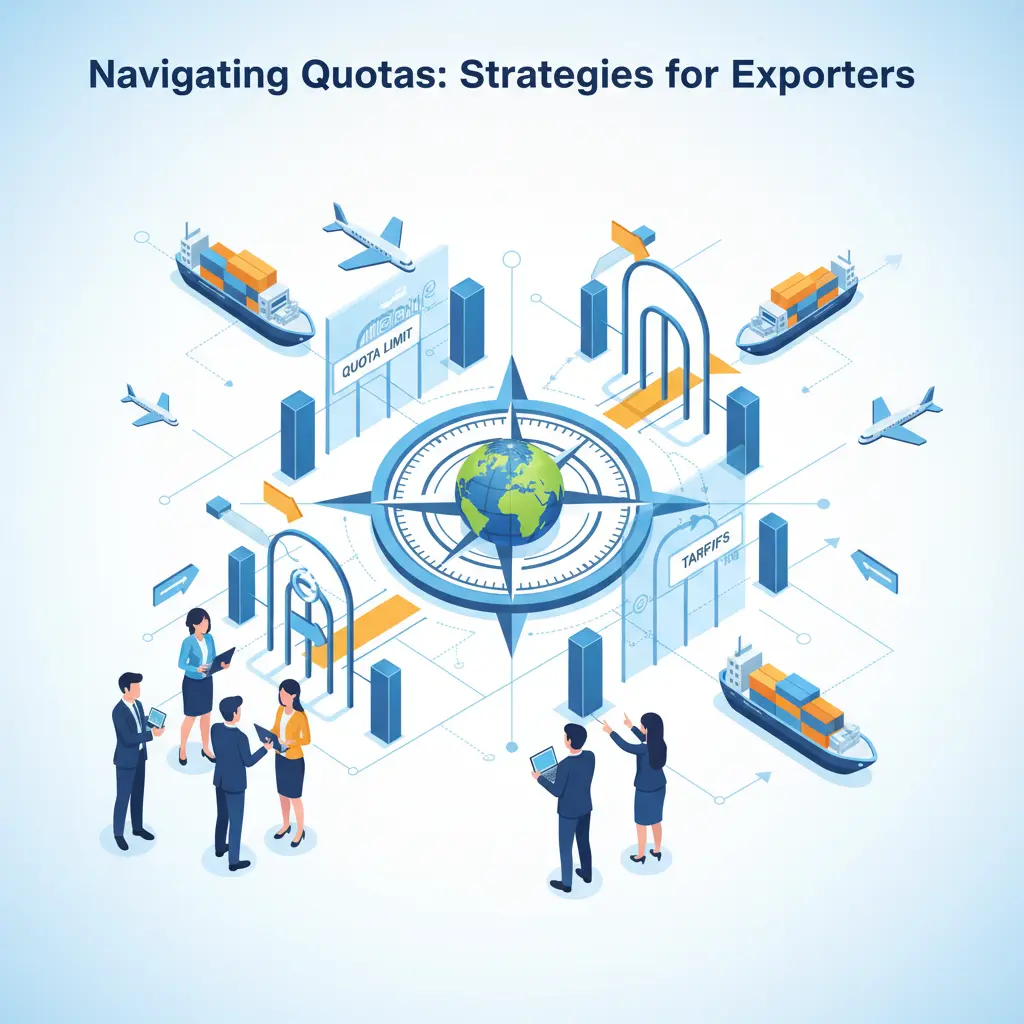
In the dynamic landscape of global commerce, exporters often face a myriad of challenges, not least among them being trade quotas. These quantitative restrictions on imports or exports can significantly impact market access, supply chain stability, and profitability. This section aims to provide actionable insights and strategic approaches for exporters to effectively manage and comply with trade quotas, ensuring continued market access and competitiveness. A comprehensive understanding of import quotas in global trade is paramount for sustainable international business.
1. Monitoring Quota Limits and Allocation Systems
The first and most crucial step in navigating trade quotas is diligent monitoring of their limits and understanding the allocation mechanisms. Quotas are not static; they can change annually, quarterly, or even more frequently, influenced by political decisions, economic conditions, or bilateral agreements. Exporters must establish robust systems to track real-time quota utilization rates for their target markets and products. This involves regularly checking official government websites, customs authorities, and trade databases. Some quotas operate on a “first-come, first-served” basis, while others are allocated through licenses based on historical performance, specific criteria, or even auctions. Being aware of how a particular quota is administered is critical for timely shipments and avoiding costly penalties or shipment rejections. For instance, understanding a tariff-rate quota explained means knowing when lower duties apply and when higher tariffs kick in once the quota limit is reached. Proactive monitoring allows exporters to adjust their shipping schedules, production volumes, and inventory management to align with available quota allowances, thereby maintaining a consistent presence in target markets.
2. Diversifying Markets and Value-Added Strategies
An over-reliance on a single market or a few key markets that are subject to restrictive quotas can expose exporters to significant risks. A strategic approach involves diversifying export markets to mitigate the impact of quotas in any one region. By spreading risk across multiple countries, exporters can reduce their vulnerability to sudden quota changes or closures. This might involve exploring emerging markets or regions with more liberal trade policies. Furthermore, adopting value-added strategies can sometimes help exporters navigate quota challenges. By transforming raw materials into higher-value, finished products, companies may be able to classify their goods under different Harmonized System (HS) codes that face less stringent quota restrictions or even fall outside quota limitations altogether. For example, exporting processed agricultural goods rather than raw produce might open new avenues. This approach not only enhances profitability but also provides flexibility in navigating trade barriers. Considering the impact of import quotas on international sourcing, diversification can also lead to more resilient supply chains.
3. Leveraging Free Trade Agreements and Origin Rules
Free Trade Agreements (FTAs) and Preferential Trade Agreements (PTAs) often provide significant advantages for exporters, including preferential tariff rates or increased quota allocations for goods originating from member countries. Exporters should thoroughly research and understand the FTAs that their home country or target markets are party to. These agreements can offer a competitive edge by reducing duties, improving market access, or providing larger quota volumes than non-FTA partners. However, merely being in an FTA is not enough; exporters must meticulously comply with the Rules of Origin (ROO) specified in each agreement. ROO determine whether a product qualifies as “originating” from a particular country and is therefore eligible for preferential treatment. This often involves detailed record-keeping, documentation, and sometimes specific manufacturing processes or value-add thresholds within the originating country. Failing to meet ROO requirements can result in goods being denied preferential treatment, subjecting them to standard quotas and tariffs, which can significantly affect profitability and the import quota effects on market prices. Staying informed about global trade facilitation agreements and how they pertain to quotas is essential for maximizing market opportunities.
Successfully managing trade quotas for exporters requires a proactive, multi-faceted strategy. By combining vigilant monitoring, market diversification, value-added approaches, and strategic utilization of free trade agreements, exporters can not only comply with these trade barriers but also transform them into opportunities for competitive advantage and sustainable growth in the global marketplace. A deep understanding and agile response to quota dynamics are key to ensuring uninterrupted market access and long-term success.
Partner with Vietnam’s Leading Suppliers
Looking for reliable suppliers in Vietnam? Contact VietnamSuppliers.com today to connect with verified manufacturers and exporters across all industries.
—————————————
References
– Import Quota: https://www.investopedia.com/terms/i/importquota.asp
– USDA Foreign Agricultural Service – Tariff-Rate Quotas: https://www.fas.usda.gov/topics/tariff-rate-quotas
– WTO Agreement on Agriculture: https://www.wto.org/english/thewto_e/whatis_e/tif_e/agrm3_e.htm
– WTO Agreement on Agriculture – Quantitative Restrictions: https://www.wto.org/english/thewto_e/whatis_e/tif_e/agrm8_e.htm
– WTO Trade Facilitation Agreement: https://www.wto.org/english/tratop_e/tradfa_e/tradfa_e.htm