
Introduction to Trade Liberalization
Trade liberalization stands as a cornerstone of modern global economics, profoundly reshaping the way nations interact and conduct business. At its core, it refers to the systematic reduction or elimination of governmental barriers to international trade, fostering an an environment where goods, services, and capital can flow more freely across borders. This strategic shift has not only spurred unprecedented economic growth in many regions but has also fundamentally altered the architecture of global supply chains, transforming everything from sourcing strategies to market access. Understanding its history and mechanisms is crucial for comprehending the complex, interconnected world of commerce we inhabit today.

1. What is Trade Liberalization?
Trade liberalization encompasses a range of policies designed to dismantle obstacles that hinder the free movement of goods and services between countries. These barriers traditionally include tariffs (taxes on imported goods), non-tariff barriers (such as quotas, import licenses, and complex customs procedures), and subsidies that favor domestic industries. The primary objective of trade liberalization is to foster greater efficiency, stimulate competition, and provide consumers with a wider array of choices at potentially lower prices. For businesses, this translates into expanded export market access and significant Impact of Trade Liberalization on Global Supply Chains, enabling them to source components and raw materials more economically. For example, the tariff reduction benefits for importers mean lower input costs, which can then be passed on to consumers or reinvested into innovation. By reducing these friction points, trade liberalization aims to integrate economies more deeply into the global marketplace, fostering specialization and comparative advantage among nations.
2. Historical Context and Key Milestones
The roots of modern trade liberalization can be traced back to the post-World War II era, when global leaders recognized the need for a cooperative framework to prevent future conflicts and promote economic stability. This led to the creation of the General Agreement on Tariffs and Trade (GATT) in 1947, a multilateral treaty focused on reducing tariffs and other trade barriers. Over several decades, GATT rounds of negotiations progressively lowered tariffs and addressed non-tariff barriers, laying the groundwork for a more open global trading system. A pivotal moment arrived in 1995 with the establishment of the World Trade Organization (WTO), which superseded GATT and introduced a more robust institutional framework for global trade rules, dispute settlement, and ongoing liberalization efforts. Alongside these multilateral agreements, the proliferation of regional free trade agreements impact on sourcing strategies significantly. Pacts like the European Union (EU), the North American Free Trade Agreement (NAFTA, now USMCA), and the ASEAN Free Trade Area (AFTA) further deepened integration among member states, allowing companies to optimize their sourcing and production networks across participating countries. These historical milestones collectively illustrate a persistent global drive towards dismantling protectionist measures in favor of integrated economies.
For a detailed history of the multilateral trading system, refer to the World Trade Organization’s overview of the GATT years.
3. The Evolving Landscape of Global Trade
The continuous push for trade liberalization has dramatically reshaped the global economic landscape, especially in how companies construct and manage their supply chains. Decades of reduced tariffs and streamlined customs procedures have enabled businesses to fragment their production processes, sourcing components and manufacturing goods wherever it is most efficient and cost-effective. This has led to the rise of complex, interconnected global supply chains stretching across continents, facilitating specialized production and fostering global competitiveness. Companies have leveraged these open trade policies for significant supply chain optimization through open trade, often leading to lower production costs and enhanced market responsiveness. However, this evolving landscape is not without its challenges. Recent years have seen a rise in protectionist sentiments and shifts in trade policy changes and export market access, triggered by geopolitical tensions, trade disputes, and calls for greater supply chain resilience and national security. While the foundational principles of trade liberalization remain, the emphasis is increasingly shifting towards balancing efficiency with robustness, and global integration with regional self-sufficiency. Navigating these complexities requires businesses to be agile, constantly adapting their sourcing and distribution networks to new regulatory environments and economic realities, ensuring continued access to vital markets and resources.
Free Trade Agreements and Sourcing Strategies
Free Trade Agreements (FTAs) are pivotal in shaping global commerce, directly influencing company decisions regarding where to source materials, components, and finished goods. These agreements, which reduce or eliminate tariffs and non-tariff barriers between signatory countries, fundamentally alter the economic landscape for international trade. Understanding the impact of trade liberalization on global supply chains is crucial for businesses aiming to remain competitive and resilient in an interconnected world.
1. Optimizing Global Sourcing Through FTAs
Optimizing global sourcing through FTAs involves strategically leveraging the preferential treatment offered by these agreements to reduce costs and enhance efficiency. The most immediate and significant benefit is the reduction or elimination of tariffs, which directly translates into tariff reduction benefits for importers. For instance, a company importing components from an FTA partner country can avoid import duties that would otherwise apply, significantly lowering landed costs. This direct cost saving makes goods from FTA regions more competitive and attractive, encouraging businesses to shift their sourcing bases to these areas.
Beyond tariffs, FTAs often streamline customs procedures, harmonize standards, and improve intellectual property protection, further facilitating trade. These provisions contribute to overall supply chain optimization through open trade by reducing lead times, mitigating regulatory hurdles, and enhancing transparency. Companies can also benefit from better access to high-quality raw materials or specialized components available within FTA blocs. However, it’s vital to navigate the complex ‘rules of origin’ stipulations within FTAs, which dictate what percentage of a product must originate from member countries to qualify for preferential treatment. This complexity often requires meticulous planning and robust compliance frameworks, but the strategic advantage gained in terms of cost and market access often outweighs the administrative effort. Ultimately, the profound free trade agreements impact on sourcing strategies is evident in the strategic decisions companies make to leverage these frameworks for competitive advantage.
2. Mitigating Risks in Diversified Supply Chains
FTAs play a critical role in mitigating risks by promoting the diversification of supply chains. By opening up new markets and creating stable trading environments, these agreements allow companies to reduce their reliance on a single country or region for critical inputs. This diversification is a key strategy against geopolitical instabilities, natural disasters, or protectionist measures that could disrupt production in concentrated supply chains. For example, if a major supplier in a non-FTA country faces political unrest or imposes export restrictions, having alternative suppliers in FTA partner countries provides a crucial buffer, ensuring continuity of supply and minimizing operational downtime.
The predictability and stability offered by FTAs are invaluable. Unlike unilateral trade policies that can change abruptly, the commitments enshrined in FTAs provide a more secure framework for long-term investment and sourcing decisions. This stability encourages businesses to explore new export markets and establish deeper supply chain relationships with partners in signatory countries, enhancing overall resilience. Organizations like the World Trade Organization have long championed the principle of trade liberalization, emphasizing its role in fostering economic cooperation and mitigating trade-related risks. Consequently, strategic sourcing within FTA networks can provide insulation against unexpected trade policy changes and export market access challenges, offering a robust mechanism for risk management in an increasingly volatile global economy.
3. Impact on Nearshoring and Reshoring Decisions
While FTAs generally promote global sourcing by making distant markets more accessible and cost-effective, their presence or absence also significantly influences nearshoring and reshoring decisions. Nearshoring, the practice of relocating production closer to the end market, and reshoring, bringing production back to the home country, are often driven by factors like rising labor costs in traditional manufacturing hubs, geopolitical tensions, and the desire for greater supply chain control and resilience. However, FTAs can either accelerate or decelerate these trends.
For instance, FTAs within a geographical region (like the USMCA or agreements within the European Union) can make nearshoring *within that bloc* highly attractive. Companies might shift production from Asia to Mexico or Eastern Europe to serve North American or Western European markets, respectively, leveraging preferential tariffs, shorter logistics routes, and cultural proximity. These regional FTAs essentially create a larger, integrated market that incentivizes sourcing within its boundaries. Conversely, the absence of an FTA, or the imposition of new tariffs on a trading partner, might push companies towards reshoring to avoid trade barriers, despite potentially higher domestic production costs. Businesses carefully weigh the benefits of reduced tariffs and market access provided by FTAs against the strategic advantages of proximity, speed-to-market, and reduced carbon footprint offered by nearshoring or reshoring, making the role of trade agreements a complex but critical factor in these strategic location decisions.
Tariff Reductions and Their Economic Benefits
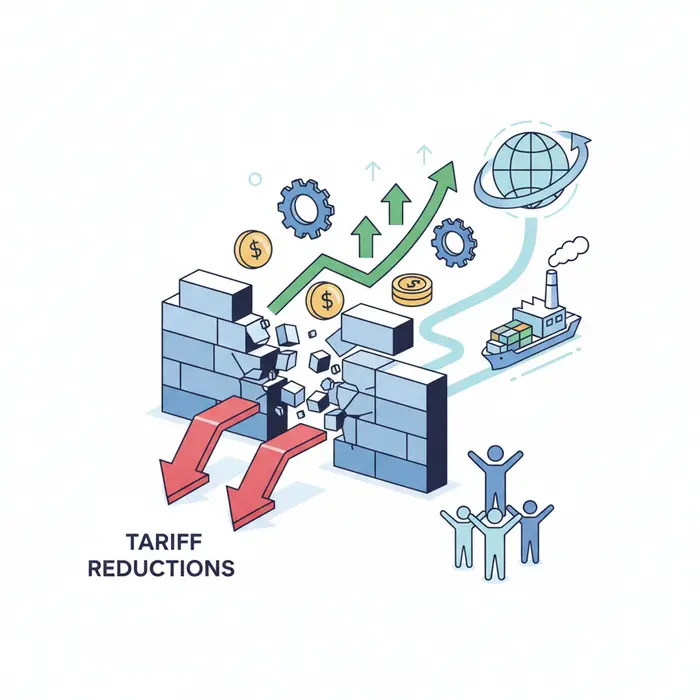
The global economic landscape is continuously reshaped by shifts in trade policy, with tariff reductions standing out as a powerful catalyst for economic growth and business prosperity. Tariffs, essentially taxes on imported goods, have historically served various purposes, from protecting domestic industries to generating government revenue. However, a concerted move towards lower tariffs, often facilitated by international agreements, directly translates into tangible financial advantages for businesses and profound benefits for consumers. This significant shift underscores the broader Impact of Trade Liberalization on Global Supply Chains, fostering a more interconnected and efficient international marketplace. By dismantling these fiscal barriers, economies can unlock new levels of efficiency, drive innovation, and enhance overall market dynamism, creating a ripple effect that benefits all participants in the trade ecosystem.
1. Cost Savings for Importers and Manufacturers
One of the most immediate and impactful consequences of tariff reductions is the direct financial relief experienced by importers and manufacturers. When tariffs are lowered or eliminated, the cost of bringing raw materials, components, semi-finished goods, or even finished products across borders significantly decreases. This provides substantial tariff reduction benefits for importers, who no longer bear the heavy burden of these import taxes. For manufacturers, this means cheaper inputs, which directly translates to lower production costs. These savings can then be strategically utilized: businesses might choose to increase their profit margins, reinvest in research and development, expand their operations, or, crucially, pass on some of these savings to the end consumer. Such reductions in overhead facilitate greater flexibility in pricing strategies and bolster competitiveness in both domestic and international markets. Moreover, lower input costs enable better supply chain optimization through open trade, allowing companies to source the best quality materials at the most economical prices globally, unhindered by punitive import duties. This strategic advantage promotes efficiency and innovation across the entire production process.
2. Impact on Consumer Prices and Market Competitiveness
The cost savings realized by importers and manufacturers through tariff reductions rarely stay confined to businesses alone; they invariably flow down to the consumer level, influencing market dynamics profoundly. When the cost of importing goods falls, businesses can afford to lower their retail prices without compromising their profit margins. This direct reduction in consumer prices means that goods become more affordable, increasing purchasing power and improving the standard of living. For instance, free trade agreements impact on sourcing strategies, allowing retailers to import a wider variety of goods from different countries at competitive prices, which directly benefits consumers through greater choice and affordability. Furthermore, the influx of more competitively priced foreign goods intensifies market competition. Domestic producers are prompted to innovate, improve efficiency, and potentially lower their own prices to remain competitive, leading to a race to the top for quality and value. This vibrant competitive environment not only benefits consumers through better products and services but also stimulates innovation across industries. Additionally, these trade policy changes and export market access contribute to a more diverse marketplace, offering consumers an expansive selection of goods they might not have had access to previously, enriching their choices and driving economic activity.
3. Navigating Non-Tariff Barriers in Open Markets
While tariff reductions undeniably pave the way for more open and integrated markets, it’s crucial to acknowledge that the path to truly free trade is often complex, marked by challenges beyond mere customs duties. Even as tariffs fall, businesses, particularly those engaged in international trade, must contend with a myriad of non-tariff barriers (NTBs). These invisible yet formidable obstacles can include import quotas, overly stringent product standards, complex customs procedures, health and safety regulations, anti-dumping measures, and government subsidies to domestic industries. Unlike tariffs, which are straightforward financial levies, NTBs are often more opaque and harder to navigate, demanding significant expertise and resources from businesses. For example, a company might face challenges in aligning its products with a foreign market’s specific environmental or safety certifications, or it might encounter bureaucratic delays that add to costs and lead times. Understanding and effectively overcoming these NTBs is paramount for businesses seeking to capitalize fully on the opportunities presented by trade liberalization. It often requires thorough market research, adaptation of products and processes, and sometimes even lobbying efforts to advocate for regulatory harmonization. Organizations like the World Trade Organization (WTO) actively work to reduce these impediments, recognizing their potential to undermine the benefits of tariff reductions and distort global trade. Successfully addressing NTBs is essential for maximizing the economic advantages gained from reduced tariffs and ensuring equitable market access for all participants. For more information on challenges in international trade, see the WTO’s work on non-tariff measures.
Trade Policy Changes and Market Access
The global economic landscape is constantly reshaped by evolving trade policies, dictating the flow of goods and services across borders and significantly influencing market access for both exporters and importers. Understanding the intricate Impact of Trade Liberalization on Global Supply Chains is crucial for businesses. While liberalization often creates new opportunities, shifts towards protectionism or the formation of exclusive trade blocs can introduce challenges, necessitating strategic adaptation to new global market dynamics.
1. Expanding Export Market Opportunities
Trade liberalization, marked by reduced tariffs and eliminated quotas, powerfully expands export market opportunities. Free trade agreements (FTAs) provide preferential access, allowing goods and services to flow more freely and making products more competitive abroad. Tariff reduction benefits for importers in partner countries lower landed costs, increasing product attractiveness. This environment encourages businesses to explore new geographies, leading to increased export volumes and market diversification. The profound free trade agreements impact on sourcing strategies is evident, as companies can source inputs from FTA partners at lower costs, enhancing their competitive edge. Ultimately, broadened trade policy changes and export market access empower businesses to tap larger customer bases and foster growth. This positive shift is a significant aspect of the overall Impact of Trade Liberalization on Global Supply Chains, enabling more efficient resource allocation and increased international trade.
2. Challenges in Adapting to New Trade Policies
Evolving trade policies also present substantial challenges. Adapting to new trade regimes demands significant investment in time and resources. Companies must navigate complex regulations, including updated rules of origin, sanitary standards, and technical barriers. For importers, non-tariff barriers can sometimes negate tariff reduction gains, adding complexity and cost. Liberalization can intensify domestic competition, as foreign goods become more accessible, potentially displacing local producers. Ongoing trade policy shifts, whether towards liberalization or protectionism, demand constant re-evaluation and adjustment of sourcing strategies. A change in trade relations might necessitate a complete overhaul of an existing global supply chain. Companies failing to react swiftly risk losing market share, facing increased operational costs, or being excluded from key markets. This continuous need for agility and foresight is paramount in an era of fluid trade policies.
3. Regional Trade Blocs and Market Dynamics
The proliferation of regional trade blocs (e.g., EU, USMCA, ASEAN) profoundly influences global market dynamics. These blocs foster economic integration among members by reducing internal trade barriers and often establishing common external tariffs. For businesses within these blocs, market access is significantly enhanced, leading to streamlined trade, reduced costs, and opportunities for supply chain optimization through open trade within the region. This preferential treatment can encourage foreign direct investment as companies seek to leverage internal market benefits. Conversely, regional trade blocs can create trade diversion, making it more difficult and costly for non-member countries to export into these integrated markets. This can put outside businesses at a competitive disadvantage, forcing them to re-evaluate strategies or consider establishing operations within a bloc. The evolving landscape of regional trade agreements continually reshapes global trade flows, creating distinct spheres of influence. For a deeper understanding of the global landscape of regional trade agreements, insights can be found from authoritative sources like the World Trade Organization. Understanding specific bloc rules and benefits is critical for optimizing market access and refining international trade strategies.
In conclusion, the evolution of global and regional trade policies presents a mixed landscape of opportunities and challenges. While trade liberalization can expand market access and foster efficient global supply chains, businesses must remain vigilant to the complexities introduced by new regulations, increased competition, and the strategic implications of regional trade blocs. Successful navigation requires continuous monitoring, proactive adaptation, and a strategic approach to sourcing, production, and market entry, ensuring resilience and competitiveness in an interconnected global economy.
Optimizing Supply Chains in an Open Trade Environment
The global economic landscape is increasingly characterized by open trade environments, driven by various free trade agreements impact on sourcing strategies and multilateral accords. For businesses operating across borders, understanding the profound impact of trade liberalization on global supply chains is paramount. This environment presents both opportunities and challenges, necessitating a strategic approach to supply chain management. By embracing open trade principles, companies can enhance efficiency, build resilience, and drive sustainability within their global networks. Leveraging tariff reduction benefits for importers and adapting to trade policy changes and export market access shifts are crucial for sustained growth. This section provides actionable strategies and best practices for businesses to thrive by optimizing their supply chains in this dynamic landscape.

1. Leveraging Digitalization for Supply Chain Transparency
Digitalization is no longer a luxury but a necessity for modern supply chains, especially in an open trade environment where regulations and market dynamics can shift rapidly. Supply chain optimization through open trade means deploying advanced technologies like Artificial Intelligence (AI), Machine Learning (ML), Blockchain, and the Internet of Things (IoT) to gain real-time visibility and control. These tools enable businesses to track goods from origin to destination, monitor compliance with international trade laws, and mitigate risks proactively. For example, blockchain can create immutable records of transactions, enhancing trust and reducing fraud in cross-border dealings. IoT sensors can provide real-time data on shipment conditions, ensuring product integrity. This heightened transparency is vital for navigating complex customs procedures, optimizing inventory levels, and identifying potential bottlenecks or disruptions before they escalate. Digitalization facilitates faster decision-making, allowing companies to capitalize on trade facilitation measures and adapt quickly to emerging market opportunities presented by open trade.
2. Building Resilient and Agile Supply Networks
The increasing interconnectedness fostered by open trade environments underscores the importance of building resilient and agile supply networks. Resilience refers to the ability to withstand and recover from shocks, while agility is the capacity to adapt quickly to changing conditions. Strategies include diversifying supplier bases across multiple geographies to reduce reliance on any single region, thus minimizing exposure to localized disruptions or protectionist policies. Free trade agreements can significantly ease this diversification by lowering trade barriers and making new markets more accessible. Furthermore, implementing scenario planning and robust risk management frameworks allows businesses to anticipate potential issues and develop contingency plans. Agility also involves adopting flexible manufacturing processes and investing in responsive logistics infrastructure. By having alternative sourcing, production, and distribution channels, companies can maintain continuity of supply, even when faced with unforeseen trade policy changes and export market access challenges.
3. Sustainable Sourcing in Liberalized Markets
As open trade expands global sourcing options, it simultaneously amplifies the importance of sustainable practices. Consumers, investors, and regulatory bodies are increasingly demanding ethical and environmentally responsible supply chains. Sustainable sourcing in liberalized markets means prioritizing suppliers who adhere to fair labor practices, minimize environmental impact, and uphold strong ethical standards. Businesses can leverage the broader supplier pool offered by open trade to identify partners committed to sustainability, rather than merely focusing on cost efficiencies. This involves conducting thorough due diligence, implementing supplier codes of conduct, and utilizing certifications (e.g., Fair Trade, ISO 14001). While liberalized markets can potentially open doors to regions with varying environmental and labor regulations, it is crucial for companies to maintain consistent internal standards. Investing in traceability technologies, as mentioned in digitalization, can also support sustainable sourcing by verifying the origin and production methods of goods. Ultimately, integrating sustainability into supply chain decisions not only meets growing ethical demands but also enhances brand reputation, reduces long-term operational risks, and contributes to a more responsible global economy.
In conclusion, optimizing supply chains in an open trade environment requires a multifaceted approach that embraces technological innovation, builds robust resilience, and commits to sustainable practices. Businesses that proactively adapt to the complexities and opportunities presented by open trade will be best positioned to achieve competitive advantage, navigate global challenges, and secure long-term success.
Partner with Vietnam’s Leading Suppliers
Looking for reliable suppliers in Vietnam? Contact VietnamSuppliers.com today to connect with verified manufacturers and exporters across all industries.
—————————————
References
– World Trade Organization’s overview of the GATT years: https://www.wto.org/english/thewto_e/whatis_e/tif_e/fact4_e.htm
– :
– :
– World Trade Organization: https://www.wto.org/english/tratop_e/region_e/region_e.htm
– Trade Facilitation Agreement: https://www.wto.org/english/thewto_e/whatis_e/tif_e/agrm1_e.htm

