Introduction to Tariff Rate Quota (TRQ)
A Tariff Rate Quota (TRQ) is a crucial instrument in international trade policy, designed to manage the flow of specific goods across borders by combining elements of both tariffs and quotas. It permits a predetermined quantity of a product to be imported at a lower, preferential tariff rate. Once this quota volume is reached, any additional imports of that product face a significantly higher tariff rate. This two-tiered tariff structure serves various purposes, from protecting domestic industries and stabilizing markets to facilitating trade agreements and ensuring supply chain predictability. Understanding TRQs is essential for businesses navigating global commerce, particularly in Tariff Rate Quota-regulated sectors.

1. What is a Tariff Rate Quota?
At its core, a Tariff Rate Quota (TRQ) specifies a maximum quantity of a particular good that can be imported into a country during a defined period, typically a year, at a reduced or zero tariff rate. This initial quantity is known as the “in-quota” volume. For example, a country might allow 100,000 tons of sugar to be imported at a 5% tariff. However, any imports exceeding this 100,000-ton threshold, the “over-quota” volume, would then be subject to a much higher tariff, perhaps 50% or more. This mechanism creates a powerful incentive for importers to secure their share of the in-quota volume, as it offers a significant cost advantage.
The primary purpose of TRQs is multifaceted. They protect sensitive domestic industries from a sudden surge of inexpensive imports, giving local producers a competitive edge within the in-quota limit. They also help manage supply, ensuring essential goods are available at reasonable prices up to a certain point. Furthermore, TRQs are frequently employed in multilateral and bilateral trade agreements, enabling countries to liberalize trade progressively while safeguarding specific sectors. For businesses, understanding import quota regulations is crucial for strategic planning. Customs quota application processes vary, requiring meticulous attention to detail to benefit from preferential rates.
2. TRQ vs. Standard Tariffs & Quotas
To truly appreciate the functionality of a Tariff Rate Quota, it’s essential to distinguish it from simpler trade barriers: standard tariffs and absolute quotas.
- Standard Tariffs: A standard tariff is a fixed tax levied on all imported goods of a certain type, regardless of quantity. For instance, a 10% tariff on all imported cars means every car faces the same duty. While it raises import costs and government revenue, it doesn’t directly restrict import volume; importers can bring in as many cars as they wish, provided they pay the tariff.
- Absolute Quotas: An absolute quota, or quantitative restriction, sets a strict upper limit on the total volume or value of a specific good that can be imported during a given period. Once this limit is reached, no further imports are allowed, regardless of price. This offers strong protection to domestic industries but can lead to supply shortages and higher domestic prices.
The TRQ combines elements of both, offering greater flexibility. Unlike an absolute quota, a TRQ does not completely prohibit over-quota imports; it merely makes them more expensive. This allows for market flexibility, ensuring goods can still be imported even after the quota is filled, albeit at a higher cost, thus preventing severe shortages. Conversely, unlike a standard tariff, a TRQ introduces a preferential rate for a specific volume, offering a tangible benefit to early or strategic importers and acting as a more direct volume management tool. This hybrid approach often balances the need for domestic protection with the desire for market access and consumer choice, providing significant Tariff rate quota benefits.
3. Historical Context and Evolution of TRQs
While tariffs and quotas date back centuries, the formalization and widespread adoption of Tariff Rate Quotas gained prominence in the latter half of the 20th century, particularly with the evolution of global trade rules. A significant turning point was the Uruguay Round of multilateral trade negotiations (1986-1994) under the General Agreement on Tariffs and Trade (GATT), which led to the creation of the World Trade Organization (WTO).
Before the Uruguay Round, many countries heavily relied on non-tariff barriers, including absolute import quotas, especially for agricultural products. The Agreement on Agriculture, a key outcome, mandated the “tariffication” of these non-tariff barriers. This meant converting existing non-tariff measures into equivalent tariffs, making trade protection more transparent. However, to ease this transition and provide some continued protection for sensitive sectors, TRQs were extensively adopted. They allowed countries to maintain a degree of control over import volumes while still adhering to the spirit of trade liberalization.
Today, TRQs are a common feature in numerous bilateral and multilateral trade agreements, including those for countries like Vietnam. For instance, Vietnam export quota policy, especially concerning agricultural and textile products, often incorporates TRQs as part of its commitments under free trade agreements. Their evolution reflects a global shift towards more sophisticated and flexible trade management tools, balancing national economic interests with the overarching goals of open and fair international trade. The administration of TRQs, including allocation methods, continues to be a complex and debated aspect of trade policy, reflecting their ongoing importance in shaping global supply chains and market access.
Navigating Import Quota Regulations and Compliance
In the intricate landscape of global commerce, Tariff Rate Quotas (TRQs) stand as a pivotal mechanism influencing trade flows and market access. These two-tiered tariff systems allow a specified quantity of goods to be imported at a lower duty rate, while quantities exceeding this threshold face a higher tariff. For businesses engaged in international trade, understanding and meticulously navigating these import quota regulations is not merely a matter of efficiency but a critical component of risk management and profitability. Non-compliance can lead to severe penalties, including increased costs, shipment delays, and even forfeiture of goods. This section delves into the regulatory framework surrounding TRQs, outlining how businesses can effectively comply with varying international rules to secure tariff rate quota benefits and avoid costly pitfalls.
1. Key International Trade Agreements and TRQs
TRQs are frequently negotiated and implemented within the framework of major international trade agreements, serving to balance market protection with liberalized trade. The World Trade Organization (WTO), for instance, plays a central role, establishing fundamental principles and rules governing the use of quotas, ensuring transparency and non-discrimination among member states. Many WTO agreements, particularly those related to agriculture, include specific provisions for TRQs to manage sensitive product categories. Beyond the WTO, numerous regional and bilateral Free Trade Agreements (FTAs) — such as the CPTPP (Comprehensive and Progressive Agreement for Trans-Pacific Partnership) or the EU-Vietnam FTA — also incorporate TRQs. These agreements often define the specific products covered, the quota volumes, and the preferential tariff rates applicable to goods originating from signatory countries. For businesses importing into or exporting from regions like Southeast Asia, understanding the nuances of how these agreements shape, for example, Vietnam export quota policy for particular agricultural or textile products, is essential for strategic planning and market entry. Such knowledge enables companies to leverage preferential access and competitive pricing, maximizing tariff rate quota benefits. An authoritative overview of global trade rules, including those pertaining to TRQs, can be found on the WTO website.
2. Understanding TRQ Allocation Methods
The method by which a country allocates its TRQ can significantly impact an importer’s ability to access the lower tariff rates. These methods vary widely and require careful attention during the customs quota application process. Common allocation approaches include:
- First-Come, First-Served (FCFS): Quota is granted to eligible importers in the order their applications are received or goods clear customs, until the quota is exhausted. This method often favors speed and efficiency in customs clearance.
- Historical Performance: Allocation is based on an importer’s past import volumes or market share for the specific product. This approach often benefits established players but can pose challenges for new market entrants.
- Licensing System: Governments issue import licenses to eligible businesses, granting them the right to import a specific quantity under the TRQ. Eligibility criteria can include production capacity, domestic sales, or other factors.
- Auctioning: Importers bid for shares of the quota, with those offering the highest bids securing the right to import under the lower tariff. This method can lead to higher upfront costs but ensures market-driven allocation.
- State Trading Enterprises (STEs): In some cases, government-controlled entities are granted exclusive or preferential rights to import under TRQs.
Each method presents unique challenges and opportunities. Importers must diligently research the specific allocation mechanism for their target products and markets, as a misunderstanding can lead to missed opportunities or unexpected higher duty costs. For comprehensive guidance on managing these complex regulations and exploring opportunities in specific markets, further details can be found by searching “Tariff Rate Quota” on VietnamSuppliers.com.
3. Compliance Best Practices for Importers
Effective compliance with import quota regulations is paramount for mitigating risks and ensuring smooth trade operations. Businesses must adopt a proactive and systematic approach:
- Thorough Due Diligence: Before importing, thoroughly research the TRQ rules, including specific product classifications, origin requirements, quota volumes, and applicable tariff rates for the target market. This includes understanding the specific customs quota application procedures and deadlines.
- Accurate Documentation: Maintain meticulous records. This includes commercial invoices, packing lists, bills of lading, certificates of origin, and any required import licenses or permits. Ensure that product classifications (HS codes) are accurate, as misclassification can lead to rejection or penalties.
- Timely Application and Monitoring: Adhere strictly to application deadlines for import licenses or quota allocations. For FCFS systems, monitor quota utilization rates published by customs authorities to ensure goods arrive while quota remains available.
- Internal Controls and Training: Establish robust internal controls and provide regular training to staff involved in international trade. This ensures that all personnel are aware of the latest import quota regulations and compliance procedures.
- Leveraging Technology: Utilize trade compliance software or enterprise resource planning (ERP) systems to track quota usage, manage documentation, and automate compliance checks.
- Partnering with Experts: Engage experienced customs brokers, trade consultants, or legal professionals who specialize in international trade law and Tariff Rate Quota management. Their expertise can be invaluable in navigating complex regulations, especially in dynamic markets or for new product lines.
- Risk Management and Contingency Planning: Develop strategies for scenarios where TRQs might be exhausted or unavailable, such as exploring alternative markets, adjusting pricing strategies, or budgeting for higher duty rates.
By adopting these best practices, businesses can not only avoid penalties but also strategically leverage TRQs to gain a competitive edge, ensuring predictable costs and efficient supply chain management in the global marketplace.
Maximizing Tariff Rate Quota Benefits for Your Business
Explore the strategic advantages TRQs offer, such as cost savings and competitive edge, and how businesses can effectively leverage them.
Navigating international trade policies is crucial for business success. The Tariff Rate Quota (TRQ) is a powerful, often underutilized, tool. A TRQ applies a lower tariff rate to an initial quantity of imported goods (the quota amount) and a higher rate to imports exceeding it. Strategic TRQ utilization unlocks substantial benefits: significant cost reductions, enhanced market competitiveness, and expanded market access.
For international trade businesses, TRQs are strategic opportunities, not just regulatory hurdles. They manage trade flows, protect domestic industries, and facilitate international agreements. Mastering customs quota application and adhering to import quota regulations transforms challenges into distinct advantages.

1. Cost Savings Through Lower Tariff Rates
Leveraging Tariff Rate Quotas offers significant cost savings. Goods within the quota limit are subject to a preferential, often zero, tariff rate. This direct reduction in import duties translates to lower landed costs. These tariff rate quota benefits directly improve profit margins, allowing for more competitive pricing or reinvestment into R&D and marketing.
Effective customs quota application demands meticulous planning and timely submission. Businesses must understand specific quota periods, allocation methods, and documentation. Proactive management ensures shipments qualify for lower tariff rates, preventing unexpected costs. Failing to utilize these lower rates inflates import costs, disadvantaging your business.
2. Gaining Competitive Advantages in Specific Markets
Beyond direct savings, strategic TRQ utilization provides a formidable competitive edge. Businesses securing TRQ allocations can offer products at more attractive prices than competitors paying higher out-of-quota tariffs. This pricing advantage is a critical differentiator, capturing greater market share. Consistent access to lower-cost imports also enhances supply chain stability and pricing strategies.
Understanding and navigating complex international trade agreements is vital. By staying informed about global trade policies and agreements, your business can anticipate changes, adapt strategies, and secure allocations ahead of competitors. This proactive approach ensures an efficient, cost-effective supply chain, solidifying your market position.
3. Market Access Opportunities and Expansion
TRQs are powerful enablers for market access and expansion, opening doors to markets otherwise financially prohibitive due to high tariff barriers. By allowing goods to enter at reduced tariff rates, TRQs make it feasible to introduce new products or establish a presence in new regions, particularly for developing economies or industries where tariffs protect local production.
For expanding businesses, understanding regional policies like Vietnam export quota policy is crucial. These policies, linked to international trade agreements, dictate conditions for preferential import/export treatment. Aligning your strategy with available TRQs enables exploration of untapped markets, diversification of customer base, and reduced reliance on a single market. This strategic use fosters sustainable growth and capitalizes on global demand.
In conclusion, Tariff Rate Quotas are strategic instruments. Effectively managed, they significantly enhance operational efficiency, competitiveness, and growth. By diligently pursuing lower tariff rates, leveraging competitive advantages, and seizing new market opportunities, businesses can maximize the extensive benefits TRQs offer in international trade.
The Customs Quota Application Process
Navigating the complexities of international trade often involves understanding and utilizing various mechanisms designed to regulate the flow of goods. Among these, Tariff Rate Quotas (TRQs) play a pivotal role, allowing specific quantities of imported goods to enter a country at a reduced tariff rate. For businesses looking to maximize their competitive edge, a thorough understanding of the Tariff Rate Quota system and its application process is crucial. This section provides a step-by-step guide to applying for and effectively managing TRQs, highlighting essential documentation, critical deadlines, and common pitfalls to avoid, ensuring businesses can fully leverage Tariff rate quota benefits.
Required Documentation and Forms
A meticulous approach to documentation is the cornerstone of a successful Customs quota application. The specific documents required can vary significantly based on the importing country, the type of goods, and the TRQ program itself. However, common requisites typically include:
- Business Registration and Licenses: Proof of legal entity and operational licenses in both the exporting and importing countries.
- Import/Export Licenses: Specific permits for the particular goods being traded, if applicable.
- Commercial Invoices and Packing Lists: Detailed descriptions of the goods, their value, and quantity.
- Certificates of Origin: Documenting where the goods were produced, often crucial for preferential tariff treatment under TRQs.
- Customs Declarations: Official forms declaring the goods to customs authorities.
- Proof of Financial Solvency: In some cases, to ensure the applicant’s capacity to fulfill the import obligations.
- Historical Import Data: For some TRQs, previous import performance may be a criterion for allocation.
It is imperative to obtain the most current versions of all required forms directly from the respective customs authority or trade ministry. Accuracy and completeness are paramount; even minor discrepancies can lead to delays or outright rejection.
Step-by-Step Application Guide for TRQs
The application process for TRQs, while varying by jurisdiction, generally follows a structured path:
- Research and Eligibility: Begin by identifying relevant TRQ programs for your specific products and target markets. Understand the eligibility criteria, quota periods, and the administering authority. This often involves reviewing official government gazettes, customs websites, or trade agreements.
- Preparation of Documents: Gather all required documentation as outlined above. Ensure all certificates are valid and meet the stipulated requirements. Pay close attention to any notarization or translation requirements.
- Submission of Application: Applications are typically submitted through designated online portals, via mail, or in person at the relevant government agency. Ensure your application is submitted well before the deadline, as late submissions are rarely accepted. Some systems operate on a first-come, first-served basis, while others allocate based on historical trade or a lottery system.
- Review and Approval: The administering authority will review your application for completeness and compliance. This phase may involve requests for additional information or clarification. Once approved, you will receive notification and details regarding your allocated quota.
- Quota Utilization and Management: Upon approval, ensure you understand the validity period and any conditions attached to your quota. Monitor your quota usage carefully to avoid exceeding the allocated amount, which would result in higher MFN (Most Favored Nation) tariffs. Effective management can help businesses fully realize Tariff rate quota benefits.
Common Challenges and Solutions in Application
The TRQ application process can present several hurdles. Being aware of these challenges and preparing solutions can significantly improve your chances of success:
- Challenge 1: Missing or Incorrect Documentation. This is the most frequent cause of rejection.
- Solution: Start preparing early. Create a comprehensive checklist, double-check every item, and consider having legal or customs experts review your application before submission.
- Challenge 2: Missed Deadlines. TRQ application windows are often strict and non-negotiable.
- Solution: Establish a robust calendar system with multiple reminders. Subscribe to official government alerts for updates on application periods.
- Challenge 3: Complex Import Quota Regulations. Understanding the nuances of Import quota regulations, especially across different countries and trade agreements (like those impacting Vietnam export quota policy), can be daunting.
- Solution: Engage with customs brokers or trade consultants who specialize in TRQs and the specific markets you are targeting. Stay updated on international trade rules and regulations, such as those published by the World Trade Organization.
- Challenge 4: Limited Quota Availability. Many TRQs are highly competitive, with demand often exceeding supply.
- Solution: Explore alternative TRQ programs or trade agreements. If unsuccessful, be prepared to import under the higher MFN tariff rate, or adjust your sourcing strategy. Building a strong track record of compliance and efficient quota utilization can also improve future allocations in some systems.
By proactively addressing these potential challenges, businesses can streamline their TRQ application process and ensure they remain competitive in the global marketplace.
Case Study: Vietnam’s Export Quota Policy and TRQs
Vietnam has emerged as a powerhouse in global trade, largely thanks to its strategic integration into the world economy through numerous free trade agreements and a nuanced approach to trade policy instruments. Among these instruments, export quotas and Tariff Rate Quotas (TRQs) play a significant role. This section delves into how Vietnam utilizes these mechanisms to manage its international trade, providing a real-world example of their impact on both domestic industries and global markets. Understanding Vietnam’s export quota policy offers crucial insights into the complexities of modern trade regulations and their far-reaching consequences.
1. Overview of Vietnam’s Trade Strategy and TRQs
Vietnam’s economic growth has been inextricably linked to its export-oriented strategy. The nation actively participates in global value chains, leveraging its competitive advantages in various sectors. As part of this strategy, Vietnam employs trade policy tools like TRQs not just for imports, but also, in specific contexts, for managing exports or as part of reciprocal agreements within broader trade frameworks. A Tariff Rate Quota is a two-tiered tariff system where a specific quantity of a product can be imported or exported at a lower tariff rate, while any quantity exceeding this quota is subject to a significantly higher tariff. While more commonly associated with import restrictions, export quotas can be used by exporting countries to manage domestic supply, stabilize prices, ensure compliance with international agreements, or strategically control market access. For Vietnam, the application of TRQs, particularly in its trade agreements, often reflects a careful balancing act between promoting exports and protecting sensitive domestic sectors or meeting international commitments. The nation’s Vietnam export quota policy, while adapting to global trade norms, still prioritizes strategic market positioning.
2. Specific Industries Affected by Vietnam’s TRQs
Vietnam’s strategic use of TRQs and export quotas impacts several key industries. Historically, sectors like textiles and apparel, rice, coffee, and seafood have been at the forefront of Vietnam’s export drive. While direct export quotas on these goods are less common today due to Vietnam’s commitment to WTO and various FTAs, the country actively engages with TRQ mechanisms within its trade agreements. For instance, in certain FTAs, Vietnam might secure preferential TRQs for its agricultural products into partner markets, or it might apply TRQs on imports of sensitive goods like sugar, eggs, or tobacco as part of its import quota regulations to protect domestic producers while fulfilling market access commitments. These TRQs dictate the volume of goods that can enter or leave Vietnam at reduced tariff rates, significantly influencing the competitiveness of products. For example, access to specific quotas for garments in markets like the EU or US under preferential trade agreements has been critical for the growth of Vietnam’s textile industry. Similarly, agricultural products often face strict TRQ structures in importing countries, necessitating careful planning by Vietnamese exporters. An understanding of these specific quota structures is paramount for businesses operating in or with Vietnam. The World Trade Organization (WTO) provides comprehensive data on members’ commitments regarding TRQs, illustrating their widespread application in global trade.
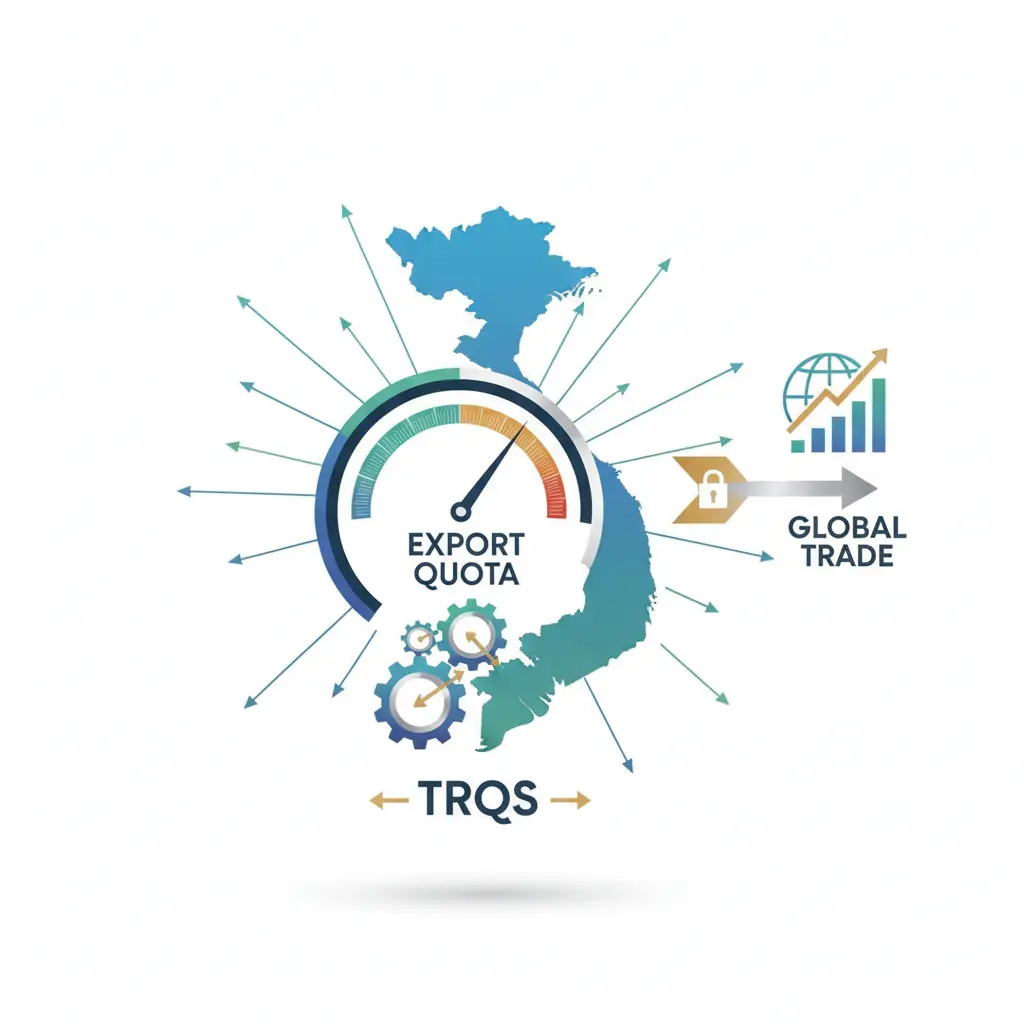
The application of these policies is not static; it evolves with Vietnam’s trade agreements and economic objectives. For instance, as Vietnam enters new bilateral or multilateral agreements, new TRQ schedules are often negotiated, offering fresh opportunities or new challenges for various sectors.
3. Impact on Vietnamese Exporters and Global Importers
The implementation of TRQs and quota policies has multifaceted impacts on both Vietnamese exporters and global importers. For Vietnamese exporters, navigating these regulations is crucial for market access and profitability. Those who successfully operate within the quota limits enjoy significant Tariff rate quota benefits, gaining a competitive edge due to lower tariffs. This incentivizes efficiency and quality control to secure a share of the limited quota. However, exceeding the quota can lead to prohibitive tariffs, rendering products uncompetitive. This dynamic necessitates meticulous planning, production scheduling, and adherence to specific Customs quota application procedures. Smaller exporters, in particular, may face challenges in understanding and complying with complex quota administration, potentially limiting their participation in preferential trade. The Vietnamese government often works to support exporters in this regard, providing information and facilitating the application process to maximize the utilization of quotas granted by importing countries.
For global importers, Vietnam’s trade policies, including its approach to TRQs, offer a mix of opportunities and constraints. Importers benefit from predictable access to Vietnamese goods at preferential rates, provided they can secure products within the quota limits. This certainty can help stabilize supply chains and manage costs. However, the finite nature of quotas means that demand exceeding the quota can lead to higher prices for the same goods if sourced from Vietnam outside the quota, or necessitate seeking alternative suppliers. This can introduce volatility and increase sourcing costs. Therefore, understanding Vietnam’s export quota policy and the specific TRQ schedules in relevant trade agreements is essential for international businesses. The strategic management of these quotas by Vietnam underscores its commitment to optimizing its position in the global trading system, influencing trade flows, pricing, and market access for numerous products worldwide.
Partner with Vietnam’s Leading Suppliers
Looking for reliable suppliers in Vietnam? Contact VietnamSuppliers.com today to connect with verified manufacturers and exporters across all industries.
—————————————
References
– WTO Agreement on Agriculture: https://www.wto.org/english/docs_e/legal_e/ursum_e.htm#agreement
– WTO website: https://www.wto.org/english/thewto_e/whatis_e/tif_e/agrm1_e.htm
– WTO Agreement on Agriculture: https://www.wto.org/english/thewto_e/whatis_e/tif_e/agrm2_e.htm
– World Trade Organization (WTO) – Tariffs: https://www.wto.org/english/tratop_e/trarap_e/tariffs_e.htm
– WTO | Tariff Quotas in Agriculture: https://www.wto.org/english/tratop_e/agric_e/agric_trqs_e.htm