The Landscape of Modern Manufacturing
In an era defined by rapid technological advancements and unprecedented global challenges, the manufacturing sector finds itself at a pivotal crossroads. Traditional approaches, once reliable, are increasingly unable to keep pace with evolving market demands, intense competition, and complex supply chain disruptions. This dynamic environment necessitates a fundamental shift, moving beyond conventional production methods towards sophisticated, interconnected systems. The imperative to embrace Smart Manufacturing Solutions is no longer an option but a critical requirement for sustained growth, efficiency, and resilience in the future.
From Traditional to Digital: The Transformation Imperative
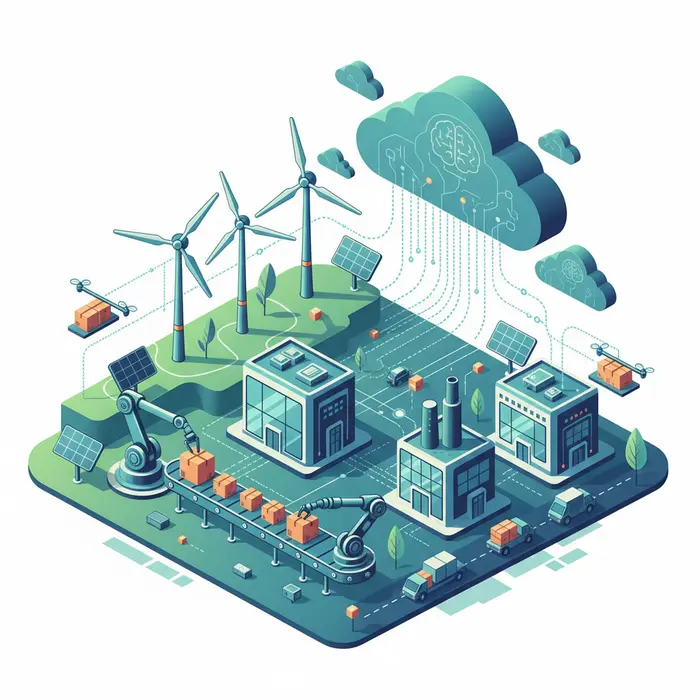
For decades, manufacturing operations were characterized by manual processes, isolated systems, and a reactive approach to problems. Data, if collected, often resided in silos, making it difficult to gain a holistic view of production. This traditional model, while effective for its time, inherently limits scalability, innovation, and responsiveness. The digital transformation imperative demands a radical overhaul, leveraging cutting-edge technologies to create more intelligent, agile, and productive factories. This shift involves integrating Industrial IoT solutions for manufacturing to connect machines, sensors, and operational technology, enabling seamless data flow across the entire production floor. By digitizing workflows and adopting advanced analytics, manufacturers can unlock unprecedented levels of insight, predictive capabilities, and operational control.
Key Drivers for Adopting Smart Manufacturing
Several powerful forces are compelling manufacturers to accelerate their adoption of smart solutions:
- Global Competition & Cost Pressures: Manufacturers face intense pressure to reduce operational costs, optimize resource utilization, and deliver high-quality products at competitive prices. Smart manufacturing provides the tools to achieve lean operations, minimize waste, and enhance productivity, giving companies a significant edge in the global marketplace.
- Evolving Customer Expectations: Modern customers demand greater personalization, faster delivery times, and higher product quality. Smart factories, powered by flexible Manufacturing automation software, can adapt quickly to changing order specifications and scale production efficiently to meet these dynamic demands.
- Operational Efficiency & Productivity: The drive for continuous improvement in efficiency and output is a perpetual goal. Real-time monitoring and Real-time production data analytics provide immediate insights into bottlenecks, equipment performance, and quality control, enabling proactive interventions rather than reactive fixes. This data-driven approach dramatically boosts overall equipment effectiveness (OEE).
- Supply Chain Resilience & Visibility: Recent global events have highlighted the fragility of traditional supply chains. Smart manufacturing, coupled with supply chain visibility technology, empowers businesses to track materials, products, and logistics in real-time. This enhanced visibility fosters greater transparency, allows for better risk management, and builds more resilient, adaptable supply networks.
Defining ‘Smart’ in Industrial Operations
At its core, ‘smart’ in the context of industrial operations signifies a system that is interconnected, data-driven, automated, and adaptable. It’s about creating an ecosystem where machines, processes, and people communicate seamlessly. This involves:
- Interconnectivity: Through IoT devices and networks, all elements of the factory communicate, forming a cohesive digital thread.
- Data-Driven Decision Making: Raw data from the shop floor is transformed into actionable intelligence using advanced analytics and artificial intelligence. This enables predictive maintenance, optimized scheduling, and proactive quality control.
- Automation: Beyond simple robotics, smart automation involves intelligent systems that can learn, adapt, and perform complex tasks with minimal human intervention, freeing up human workers for higher-value activities.
- Agility & Adaptability: A smart factory can rapidly reconfigure production lines, adjust to new product designs, and respond effectively to market fluctuations or unforeseen disruptions. This inherent flexibility is crucial for navigating today’s volatile business landscape.
Embracing smart manufacturing is not merely about adopting new technologies; it’s about fundamentally rethinking how production works. It’s an investment in the future, providing the agility, efficiency, and resilience needed to thrive in the complex manufacturing environment of the 21st century. As Deloitte aptly describes it, Industry 4.0 represents the convergence of advanced digital technologies that are reshaping the very foundations of productivity and growth for manufacturers worldwide.
Industrial IoT Solutions for Enhanced Connectivity
The modern manufacturing landscape is undergoing a profound transformation, driven by the integration of cutting-edge technology into every facet of production. At the heart of this revolution are Industrial IoT (IIoT) solutions, which are fundamentally reshaping how data is collected, processed, and utilized across the factory floor. These advanced systems are not merely incremental upgrades; they are foundational elements of Smart Manufacturing Solutions, enabling unprecedented levels of connectivity, operational visibility, and data-driven decision-making. By creating a seamless digital thread from raw material to finished product, IIoT empowers manufacturers to optimize processes, reduce costs, and enhance overall efficiency, truly driving the future of manufacturing.
1. Sensors, Gateways, and Edge Computing in Action
The backbone of any robust IIoT infrastructure lies in its ability to accurately capture and intelligently process data at its source. This is where the synergy of sensors, gateways, and edge computing comes into play. IIoT sensors, the eyes and ears of the digital factory, are deployed on machinery, equipment, and environmental points to continuously monitor critical parameters such as temperature, pressure, vibration, motor RPM, and energy consumption. These tiny devices convert physical conditions into digital signals, providing a granular, real-time understanding of operational status.
However, the sheer volume of data generated by thousands of sensors can overwhelm traditional network infrastructures. This is where IIoT gateways become indispensable. Gateways act as intelligent aggregators and translators, collecting data from multiple sensors, performing initial filtering, and converting diverse communication protocols into a unified format. They bridge the operational technology (OT) layer with the information technology (IT) layer, ensuring secure and reliable data transfer.
Complementing this setup is edge computing, a crucial component that brings computation and data storage closer to the data sources. Instead of sending all raw data to a centralized cloud for processing, edge devices perform analytics locally. This significantly reduces network latency, enables faster decision-making for time-critical applications (like immediate machine control), and conserves bandwidth by sending only relevant, pre-processed data to the cloud. The combined power of these technologies forms the bedrock for advanced Industrial IoT solutions for manufacturing, powering sophisticated Real-time production data analytics and intelligent Manufacturing automation software.
2. Predictive Maintenance and Asset Performance Optimization
One of the most impactful applications of IIoT in manufacturing is in the realm of asset management, specifically through predictive maintenance and asset performance optimization. Traditionally, maintenance was reactive (fixing breakdowns) or preventive (scheduled based on time or usage). Both approaches have limitations, leading to unplanned downtime, unnecessary interventions, or missed opportunities for optimization.
IIoT revolutionizes this by enabling predictive maintenance. Sensors continuously monitor the health and performance of critical assets – from CNC machines and conveyor belts to industrial robots and HVAC systems. These sensors collect vast amounts of data on vibrations, temperature fluctuations, power consumption, acoustic patterns, and more. Advanced algorithms and machine learning models then analyze this Real-time production data analytics to identify subtle anomalies and patterns indicative of impending failures. Manufacturers can receive alerts days or even weeks before a breakdown occurs, allowing them to schedule maintenance precisely when needed, minimizing disruption to production schedules.
Beyond simply predicting failures, IIoT facilitates comprehensive Asset Performance Optimization. By analyzing operational data, manufacturers can gain insights into equipment utilization, energy efficiency, and overall equipment effectiveness (OEE). This enables them to fine-tune operational parameters, identify bottlenecks, optimize resource allocation, and extend the lifespan of valuable assets. The result is significant cost savings from reduced downtime, lower maintenance expenses, and improved throughput, contributing directly to a more resilient and profitable operation.
3. Real-World IIoT Deployment: A Manufacturer’s Story
Consider a medium-sized automotive parts manufacturer facing challenges with frequent unplanned downtime, inconsistent product quality, and limited visibility into their production line and extended supply chain. Their traditional setup involved manual data logging and reactive maintenance, leading to high operational costs and missed delivery targets.
To overcome these hurdles, the company embarked on an IIoT transformation. They strategically deployed IIoT sensors on key machinery, including stamping presses, welding robots, and assembly lines. These sensors monitored vibrations, temperature, motor current, and throughput rates. Data was collected by industrial gateways and processed at the edge, where anomaly detection algorithms immediately flagged potential issues. The pre-processed data was then sent to a cloud-based platform running advanced Manufacturing automation software.
The results were transformative. Within months, the company saw a 30% reduction in unplanned downtime due to precise predictive maintenance insights. Quality control improved as real-time sensor data allowed for immediate adjustments to machine parameters, reducing defect rates. Furthermore, by integrating IIoT with their inventory and logistics systems, they achieved enhanced Supply chain visibility technology. They could track raw materials from suppliers and monitor finished goods distribution in real time, preventing stockouts and optimizing delivery schedules. This holistic approach, driven by Industrial IoT solutions for manufacturing, not only improved their bottom line but also significantly enhanced their competitive edge in a demanding market.
In conclusion, Industrial IoT solutions are more than just a technological trend; they are a strategic imperative for manufacturers seeking to thrive in the digital age. By fostering enhanced connectivity, leveraging Real-time production data analytics, and enabling intelligent automation, IIoT transforms factories into smart, responsive, and highly efficient ecosystems, paving the way for the next generation of manufacturing excellence.
Advanced Manufacturing Automation Software
The manufacturing landscape is undergoing a profound transformation, driven by the relentless pursuit of efficiency, precision, and adaptability. At the heart of this revolution lies Smart Manufacturing Solutions, which increasingly rely on sophisticated software to orchestrate complex processes. This evolution marks a significant shift from traditional, hardware-centric automation to flexible, data-driven systems. Modern manufacturing automation software is the backbone of future factories, enabling unprecedented levels of control, optimization, and real-time responsiveness. It integrates various technologies, from robotics to artificial intelligence, to create intelligent, interconnected production environments. The emergence of Industrial IoT solutions for manufacturing has further accelerated this paradigm shift, allowing machines, sensors, and systems to communicate seamlessly, generating vast amounts of data that can be leveraged for continuous improvement.
1. Robotics and Collaborative Systems for Production Lines
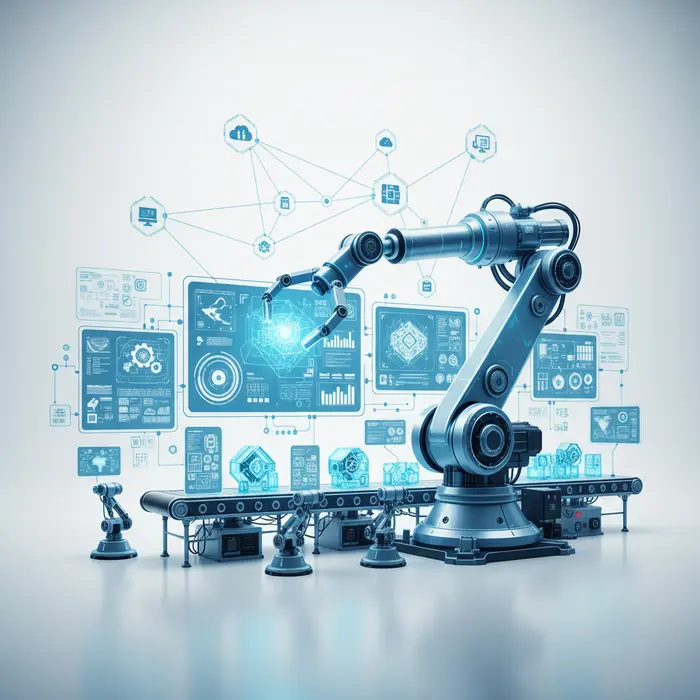
The integration of robotics into manufacturing is not new, but their evolution, driven by advanced manufacturing automation software, has been revolutionary. Modern robots are no longer confined to cages performing repetitive, dangerous tasks. They are becoming more intelligent, adaptable, and, crucially, collaborative. Collaborative robots, or cobots, are designed to work safely alongside human operators, enhancing productivity and flexibility on production lines. Software platforms enable precise control over robot movements, vision systems for quality inspection and guidance, and the ability to quickly re-program robots for new tasks or product variations. This agility is vital in today’s fast-changing markets. From automated assembly and welding to intricate pick-and-place operations and packaging, software-driven robotics increase throughput, reduce human error, and improve overall operational safety. The advanced programming interfaces and simulation tools allow manufacturers to design and test robotic workflows virtually, minimizing downtime and optimizing performance before physical deployment.
2. AI-Powered Process Optimization and Quality Control
Artificial intelligence (AI) and machine learning (ML) are transforming manufacturing processes by enabling unprecedented levels of optimization and quality assurance. AI-powered manufacturing automation software analyzes vast datasets from production lines, identifying patterns and anomalies that human operators might miss. This allows for predictive maintenance, where potential equipment failures are anticipated before they occur, significantly reducing unplanned downtime and maintenance costs. For quality control, AI-driven vision systems can inspect products with greater speed and accuracy than traditional methods, detecting microscopic defects and ensuring consistent quality across every unit. Furthermore, AI algorithms can optimize process parameters in real-time, adjusting machine settings to maximize efficiency, minimize waste, and improve product yield. The ability to perform real-time production data analytics provides immediate insights, allowing for proactive adjustments and continuous improvement cycles. This integration of AI represents a leap forward in achieving operational excellence and maintaining competitive advantage. For deeper insights into how advanced technologies are reshaping industrial processes, one can refer to research on the future of manufacturing.
3. Integrating Automation with MES and ERP Systems
The true power of advanced manufacturing automation software is unlocked through its seamless integration with higher-level enterprise systems like Manufacturing Execution Systems (MES) and Enterprise Resource Planning (ERP). This integration creates a cohesive digital thread across the entire organization, from the shop floor to the top floor. MES acts as the bridge, translating production schedules from ERP into actionable tasks for automated machinery, robots, and human operators. It gathers real-time production data analytics from automated systems, providing granular visibility into work-in-progress, resource utilization, and operational performance. This data then flows back to ERP, enriching financial, inventory, and supply chain management modules. The result is enhanced decision-making, improved resource allocation, and greater agility in responding to market demands. This holistic approach also significantly improves supply chain visibility technology, allowing manufacturers to track materials and products from raw input to finished goods, ensuring traceability and optimizing logistics. By eliminating data silos and enabling comprehensive data exchange, integrated automation software empowers businesses to achieve true operational excellence and strategic growth.
Conclusion:
Advanced manufacturing automation software is not merely a tool for efficiency; it is the strategic imperative for businesses aiming to thrive in the Industry 4.0 era. By leveraging Industrial IoT solutions for manufacturing, sophisticated robotics, AI-driven insights, and robust system integration, companies can build smart factories that are resilient, highly efficient, and capable of producing high-quality products at scale. Embracing these software-driven solutions is key to unlocking new levels of productivity, quality, and adaptability, ensuring a competitive edge in the global market.
Leveraging Real-Time Production Data Analytics
In today’s rapidly evolving manufacturing landscape, the ability to react swiftly and intelligently to production dynamics is no longer a luxury but a fundamental requirement. Modern manufacturers face intense pressure to optimize processes, reduce costs, and accelerate time to market. This imperative drives the critical role of real-time production data analytics, empowering organizations to transcend traditional operational limitations and embrace true Smart Manufacturing Solutions. By transforming raw operational data into actionable insights, manufacturers can make informed decisions on the fly, accurately identify bottlenecks, and drive a culture of continuous improvement across the entire value chain. The integration of advanced Industrial IoT solutions for manufacturing with sophisticated Manufacturing automation software provides the backbone for collecting, processing, and analyzing vast amounts of data from diverse sources, from shop floor machinery to enterprise-level systems. This comprehensive approach not only enhances operational efficiency but also significantly improves supply chain visibility technology, allowing for proactive adjustments and superior resource allocation.
The journey towards data-driven manufacturing excellence begins with understanding and implementing key analytical capabilities. These capabilities enable companies to move beyond retrospective analysis, providing a foresight that is crucial for maintaining competitiveness and fostering innovation in an era defined by rapid technological advancements and global competition. The insights derived from real-time data underpin strategic decisions, leading to optimized production schedules, enhanced product quality, and ultimately, a stronger market position. The transformative potential of these technologies is a key aspect of Industry 4.0 transformations, redefining what’s possible in manufacturing operations.
1. Dashboards and Visualization for Operational Insights
At the forefront of real-time production data analytics are interactive dashboards and visualization tools. These platforms aggregate complex operational data – such as Overall Equipment Effectiveness (OEE), cycle times, scrap rates, and energy consumption – into intuitive, easy-to-understand visual formats. Rather than sifting through spreadsheets or legacy reports, operators, supervisors, and managers gain immediate access to key performance indicators (KPIs) and operational status. This instant visibility allows for rapid identification of anomalies or emerging issues, such as a machine running below optimal capacity or a sudden spike in defective products. For instance, a dashboard might highlight a specific production line’s decreasing throughput, prompting immediate investigation and resolution before it escalates into a major disruption. This level of transparency fosters proactive problem-solving, enabling teams to address inefficiencies and bottlenecks as they occur, rather than discovering them after significant impact. Beyond the immediate shop floor, these dashboards can offer a holistic view of manufacturing operations, integrating data from various plants and supply chain partners, thereby enhancing overall strategic decision-making and ensuring alignment with business objectives.
2. Predictive Modeling and Anomaly Detection in Production
Moving beyond descriptive analytics, predictive modeling and anomaly detection leverage advanced algorithms and machine learning to anticipate future outcomes and identify deviations from normal operating patterns. In a production environment, this translates into significant advantages. Predictive maintenance, for example, uses historical and real-time sensor data from machinery to forecast potential equipment failures. By analyzing vibration, temperature, pressure, and other parameters, models can predict when a component is likely to fail, allowing maintenance teams to schedule interventions proactively during planned downtime, thereby minimizing unscheduled outages and costly emergency repairs. Similarly, anomaly detection algorithms continuously monitor production parameters for unusual patterns that might indicate a quality issue, a process drift, or even a security breach. If a specific parameter, like the temperature of a curing oven, suddenly deviates from its established range without explanation, the system can flag it instantly. This enables immediate corrective action, preventing the production of substandard products and reducing waste. These capabilities are powered by robust Industrial IoT solutions for manufacturing that collect granular data, making the manufacturing process more resilient, efficient, and reliable.
3. Case Study: Data-Driven Efficiency Gains
Consider a mid-sized automotive parts manufacturer that struggled with unpredictable machine downtime and inconsistent product quality, directly impacting delivery schedules and customer satisfaction. The company relied on manual data collection and reactive maintenance, leading to frequent production bottlenecks. To combat these challenges, they implemented a comprehensive real-time production data analytics platform, integrating sensors across all critical machines and linking it with their Manufacturing automation software and ERP system. Interactive dashboards provided immediate visibility into OEE across all production lines, highlighting underperforming assets and identifying the root causes of downtime, whether due to material shortages, unplanned maintenance, or operator error. Concurrently, predictive modeling was deployed to monitor the health of key machinery components. By analyzing vibration and temperature data, the system began to accurately predict potential equipment failures days in advance.
The results were transformative. Within the first year, the manufacturer reduced unscheduled downtime by 25%, shifting maintenance from reactive to proactive and significantly extending machine lifespan. Quality control improved dramatically, with a 15% reduction in scrap and rework, as anomaly detection instantly flagged process deviations. Furthermore, optimized resource allocation, informed by real-time insights into inventory levels and production bottlenecks, led to a 10% improvement in energy efficiency and faster order fulfillment. This data-driven approach not only improved operational metrics but also boosted overall profitability and enhanced the company’s competitive edge, demonstrating the immense power of Smart Manufacturing Solutions in achieving tangible, measurable efficiency gains.
Achieving End-to-End Supply Chain Visibility
In today’s complex and interconnected global economy, achieving true end-to-end supply chain visibility is no longer a luxury but a strategic imperative. Businesses face an array of challenges, from geopolitical shifts and natural disasters to fluctuating customer demands and regulatory changes. To navigate this intricate landscape, modern manufacturers are turning to advanced Smart Manufacturing Solutions that extend their reach far beyond the confines of the factory floor. These transformative technologies provide unprecedented insights, enabling companies to monitor, manage, and optimize every stage of their supply chain, from the sourcing of raw materials to the final delivery to the customer. By integrating data across disparate systems and geographical locations, smart manufacturing fosters a holistic understanding that drives efficiency, reduces risk, and enhances responsiveness across the entire value chain.

1. Tracking and Tracing: From Source to Customer
The cornerstone of end-to-end visibility lies in robust tracking and tracing capabilities. Industrial IoT solutions for manufacturing are revolutionizing how companies monitor goods in transit and at rest. Sensors, RFID tags, and GPS devices embedded in products, pallets, and containers provide continuous, real-time production data analytics on their location, condition, and status. This granular data allows manufacturers to know precisely where every component is at any given moment, whether it’s still at the supplier’s warehouse, en route on a cargo ship, or undergoing quality checks in a distribution center.
Beyond simple location tracking, these technologies can also monitor environmental factors like temperature, humidity, and shock, which are critical for sensitive goods such as pharmaceuticals or electronics. If a deviation occurs, alerts are triggered, allowing for immediate corrective action. This level of traceability not only enhances operational efficiency but also builds consumer trust, particularly in industries where authenticity and provenance are paramount. Imagine a customer scanning a QR code on a product and instantly seeing its entire journey, from the farm or factory to their hand. This transparency, powered by sophisticated supply chain visibility technology, significantly reduces the risk of counterfeiting, improves recall management, and ensures compliance with increasingly stringent global regulations.
2. Mitigating Disruptions with Proactive Monitoring
Supply chains are inherently vulnerable to disruptions, from port congestions and natural disasters to supplier failures and geopolitical events. Traditional reactive approaches often result in costly delays, production halts, and lost revenue. However, with the advent of advanced manufacturing automation software and AI-powered analytics, businesses can now transition from reactive to proactive monitoring.
Real-time production data analytics, combined with external data sources like weather forecasts, geopolitical news, and traffic patterns, create a powerful predictive engine. This engine can identify potential risks before they escalate, providing early warnings about impending disruptions. For example, if a severe storm is forecasted in a key shipping lane, the system can automatically flag affected shipments and suggest alternative routes or transportation methods. Similarly, if a critical supplier’s production output begins to decline unexpectedly, the system can alert procurement teams to explore backup options or expedite orders from secondary suppliers. This proactive stance, highlighted in various industry reports, minimizes the impact of unforeseen events, safeguarding production schedules and ensuring continuity of operations. The ability to simulate various disruption scenarios and assess their potential impact empowers decision-makers to formulate robust contingency plans.
3. Building Resilient and Responsive Supply Networks
The ultimate goal of enhancing supply chain visibility through smart technologies is to build inherently resilient and responsive networks. By gaining granular insights into every node of the supply chain, companies can identify single points of failure, diversify their supplier base, and optimize inventory levels more effectively. Predictive analytics, powered by machine learning, can forecast demand fluctuations with greater accuracy, allowing for dynamic adjustments in production and distribution. This minimizes overstocking or understocking, reducing waste and improving cash flow.
Furthermore, the integration of data from diverse sources – ERP systems, CRM platforms, IoT devices, and external market intelligence – creates a unified digital twin of the supply chain. This comprehensive model enables scenario planning and “what-if” analysis, allowing organizations to test the impact of potential changes or disruptions before they occur in the real world. For instance, a manufacturer could simulate the effect of a new trade tariff on their material costs or the impact of a sudden surge in demand for a particular product. Such capabilities facilitate strategic decision-making, transforming a linear supply chain into an agile, interconnected supply network that can adapt rapidly to changing market conditions and unforeseen challenges. Embracing these advanced Smart Manufacturing Solutions ensures not just survival, but sustained growth and competitive advantage in an increasingly volatile global marketplace.
Partner with Vietnam’s Leading Suppliers
Looking for reliable suppliers in Vietnam? Contact VietnamSuppliers.com today to connect with verified manufacturers and exporters across all industries.
—————————————
References
– Industry 4.0: The Future of Productivity and Growth: https://www2.deloitte.com/us/en/pages/manufacturing/articles/industry-4-0-the-future-of-productivity-and-growth.html
– Industry 4.0 and the Future of Manufacturing – Deloitte: https://www.deloitte.com/global/en/pages/manufacturing/articles/industry-4-0-the-future-of-manufacturing.html
– Deloitte’s Future of Manufacturing Report: https://www.deloitte.com/global/en/pages/manufacturing/articles/future-of-manufacturing.html
– Industry 4.0: Reimagining manufacturing operations – McKinsey & Company: https://www.mckinsey.com/capabilities/operations/our-insights/industry-4-0-reimagining-manufacturing-operations
– McKinsey & Company: Supply Chain Resilience: Six key capabilities to build it: https://www.mckinsey.com/capabilities/operations/our-insights/supply-chain-resilience-six-key-capabilities-to-build-it