Understanding Non-Tariff Barriers (NTBs)
In the intricate landscape of global commerce, the flow of goods across borders is often shaped by more than just tariffs. Non-Tariff Barriers (NTBs) represent a complex and pervasive set of regulations, policies, and procedures that significantly impact international trade. Unlike straightforward customs duties, NTBs are less visible but can be far more challenging to navigate, often increasing costs, creating delays, and limiting market access for businesses worldwide. This section will delve into defining NTBs, explore their profound impact on the international trading system, and clearly distinguish them from their more traditional counterpart, tariffs, offering a foundational understanding crucial for any entity engaged in Overcoming Non-Tariff Barriers.
1. What are NTBs and why do they matter?
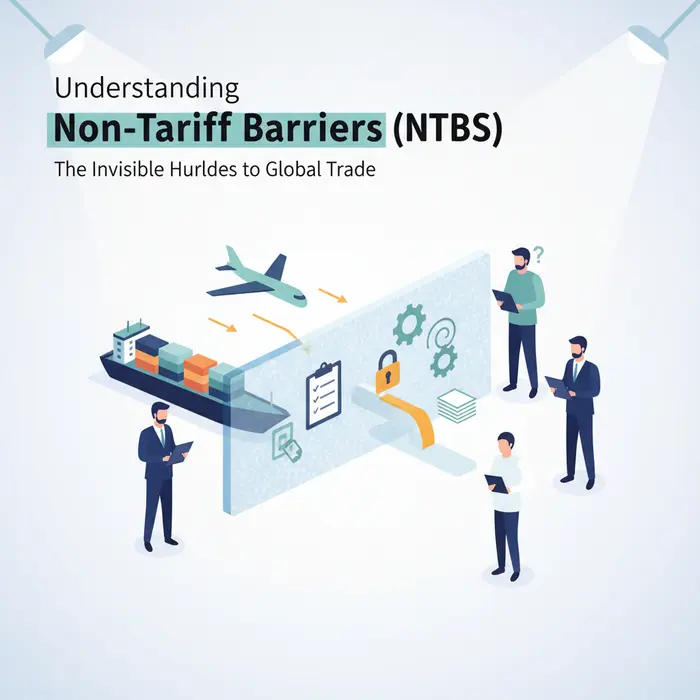
Non-Tariff Barriers (NTBs) encompass a broad spectrum of measures, other than traditional tariffs, that can restrict or distort international trade. These include, but are not limited to, import quotas, licensing requirements, technical standards, health and safety regulations, customs procedures, domestic subsidies, and government procurement policies. Essentially, any governmental policy or practice that inhibits the free exchange of goods and services across national borders, without being a direct tax on imports, falls under the umbrella of NTBs. For businesses engaged in NTBs import export operations, these barriers are a daily reality. They matter immensely because they often represent a greater impediment to trade than tariffs, which have generally seen a reduction through multilateral agreements. NTBs can be less transparent, more complex to understand, and harder to comply with, requiring significant investment in legal, technical, and logistical expertise. They affect a product’s cost, quality, and even its eligibility for market entry, profoundly influencing global supply chains and international competitiveness.
2. The Economic Impact of Non-Tariff Barriers
The economic ramifications of Non-Tariff Barriers are extensive and far-reaching, affecting all stakeholders from producers to consumers. For businesses, NTBs translate into increased production costs due to the need to adapt products to specific market standards, invest in new compliance procedures, and manage longer lead times and administrative burdens. This can reduce profitability, especially for small and medium-sized enterprises (SMEs) that may lack the resources to navigate complex regulatory landscapes. Consumers often bear the brunt of these increased costs through higher prices for imported goods and reduced product variety. On a macro-economic level, NTBs can significantly curb overall trade flows, stifle innovation, and distort global competition. For instance, stringent sanitary and phytosanitary measures (SPS), while crucial for public health and safety, can inadvertently become protective barriers if implemented without scientific justification or transparency. Similarly, elaborate technical barriers to trade compliance, such as labeling requirements or certification processes, can make market entry prohibitively expensive. Even subtle aspects like customs valuation non-tariff barriers, where authorities might over-value goods, can lead to higher duties and taxes, effectively acting as an NTB. These barriers can slow economic growth, reduce foreign direct investment, and prevent countries from fully realizing the benefits of international trade.
3. NTBs vs. Tariffs: A Clear Distinction
While both non-tariff barriers and tariffs serve to regulate international trade, their nature and impact are fundamentally different. Tariffs are direct taxes or duties levied on imported goods, making them more expensive and thus less competitive than domestically produced items. They are generally transparent, quantifiable, and their financial impact is relatively straightforward to calculate. Historically, tariffs were the primary tool for protectionism, but significant efforts through organizations like the World Trade Organization (WTO) have led to their progressive reduction. This reduction, however, has often led to the rise in prominence and complexity of NTBs. Unlike tariffs, NTBs are indirect and can be far more subtle. They typically involve regulations, administrative procedures, or technical standards rather than direct monetary charges. The cost impact of an NTB is often hidden within production processes, compliance efforts, and logistical complexities, making it difficult to quantify precisely. Tariffs primarily affect the price of goods, whereas NTBs can impact everything from product design and manufacturing processes to packaging, distribution, and overall market access. While tariffs are overt economic instruments, NTBs often masquerade as legitimate domestic policies for public safety, environmental protection, or national security, making their identification and challenge more complicated. Understanding this distinction is crucial for businesses aiming for efficient global trade and for policymakers striving to create a fair and equitable international trading environment, underscoring the ongoing challenge of Overcoming Non-Tariff Barriers in an increasingly interconnected world.
Navigating Technical Barriers to Trade (TBTs)
Technical Barriers to Trade (TBTs) represent a significant, often intricate, category of non-tariff barriers (NTBs) that profoundly impact global commerce. Far from simple tariffs, these regulatory hurdles – encompassing technical regulations, mandatory standards, and complex conformity assessment procedures – demand meticulous attention from businesses engaged in NTBs import export. Successfully Overcoming Non-Tariff Barriers like TBTs is paramount for market access and sustained international competitiveness, requiring a deep understanding of compliance pathways.
1. Decoding Technical Regulations and Standards
At their core, TBTs stem from national differences in how products are defined, tested, and approved. Technical regulations are mandatory rules specifying product characteristics or related processes and production methods. Compliance is legally required for market entry, often enforced by government bodies. Standards, conversely, are typically voluntary guidelines established by recognized national or international bodies (e.g., ISO, IEC), though they often become de facto mandatory due to market expectations, contractual obligations, or regulatory referencing. Both aim to achieve legitimate policy objectives such as consumer safety, public health protection, environmental preservation, or preventing deceptive practices.
The primary challenge for businesses lies in the sheer diversity of these requirements across different countries, creating significant hurdles for technical barriers to trade compliance. A product perfectly compliant in one market may be entirely non-compliant in another, necessitating costly redesigns or separate production lines. Businesses must implement robust systems to monitor updates to national regulations and understand the varying interpretations of international standards. A crucial framework in this domain is the WTO Agreement on Technical Barriers to Trade, which aims to ensure that technical regulations and standards do not create unnecessary obstacles to international trade by promoting transparency, non-discrimination, and the use of international standards.
2. Conformity Assessment and Certification Processes
Even after understanding the regulations, the undeniable proof of compliance is critical. Conformity assessment refers to the process of demonstrating that specified requirements relating to a product, process, service, system, or person have been fulfilled. This typically involves a combination of testing, inspection, and certification.
- Testing verifies product attributes against specified criteria, often conducted by accredited laboratories.
- Inspection involves examining a product’s design, the product itself, a process, or an installation to determine its conformity with specific requirements or, based on professional judgment, with general requirements.
- Certification is a third-party attestation related to products, processes, systems, or persons, providing assurance that a product meets defined standards or regulations.
The complexity intensifies due to varying national certification schemes, often necessitating multiple assessments for different markets. This can lead to duplicative testing, increased costs, and prolonged market entry times. To alleviate this burden, countries often negotiate Mutual Recognition Agreements (MRAs), which accept each other’s assessment results. However, the scope of MRAs is often limited to specific sectors or products, meaning businesses must still carefully navigate a patchwork of assessment requirements. Furthermore, specific measures like sanitary and phytosanitary measures SPS for food safety and plant/animal health also involve rigorous conformity assessment to ensure compliance with health standards.
3. Strategies for TBT Compliance
Proactive engagement and strategic planning are paramount for navigating the complex TBT landscape effectively. Companies should establish robust internal processes for identifying, tracking, and interpreting relevant technical regulations and standards in their target markets. This includes subscribing to regulatory updates, participating in industry dialogues, and utilizing TBT notification services provided by organizations like the WTO.
Partnering with reputable, internationally accredited testing laboratories and certification bodies is crucial for reliable conformity assessment, ensuring that products meet all necessary safety and performance criteria. Investing in internal expertise or seeking external consultancy can significantly streamline technical barriers to trade compliance, minimizing risks of non-compliance and market rejection. While not directly TBTs, other forms of NTBs like complex import licensing requirements or customs valuation non-tariff barriers often run in parallel, demanding a holistic approach to market entry strategy.
Ultimately, success in Overcoming Non-Tariff Barriers, particularly TBTs, depends on strategic foresight, diligent execution, and a commitment to continuous adaptation in the face of evolving global trade rules. This proactive approach minimizes delays, reduces costs, and ensures smooth, sustained market access for products worldwide.
Mastering Sanitary and Phytosanitary (SPS) Measures
In the intricate world of global trade, market access is often dictated not just by tariffs, but by a complex web of health and safety standards. These are known as Sanitary and Phytosanitary (SPS) measures, crucial regulations that govern the trade of food, animal, and plant products. While essential for protecting human, animal, and plant life and health from risks arising from pests, diseases, or contaminants, SPS measures can also act as significant non-tariff barriers (NTBs). Successfully navigating these standards is paramount for businesses engaged in NTBs import export, ensuring smooth customs valuation and overall technical barriers to trade compliance. This section delves into the international agreements and strategic compliance approaches necessary for mastering sanitary and phytosanitary measures.
1. Understanding SPS Agreements and Regulations
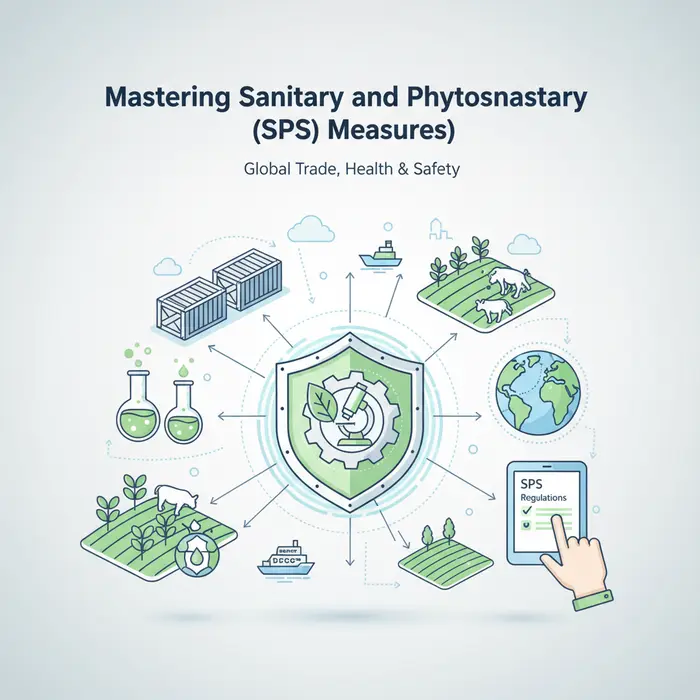
At the heart of international trade in agricultural and food products lies the WTO Agreement on the Application of Sanitary and Phytosanitary Measures (SPS Agreement). This foundational agreement aims to prevent member countries from using health and safety regulations as unjustifiable protectionist measures, while upholding their sovereign right to protect domestic life and health. SPS measures encompass a broad range of actions, including pest and disease controls, quarantine requirements, food safety standards (e.g., maximum residue levels for pesticides, limits on contaminants), and inspection procedures for food, animal, and plant products. The agreement encourages members to base their measures on international standards, guidelines, and recommendations developed by three key organizations: the Codex Alimentarius Commission (food safety), the World Organisation for Animal Health (OIE, animal health), and the International Plant Protection Convention (IPPC, plant health). Adhering to these globally recognized benchmarks significantly streamlines the process of gaining market access and reduces the likelihood of trade disputes arising from differing national standards, thereby simplifying technical barriers to trade compliance for exporters and importers alike.
2. Risk Assessment and Transparency in SPS
A cornerstone of legitimate SPS measures is their scientific justification, typically through a thorough risk assessment. Countries are permitted to implement measures that deviate from international standards if they can demonstrate, through scientific evidence, that a higher level of protection is necessary and proportionate to the identified risks. This emphasis on scientific rigor ensures that regulations are not arbitrary or discriminatory. Equally vital is transparency. The SPS Agreement mandates that member countries notify other WTO members of new or changed SPS regulations that could significantly affect trade. This notification process, coupled with the establishment of national inquiry points, allows trading partners to understand and adapt to evolving requirements. Furthermore, principles like equivalence and regionalization contribute to fairer trade. Equivalence means that if an exporting country can objectively demonstrate that its SPS measures achieve the importing country’s appropriate level of protection, even if their methods differ, the measures should be accepted. Regionalization acknowledges that pest or disease-free areas may exist within a country, allowing trade from those specific regions even if other parts of the country are affected. These principles are crucial in mitigating the impact of sanitary and phytosanitary measures SPS on trade flows.
3. Overcoming Common SPS Compliance Hurdles
Despite the framework provided by the SPS Agreement, businesses frequently encounter significant challenges in meeting diverse national SPS requirements. Common hurdles include a lack of comprehensive understanding of target market regulations, complex and often rapidly changing import documentation, stringent testing requirements for residues or pathogens, and the need for specific certifications from accredited bodies. Discrepancies between national standards, even when aligned with international guidelines, can create significant technical barriers to trade compliance. For example, a product deemed safe in one country might face additional testing or labeling requirements in another. To effectively navigate these complexities and facilitate overcoming non-tariff barriers, businesses must adopt a proactive and strategic approach. This involves conducting thorough market research to understand specific import country SPS requirements well in advance, establishing robust internal quality control systems, utilizing accredited laboratories for testing and analysis, and investing in capacity building for personnel involved in exports. Engaging with trade associations, consulting with SPS experts, and leveraging government resources can also provide invaluable insights. Ultimately, continuous monitoring of regulatory changes and fostering strong communication channels with import authorities are key to ensuring consistent compliance and successful market access, especially when dealing with the intricacies of customs valuation and the broader spectrum of non-tariff barriers that impact global trade.
Customs Valuation and Other Administrative NTBs
Non-tariff barriers (NTBs) represent a significant hurdle for businesses engaged in international trade, often proving more complex and challenging to navigate than traditional tariffs. While tariffs impose a direct cost, administrative NTBs manifest as intricate regulations, bureaucratic procedures, and non-transparent requirements that can lead to delays, increased costs, and even market exclusion. This section delves into the specifics of customs valuation, import licensing, quotas, and the often-cumbersome administrative and documentation requirements, offering insights into effective strategies for businesses aiming for efficient global trade. Understanding and proactively addressing these barriers is crucial for Overcoming Non-Tariff Barriers and ensuring smooth cross-border operations.
1. Accurate Customs Valuation: Avoiding Pitfalls
Customs valuation is the process of determining the customs value of imported goods, a critical step as it forms the basis for assessing import duties, taxes, and other charges. Errors or discrepancies in this valuation can lead to severe consequences, including penalties, delays, and unexpected costs, making it a prominent example of customs valuation non-tariff barriers. The World Trade Organization (WTO) Agreement on Customs Valuation provides a framework, primarily based on the transaction value of the goods, but applying these principles can be complex. Challenges arise when goods are not sold for export to the country of importation (e.g., consignments, samples), when related parties are involved, or when complex transfer pricing arrangements exist.
To avoid pitfalls, businesses must maintain meticulous records, including purchase orders, invoices, payment proofs, and transportation costs. Transparency with customs authorities is paramount. Companies should understand the various valuation methods – transaction value, transaction value of identical goods, transaction value of similar goods, deductive value, computed value, and fall-back method – and be prepared to justify their chosen method. Seeking expert advice from customs brokers or trade consultants can be invaluable, especially for high-value goods or complex supply chains. Proactive engagement and compliance significantly mitigate the risks associated with this administrative hurdle. For more detailed information, consult the official guide on the WTO Agreement on Customs Valuation.
2. Import Licensing, Quotas, and Restrictions
Beyond valuation, countries employ various other administrative tools to manage and sometimes restrict imports. Import licensing, quotas, and other quantitative restrictions are potent NTBs import export tools that can significantly impact market access. Import licenses are administrative permits required by some countries for goods to enter their market. These can be automatic, granted freely, or non-automatic, requiring specific conditions to be met. Non-automatic licenses are often used to implement quotas, manage foreign exchange, or protect domestic industries. Quotas, on the other hand, set numerical limits on the quantity or value of specific goods that can be imported over a defined period.
Navigating these restrictions demands thorough research and planning. Businesses must identify if their products are subject to licensing or quotas in target markets. This involves checking national regulations, trade agreements, and bilateral arrangements. The application process for licenses can be lengthy and require extensive documentation, often involving multiple government agencies. Non-compliance can result in goods being held at the border, fines, or even forfeiture. For products subject to strict controls, such as certain agricultural goods or dual-use items, understanding the rationale behind the restrictions and preparing a robust compliance strategy is essential. Early engagement with importers and local trade experts can help anticipate and overcome these bureaucratic obstacles.
3. Streamlining Import/Export Documentation
One of the most universally encountered administrative NTBs is the sheer volume and complexity of import/export documentation requirements. From commercial invoices and packing lists to certificates of origin, bills of lading, phytosanitary certificates, and myriad other forms, the paperwork can be overwhelming. Errors or omissions in these documents are a leading cause of customs delays, inspections, and demurrage charges. For products sensitive to health, safety, or environmental standards, the burden extends to technical barriers to trade compliance and stringent sanitary and phytosanitary measures SPS, necessitating specific certifications and testing reports.
To streamline this process, businesses should first standardize their documentation procedures. Implementing robust internal controls and training programs for staff involved in trade operations is crucial. Leveraging technology, such as trade management software, can automate document generation, reduce manual errors, and improve data accuracy across the supply chain. Prior to shipment, verifying that all required documents are complete, accurate, and consistent with the physical goods is imperative. Collaborating closely with freight forwarders, customs brokers, and legal counsel can ensure that all regulatory nuances, especially those related to product-specific compliance like SPS measures, are addressed. Ultimately, a proactive, detail-oriented approach to documentation is a cornerstone of efficient international trade, minimizing delays and mitigating potential penalties.
Strategies for Overcoming NTBs and Future Outlook
In the intricate landscape of global trade, Non-Tariff Barriers (NTBs) represent a formidable challenge for businesses aiming to expand internationally. Unlike tariffs, these obstacles are often subtle, complex, and constantly evolving, ranging from intricate customs procedures to stringent product standards. Effectively navigating and Overcoming Non-Tariff Barriers is not just about compliance; it’s about strategic foresight, technological adoption, and proactive risk management. This section provides actionable strategies for businesses to mitigate the impact of NTBs, leverage emerging technologies, and anticipate future trends in global trade policy to sustain competitive advantage.

1. Proactive Compliance and Risk Management
A fundamental strategy for tackling NTBs is to shift from reactive problem-solving to proactive compliance and meticulous risk management. This involves an in-depth understanding of the regulatory environment of target markets long before commencing export operations. Businesses must dedicate resources to researching specific import regulations, licensing requirements, and product certification standards. For instance, addressing technical barriers to trade compliance requires early engagement with testing and certification bodies to ensure products meet required specifications, labelling, and packaging rules. This can prevent costly delays and rejections at customs.
Furthermore, businesses should implement robust internal control systems to ensure all documentation, from origin certificates to health permits, is accurate and complete. Engaging with local trade consultants or legal experts in destination countries can provide invaluable insights into nuanced national policies and informal trade practices. This due diligence extends to anticipating potential changes in regulations, allowing companies to adapt their supply chains and product formulations proactively. Developing a comprehensive risk assessment framework that identifies potential NTBs at various stages of the NTBs import export process enables businesses to formulate contingency plans, minimizing disruptions and financial losses.
2. Leveraging Technology and Digitalization
Technology plays a pivotal role in streamlining compliance and enhancing supply chain resilience against NTBs. Digitalization offers solutions for managing complex documentation, improving transparency, and accelerating customs processes. For instance, advanced Enterprise Resource Planning (ERP) systems and Global Trade Management (GTM) software can automate the generation of trade documents, track regulatory changes, and alert companies to potential compliance gaps. Blockchain technology, with its immutable ledger, offers unprecedented transparency and traceability in supply chains, which is crucial for meeting stringent origin rules or sanitary and phytosanetary measures SPS requirements.
Artificial intelligence (AI) and machine learning (ML) can analyze vast amounts of trade data to predict regulatory shifts, optimize logistics routes, and even assist in accurate customs valuation non-tariff barriers assessments, reducing the risk of disputes. E-platforms for customs declarations and single-window systems, increasingly adopted by governments worldwide, significantly reduce administrative burdens and processing times. Embracing these digital tools not only enhances operational efficiency but also provides a strategic advantage by reducing the human error often associated with complex cross-border transactions.
3. The Future of NTBs in Global Trade 2025
Looking ahead to 2025 and beyond, the landscape of NTBs is expected to become even more dynamic, driven by geopolitical shifts, climate change concerns, and rapid technological advancements. Businesses must anticipate evolving trade policies that prioritize environmental sustainability, labor standards, and data privacy. Green NTBs, such as carbon border adjustment mechanisms and stringent eco-labelling requirements, will likely proliferate. Furthermore, the rise of digital services trade will introduce new forms of NTBs related to data localization, cross-border data flows, and cybersecurity regulations.
The role of international cooperation and multilateral frameworks, such as those facilitated by the World Trade Organization’s Agreement on Technical Barriers to Trade, will remain crucial in harmonizing standards and reducing regulatory divergence. However, companies must also be prepared for increased bilateral and regional trade agreements, which can create both opportunities and new sets of specific NTBs. Continuous monitoring of global trade policy discussions, participation in industry associations, and agile business models will be essential for navigating this future. Businesses that invest in adaptable compliance strategies and leverage predictive analytics will be best positioned to thrive amidst the complexities of future NTBs.
Partner with Vietnam’s Leading Suppliers
Looking for reliable suppliers in Vietnam? Contact VietnamSuppliers.com today to connect with verified manufacturers and exporters across all industries.
—————————————
References
– sanitary and phytosanitary measures (SPS): https://www.wto.org/english/tratop_e/sps_e/sps_e.htm
– WTO Agreement on Technical Barriers to Trade: https://www.wto.org/english/tratop_e/tbt_e/tbt_e.htm
– WTO | Understanding the SPS Agreement: https://www.wto.org/english/tratop_e/sps_e/sps_e.htm
– WTO Agreement on Customs Valuation: https://www.wto.org/english/docs_e/legal_e/20-val_e.htm
– World Trade Organization’s Agreement on Technical Barriers to Trade: https://www.wto.org/english/tratop_e/tbt_e/tbt_e.htm