
What Are Non-Tariff Barriers (NTBs)?
In the dynamic world of international trade, businesses often encounter obstacles beyond the straightforward taxes known as tariffs. These hidden complexities, collectively referred to as Non-Tariff Barriers (NTBs), represent a significant and growing challenge for exporters and importers alike. Unlike tariffs, which are direct price-based restrictions, NTBs encompass a vast array of regulatory, administrative, and technical measures that impede trade flows. Understanding these barriers is crucial for any entity engaged in global commerce, as they can dramatically influence market access, competitiveness, and overall profitability, often in less transparent ways than traditional tariffs.
1. Defining Non-Tariff Barriers
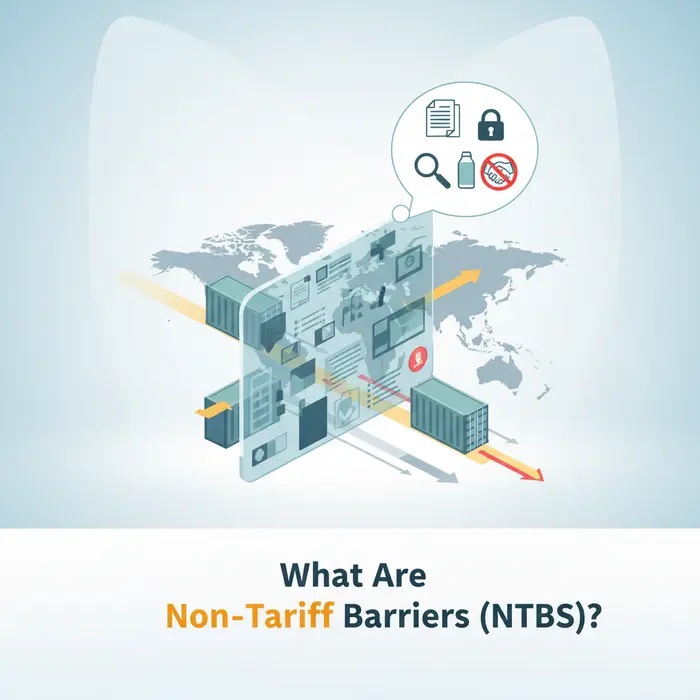
Non-Tariff Barriers (NTBs) are any measures, other than customs tariffs, that restrict trade or distort market conditions. Their primary function, often disguised, is to protect domestic industries, ensure consumer safety, or address environmental concerns. The types of non-tariff barriers are incredibly diverse and can include:
- Quotas: Direct limits on the quantity of goods that can be imported or exported.
- Import Licenses: Administrative requirements mandating special permits for certain products.
- Subsidies: Government financial assistance to domestic producers, making their goods cheaper.
- Embargoes: Complete bans on trade with a particular country or on specific goods.
- Voluntary Export Restraints (VERs): Agreements between countries to limit exports.
- Customs Procedures: Complex or slow customs valuations, classifications, or inspection processes.
- Technical Barriers to Trade (TBTs): These are among the most common and complex NTBs. TBTs involve technical regulations, standards, and conformity assessment procedures products must meet. Examples include mandatory product quality, safety, labeling, and certification requirements. While often legitimate in intent (e.g., protecting health or the environment), they can be applied discriminatorily, creating significant hurdles for foreign producers. The World Trade Organization (WTO) Agreement on Technical Barriers to Trade aims to ensure these standards are not used as disguised protectionism.
The opaque nature and sheer variety of these barriers make them particularly challenging for businesses to navigate, demanding substantial resources for compliance and market analysis.
2. NTBs vs. Tariffs: Key Differences
To fully grasp the essence of NTBs, it’s essential to differentiate them from their more traditional counterparts: tariffs. Tariffs are taxes or duties imposed on imported or exported goods. They are straightforward, transparent, and quantifiable, directly increasing the price of foreign goods at the border. For instance, a 10% tariff on imported cars directly adds 10% to their cost, making domestically produced cars relatively cheaper and allowing businesses to easily calculate this impact on pricing.
Non-tariff barriers, however, operate differently. Instead of directly increasing the price, they often restrict quantities, add administrative burdens, introduce compliance costs, or create delays. Their impact is less direct and frequently harder to measure. For example, a complex safety certification process for an imported electronic device doesn’t add a direct tax but demands time, specialized testing, and potentially redesigns, all contributing to indirect costs and delays. Tariffs are typically collected at the border; NTBs can manifest at any stage, from product design to distribution, making them far more insidious and challenging to address.
3. Why NTBs are Growing in Importance
The increasing prevalence and complexity of NTBs can be attributed to several factors. Historically, tariffs were the primary tool for trade protection. However, decades of multilateral trade negotiations under the GATT and WTO have led to a significant reduction in global tariff rates. As tariffs have fallen, countries seeking to protect their domestic industries or pursue other policy objectives have increasingly turned to NTBs, which are often less visible and harder to challenge under international trade law.
Moreover, the rise of global supply chains and consumer awareness has led to greater demands for product safety, environmental protection, and ethical sourcing. Governments respond by implementing regulations, standards, and certification requirements. While many of these measures are legitimate and beneficial, they can inadvertently or intentionally act as barriers to trade, especially for smaller businesses and developing countries. The impact of non-tariff barriers on exports can be severe, leading to increased production costs, delays in market entry, reduced competitiveness, and sometimes complete exclusion from a market. For instance, differing national standards for food safety or electronics can force exporters to reconfigure production lines, undertake costly testing, or abandon certain markets entirely.
The sophisticated nature of modern manufacturing and diverse societal values mean that harmonizing standards globally is an immense undertaking. Consequently, businesses must develop robust strategies for overcoming non-tariff barriers, which often involves meticulous research into target market regulations, investing in compliance, obtaining necessary certifications, and sometimes advocating for regulatory alignment through industry associations or governmental channels. Their growing importance means that navigating NTBs is no longer an ancillary concern but a core competency for successful international traders.
While tariffs—taxes on imported goods—are straightforward obstacles to global commerce, a far more complex and often subtle array of impediments exists in the form of non-tariff barriers (NTBs). These measures, which range from administrative hurdles to direct financial assistance, significantly impact international trade by increasing costs, limiting market access, or distorting competition. Understanding the various types of non-tariff barriers is crucial for businesses navigating the intricacies of global supply chains and for policymakers aiming to foster fair trade environments. Often more challenging to identify and quantify than tariffs, NTBs nonetheless represent substantial obstacles that require strategic approaches for effective overcoming non-tariff barriers.
1. Quantitative Restrictions (Quotas, Embargoes)
Quantitative restrictions are among the most direct forms of non-tariff barriers, imposing strict limits on the volume or value of goods that can be imported or exported over a specific period. These measures are designed to protect domestic industries from foreign competition, manage supply, or achieve specific political objectives. Quotas, for instance, set a maximum quantity of certain goods allowed to enter or leave a country. Import quotas directly restrict the supply of foreign goods, thereby increasing their price in the domestic market and making local products more competitive. Export quotas, less common but still used, can be implemented to ensure sufficient domestic supply of critical goods or to manage prices in international markets. The impact of non-tariff barriers on exports, particularly through quotas, can be severe, leading to reduced market access for foreign producers and higher costs for domestic consumers due to limited choice and reduced competition. Similarly, embargoes represent an even more stringent form of quantitative restriction, often imposed for political or security reasons. An embargo completely prohibits trade with a specific country or in particular goods, effectively cutting off all commercial ties. While powerful tools for political leverage, embargoes can have significant economic repercussions for both the imposing and target nations, disrupting established trade routes and supply chains.
2. Subsidies and State Aid
Subsidies and state aid involve financial contributions or support provided by a government to domestic industries or producers, with the aim of making them more competitive. While often justified as measures to support nascent industries, promote employment, or ensure the supply of essential goods, these forms of non-tariff barriers can significantly distort international trade patterns. Subsidies can take various forms, including direct cash payments, tax breaks, preferential loans, free or subsidized land, and government procurement policies that favor domestic suppliers. Production subsidies lower the cost of producing goods domestically, making them cheaper than imported alternatives even if the foreign producers are more efficient. Export subsidies directly support domestic firms in selling their products abroad, allowing them to offer lower prices in international markets and gain an unfair advantage over foreign competitors. The main keyword, non-tariff barriers international trade, highlights how these governmental interventions can create an uneven playing field. The negative impact of non-tariff barriers on exports from unsubsidized countries can be substantial, as their products struggle to compete against artificially cheap, subsidized goods. The World Trade Organization (WTO) has specific agreements aimed at regulating subsidies due to their potential to create unfair competition and harm the economic interests of other trading partners.
3. Customs and Administrative Procedures
Beyond direct quantitative limits and financial aid, a vast category of non-tariff barriers stems from complex, opaque, or discriminatory customs and administrative procedures. These barriers often manifest as bureaucratic hurdles that increase the time, cost, and effort required for goods to cross borders. Key areas include complex import licensing procedures, extensive documentation requirements, arbitrary customs valuation methods, and non-transparent rules of origin. For example, obtaining the necessary permits and licenses for specific goods can be a lengthy and costly process, especially if the regulations are frequently changed or poorly communicated. Furthermore, product standards and regulations, while often implemented for legitimate reasons such as health, safety, or environmental protection, can become technical barriers to trade (TBTs) if they are more stringent than necessary, are not based on international norms, or are applied in a discriminatory manner. If a country requires foreign goods to undergo costly and time-consuming testing and certification that is redundant or designed to favor domestic products, it effectively creates a significant barrier. The administrative burden and lack of predictability associated with these procedures disproportionately affect small and medium-sized enterprises (SMEs), which may lack the resources to navigate intricate regulatory landscapes. Simplifying and harmonizing customs procedures and promoting transparency are critical steps in overcoming non-tariff barriers in this category and facilitating smoother non-tariff barriers international trade.
Technical Barriers to Trade (TBTs)
Technical Barriers to Trade (TBTs) represent a significant category among the various non-tariff barriers international trade faces today. Unlike tariffs, which are direct taxes on imports, TBTs are often subtle yet profoundly impactful, creating hurdles for exporters by imposing specific requirements on products entering a foreign market. These barriers stem from a country’s legitimate right to protect its domestic human, animal, and plant life or health, environment, and national security, or to prevent deceptive practices. However, when these measures become more trade-restrictive than necessary to achieve a legitimate objective, they transform into significant obstacles, affecting global supply chains and market access. Understanding these types of non-tariff barriers is crucial for any business engaged in cross-border commerce, as they directly influence competitiveness and market entry strategies. The impact of non-tariff barriers on exports, particularly TBTs, can range from increased production costs and delays to outright exclusion from a target market.
1. Understanding Standards and Technical Regulations
At the heart of technical barriers to trade are product standards and technical regulations. Standards are voluntary guidelines or specifications that lay out requirements for products, services, or processes. They are often developed by industry bodies or international organizations (e.g., ISO, IEC) to ensure quality, interoperability, and safety. While voluntary, adhering to certain standards can be a de facto market requirement for exporters wishing to compete effectively.
In contrast, technical regulations are mandatory rules that specify product characteristics or their related processes and production methods. Compliance with technical regulations is legally required for products to be sold in a particular market. Examples include safety requirements for electronics, energy efficiency labels for appliances, or labeling requirements for food products. The divergence in these mandatory regulations across countries often poses significant challenges for exporters, who must adapt their products and manufacturing processes to meet varied and sometimes conflicting requirements. This necessitates costly redesigns, retooling, and separate production lines, adding complexity and expense to international trade.
2. Sanitary and Phytosanitary (SPS) Measures
While technically distinct from TBTs, Sanitary and Phytosanitary (SPS) Measures are another category of non-tariff barriers that often overlap in their impact on trade. SPS measures are applied to protect human, animal, or plant life or health from risks arising from food additives, contaminants, toxins or disease-carrying organisms, or from diseases carried by animals and plants. These include a wide range of requirements such as quarantine procedures, pesticide residue limits, inspection requirements for meat imports, or disease-free area certifications for agricultural products.
The challenge with SPS measures arises when they are not based on scientific principles, are disproportionately restrictive, or are applied in a discriminatory manner. For instance, an import ban on a particular agricultural product due to a minor pest outbreak in a large country might be seen as an unjustified barrier if the risk could be mitigated through less restrictive means, such as specific processing requirements. Exporters must meticulously comply with these health and safety rules, which often involve extensive testing, certification, and documentation, adding considerable administrative and financial burdens.
3. Conformity Assessment and Certification
Even when an exporter’s product meets the technical standards and regulations of an importing country, it must often undergo conformity assessment procedures to prove compliance. These are processes used to demonstrate that specific requirements relating to a product, process, or service are fulfilled. Common forms of conformity assessment include testing, inspection, and certification.
- Testing: Products may need to be tested in accredited laboratories in the importing country or by recognized bodies to ensure they meet specific performance or safety criteria.
- Inspection: Shipments might be subject to physical inspection at the border to verify compliance with packaging, labeling, or other regulatory requirements.
- Certification: This involves a third-party assurance that a product, process, or service conforms to specified requirements. Certification marks (like CE marking in Europe) signal compliance and are often mandatory.
The impact of non-tariff barriers on exports stemming from conformity assessment can be substantial. Exporters often face challenges such as the need for multiple certifications for different markets, high costs associated with testing and certification, long delays in obtaining necessary approvals, and a lack of mutual recognition agreements between countries for test results or certifications. Navigating these complex procedures without adequate information or support can be a daunting task, significantly increasing time-to-market and overall costs for businesses. Overcoming non-tariff barriers like burdensome conformity assessment requires strategic planning, investment in understanding market-specific requirements, and leveraging international agreements designed to streamline trade.
In conclusion, Technical Barriers to Trade, encompassing varied product standards, mandatory technical regulations, stringent SPS measures, and complex conformity assessment procedures, are formidable obstacles in international trade. While often serving legitimate policy objectives, their diversity and complexity demand careful attention from exporters aiming for global market success. Strategic engagement with international standards, proactive compliance planning, and advocating for regulatory harmonization are key to mitigating the adverse impact of non-tariff barriers on exports and fostering a more seamless global trading environment.
Impact of Non-Tariff Barriers on Exports
Non-tariff barriers (NTBs) have become increasingly prevalent and complex in international trade, often eclipsing traditional tariffs in their ability to impede the free flow of goods and services. Unlike easily quantifiable tariffs, NTBs encompass a broad spectrum of measures, including non-tariff barriers international trade policies like quotas, import licensing requirements, stringent technical regulations, health and safety standards, customs procedures, and subsidies. These barriers, while often legitimate in their stated purpose (e.g., consumer protection or environmental safety), can significantly distort trade patterns, diminish market access, and impose substantial costs on exporters. The far-reaching consequences of NTBs extend beyond individual businesses, affecting international trade flows, consumer choices, and overall economic development and competitiveness on a global scale.
1. Increased Costs and Reduced Competitiveness
The most immediate and tangible impact of non-tariff barriers on exports is the significant increase in operational costs for businesses. Exporters must often navigate a labyrinth of administrative procedures, acquire various licenses and permits, and adhere to specific product standards that can differ vastly from one market to another. For instance, technical barriers to trade (TBTs), such as mandatory testing, certification, and labeling requirements, necessitate additional investment in product redesign, specialized equipment, and compliance documentation. These compliance costs, coupled with potential delays at customs due to complex procedures, add directly to the production and delivery expenses. Such added financial and time burdens erode profit margins, making exported goods less competitive compared to domestically produced alternatives or imports from countries with fewer trade barriers. This not only hurts individual firms but also reduces a nation’s overall export volume and trade balance, potentially leading to a decline in its global economic standing.
2. Market Access Challenges for SMEs
While large multinational corporations often possess the resources and expertise to navigate complex global regulatory landscapes, small and medium-sized enterprises (SMEs) face disproportionately severe market access challenges due to NTBs. SMEs typically lack dedicated legal departments, extensive international trade experience, or the financial capital to invest in understanding and complying with diverse regulations across multiple export markets. The fixed costs associated with testing, certification, and obtaining permits for a new market often represent a much larger percentage of an SME’s revenue compared to a larger firm. Consequently, many SMEs, despite having innovative products or services, are effectively locked out of lucrative foreign markets. This inability to scale internationally not only stifles their growth and job creation potential but also limits consumer choice in import markets and reduces overall economic dynamism. The asymmetric impact of non-tariff barriers on exports means that smaller players are often unable to compete, concentrating market power among larger, more established companies.
3. Innovation and Product Development Hurdles
Non-tariff barriers, particularly those related to differing technical regulations and standards, can significantly impede innovation and product development within export-oriented industries. When each target market imposes unique and often conflicting product specifications (e.g., electrical safety standards, packaging requirements, chemical composition limits), exporters are forced to either develop multiple versions of the same product or undergo costly and time-consuming modifications for each market. This fragmentation of product development efforts diverts resources that could otherwise be used for genuine innovation, research, and development of new, globally competitive products. The uncertainty created by frequently changing or opaque regulations further deters investment in long-term R&D projects for international markets. Instead of focusing on advancing technology or improving efficiency, companies are preoccupied with compliance, leading to slower product cycles and less cutting-edge offerings. Ultimately, this can diminish an exporting nation’s innovative capacity and long-term competitiveness in a rapidly evolving global economy, making it harder to establish and maintain leadership in key industries. Overcoming non-tariff barriers requires strategic adaptation and often international collaboration to harmonize standards.
Strategies for Overcoming Non-Tariff Barriers
Non-tariff barriers (NTBs) represent a significant hurdle in international trade, often proving more complex and subtle than traditional tariffs. These barriers encompass a wide array of measures, from import quotas and subsidies to stringent technical regulations and sanitary and phytosanitary (SPS) standards. While tariffs are straightforward costs, NTBs introduce complexities related to compliance, information asymmetry, and administrative burdens, profoundly impacting a business’s ability to compete globally and export efficiently. For businesses, policymakers, and trade organizations, understanding and implementing effective strategies to navigate, mitigate, and ultimately overcome these challenges is paramount for fostering robust economic growth and facilitating seamless cross-border commerce. This section provides actionable advice and practical strategies to tackle the multifaceted nature of NTBs, ensuring smoother market access and enhanced global competitiveness.
1. Market Research and Due Diligence
Effective market entry into foreign territories demands thorough groundwork, especially when confronted with diverse types of non-tariff barriers. Businesses must invest significantly in comprehensive market research and due diligence to proactively identify potential NTBs specific to their target markets and products. This involves understanding the regulatory landscape, consumer preferences, and distribution channels.
- For Businesses: Conduct in-depth analysis of import regulations, local certification requirements, labeling standards, and intellectual property laws in target countries. Utilize resources from trade associations, chambers of commerce, and government export promotion agencies. Engage with local partners, agents, or distributors who possess invaluable insights into the domestic market’s nuances and regulatory quirks. Early identification of specific technical barriers to trade (TBTs) or SPS measures can prevent costly delays and rejections down the line.
- For Policymakers/Trade Organizations: Support businesses by providing accessible, up-to-date information databases on NTBs across various markets. Offer training programs and workshops on identifying and analyzing market-specific barriers. Facilitate networking events that connect domestic businesses with international regulatory experts and potential partners.
2. Compliance and Certification Strategies
Compliance with foreign standards and regulations is often the most direct way to overcome NTBs. This includes adhering to product standards, health and safety regulations, environmental requirements, and administrative procedures.
- For Businesses: Prioritize securing the necessary certifications and adhering to all relevant standards from the outset. This might involve redesigning products, adjusting manufacturing processes, or altering packaging to meet import country specifications. Where possible, seek international standard certifications (e.g., ISO, CE marking), which can often facilitate acceptance across multiple markets, reducing redundant testing and certification processes. Consider appointing a dedicated compliance officer or team to stay abreast of evolving regulations. Proactively engage with local testing laboratories or certification bodies to ensure products meet required specifications before export. This strategy significantly mitigates the impact of non-tariff barriers on exports by ensuring readiness.
- For Policymakers/Trade Organizations: Advocate for harmonization and mutual recognition agreements for standards and conformity assessment procedures with key trading partners. This reduces the burden on exporters by allowing a product tested and certified in one country to be accepted in another. Provide financial or technical assistance programs to help SMEs achieve compliance with international standards, which can be a significant cost for smaller enterprises.
3. Leveraging Free Trade Agreements (FTAs)
Free Trade Agreements are powerful tools for reducing or eliminating NTBs, in addition to tariffs. Modern FTAs often include specific chapters dedicated to addressing regulatory cooperation, technical barriers, and SPS measures, providing mechanisms for dispute resolution and facilitating smoother trade flows.
- For Businesses: Actively research and understand the provisions of FTAs that their home country or trading bloc has with target markets. Many FTAs contain clauses designed to streamline customs procedures, prevent arbitrary application of standards, and foster regulatory transparency. Utilize rules of origin to benefit from preferential treatment. Participate in consultations related to new or existing FTAs to voice concerns about specific NTBs your business faces, directly contributing to future trade policy. Understanding and leveraging these agreements is a critical strategy for overcoming non-tariff barriers.
- For Policymakers/Trade Organizations: Negotiate comprehensive FTAs that explicitly address and aim to reduce NTBs across various sectors. Ensure these agreements include provisions for regulatory coherence, transparency in standard-setting, and effective dispute settlement mechanisms. Actively inform and educate the business community about the benefits and specific provisions of existing FTAs, potentially through seminars, online portals, and advisory services. Advocate for the full implementation of FTA commitments related to NTBs by partner countries.
By systematically applying these strategies, businesses can transform the daunting challenge of non-tariff barriers into navigable pathways for global expansion, while policymakers and trade organizations can cultivate a more predictable and equitable international trading environment.
Partner with Vietnam’s Leading Suppliers
Looking for reliable suppliers in Vietnam? Contact VietnamSuppliers.com today to connect with verified manufacturers and exporters across all industries.
—————————————
References
– World Trade Organization (WTO) Agreement on Technical Barriers to Trade: https://www.wto.org/english/tratop_e/tbt_e/tbt_e.htm
– Technical Barriers to Trade – World Trade Organization: https://www.wto.org/english/tratop_e/tbt_e/tbt_e.htm
– WTO Technical Barriers to Trade: https://www.wto.org/english/tratop_e/tbt_e/tbt_e.htm
– Technical Barriers to Trade – WTO: https://www.wto.org/english/tratop_e/tbt_e/tbt_e.htm
– WTO Agreement on Technical Barriers to Trade: https://www.wto.org/english/tratop_e/tbt_e/tbt_e.htm

