What is a Multilateral Trade Agreement?
A multilateral trade agreement is a comprehensive trade pact involving three or more countries, designed to reduce or eliminate barriers to trade and promote economic integration among its members. Unlike bilateral agreements, which are negotiated between two nations, multilateral agreements aim to create a level playing field across a wider array of economies, fostering global commerce and often addressing a broad range of issues from tariffs and quotas to intellectual property rights and environmental standards. Understanding what a Multilateral Trade Agreement Explained is crucial for businesses and policymakers navigating the complexities of international trade.

1.
Defining Multilateralism in Trade
Multilateralism in trade refers to the practice of engaging multiple countries in the negotiation and implementation of trade rules and agreements. At its heart, a multilateral trade agreement seeks to harmonize trade relations across a significant portion of the global economy, rather than creating exclusive trading blocs. This approach is distinct from Multilateral vs Bilateral Trade Agreements, where bilateral pacts involve only two countries and often create preferential treatment that may not extend to others. Regional agreements, while involving multiple countries, are geographically confined, such as the European Union or ASEAN.
The core concept behind multilateral trade is non-discrimination, ensuring that all member countries benefit equally from any trade concessions made. This broad participation enhances predictability and stability in international markets, reducing trade friction and offering greater opportunities for businesses to expand their reach. It creates a universal set of rules that, in theory, makes trade fairer and more efficient for all participants, fostering a more interconnected global economy.
2.
Core Principles and Objectives
Multilateral trade agreements are built upon several fundamental principles, primarily championed by organizations like the World Trade Organization (WTO). These principles form the bedrock of a fair and open trading system:
- Most-Favored-Nation (MFN) Treatment: This cornerstone principle dictates that any trade concession or privilege granted by one member country to another must be extended immediately and unconditionally to all other member countries. It ensures non-discrimination among trading partners, preventing the creation of exclusive trading advantages. For more information on these foundational rules, you can refer to the WTO’s core principles of multilateralism.
- National Treatment: Once imported goods or services have entered a country, they must be treated no less favorably than domestically produced goods or services. This prevents countries from using internal taxes, regulations, or standards to discriminate against imports.
- Lowering Trade Barriers: A primary objective is the progressive reduction and eventual elimination of tariffs, quotas, subsidies, and non-tariff barriers that impede the free flow of goods and services.
- Transparency and Predictability: Agreements aim to make trade policies and regulations clear, accessible, and consistent, creating a stable and predictable environment for businesses to plan investments and operations.
- Promoting Fair Competition: Rules are established to deter unfair trade practices such as dumping (selling goods below cost) and excessive subsidies, ensuring a level playing field.
Ultimately, these principles contribute to the Benefits of Multilateral Trade for Export, as they create larger, more open markets, reduce costs for exporters, and provide greater legal certainty, encouraging international investment and economic growth.
3.
Legal Framework and Enforcement
The most prominent example of a framework for multilateral trade agreements is the World Trade Organization (WTO), which evolved from the General Agreement on Tariffs and Trade (GATT). The WTO Multilateral Trade Agreements establish a comprehensive set of rules governing international trade and provide a robust mechanism for their enforcement. These agreements are not merely recommendations; they are legally binding contracts negotiated and signed by the majority of the world’s trading nations, accounting for over 98% of world trade.
A crucial element of the WTO framework is its Dispute Settlement Understanding (DSU). This mechanism allows member countries to resolve trade disputes in a structured and rules-based manner, rather than resorting to unilateral actions or trade wars. When a country believes another member has violated a trade agreement, it can initiate a formal complaint process that involves consultations, panel rulings, and potentially appellate body reviews. The decisions are legally binding, and non-compliance can lead to authorized retaliatory measures, ensuring a high degree of adherence to the agreed-upon rules.
The existence of such a strong legal framework and enforcement system distinguishes multilateral agreements from simpler declarations of intent. It provides businesses and investors with confidence that the rules of the game are clear, stable, and enforceable, which is vital for long-term planning and investment in global markets. The collective commitment embodied in Examples of Multilateral Trade Pacts like the WTO agreements fosters greater stability and prosperity worldwide.
Multilateral vs. Bilateral Trade Agreements
In the complex landscape of global commerce, nations often engage in various forms of trade agreements to facilitate economic exchange. Two primary types dominate this arena: multilateral and bilateral trade agreements. Understanding their distinct structures, scope, and impact is crucial for businesses, policymakers, and anyone keen on international trade dynamics. This section offers a detailed comparison, shedding light on their unique characteristics and strategic implications. Our focus here provides a comprehensive Multilateral Trade Agreement Explained, contrasting it with its bilateral counterpart.
1. Key Differences in Scope and Parties
The most fundamental distinction between multilateral and bilateral trade agreements lies in the number of parties involved and their resulting scope. A multilateral trade agreement involves three or more countries working together to establish a set of rules and commitments that apply to all signatories. These agreements typically aim for broader liberalization, reducing tariffs and non-tariff barriers across a wide range of goods and services for a significant portion of global trade. The World Trade Organization (WTO) is the quintessential example of a multilateral framework, governing global trade rules for 164 member countries.
In contrast, a bilateral trade agreement is an accord between just two countries. These agreements are often more specific, focusing on particular sectors or products where both nations see mutual benefit. While they can be comprehensive, their reach is inherently limited to the two signatory parties. Bilateral pacts allow for greater customization and deeper integration between the two partners, as negotiations are less complex than those involving numerous nations with diverse interests.
2. Advantages and Disadvantages of Each Approach
Both multilateral and bilateral approaches offer unique benefits and drawbacks. Multilateral agreements, such as those forged under the auspices of the WTO Multilateral Trade Agreements, are celebrated for promoting non-discrimination, typically through the Most-Favored-Nation (MFN) principle, where trade concessions granted to one member are extended to all. This creates a more level playing field, reduces the ‘spaghetti bowl’ effect of numerous differing rules, and offers widespread market access, providing significant Benefits of Multilateral Trade for Export. They also often include robust dispute settlement mechanisms, providing stability and predictability. However, their negotiation process can be exceedingly slow and challenging due to the need for consensus among many diverse nations, often leading to diluted outcomes or stalemates, as seen in the Doha Round of WTO negotiations.
Bilateral agreements, by their nature, are quicker to negotiate and implement. They allow countries to tailor agreements to their specific economic strengths and weaknesses, fostering deeper integration in particular sectors. This can be particularly advantageous for smaller economies seeking preferential access to larger markets. Yet, a proliferation of bilateral agreements can lead to a complex web of overlapping and sometimes conflicting rules of origin and standards, often referred to as the ‘noodle bowl’ effect. This complexity can increase administrative burdens for businesses and potentially lead to trade diversion, where trade shifts from a more efficient non-partner country to a less efficient partner country due to preferential tariffs, rather than genuinely creating new trade.
3. Strategic Implications for Member Nations
The choice between pursuing multilateral or bilateral trade agreements, or a combination of both, carries significant strategic implications for member nations. Countries often leverage bilateral agreements to achieve specific economic or political objectives quickly, fostering closer ties with key trading partners. These pacts can act as testing grounds for deeper integration or as a response to the slow pace of multilateral liberalization. For instance, many nations pursue bilateral Free Trade Agreements (FTAs) even while remaining committed to the WTO.
However, an over-reliance on bilateral deals risks fragmenting the global trading system and potentially disadvantaging smaller nations with less negotiating power. Multilateral frameworks, like the existing WTO Multilateral Trade Agreements, remain vital for setting universal standards, ensuring fairness, and managing disputes on a global scale. Multilateral vs Bilateral Trade Agreements represent different philosophies of economic integration, with countries often adopting a multi-pronged approach to maximize their trade advantages. Understanding these strategic choices is key for businesses, especially those involved in exports, to navigate the global market effectively. Prominent Examples of Multilateral Trade Pacts include the GATT (General Agreement on Tariffs and Trade), the precursor to the WTO, while countless bilateral FTAs exist worldwide, demonstrating the diverse tools nations use to shape their trade relationships.
The Role of the WTO in Multilateral Trade
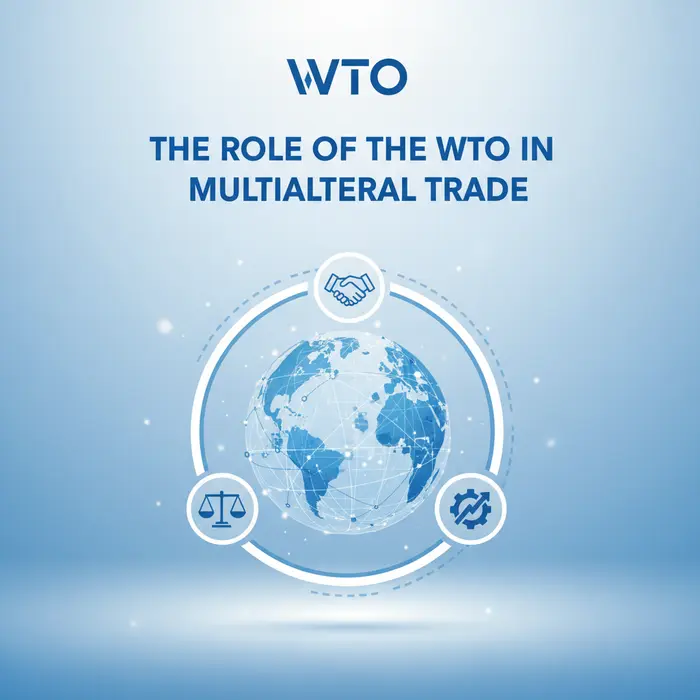
The global economy thrives on international exchange, and at the heart of regulating this intricate system lies the World Trade Organization (WTO). This crucial institution serves as the primary forum for governments to negotiate trade agreements and resolve trade disputes, playing a central role in fostering and regulating multilateral trade agreements explained. Unlike multilateral vs bilateral trade agreements, which involve two countries, multilateral pacts encompass numerous nations, aiming for broader economic integration and shared prosperity. The WTO’s framework ensures a more predictable and transparent trading environment, offering significant benefits of multilateral trade for export by opening up vast markets and standardizing trade rules for businesses worldwide.
1. Foundational WTO Agreements
The World Trade Organization, established in 1995, is a successor to the General Agreement on Tariffs and Trade (GATT), which was created in 1948. The transition from GATT to the WTO marked a significant evolution, broadening the scope of international trade rules to cover not just goods, but also services and intellectual property. The foundational WTO Multilateral Trade Agreements stem from the Uruguay Round negotiations (1986-1994), which led to the Marrakesh Agreement establishing the WTO. Key agreements include the General Agreement on Tariffs and Trade (GATT 1994) for goods, the General Agreement on Trade in Services (GATS) for services, and the Agreement on Trade-Related Aspects of Intellectual Property Rights (TRIPS). These agreements form the legal bedrock of the multilateral trading system, setting out fundamental principles and obligations for member countries. They aim to reduce tariffs and other barriers to trade, ensuring a level playing field for all participants and providing a stable framework for global commerce.
2. Promoting Fair and Open Trade
One of the WTO’s core objectives is to promote fair and open trade through non-discriminatory rules. This is primarily achieved through two fundamental principles: Most-Favoured-Nation (MFN) treatment and National Treatment. MFN requires members to treat all other members equally, meaning that any trade concession granted to one country must be extended to all other WTO members. This prevents selective protectionism and ensures widespread market access. National Treatment dictates that imported goods and services, once they have entered a country, must be treated no less favorably than domestically produced goods and services. These principles are vital for preventing trade distortions and fostering a predictable environment, which significantly enhances the benefits of multilateral trade for export. By lowering tariffs, reducing non-tariff barriers, and encouraging market liberalization, the WTO helps businesses, particularly small and medium-sized enterprises (SMEs), access global supply chains and consumer markets more easily. This broader access and reduced uncertainty are crucial advantages of a multilateral system when comparing multilateral vs bilateral trade agreements, as the former creates a more inclusive and expansive trading network.
3. Dispute Settlement and Compliance
A cornerstone of the WTO’s effectiveness is its robust Dispute Settlement Body (DSB), which provides a mechanism for resolving trade disputes between member countries. This system is designed to ensure that members comply with the agreed-upon rules and obligations. When a country believes another member has violated a WTO agreement, it can initiate a formal dispute process. This process typically involves consultations, panel proceedings, and, if appealed, review by an Appellate Body. The DSB’s rulings are legally binding, and non-compliance can lead to authorized retaliatory measures, though such actions are generally a last resort. This system is critical for maintaining stability and confidence in the multilateral trading system, as it provides an impartial forum for resolving disagreements peacefully and according to established legal principles. The existence of an enforceable dispute settlement mechanism distinguishes the WTO from previous arrangements and ensures the credibility of examples of multilateral trade pacts. By upholding the rule of law in international commerce, the WTO plays an indispensable role in preventing trade wars and fostering cooperation, ultimately safeguarding the integrity and future of global trade.
Benefits of Multilateral Trade for Export-Oriented Businesses
For businesses seeking to thrive in the global marketplace, understanding and leveraging international trade agreements is paramount. While bilateral agreements offer advantages between two nations, multilateral trade agreements explained represent a broader, more impactful framework. These agreements involve three or more countries working together to establish common rules for commerce, significantly reducing trade barriers and fostering a more integrated global economy. For export-oriented businesses, these comprehensive pacts offer a multitude of practical advantages, fundamentally transforming their ability to compete, expand, and succeed on an international scale. They address not just tariffs but also a spectrum of non-tariff barriers, creating a more level playing field for goods and services crossing borders.
1. Expanded Market Access and Reduced Tariffs
One of the most immediate and tangible benefits of multilateral trade agreements for exporters is the substantial expansion of market access coupled with significant tariff reductions. Unlike multilateral vs bilateral trade agreements, which might offer preferential treatment to a single partner, multilateral pacts simultaneously open up numerous markets. By committing multiple signatory nations to lower or eliminate import duties and quotas on a wide range of products, these agreements create a larger, more accessible customer base for export-oriented businesses. This reduction in tariffs directly translates into more competitive pricing for exported goods, as the final cost to the consumer in the importing country is reduced. For instance, an exporter of manufactured goods can now reach consumers in several countries at a more attractive price point, boosting demand and sales volumes. This expanded reach allows businesses to diversify their customer base, reducing reliance on any single market and providing a buffer against regional economic downturns. Moreover, lower tariffs can stimulate innovation and efficiency as companies compete across a broader international arena, leading to better products and services.
2. Simplified Customs Procedures and Regulations
Beyond tariff reductions, multilateral trade agreements are instrumental in streamlining the often-complex world of international logistics and customs. Many of these agreements, particularly those facilitated by organizations like the World Trade Organization, incorporate comprehensive trade facilitation measures. These measures aim to simplify, standardize, and modernize customs procedures across member states, directly benefiting exporters by reducing administrative burdens and accelerating the movement of goods. For example, the WTO Multilateral Trade Agreements on Trade Facilitation specifically target the acceleration of customs procedures and the improvement of transparency. This means less paperwork, standardized documentation requirements, and often, faster processing times at borders. Exporters can experience significant reductions in lead times and associated costs, from warehousing fees to potential penalties for delays. The harmonization of regulations across multiple countries also reduces the need for businesses to adapt to vastly different legal and administrative frameworks for each export destination, saving time, effort, and resources. This predictability and ease of doing business are crucial for maintaining efficient supply chains and meeting delivery schedules.
3. Increased Predictability and Stability for Exporters
Multilateral trade agreements are not just about opening markets; they are equally vital for creating a stable and predictable trading environment. This stability is critical for export-oriented businesses, allowing them to make long-term investment decisions with greater confidence. These agreements establish clear rules of engagement, including provisions for dispute resolution mechanisms that help mediate trade conflicts between member countries. This institutional framework significantly reduces policy uncertainty and political risks that can otherwise deter international trade. When an exporter knows that the rules of the game are transparent and enforced by an independent body, they are more likely to invest in new production capacities, expand their export operations, and explore new markets. The long-term commitments made by signatory nations provide a strong foundation for business planning, ensuring that tariffs and regulations are not subject to arbitrary or sudden changes. This institutional stability fosters a more secure environment for global supply chains, enabling businesses to forge reliable partnerships and plan their logistics more effectively. The benefits of multilateral trade for export are thus amplified by this dependable framework, which encourages sustained growth and international cooperation. Major examples of multilateral trade pacts, such as regional agreements like the European Union’s single market or global accords under the WTO, underscore how these structures underpin consistent and equitable trade relations, allowing businesses to flourish with greater certainty.
Key Examples of Multilateral Trade Pacts
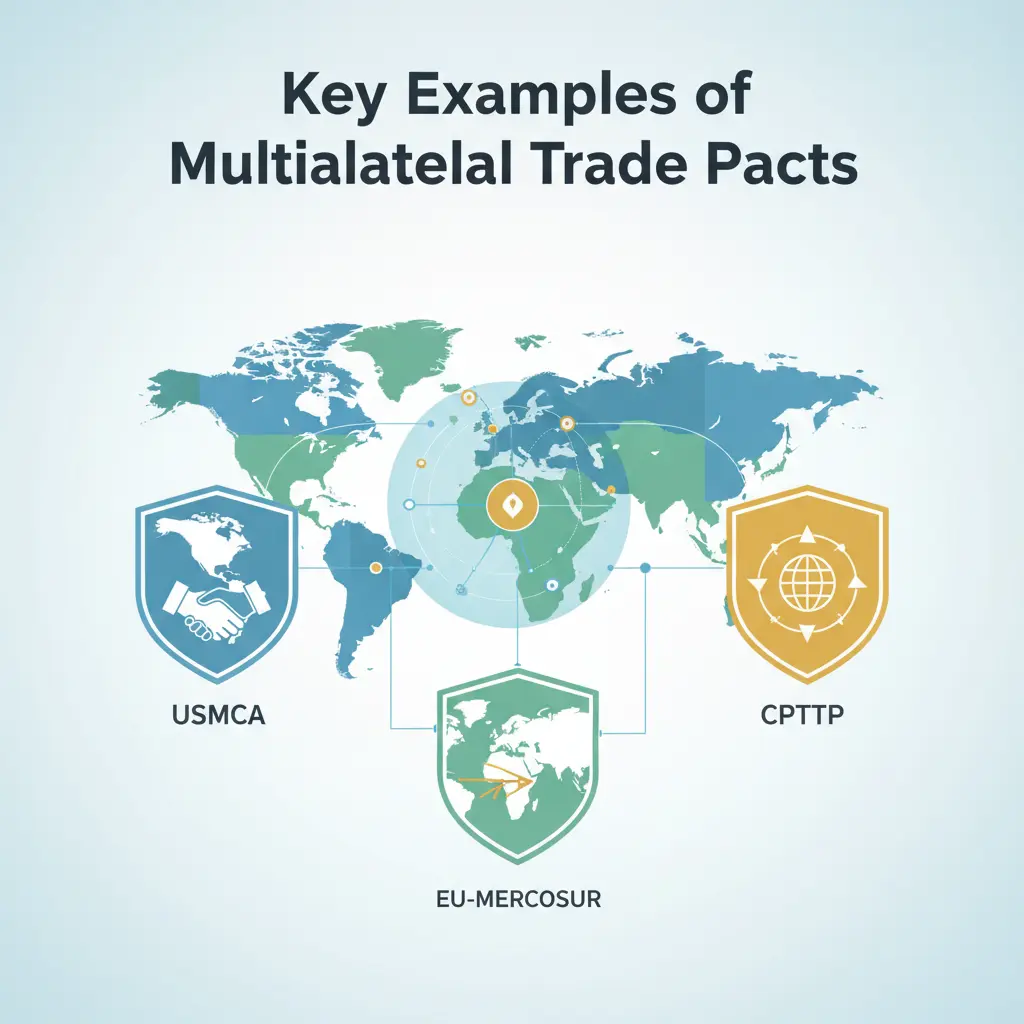
Multilateral trade agreements are foundational to the intricate web of global commerce, representing a commitment among three or more nations to reduce trade barriers and foster economic cooperation. These agreements, unlike bilateral pacts, aim to standardize trade rules across a wider geographic or economic bloc, thereby enhancing efficiency, predictability, and fairness in international trade. Understanding a Multilateral Trade Agreement Explained involves recognizing their global reach and profound impact on economic integration, supply chains, and consumer markets. This section explores significant historical and modern examples, illustrating their evolution and enduring influence.
Historical Multilateral Agreements (e.g., GATT)
The concept of multilateral trade agreements gained significant traction in the post-World War II era, driven by a global desire to prevent economic nationalism and foster peace through trade. The most prominent historical example is the General Agreement on Tariffs and Trade (GATT), signed in 1947. GATT was not an organization but a legal agreement between contracting parties, serving as a provisional framework for reducing tariffs and other trade barriers. Its primary goal was to create a more open and predictable international trading system, a stark contrast to the protectionist policies that contributed to the Great Depression. Through successive rounds of negotiations, GATT successfully lowered average tariff rates on industrial goods from around 40% in 1947 to less than 5% by the time it concluded. This marked a pivotal shift from numerous, often contradictory, Multilateral vs Bilateral Trade Agreements to a more unified approach, laying the groundwork for a truly globalized economy. GATT’s principles of non-discrimination (most-favored-nation treatment and national treatment) became cornerstones of modern trade law, profoundly influencing how nations interacted economically for nearly five decades.
Modern Global and Regional Pacts (e.g., WTO, AfCFTA)
The evolution of multilateral trade agreements culminated in the establishment of the World Trade Organization (WTO) in 1995, succeeding GATT. The WTO is a permanent international organization that deals with the global rules of trade between nations. Its primary functions include administering existing trade agreements, acting as a forum for trade negotiations, and providing a mechanism for resolving trade disputes. The scope of WTO Multilateral Trade Agreements is far broader than GATT’s, encompassing not only goods but also services (General Agreement on Trade in Services – GATS) and intellectual property (Agreement on Trade-Related Aspects of Intellectual Property Rights – TRIPS). The WTO ensures a more comprehensive and legally binding framework for international trade, promoting transparency and adherence to agreed-upon rules globally.
Beyond global frameworks, significant regional multilateral pacts have emerged, reflecting the growing trend of economic integration at a continental or sub-continental level. A prime example is the African Continental Free Trade Area (AfCFTA), launched in 2018. AfCFTA is set to become the world’s largest free trade area by number of participating countries, aiming to create a single market for goods and services across 54 African Union member states. Its objectives include boosting intra-African trade, promoting industrialization, fostering job creation, and accelerating sustainable development. By eliminating tariffs on most goods and harmonizing trade policies, AfCFTA represents a monumental effort to unlock Africa’s economic potential and foster greater resilience against global economic shocks. The ambition of AfCFTA underscores the continued relevance and evolving nature of multilateralism in addressing contemporary economic challenges and opportunities. For more insights into the principles governing global trade, refer to the World Trade Organization’s official overview.
Impact on Global Economic Integration
Multilateral trade pacts have been instrumental in driving global economic integration by systematically dismantling barriers to trade. These agreements reduce tariffs, eliminate quotas, and standardize customs procedures, making it easier and cheaper for goods and services to cross borders. This reduction in trade friction fosters increased international trade volumes, leading to greater specialization, efficiency, and competitiveness among nations. For businesses, particularly those engaged in international commerce, the Benefits of Multilateral Trade for Export are substantial, offering predictable market access, reduced administrative burdens, and a more level playing field. Economies can leverage their comparative advantages, producing what they do best and importing what others produce more efficiently, thereby enhancing overall global welfare and consumer choice.
Furthermore, these agreements provide a stable and predictable environment for international investment. Companies are more likely to invest in countries that are part of a stable multilateral trading system, knowing that their products will have reliable access to foreign markets and that disputes can be resolved through established mechanisms. The framework provided by organizations like the WTO, for instance, offers a degree of legal certainty that is crucial for long-term business planning and cross-border supply chain management. By fostering interdependence and shared economic prosperity, multilateral trade pacts not only boost economic growth but also contribute to geopolitical stability, demonstrating how a Multilateral Trade Agreement Explained is not just about economics, but also about building a more interconnected and cooperative world.
Partner with Vietnam’s Leading Suppliers
Looking for reliable suppliers in Vietnam? Contact VietnamSuppliers.com today to connect with verified manufacturers and exporters across all industries.
—————————————
References
– WTO’s core principles of multilateralism: https://www.wto.org/english/thewto_e/whatis_e/tif_e/fact2_e.htm
– WTO Multilateral Trade Agreements: https://www.wto.org/english/thewto_e/whatis_e/tif_e/fact1_e.htm
– World Trade Organization – Global trade: https://www.wto.org/
– WTO Agreement on Trade Facilitation: https://www.wto.org/english/tratop_e/tradfa_e/tradfa_e.htm
– World Trade Organization’s official overview: https://www.wto.org/english/thewto_e/whatis_e/whatis_e.htm