Understanding the Basics of International Trade Compliance
In today’s interconnected global economy, businesses frequently engage in cross-border transactions, navigating a complex web of regulations, laws, and procedures. Laying the groundwork for what trade compliance entails and why it’s crucial for global businesses to avoid penalties and ensure smooth operations, this section aims to demystify the essential practices that help companies mitigate risks and succeed in the international marketplace.

1. What is International Trade Compliance?
At its core, international trade compliance refers to the adherence to all applicable laws, regulations, and policies governing the import and export of goods, services, and technology across national borders. It’s a multi-faceted discipline that touches every aspect of a global supply chain, from the initial sourcing of materials to the final delivery to the end-user. This comprehensive framework encompasses:
- Customs Regulations: Ensuring correct classification, valuation, and origin declarations for goods to facilitate the Customs clearance process. This also involves understanding specific duties, taxes, and tariffs applicable to various products and countries.
- Export Controls: Adhering to regulations that restrict the export of certain items (e.g., dual-use technologies, military items) to specific destinations or end-users due to national security or foreign policy concerns.
- Sanctions & Embargoes: Complying with restrictions on trade activities with sanctioned countries, entities, or individuals imposed by international bodies or national governments.
- Import License Requirements: Obtaining necessary permits and licenses for importing specific goods, which often vary significantly by country and product type (e.g., pharmaceuticals, agricultural products, chemicals).
- Trade Documentation: Meticulously preparing and maintaining accurate paperwork, including commercial invoices, packing lists, bills of lading, certificates of origin, and other specific trade documentation services as required by customs authorities.
- Product Standards & Certifications: Ensuring goods meet the safety, health, environmental, and technical standards of the destination country.
- Anti-Bribery & Corruption: Adhering to international anti-corruption laws like the FCPA or UK Bribery Act in all global transactions.
Essentially, effective international trade compliance is about understanding and proactively managing the myriad rules that govern cross-border commerce, ensuring that every transaction is lawful, transparent, and efficient.
2. Why Compliance is Essential for Global Businesses
The stakes in international trade are incredibly high. Non-compliance, whether intentional or accidental, can lead to severe consequences for businesses operating globally. Understanding and adhering to global import regulations and other trade laws isn’t just about avoiding penalties; it’s fundamental to sustainable growth and maintaining a positive reputation.
Consequences of Non-Compliance:
- Hefty Fines and Penalties: Regulatory bodies possess broad authority to impose substantial monetary fines, often reaching millions of dollars, for violations ranging from incorrect declarations to sanctions breaches.
- Shipment Delays and Seizures: Non-compliant shipments can be delayed at customs, incurring storage fees, or even seized entirely, leading to significant financial losses and disrupted supply chains.
- Reputational Damage: Violations can tarnish a company’s image, erode customer trust, and negatively impact relationships with partners and investors.
- Loss of Export Privileges: In severe cases, businesses may face suspension or revocation of their import/export privileges, effectively barring them from international trade.
- Legal Ramifications: Individuals within the company, including executives, can face criminal charges and imprisonment for serious breaches of trade laws.
Benefits of Proactive Compliance:
- Smooth Operations: A robust compliance program streamlines the customs clearance process, reduces delays, and ensures predictable supply chain flows.
- Reduced Costs: Avoiding penalties, demurrage charges, and re-export costs directly impacts a company’s bottom line. Accurate declarations also ensure optimal tariff application.
- Enhanced Market Access: Demonstrating strong compliance builds trust with customs authorities, potentially leading to faster clearances and fewer inspections.
- Competitive Advantage: Companies known for their integrity and reliability in international trade can attract more business and strengthen partnerships.
- Risk Mitigation: Proactive compliance identifies and addresses potential vulnerabilities before they become costly problems.
Ultimately, investing in robust international trade compliance is an investment in the longevity and profitability of a global enterprise.
3. Key Regulatory Bodies and Their Roles
Navigating the landscape of international trade requires an understanding of the primary bodies that establish, interpret, and enforce global import regulations and export controls. These organizations operate at both international and national levels, shaping the rules that businesses must follow.
- World Trade Organization (WTO): As the primary international organization dealing with the global rules of trade between nations, the WTO helps trade flow as smoothly, predictably, and freely as possible. It provides a framework for negotiating trade agreements and a dispute resolution process aimed at ensuring fair competition.
- World Customs Organization (WCO): The WCO is an independent intergovernmental body whose mission is to enhance the effectiveness and efficiency of customs administrations worldwide. It develops international instruments and standards for customs procedures, including classification (Harmonized System), valuation, rules of origin, customs enforcement, and supply chain security.
- National Customs Authorities (e.g., U.S. Customs and Border Protection (CBP), HM Revenue & Customs (HMRC) in the UK): These national agencies are responsible for enforcing their respective countries’ trade laws. They manage the entry and exit of goods, collect duties and taxes, and protect their borders against illegal activities. Their roles include processing import declarations, conducting inspections, and ensuring compliance with import license requirements and other national regulations.
- Other Governmental Agencies: Beyond customs, numerous other governmental departments play a role. For instance, the Department of Commerce in the U.S. or the Department for International Trade in the UK are responsible for export control regulations, sanctions enforcement, and promoting national trade interests. Bodies like the FDA (Food and Drug Administration) or EPA (Environmental Protection Agency) impose specific product standards that must be met for certain goods to enter a market.
Staying informed about the evolving mandates and guidelines from these regulatory bodies is paramount for any business engaged in cross-border commerce, ensuring adherence to the latest global import regulations and avoiding potential pitfalls.
Navigating Import License Requirements Globally
Ensuring the lawful entry of goods into any country is a cornerstone of successful International Trade Compliance. A critical component of this process involves understanding and adhering to various import license requirements, which differ significantly across nations and product categories. Failing to secure the necessary permits can lead to costly delays, fines, and even the confiscation of goods, making a thorough grasp of global import regulations indispensable for businesses engaged in cross-border commerce.
1. Identifying Products Requiring Special Licenses
Identifying Products Requiring Special Licenses
The first step in navigating the intricate world of import licenses is to identify whether your specific product requires one. While general goods often move with standard customs declarations, certain categories are subject to heightened scrutiny and necessitate special import permits. These commonly include, but are not limited to:
- Agricultural Products: Foods, plants, and livestock often require phytosanitary or veterinary certificates to prevent the introduction of pests and diseases.
- Pharmaceuticals and Medical Devices: Strict health and safety regulations demand licenses from national health authorities to ensure product efficacy and safety.
- Chemicals and Hazardous Materials: Due to environmental and safety concerns, these items typically require permits detailing their composition, handling, and intended use.
- Dual-Use Goods: Products with both civilian and military applications (e.g., certain electronics, software, or advanced materials) often fall under stringent export and import controls to prevent proliferation.
- Textiles and Apparel: While less common now, some countries still maintain quota systems or specific licensing for textile imports.
- Electronics and Telecommunications Equipment: Depending on the technology, specific certifications for frequency use or safety standards might be mandatory.
Exporters and importers must meticulously classify their goods using the Harmonized System (HS) code, as this classification often dictates the applicable import license requirements. Consulting official government customs websites or trade compliance databases is crucial to pinpointing these specific needs. For a broader understanding of non-tariff measures, including import licensing, the World Trade Organization (WTO) provides valuable insights into international trade regulations.
2. Country-Specific Import Permit Regulations
Country-Specific Import Permit Regulations
Beyond product-specific requirements, import permit regulations vary dramatically from one country or economic bloc to another. What is permitted freely in the European Union may require extensive documentation in Southeast Asia or a specific license in North America. For instance:
- European Union: While most goods can circulate freely within the EU once imported, specific items like certain chemicals (under REACH regulations) or protected species (CITES) require import authorizations for entry into the bloc.
- United States: Various federal agencies, such as the FDA (for food and drugs), EPA (for environmental goods), and ATF (for firearms), issue import licenses based on their respective jurisdictions.
- Developing Nations: Many developing economies use import licenses not only for regulatory control but also as a tool for economic management, protecting domestic industries, or managing foreign exchange reserves. This can lead to more complex and time-consuming application processes.
- Regional Trade Agreements: Free Trade Agreements (FTAs) or Customs Unions can simplify import procedures among member states, often reducing or eliminating the need for certain licenses and tariffs, though product-specific regulatory compliance still applies.
Staying updated on these dynamic global import regulations is a continuous challenge. Businesses should routinely consult the customs authorities of their target markets, leverage local customs brokers, or utilize trade documentation services to ensure full compliance and avoid unforeseen disruptions to their supply chain. Understanding these nuances is a vital aspect of effective International Trade Compliance.
3. Application Processes and Documentation
Application Processes and Documentation
The application process for an import license is often meticulous, demanding precision and a thorough understanding of required documentation. While specific steps vary by country and product, common elements typically include:
- Online Portals vs. Manual Submissions: Many countries have moved to electronic application systems, streamlining the process, while others may still require physical submissions.
- Required Documents: A standard application package often includes the commercial invoice, packing list, bill of lading or airway bill, certificate of origin, pro forma invoice, and sometimes technical specifications, test reports, or health certificates. For regulated goods, additional permits from specific government agencies are usually mandatory.
- Fees and Lead Times: Be prepared for application fees and varying processing times, which can range from a few days to several months, depending on the complexity of the product and the efficiency of the issuing authority. Proper planning, therefore, is paramount.
- Compliance Checks: Authorities will verify the accuracy of all submitted information against their regulations. Any discrepancies can lead to delays or rejection.
Engaging experienced customs brokers or specialized trade documentation services can significantly streamline this process, ensuring that all paperwork is accurate, complete, and submitted in a timely manner. Their expertise is invaluable in navigating the often-complex Customs clearance process, helping businesses avoid common pitfalls and ensuring smooth transitions for goods across international borders. Adherence to these strict import license requirements is not merely a formality but a fundamental aspect of maintaining legal and efficient international trade operations.
The Customs Clearance Process Explained
In the intricate world of global commerce, efficient International Trade Compliance is paramount. Navigating borders smoothly is not merely about logistics; it’s about mastering the customs clearance process—a critical step that, if mishandled, can lead to costly delays, penalties, and damaged supply chains. This comprehensive guide outlines the essential procedures, offering insights to optimize efficiency and ensure your goods move seamlessly across international frontiers, thereby avoiding the common pitfalls associated with inefficient customs management. Understanding and preparing for each stage is key to successful international trade.
1. Pre-Arrival Planning and Documentation
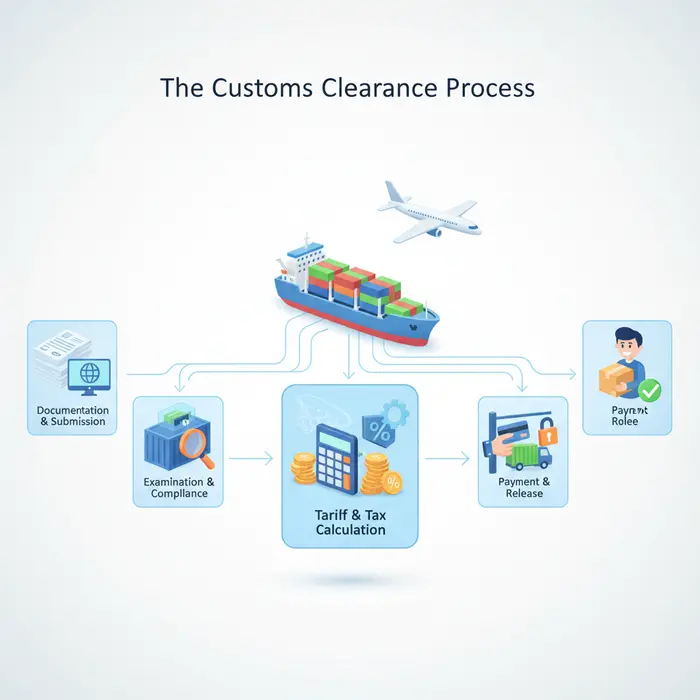
The foundation of a swift customs clearance process is laid long before goods even reach the border. Pre-arrival planning involves meticulously gathering and preparing all necessary documentation. This proactive approach minimizes last-minute scrambling and potential discrepancies that could halt your shipment. Key documents include the commercial invoice, which details the transaction between buyer and seller; the packing list, providing an itemized list of contents; and the bill of lading (for sea freight) or airway bill (for air freight), serving as a contract between the shipper and carrier. Crucially, many goods also require specific permits or import license requirements depending on their nature, origin, and destination. For instance, agricultural products, pharmaceuticals, and certain technologies are often subject to stringent regulations requiring prior approval from various government agencies. Neglecting these can result in immediate seizure or forced re-exportation. Engaging professional trade documentation services or experienced customs brokers at this stage can significantly streamline the process, ensuring all paperwork is accurate, complete, and compliant with Global import regulations. This early attention to detail is indispensable for maintaining flow and avoiding costly demurrage or detention charges.
2. Customs Declaration and Valuation
Once the pre-arrival documentation is in order, the next critical step is the formal customs declaration. This involves submitting a detailed entry to the customs authority, often electronically, which officially initiates the clearance process. The declaration includes vital information such as the consignee and consignor details, the country of origin, and most importantly, the Harmonized System (HS) code for each product. Correct commodity classification through HS codes is fundamental, as it directly impacts the applicable duties, taxes, and regulatory requirements. Misclassification, whether accidental or intentional, can lead to penalties, audits, and delays. Parallel to classification is accurate customs valuation. Customs authorities typically determine the value of imported goods based on methods prescribed by the World Trade Organization (WTO), primarily the transaction value—the price actually paid or payable for the goods. However, various adjustments might be made for elements like royalties, selling commissions, and assists. Incorrect valuation can lead to either underpayment or overpayment of duties and taxes, both of which can trigger extensive investigations and severe penalties under Global import regulations. Adherence to international customs standards, often guided by the World Customs Organization (WCO), is essential to ensure compliance and avoid issues.
3. Duties, Taxes, and Fees Calculation
The final phase before goods are released involves the calculation and payment of applicable duties, taxes, and other fees. These financial obligations are determined by several factors: the HS code (which dictates the duty rate), the customs valuation, the country of origin (benefiting from free trade agreements can significantly reduce or eliminate duties), and the prevailing tax rates (such as Value Added Tax or Goods and Services Tax). Customs duties are typically assessed as a percentage of the declared value, while taxes like VAT are often applied to the sum of the goods’ value, freight, insurance, and duties. Beyond duties and taxes, other fees may include processing fees, anti-dumping duties, countervailing duties, or excise taxes, depending on the product and origin. Leveraging existing free trade agreements (FTAs) can offer substantial cost savings, provided the goods meet the specific rules of origin criteria. It is imperative that all calculations are precise and that payments are made promptly to ensure the smooth release of the shipment. Any errors or delays in payment will result in the goods remaining under customs hold, incurring additional storage costs and potentially disrupting supply chains. For businesses engaging in international trade, a thorough understanding of these financial aspects is crucial for accurate budgeting and maintaining competitive pricing. Navigating this complex landscape requires specialized knowledge and attention to detail, making the expertise in the overall International Trade Compliance and Customs clearance process invaluable.
Key Global Import Regulations and Standards
Navigating the intricate landscape of global import regulations is crucial for businesses engaged in cross-border trade. Adherence to International Trade Compliance not only ensures smooth customs clearance processes but also mitigates risks of penalties and supply chain disruptions. This section provides an overview of the pivotal agreements, restrictive measures, and product-specific standards that govern international imports, impacting market access and operational strategies. Understanding these frameworks is essential for any entity seeking to successfully participate in global commerce, ensuring efficient trade documentation services and avoiding costly errors.
1. WTO Agreements and Their Impact
The World Trade Organization (WTO) serves as the primary international body for regulating global trade. Its foundational agreements, such as the General Agreement on Tariffs and Trade (GATT), the Agreement on Technical Barriers to Trade (TBT), and the Agreement on Sanitary and Phytosanitary (SPS) Measures, establish a framework for predictable and transparent trade practices among member countries. These agreements aim to reduce tariffs, eliminate non-tariff barriers, and ensure fair competition, significantly streamlining the international trade compliance landscape.
For importers, understanding WTO principles means recognizing commitments to national treatment, most-favored-nation (MFN) status, and customs valuation rules. Compliance with these frameworks directly influences the efficiency of the customs clearance process, affecting duties, taxes, and the overall cost of imports. Members are required to publish their trade regulations promptly, providing transparency that aids businesses in planning their global import regulations strategies and managing import license requirements effectively. Ignoring these foundational rules can lead to disputes and barriers to market access, underscoring the necessity of robust trade documentation services to navigate this complex environment.
2. Sanctions and Embargoes (e.g., OFAC, EU)
Sanctions and embargoes represent targeted economic measures imposed by individual nations or blocs to achieve specific foreign policy or national security objectives. These restrictive measures can significantly impact global imports by prohibiting trade with designated countries, entities, or individuals.
The **Office of Foreign Assets Control (OFAC)**, under the U.S. Department of the Treasury, administers and enforces economic sanctions programs against countries and regimes, terrorists, international narcotics traffickers, those engaged in activities related to the proliferation of weapons of mass destruction, and other threats to the national security, foreign policy or economy of the United States. Similarly, the **European Union (EU)** implements various restrictive measures, including arms embargoes, travel bans, asset freezes, and trade restrictions, often in line with UN Security Council resolutions or its own foreign policy initiatives.
For businesses, compliance with these sanctions is paramount. It involves rigorous due diligence to identify sanctioned parties, screening against restricted party lists (e.g., OFAC’s Specially Designated Nationals and Blocked Persons List – SDN List), and adhering to strict import license requirements for certain goods or destinations. Non-compliance can result in severe penalties, including substantial fines and imprisonment. Navigating these complex global import regulations necessitates comprehensive understanding and robust internal controls to avoid inadvertent violations and ensure continuous market access.
3. Product Safety, Health, and Environmental Standards
Beyond tariffs and trade restrictions, a critical aspect of international trade compliance involves adhering to product-specific standards related to safety, health, and environmental protection. These global import regulations are designed to protect consumers and the environment but can act as significant non-tariff barriers if not properly managed.
Many countries enforce stringent standards for product design, manufacturing processes, labeling, and performance. For instance, the **EU’s CE marking** is mandatory for many products sold within the European Economic Area, indicating conformity with health, safety, and environmental protection standards. Similarly, regulations like **REACH** (Registration, Evaluation, Authorisation and Restriction of Chemicals) govern the use of chemicals within products, directly impacting import license requirements for various goods. In the United States, agencies like the **FDA** (Food and Drug Administration) and **EPA** (Environmental Protection Agency) set comprehensive standards for food, drugs, medical devices, and environmental emissions.
For importers, ensuring that products meet these diverse and often evolving standards is vital for gaining and maintaining market access. This typically involves product testing, certification from recognized bodies, accurate trade documentation services, and clear labeling. Failure to comply can lead to product recalls, border rejections, and reputational damage. Proactive engagement with these product-specific global import regulations is essential for successful international trade and seamless entry into target markets.
Leveraging Trade Documentation and Support Services
In the intricate world of global commerce, the precision and accuracy of documentation are not merely bureaucratic hurdles but fundamental pillars of success. This section explores the critical role of accurate documentation and elucidates how professional services can significantly streamline International Trade Compliance efforts, thereby saving invaluable time and mitigating substantial risks. From navigating complex Global import regulations to ensuring seamless Customs clearance process, robust documentation and expert support are indispensable.

1. Essential Trade Documents (Commercial Invoice, Packing List, BOL, etc.)
At the heart of every international transaction lies a comprehensive set of documents, each serving a distinct yet interconnected purpose. Understanding and meticulously preparing these documents are crucial for achieving robust International Trade Compliance. Key documents include:
- Commercial Invoice: This is a bill for the goods from the seller to the buyer, detailing the products, quantities, prices, and terms of sale. It is vital for customs valuation and duties calculation.
- Packing List: Providing details about the contents of each package, including weight, dimensions, and descriptions, the packing list is indispensable for physical handling, inventory management, and customs inspection.
- Bill of Lading (BOL) / Air Waybill (AWB): These are contracts of carriage and receipts for goods, issued by the carrier. The BOL is for ocean freight, while the AWB is for air freight. They serve as proof of shipment and title to the goods.
- Certificate of Origin (COO): This document certifies where the goods were manufactured, crucial for determining tariffs, trade agreements, and Global import regulations.
- Import/Export Licenses: Depending on the goods and destination, specific Import license requirements may be necessary to control restricted or regulated items.
Any discrepancy or omission in these documents can lead to significant delays, hefty fines, and even seizure of goods, highlighting their critical role in a smooth Customs clearance process.
2. Electronic Data Interchange (EDI) in Trade
The digital transformation has profoundly impacted international trade, with Electronic Data Interchange (EDI) emerging as a cornerstone for efficient documentation. EDI allows for the standardized, electronic exchange of business documents between trading partners. Instead of paper-based invoices, purchase orders, and shipping notices, EDI facilitates their transmission in a structured, machine-readable format.
The benefits of integrating EDI into trade operations are manifold:
- Increased Speed and Efficiency: Manual data entry is replaced by automated processes, drastically reducing transaction times.
- Reduced Errors: Automation minimizes human error, leading to higher data accuracy and fewer disputes.
- Cost Savings: Lower administrative costs associated with printing, mailing, and manual processing.
- Enhanced International Trade Compliance: Standardized data exchange helps meet regulatory requirements and facilitates easier audits.
- Improved Visibility: Real-time data exchange provides better tracking and management of shipments, crucial for navigating complex Global import regulations.
Embracing EDI is essential for businesses looking to modernize their supply chains and improve the overall efficiency of their Customs clearance process in an increasingly digital global economy. More information on digital trade facilitation can be found on authoritative sources like the International Trade Centre (ITC).
3. Benefits of Professional Trade Documentation Services
Given the complexity and ever-evolving nature of international trade laws, many businesses find immense value in outsourcing their documentation needs to professional Trade documentation services. These specialized providers offer expertise that can significantly mitigate risks and enhance operational efficiency.
Key benefits include:
- Expertise and Accuracy: Professionals are well-versed in the latest Global import regulations and country-specific Import license requirements, ensuring documents are precise and complete. This expertise is vital for maintaining strict International Trade Compliance.
- Risk Mitigation: By ensuring all documentation adheres to legal standards, these services significantly reduce the risk of penalties, delays, and rejections.
- Time Savings: Offloading the laborious task of document preparation allows businesses to focus on core competencies, improving productivity.
- Cost Efficiency: While an initial investment, avoiding customs delays, fines, and potential legal issues often results in greater cost savings in the long run.
- Access to Technology: Many services leverage advanced software and EDI capabilities, providing clients with the benefits of digitalization without direct investment.
- Staying Current: Trade regulations are constantly changing. Professional services stay updated, ensuring clients are always in compliance with the latest requirements for the Customs clearance process.
For businesses engaged in cross-border trade, partnering with professional trade documentation services is a strategic move towards achieving seamless operations, robust compliance, and sustainable growth in the global marketplace.
Partner with Vietnam’s Leading Suppliers
Looking for reliable suppliers in Vietnam? Contact VietnamSuppliers.com today to connect with verified manufacturers and exporters across all industries.
—————————————
References
– World Trade Organization (WTO): https://www.wto.org/
– World Trade Organization (WTO) provides valuable insights: https://www.wto.org/english/tratop_e/nontariff_barriers_e/ntm_e.htm
– World Customs Organization: https://www.wcoomd.org/
– OFAC Specially Designated Nationals and Blocked Persons List (SDN List): https://www.treasury.gov/ofac/downloads/sdnlist.txt
– International Trade Centre (ITC): https://www.intracen.org/news/simplifying-trade-procedures-for-smes/