Introduction to Incoterms 2020
In the intricate landscape of international trade, clarity is paramount. Every cross-border shipment involves defining responsibilities for costs, risks, and logistics. Misunderstandings can lead to significant disputes and delays. This is precisely where Incoterms 2020 provide an indispensable framework. These internationally recognized rules offer a universal language for buyers and sellers, streamlining transactions and minimizing potential misinterpretations in global commerce.
The 2020 revision of Incoterms reflects contemporary global trade practices, addressing evolving challenges and modernizing existing rules. A deep understanding of these updates is crucial for businesses involved in import and export, ensuring efficient operations, predictable costs, and robust risk management.
1. What are Incoterms and Why Do They Matter?
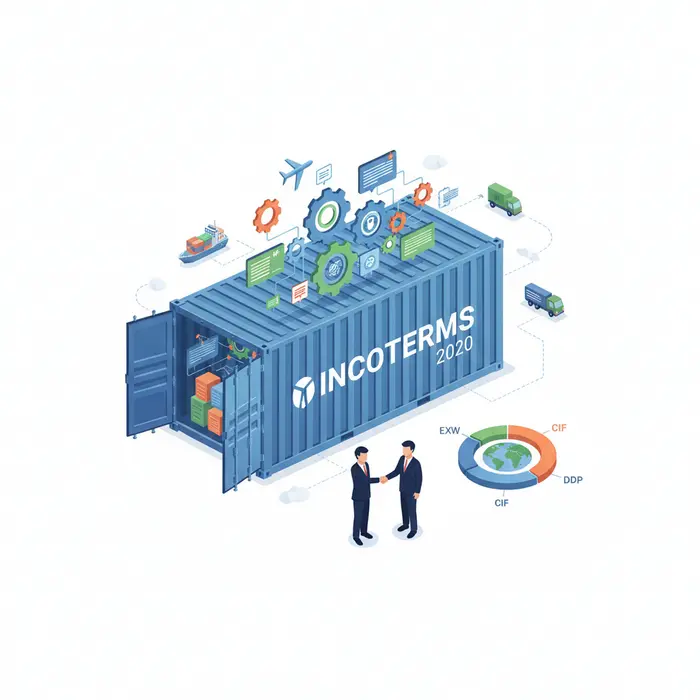
Incoterms, an acronym for International Commercial Terms, are a set of eleven rules published by the International Chamber of Commerce (ICC). They precisely define the obligations of buyers and sellers for the delivery of goods under sales contracts. Essentially, Incoterms stipulate who is responsible for paying for and managing shipping, insurance, documentation, customs clearance, and other logistical costs from origin to destination.
Their importance in international trade is immense. By offering a clear, globally accepted framework, Incoterms:
- Prevent Misunderstandings: They eliminate ambiguity regarding responsibilities at each stage of the shipping process.
- Reduce Disputes: Clear definitions of cost and risk transfer points minimize conflicts between trading partners.
- Streamline Logistics: They enable more effective planning and execution of transportation, insurance, and customs procedures.
- Standardize Contracts: Incoterms serve as a concise shorthand, simplifying complex responsibility clauses in sales agreements.
In essence, Incoterms are the foundation for predictable global supply chains, avoiding the need for exhaustive, bespoke negotiations for every international transaction.
2. History and Evolution: From Incoterms 2010 to 2020
First published by the ICC in 1936, Incoterms have undergone regular revisions, roughly every ten years, to adapt to changes in global trade, transportation, technology, and security demands. These updates ensure the rules remain relevant and responsive to current business practices.
The transition from Incoterms 2010 to Incoterms 2020 introduced several key updates:
- DAT replaced by DPU: “Delivered at Terminal” (DAT) became “Delivered at Place Unloaded” (DPU), offering greater flexibility for the destination point beyond just terminals.
- Insurance Coverage in CIF and CIP: While Cost, Insurance and Freight (CIF) maintains minimum coverage (Clause C), Carriage and Insurance Paid To (CIP) now requires higher coverage (Clause A), aligning with the needs of higher-value manufactured goods.
- Own Transport: The 2020 rules explicitly acknowledge and allow for buyers or sellers to use their own vehicles for transport, reflecting modern logistical realities.
- Security Allocation: Enhanced emphasis on security-related requirements, with clearer allocation of associated costs between parties.
- Bills of Lading in FCA: A provision was added to Free Carrier (FCA) to facilitate the issuance of an “on-board” bill of lading to the seller, often required for letters of credit.
These revisions underscore the ICC’s commitment to maintaining Incoterms 2020 as a practical and current guide for international commerce.
3. Key Principles: Cost, Risk, and Responsibility
All Incoterms rules fundamentally address three core principles: the allocation of costs, the transfer of risk, and the definition of responsibilities between buyer and seller.
- Cost: This principle dictates which party covers specific expenses throughout the shipping journey, including freight, loading/unloading, insurance, customs duties, and taxes. For example, comparing FOB vs CIF Incoterms clearly illustrates how main carriage and insurance costs are distributed differently.
- Risk: This defines the precise point at which the responsibility for loss or damage to goods transfers from the seller to the buyer. This transfer point is crucial; the party bearing the risk at that moment is financially liable for any damage. Under EXW meaning and responsibilities, risk transfers at the seller’s premises, placing maximum risk on the buyer. Conversely, DDP Incoterms explained entails the seller bearing almost all risk until the goods are delivered and customs-cleared at the buyer’s destination.
- Responsibility: This outlines which party is tasked with specific operational duties, such as handling export and import customs clearance, obtaining necessary licenses and permits, arranging transport contracts, and providing proof of delivery. Clear responsibility prevents logistical bottlenecks and ensures compliance.
Mastering these three pillars and understanding how each Incoterms 2020 chart maps them is vital for selecting the appropriate term for any transaction. This knowledge empowers businesses to navigate global trade confidently, optimizing supply chain strategies and minimizing potential liabilities.
Decoding Key Incoterms: FOB, CIF, EXW, and DDP
In the intricate world of international trade, understanding shipping terms is paramount to avoiding disputes, managing costs, and ensuring smooth logistics. Incoterms 2020, published by the International Chamber of Commerce (ICC), provide a universally recognized set of rules that define the responsibilities of buyers and sellers for the delivery of goods. This deep dive will unravel the intricacies of the most frequently used Incoterms: FOB, CIF, EXW, and DDP, offering clarity on their implications for both parties.
1. FOB vs CIF Incoterms: Sea Shipping Differences Explained
When shipping goods by sea or inland waterway, Incoterms 2020 rules like Free On Board (FOB) and Cost, Insurance, and Freight (CIF) are among the most common. While both involve sea transport, their allocations of risk, cost, and responsibility differ significantly, making the choice between FOB vs CIF Incoterms crucial for exporters and importers.
Under FOB (Free On Board), the seller is responsible for delivering the goods on board the vessel nominated by the buyer at the named port of shipment. The seller covers all costs and risks up to this point, including loading the goods onto the vessel. Once the goods are on board, the risk of loss or damage transfers from the seller to the buyer. From that point onward, the buyer assumes all costs and risks, including ocean freight, insurance, unloading at the destination port, and any further transport to the final destination. FOB is generally preferred by buyers who want more control over the shipping process and can secure better freight rates.
Conversely, CIF (Cost, Insurance, and Freight) places more responsibility on the seller. The seller is responsible for arranging and paying for the carriage of goods to the named port of destination, as well as obtaining marine insurance against the buyer’s risk of loss or damage during carriage. However, and this is a critical distinction, the risk of loss or damage to the goods transfers from the seller to the buyer once the goods are loaded on board the vessel at the port of shipment (the same point as FOB). The seller pays for freight and insurance *to* the destination port, but the risk transfers *at* the origin port. CIF is often favored by sellers who want to offer a more ‘door-to-port’ solution to their buyers, or by buyers who prefer less involvement in the logistics chain up to the destination port.
In essence, while both terms transfer risk when goods are on board the vessel at the port of origin, CIF requires the seller to also cover the cost of main carriage and insurance to the destination port, providing a more comprehensive service from the seller’s side.
2. EXW Meaning and Buyer’s Extensive Responsibilities
EXW (Ex Works) represents the Incoterm with the minimum obligation for the seller and, consequently, the maximum responsibility for the buyer. Under EXW, the seller simply makes the goods available at their own premises – typically their factory, warehouse, or other named place. The seller has no obligation to load the goods onto any collecting vehicle, clear them for export, or even provide any documentation beyond what’s needed for the buyer to take the goods.
This means the buyer bears almost all the costs and risks involved in bringing the goods from the seller’s premises to their final destination. The EXW meaning and responsibilities for the buyer include: arranging all transportation, loading the goods at the seller’s premises, clearing the goods for export (which can be a significant hurdle if the buyer is unfamiliar with the seller’s country regulations), paying all export duties and taxes, arranging main carriage, import clearance, import duties and taxes, and delivery to the final destination. Because of the extensive responsibilities, EXW is often used in domestic trade where the buyer has the logistical expertise and presence in the seller’s country, or when a buyer consolidates multiple purchases from different suppliers within the same region before exporting them.
3. DDP Incoterms Explained: Seller’s Maximum Obligation
At the opposite end of the spectrum from EXW lies DDP (Delivered Duty Paid), which places the maximum obligation on the seller and the minimum on the buyer. When considering DDP Incoterms explained, it’s clear this term offers the most convenience to the buyer, as the seller handles almost everything.
Under DDP, the seller delivers the goods to the buyer’s named place of destination, ready for unloading, and cleared for import. This means the seller is responsible for all costs and risks associated with bringing the goods to the destination, including export customs clearance, main carriage, insurance, import customs clearance, and payment of all import duties, taxes (such as VAT or GST), and other charges payable upon import. The only responsibility left for the buyer is to unload the goods at the final destination.
While DDP offers unparalleled convenience for the buyer, it can be particularly complex and risky for the seller. The seller must possess a thorough understanding of the import regulations, customs procedures, and tax laws of the destination country. Any errors or unforeseen costs can significantly impact the seller’s profitability. Consequently, sellers usually factor these potential complexities and costs into the overall price of the goods. For buyers seeking a hassle-free, ‘door-to-door’ solution, DDP is the ideal choice, often making it seem like a domestic purchase even for international transactions. A comprehensive Incoterms 2020 chart can help visualize these distinctions across all terms.
Navigating Risk, Cost, and Logistics in Incoterms 2020
In the complex world of international trade, clarity is paramount. Misunderstandings regarding responsibilities can lead to costly delays, disputes, and even lost shipments. This is precisely where Incoterms 2020 rules come into play. Published by the International Chamber of Commerce (ICC), Incoterms, or “International Commercial Terms,” provide a universally recognized set of eleven three-letter terms that define the responsibilities of sellers and buyers for the delivery of goods under sales contracts. Far more than just abbreviations, these rules meticulously delineate who is responsible for costs, when the critical point of risk transfer occurs, and the practical logistical implications for both parties in a transaction, ensuring smoother global commerce. Understanding these nuances is fundamental for importers and exporters alike, impacting everything from pricing strategies to supply chain management.

1. The Critical Point of Risk Transfer
One of the most vital aspects clarified by Incoterms 2020 is the exact moment and location where the risk of loss or damage to goods transfers from the seller to the buyer. This isn’t merely an academic point; it has profound financial implications, determining which party bears the financial burden if something goes wrong during transit. For instance, under EXW (Ex Works), the seller’s responsibility is minimal; risk transfers to the buyer as soon as the goods are made available at the seller’s premises. The buyer assumes all risks and costs from that point onwards. Conversely, under DDP (Delivered Duty Paid), the seller bears almost all risks until the goods are delivered to the named place of destination, cleared for import, and ready for unloading.
The distinction between terms like FOB (Free On Board) vs CIF (Cost, Insurance and Freight) further highlights this. Under FOB, risk transfers when goods are loaded on board the vessel nominated by the buyer at the named port of shipment. The buyer assumes risk once goods are on the ship. For CIF, while the seller pays for cost, freight, and procures insurance to the destination port, the risk transfer point is identical to FOB – when goods are loaded on board the vessel at the port of shipment. This subtle but significant difference in risk transfer, irrespective of who pays for main carriage and insurance, underscores the importance of carefully examining each Incoterm. For more detailed insights into the official Incoterms 2020 rules, it’s always best to refer to the authoritative source.
2. Cost Allocation: Who Pays for What?
Beyond risk, Incoterms 2020 meticulously define the allocation of costs between the buyer and seller for various stages of the shipping process. These costs can encompass everything from packaging and loading at the origin to main carriage, unloading, import/export duties, taxes, and final delivery. Understanding EXW meaning and responsibilities reveals that the seller’s cost obligation is minimal; they are only responsible for making goods available at their premises, with the buyer incurring virtually all subsequent costs. At the opposite end, DDP Incoterms explained show the seller shoulders maximum responsibility, covering all costs until goods reach the buyer’s desired destination, including import duties and taxes.
Most other Incoterms fall between these two extremes. For example, under FCA (Free Carrier), the seller delivers goods to a carrier nominated by the buyer at a named place, and pays for export clearance. From that point, the buyer covers main carriage, insurance, and import procedures. An effective Incoterms 2020 chart serves as an invaluable visual guide, illustrating how cost responsibilities progressively shift from seller to buyer across the various terms. These precise delineations prevent disputes over unforeseen expenses and allow both parties to accurately budget for their respective financial commitments.
3. Logistics, Insurance, and Customs: Defined by Incoterms
The practical implications of Incoterms 2020 extend deeply into the operational and logistical aspects of international trade. Each term dictates who is responsible for arranging transport, whether by road, rail, sea, or air, and at what specific points along the supply chain. For instance, while an EXW transaction places the burden of arranging all transport squarely on the buyer, terms like CFR (Cost and Freight) or CIF require the seller to contract for the main carriage.
Furthermore, Incoterms clarify responsibilities regarding export and import formalities. Under most Incoterms, the seller is responsible for export clearance, while the buyer handles import clearance. DDP is a notable exception where the seller manages both. Insurance is another critical component. While many Incoterms do not explicitly mandate insurance (leaving it to commercial discretion), two terms — CIF and CIP (Carriage and Insurance Paid To) — specifically require the seller to procure minimum insurance coverage against the buyer’s risk of loss or damage during main carriage. Understanding these specific duties is essential for efficient supply chain management and compliance. For comprehensive guides and resources related to Incoterms 2020 and their application in trade, you can find more information on our site.
By meticulously defining responsibilities for risk, cost, and logistics, Incoterms 2020 provide a common language and framework that underpins successful international transactions, fostering greater clarity and reducing potential friction between trading partners worldwide.
Grouping Incoterms: Rules for All Modes vs. Sea & Waterway
Understanding the Incoterms 2020 rules is fundamental for international trade, defining responsibilities, costs, and risks between buyers and sellers. To simplify their application, Incoterms 2020 are categorized into two distinct groups, reflecting the transport methods they primarily serve. This structured approach helps businesses, from small importers to large multinational corporations, identify the most appropriate rule for their specific shipping methods and scenarios, preventing misunderstandings and costly disputes. A thorough understanding of these groupings is crucial for anyone navigating the complexities of global logistics and ensuring smooth trade operations.
1. Rules for Any Mode or Modes of Transport (EXW, FCA, CPT, CIP, DAP, DPU, DDP)
This category comprises seven Incoterms 2020 rules designed for maximum flexibility, applicable to any single mode of transport (e.g., road, rail, air, sea) or combinations thereof (multimodal shipments). These rules are generally preferred for containerized cargo, where goods are typically handed over to the carrier at an inland point before being loaded onto a vessel.
- EXW (Ex Works): Places maximum responsibility on the buyer. The seller makes the goods available at their own premises, and the buyer bears all costs and risks from that point onward, including loading. Understanding the EXW meaning and responsibilities is critical for buyers.
- FCA (Free Carrier): The seller delivers the goods to the buyer’s nominated carrier at a named place. Risk and cost transfer at this point. This is often recommended over EXW for international shipments.
- CPT (Carriage Paid To): The seller pays for carriage to a named destination but risk transfers to the buyer upon handing over the goods to the first carrier.
- CIP (Carriage and Insurance Paid To): Similar to CPT, but the seller also pays for minimum insurance coverage against the buyer’s risk of loss or damage to the goods during carriage.
- DAP (Delivered at Place): The seller delivers the goods at a named place of destination, ready for unloading, but not unloaded. The buyer is responsible for unloading and import customs clearance.
- DPU (Delivered at Place Unloaded): The seller delivers the goods, unloaded, at a named place of destination. This is a new term in Incoterms 2020, replacing DAT, and emphasizes the seller’s responsibility for unloading.
- DDP (Delivered Duty Paid): Places maximum responsibility on the seller. The seller delivers the goods, cleared for import, and ready for unloading at the named place of destination. The seller bears all costs and risks, including duties, taxes, and other import formalities. DDP Incoterms explained clearly places the heaviest burden on the seller.
2. Rules for Sea and Inland Waterway Transport (FAS, FOB, CFR, CIF)
This smaller group of four Incoterms 2020 rules is specifically tailored for situations where goods are transported by sea or inland waterway, typically for bulk cargo, oversized goods, or when goods are not containerized and are delivered directly to the vessel. A defining characteristic of these rules is the concept of delivery occurring when the goods are placed alongside or on board the vessel.
- FAS (Free Alongside Ship): The seller delivers the goods alongside the vessel nominated by the buyer at the named port of shipment. The buyer bears all costs and risks of loss or damage to the goods from that moment.
- FOB (Free On Board): The seller delivers the goods on board the vessel nominated by the buyer at the named port of shipment. The risk of loss or damage to the goods transfers when the goods are on board the vessel, and the buyer bears all costs from that point.
- CFR (Cost and Freight): The seller pays the costs and freight to bring the goods to the named port of destination, but the risk of loss or damage transfers to the buyer once the goods are on board the vessel at the port of shipment.
- CIF (Cost, Insurance and Freight): Similar to CFR, but the seller also procures minimum insurance coverage against the buyer’s risk of loss or damage to the goods during carriage to the named port of destination. The critical distinction in FOB vs CIF Incoterms lies in who pays for and assumes risk for insurance and freight, beyond the point of loading onto the vessel.
3. Choosing the Right Incoterm for Multimodal Shipments
Selecting the correct Incoterm is paramount for efficient and dispute-free international trade. For multimodal shipments—those involving more than one mode of transport, such as truck to port, then sea, then rail—it is generally advisable to use one of the “Rules for Any Mode or Modes of Transport.” This is because the point of delivery and risk transfer under the “Rules for Sea and Inland Waterway Transport” is specifically tied to the vessel at the port of loading. If the goods are handed over to a carrier (e.g., a truck driver or freight forwarder) at an inland warehouse, the risk transfer occurs at that initial point, not when the goods are loaded onto the ship.
Misapplying a sea-specific rule like FOB to a containerized shipment that begins its journey at an inland factory can lead to ambiguity regarding who is responsible for loss or damage that occurs between the factory and the port. For instance, if goods are damaged while being transported from an inland factory to the port, under FOB, the buyer might argue the risk hadn’t transferred, while the seller might contest this, leading to disputes. Therefore, terms like FCA, CPT, CIP, DAP, DPU, or DDP are usually more appropriate for modern container shipping and multimodal logistics, as they allow the named place of delivery and risk transfer to be any agreed-upon location, regardless of its proximity to a port or waterway. When reviewing an Incoterms 2020 chart, always consider the entire transport chain.
By carefully evaluating the entire transportation chain, the specific responsibilities of each party, and the precise point where risk and cost should transfer, businesses can select an Incoterm that accurately reflects their commercial agreement and minimizes potential liabilities. This strategic choice is a cornerstone of effective global supply chain management.
Incoterms 2020 Chart: Your Quick Reference
A visual aid and practical guide to understanding all Incoterms at a glance, highlighting key responsibilities and common pitfalls to avoid for effective implementation.
Navigating international trade can be complex, with numerous regulations and agreements governing the movement of goods. At the heart of defining buyer and seller responsibilities are the International Commercial Terms, commonly known as Incoterms. The Incoterms 2020 rules, published by the International Chamber of Commerce (ICC), provide a globally recognized framework for specifying who is responsible for what in a shipping transaction. While the full text can be comprehensive, an Incoterms 2020 chart serves as an invaluable quick reference, simplifying these complex rules into an easily digestible format. This visual aid clarifies crucial aspects such as cost, risk, and insurance obligations, empowering businesses to make informed decisions and prevent costly misunderstandings.
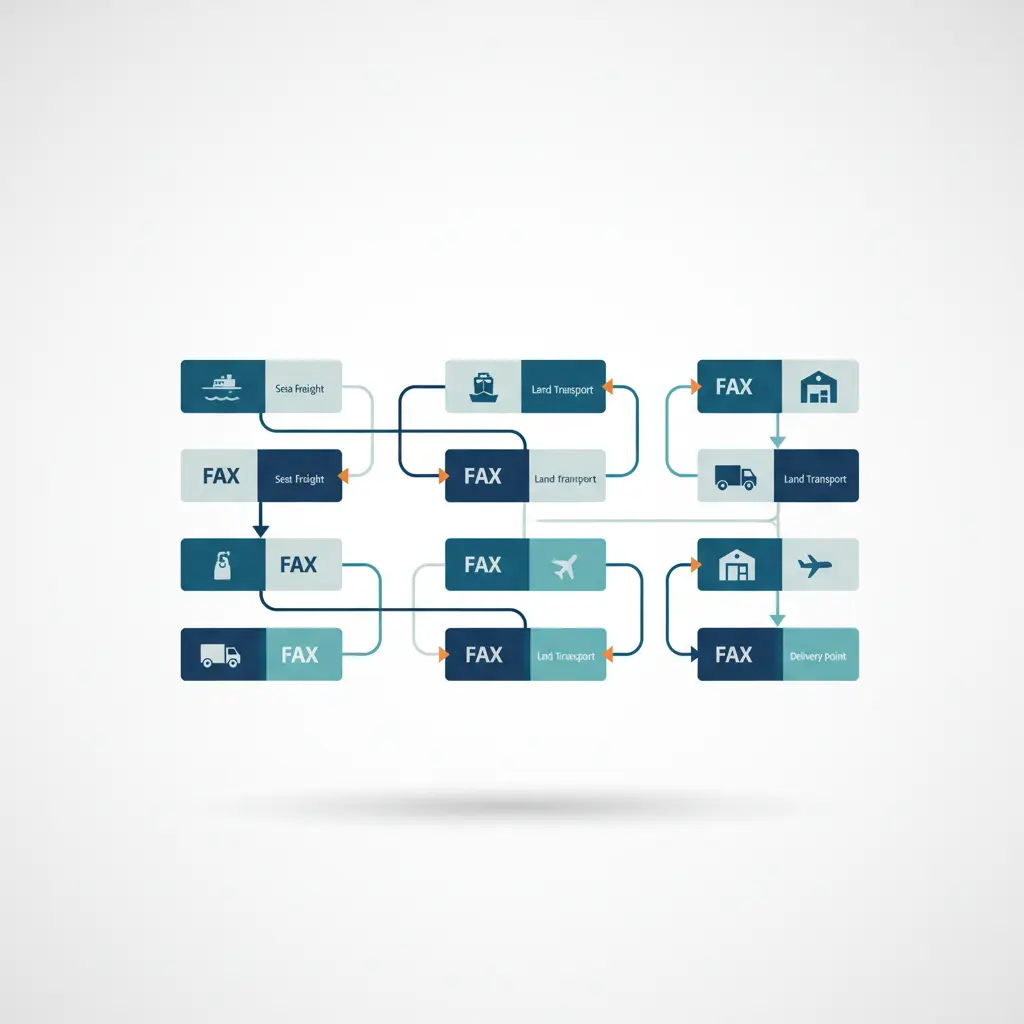
1. Visualizing Incoterms: A Comprehensive Responsibility Chart
An Incoterms 2020 chart typically presents the 11 rules in a clear, comparative layout, often categorizing them by the mode of transport (rules for any mode of transport and rules for sea and inland waterway transport). For each term, the chart visually outlines the division of responsibilities between the buyer and seller regarding:
- Delivery: Where and when the seller delivers the goods to the buyer.
- Risk Transfer: The exact point at which the risk of loss or damage to the goods shifts from the seller to the buyer. This is arguably the most critical element.
- Cost Allocation: Who pays for various costs, including main carriage, loading/unloading, customs clearance, duties, and taxes.
- Insurance: Which party is obligated to procure insurance coverage and to what extent.
Understanding the nuances of each term is vital. For instance, the EXW meaning and responsibilities (Ex Works) represent the seller’s minimum obligation, with the buyer assuming almost all costs and risks from the seller’s premises. Conversely, terms like DDP (Delivered Duty Paid) place maximum responsibility on the seller. The chart also provides clarity on common dilemmas, such as the distinct differences between FOB vs CIF Incoterms. While both are used for sea and inland waterway transport, FOB (Free On Board) transfers risk when goods are on board the vessel, with the buyer paying for main carriage and insurance. CIF (Cost, Insurance and Freight) means the seller pays for main carriage and insurance, but risk still transfers when the goods are on board, similar to FOB. This side-by-side comparison makes it easier to grasp the implications of each choice.
2. How to Effectively Use the Incoterms 2020 Chart
To maximize the utility of your Incoterms 2020 chart, focus on specific columns and leverage it as a decision-making tool.
- Identify the Critical Point of Risk Transfer: This is paramount. The chart clearly indicates where risk shifts. Ensure both parties understand this precise moment, as it dictates who bears financial responsibility for unforeseen events during transit.
- Trace Cost Allocation: Follow the flow of costs from origin to destination for your chosen Incoterm. This helps in accurate pricing and budgeting. Note who is responsible for export packaging, loading, pre-carriage, main carriage, unloading, import clearance, duties, and taxes.
- Understand Insurance Obligations: Some Incoterms mandate one party to arrange insurance (e.g., CIP, CIF), while others do not. The chart highlights these requirements, allowing you to secure appropriate coverage and avoid gaps.
- Consider Mode of Transport: The 2020 rules specify which terms are suitable for any mode of transport (EXW, FCA, CPT, CIP, DAP, DPU, DDP) and which are exclusively for sea and inland waterway transport (FAS, FOB, CFR, CIF). The chart will typically group them accordingly, guiding you to select the correct term for your shipment.
For example, if you are grappling with DDP Incoterms explained, the chart will immediately show that the seller bears almost all responsibilities, including delivery, risk, main carriage, and even import duties and taxes, right up to the named place of destination. This makes DDP the most seller-friendly term in terms of responsibility.
3. Common Misunderstandings and How to Avoid Them
Despite their clarity, Incoterms can still be a source of confusion. Avoiding common pitfalls is crucial for smooth international transactions.
- Confusing Incoterms with Payment Terms: Incoterms define delivery, risk, and cost transfer, NOT when or how payment is made. Payment terms (e.g., Net 30, Letter of Credit) are separate contractual agreements.
- Failure to Specify the Exact Place/Port: Simply stating “FOB New York” isn’t enough. It should be “FOB Port of New York, USA.” For terms like DAP, DPU, or DDP, the exact point of destination (e.g., “DDP Buyer’s Warehouse, 123 Main St, Anytown, Country”) is critical. Without this precision, ambiguity arises about where risk and cost transfer.
- Misinterpreting “Delivery” vs. “Arrival”: Delivery is where the risk passes from seller to buyer. Arrival is where the goods physically arrive. These are not always the same point. For instance, under CIF, delivery (and risk transfer) occurs when goods are loaded on the vessel at the port of shipment, even though they will arrive much later at the port of destination.
- Not Considering Incoterms in Contractual Agreements: Incoterms should be explicitly incorporated into sales contracts. Simply quoting an Incoterm on an invoice isn’t sufficient; it needs to be part of the legally binding agreement.
- Assuming Insurance Coverage: Even when an Incoterm requires one party to obtain insurance, always confirm the scope and level of coverage. CIF and CIP only mandate minimum coverage unless otherwise agreed.
By proactively addressing these areas and regularly consulting your shipping terms quick reference, businesses can significantly reduce risks, streamline logistics, and foster clearer communication with their trading partners. Thorough understanding Incoterms is an investment in efficient and compliant global trade operations.
Partner with Vietnam’s Leading Suppliers
Looking for reliable suppliers in Vietnam? Contact VietnamSuppliers.com today to connect with verified manufacturers and exporters across all industries.
—————————————
References
– International Chamber of Commerce (ICC) Incoterms: https://iccwbo.org/resources-for-business/incoterms-rules/
– :
– official Incoterms 2020 rules: https://iccwbo.org/resources-for-business/incoterms-rules/incoterms-2020/
– ICC Incoterms 2020: https://iccwbo.org/resources-for-business/incoterms-rules/incoterms-2020/
– ICC Incoterms 2020 explained: https://www.iccwbo.org/resources-for-business/incoterms-rules/incoterms-2020-explained/