The Critical Role of Global Supply Chain Quality Control
In today’s interconnected yet increasingly volatile global trade environment, the paramount importance of robust global supply chain quality control cannot be overstated. Businesses navigating complex international logistics, diverse manufacturing standards, and intricate distribution networks face a myriad of challenges that can severely impact product integrity and consumer trust. Without stringent quality measures, companies risk facing costly product recalls, high return rates, reputational damage, and ultimately, significant financial losses. Conversely, a well-implemented quality control system ensures consistent product quality, enhances brand reputation, fosters customer loyalty, and drives operational efficiency, transforming potential liabilities into competitive advantages. It’s the cornerstone for sustainable success in the global marketplace.

1. Why Quality Control is Non-Negotiable in International Trade
The intricate web of global commerce introduces numerous variables that make quality control a critical, non-negotiable component of any successful international trade strategy. Unlike domestic operations, sourcing from different countries means grappling with varying regulatory frameworks, cultural differences in manufacturing practices, and diverse material availability. Customers today expect consistent quality regardless of product origin, and any deviation can quickly erode trust. Effective international trade quality assurance goes beyond simple defect detection; it encompasses a proactive approach to prevent issues before they arise. This includes establishing clear specifications, conducting thorough supplier evaluations, and implementing continuous monitoring throughout the production lifecycle. Adhering to recognized international standards and certifications, such as ISO 9001, provides a universal benchmark for quality, assuring partners and consumers of a commitment to excellence. Without this rigorous oversight, businesses expose themselves to legal liabilities, compliance fines, and the potential closure of vital international markets.
2. Impact of Poor Quality on Brand Reputation and Profitability
The ramifications of poor quality goods ripple far beyond individual faulty products, directly impacting a company’s brand reputation and long-term profitability. In the age of instant information sharing, a single negative review or a widely reported product recall can swiftly tarnish a brand image painstakingly built over years. Customers are increasingly discerning, and their loyalty is fragile; they will readily switch to competitors if quality is compromised. The financial implications are staggering: beyond the direct costs associated with product recalls and warranty claims, businesses face increased return logistics, costly rework, and lost sales opportunities. A robust reduce import returns strategy, underpinned by strong quality control at the source, is crucial to mitigate these financial drains. Moreover, persistent quality issues can lead to a loss of market share, damage relationships with distributors and retailers, and even attract scrutiny from regulatory bodies. Ultimately, investing in comprehensive quality control is an investment in protecting a brand’s most valuable assets: its reputation and its customer base.
3. Implementing Effective Supplier Quality Management Best Practices
To safeguard product integrity and maintain a competitive edge, businesses must embrace sophisticated supplier quality management best practices. This involves a holistic approach that begins long before production even commences. It starts with a meticulous supplier selection process, including comprehensive audits and assessments of potential partners’ quality systems, production capabilities, and ethical standards. Once suppliers are onboarded, clear, detailed specifications and quality agreements must be established, leaving no room for ambiguity. A critical component of this strategy is the implementation of regular pre-shipment inspection services. These inspections, often conducted by independent third parties, verify that goods meet all specified requirements before they leave the factory, preventing defective products from entering the supply chain and reaching consumers. Beyond inspections, continuous performance monitoring, regular feedback loops, and a systematic approach to corrective and preventive actions (CAPA) are essential. Building strong, collaborative relationships with suppliers, encouraging open communication, and fostering a shared commitment to quality can transform a transactional relationship into a strategic partnership, driving continuous improvement and ensuring consistent excellence across the entire global supply chain.
Mastering Pre-Shipment Inspection Services for Flawless Imports
In today’s interconnected world, where goods traverse continents with unprecedented speed, ensuring product quality before it even leaves the factory floor is paramount. Effective global supply chain quality control is not just a buzzword; it’s a critical operational imperative impacting profitability, brand reputation, and customer satisfaction. Among the most potent strategies for achieving this is the diligent application of pre-shipment inspection (PSI) services. These proactive quality checks serve as a cornerstone for preventing defects, discrepancies, and compliance issues, effectively eliminating costly problems before they escalate. By identifying and rectifying issues at the source, businesses can significantly reduce import returns, minimize financial losses, and safeguard their market standing.
1. Types of Pre-Shipment Inspections and When to Utilize Them
Pre-shipment inspection services encompass a range of quality control checkpoints strategically placed throughout the production cycle. Understanding these various types allows importers to tailor their international trade quality assurance strategy for comprehensive coverage. Here are the primary types:
- Initial Production Inspection (IPI): Conducted when 10-20% of raw materials or components are ready, IPI verifies supplier understanding, raw material quality, and initial samples. It prevents costly errors from misunderstandings or substandard materials, forming a strong base for supplier quality management best practices.
- During Production Inspection (DUPRO): Performed when 20-50% of goods are produced and packed, DUPRO monitors manufacturing, checks consistent quality, and addresses issues during mass production. It’s vital for early defect correction and a key component of a robust reduce import returns strategy.
- Final Random Inspection (FRI) / Pre-Shipment Inspection (PSI): The most common PSI, conducted when 100% of goods are produced and at least 80% packed. FRI assesses overall quality, quantity, packaging, labeling, and shipping marks against AQL, serving as the last verification before shipment.
- Container Loading Check (CLC): Ensures correct products, quantities, and packaging are loaded safely and securely. It verifies container integrity, proper loading, and marks against the packing list, minimizing transit damage and confirming final order accuracy.
2. Implementing Effective PSI Programs for Your Global Imports
Establishing an effective PSI program demands a strategic approach integrated into your broader global supply chain quality control framework. Key steps for successful implementation include:
- Define Clear Quality Standards and Specifications: Provide comprehensive and unambiguous specifications (dimensions, materials, performance, packaging, compliance standards) to your supplier before production. These guidelines form the basis for all pre-shipment inspection services.
- Select a Reputable Inspection Partner: Choose an independent third-party inspection company with a proven track record, industry expertise, and global presence. Their impartiality and technical capabilities are crucial for objective assessment.
- Establish a Communication Protocol: Maintain open lines of communication with both your supplier and the inspection company. Ensure prompt report delivery and clear action plans for identified issues. This proactive engagement is central to effective supplier quality management best practices.
- Integrate Feedback and Continuous Improvement: Use inspection findings to identify recurring issues, working with suppliers on corrective and preventive actions. This iterative process strengthens your supply chain, reduces future quality risks, and supports your reduce import returns strategy.
3. Key Benefits of a Robust PSI Strategy
Investing in comprehensive pre-shipment inspection services offers benefits extending far beyond simply catching defects, transforming your import operations:
- Cost Reduction: PSI prevents expensive reworks, emergency shipments, recalls, and customer returns. The inspection cost is significantly less than dealing with defective goods post-arrival.
- Enhanced Brand Reputation: Consistently delivering high-quality products builds customer trust and strengthens your brand image.
- Reduced Lead Times and Delays: Proactive quality control minimizes production delays from quality issues or rejected shipments, ensuring on-schedule arrivals.
- Improved Supplier Relations: A structured PSI program fosters transparency and accountability, building stronger supplier relationships based on shared quality goals. It provides data for performance evaluation, vital for effective quality control and management.
- Compliance Assurance: PSI ensures products comply with international safety standards, regulatory requirements, and contractual agreements, mitigating legal and financial risks.
In conclusion, embracing robust pre-shipment inspection services is not merely an expense but a strategic investment in the long-term success of your import business. It is the ultimate safeguard against quality pitfalls, transforming the complex landscape of global sourcing into a pathway for flawless imports and sustained profitability.
Strategies to Reduce Import Returns and Boost Customer Satisfaction
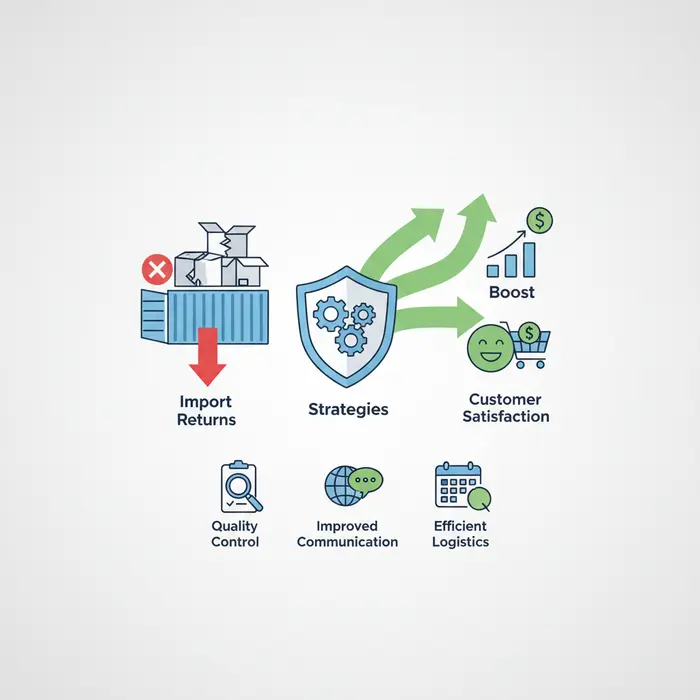
Minimizing import returns is paramount for optimizing operational costs and cultivating strong customer loyalty. High return rates can erode profit margins, strain logistics, and damage brand reputation. This section delves into actionable strategies designed to mitigate product returns, focusing on proactive quality measures, transparent communication, and robust feedback mechanisms. By prioritizing Global supply chain quality control, businesses can significantly enhance product quality, streamline their operations, and ultimately boost customer satisfaction.
1. Analyzing Root Causes of Import Returns for Continuous Improvement
Effective reduction of import returns begins with a thorough understanding of why products are being returned. Companies must implement robust systems for collecting and analyzing return data. This involves categorizing returns by specific reasons, such as manufacturing defects, incorrect sizing or color, damaged in transit, item not as described, or customer remorse. Tracking these data points helps identify recurring patterns, pinpoint problematic suppliers, and address systemic issues. Customer feedback, service reports, and quality inspection results provide invaluable insights for refining a quality management system. This analytical approach forms the bedrock of any successful Reduce import returns strategy, enabling continuous improvement.
2. Developing a Comprehensive Reduce Import Returns Strategy
A proactive and multi-faceted strategy is essential to prevent returns before they occur. This involves several critical components:
- Pre-shipment Inspection Services: Engaging professional Pre-shipment inspection services is crucial. These inspections, conducted at the factory before shipment, verify product quantity, quality, specifications, packaging integrity, and labeling accuracy. Catching defects at this stage saves significant costs and time compared to addressing returns post-delivery.
- Clear and Accurate Product Descriptions: Misaligned customer expectations are a major driver of returns. Ensure product listings feature high-quality, accurate imagery, detailed specifications, precise dimensions, material composition, and transparent sizing charts. Realistic representations minimize the “item not as described” returns.
- Robust Packaging Standards: Products often travel vast distances in International trade quality assurance, making resilient packaging vital. Implement rigorous packaging standards to protect products from transit damage and handling issues. This includes appropriate cushioning, sturdy cartons, and proper sealing.
- Accurate Documentation: Errors in customs documentation or regulatory non-compliance can cause delays, rejections, or forced returns. Meticulous attention to all paperwork is critical for smooth cross-border transactions.
Integrating these elements into your operational framework is key to building a resilient Reduce import returns strategy that prioritizes quality from source to customer.
3. Fostering Strong Supplier Relationships and Collaboration
The success of any import business is intrinsically linked to the quality and reliability of its suppliers. Cultivating strong, collaborative relationships is fundamental for achieving superior product quality and reducing returns. This involves implementing robust Supplier quality management best practices:
- Clear Communication and Expectations: Establish explicit quality standards, technical specifications, and performance metrics from the outset. Regular communication ensures both parties are aligned on quality expectations and potential challenges.
- Supplier Audits and Performance Reviews: Conduct regular factory audits and assessments to verify compliance with quality standards, production capabilities, and ethical practices. Implement ongoing performance reviews based on inspection reports, defect rates, and delivery reliability.
- Collaborative Problem Solving: When quality issues arise, work collaboratively with suppliers to identify root causes and implement corrective actions. Share detailed feedback and data to facilitate their improvement process, fostering a partnership approach rather than just a transactional one.
- Incentivization for Quality: Consider incorporating incentives or preferential treatment for suppliers who consistently meet or exceed quality benchmarks, encouraging a continuous commitment to excellence.
By treating suppliers as partners, businesses can proactively address issues, implement preventative measures, and significantly enhance overall quality, leading to fewer returns and greater customer satisfaction.
Implementing Supplier Quality Management Best Practices
In today’s interconnected marketplace, ensuring consistent product quality across a global supply chain quality control is paramount. The complexity of international sourcing demands a proactive and robust approach to supplier quality management, moving beyond transactional relationships to foster strong, collaborative partnerships. This section focuses on building resilient systems with international suppliers to guarantee product integrity from raw material to final delivery, effectively enhancing international trade quality assurance and mitigating risks associated with overseas manufacturing.
1. Supplier Vetting and Auditing for Robust Quality Assurance
Effective supplier quality management begins with meticulous vetting and auditing. Before any engagement, comprehensive due diligence is crucial to assess a potential supplier’s capabilities, reliability, and commitment to quality. This extends beyond financial health to include evaluation of their quality management systems, manufacturing processes, and compliance with relevant industry standards. Key initial phases include:
- Risk Assessment: Identifying potential quality, delivery, ethical, and geopolitical risks.
- Capability Evaluation: Assessing technological infrastructure, production capacity, personnel expertise, and adherence to rigorous quality management standards.
- On-Site Audits: Conducting physical audits (pre-qualification, factory, process) to gain insights into operational transparency, safety, and production environment, ensuring alignment with your specifications.
- Certifications: Verifying relevant certifications (e.g., ISO 9001) confirms a supplier’s foundational commitment to quality.
Once a supplier is selected, implementing regular pre-shipment inspection services becomes a critical checkpoint. These inspections, conducted by independent third parties or your team, verify goods meet specified quality, quantity, and packaging requirements before leaving the supplier’s premises. This proactive measure is instrumental in preventing defective products from entering the supply chain, enhancing overall global supply chain quality control and reducing costly import returns.
2. Continuous Improvement in Supplier Quality Management Best Practices
Supplier quality management is an ongoing cycle of monitoring, evaluation, and improvement. To sustain high quality and foster long-term partnerships, businesses must embed a continuous improvement philosophy into their supplier quality management best practices. This involves:
- Performance Monitoring: Establishing clear Key Performance Indicators (KPIs) for quality, delivery, and responsiveness, and regularly tracking these metrics.
- Feedback Loops and Communication: Implementing structured channels to provide suppliers with timely feedback on product quality, defect rates, and compliance issues.
- Corrective and Preventive Action (CAPA): Collaborating with suppliers to identify root causes of quality issues and implement effective corrective and preventive actions to avoid recurrence, critical for a robust reduce import returns strategy.
- Supplier Development Programs: Investing in training and support for suppliers to enhance their capabilities, adopt new technologies, or improve quality processes.
By fostering an environment of continuous improvement, companies drive sustained quality gains, build trust, and ensure suppliers are active partners in achieving shared quality objectives. This proactive engagement significantly contributes to a robust international trade quality assurance framework.
3. Leveraging Technology and Collaboration for Enhanced Quality Oversight
The digital age offers powerful tools to enhance supplier quality oversight and strengthen global supply chain quality control. Adopting modern technologies and fostering deep collaboration are essential components of leading supplier quality management best practices:
- Supplier Relationship Management (SRM) Platforms: Implementing SRM software to centralize supplier data, manage contracts, track performance, and streamline communication for data-driven decisions.
- Data Analytics and Predictive Modeling: Utilizing advanced analytics to identify trends, predict potential quality issues, and proactively address risks with early warnings from real-time data.
- IoT and Sensor Technology: Deploying IoT devices and sensors to monitor critical parameters during production or logistics, ensuring product integrity.
- Joint Quality Planning and Problem Solving: Engaging suppliers early in product development to co-create quality plans, define specifications, and address manufacturing challenges upfront, minimizing design-related defects.
- Digital Inspection and Reporting Tools: Using digital tools for inspections, non-conformance reporting, and corrective action tracking improves efficiency, accuracy, and transparency across the supply chain, contributing to a stronger reduce import returns strategy.
By strategically integrating technology and fostering genuine collaboration, businesses gain unparalleled visibility and control over international suppliers, ensuring consistent high quality and building a resilient global supply chain.
Leveraging Technology for International Trade Quality Assurance 2025
The global landscape of international trade is constantly evolving, presenting both immense opportunities and complex challenges. In 2025 and beyond, ensuring product quality across vast, interconnected supply chains is paramount for brand reputation, consumer safety, and operational efficiency. Traditional quality control methods are increasingly insufficient to meet the demands of speed, scale, and transparency required in modern global commerce. This necessitates a strategic pivot towards leveraging cutting-edge technology to transform Global supply chain quality control from reactive into a proactive, intelligent system. Embracing digital transformation in quality assurance is crucial for enhancing transparency, bolstering efficiency, and achieving unparalleled accuracy across global networks, preparing for future disruptions and maintaining a competitive edge.

1. Data Analytics and AI in Global Supply Chain Quality Control
The sheer volume of data generated throughout a global supply chain, from production metrics to customer feedback, is staggering. Harnessing this information effectively is where artificial intelligence (AI) and advanced data analytics prove indispensable for international trade quality assurance. AI-powered platforms can process vast datasets far beyond human capacity, identifying subtle patterns, anomalies, and correlations that indicate potential quality issues. Predictive analytics allows businesses to forecast potential defects or compliance risks before they manifest. By analyzing historical data on supplier performance, AI can pinpoint high-risk suppliers or production stages, enabling targeted interventions. This proactive approach significantly enhances supplier quality management best practices, shifting focus from post-production defect detection to preventative measures. AI can also optimize inspection protocols, suggesting where and when to conduct inspections for maximum impact, leading to more efficient pre-shipment inspection services. Ultimately, these data-driven insights translate into a robust strategy to reduce import returns strategy by ensuring higher quality at the source.
2. Blockchain for Enhanced Traceability and International Trade Quality Assurance
Transparency and trust are cornerstones of effective Global supply chain quality control, and blockchain technology offers an unparalleled solution. By creating an immutable, decentralized ledger, blockchain can record every step a product takes from its raw material origin to the final consumer. Each transaction, quality check, certification, and logistic movement is timestamped and cryptographically secured, making it impossible to alter retrospectively. This level of verifiable traceability is revolutionary for international trade quality assurance. Consumers and businesses can access a clear, tamper-proof history, verifying authenticity, ethical sourcing, and compliance with quality standards. Manufacturers can track raw materials to their origin, verifying certifications. In cases of product recalls, blockchain enables rapid and precise identification of affected batches, minimizing risk. It also significantly combats counterfeiting by providing verifiable proof of product authenticity. The transparency empowers better decision-making, fosters greater accountability, and builds unprecedented trust. A detailed exploration of digital supply chain transformation by sources like McKinsey & Company highlights the profound impact of such technologies on operational efficiency and quality.
3. IoT and Automation for Real-time Monitoring and Quality Assurance
The Internet of Things (IoT) combined with automation brings real-time visibility and control directly to the factory floor and beyond. IoT sensors, embedded in machinery, storage, or products, continuously collect critical data like environmental conditions (temperature, humidity) and machine performance. Any deviation from predefined parameters triggers instant alerts, allowing for immediate corrective action, preventing minor issues from escalating. Automated systems, such as AI-powered visual inspection cameras, perform rapid, high-precision quality checks on production lines, detecting defects missed by human eyes. This continuous, objective monitoring significantly reduces human error and ensures consistent quality. For example, during pre-shipment inspection services, drones with sensors can inspect large batches quickly and accurately. The integration of IoT and automation provides a constant pulse on product quality throughout the manufacturing process and supply chain, enabling a truly proactive and preventative approach to Global supply chain quality control, ultimately leading to a substantial reduce import returns strategy by catching issues before they leave the factory.
The integration of data analytics, AI, blockchain, IoT, and automation represents a paradigm shift in international trade quality assurance. These technologies empower businesses to transition from a reactive, inspection-heavy model to a proactive, predictive, and prevention-focused framework. By enhancing transparency, bolstering efficiency, and achieving unprecedented accuracy, companies can exceed the escalating demands of the global market. Investing in these advanced technological solutions is a strategic imperative for navigating the complexities of 2025 and beyond, safeguarding brand reputation, fostering consumer trust, and securing a resilient, high-quality future for international trade.
Partner with Vietnam’s Leading Suppliers
Looking for reliable suppliers in Vietnam? Contact VietnamSuppliers.com today to connect with verified manufacturers and exporters across all industries.
—————————————
References
– Supply chain quality management: A comprehensive guide: https://www2.deloitte.com/us/en/insights/topics/supply-chain/supply-chain-quality-management.html
– effective quality control and management: https://asq.org/quality-resources/quality-control
– ISO 9001 Quality Management: https://www.iso.org/iso-9001-quality-management.html
– rigorous quality management standards: https://asq.org/quality-resources/supplier-quality
– McKinsey & Company: https://www.mckinsey.com/capabilities/operations/our-insights/digital-supply-chain-transformation-an-inflection-point