
Overall Global Freight Market Outlook 2025
The global freight market is poised for another transformative year in 2025, navigating a complex interplay of macroeconomic forces and an ever-evolving geopolitical landscape. Following several years of unprecedented volatility – from the supply chain chaos of the pandemic era to the inflationary pressures and demand shifts of recent times – 2025 promises a period of continued recalibration. Shippers, carriers, and logistics providers alike will closely monitor Global Freight Rate Trends as they seek stability amidst persistent uncertainties. Factors such as fluctuating energy prices, evolving consumer spending patterns, and significant geopolitical events will collectively shape transportation costs, capacity availability, and delivery timelines across all modes of transport. The industry is adapting to a new normal where resilience, flexibility, and data-driven decision-making are paramount for success.

1. Key Economic Indicators & Trade Volume Forecasts
The trajectory of global trade in 2025 will largely be dictated by major economic indicators. Projections suggest a modest but uneven global GDP growth, with advanced economies potentially experiencing a slowdown while emerging markets, particularly in Asia, continue to drive much of the world’s economic expansion. Inflationary pressures, though easing in some regions, will remain a key concern, impacting operational costs for carriers and consumer purchasing power. This delicate balance will directly influence trade volumes. For instance, a continued shift in consumer spending from goods to services in Western economies could temper demand for manufactured goods, subsequently affecting the Container shipping rate forecast. Conversely, sustained industrial output in manufacturing hubs, combined with strategic inventory rebuilding efforts, could provide support for freight volumes. The International Monetary Fund (IMF) projects global trade growth to rebound slightly in 2025 after a challenging 2024, indicating potential for increased cross-border movement of goods. This rebound, however, is contingent on stable energy markets and contained inflationary pressures. The specific Global Freight Rate Trends will reflect the intricate relationship between supply-side capacity additions and demand-side economic vitality.
2. Geopolitical Tensions & Their Supply Chain Impact
The geopolitical landscape remains a critical determinant of global supply chain stability and freight costs. Ongoing conflicts, such as the war in Ukraine and heightened tensions in the Red Sea region, continue to disrupt established trade routes, forcing rerouting and increasing transit times and fuel consumption. These disruptions have a direct impact on Air freight rates international for urgent shipments and push up ocean freight surcharges. Furthermore, the rise of protectionist policies and localized trade disputes between major economic blocs could lead to further fragmentation of supply chains. Businesses are increasingly seeking to de-risk their operations by diversifying sourcing strategies, often looking to nearshoring or “friend-shoring” initiatives. This trend could particularly benefit regions like Southeast Asia, leading to shifts in Southeast Asia freight trends as manufacturing and logistics hubs gain prominence. The imperative for supply chain resilience means companies are building in redundancies and exploring multi-modal transportation options, even if it entails higher Global logistics costs report figures initially. The strategic value of secure and reliable logistics pathways has never been clearer, pushing companies to invest more in risk assessment and mitigation.
3. Overall Market Sentiment and Investment Trends
Market sentiment among shippers and carriers for 2025 is characterized by cautious optimism. While the extreme peaks and troughs of recent years are unlikely to be replicated, a return to a pre-pandemic “normal” also seems distant. Carriers, having expanded capacity significantly during the boom years, now face the challenge of managing overcapacity in certain sectors, notably container shipping. This dynamic is a critical factor in shaping the Container shipping rate forecast. Investments are increasingly focused on efficiency, sustainability, and digitalization. Shippers are demanding greater visibility and predictability, pushing logistics providers to adopt advanced analytics, AI, and automation. The drive towards decarbonization is also prompting significant investments in alternative fuels, electric vehicles, and greener port infrastructure, which will contribute to Global logistics costs report figures but also enhance long-term operational resilience. The overall market is moving towards a more collaborative and integrated approach, where data sharing and strategic partnerships are key to navigating volatility and optimizing supply chains. Companies that embrace these technological and environmental shifts are best positioned to thrive in the evolving freight market of 2025 and beyond.
Container Shipping Rate Forecast 2025
The global container shipping industry is bracing for another dynamic year in 2025, marked by an intricate interplay of supply-side pressures and evolving demand patterns. Following several years of unprecedented volatility—from pandemic-induced surges to subsequent corrections—forecasting the Global Freight Rate Trends for 2025 requires an in-depth analysis of several critical sea freight dynamics. This includes assessing the persistent challenges of port congestion, the substantial wave of new vessel deliveries, and the delicate balance between overall supply and demand, all of which will shape the container shipping rate forecast.
1. Major Trade Lane Analysis: Trans-Pacific, Asia-Europe
Understanding the pulse of major trade lanes is crucial for any comprehensive container shipping rate forecast. In 2025, both the Trans-Pacific and Asia-Europe routes are expected to face unique pressures. The Trans-Pacific lane, connecting Asian manufacturing hubs with North American consumer markets, will continue to be influenced by consumer spending habits in the US, inventory levels, and potential labor negotiations at US West Coast ports. Disruptions from climate change affecting the Panama Canal’s capacity also remain a wildcard, potentially pushing more cargo towards the Suez Canal or intermodal rail from the US West Coast.
Meanwhile, the Asia-Europe trade lane remains highly susceptible to geopolitical events, as demonstrated by the Red Sea crisis. While contingencies have been established, sustained rerouting via the Cape of Good Hope adds significant transit time and fuel costs, inherently impacting freight rates. The economic health of the Eurozone will also play a pivotal role, with any slowdown potentially dampening demand. Insights from various global logistics costs report indicate that while some stability might return, the inherent risks on these routes will keep premiums in play, especially for express services. Furthermore, shifts in manufacturing and sourcing, particularly with growing exports from Southeast Asia freight trends, will continue to diversify cargo origins, impacting vessel utilization and routing strategies on these key corridors.
2. Impact of Fleet Capacity and Port Efficiency on Rates
The single most significant factor poised to influence the container shipping rate forecast for 2025 is the impending surge in new vessel deliveries. The order book from the boom years is set to materialize, with a substantial influx of new containerships—including numerous mega-vessels—expected to enter service. This expansion of fleet capacity could potentially outpace demand growth, leading to downward pressure on rates, assuming port operations remain relatively fluid. However, the degree to which this overcapacity manifests will depend on carriers’ strategies regarding vessel cascading, slower steaming, and accelerated scrapping of older, less efficient ships. According to data from industry analysts, the global container fleet capacity is projected to increase significantly, potentially reaching record levels, as detailed in reports like those from Alphaliner.
Concurrently, port efficiency remains a critical bottleneck. Despite investments in automation and infrastructure, congestion hot spots persist globally, driven by factors like labor shortages, equipment availability, and adverse weather conditions. Any major disruption, such as a localized strike or a surge in import volumes coinciding with peak seasons, can quickly absorb excess vessel capacity by increasing turnaround times, thereby tightening effective supply and pushing rates up. The delicate balance here is that even with ample ships, if they spend too much time waiting outside ports, the market effectively experiences a capacity crunch, preventing the full impact of new vessel deliveries from stabilizing rates.
3. Long-Term Contract vs. Spot Rate Projections
For shippers and carriers alike, the relationship between long-term contract rates and spot rates will be a central theme in 2025. Following a period where spot rates often significantly diverged from contracted rates (both above and below), the market is seeking greater equilibrium. For 2025, with the projected increase in fleet capacity, there’s an expectation that spot rates may stabilize or even soften compared to the peaks seen in recent years, provided there are no major unforeseen geopolitical or logistical shocks. This potential softening could make shippers more inclined to rely on the spot market for certain volumes, while also pushing carriers to offer more competitive terms for long-term agreements to secure stable revenue streams.
However, the underlying volatility factors (geopolitics, port efficiency, demand shifts) mean that spot rates are unlikely to return to pre-pandemic lows without significant market oversupply. Long-term contracts will continue to offer predictability and guaranteed space, a premium many large shippers are willing to pay for supply chain resilience. The negotiation leverage is likely to shift somewhat back towards shippers, but carriers will remain cautious, building flexibility into contracts to mitigate risks. For comparison, while not directly addressing sea freight, the market for air freight rates international offers a useful benchmark for observing global supply chain pressures and premium service demand, often reacting quicker to immediate disruptions before cascading into sea freight. Shippers will strategically balance these options, continuously monitoring the market to optimize their overall global logistics costs report.
International Air Freight Rates & Capacity 2025
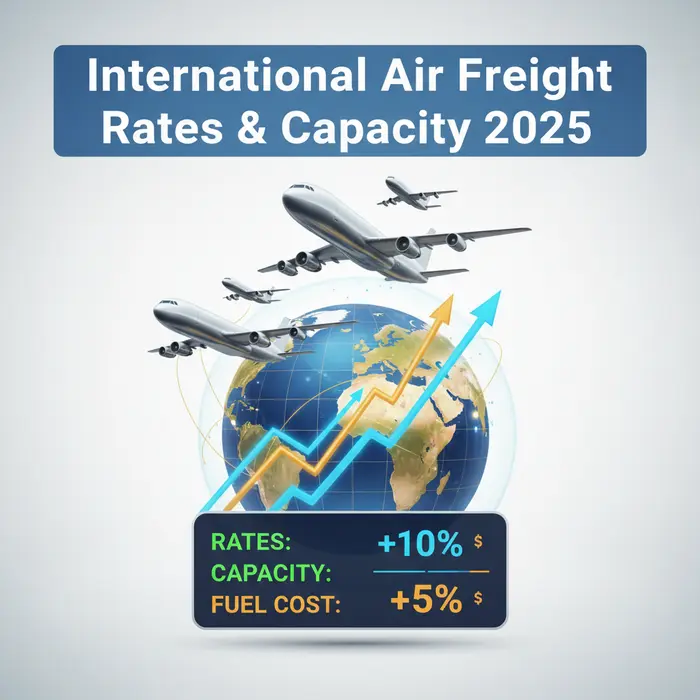
As the global economy continues to navigate through complex shifts, the landscape of international air freight rates and capacity in 2025 is poised for dynamic changes. This year will be defined by a delicate interplay between the ongoing restoration of passenger belly capacity, the relentless surge of e-commerce, and the ever-present volatility of fuel prices. Understanding these Global Freight Rate Trends is crucial for businesses engaged in international trade, as they directly impact global logistics costs and supply chain efficiency.
1. Passenger Flight Resumption and Belly Cargo Capacity
The most significant factor influencing air freight capacity in 2025 continues to be the accelerated recovery of global passenger air travel. As airlines progressively restore their flight schedules to pre-pandemic levels, the availability of ‘belly capacity’—the cargo space within passenger aircraft—is expanding considerably. This influx of capacity, particularly on major East-West trade lanes, is fundamentally altering the supply-demand balance that characterized the market during the pandemic.
During the peak of the COVID-19 crisis, a significant portion of air cargo was reliant on dedicated freighter aircraft, leading to inflated Air freight rates international due to limited options. Now, with passenger wide-body aircraft returning to service, this additional cargo space provides a more economical alternative for shippers. This trend is expected to exert downward pressure on general cargo rates, as the increased supply helps to absorb demand. However, the impact isn’t uniform; while spot rates for general cargo may soften, premium services requiring expedited or specialized handling will likely retain their value. Businesses should monitor route-specific capacity increases closely, as the restoration isn’t synchronous across all regions and carriers, influencing the Container shipping rate forecast indirectly by offering more competitive air cargo options for urgent shipments.
2. E-commerce Boom and Express Cargo Demand
Despite the growing belly capacity, the insatiable demand driven by the e-commerce boom remains a powerful counteracting force in the air freight market. The global shift towards online retail continues unabated, propelling the need for swift, reliable, and often direct-to-consumer delivery services. This trend fuels robust demand for express cargo, which typically utilizes dedicated freighter networks and premium services, thereby sustaining higher rates for time-sensitive goods.
Categories like high-value electronics, pharmaceuticals, fashion, and perishable goods benefit significantly from air freight’s speed advantage. The continued expansion of cross-border e-commerce, particularly from manufacturing hubs to consumption markets, ensures a baseline of demand that resists the full deflationary impact of increased belly capacity. For instance, the rapid growth of platforms facilitating international direct sales means that even as general cargo rates adjust, the specific niche of express e-commerce cargo will likely maintain its premium. This divergence creates a dual-speed market, where standard Air freight rates international might fluctuate more, while express rates remain relatively resilient, highlighting the complexity within any Global logistics costs report.
3. Regional Air Freight Market Snapshots and Forecasts
Regional dynamics will play a crucial role in shaping the overall picture of air freight in 2025. While global trends provide a broad overview, specific markets exhibit unique characteristics. For instance, Southeast Asia freight trends are particularly vibrant, driven by burgeoning manufacturing capabilities and growing intra-regional trade. Countries like Vietnam, Thailand, and Malaysia are increasingly becoming key production and consumption centers, fostering robust air cargo volumes both within the region and to major export markets in Europe and North America.
The Trans-Pacific and Trans-Atlantic routes will continue to be critical arteries, influenced by economic growth in the US and Europe, as well as geopolitical stability. Asia-Europe corridors will see significant capacity increases from passenger flight resumptions, potentially easing rates. However, regional conflicts, trade policies, and economic performance will introduce localized volatility. For a deeper dive into the broader market conditions influencing various freight modalities, including a comprehensive Global Logistics Costs Report, consulting authoritative industry analyses is essential. Shippers must remain agile, diversifying their logistics strategies and leveraging both air and ocean options based on cost, urgency, and specific regional market conditions to optimize their supply chains.
Global Logistics Costs Report & Key Drivers
Understanding the intricate landscape of global logistics requires looking beyond mere freight rates to the total expenditures that underpin the movement of goods worldwide. A comprehensive Global Freight Rate Trends analysis, while crucial, only scratches the surface. This section delves into a broader Global Logistics Costs Report, examining the multifaceted components that contribute to the overall logistics expenditure, including warehousing, fuel, labor, and technology investments. From the fluctuating price of crude oil to the rising demand for efficient last-mile delivery, numerous factors are reshaping the economics of supply chains globally, impacting everything from individual shipping costs to long-term strategic planning.
1. Fuel Price Volatility and Bunker Surcharge Evolution
Fuel remains one of the most significant and volatile cost components in global logistics. The price of crude oil directly impacts transportation expenses across all modes, from container ships traversing oceans to cargo planes soaring through skies and trucks navigating land routes. This is particularly evident in container shipping rate forecast models and the pricing of air freight rates international. Geopolitical events, supply-demand imbalances, and production decisions by major oil-producing nations can cause rapid and unpredictable swings in fuel prices. To mitigate these risks, carriers widely employ bunker surcharges (BAF – Bunker Adjustment Factor, or FAF – Fuel Adjustment Factor). These surcharges are dynamic fees added to base freight rates, designed to recover the fluctuating cost of fuel. The evolution of these surcharges, driven by regulatory changes like the IMO 2020 sulfur cap, has added another layer of complexity, requiring shippers to constantly monitor and factor in these adjustments to their total logistics budgets. Understanding these mechanisms is vital for accurate budgeting and strategic route planning.
2. Warehousing, Storage, and Last-Mile Delivery Costs
Beyond transportation, the costs associated with warehousing, storage, and the critical last-mile delivery phase are escalating significantly. The booming e-commerce sector, especially pronounced in regions like Southeast Asia where freight trends show rapid growth, has intensified demand for strategic warehouse locations and efficient storage solutions. Real estate prices for logistics hubs, particularly near urban centers, are climbing, making warehousing a substantial fixed and variable cost. Furthermore, the push for faster delivery times and increased inventory visibility requires significant investment in warehouse automation, sophisticated inventory management systems, and specialized handling equipment. Last-mile delivery, the final leg of a product’s journey to the customer, is notoriously expensive and complex. It involves navigating congested urban areas, managing diverse delivery requirements (e.g., residential vs. commercial), and dealing with increasing customer expectations for speed and flexibility. The proliferation of delivery vehicles, specialized personnel, and optimization software adds considerable expense, making it a key area for cost-cutting innovation and efficiency improvements in the overall logistics chain.
3. Labor Shortages, Digitalization, and Technology Investments
The global logistics sector is currently grappling with widespread labor shortages across various critical roles, from truck drivers and warehouse operatives to port staff and supply chain managers. This scarcity drives up wages and benefits, directly contributing to higher operational costs. The demand for skilled labor, particularly those proficient in handling new technologies, continues to outstrip supply, impacting efficiency and service levels. In response, digitalization and substantial technology investments are becoming indispensable. This includes the adoption of Artificial Intelligence (AI) for demand forecasting and route optimization, the Internet of Things (IoT) for real-time tracking and monitoring, and blockchain for enhanced supply chain transparency and security. Automation within warehouses, such as robotic picking systems, helps mitigate labor reliance and boost throughput. While these technological advancements promise long-term efficiencies, reduced errors, and improved visibility, they necessitate significant upfront capital expenditure. Integrating these technologies also requires ongoing training for the existing workforce and the recruitment of new talent with specialized skills. The strategic allocation of resources towards these innovations is a critical component of any forward-looking Global Freight Rate Trends and a broader Global Logistics Costs Report, as companies strive to build resilient, efficient, and cost-effective supply chains in a dynamic global market.
Southeast Asia Freight Trends & Regional Outlook 2025
A specific focus on the dynamic Southeast Asian market, exploring emerging trade routes, infrastructure development, and intra-regional growth drivers.
The landscape of Global Freight Rate Trends in Southeast Asia is poised for significant evolution in 2025, driven by robust economic growth, increasing digitization, and strategic infrastructure investments. As a pivotal hub in global supply chains, the region continues to attract substantial attention from logistics providers and shippers alike, seeking efficiency and new market access. Understanding the nuances of Southeast Asia freight trends is crucial for businesses aiming to optimize their supply chain strategies and capitalize on emerging opportunities.
1. Intra-Asia Trade Growth and Connectivity Initiatives
Intra-Asia trade continues to be a primary engine for the region’s freight market. Driven by burgeoning middle-class consumption, expanding manufacturing capabilities, and strategic free trade agreements like the Regional Comprehensive Economic Partnership (RCEP), the flow of goods within Southeast Asia is experiencing unprecedented growth. This surge in regional commerce directly impacts the Container shipping rate forecast, with increased demand on key intra-Asia routes. Initiatives such as the ASEAN Economic Community (AEC) and various bilateral agreements are fostering closer economic ties, leading to more streamlined cross-border logistics. Connectivity projects, including improved road networks, railway links, and synchronized customs procedures, are enhancing transit efficiency. These developments are not only boosting trade volumes but also encouraging diversification of supply chains, making the region more resilient to external shocks and further solidifying its role as a manufacturing and distribution powerhouse.
2. Key Infrastructure Projects and Their Logistical Impact
Massive investments in infrastructure are fundamentally reshaping the logistics landscape of Southeast Asia. Major port expansions, such as those in Singapore, Malaysia (Port Klang), and Vietnam (Cai Mep-Thi Vai), are increasing handling capacities and reducing turnaround times, directly influencing overall Global logistics costs report for shippers utilizing these crucial maritime gateways. Beyond sea freight, significant advancements are being made in land-based connectivity. Projects like the China-Laos Railway, which is extending into Thailand, and other planned high-speed rail networks, are creating new multi-modal corridors. These infrastructure upgrades are crucial for improving hinterland connections, reducing transit times, and enhancing supply chain predictability across the region. They also facilitate the movement of goods between manufacturing hubs and export gateways, driving down operational expenses and supporting the growth of regional industrial parks and special economic zones. The long-term impact of these projects is expected to be a more integrated, efficient, and cost-effective logistics network throughout Southeast Asia.
3. Challenges and Opportunities for Shippers in the Region
While the prospects are bright, shippers navigating Southeast Asia face a unique set of challenges and opportunities. On the challenge front, port congestion, especially during peak seasons, and varying regulatory environments across different countries can lead to delays and increased operational complexities. Sustainability pressures are also mounting, with growing demands for eco-friendlier logistics solutions. However, these challenges often pave the way for innovation. The burgeoning e-commerce market presents a significant opportunity, driving demand for efficient last-mile delivery and sophisticated warehousing solutions. Digital transformation, including the adoption of AI, IoT, and blockchain in supply chain management, offers pathways to enhanced visibility, traceability, and efficiency, potentially mitigating high Air freight rates international for time-sensitive cargo by optimizing routes and loads. Furthermore, the push for supply chain diversification away from single-source dependencies continues to position Southeast Asia as an attractive alternative manufacturing base. Shippers who embrace technological advancements and adapt to the evolving Global Freight Rate Trends will be best positioned to thrive in this dynamic and competitive market. An authoritative Global logistics costs report from leading industry analysts consistently highlights the need for agility and strategic planning in navigating global supply chain volatility, a principle that holds particularly true for Southeast Asia.
Partner with Vietnam’s Leading Suppliers
Looking for reliable suppliers in Vietnam? Contact VietnamSuppliers.com today to connect with verified manufacturers and exporters across all industries.
—————————————
References
– World Economic Outlook Report: https://www.imf.org/en/Publications/WEO/Issues/2024/04/16/world-economic-outlook-april-2024
– Alphaliner – Shipping News & Data: https://www.alphaliner.com/
– Global Logistics Costs Report: https://www.iata.org/en/iata-store/products/air-cargo-market-analysis/
– Logistics in Southeast Asia – Statista: https://www.statista.com/topics/6134/logistics-in-southeast-asia/
– 2024 Future of Supply Chains Report by Deloitte: https://www2.deloitte.com/us/en/pages/supply-chain/articles/2024-future-of-supply-chains-report.html