The Essential Role of Global Container Tracking
In the intricate web of modern international trade, goods traverse continents and oceans, facing myriad challenges from their origin to their final destination. In this dynamic environment, the ability to maintain continuous oversight of these movements is not merely a convenience but a critical necessity. Global Container Tracking has emerged as an indispensable tool, offering unparalleled clarity and control over the logistics landscape. It acts as the backbone of efficient supply chains, transforming opaque transit processes into transparent, manageable operations. By providing accurate and timely information, global container tracking significantly enhances operational efficiency, enables proactive decision-making, and ultimately underpins the reliability and competitiveness of businesses operating on an international scale.

1. Navigating International Logistics Challenges
The journey of a shipping container across international borders is fraught with potential disruptions. From unpredictable weather patterns and port congestion to complex customs regulations and geopolitical events, numerous factors can delay shipments and inflate costs. Without robust global container tracking capabilities, businesses often operate in the dark, reacting to problems rather than anticipating them. This lack of visibility can lead to missed delivery deadlines, increased demurrage and detention charges, production line shutdowns, and ultimately, damaged customer relationships. Effective tracking, particularly track shipment from Vietnam or any other major manufacturing hub, provides the crucial insights needed to anticipate these hurdles. By offering details such as the container’s current location, estimated time of arrival, and potential delays, companies can proactively adjust their plans, whether by rerouting cargo, informing customers, or modifying production schedules. Utilizing methods like container tracking by bill of lading numbers, shippers gain a granular view, transforming uncertainty into informed action.
2. Why Real-Time Cargo Tracking is Non-Negotiable
In today’s fast-paced global economy, the demand for up-to-the-minute information is paramount. Real-time cargo tracking is no longer a luxury but a fundamental requirement for resilient and agile supply chains. This capability provides continuous updates on a shipment’s progress, allowing businesses to monitor their goods as they move across oceans and land. The benefits are extensive: it enables immediate responses to unforeseen issues, enhances security by detecting unauthorized diversions or delays, and ensures inventory managers have precise data for just-in-time operations. Beyond operational advantages, real-time visibility fosters greater trust and transparency among all supply chain stakeholders, from manufacturers and distributors to end customers. It empowers businesses to provide accurate delivery estimates, manage expectations effectively, and maintain a competitive edge in a market that increasingly values speed and reliability. Understanding and implementing comprehensive supply chain visibility solutions is critical for navigating the complexities of global trade, transforming potential chaos into controlled, efficient movements.
3. Impact on Business Efficiency and Customer Satisfaction
The profound impact of effective global container tracking extends directly to a company’s bottom line and its relationship with customers. Operationally, enhanced visibility translates into optimized inventory levels, reducing the need for costly safety stock and freeing up working capital. It streamlines warehouse management by providing precise inbound shipment schedules, enabling more efficient resource allocation for unloading and storage. Furthermore, robust tracking minimizes the risk of lost or delayed shipments, thereby reducing insurance claims and administrative overhead. For customers, the ability to accurately predict delivery times and receive timely updates is a significant driver of satisfaction. In an era where consumers expect transparency, providing detailed insights into their order’s journey builds trust and loyalty. Businesses that leverage advanced supply chain visibility solutions can offer superior service, differentiate themselves from competitors, and foster long-term customer relationships. Ultimately, global container tracking transforms the complex process of international shipping into a strategic advantage, bolstering both internal efficiency and external customer goodwill.
In conclusion, the modern global marketplace demands precision, transparency, and adaptability. Global Container Tracking is not merely a technological tool but a strategic imperative that empowers businesses to navigate the complexities of international logistics with confidence. By providing real-time insights and enhancing overall supply chain visibility, it ensures operational excellence, mitigates risks, and elevates customer satisfaction, solidifying its essential role in driving success in today’s interconnected world.
How Global Container Tracking Works: Key Methods & Technologies
Explore the fundamental mechanisms and cutting-edge technologies that enable comprehensive global container tracking, from traditional documentation to advanced digital solutions. In today’s interconnected global economy, the ability to monitor the movement of goods with precision is not just an advantage—it’s a necessity. Businesses worldwide, especially those involved in international trade like tracking shipments from Vietnam, rely on robust Global Container Tracking systems to ensure supply chain integrity, manage inventory, and provide accurate delivery estimates.
1. Understanding Bill of Lading (BoL) for Tracking
At the foundational level of international shipping, the Bill of Lading (BoL) serves as one of the most critical documents for container tracking. A BoL is a legal document issued by a carrier to a shipper, detailing the type, quantity, and destination of the goods being carried. More than just a receipt, it acts as a contract between the shipper and the carrier and a document of title to the goods. For tracking purposes, the unique BoL number (along with other identifiers like the container number or booking number) allows stakeholders to ascertain the general status and location of a shipment as it moves through various checkpoints.
While the BoL doesn’t provide real-time GPS coordinates, it is instrumental in traditional tracking by offering key data points at different stages—loading, departure, arrival at transshipment ports, and final destination. When you need to track shipment from Vietnam, for instance, providing the BoL number to the carrier or a third-party tracking platform is often the initial step to gain visibility into your cargo’s journey. This method is fundamental for “container tracking by bill of lading” and forms the backbone of record-keeping in logistics.
2. GPS, IoT, and Satellite Technologies in Cargo Tracking
Moving beyond traditional documentation, modern global container tracking is revolutionized by advanced digital technologies. Global Positioning System (GPS) devices, embedded directly onto containers or within the cargo itself, provide precise geographical coordinates, offering unparalleled real-time cargo tracking capabilities. These devices continuously transmit location data, allowing businesses to monitor the exact whereabouts of their goods at any given moment, whether on land or at sea.
Complementing GPS, the Internet of Things (IoT) has introduced a new era of granular visibility. IoT sensors are sophisticated devices capable of monitoring a range of environmental conditions inside a container, such as temperature, humidity, light exposure, and shock. For sensitive goods, this data is invaluable, alerting stakeholders to potential issues that could compromise cargo integrity. For example, if a refrigerated container carrying perishables from Vietnam experiences a temperature fluctuation, an IoT sensor can trigger an immediate alert, enabling proactive intervention. These sensors communicate data via various networks, including cellular and satellite.
Satellite communication plays a crucial role, especially when containers are in remote areas without cellular coverage, such as mid-ocean or vast terrestrial expanses. Satellites ensure continuous data transmission from GPS and IoT devices, maintaining an unbroken chain of information. This integration of GPS, IoT, and satellite technologies is paramount for achieving true “supply chain visibility solutions,” transforming raw data into actionable insights for optimized logistics management.
3. Carrier Websites vs. Third-Party Tracking Platforms
Once armed with tracking numbers (like a BoL, container number, or booking ID) and the understanding of underlying technologies, the next step is accessing the tracking information. Two primary avenues exist: direct carrier websites and third-party tracking platforms.
Carrier Websites: Most major shipping lines provide their own online tracking portals. By entering the relevant tracking number, users can access information specific to their shipment within that carrier’s network. This method is straightforward and direct, ideal when a shipment is handled exclusively by a single carrier. However, its limitation arises when cargo involves multiple carriers, especially in complex international routes. Each leg of the journey might require tracking through a different carrier’s portal, creating a fragmented view.
Third-Party Tracking Platforms: These platforms offer a more holistic and integrated approach to global container tracking. They aggregate data from numerous carriers, ports, and logistics providers into a single, user-friendly interface. This means you can track shipment from Vietnam through multiple carriers using just one platform, gaining end-to-end visibility without switching between websites. Many third-party solutions leverage APIs (Application Programming Interfaces) to pull real-time data directly from carrier systems and often incorporate advanced features like predictive analytics, customizable alerts, and comprehensive reporting. They are invaluable “supply chain visibility solutions” for businesses managing complex logistics, offering a unified dashboard for all their consignments, irrespective of the underlying carrier or geographical location. This consolidated view empowers businesses with superior control and better decision-making capabilities.
Benefits of Real-Time Cargo Tracking & Supply Chain Visibility
In today’s fast-paced global economy, the ability to monitor and manage cargo movement with precision is no longer a luxury but a fundamental necessity. Real-time cargo tracking technologies are revolutionizing the logistics landscape, offering unparalleled insights into every stage of the supply chain. From the moment a shipment leaves the warehouse until it reaches its final destination, enhanced Global Container Tracking provides comprehensive visibility, transforming operational efficiency, mitigating risks, and ultimately, boosting customer satisfaction. This deep dive explores the myriad advantages of adopting advanced real-time cargo tracking and robust supply chain visibility solutions.

1. Enhanced Operational Efficiency and Cost Savings
The immediate benefit of real-time cargo tracking is a significant uplift in operational efficiency. By providing continuous updates on a shipment’s location and status, businesses can optimize routing, reduce transit times, and make more informed decisions. This granular visibility helps identify bottlenecks, optimize warehouse operations, and streamline delivery schedules. For instance, knowing the exact position of a container allows for precise planning of labor and equipment at destination ports, minimizing idle time and demurrage charges. Furthermore, the ability to perform container tracking by bill of lading empowers logistics managers to quickly pinpoint specific shipments without manual searches, saving valuable time and reducing administrative overhead. This level of optimization translates directly into substantial cost savings across the entire logistics operation. Reduced fuel consumption through optimized routes, fewer delays leading to lower penalties, and improved inventory management all contribute to a leaner, more efficient supply chain. The automation inherent in these tracking systems also reduces the need for manual checks and communication, freeing up staff to focus on more strategic tasks. For companies that track shipment from Vietnam or other major manufacturing hubs, this efficiency is paramount to maintaining competitive pricing and timely delivery in a global marketplace.
2. Proactive Problem Solving and Risk Mitigation
Supply chains are inherently complex and prone to disruptions, from adverse weather conditions and port congestion to geopolitical events and unforeseen delays. Real-time cargo tracking transforms reactive problem-solving into proactive risk mitigation. When an anomaly occurs – perhaps a container is delayed at customs or rerouted due to a natural disaster – the system immediately alerts stakeholders. This early warning enables companies to take corrective action, such as rerouting subsequent shipments, notifying affected customers, or arranging alternative transport, long before the issue escalates. For example, if you track shipment from Vietnam and see an unexpected hold-up at an intermediate port, you can immediately initiate contingency plans. This proactive approach minimizes the financial impact of disruptions, prevents stockouts, and protects brand reputation. Moreover, enhanced visibility aids in identifying patterns of inefficiency or recurring issues, allowing for strategic improvements to the supply chain design itself. By leveraging data from modern supply chain management, businesses can build more resilient supply chains that are better equipped to withstand the unpredictable nature of global logistics. This also extends to security; knowing the precise location of high-value cargo at all times deters theft and allows for rapid response in case of security breaches.
3. Meeting Customer Expectations with Accurate ETAs
In an age where consumers expect instant gratification and precise delivery information, accurate Estimated Times of Arrival (ETAs) are critical for customer satisfaction. Real-time cargo tracking provides the data necessary to generate highly accurate ETAs, which can be communicated directly to customers. This transparency builds trust and enhances the overall customer experience. No longer do customers have to wonder about the status of their order; they can often track it themselves, much like tracking a parcel from an e-commerce giant. This capability is particularly vital for B2B clients who rely on precise delivery schedules for their own production lines or retail operations. When businesses can reliably track shipment from Vietnam and provide precise delivery windows, it strengthens partnerships and fosters loyalty. Furthermore, if a delay does occur, communicating it proactively with a revised ETA is far better than a customer discovering it themselves or being left in the dark. This level of customer service is a significant competitive differentiator. Accurate ETAs also empower internal teams, such as sales and customer service, with the information they need to answer inquiries confidently and provide exceptional support, further solidifying the company’s reputation as a reliable and transparent partner.
In conclusion, the adoption of real-time cargo tracking and advanced supply chain visibility solutions is a strategic imperative for any business operating in the global marketplace. From driving down operational costs and fostering unparalleled efficiency to proactively mitigating risks and delighting customers with accurate information, the benefits are expansive and transformative. Investing in robust Global Container Tracking technology equips businesses with the insights and agility needed to navigate the complexities of international logistics, ensuring resilience, profitability, and sustained growth.
Practical Guide: Tracking Your Shipment from Vietnam and Beyond
In today’s interconnected global economy, efficient logistics are the backbone of successful international trade. Whether you’re a business importing goods or an individual awaiting a crucial delivery, the ability to Global Container Tracking is paramount. This guide provides a practical, step-by-step approach to effectively track shipments, with a specific focus on common routes like ‘track shipment from Vietnam’ and strategies applicable to diverse global origins. Mastering real-time cargo tracking ensures transparency, helps mitigate risks, and provides invaluable supply chain visibility solutions, transforming potential logistical headaches into manageable processes.
1. Step-by-Step: Container Tracking by Bill of Lading
The Bill of Lading (B/L) is the single most critical document in international shipping, serving as a contract between the shipper and the carrier, a receipt for goods, and a document of title. It is your primary key for efficient container tracking by bill of lading. Here’s how to use it:
- Identify Your Carrier: The B/L will clearly state the shipping line responsible for your cargo (e.g., Maersk, MSC, COSCO, CMA CGM).
- Locate Tracking Information: On your B/L, find the B/L number, booking number, or container number. The B/L number is typically the most reliable for comprehensive tracking.
- Visit the Carrier’s Website: Navigate to the official website of your shipping carrier. Most major carriers have a prominent “Track & Trace” or “Container Tracking” section on their homepage.
- Enter Tracking Details: Input your B/L number, booking number, or container number into the designated field. Some carriers also allow tracking by purchase order number if you have an integrated account.
- Interpret the Results: The system will display the current status of your shipment, including its last known location, estimated time of arrival (ETA), transshipment points, and past movements. Pay attention to dates, port names, and any status changes like “Loaded,” “In Transit,” “Arrived,” or “Customs Cleared.” For detailed Global Container Tracking, cross-reference this data with your expected schedule.
Beyond direct carrier websites, third-party logistics (3PL) providers and online tracking aggregators can also offer unified tracking for multiple carriers, enhancing your real-time cargo tracking capabilities.
2. Specific Considerations for Asian Routes (e.g., Vietnam)
Tracking shipments from Asian origins, particularly Vietnam, comes with its own set of nuances. Vietnam, with its booming manufacturing sector and key ports like Hai Phong (North) and Ho Chi Minh City (South), is a significant hub for global trade. When you track shipment from Vietnam, be mindful of these factors:
- Multiple Transshipment Points: Shipments from Vietnam often involve several transshipment points in major regional hubs like Singapore, Hong Kong, or Busan before reaching their final destination. Each transshipment adds a layer of complexity and potential for delays, making consistent real-time cargo tracking crucial.
- Port Congestion: Vietnamese ports, while efficient, can experience congestion, especially during peak seasons or holidays (e.g., Lunar New Year). This can affect vessel schedules and lead to delays in loading or unloading. Regular checks on port status updates are advisable.
- Customs Procedures: Understanding the customs clearance process in both Vietnam and the destination country is vital. Delays can occur due to incomplete documentation or unforeseen inspections. Collaborate closely with your freight forwarder to ensure all paperwork is in order.
- Local Logistics Partners: Leveraging reliable local freight forwarders or logistics partners in Vietnam can significantly enhance your visibility. They often have direct lines of communication with port authorities and carriers, providing more granular updates than public tracking systems. For insights into the broader context of supply chain visibility, this article from Maritime Executive on supply chain visibility highlights the importance of such tools.
Always factor in potential delays and build buffer time into your supply chain when shipping from dynamic regions like Southeast Asia.
3. Leveraging Integrated Supply Chain Visibility Solutions
While direct carrier tracking is essential, modern supply chain management demands more robust supply chain visibility solutions. These advanced platforms go beyond simple point-to-point tracking, offering a holistic view of your entire logistics network.
- Real-time Updates and Predictive Analytics: These solutions aggregate data from multiple carriers, port systems, and IoT devices to provide true real-time cargo tracking. Crucially, many incorporate AI and machine learning to offer predictive ETAs, alerting you to potential delays before they impact your operations. This proactive approach is invaluable for managing expectations and planning resources.
- Exception Management: Integrated platforms often feature automated alerts for deviations from the planned schedule, such as port delays, missed transshipments, or customs holds. This allows for swift intervention and problem-solving, minimizing the financial and operational impact of disruptions.
- End-to-End Visibility: From the factory floor in Vietnam to the customer’s doorstep, these solutions provide a continuous stream of information, breaking down silos between different legs of the journey (ocean, rail, truck). This comprehensive view is vital for optimizing inventory levels, reducing carrying costs, and improving delivery reliability.
- Integration with ERP/TMS: Many visibility platforms integrate seamlessly with existing Enterprise Resource Planning (ERP) or Transport Management System (TMS) software, streamlining data flow and providing a single source of truth for all supply chain operations. This level of integration is critical for businesses aiming for peak efficiency and responsiveness.
Investing in advanced supply chain visibility solutions is no longer a luxury but a necessity for businesses seeking to maintain a competitive edge and ensure resilient, transparent Global Container Tracking in an increasingly complex global trade landscape.
Choosing the Right Global Container Tracking Solution for Your Business
In today’s interconnected world, efficient supply chain management is paramount for businesses operating internationally. The ability to know the precise location and status of your shipments at any given moment is no longer a luxury but a fundamental necessity. This guide offers expert advice on evaluating and selecting the most suitable global container tracking solutions, considering various business needs, integration capabilities, and future-proofing strategies. From enhancing supply chain visibility to optimizing logistics, the right tracking platform can significantly reduce risks, improve customer satisfaction, and drive operational efficiencies. Understanding how to track shipment from Vietnam or any other origin, and gaining insights through real-time cargo tracking, are critical components of a modern, resilient supply chain.
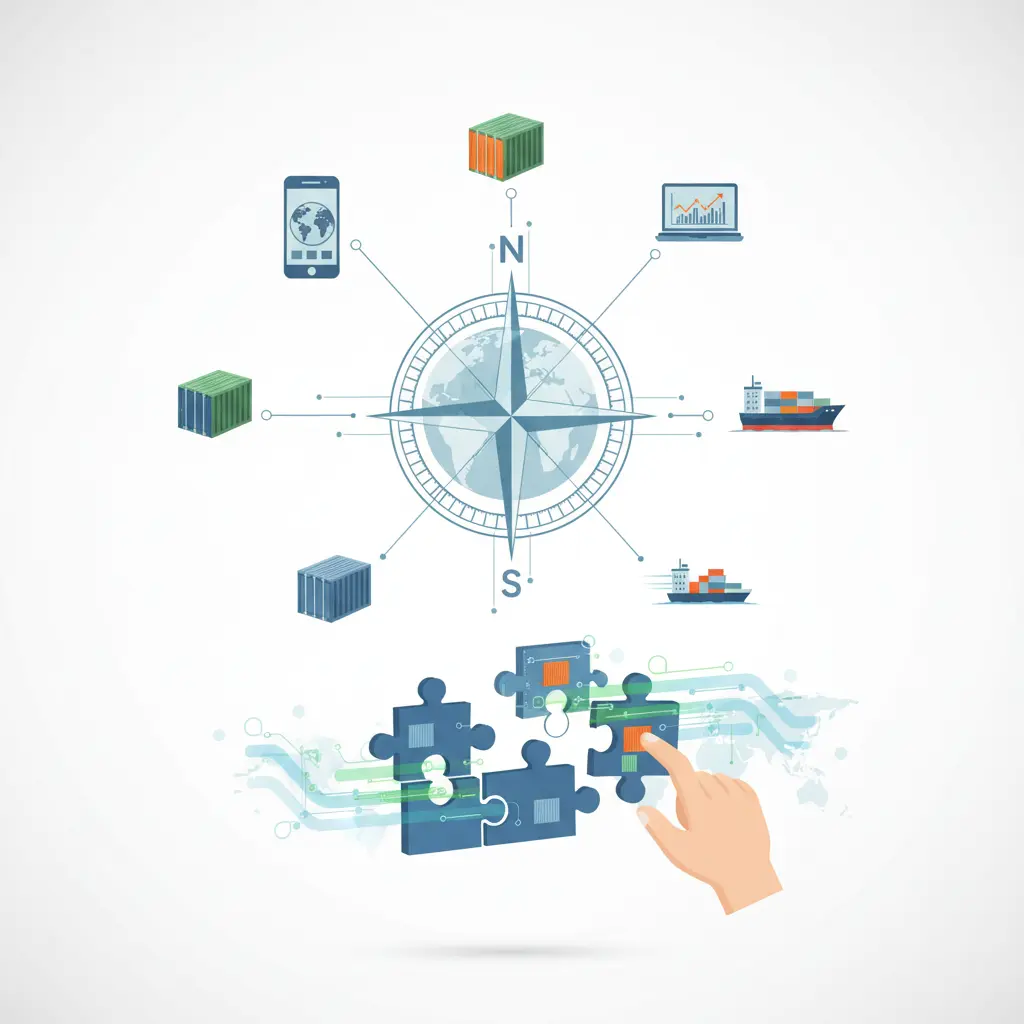
1. Key Features to Look for in a Tracking Platform
When embarking on the search for a robust global container tracking solution, businesses must prioritize platforms offering a comprehensive suite of features. Foremost among these is true real-time cargo tracking, providing continuous updates on your container’s location, speed, and potential delays. This goes beyond simple port-to-port updates, offering granular detail from origin to final destination. Look for solutions that support various tracking methods, including tracking by container number, vessel name, and critically, container tracking by bill of lading (B/L) number, which is essential for many international shipments. Predictive analytics and delay alerts are also invaluable, allowing proactive management of potential disruptions. Features like geofencing for specific routes or destinations, historical data analysis for performance review, and customizable dashboards for tailored insights further enhance a platform’s utility. Ensure the platform provides global coverage, capable of tracking containers across all major shipping lanes and ports, irrespective of the carrier.
2. Integrating Tracking into Your Existing Systems (ERP/TMS)
The true power of a global container tracking solution is unleashed when it seamlessly integrates with your existing enterprise resource planning (ERP) and transport management system (TMS). This integration eliminates data silos, automates workflows, and provides a single source of truth for all supply chain operations. Look for solutions that offer robust Application Programming Interfaces (APIs) or pre-built connectors for popular ERPs (e.g., SAP, Oracle, NetSuite) and TMS platforms. Seamless integration means that tracking data—from estimated times of arrival (ETAs) to customs clearance statuses—can flow directly into your operational systems, triggering automated actions like inventory adjustments, customer notifications, or scheduling changes. This not only reduces manual data entry and potential errors but also provides a holistic view of your supply chain, enabling better decision-making and operational efficiency. The goal is to transform raw tracking data into actionable intelligence that enhances your entire business process, from procurement to final delivery.
3. Future Trends in Global Logistics and Tracking 2025
As businesses plan for the future, it’s crucial to select a container tracking solution that is not only effective today but also adaptable to emerging trends. By 2025, several key innovations are set to reshape global logistics. Artificial Intelligence (AI) and Machine Learning (ML) will play an increasingly significant role in predictive analytics, offering more accurate ETA estimations, identifying potential risks before they materialize, and optimizing routes. The Internet of Things (IoT) will further enhance tracking capabilities, with smart sensors monitoring not just location but also temperature, humidity, and shock, critical for sensitive cargo. Blockchain technology is also gaining traction for creating transparent and secure records of shipments, improving traceability and trust across complex supply chains. Furthermore, the demand for hyper-personalized tracking updates and direct communication channels with logistics providers will grow. Choosing a platform that demonstrates a clear roadmap for incorporating these advanced technologies ensures your investment remains future-proof, keeping your business at the forefront of supply chain innovation and providing unparalleled supply chain visibility solutions.
Partner with Vietnam’s Leading Suppliers
Looking for reliable suppliers in Vietnam? Contact VietnamSuppliers.com today to connect with verified manufacturers and exporters across all industries.
—————————————
References
– Supply Chain Visibility Guide: What Is It, How to Achieve It – Supply Chain Dive: https://www.supplychaindive.com/news/supply-chain-visibility-guide-what-is-it-how-to-achieve-it/598586/
– IoT Tracking Technologies to Reduce Supply Chain Risk: https://www.supplychainbrain.com/articles/29887-iot-tracking-technologies-to-reduce-supply-chain-risk
– modern supply chain management: https://www.mckinsey.com/capabilities/operations/our-insights/supply-chain
– Maritime Executive insights on supply chain visibility: https://www.maritime-executive.com/article/supply-chain-visibility-key-to-resilience
– Real-time Visibility: The Cornerstone of Modern Supply Chains: https://www.supplychaindigital.com/supply-chain-management/real-time-visibility-the-cornerstone-of-modern-supply-chains