
FCL vs. LCL: Understanding Your Container Choices
Navigating international shipping can be complex, especially when exporting goods from a bustling hub like Vietnam. A critical decision for any business is choosing between Full Container Load (FCL) and Less than Container Load (LCL) shipping. This choice profoundly impacts your supply chain’s efficiency, cost, and security, helping businesses decide which method is best for their cargo volume and needs from Vietnam. Understanding the fundamental differences between these two methods is essential for optimizing your logistics and securing competitive FCL shipping rates Vietnam.
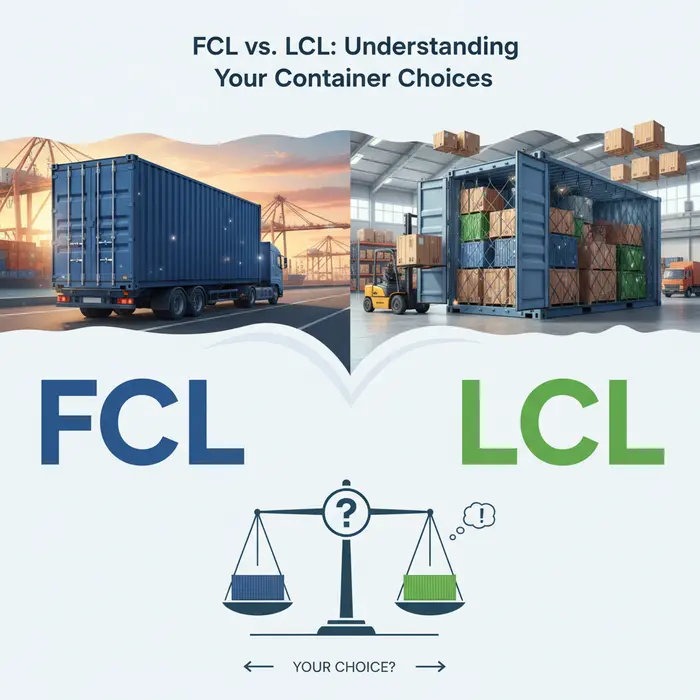
1. What is Full Container Load (FCL)?
Full Container Load (FCL) shipping involves reserving an entire shipping container exclusively for your cargo. Even if your goods don’t fully occupy the container’s volume, you pay for and utilize the entire unit. This method is ideal for businesses with sufficient cargo to fill a standard container or those prioritizing speed, security, and minimal handling. Common FCL container dimensions and types include 20-foot and 40-foot standard containers, as well as 40-foot High Cube (HC) containers, which offer extra height for bulky goods. Given Vietnam’s strong manufacturing and export economy, FCL is a popular choice for large-volume shipments destined for markets worldwide. When considering FCL, understanding the FCL shipping rates Vietnam can help businesses budget effectively.
2. What is Less than Container Load (LCL)?
In contrast to FCL, Less than Container Load (LCL) shipping means your cargo shares space within a container with goods from other shippers. This method is highly suitable for businesses with smaller shipments that don’t warrant a full container, offering a cost-effective solution by only paying for the space your cargo occupies. While LCL provides flexibility for smaller volumes, it typically involves more handling and consolidation at origin ports and deconsolidation at destination ports. This additional handling can sometimes lead to slightly longer transit times and a higher risk of damage compared to FCL shipments. The decision between full container load vs LCL often comes down to the volume of your goods and your urgency requirements.
3. Key Advantages of FCL for Vietnam Exports
For many businesses exporting from Vietnam, FCL offers significant advantages that can streamline logistics and enhance overall supply chain performance:
- Speed and Efficiency: FCL shipments enjoy a more direct route. Once loaded, the container typically moves straight from the origin port (e.g., Ho Chi Minh City, Haiphong) to the destination port with fewer stops. This direct transit results in faster delivery times compared to LCL, where containers must wait for consolidation and deconsolidation processes.
- Enhanced Security: With FCL, your cargo is sealed within its own container from the point of origin until it reaches the destination. This significantly reduces the risk of damage, loss, or theft that can occur during the multiple loading and unloading stages inherent in LCL shipping.
- Cost-Effectiveness for Volume: While the upfront cost of an FCL container might seem higher, for larger shipments (typically exceeding 12-15 cubic meters), FCL often becomes more cost-effective per unit of cargo than LCL. The simplified logistics and reduced handling also minimize potential hidden costs. Understanding current FCL shipping rates Vietnam is crucial for this calculation.
- Predictability and Control: FCL provides greater control over your shipping schedule. You can book a specific vessel and departure date, allowing for more precise planning and inventory management. This predictability is a cornerstone of an efficient supply chain.
- Reduced Customs Delays: Because an FCL container holds goods from a single shipper, customs clearance can often be smoother and faster, as there’s less complexity compared to an LCL container with multiple consignments.
Choosing the right method, whether it’s FCL or LCL, depends heavily on your specific business needs, cargo volume, and budget. For those considering FCL, consulting with a reputable Vietnam FCL freight forwarder services can provide expert guidance and competitive FCL shipping rates Vietnam. They can also assist with a comprehensive FCL shipping process guide Vietnam, ensuring a smooth and efficient export experience.
FCL Container Types & Dimensions for Vietnam Cargo
Navigating international shipping from Vietnam, particularly with FCL (Full Container Load) shipments, hinges on a critical decision: selecting the right container. Understanding FCL container dimensions and types is paramount for optimizing cargo loading, ensuring cost efficiency, and streamlining your supply chain when evaluating FCL shipping rates Vietnam. Unlike LCL (Less than Container Load), FCL offers exclusive use of an entire container, often leading to better security and potentially faster transit for larger volumes. This detailed overview will guide you through standard and specialized container options crucial for your FCL shipping process guide Vietnam.
1. Standard 20-Foot & 40-Foot Containers
These are the most ubiquitous container types, forming the foundation of global trade and are the primary choice for general cargo in FCL shipping from Vietnam. Their widespread availability makes them key to competitive FCL shipping rates Vietnam.
- 20-Foot Standard Dry Container (20’ GP or DV):
- External: 20 ft (L) x 8 ft (W) x 8 ft 6 in (H) / 6.10 m x 2.44 m x 2.59 m
- Internal: 19 ft 4 in (L) x 7 ft 8 in (W) x 7 ft 9 in (H) / 5.89 m x 2.35 m x 2.39 m
- Cubic Capacity: Approx. 33.2 CBM
- Payload: Up to 28,000 kg (61,730 lbs)
- Best For: Dense, heavy cargo like machinery, raw materials, or moderate quantities of textiles and electronics common in Vietnamese exports.
- 40-Foot Standard Dry Container (40’ GP or DV):
- External: 40 ft (L) x 8 ft (W) x 8 ft 6 in (H) / 12.19 m x 2.44 m x 2.59 m
- Internal: 39 ft 5 in (L) x 7 ft 8 in (W) x 7 ft 9 in (H) / 12.03 m x 2.35 m x 2.39 m
- Cubic Capacity: Approx. 67.7 CBM
- Payload: Up to 28,000 kg (61,730 lbs)
- Best For: Lighter, bulkier cargo or larger quantities of goods like furniture, footwear, and consumer goods frequently exported from Vietnam. Often limited by weight before reaching full volume.
The choice between a 20-foot and 40-foot often comes down to your cargo’s weight-to-volume ratio. For heavy cargo that “cubes out” (hits weight limit) before “measures out” (fills volume), a 20-foot is more economical. For light, bulky items, a 40-foot generally offers better value for FCL shipping rates Vietnam.
2. High-Cube Containers for Extra Volume
High-Cube (HC) containers are preferred when standard containers lack sufficient vertical space. These taller versions of the 40-foot standard are ideal for light, voluminous goods, a common characteristic of many Vietnamese exports such as furniture, plastics, and apparel.
- 40-Foot High-Cube Container (40’ HC):
- External: 40 ft (L) x 8 ft (W) x 9 ft 6 in (H) / 12.19 m x 2.44 m x 2.89 m
- Internal: 39 ft 5 in (L) x 7 ft 8 in (W) x 8 ft 9 in (H) / 12.03 m x 2.35 m x 2.69 m
- Cubic Capacity: Approx. 76.3 CBM (an extra 8-9 CBM over a standard 40-foot)
- Payload: Up to 28,000 kg (61,730 lbs)
- Best For: Tall or voluminous cargo that isn’t excessively heavy, maximizing space utilization for items like mattresses, large furniture pieces, or stacked apparel from Vietnam, positively impacting FCL shipping rates Vietnam.
The additional foot of height in a 40’ HC can significantly reduce overall freight costs by accommodating more cargo per container, making it a strategic choice for optimizing your FCL container dimensions and types.
3. Specialized Containers: Reefer, Open-Top, Flat Rack
For cargo with specific handling or environmental needs, specialized containers are indispensable, though they often entail higher FCL shipping rates Vietnam due to their niche functions and limited availability.
- Reefer Containers (Refrigerated Containers):
- Purpose: Transport temperature-sensitive cargo (e.g., seafood, fruits, pharmaceuticals from Vietnam), maintaining constant internal temperatures (-35°C to +30°C).
- Dimensions: Available in 20-foot and 40-foot, with slightly reduced internal space due to insulation and refrigeration units.
- Rates: Higher due to power consumption, specialized equipment, and limited supply.
- Open-Top Containers:
- Purpose: Feature a removable tarpaulin roof for top-loading via crane.
- Dimensions: Available in 20-foot and 40-foot lengths.
- Best For: Tall or bulky cargo like heavy machinery, timber, or construction materials from Vietnamese factories that cannot fit through standard doors.
- Rates: Higher than standard due to specialized handling and potential for less optimal vessel stowage.
- Flat Rack Containers:
- Purpose: A flat base with fixed or collapsible end walls, ideal for oversized, overwidth, or extremely heavy cargo.
- Dimensions: Available in 20-foot and 40-foot lengths.
- Best For: Project cargo, large machinery, vehicles, and unconventional shipments exceeding enclosed container dimensions.
- Rates: Among the highest for FCL shipping rates Vietnam, requiring unique securing and stowage plans.
Engaging with experienced Vietnam FCL freight forwarder services is crucial for determining the most appropriate and cost-effective specialized container solution. A well-informed choice contributes significantly to the efficiency and profitability of your international trade operations from Vietnam.
FCL Shipping Rates Vietnam: Factors & Cost Breakdown 2025
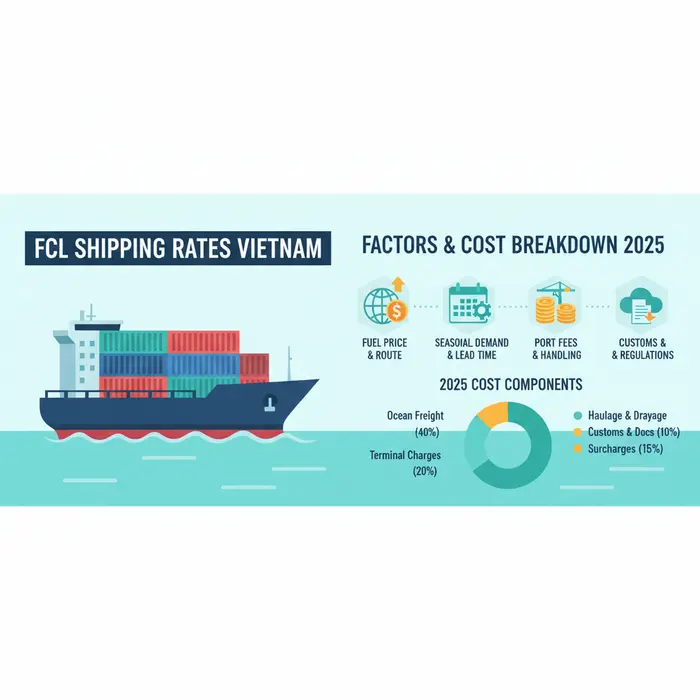
Navigating the complexities of international shipping costs, particularly for Full Container Load (FCL) shipments from Vietnam, can be a daunting task. As global trade dynamics evolve, understanding the intricate components that influence FCL shipping rates Vietnam for 2025 is crucial for businesses aiming for predictable budgeting and efficient supply chain management. This comprehensive breakdown aims to demystify these costs, offering transparency and vital insights into how your FCL rates are calculated, distinguishing full container load from LCL (Less than Container Load) and highlighting the unique aspects of Vietnamese logistics.
When planning your logistics from Vietnam, it’s essential to look beyond the initial quote. Numerous variables contribute to the final price, from the type and size of your FCL container dimensions and types to the specific port of origin and destination, and prevailing market conditions. By understanding each element, you can better negotiate, plan, and avoid unexpected expenses, ensuring a smoother FCL shipping process guide Vietnam for your goods.
1. Base Ocean Freight Rates Explained
The foundation of any FCL shipping cost is the base ocean freight rate. This charge covers the actual transportation of your container from the port of loading in Vietnam to the port of discharge. These rates are highly volatile and influenced by a confluence of global factors including, but not limited to, supply and demand for vessel space, global fuel prices (bunker costs), geopolitical events, and seasonal demand fluctuations. For 2025, analysts predict a continued rebalancing of supply chains, yet unforeseen disruptions can always impact rates. Key determinants include the specific trade lane (e.g., Vietnam to North America vs. Vietnam to Europe), the type and size of the container (e.g., 20ft, 40ft, 40ft HC – high cube), and the carrier’s specific pricing strategy. Understanding how ocean freight rates are determined can provide a significant advantage in forecasting your logistics budget.
2. Terminal Handling Charges (THC) & Surcharges
Beyond the base rate, several additional charges contribute significantly to the overall FCL cost. Terminal Handling Charges (THC) are a prime example, covering the costs incurred by the shipping line for moving the container within the terminal, including loading onto or unloading from the vessel. These are typically levied at both the origin (Vietnam) and destination ports. Furthermore, a variety of surcharges are common:
- Bunker Adjustment Factor (BAF) / Fuel Adjustment Factor (FAF): A fluctuating charge to compensate carriers for changes in fuel prices.
- Currency Adjustment Factor (CAF): Compensates for currency fluctuations between the origin and destination countries.
- Peak Season Surcharge (PSS): Imposed during periods of high demand, such as before major holidays or specific shipping seasons.
- General Rate Increase (GRI): A general increase in freight rates, usually implemented by carriers at regular intervals.
- Security Surcharge (ISPS): Covers security measures mandated by international regulations at ports and on vessels.
- Congestion Surcharge: Applied when ports experience significant delays due to high traffic or unforeseen events.
These surcharges can vary significantly between carriers and trade lanes, making it vital to scrutinize quotes carefully for a comprehensive understanding of your FCL shipping rates Vietnam.
3. Local Charges in Vietnam (Haulage, Customs)
The journey of your FCL container begins well before it reaches the vessel and continues after it departs. Local charges in Vietnam encompass all expenses incurred within the country, from the factory gate to the port of loading. These typically include:
- Inland Haulage/Trucking: The cost of transporting the container by truck from the supplier’s factory or warehouse to the designated port terminal (e.g., Cat Lai Port in Ho Chi Minh City, Haiphong Port). This varies based on distance, fuel prices, and truck availability.
- Customs Clearance Fees: Fees associated with preparing and submitting export documentation to Vietnamese customs authorities, ensuring compliance with local regulations. Engaging expert Vietnam FCL freight forwarder services is crucial here to navigate the intricate customs procedures smoothly.
- Documentation Fees: Charges for preparing essential shipping documents such as the Bill of Lading, Manifest, and other certificates.
- Container Detention/Demurrage: Costs incurred if the container is held at the port for longer than the agreed-upon free days (demurrage) or if the empty container is not returned to the shipping line within the free period (detention). These can accumulate rapidly and significantly impact your FCL shipping rates Vietnam if not managed proactively.
A reliable freight forwarder in Vietnam will offer an FCL shipping process guide Vietnam, assisting with these local intricacies and ensuring all necessary permits and declarations are in order, thereby minimizing delays and additional costs.
In conclusion, calculating precise FCL shipping rates from Vietnam for 2025 requires a detailed understanding of base ocean freight, various surcharges, and local operational costs. By breaking down these elements, businesses can gain better cost control and make more informed decisions. Partnering with experienced Vietnam FCL freight forwarder services is paramount for navigating this complex landscape, ensuring your cargo moves efficiently and cost-effectively from Vietnam to its global destination.
Navigating the FCL Shipping Process from Vietnam
For businesses engaged in international trade, Full Container Load (FCL) shipping from Vietnam offers a highly efficient and secure method for transporting large volumes of goods. This comprehensive guide outlines the entire FCL shipping journey from Vietnam, from the initial booking to final delivery, ensuring a smooth and efficient logistics experience. Understanding each step is crucial for optimizing your supply chain and securing competitive FCL shipping rates Vietnam, minimizing delays, and avoiding unexpected costs. Unlike Less than Container Load (LCL), FCL means your cargo occupies an entire container, providing greater control, faster transit times, and reduced risk of damage or misplacement, making it the preferred choice for substantial shipments.
1. Booking Your FCL Shipment
The journey begins with strategically booking your FCL shipment. This initial phase is critical for setting the stage for a successful delivery. Your first step involves choosing a reliable Vietnam FCL freight forwarder services provider. A reputable freight forwarder acts as your logistics partner, guiding you through the complexities of international shipping.
When approaching a freight forwarder, be prepared to provide detailed information about your cargo, including:
- Nature of Goods: A precise description of what you are shipping.
- Volume and Weight: Accurate measurements are essential for determining the appropriate container size.
- Origin and Destination: Specific pick-up points in Vietnam and the final delivery port.
- Desired Transit Time: Urgent shipments may require expedited services.
- Special Handling Requirements: Any specific needs, such as refrigeration or hazardous material handling.
Based on this information, the freight forwarder will help you select the most suitable container type and size. Common FCL container dimensions and types include 20-foot and 40-foot standard containers, but specialized options like high-cube, open-top, or refrigerated (reefer) containers are also available for specific cargo needs. This choice directly impacts your FCL shipping rates Vietnam. Once you finalize the details, the freight forwarder will provide a booking confirmation, reserving space on a vessel and scheduling the container pick-up.
2. Cargo Loading & Container Stuffing
With your booking confirmed, the next critical phase involves preparing your cargo for shipment and loading it into the container. This process, often referred to as container stuffing, can occur either at your factory/warehouse or at the freight forwarder’s designated consolidation facility near the port.
- Pre-Shipment Inspection: Before loading, it’s advisable to conduct a thorough quality inspection of your goods to ensure they meet agreed-upon standards.
- Packaging: Proper packaging is paramount. Goods should be securely packed, labeled clearly, and suitable for international transit, protecting them from potential damage due to movement, moisture, or handling.
- Loading Strategy: The way goods are loaded into the container significantly impacts safety and space utilization. Experienced loaders adhere to strict guidelines to distribute weight evenly, prevent shifting during transit, and maximize the container’s capacity. Heavy items are typically loaded first, at the bottom, and towards the center.
- Securing Cargo: Once loaded, cargo must be securely braced, blocked, and strapped to prevent movement. Dunnage bags, wooden planks, and cargo straps are commonly used to fill voids and immobilize the goods.
- Container Sealing: After stuffing, the container is sealed with a unique, tamper-proof seal, ensuring the integrity of your shipment until it reaches its destination. A copy of the seal number is recorded on the Bill of Lading.
3. Customs Clearance & Documentation in Vietnam
Efficient customs clearance is a cornerstone of smooth FCL shipping process guide Vietnam. This stage involves meticulous preparation and submission of various documents to Vietnamese customs authorities to permit the export of your goods. Errors or omissions in documentation can lead to significant delays and penalties.
Key documents required for export customs clearance from Vietnam typically include:
- Commercial Invoice: Details the transaction between buyer and seller, including product description, quantity, value, and terms of sale (Incoterms).
- Packing List: Provides a detailed inventory of the contents within each package, weight, and dimensions.
- Bill of Lading (B/L): A legal document issued by the carrier to the shipper, serving as a contract of carriage, a receipt for goods, and a document of title.
- Certificate of Origin (C/O): Verifies the country where the goods were manufactured, often necessary for preferential tariffs under free trade agreements.
- Export License: Required for certain types of goods that are restricted or controlled by the Vietnamese government.
- Customs Declaration Form: The official form submitted to Vietnamese customs authorities.
Your freight forwarder or a dedicated customs broker will manage the submission of these documents and liaise with customs officials on your behalf. They ensure compliance with all Vietnamese export regulations, pay any applicable duties or taxes, and obtain the necessary clearances. Once customs clearance is granted, the container is transported to the port and loaded onto the designated vessel, commencing its international journey.
Finding the Best FCL Freight Forwarder Services in Vietnam
Navigating the complexities of international trade requires a reliable logistics partner, especially when dealing with Full Container Load (FCL) shipments from a burgeoning manufacturing hub like Vietnam. For businesses importing or exporting goods, selecting the right freight forwarder is paramount to ensuring efficiency, cost-effectiveness, and timely delivery. This guide offers insights into choosing optimal FCL shipping rates Vietnam and services, highlighting key considerations for effective FCL logistics management in the Vietnamese market.
1. Why Use an FCL Freight Forwarder?
When your cargo volume is substantial enough to fill an entire shipping container, opting for Full Container Load (FCL) over Less than Container Load (LCL) offers distinct advantages. An FCL freight forwarder specializes in managing these large-volume shipments, providing a dedicated container for your goods. This significantly reduces the risk of damage or loss that can occur with LCL shipments due to frequent handling and co-loading with other consignments. Furthermore, FCL often proves more cost-effective per unit for larger volumes, and generally offers faster transit times as the container moves directly from origin to destination without additional stops for consolidation or deconsolidation.
Choosing FCL also grants you greater control over your shipment’s schedule and route, avoiding potential delays caused by other shippers’ cargo. Understanding the differences between full container load vs LCL is crucial, and an FCL forwarder can advise on when FCL is the most advantageous option, considering your specific cargo type, volume, and urgency.
2. Key Services Offered by Vietnam Forwarders
A comprehensive Vietnam FCL freight forwarder services provider goes beyond simply booking container space. They offer a suite of integrated services designed to streamline your supply chain. These typically include:
- Customs Clearance & Documentation: Expert handling of all necessary paperwork, tariffs, duties, and compliance with Vietnamese and destination country regulations, ensuring smooth passage through customs.
- Inland Transportation (Drayage): Arranging the movement of containers from your supplier’s factory to the port and from the destination port to your final warehouse.
- Warehousing & Storage: Offering temporary storage solutions, whether for consolidation before shipment or distribution upon arrival.
- Cargo Insurance: Facilitating insurance coverage to protect your goods against unforeseen events during transit.
- Container Management: Advising on the most suitable FCL container dimensions and types (e.g., 20ft, 40ft, High Cube, refrigerated) for your specific cargo.
- Tracking & Communication: Providing real-time updates on your shipment’s status and proactive communication regarding any potential issues.
- Regulatory Compliance: Staying updated with international shipping laws and Incoterms® rules to ensure legal and efficient operations.
A reliable forwarder will also guide you through the entire FCL shipping process guide Vietnam, from booking to final delivery, simplifying complex procedures.
3. Qualities of a Reliable FCL Partner
When evaluating potential FCL freight forwarders in Vietnam, look for partners who exhibit these essential qualities:
- Experience & Expertise: A proven track record in handling FCL shipments, particularly within Vietnam’s unique logistical landscape. They should possess deep knowledge of local ports, customs procedures, and transportation networks.
- Strong Global Network: Partnerships with major shipping lines and agents worldwide to ensure competitive FCL shipping rates and efficient service routes to various destinations.
- Transparency & Communication: Clear, honest communication regarding pricing, transit times, and any potential challenges. They should be responsive and provide timely updates.
- Regulatory Compliance: Adherence to all international shipping regulations and local laws, minimizing risks of delays or penalties.
- Technology & Tracking: Utilization of modern logistics software for efficient booking, tracking, and reporting, offering you visibility into your supply chain.
- Customer Service: A dedicated team that understands your specific needs and offers personalized solutions, demonstrating flexibility and problem-solving capabilities.
- Financial Stability: A forwarder with sound financial health is crucial for reliability and continuity of service.
By prioritizing these attributes, you can secure a freight forwarder that not only offers competitive FCL shipping rates but also acts as a strategic partner, contributing significantly to the success of your international trade operations from Vietnam.
Partner with Vietnam’s Leading Suppliers
Looking for reliable suppliers in Vietnam? Contact VietnamSuppliers.com today to connect with verified manufacturers and exporters across all industries.
—————————————
References
– Maersk Container Types: https://www.maersk.com/shipping-services/shipping-container-types
– LCL vs FCL Shipping Explained by Maersk: https://www.maersk.com/news/articles/2021/04/16/lcl-vs-fcl#:~:text=FCL%20shipping%20is%20when%20you%20have,used%20by%20multiple%20shippers%20at%20once.
– What Is Ocean Freight Rate? – Shipping and Freight Resource: https://www.shippingandfreightresource.com/what-is-ocean-freight-rate/
– ICC Incoterms Rules: https://www.iccwbo.org/resources-for-business/incoterms-rules/
– Incoterms® rules: https://iccwbo.org/resources-for-business/incoterms-rules/

