
The New Frontier: B2B E-commerce for Exports
The global trade landscape is undergoing a profound transformation, driven largely by advancements in digital technology. For businesses engaged in exports, the traditional models of trade shows, agents, and face-to-face negotiations are increasingly complemented, and sometimes even replaced, by online platforms. This shift heralds “The New Frontier: B2B E-commerce for Exports,” fundamentally reshaping how goods move across borders. By embracing digital channels, exporters can achieve unprecedented market reach, streamline complex order processes, and foster more direct relationships with international buyers, ultimately leading to significant growth and efficiency gains. This profound change, often referred to as Digital Transformation in Import Export, is not merely about having a website; it’s about integrating technology across the entire export value chain, from marketing and sales to logistics and finance.

1. Building Your Digital Export Storefront
The cornerstone of a successful B2B e-commerce strategy for exports is a robust, well-designed digital storefront. This isn’t just an informational website; it’s an interactive platform capable of showcasing products, managing inquiries, handling quotes, and processing orders tailored for international clients. Key elements include multi-language support, multi-currency display, and detailed product catalogs with specifications, certifications, and high-quality visuals. For exporters, this storefront acts as a 24/7 global sales representative, significantly expanding their market reach beyond geographical limitations. Implementing effective digital marketing for exporters strategies is crucial to drive traffic to this platform, utilizing SEO, content marketing, and targeted digital advertising to attract potential B2B buyers worldwide. Furthermore, integrating features like instant quoting, bulk order capabilities, and personalized dashboards for repeat customers enhances the buyer experience and streamlines the sales cycle. This digital presence allows for granular control over branding and customer data, fostering stronger, more direct relationships with international partners.
2. Navigating Cross-Border Payment Solutions
One of the most significant hurdles in international trade has historically been secure and efficient cross-border payments. B2B e-commerce platforms are simplifying this through integrated payment gateways that support various methods, from traditional bank transfers and Letters of Credit to modern digital wallets and blockchain-based solutions. Addressing concerns about currency fluctuations, transaction fees, and regulatory compliance is paramount. The benefits of Trade Finance Digitization are particularly evident here, as digital platforms offer greater transparency, reduced processing times, and often lower costs compared to traditional banking channels. Exporters can leverage platforms that provide escrow services, multi-currency accounts, and automated invoicing, mitigating risks and improving cash flow. Selecting the right payment partner, one that understands the nuances of international transactions and offers robust security features, is crucial for building buyer trust and ensuring smooth, reliable financial flows across borders. This focus on financial technology is integral to achieving overall supply chain optimization, ensuring that every link in the chain is efficient and secure.
3. Leveraging Marketplaces vs. Proprietary Platforms
When establishing an online presence for export, businesses face a strategic choice: utilize established B2B e-commerce marketplaces or develop a proprietary platform. Global marketplaces like Alibaba.com, Amazon Business, or regional equivalents offer immediate access to a vast network of potential buyers and built-in payment/logistics infrastructure, significantly lowering the barrier to entry for new exporters. They provide a ready-made audience and often handle much of the back-end complexity, making them excellent starting points, especially for exploring new markets or product lines. However, they typically come with transaction fees, limited branding customization, and increased competition.
Conversely, a proprietary platform offers complete control over branding, customer experience, data analytics, and pricing strategies. It allows for deeper integration with internal ERP and CRM systems, enabling sophisticated Supply Chain Optimization Technology and tailored customer journeys. While requiring a greater upfront investment in development, marketing, and security, a proprietary platform can yield higher profit margins and foster stronger customer loyalty in the long run. Many successful exporters adopt a hybrid strategy, utilizing marketplaces for lead generation and initial sales, while nurturing long-term relationships and high-volume orders through their own dedicated platforms. The decision hinges on the exporter’s resources, target market, product complexity, and long-term strategic objectives for their B2B e-commerce for exports strategy.
The embrace of B2B e-commerce for exports is no longer an option but a strategic imperative for businesses aiming to thrive in the global economy. From building compelling digital storefronts and streamlining cross-border payments to making informed choices between marketplaces and proprietary platforms, each step in this journey contributes to a more efficient, expansive, and resilient export operation. By leveraging the power of digital platforms, exporters are not just selling products; they are building global brands, forging new partnerships, and pioneering the future of international trade. This digital transformation in import export promises a new era of growth and innovation, making the world a truly connected marketplace.
Supply Chain Optimization Through Technology
In an increasingly interconnected and volatile global marketplace, the resilience, efficiency, and transparency of supply chains are paramount. Businesses engaged in international trade, particularly those involved in import and export, are rapidly embracing Digital Transformation in Import Export to gain a competitive edge. This shift involves leveraging cutting-edge technologies like Artificial Intelligence (AI), the Internet of Things (IoT), and blockchain to enhance every facet of the supply chain, from sourcing and manufacturing to logistics and delivery. These innovations are not merely incremental improvements; they are foundational shifts that redefine how goods move across borders, offering unprecedented visibility, speed, and reliability. By adopting advanced digital supply chain transformation strategies, companies can navigate complexities, mitigate risks, and unlock new levels of operational excellence.
1. Real-time Tracking and Predictive Analytics
The ability to know where goods are at any given moment and to predict potential disruptions is a game-changer for modern supply chains. Supply Chain Optimization Technology powered by IoT and AI provides exactly this. IoT sensors, embedded in products, containers, and vehicles, collect vast amounts of data on location, temperature, humidity, and other critical parameters in real-time. This data is then fed into AI and machine learning algorithms, which analyze patterns and anomalies to generate predictive insights. For instance, these systems can forecast demand more accurately, anticipate equipment failures, predict potential delays due to weather or traffic, and even identify optimal shipping routes. Such predictive capabilities enable proactive decision-making, allowing businesses to reroute shipments, adjust inventory levels, or communicate potential delays to customers before they become major issues. The result is significantly improved operational efficiency, reduced waste, and enhanced customer satisfaction, particularly crucial for time-sensitive or perishable goods in B2B E-commerce for Exports scenarios.
2. Blockchain for Transparency and Trust
One of the persistent challenges in global supply chains is the lack of transparency and the difficulty in establishing trust among numerous parties. Blockchain technology offers a robust solution to these issues. As a decentralized, immutable ledger, blockchain creates a tamper-proof record of every transaction and movement of goods throughout the supply chain. Each step, from raw material sourcing and manufacturing to shipping and delivery, can be recorded on the blockchain, creating an unalterable audit trail. This enhanced transparency is invaluable for verifying product authenticity, ensuring compliance with regulatory standards, and combating counterfeiting. Furthermore, blockchain streamlines Trade Finance Digitization Benefits by providing secure, verifiable records that can accelerate payment processing and reduce the risk of fraud. For exporters and importers, this translates into greater accountability, faster dispute resolution, and a foundation of trust that strengthens relationships across the entire supply chain ecosystem, promoting more reliable and secure Digital Transformation in Import Export.
3. Automating Logistics and Inventory Management
Automation is revolutionizing the physical movement and storage of goods, driving unprecedented levels of efficiency and cost savings. Robotic Process Automation (RPA), autonomous vehicles, and advanced warehouse management systems (WMS) are at the forefront of this transformation. In warehouses, robots can handle picking, packing, and sorting tasks with remarkable speed and accuracy, drastically reducing human error and labor costs. Drones are being employed for inventory checks, rapidly scanning stock and updating records. Furthermore, AI-driven inventory management systems analyze sales data, market trends, and historical performance to optimize stock levels, minimizing both overstocking and understocking. This precise management prevents capital from being tied up in excess inventory and ensures that products are available when needed, critical for meeting the demands of B2B E-commerce for Exports. The integration of these automated systems with real-time tracking and predictive analytics creates a highly synchronized and responsive logistics network, making the entire supply chain more agile and resilient. While Digital Marketing for Exporters focuses on market access, these operational improvements ensure that once orders are placed, they are fulfilled with optimal efficiency.
In conclusion, the strategic adoption of AI, IoT, and blockchain technologies is not just an upgrade but a fundamental reinvention of global supply chains. These innovations collectively foster a more visible, efficient, and resilient network capable of navigating the complexities of international trade. For businesses aiming to thrive in the import-export arena, embracing this technological evolution is imperative for sustaining growth, reducing costs, and delivering superior value to customers.
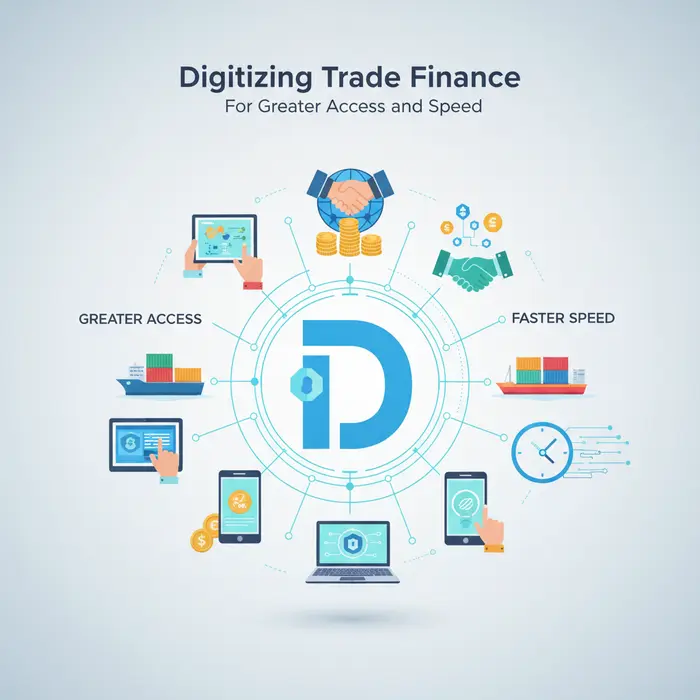
The global landscape of import-export businesses is undergoing a profound transformation, driven by technological advancements that are reshaping traditional processes. At the forefront of this evolution is the Digital Transformation in Import Export, particularly evident in the realm of trade finance. Historically, trade finance has been characterized by its complexity, reliance on extensive paperwork, manual processes, and slow transaction speeds. These inherent inefficiencies often translated into higher operational costs, increased risks, and, critically, limited access to essential capital for many small and medium-sized enterprises (SMEs).
However, digital solutions are now revolutionizing this sector, offering unparalleled Trade Finance Digitization Benefits that extend from significantly faster transactions to drastically reduced paperwork. By automating and streamlining various stages of the financing process, businesses can now experience unprecedented efficiency. This shift is not merely about speed; it’s about democratizing access to capital, enabling more import-export businesses to participate in global trade with greater confidence and agility. The advent of B2B E-commerce for Exports further underscores this trend, integrating digital payment and finance solutions directly into sales channels, thereby simplifying complex cross-border transactions.
1. Digital Letters of Credit and Guarantees
Letters of Credit (LCs) and Bank Guarantees have long been foundational instruments in international trade, providing security and assurance between buyers and sellers in different countries. Traditionally, these instruments involve a laborious paper trail, requiring physical document handling, courier services, and multiple verification steps across various banks and parties. This process is not only time-consuming but also prone to errors, delays, and potential fraud. The digitization of LCs and Guarantees fundamentally alters this paradigm.
By leveraging technologies such as blockchain and secure digital platforms, these critical documents can now be issued, amended, and processed electronically. This digital shift ensures real-time visibility, reduces processing times from days to hours, and significantly minimizes the risk of discrepancies. The immutability of blockchain records, for instance, provides an unparalleled level of security and trust, as all parties can access a single, verifiable version of the truth. This enhanced transparency and efficiency mean businesses can secure their transactions faster, freeing up working capital sooner and facilitating smoother trade flows.
2. Streamlining Invoice Factoring and Supply Chain Finance
Access to working capital is often a major hurdle for import-export businesses, particularly SMEs looking to expand their operations. Invoice factoring and supply chain finance are vital tools designed to address this challenge by providing liquidity against outstanding invoices or future receivables. However, the traditional process can be cumbersome, involving manual submission of invoices, extensive credit checks, and slow disbursement of funds. Digital platforms are transforming these financing mechanisms into swift and accessible solutions.
Through advanced Supply Chain Optimization Technology, digital trade finance platforms can connect businesses with a wide network of lenders and investors. This allows for rapid online application, automated credit assessment, and faster funding decisions. For instance, an exporter can upload their invoices to a digital platform and receive funding within a matter of days, or even hours, instead of weeks. This immediate access to cash flow is crucial for covering operational expenses, purchasing new inventory, or investing in growth opportunities. Such streamlined processes not only enhance the speed of finance but also broaden the availability of funding sources, offering more competitive rates and flexible terms for businesses of all sizes.
3. Mitigating Risk with Digital Documentation
One of the most significant advantages of digital trade finance lies in its ability to mitigate risks associated with traditional paper-based documentation. Manual handling of crucial trade documents – such as bills of lading, certificates of origin, and inspection reports – exposes transactions to numerous vulnerabilities, including loss, damage, tampering, and outright fraud. These risks can lead to disputes, delays, and substantial financial losses for all parties involved.
Digital documentation, facilitated by secure online platforms and distributed ledger technologies (DLT), provides a robust solution. Electronic bills of lading (eBLs), for example, offer a legally recognized digital equivalent to their paper counterparts, allowing for instant transfer and secure storage. This not only eliminates the physical risks but also enhances the traceability and authenticity of documents. Every transaction and document transfer can be timestamped and recorded, creating an immutable audit trail. This transparency vastly reduces the potential for fraud and disputes, building greater trust among trading partners, banks, and customs authorities. The International Chamber of Commerce (ICC) has been a strong advocate for these digital advancements, recognizing their potential to significantly de-risk global trade and foster greater economic inclusion.
In conclusion, the digitization of trade finance is not merely an upgrade; it’s a fundamental shift towards a more efficient, secure, and inclusive global trading system. By embracing these digital solutions, import-export businesses can unlock new avenues for growth, manage risks more effectively, and ultimately thrive in an increasingly interconnected world.
Digital Marketing Strategies for Global Reach
In today’s interconnected global economy, exporters must embrace sophisticated Digital Transformation in Import Export strategies to thrive. Moving beyond traditional trade shows and physical brochures, digital marketing offers unparalleled opportunities to identify new markets, attract international buyers, and build a strong global brand presence. For businesses engaged in B2B E-commerce for Exports, leveraging digital tools is not just an advantage—it’s a necessity for competitive survival and expansion. This section delves into effective digital marketing tactics that empower exporters to reach a worldwide audience, optimize their sales funnels, and solidify their position in the international marketplace.
1. Targeting International Audiences with SEO & SEM
Search Engine Optimization (SEO) and Search Engine Marketing (SEM) are cornerstones of any successful digital strategy, and their importance is amplified when targeting global markets. For exporters, this means meticulously tailoring your online presence to resonate with diverse linguistic and cultural nuances.
International SEO: Effective international SEO begins with comprehensive keyword research in the target languages. This goes beyond direct translation, requiring an understanding of local search intent and popular terms. Technical SEO elements are crucial: implementing hreflang tags to indicate page language and geographical targeting, choosing appropriate URL structures (e.g., country-code top-level domains like .co.uk, subdomains like uk.yourcompany.com, or subdirectories like yourcompany.com/uk/), and ensuring fast loading speeds globally. Building high-quality backlinks from relevant international sites also significantly boosts domain authority. For deeper insights into international SEO, a reliable resource like Moz’s International SEO Checklist provides invaluable guidance.
International SEM: Paid advertising campaigns through platforms like Google Ads or Bing Ads allow for precise geo-targeting and language targeting. Exporters can create highly specific campaigns for different regions, tailoring ad copy and landing pages to local idioms and purchasing behaviors. Bid management strategies should account for varying competition and cost-per-click rates across countries. Utilizing negative keywords is also vital to avoid irrelevant traffic and optimize ad spend. Combining robust SEO with targeted SEM ensures maximum visibility and reach among potential international buyers.
2. Content Marketing for Global Buyers
Content marketing serves as a powerful magnet for attracting and nurturing international leads. The key is to create valuable, relevant, and consistent content that addresses the specific needs and pain points of your global audience. For Digital Marketing for Exporters, this includes a variety of formats.
Consider developing case studies that highlight successful international partnerships, whitepapers detailing industry trends relevant to specific regions, or localized blog posts that discuss how your products or services solve unique challenges faced by businesses in different countries. Webinars and online workshops can also be highly effective for engaging international prospects, offering interactive sessions that can be recorded and distributed for wider reach.
Crucially, content must be localized, not just translated. This means adapting cultural references, units of measurement, legal implications, and even design aesthetics to resonate with the target market. A deep understanding of cultural nuances prevents misinterpretations and builds trust. Distribute this content through targeted email campaigns, industry-specific forums, and your international social media channels to maximize its impact. High-quality, culturally appropriate content establishes your company as a thought leader and builds credibility, which is essential in fostering long-term relationships with international buyers.
3. Social Media and Professional Networking Platforms
Social media extends its reach far beyond consumer marketing, offering significant opportunities for Digital Marketing for Exporters, particularly in the B2B sector. Platforms like LinkedIn are indispensable for professional networking, allowing exporters to connect directly with decision-makers, industry influencers, and potential partners across borders. Creating company pages, sharing industry insights, and participating in relevant groups can establish thought leadership and build a strong international brand presence.
Beyond LinkedIn, consider regional professional networking sites that might be dominant in specific markets. For example, Xing is popular in German-speaking countries, and certain platforms might hold sway in Asian markets. The strategy isn’t just about presence; it’s about engagement. Actively participate in discussions, respond to comments, and use these platforms to share your localized content, such as case studies or whitepapers.
Social listening tools are also vital for monitoring brand mentions, tracking industry trends, and understanding competitor activities in various international markets. This intelligence can inform your marketing strategies and product development. By strategically leveraging social media and professional networks, exporters can foster meaningful relationships, generate leads, and amplify their global reach, transforming casual interest into concrete business opportunities.
Overcoming Challenges and Embracing the Future of Trade
The global trade landscape is undergoing a profound metamorphosis, driven by rapid technological advancements. For businesses engaged in import and export, the imperative for digital transformation in import export is no longer an option but a strategic necessity. This shift, while promising unprecedented efficiencies and market access, also presents a unique set of challenges. From navigating complex regulatory frameworks in a digital space to ensuring robust data security and fostering a tech-savvy workforce, businesses must strategically adapt, innovate, and thrive. Embracing this future means not just adopting new tools but fundamentally reimagining operational workflows, customer engagement, and global connectivity. The goal is to build resilient, agile, and competitive enterprises capable of harnessing the full potential of the digital economy.
1. Data Security and Compliance in Digital Trade
One of the most critical hurdles in the journey towards digital transformation is ensuring paramount data security and unwavering compliance with evolving international trade regulations. As businesses increasingly digitize sensitive information – from customs declarations and shipping manifests to financial transactions and client data – the risk of cyber threats escalates. Breaches can lead to severe financial penalties, reputational damage, and loss of trust. Therefore, implementing robust cybersecurity measures, including encryption, multi-factor authentication, and regular security audits, is non-negotiable. Furthermore, businesses must meticulously navigate the complex web of data privacy laws (like GDPR or CCPA) and trade compliance regulations (such as those concerning sanctions, export controls, and product standards) that vary significantly across jurisdictions. Adopting solutions that provide end-to-end visibility and automated compliance checks can significantly mitigate risks. For instance, platforms facilitating B2B E-commerce for Exports must incorporate features that verify buyer identities and ensure transaction integrity, while also adhering to regional data residency requirements. Understanding and leveraging frameworks for secure cross-border data flows is essential for uninterrupted digital trade. For more insights on global data security standards, refer to reputable sources like the World Trade Organization’s work on e-commerce.
2. Upskilling Your Workforce for the Digital Age
The success of any import-export digital strategies hinges not just on technology adoption but equally on the human element. A digitally transformed enterprise requires a workforce equipped with new skills. Many traditional roles in import-export may evolve or be augmented by automation, necessitating a proactive approach to upskilling and reskilling employees. This includes fostering digital literacy, data analytics capabilities, and proficiency in using specialized trade software. For example, personnel previously focused on manual documentation might now need to manage digital platforms for supply chain optimization technology, interpret real-time logistics data, or engage in sophisticated digital marketing for exporters to reach global audiences. Training programs should focus on areas such as understanding blockchain for supply chain transparency, utilizing AI for predictive analytics in demand forecasting, and mastering secure communication protocols. Investing in continuous learning ensures that employees remain adaptable and can effectively leverage new tools, transforming them from procedural workers into strategic contributors who can derive insights and drive innovation.
3. The Strategic Roadmap for Digital Transformation
Embarking on optimizing global trade through digital means requires a clear and comprehensive strategic roadmap. This isn’t merely about implementing new software; it’s a holistic organizational shift. The roadmap should begin with a thorough assessment of current operations, identifying bottlenecks and opportunities for digitization. Key areas to focus on include streamlining customs procedures, automating documentation, enhancing inventory management, and optimizing logistics through advanced technologies. Businesses should prioritize solutions that offer significant competitive advantages, such as platforms enabling efficient B2B E-commerce for Exports, leveraging AI-driven analytics for market penetration, or exploring the trade finance digitization benefits that reduce processing times and costs. A phased implementation approach, coupled with pilot projects, allows organizations to test new technologies, gather feedback, and refine strategies before full-scale deployment. Crucially, the roadmap must align with overarching business objectives, ensuring that technology serves as an enabler for growth, market expansion, and enhanced customer satisfaction. Regular evaluation and adaptation of the strategy are vital in this rapidly evolving digital ecosystem.
Partner with Vietnam’s Leading Suppliers
Looking for reliable suppliers in Vietnam? Contact VietnamSuppliers.com today to connect with verified manufacturers and exporters across all industries.
—————————————
References
– benefits of Trade Finance Digitization: https://www.wto.org/english/news_e/news22_e/dta_10may22_e.htm
– Deloitte Insights: The future of supply chains: https://www2.deloitte.com/us/en/insights/topics/supply-chain/digital-supply-chain-transformation.html
– ICC Digital Trade Roadmap 2023: https://iccwbo.org/news-publications/news/icc-digital-trade-roadmap-2023-reveals-priorities-for-accelerating-global-digital-trade/
– Moz’s International SEO Checklist: https://moz.com/blog/international-seo-checklist
– World Trade Organization’s work on e-commerce: https://www.wto.org/english/tratop_e/serv_e/e_commerce_e.htm

