
Understanding Customs Valuation Methods: The WTO Framework
In the intricate world of global trade, one fundamental element consistently determines the cost and legality of imports: accurate Customs Valuation Methods. This process, which assigns a monetary value to imported goods, isn’t merely an administrative formality; it’s a critical determinant of import duties, taxes, and ultimately, a company’s profitability and compliance. Missteps in this area can lead to significant financial penalties, supply chain disruptions, and reputational damage. To ensure fairness, transparency, and uniformity across international borders, the global trading community largely adheres to the WTO Agreement on Customs Valuation, serving as the definitive guiding principle for how goods are valued for customs purposes worldwide.
1. The Global Standard: WTO Agreement on Customs Valuation
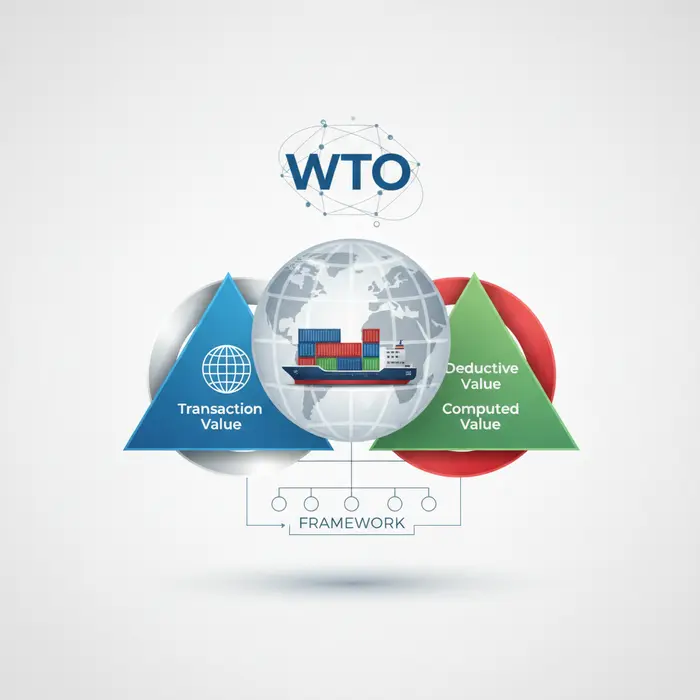
The World Trade Organization’s (WTO) Agreement on Customs Valuation, officially known as the Agreement on Implementation of Article VII of the General Agreement on Tariffs and Trade 1994 (GATT 1994), establishes a standardized framework for valuing goods. Prior to this agreement, various countries employed diverse and often arbitrary methods, leading to uncertainty, unfair competition, and barriers to trade. The WTO Agreement aimed to create a fair, uniform, and neutral system that promotes predictability and simplifies international commerce. Its cornerstone principle is the use of the transaction value customs valuation method, meaning the price actually paid or payable for the goods when sold for export to the country of importation, with certain adjustments. This method is preferred because it is objective and based on commercial realities, reflecting the true economic value of the goods. Only when the transaction value cannot be determined or accepted are other, hierarchical methods considered.
2. Why Accurate Valuation Matters for Import Duties & Compliance
The direct link between Customs Valuation Methods and a business’s bottom line cannot be overstated. The declared customs value forms the basis upon which import duties, value-added taxes (VAT), excise duties, and other charges are calculated. Even a small error in valuation can lead to substantial discrepancies in duties paid, potentially resulting in underpayment or overpayment.
For importers, inaccurate valuation poses significant Customs valuation compliance risks. Under-declaration can trigger customs audits, leading to severe penalties, interest charges, and retroactive duty assessments. In extreme cases, it can result in goods seizure, import privileges suspension, and legal prosecution for fraud. Conversely, consistent over-declaration, while avoiding penalties, means paying excessive duties, eroding profit margins, and making products less competitive in the market. Beyond financial implications, compliance issues can damage a company’s reputation, strain relationships with customs authorities, and complicate future import activities. Maintaining robust internal controls, diligent record-keeping, and a thorough understanding of valuation rules are essential to mitigate these risks and ensure smooth, cost-effective trade operations. Businesses seeking to navigate these complexities effectively often look for reliable resources on the various Customs Valuation Methods available.
3. Key Customs Valuation Methods Beyond Transaction Value
While the transaction value customs valuation method is the primary and preferred approach, the WTO Agreement provides a sequential hierarchy of alternative methods to be used when the transaction value cannot be reliably determined or is not applicable. This ensures that even in complex scenarios, a consistent and fair valuation can still be reached.
The alternative methods, in order of preference, are:
- Transaction Value of Identical Goods: The value is based on the transaction value of identical goods sold for export to the same country of importation at or about the same time, under similar commercial conditions.
- Transaction Value of Similar Goods: If identical goods are not available, the value is based on similar goods, which are goods that, although not alike in all respects, have like characteristics and component materials and perform the same functions, and are commercially interchangeable.
- Deductive Value Method: This method starts with the resale price of the imported goods (or identical/similar goods) in the country of importation, then deducts certain costs like commissions, profits, general expenses, and transport and insurance costs incurred after importation.
- Computed Value Method: This involves calculating the value based on the cost of production of the imported goods, including materials, manufacturing costs, profit, and general expenses. This method often requires access to the producer’s cost data, making it less frequently used.
- Fallback Method: As a last resort, if none of the preceding methods can be applied, customs authorities can use “reasonable means consistent with the principles and general provisions of the WTO Agreement.” This method offers flexibility but must be based on objective and quantifiable data.
Understanding this hierarchy is crucial for importers, as it dictates the fallback options available and helps anticipate how customs authorities might value goods when the straightforward transaction value method isn’t feasible. Ensuring the correct application of these methods is paramount for accurate Customs valuation impact on import duties and avoiding Customs valuation compliance risks.
The Primary Method: Transaction Value Customs Valuation
The process of determining the customs value of imported goods is a critical aspect of international trade, directly influencing the amount of import duties, taxes, and fees payable. Among the various Customs Valuation Methods available, the "Transaction Value" method stands as the cornerstone, globally recognized and preferred. This approach, established under the WTO Agreement on Customs Valuation, bases the value on the price actually paid or payable for the goods when sold for export to the country of importation. Its preference stems from its direct reflection of the commercial reality of the transaction, making it the most objective and straightforward method when applicable. Compliance with this method is crucial for avoiding significant Customs valuation compliance risks and ensuring accurate Customs valuation impact on import duties.
1. Defining ‘Price Actually Paid or Payable’
At the heart of the transaction value method is the concept of the ‘price actually paid or payable’. This isn’t merely the invoice price; it encompasses the total payment made or to be made by the buyer to or for the benefit of the seller for the imported goods. This payment can include direct payments, such as cash or wire transfers, as well as indirect payments, like the settlement of a debt owed by the seller. It’s important to note that this price must relate specifically to the imported goods themselves. The definition is broad to ensure all elements of value exchange between the buyer and seller related to the goods are captured. This forms the bedrock for calculating the initial transaction value customs valuation before any further adjustments are made. This robust definition is essential for preventing under-invoicing or other practices that could distort the true value and thereby reduce legitimate duty collections.
2. Common Adjustments (Additions & Deductions) to Transaction Value
While the ‘price actually paid or payable’ provides the starting point, the WTO Agreement mandates specific adjustments – both additions and deductions – to arrive at the final customs value. These adjustments ensure that all elements of value related to the sale of the goods are included, and conversely, elements unrelated or explicitly excluded by the Agreement are removed.
Additions to the Price Actually Paid or Payable: These are typically costs incurred by the buyer but not included in the invoice price, which contribute to the value of the imported goods. They include:
- Commissions and Brokerage Fees: (excluding buying commissions).
- Cost of Containers and Packing: Materials and labor associated with packaging the goods for export.
- Assists: The value of certain goods and services supplied directly or indirectly by the buyer, free of charge or at reduced cost, for use in the production of the imported goods (e.g., materials, components, tools, dies, molds, engineering, design work).
- Royalties and License Fees: Related to the imported goods that the buyer must pay, either directly or indirectly, as a condition of the sale.
- Proceeds of Subsequent Resale: Any part of the proceeds of any subsequent resale, disposal, or use of the imported goods that accrues directly or indirectly to the seller.
- Transport and Insurance Costs: Costs of transport and insurance to the port or place of importation (if not already included in the price).
Deductions from the Price Actually Paid or Payable: These are costs typically included in the invoice price but are explicitly excluded from the customs value by the Agreement. They include:
- Charges for transport and insurance after importation.
- Duties and taxes payable in the country of importation.
- Charges for construction, erection, assembly, maintenance, or technical assistance performed after importation for industrial plant, machinery, or equipment.
These adjustments are crucial for ensuring a uniform and fair application of customs valuation rules globally, minimizing Customs valuation compliance risks for importers.
3. Conditions for Transaction Value Acceptance
While the transaction value customs valuation method is preferred, its application is not unconditional. The WTO Agreement on Customs Valuation specifies several critical conditions that must be met for this method to be acceptable. If any of these conditions are not satisfied, customs authorities must then proceed to alternative valuation methods. These conditions are:
- No Restrictions on Disposition or Use: There should be no restrictions on the disposition or use of the goods by the buyer, other than restrictions imposed by law or public authorities, restrictions on the geographical area where the goods may be resold, or restrictions that do not substantially affect the value of the goods.
- No Conditions or Considerations: The sale or price must not be subject to conditions or considerations for which a value cannot be determined with respect to the goods being valued.
- No Subsequent Proceeds to Seller: No part of the proceeds of any subsequent resale, disposal, or use of the goods by the buyer should accrue directly or indirectly to the seller, unless an appropriate adjustment can be made.
- No Influence of Related Parties: If the buyer and seller are related, the transaction value can still be accepted, provided that the relationship did not influence the price. Customs administrations often scrutinize such transactions more closely, requiring additional evidence to demonstrate that the price approximates prices in arm’s length transactions for identical or similar goods. This is a significant area of potential Customs valuation compliance risk, requiring thorough documentation and justification.
Meeting these conditions is paramount for importers seeking to use the transaction value method, as failure to do so can lead to customs disputes, delays, and potentially higher import duties based on alternative, often less favorable, valuation methods. Understanding these nuances is key to navigating the complexities of global trade effectively.
Alternative Customs Valuation Methods: Beyond Transaction Value
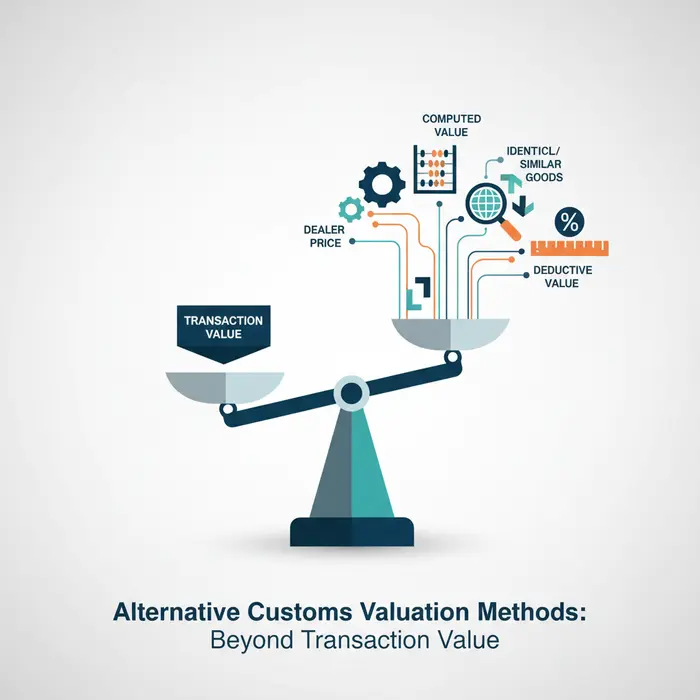
While the transaction value—the price actually paid or payable for the goods when sold for export—is the preferred and most frequently used basis for determining the customs value, there are situations where it cannot be applied. These instances often arise due to specific conditions, restrictions, or lack of verifiable data, making the transaction value customs valuation method unsuitable. In such cases, the WTO Agreement on Customs Valuation (also known as the GATT Valuation Code) prescribes a strict hierarchy of five alternative Customs Valuation Methods. Understanding these sequential methods is crucial for importers, ensuring compliance and accurately calculating duties, and mitigating potential Customs valuation compliance risks.
1. Deductive, Computed, and Fallback Methods Explained
When the transaction value cannot be determined, the WTO Agreement mandates a sequential application of alternative Customs Valuation Methods. These methods aim to arrive at a fair and consistent value, even without a direct sale price.
- Identical Goods Method: This method values the imported goods based on the transaction value of identical goods sold for export to the same country of importation at or about the same time as the goods being valued. For goods to be considered identical, they must be the same in all respects, including physical characteristics, quality, and reputation, produced in the same country by the same producer.
- Similar Goods Method: If no identical goods can be found, the valuation proceeds to similar goods. This method uses the transaction value of similar goods sold for export to the same country of importation at or about the same time. Similar goods are those which, although not alike in all respects, have similar characteristics and component materials, enabling them to perform the same functions and be commercially interchangeable. They must also be produced in the same country by the same producer.
- Deductive Value Method: When neither identical nor similar goods methods are applicable, the deductive method is used. This involves taking the unit price at which the imported goods, or identical or similar imported goods, are sold in the greatest aggregate quantity in the country of importation to unrelated purchasers, at or about the time of importation. From this price, deductions are made for commissions, profits and general expenses incurred in connection with sales in the importing country, costs of transport and insurance, and other associated costs incurred after importation, as well as any customs duties and other national taxes payable in the country of importation.
- Computed Value Method: If the deductive method also proves unfeasible, the computed value method is employed. This method calculates the value based on the cost of production of the imported goods. It comprises the cost or value of materials and fabrication or other processing employed in producing the imported goods, plus an amount for profit and general expenses, and the cost of all other expenses necessary to make the goods ready for export. This method typically requires access to the producer’s records, making it less commonly used due to data accessibility challenges.
- Fallback Method: As a last resort, if none of the preceding methods can be applied, the fallback method is used. This method provides flexibility, allowing for the determination of customs value using reasonable means consistent with the principles and general provisions of the WTO Agreement on Customs Valuation. It permits the use of valuation methods based on data available in the country of importation, with certain prohibitions against arbitrary or fictitious values.
2. The Order of Application: A Step-by-Step Guide to Other Methods
The WTO Agreement on Customs Valuation establishes a strict sequential order for these alternative methods, which is critical for ensuring fair and uniform application of Customs Valuation Methods globally. Importers must first attempt to use the transaction value. If that’s not possible, they must proceed through the alternative methods in the following order:
- Transaction Value of Identical Goods
- Transaction Value of Similar Goods
- Deductive Value Method
- Computed Value Method
- Fallback Method
An important flexibility within this hierarchy allows the order of the Deductive Value Method and the Computed Value Method to be reversed at the request of the importer. This concession recognizes that, in certain circumstances, an importer might have easier access to the necessary data for computing value than for determining the deductive value from sales in the importing country. However, this flexibility applies only to these two methods; all others must be applied strictly in sequence. Adhering to this order is vital for preventing Customs valuation compliance risks and ensuring regulatory integrity.
3. Impact on Import Duties and Compliance Challenges
The choice and correct application of Customs Valuation Methods directly and significantly impacts the calculation of import duties. Since duties are typically ad valorem (a percentage of the customs value), an incorrect valuation method or an improperly calculated value can lead to underpayment or overpayment of duties. This has direct financial implications for the importer and can lead to severe Customs valuation compliance risks.
Challenges include the difficulty in obtaining accurate data for identical or similar goods, especially for unique or proprietary products. For the deductive method, substantiating post-importation deductions can be complex, requiring meticulous record-keeping. The computed method demands transparent access to the producer’s cost data, which is often commercially sensitive. The fallback method, while offering flexibility, still requires values to be determined objectively and according to commercial principles. Misinterpretation or misapplication of these methods can result in penalties, audits, and delays in customs clearance. Therefore, a thorough understanding of these alternative Customs Valuation Methods and meticulous documentation is paramount for any importer engaging in international trade, safeguarding against financial penalties and ensuring smooth operations.
Customs Valuation’s Impact on Import Duties & Costs
Accurate customs valuation is not merely a bureaucratic hurdle; it is a foundational element that directly influences an importer’s financial health, supply chain stability, and overall competitiveness. The value declared for imported goods serves as the base upon which import duties, taxes, and other charges are calculated. Consequently, any misstep in this critical process can lead to significant cost discrepancies, potential penalties, and operational disruptions. For businesses engaged in global trade, understanding the nuances of Customs Valuation Methods is paramount to ensure compliance and cost predictability.
1.
Calculating Duty Liabilities and Other Taxes
The most immediate and direct customs valuation impact on import duties is evident in the calculation of duty liabilities. Most import duties, particularly ad valorem duties, are expressed as a percentage of the goods’ customs value. This means that a seemingly minor adjustment or miscalculation in the declared value can lead to substantial differences in the actual duty amount paid. For instance, if an importer declares a value that is 10% lower than the correct customs value for goods subject to a 15% duty rate, they might initially save on duties. However, if discovered, this could result in back-payment of duties, interest, and significant fines, far exceeding the initial ‘saving’.
Beyond import duties, customs valuation also impacts other taxes and charges. Value Added Tax (VAT) or Goods and Services Tax (GST), excise duties, and even some anti-dumping or countervailing duties are often calculated based on the customs value, sometimes including the initial duty amount. An inflated customs value, even if accidental, could lead to overpayment of these taxes, tying up valuable working capital. Conversely, an undervaluation, if detected, not only triggers retrospective payments but also undermines trust with customs authorities, potentially leading to stricter scrutiny on future shipments. Therefore, diligent and accurate valuation is key to precisely forecasting and managing these varied tax obligations.
2.
Hidden Costs & Supply Chain Implications of Valuation Choices
The financial ramifications of inaccurate customs valuation extend far beyond the direct duty and tax calculations. Importers often face a range of hidden costs and significant supply chain implications. When customs authorities dispute a declared value, shipments can be delayed, sometimes for weeks or even months, while investigations are conducted. These delays incur storage charges, demurrage fees, and potentially impact production schedules or market delivery times, leading to lost sales and damaged customer relationships. Furthermore, repeated discrepancies can flag an importer for more frequent and intensive inspections, adding layers of complexity and cost to every subsequent shipment.
The choice of valuation method and the rigor of its application can also profoundly affect a company’s reputation and its relationship with regulatory bodies. A history of non-compliance due to valuation errors can result in penalties, increased audit risks, and even loss of import privileges in severe cases. These factors disrupt the predictability of the supply chain, making inventory management and operational planning extremely challenging. For businesses operating on tight margins and just-in-time inventory systems, such disruptions can translate directly into substantial financial losses and operational inefficiencies that are far greater than the initial duty discrepancy.
3.
Mitigating Compliance Risks and Strategic Valuation
Navigating the complexities of customs valuation requires a proactive and strategic approach, focusing on mitigating customs valuation compliance risks. The global standard for customs valuation is enshrined in the WTO Agreement on Customs Valuation, which emphasizes the primary use of the “transaction value.” This method, often referred to as transaction value customs valuation, bases the customs value on the price actually paid or payable for the goods when sold for export to the country of importation, with certain adjustments for elements like commissions, packaging, and royalties. Understanding when and how to apply this method, or the five alternative methods when transaction value is not applicable (e.g., identical goods, similar goods, deductive, computed, or fallback methods), is crucial for compliance.
To minimize risks, importers should implement robust internal controls, maintain meticulous documentation of all transaction details, and ensure that their accounting practices align with customs valuation requirements. Engaging customs brokers or consultants with expertise in trade compliance can provide invaluable guidance, helping businesses accurately determine the customs value, prepare for potential audits, and navigate complex valuation scenarios, such as related-party transactions or goods with significant post-importation costs. By treating customs valuation as a strategic financial and compliance function, rather than just a procedural task, importers can safeguard against unforeseen costs, streamline their supply chains, and foster a more predictable and profitable international trade operation.
Navigating Customs Valuation Compliance Risks & Best Practices
In the dynamic landscape of global trade, precise customs valuation methods are not merely bureaucratic hurdles but critical components of a compliant and cost-effective supply chain. As we approach 2025, businesses must keenly address the potential pitfalls, severe penalties, and heightened audit risks associated with incorrect valuation. This section will delve into strategies for building robust compliance, ensuring your import operations remain smooth, transparent, and aligned with international trade regulations, particularly the WTO Agreement on Customs Valuation.

1. Common Valuation Mistakes & Potential Penalties
The foundation of customs duty assessment lies in correctly determining the customs value of imported goods. Errors in this complex process can lead to significant financial repercussions and reputational damage. One of the most common valuation mistakes is failing to accurately apply the primary method: transaction value customs valuation. Many importers mistakenly exclude elements that are legally required to be added to the price actually paid or payable, such as assists, royalties, licensing fees, selling commissions, and certain packaging costs. Conversely, some fail to deduct permissible charges like international freight and insurance when they are included in the invoice price.
Another prevalent pitfall is misclassifying related party transactions. When goods are sold between related parties, customs authorities scrutinize the transaction value more closely to ensure it was not influenced by the relationship. Failure to demonstrate that the relationship did not impact the price can result in the rejection of the transaction value and the application of alternative, often less favorable, customs valuation methods. Moreover, incorrect application of Incoterms can profoundly impact the declared value, as different Incoterms dictate what costs are included in the selling price for customs purposes.
The customs valuation impact on import duties is direct and substantial. Under-declaration of value, whether intentional or accidental, can lead to severe penalties. These can range from significant monetary fines, often calculated as a percentage of the underpaid duties, to interest charges on overdue amounts. In egregious cases, particularly those involving intent to defraud, importers may face criminal prosecution, seizure of goods, and loss of importing privileges. Furthermore, incorrect valuations can trigger extensive customs audits, consuming valuable company resources and disrupting operations. These audits often delve deep into accounting records, intercompany agreements, and transfer pricing policies, extending the compliance burden beyond the initial import declaration.
2. Building a Robust Compliance Strategy for Global Trade
To mitigate these customs valuation compliance risks, a proactive and multifaceted strategy is essential for 2025. The cornerstone of compliance is a thorough understanding and consistent application of the six WTO-defined customs valuation methods. While transaction value (Method 1) is the primary method, businesses must be prepared to justify its use or, if necessary, accurately apply the sequential alternative methods (transaction value of identical goods, transaction value of similar goods, deductive method, computed method, and “fall-back” method).
Key best practices include developing comprehensive internal policies and procedures for customs valuation. This involves clearly documenting how prices are determined, how adjustments for assists, royalties, and other dutiable charges are made, and how related-party transactions are handled to ensure they are at arm’s length. Regular training for all personnel involved in procurement, logistics, finance, and customs declarations is crucial to ensure everyone understands their role in maintaining compliance.
Leveraging technology, such as trade compliance software, can also significantly enhance accuracy and efficiency. These systems can help standardize data collection, automate calculations, and provide audit trails, reducing the likelihood of manual errors. Furthermore, conducting periodic internal audits or engaging external experts to review valuation practices can help identify weaknesses before they are flagged by customs authorities. Proactive engagement with customs authorities through binding rulings or advance valuation agreements can provide legal certainty for complex valuation scenarios, especially for unique products or intricate supply chains. For companies involved in global trade, aligning transfer pricing policies with customs valuation requirements is paramount, as these two areas, though distinct, often intersect and can lead to discrepancies if not harmonized. By implementing these strategies, businesses can not only avoid costly penalties but also streamline their import processes, fostering greater predictability and efficiency in their international operations.
Partner with Vietnam’s Leading Suppliers
Looking for reliable suppliers in Vietnam? Contact VietnamSuppliers.com today to connect with verified manufacturers and exporters across all industries.
—————————————
References
– WTO Agreement on Customs Valuation: https://www.wto.org/english/docs_e/legal_e/20-val_e.htm
– WTO Agreement on Customs Valuation: https://www.wto.org/english/docs_e/legal_e/20-val_e.htm
– :
– WTO Agreement on Customs Valuation: https://www.wto.org/english/docs_e/legal_e/20-val_e.htm
– WTO Agreement on Customs Valuation: https://www.wto.org/english/docs_e/legal_e/20-val_e.htm

