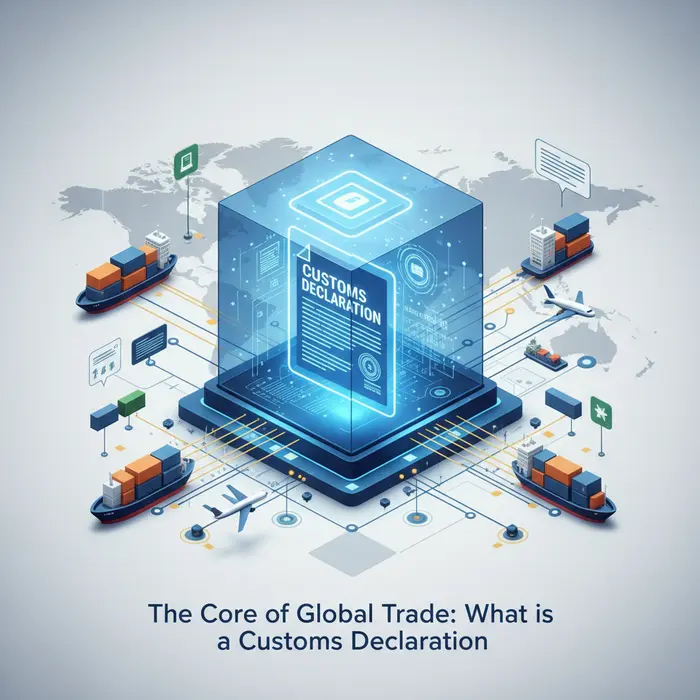
The Core of Global Trade: What is a Customs Declaration?
In the intricate ecosystem of international trade, goods traverse borders daily, connecting manufacturers, suppliers, and consumers across continents. Ensuring the smooth, lawful, and accountable movement of these goods hinges on a foundational document: the Customs Declaration. Far more than just paperwork, this declaration is the linchpin that allows customs authorities to monitor, regulate, and facilitate global commerce, playing an indispensable role in maintaining national security, public health, and economic stability.
Without a precise and truthful declaration, the orderly flow of goods would descend into chaos, leading to security risks, revenue losses, and significant delays for businesses. Understanding its purpose and requirements is crucial for anyone involved in international import or export activities.
1. Definition & Purpose
At its heart, a Customs Declaration is an official statement submitted to customs authorities detailing the goods being imported or exported. It serves as a formal notification, providing all necessary information about the consignment to enable customs officials to assess duties, ensure compliance with trade regulations, and gather vital statistical data. Whether you’re dealing with an export customs declaration for goods leaving your country or navigating import customs declaration requirements for items entering, the principle remains the same: transparency and accuracy are paramount.
The primary purposes of this mandatory document include:
- Control and Security: It allows customs to verify the nature, quantity, and origin of goods, preventing the trafficking of prohibited items (e.g., drugs, weapons, counterfeit goods) and ensuring adherence to safety and environmental standards.
- Revenue Collection: Customs declarations form the basis for calculating and collecting tariffs, taxes (like VAT or GST), and other charges due on imported goods.
- Trade Statistics: Data from these declarations provides governments with valuable insights into global trade patterns for economic analysis and policy formulation.
- Compliance Verification: It ensures goods comply with national and international laws related to health, safety, intellectual property, and environmental protection.
2. Legal Obligation for Trade
Submitting a Customs Declaration is not merely an administrative formality; it is a fundamental legal obligation enshrined in national laws and international agreements governing cross-border trade. Every country exercises sovereign control over its borders, and the declaration is the primary tool for enforcing this control. Non-compliance, whether due to omission, inaccuracy, or deliberate misrepresentation, can lead to severe penalties, including fines, seizure of goods, significant delays, and even criminal prosecution for serious offenses.
The necessity of the customs declaration process is reinforced by international frameworks like the World Trade Organization (WTO)’s Trade Facilitation Agreement, which aims to streamline customs procedures while maintaining their effectiveness. This global consensus underscores that while trade should be facilitated, it must also be regulated to protect national interests and ensure fair competition. Therefore, every shipment typically requires a declaration to legally cross an international frontier.
3. Key Information Included in a Declaration
While specific details may vary, a standard customs declaration form typically requires comprehensive information. Key elements commonly found in a declaration include:
- Shipper and Consignee Details: Full names, addresses, and identification numbers of both the sender and recipient.
- Description of Goods: A detailed and accurate description of each item, including its common name, brand, model, and crucially, its Harmonized System (HS) code. The HS code is vital for determining applicable duties and regulations.
- Value and Currency: The commercial value of the goods, declared in the appropriate currency, which forms the basis for duty and tax assessment.
- Quantity and Weight: The precise quantity of items and their net and gross weight.
- Country of Origin and Destination: The country where the goods were manufactured or produced, and their ultimate destination.
- Mode of Transport: Details of how the goods are being transported (e.g., air cargo, sea freight, road, rail).
- Customs Regime: Indicating the purpose of the import or export (e.g., import for free circulation, temporary admission).
- Supporting Documents: Reference to accompanying documents like commercial invoices, packing lists, bills of lading, and certificates of origin.
In conclusion, the Customs Declaration is far more than a bureaucratic hurdle; it is a critical instrument that underpins the legality, security, and efficiency of global trade. By providing essential information, it empowers customs authorities to perform their multifaceted role, safeguarding borders while simultaneously facilitating the seamless flow of legitimate commerce across the world.
Mastering Your Export Customs Declaration: Key Requirements
Navigating international trade efficiently hinges on meticulous attention to detail, especially concerning the Customs Declaration. An export customs declaration isn’t merely a bureaucratic step; it’s a critical document submitted to customs authorities, detailing goods shipped out of a country. Its accurate and timely submission is paramount for smooth transit, preventing costly delays, and safeguarding your business from penalties. This declaration facilitates customs control, ensures accurate trade statistics, and verifies compliance with various export regulations, including licensing and trade agreements. Therefore, understanding the necessary information, common forms, and critical compliance considerations is essential for any exporter.
1. Documents Required for Export
The foundation of an accurate export customs declaration rests on robust supporting documentation. These documents provide the factual basis for the declaration, allowing customs authorities to verify the information. Key documents typically include:
- Commercial Invoice: This fundamental document details the transaction, specifying seller/buyer, a comprehensive description of goods, quantity, value, currency, payment terms, and Incoterms.
- Packing List: Provides specific details for each package, including contents, net and gross weights, dimensions, and package count. Essential for customs to reconcile physical goods with declared information.
- Bill of Lading (B/L) or Air Waybill (AWB): These are contracts between the shipper and carrier, serving as a receipt for goods and specifying the destination and consignee. They confirm goods have been received for shipment.
- Export License/Permit: Required for certain controlled goods (e.g., dual-use items, military goods, high-technology) before shipment, issued by the relevant government authority.
- Certificate of Origin (CoO): Certifies the country of manufacture or production. Crucial for preferential tariffs under trade agreements or for compliance with specific import regulations.
- Other Supporting Documents: Depending on the goods, health certificates (food), phytosanitary certificates (plants), inspection reports, or chemical analysis reports may be required.
Meticulously gathering and reviewing these documents before preparing your export customs declaration is a critical first step towards compliance.
2. Common Export Declaration Forms
While the core information needed for an export customs declaration remains consistent, the specific forms and electronic systems vary by country or economic bloc. Each aims to capture essential data for customs clearance and trade statistics. Common examples include:
- Single Administrative Document (SAD): Extensively used within the European Union and several other nations, the SAD (or its electronic counterpart) is a multi-purpose document for both import and export declarations. It captures extensive data, from consignor/consignee details to commodity codes (HS codes), value, weight, and origin.
- Automated Export System (AES): In the United States, exporters typically file export information electronically through the AES, managed via the U.S. Census Bureau’s ACE portal. This system is vital for collecting U.S. export trade statistics and enforcing export controls.
- Country-Specific Forms: Many countries employ their own unique forms or electronic platforms. Regardless of the format, these forms consistently request crucial details like the goods’ Harmonized System (HS) code, declared value, country of origin, destination, identities of consignor and consignee, and transport specifics. While this discussion centers on export, import customs declaration requirements follow analogous principles, adapted to the importing country’s specific regulations and data needs.
The global shift towards electronic filing systems simplifies the customs declaration process and enhances data accuracy. Exporters must be proficient with their country’s specific electronic filing requirements.
3. Avoiding Penalties in Export Declaration
Errors or omissions in an export customs declaration can trigger severe consequences, including administrative penalties, fines, shipment delays, goods seizure, or even criminal charges. To mitigate these risks and ensure a seamless customs declaration process, consider the following compliance best practices:
- Accuracy and Completeness: This is paramount. Ensure all data—HS codes, declared value, quantities, and descriptions—is 100% accurate. Incorrect HS codes lead to misclassification and fines; undervaluation is a serious offense.
- Timeliness: Declarations must adhere to prescribed deadlines. Late submissions incur penalties and shipment delays.
- Understanding Regulations: Stay abreast of evolving export control regulations, sanctions lists, and trade agreements. Ignorance is not a defense. This includes regulations of your exporting country, destination, and transit nations.
- Robust Record Keeping: Maintain meticulous records of all export transactions (invoices, packing lists, transport documents, licenses, CoOs, customs declarations) for the legally required period (often several years) for audits and dispute resolution.
- Leveraging Expertise: For complex shipments or new exporters, engaging experienced customs brokers or freight forwarders is highly advisable. Their expertise ensures proper documentation and accurate declaration completion.
- Internal Compliance Programs: Implement strong internal programs, including staff training, to minimize errors and cultivate a compliance-focused culture.
By diligently adopting these practices, businesses can significantly reduce risks, optimize export operations, and build a reputation as a reliable, compliant international trader. Proactive compliance is the strongest defense against global customs complexities.
Decoding the Customs Declaration Form: A Practical Guide
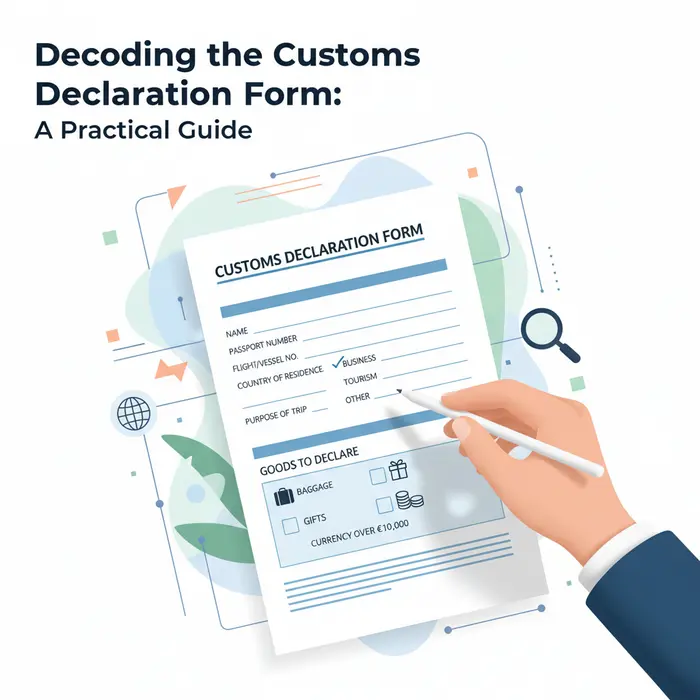
The journey of goods across international borders hinges on one critical document: the Customs Declaration Form. This indispensable piece of paperwork, whether digital or physical, serves as a formal statement to customs authorities about the goods being imported or exported. An accurately completed form is paramount, ensuring smooth transit, correct duty assessment, and compliance with intricate international trade regulations. Conversely, errors or omissions can lead to significant delays, hefty fines, and even goods seizure. This practical guide will walk you through the complexities of a typical customs declaration form, illuminating essential fields, common pitfalls, and best practices for accurate completion, whether you’re dealing with an export customs declaration or navigating import customs declaration requirements.
Understanding Form Sections
A standard customs declaration form is typically divided into several key sections, each requiring precise information. Familiarity with these sections is the first step toward flawless completion.
- Sender/Exporter Details: This section requires the full legal name, address, and often a tax identification number (like an EORI number in the EU or an EIN in the US) of the party sending the goods. Accuracy here is crucial for accountability.
- Recipient/Importer Details: Similar to the sender, the consignee’s full name, address, and identification number are required. Verify these details meticulously to avoid misdeliveries or hold-ups at the destination.
- Goods Description: This is arguably the most critical section. You must provide a clear, concise, and specific description of each item. Avoid vague terms like “parts” or “samples.” Instead, specify “automotive engine parts” or “textile fabric samples, 100% cotton.” Include brand names, models, and serial numbers where applicable.
- Quantity and Unit of Measure: State the precise quantity of each item (e.g., 10 units, 20 kg, 50 meters) and the corresponding unit.
- Value: Declare the accurate commercial value of the goods, typically the ex-works or FOB value, in the specified currency. Undervaluing goods is a serious offense that can lead to severe penalties.
- Country of Origin: Indicate where each item was manufactured or produced, not just where it was shipped from. This information is vital for determining tariffs, trade agreements, and embargoes.
- Harmonized System (HS) Codes: These international Harmonized System (HS) codes are numerical classifications for traded products. Correct HS codes are essential for duty calculation and compliance. Misclassification is a common pitfall that can result in incorrect duties, delays, or penalties. Professional assistance or dedicated online tools should be used to determine the correct codes for your products.
- Weight: Provide both gross and net weight for the shipment.
- Reason for Export/Import: Specify the purpose of the shipment (e.g., commercial sale, gift, return, repair, sample).
- Terms of Sale (Incoterms): Indicate the agreed-upon Incoterm (e.g., EXW, FOB, CIF, DDP), which defines the responsibilities of buyer and seller regarding costs and risks.
- Declaration Statement: This section requires the exporter/importer to attest to the truthfulness and accuracy of the information provided, often with a signature and date.
Digital vs. Paper Forms
The landscape of the customs declaration process has significantly evolved with technological advancements. While traditional paper forms are still used, particularly for smaller shipments or in certain regions, digital platforms have become the norm for most international trade.
Digital Forms (e-Customs): Most major economies now utilize electronic customs systems (e.g., AES in the US, CHIEF/CDS in the UK, various national single windows). These systems offer numerous advantages:
- Increased Efficiency: Faster processing times and reduced administrative burden.
- Reduced Errors: Built-in validation checks often flag common mistakes before submission.
- Improved Compliance: Easier access to updated regulations and tariff information.
- Enhanced Data Sharing: Seamless integration with other logistics and supply chain systems.
- Accessibility: Allows declarations to be filed remotely and at any time.
However, transitioning to digital systems can present challenges, including the need for specialized software, user training, and reliable internet access. It’s crucial to be proficient with the specific digital platform required by your destination country or logistics partner.
Paper Forms: For certain postal services, personal effects, or shipments to countries with less developed digital infrastructure, paper forms like the CN22 or CN23 (for postal items) are still prevalent. When completing a paper form, legibility and neatness are paramount, as handwritten errors or illegible entries can cause substantial delays.
Tips for Accurate Data Entry
Accuracy in completing your customs declaration is not merely a formality; it’s a legal obligation with significant implications for your business and its reputation. Follow these best practices to minimize risks:
- Be Specific, Not Vague: Always provide detailed descriptions. Instead of “clothing,” write “Men’s cotton t-shirts, short sleeve, size M.”
- Verify HS Codes: Utilize official customs websites, tariff databases, or consult with a customs broker to ensure you are using the correct Harmonized System (HS) codes. Incorrect codes are a leading cause of customs delays and penalties.
- Declare True Value: Always state the actual transaction value of the goods. Deliberately misrepresenting the value is a form of fraud and can lead to severe legal and financial repercussions.
- Understand Incoterms: Clearly define and understand the Incoterm agreed upon with your trading partner. This dictates who is responsible for insurance, freight, and customs clearance costs.
- Proofread Meticulously: Double-check every field, especially names, addresses, quantities, and values. Even a single typo can lead to significant issues.
- Keep Records: Maintain copies of all customs declarations, invoices, packing lists, and supporting documentation for at least the legally required period in your country (often 5-7 years). These records are vital for audits or inquiries.
- Seek Expert Advice: If you are unsure about any aspect of the import customs declaration requirements or the process, consult with a licensed customs broker or freight forwarder. Their expertise can save you time, money, and potential legal troubles.
Mastering the customs declaration form is an essential skill for anyone involved in international trade. By understanding its sections, adapting to digital platforms, and adhering to best practices for data entry, you can ensure a smoother, more compliant, and ultimately more successful global supply chain.
Import Customs Declaration Requirements & Compliance for 2025
Navigating the complexities of import customs declarations is crucial for businesses engaged in international trade. As global trade dynamics evolve, understanding the specific requirements for import customs declarations, including necessary documentation, robust valuation methods, and the correct calculation of duties and taxes, becomes paramount for compliance in 2025 and beyond. A well-executed Customs Declaration not only ensures smooth clearance but also mitigates risks of delays, penalties, and reputational damage. This section delves into the intricate process, providing a comprehensive guide to mastering your import customs declaration requirements and ensuring seamless global logistics.
1. Essential Import Documentation
The foundation of any successful import customs declaration lies in the accuracy and completeness of your documentation. Without the correct papers, your goods face potential delays, scrutiny, or even seizure. Key documents typically required for an export customs declaration and subsequent import include:
- Commercial Invoice: This document details the transaction between the exporter and importer, listing goods, quantities, prices, and terms of sale (Incoterms). It’s critical for valuation and duty calculation.
- Packing List: Provides details about the contents of each package, including weight, dimensions, and markings, aiding physical inspection and cargo handling.
- Bill of Lading (B/L) or Air Waybill (AWB): Serves as a contract of carriage, receipt for goods, and document of title (for B/L). It’s essential for proving ownership and facilitating release by the carrier.
- Certificate of Origin (COO): Declares the country where the goods were produced. This is crucial for determining eligibility for preferential tariffs under free trade agreements (FTAs) or for applying specific import restrictions.
- Import Licenses/Permits: For certain regulated goods (e.g., agricultural products, pharmaceuticals, chemicals, electronics), specific licenses or permits from government agencies may be mandatory.
- Customs Value Declaration: A form often required by customs authorities to formally declare the transaction value of the imported goods.
Ensuring that all these documents are consistent with each other and accurately reflect the shipment is the first critical step in the customs declaration process.
2. Calculating Duties & Taxes
Accurately calculating duties and taxes is a core component of import customs declaration compliance. Incorrect calculations can lead to penalties, audits, and delays. The primary factors influencing these calculations are:
- Harmonized System (HS) Code: Every product traded internationally is classified under a specific HS Code. This code determines the applicable duty rate and any associated regulations. It is imperative to correctly classify your goods to avoid misdeclaration.
- Customs Value: Duties are typically calculated as a percentage of the declared customs value of the goods (ad valorem duties). As discussed in the next section, determining this value correctly is key.
- Country of Origin: The origin dictates whether preferential tariff rates apply under FTAs or if anti-dumping/countervailing duties are imposed.
- Duty Rates: These rates vary widely based on the HS Code and country of origin. They can include Most Favored Nation (MFN) rates, preferential rates, or specific duties (e.g., per unit weight or volume).
- Other Taxes: Besides import duties, goods may be subject to Value Added Tax (VAT), Goods and Services Tax (GST), excise taxes (for specific products like alcohol or tobacco), or other local levies. These are often calculated on the sum of the customs value, duties, and sometimes even freight and insurance costs.
Businesses must stay informed about changes in tariff schedules, tax rates, and trade agreements to ensure precise duty and tax computations for every customs declaration form.
3. Import Valuation Methods Explained
The method used to determine the customs value of imported goods directly impacts the amount of duties and taxes payable. The World Trade Organization (WTO) Agreement on Customs Valuation sets out a hierarchy of methods, with the transaction value method being the most common and preferred. Understanding these methods is vital for accurate import customs declaration requirements:
- Transaction Value Method: This is the primary method, based on the price actually paid or payable for the goods when sold for export to the country of importation. Certain adjustments may be added to this price, such as commissions, packing costs, and the cost of certain goods and services supplied by the buyer free of charge or at a reduced cost (e.g., tooling, design work). Deductions may also apply for elements like post-importation charges or duties and taxes.
- Alternative Methods (in hierarchical order): When the transaction value cannot be determined or accepted (e.g., due to relationship between buyer and seller affecting price, or if the sale isn’t for export), customs authorities will move down a hierarchy of alternative methods:
- Transaction Value of Identical Goods: Based on the transaction value of identical goods sold for export to the same country of importation at or about the same time.
- Transaction Value of Similar Goods: Similar to the above, but for goods that are similar in characteristics and components, perform the same functions, and are commercially interchangeable.
- Deductive Method: Based on the unit price at which the imported goods, or identical or similar imported goods, are sold in the greatest aggregate quantity to unrelated persons in the country of importation, with deductions for post-importation costs (commissions, transport, insurance, duties, taxes, profit, and general expenses).
- Computed Method: Based on the sum of the cost of production (materials, fabrication, profit, general expenses, etc.).
- Fallback Method: If none of the above methods can be applied, customs authorities use reasonable means consistent with the principles and general provisions of the WTO Valuation Agreement.
Businesses must maintain meticulous records and understand the nuances of each method to ensure their declared customs value is justifiable and compliant, preventing potential disputes with customs authorities.
Your Step-by-Step Customs Declaration Process Explained
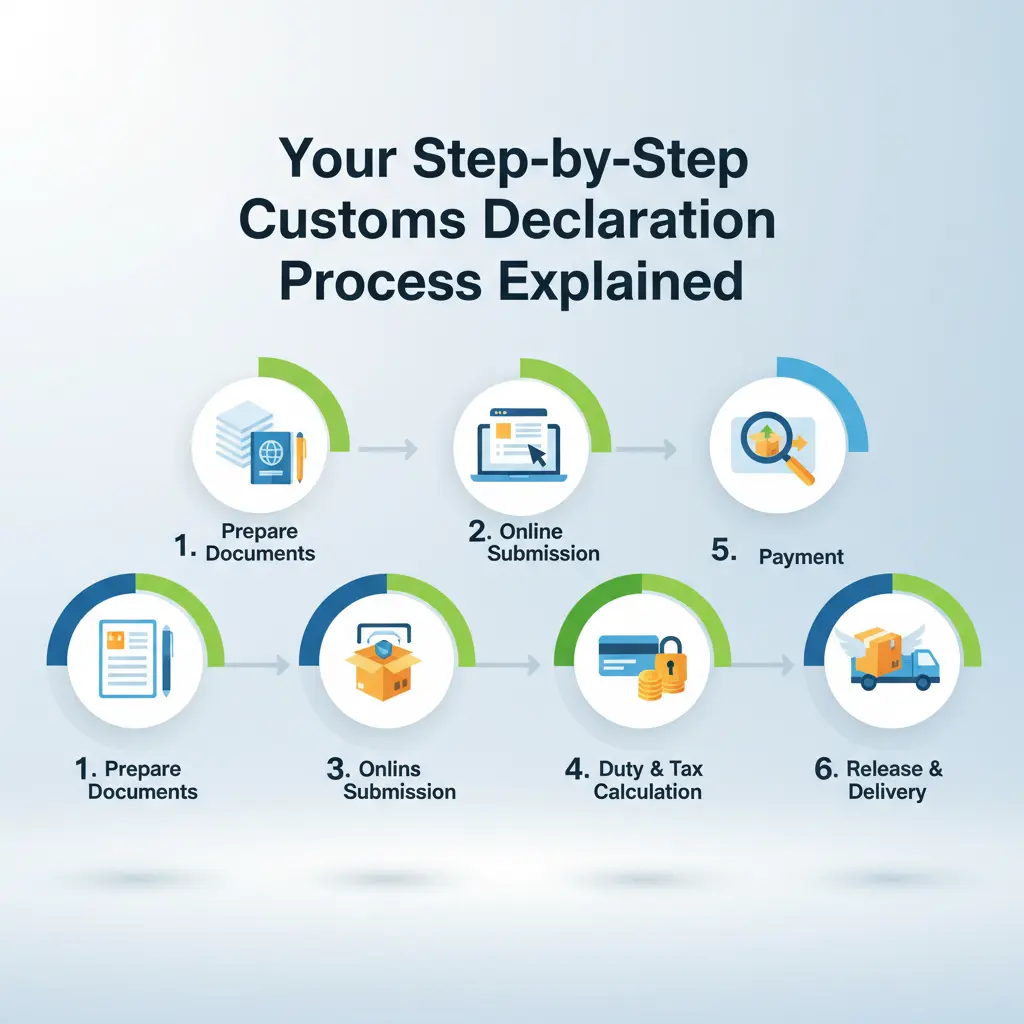
Navigating the complexities of international trade requires a precise and compliant approach to customs declarations. Whether you’re importing goods into a new market or exporting products globally, understanding the intricate customs declaration process is paramount for seamless logistics, avoiding delays, and mitigating potential penalties. This comprehensive guide breaks down the journey, from initial preparation to post-declaration scrutiny, ensuring you’re equipped for efficient trade.
1. Pre-Declaration Preparation
The foundation of a successful customs declaration lies in meticulous preparation. This phase is critical to prevent errors that could lead to customs inquiries, delays, or even rejection of your shipment.
- Document Gathering: Compile essential trade documents, including the commercial invoice, packing list, bill of lading or air waybill, certificate of origin, and any required licenses or permits. Ensure all information aligns across these documents.
- Harmonized System (HS) Code Classification: Correctly classifying your goods with the appropriate HS Code is non-negotiable. This international standardized system determines applicable duties, taxes, and import/export regulations. Misclassification can result in incorrect duty payments or penalties. Resources like the World Customs Organization’s HS Nomenclature are invaluable for accurate classification.
- Valuation of Goods: Declare the correct customs value of your goods, typically based on the transaction value. This value is crucial for calculating duties and taxes. Be aware of any specific valuation methods required by the importing country.
- Understanding Import/Export Requirements: Familiarize yourself with specific import customs declaration requirements for the destination country and export customs declaration rules for the country of origin. This includes understanding preferred trade agreements, quotas, or specific product standards.
- Choosing the Right Customs Procedure: Determine if your shipment falls under permanent import/export, temporary admission, transit, or a special economic procedure. Each has distinct requirements and documentation.
2. Submission & Approval Stages
Once all preparatory steps are complete, the actual submission of the customs declaration begins. This stage involves formal communication with the customs authorities, often facilitated by technology or specialized intermediaries.
- Electronic Submission: Most modern customs administrations utilize electronic data interchange (EDI) systems, requiring businesses or their customs brokers to submit the customs declaration form electronically. This streamlines the process and speeds up processing times.
- Role of Customs Brokers: For many businesses, engaging a licensed customs broker is highly recommended. Brokers possess expertise in local regulations, HS classification, and electronic submission protocols, minimizing errors and ensuring compliance.
- Customs Review and Risk Assessment: Upon submission, customs authorities review the declaration and accompanying documents. They employ risk management systems to identify shipments requiring further scrutiny. Shipments may be assigned different “channels” – green (cleared without physical inspection), yellow (documentary check required), or red (physical inspection required).
- Duty and Tax Payment: If applicable, duties, value-added tax (VAT), excise taxes, and other levies must be paid. This can often be done electronically, through deferred payment accounts, or directly at the time of clearance.
- Release of Goods: Once the declaration is approved, duties/taxes are settled, and any inspections are completed satisfactorily, customs will authorize the release of the goods for import or export.
3. Post-Declaration Procedures & Audits
The customs journey doesn’t necessarily end with the release of goods. Post-declaration responsibilities and potential audits are crucial for long-term compliance and risk management.
- Record Keeping: Importers and exporters are legally obliged to maintain comprehensive records of their customs declarations and supporting documents for a specified period (often 3-7 years, depending on the jurisdiction). This includes commercial invoices, transport documents, payment records, and communication with customs.
- Post-Clearance Audits: Customs authorities frequently conduct post-clearance audits to verify the accuracy of declarations made months or even years prior. These audits can involve reviewing financial records, internal controls, and documentation to ensure declared values, classifications, and origins were correct. Discrepancies found during an audit can lead to retrospective duty payments, interest charges, and penalties.
- Managing Adjustments and Refunds: If an error is discovered in a previous declaration (e.g., overpayment of duties due to incorrect classification), businesses may be able to file for an amendment or refund. Conversely, underpayments will require corrective action and potential penalties.
- Strategies for Efficient Clearance: To streamline the entire customs declaration process, focus on robust internal procedures, continuous staff training, investing in compliance software, and fostering strong relationships with reliable customs brokers and logistics providers. Proactive compliance is key to avoiding costly disruptions.
Mastering the customs declaration process is more than just a bureaucratic hurdle; it’s a strategic component of global trade. By understanding each step, from careful preparation to post-clearance vigilance, businesses can navigate international borders with confidence and efficiency.
Partner with Vietnam’s Leading Suppliers
Looking for reliable suppliers in Vietnam? Contact VietnamSuppliers.com today to connect with verified manufacturers and exporters across all industries.
—————————————
References
– WTO Trade Facilitation Agreement: https://www.wto.org/english/thewto_e/what_e/tif_e/tf_e.htm
– WTO Trade Facilitation Agreement: https://www.wto.org/english/tratop_e/tradfa_e/tradfa_e.htm
– Harmonized System (HS) codes: https://www.wcoomd.org/en/topics/nomenclature/instrument-and-tools/hs_handbook.aspx
– WTO Valuation Agreement: https://www.wcoomd.org/en/topics/valuation/overview/valuation-agreement.aspx
– World Customs Organization’s HS Nomenclature: https://www.wcoomd.org/en/topics/nomenclature/instrument-and-tools/hs-nomenclature-2022-edition.aspx