
What is a Customs Bill of Entry?
In the intricate world of international trade, numerous documents facilitate the seamless movement of goods across borders. Among the most crucial is the Customs Bill of Entry, a document that serves as the cornerstone for import operations. This section delves into defining the Customs Bill of Entry, outlining its core purpose, and explaining its critical legal significance in international trade and import operations. Understanding this document is vital for importers, customs brokers, and anyone involved in global supply chains, as it dictates the legal entry of goods into a country and the assessment of applicable duties and taxes.

1. Definition and Importance in Global Trade
A Customs Bill of Entry is a legal document filed by an importer or their authorized customs broker with the customs authorities of the importing country. It essentially serves as a declaration of the goods being imported, providing comprehensive details required for customs assessment and clearance. This document typically includes critical information such as the description of goods, their quantity, value, country of origin, destination, the name and address of the importer, and applicable tariff headings under the Harmonized System (HS) code. Its core purpose is to notify customs officials about the incoming consignment, allowing them to verify the legitimacy of the import, calculate applicable duties and taxes, and ensure compliance with all trade regulations.
For international trade, the Customs Bill of Entry is paramount. It’s a mandatory part of the customs clearance documents list, without which goods cannot legally enter the domestic market. Its importance extends beyond mere documentation; it facilitates trade by providing transparency and accountability, ensuring that all imported goods are properly categorized and assessed. By accurately detailing the shipment, it helps prevent smuggling, enforce trade policies, and protect domestic industries from unfair competition. In essence, it is the official gateway through which foreign goods gain legal entry into a sovereign territory, making it indispensable for lawful and efficient global commerce.
2. Legal Basis and Regulatory Framework
The legal significance of a Customs Bill of Entry cannot be overstated. It is a statutory declaration that binds the importer to the truthfulness and accuracy of the information provided. Submitting a false or inaccurate Bill of Entry can lead to severe penalties, including fines, seizure of goods, and even criminal prosecution, underscoring its legal weight. Each country’s customs laws and regulations mandate the filing of this document, outlining specific procedures, formats, and deadlines for its submission. These regulations are typically rooted in national customs acts, often aligning with international agreements and conventions facilitated by bodies like the World Customs Organization (WCO).
The Bill of Entry filing process is a crucial step in ensuring compliance with a nation’s trade policy, security measures, and fiscal objectives. It forms the legal basis upon which import duties, taxes, and other levies are assessed. The information declared in the Bill of Entry is cross-referenced with other shipping documents, such as the Commercial Invoice, Packing List, and Bill of Lading, to ensure consistency and prevent fraud. This stringent regulatory framework ensures that customs authorities have a comprehensive and legally sound record of all goods entering their jurisdiction, enabling effective enforcement of import restrictions, quotas, and quality standards.
3. Role in Import Clearance and Data Recording
The primary function of the Customs Bill of Entry lies in its central role in the import clearance process. Once filed, customs officials review the document to assess the applicable import duty calculation, excise duties, countervailing duties, anti-dumping duties, and other taxes. Based on the declared value, classification, and origin of goods, the customs system calculates the total financial liability of the importer. Upon payment of these duties and successful verification of all submitted documents, customs grants clearance, allowing the goods to be released from the customs bonded area.
Furthermore, the Bill of Entry is a vital tool for data recording and analysis. It provides governments with invaluable statistics on trade volumes, types of goods imported, and their origins, which are essential for economic planning, policy formulation, and international trade negotiations. While it shares some commonalities with a Bill of Lading – both being critical shipping documents – their purposes differ significantly. A Bill of Lading is primarily a contract between the shipper and the carrier, a receipt for goods, and a document of title. In contrast, the Bill of Entry is a declaration to customs authorities, specifically for duty assessment and regulatory compliance. Understanding this distinction, and the overall importance of the Customs Bill of Entry, is fundamental for any entity engaged in international import activities, ensuring legal compliance and smooth operational flow.
The Customs Bill of Entry Filing Process
Navigating international trade efficiently requires a solid understanding of customs procedures. The Customs Bill of Entry is a pivotal document, serving as a formal declaration by an importer regarding goods entering the country. This declaration provides comprehensive details of the imported cargo, essential for duty assessment, statistical record-keeping, and compliance with national trade regulations. This section offers a step-by-step guide to preparing and submitting the Bill of Entry, covering prerequisites, the submission procedure, and common challenges faced by importers.
Pre-requisites and Documentation Gathering
Before initiating the Bill of Entry filing process, importers must gather a range of essential documents and meet specific criteria. The accuracy and completeness of these documents are crucial for a smooth customs clearance process. Key items on the customs clearance documents list include:
- Commercial Invoice: Detailing goods’ value, quantity, and buyer/seller information.
- Packing List: Providing a detailed breakdown of package contents, crucial for inspection.
- Bill of Lading (sea) or Air Waybill (air): This document acts as a contract of carriage and receipt. It’s important to differentiate Bill of Entry vs Bill of Lading; the latter is for transport, while the former is the customs declaration upon arrival.
- Certificate of Origin (COO): Verifying the goods’ country of production, which can impact duty rates.
- Import License/Permit: Required for specific regulated goods (e.g., chemicals, pharmaceuticals).
- Insurance Certificate: Documenting transit insurance coverage.
Importers must also possess a valid Importer-Exporter Code (IEC) and ensure their customs broker (if used) has necessary authorizations. Any discrepancy or missing document can lead to significant delays and penalties.
Step-by-Step Filing Procedure
Once all prerequisite documents are in order, the actual Bill of Entry filing process begins. This procedure, whether handled directly by the importer or through a licensed customs broker, typically follows these stages:
- Document Verification: All gathered documents are cross-referenced for consistency and accuracy to prevent discrepancies.
- Data Entry and Declaration: Information from the commercial invoice, packing list, Bill of Lading, etc., is entered into the customs system. This includes the importer’s IEC, Harmonized System (HS) Code, goods description, quantity, value, country of origin, and port of discharge.
- Import Duty Calculation: Based on the declared value, HS Code, and applicable tariffs, the system or customs officer performs the import duty calculation. Duties can include basic customs duty, anti-dumping duty, and various cess. Importers should be familiar with prevailing tariff rates and trade agreements for potential concessions.
- Submission of Bill of Entry: The prepared Bill of Entry, with supporting documents, is submitted to customs authorities, usually electronically.
- Assessment by Customs: Customs officials review the submission, assessing declared value, classification, and duty calculation. They may query the importer for clarification.
- Duty Payment: After assessment approval, the importer or agent pays the calculated duties and taxes.
- Customs Clearance: Upon successful payment and satisfactory assessment, customs grants clearance, allowing goods to be moved.
Proactive communication and adherence to regulatory guidelines are paramount throughout this process.
Submission Channels (Electronic vs. Manual)
The method of submitting a Customs Bill of Entry has largely transitioned to electronic platforms, enhancing efficiency and transparency. While some smaller ports may still allow manual submissions, the global trend strongly favors digital channels.
Electronic Submission: Most countries now use sophisticated electronic data interchange (EDI) systems, allowing importers or their customs brokers to submit the Bill of Entry and supporting documents online. Benefits include:
- Speed and Efficiency: Faster processing, reducing port dwell time.
- Accuracy: Built-in validation checks minimize errors.
- Accessibility: 24/7 submission from anywhere.
- Transparency: Real-time tracking of Bill of Entry status.
For businesses involved in international trade, understanding the specific electronic platforms of target import countries is crucial. For instance, knowing the intricacies of the Customs Bill of Entry process in regions like Southeast Asia can streamline operations considerably. Digital copies of all documents should be ready for upload.
Manual Submission: This involves physically presenting paper copies to a customs office. It’s increasingly rare for routine imports, typically reserved for complex cases, system outages, or regions with less developed digital infrastructure. Manual processing is slower, more error-prone, and requires significant logistical coordination.
Regardless of the channel, the core requirement remains: a truthful, accurate, and complete declaration of imported goods for legal compliance and smooth trade facilitation.
Essential Documents for Customs Clearance
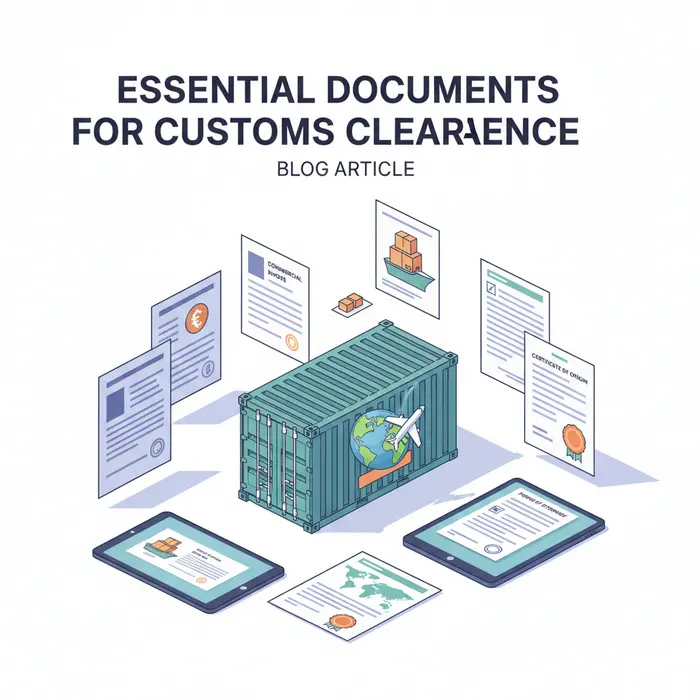
Navigating the complexities of international trade demands meticulous attention to detail, especially when it comes to customs clearance. The Customs Bill of Entry is the cornerstone document for importers, serving as a legal declaration submitted to customs authorities to initiate the clearance process. However, the Bill of Entry itself is just one piece of a larger puzzle. To ensure a smooth, compliant, and efficient customs clearance process, a comprehensive suite of supporting documents must be filed alongside it. These documents are crucial for accurate classification of goods, proper import duty calculation, and verifying the legality and safety of the imported items. Understanding and preparing this customs clearance documents list in advance can prevent delays, penalties, and costly demurrage charges.
1. Commercial Invoice and Packing List
These two documents are fundamental for any import shipment and are among the first items customs officials scrutinize. The Commercial Invoice acts as the primary record of the transaction between the exporter and importer. It contains critical information such as the names and addresses of the buyer and seller, a detailed description of the goods, their quantity, unit price, total value, currency, terms of sale (Incoterms), and payment terms. This invoice is indispensable for customs authorities to determine the assessable value of the goods, which directly impacts the import duty calculation and applicable taxes. Any discrepancy here can lead to revaluation, delays, or fines during the Bill of Entry filing process.
Complementing the commercial invoice is the Packing List. While it doesn’t contain pricing information, it provides a detailed breakdown of the contents of each package, including net and gross weights, dimensions, marks, and numbers. This document is vital for verifying the physical contents against the invoice, assisting customs in conducting inspections efficiently, and ensuring that the correct number of items have been shipped and received. Together, the commercial invoice and packing list provide a comprehensive overview of the shipment’s commercial value and physical attributes, streamlining the customs clearance process.
2. Bill of Lading / Air Waybill
The transport document is another non-negotiable requirement, confirming the shipment’s journey and details. For sea freight, the Bill of Lading (B/L) is paramount. It serves multiple functions: a contract of carriage between the shipper and the carrier, a receipt for the goods issued by the carrier, and most importantly, a document of title to the goods. This means the lawful holder of the B/L has the right to claim the goods at the destination port. Key information on a B/L includes the shipper, consignee, notify party, vessel name, port of loading, port of discharge, goods description, number of packages, weight, and cubic measurement. It’s important to understand the distinction between a Bill of Entry vs Bill of Lading; while the B/L facilitates the physical movement and ownership transfer, the Bill of Entry is the declaration for customs for clearance and duty payment.
For air freight, the equivalent document is the Air Waybill (AWB). Similar to a Bill of Lading, the AWB also serves as a contract of carriage and a receipt for the goods. However, unlike a B/L, an AWB is generally not a document of title, meaning it doesn’t confer ownership of the goods to the holder. It details the consignor, consignee, airport of departure and destination, flight number, and a description of the cargo. Both the B/L and AWB are crucial for the Bill of Entry filing process as they provide definitive proof of shipment and transportation details, allowing customs to track the goods’ origin and journey.
3. Certificate of Origin and Import Licenses
These documents address specific regulatory and preferential trade requirements. The Certificate of Origin (COO) is a document that certifies the country in which the goods were manufactured or produced. It is often required for customs clearance, especially when preferential tariffs are claimed under free trade agreements (FTAs). For example, if goods are imported from a country with which your nation has an FTA, a valid COO can significantly reduce or even eliminate import duties. Without it, the higher Most Favored Nation (MFN) tariff rates would apply, directly impacting your import duty calculation. The COO is also vital for trade statistics and can sometimes be used to enforce trade remedies or quotas.
Finally, Import Licenses or Permits are specific authorizations required for certain regulated goods. Many countries impose restrictions or require special permission for the import of items such as pharmaceuticals, chemicals, agricultural products, endangered species, firearms, or certain dual-use technologies. Before initiating the Bill of Entry filing process, importers must ensure they have obtained all necessary licenses from the relevant government agencies. Failure to possess the correct import licenses can lead to severe consequences, including seizure of goods, hefty fines, or even criminal charges. These licenses confirm that the imported goods comply with national health, safety, and environmental standards, making them indispensable for a compliant customs clearance process.
Understanding Import Duty Calculation
Engaging in international trade necessitates a thorough understanding of customs regulations and import duty calculation. For businesses importing goods, accurately assessing and paying duties and taxes is paramount for smooth operations, avoiding penalties, and ensuring cost predictability. At the core of this assessment process lies the Customs Bill of Entry, a pivotal document that acts as your official declaration to customs authorities.
The Customs Bill of Entry: Your Gateway to Clearance
The Customs Bill of Entry is a legal document filed by an importer or their licensed customs broker upon the arrival of imported goods. It serves as a comprehensive declaration detailing the nature, quantity, value, origin, and destination of the goods, alongside applicable duties and taxes. This document is essential for the assessment and payment of duties, facilitating customs clearance.
The Bill of Entry filing process typically involves submitting a customs clearance documents list, including the commercial invoice, packing list, bill of lading (or air waybill), certificate of origin, and other specific permits. Crucially, the Bill of Entry vs Bill of Lading highlights their distinct roles: a Bill of Lading facilitates the physical movement and title of goods, while a Bill of Entry facilitates their legal entry into the country.
Types of Duties and Taxes
Import duty calculation involves various types of levies, each serving a specific purpose. Understanding these is crucial for accurate assessment:
- Basic Customs Duty (BCD): The fundamental duty levied on imported goods, calculated as a percentage of the assessable value. Rates vary based on commodity and HS Code.
- Integrated Goods and Services Tax (IGST): Applicable in countries like India, IGST is levied on imports in addition to BCD. It covers various indirect taxes and is calculated on the sum of assessable value, BCD, and other duties.
- Social Welfare Surcharge (SWS): An additional duty, often a percentage of BCD, funding specific social welfare programs.
- Anti-Dumping Duty (ADD): Imposed to protect domestic industries from foreign goods being “dumped” (sold at unfairly low prices).
- Safeguard Duty (SGD):1 Levied temporarily to protect domestic industries from a sudden surge in imports causing or threatening serious injury.
- Countervailing Duty (CVD): Imposed to offset benefits from foreign government subsidies to exporters.
Valuation Methods for Duty Assessment
Customs authorities must determine the “assessable value” of imported goods before duties can be applied. The primary method, globally accepted, is the Transaction Value method – the price actually paid or payable for the goods when sold for export to the country of importation, with certain adjustments. If this cannot be determined, customs may use alternative methods:
- Deductive Value Method: Based on the selling price of identical or similar goods in the importing country, with deductions for post-importation costs.
- Computed Value Method: Based on the cost of production of the imported goods, plus an amount for profit and general expenses.
- Identical Goods Method: Based on the transaction value of identical goods sold for export to the same country at or about the same time.
- Similar Goods Method: For goods similar in characteristics, components, functions, and commercial interchangeability.
Accurate valuation is critical, as misdeclaration can lead to disputes, delays, and penalties.
Impact of HS Codes and Customs Tariffs
The foundation of all duty calculations rests on the Harmonized System (HS) Code. Developed by the World Customs Organization (WCO), HS Codes are a standardized international system for classifying traded products. These six-digit codes are used worldwide to identify products, assign duty and tax rates, and collect trade statistics. Beyond six digits, countries often add further digits for more specific classifications (e.g., 8-digit or 10-digit codes), forming national customs tariffs.
The HS Code assigned to your goods directly dictates the applicable Basic Customs Duty rate, and rates for other duties and taxes. An incorrect HS Code can lead to incorrect duty payments (overpaying or underpaying), customs delays, goods seizure, and significant fines. Therefore, meticulous classification is indispensable for efficient customs clearance and precise import duty calculation.
Duty Payment Methods
Once duties and taxes are assessed, importers typically have several payment methods, including direct bank transfers, online payment portals from customs authorities, or via their customs brokers. Payment usually needs to be cleared before goods are released from customs custody.
Mastering the intricacies of import duty calculation is not just about compliance; it’s about strategic financial planning and operational efficiency in international trade. By understanding the Bill of Entry’s role, duty types, valuation methods, and the critical impact of HS Codes, businesses can navigate the customs landscape with greater confidence and competence.
Bill of Entry vs. Bill of Lading: Key Differences
In the complex world of international trade, numerous documents facilitate the seamless movement of goods across borders. Among the most crucial are the Bill of Entry and the Bill of Lading. While both are indispensable, they serve distinctly different purposes and play unique roles within the shipping and customs ecosystem. Often, their names can cause confusion, but understanding their individual functions is vital for importers, exporters, and logistics professionals to ensure compliance and efficient operations.

This section will clearly distinguish between these two fundamental documents, highlighting their unique objectives, the parties involved, their legal implications, and when they come into play.
1. Purpose and Functionality
The core difference between a Bill of Entry and a Bill of Lading lies in their fundamental purpose. Each document addresses a specific stage and set of requirements in the international trade process.
-
Bill of Lading (B/L): Primarily a contract between the shipper and the carrier, the Bill of Lading serves three main functions:
- It acts as a receipt of goods, confirming that the carrier has received the specified cargo in good condition.
- It is a contract of carriage, outlining the terms and conditions for transporting the goods from the port of origin to the port of destination.
- Crucially, it is a document of title, meaning whoever holds the original Bill of Lading has the right to claim the goods at the destination port. This document is essential for the physical movement and transfer of ownership of goods during transit. For a comprehensive understanding of various shipping documents, you can refer to resources on international shipping documentation.
-
Bill of Entry: In contrast, the Customs Bill of Entry is a legal document filed by an importer or their customs broker with the customs authorities upon the arrival of imported goods. Its primary purposes include:
- Declaring the details of imported goods, such as their description, quantity, value, country of origin, and destination, to the customs department.
- Facilitating customs clearance documents list by providing all necessary information for assessment.
- Enabling the calculation and payment of applicable import duties, taxes, and other levies. This document is crucial for getting the goods legally released from customs custody. Understanding the Bill of Entry filing process is paramount for timely cargo release.
2. Issuing Authority and Parties Involved
The entities responsible for issuing these documents and the primary parties they involve also differentiate them significantly.
-
Bill of Lading: This document is issued by the carrier (e.g., shipping line, airline, freight forwarder) or their authorized agent. The main parties involved are:
- Shipper (Consignor): The party sending the goods.
- Carrier: The company responsible for transporting the goods.
- Consignee: The party receiving the goods at the destination.
-
Bill of Entry: The Bill of Entry is prepared and filed by the importer or their appointed customs broker. The key parties associated with this document are:
- Importer: The individual or entity bringing the goods into the country.
- Customs Broker: An agent authorized by the importer to handle customs formalities.
- Customs Authority: The government body responsible for collecting duties and enforcing trade regulations.
3. Timing and Legal Implications
The point at which each document becomes relevant and its associated legal weight are also distinct.
-
Bill of Lading: A Bill of Lading is typically issued before the goods depart from the port of origin, or upon the carrier receiving them for shipment. Its legal implications are profound during the transit phase:
- It serves as evidence of the contract of carriage, binding the carrier to deliver the goods as specified.
- It is proof of ownership or the right to possess the goods while they are in transit. Without the original B/L (for negotiable bills), the consignee cannot take possession of the cargo at the destination.
- It governs liabilities between the shipper, carrier, and consignee for loss or damage to goods during transportation.
-
Bill of Entry: The Bill of Entry, on the other hand, is filed upon or shortly after the arrival of the goods at the destination port or customs station. Its legal implications primarily relate to import compliance and the release of goods:
- It is a mandatory declaration to customs, without which goods cannot be legally cleared and enter the domestic market.
- It forms the basis for the import duty calculation and payment of all applicable taxes. Non-filing or inaccurate filing can lead to penalties, delays, and even confiscation of goods.
- Once processed and duties paid, it legally authorizes the importer to take possession of the goods from customs custody, marking the conclusion of the import process.
In conclusion, while both the Bill of Entry and the Bill of Lading are critical cogs in the international trade machinery, they operate at different stages and serve complementary, rather than overlapping, functions. The Bill of Lading governs the physical movement and contractual obligations of goods in transit, while the Customs Bill of Entry is the legal gateway for goods to enter a country and clear customs, ensuring compliance with national regulations and fiscal obligations.
Partner with Vietnam’s Leading Suppliers
Looking for reliable suppliers in Vietnam? Contact VietnamSuppliers.com today to connect with verified manufacturers and exporters across all industries.
—————————————
References
– U.S. Customs and Border Protection (CBP) – Importing Process: https://www.cbp.gov/trade/basic-import-export/importing-sample
– WTO Trade Facilitation Agreement: https://www.wto.org/english/tratop_e/custcar_e/custcar_e.htm
– import duty calculation: https://www.cbp.gov/trade/basic-import-export/importing-guide/importing-entry-process
– Harmonized System Explanatory Notes: https://www.wcoomd.org/en/topics/nomenclature/instrument-and-tools/hs_expl_notes.aspx
– international shipping documentation: https://www.ics.org.uk/shipping-facts/key-shipping-documents

