In an increasingly interconnected global economy, understanding and anticipating commodity price trends is no longer a niche concern but a foundational imperative for businesses, investors, and policymakers alike. As we approach 2025, the intricate web of global supply chains, geopolitical shifts, and evolving consumer demands continues to reshape the landscape of raw materials, energy, and agricultural products. Fluctuations in these markets reverberate across industries, impacting everything from manufacturing costs and consumer prices to national trade balances and socio-economic stability. This report sets the stage for a deep dive into the forces expected to define the commodity markets in the coming year, providing crucial insights for strategic planning and risk management. Mastering the complexities of these markets requires not just reactive measures but a proactive approach fueled by robust global market intelligence and a keen eye on burgeoning patterns.

1. The Dynamic Landscape of Global Commodities
The world of commodities is inherently dynamic, characterized by a constant interplay of supply and demand shocks, technological advancements, and unforeseen global events. From the crude oil driving industrial engines to the grains feeding populations, each commodity sector operates within its unique ecosystem while simultaneously being influenced by broader macro-economic currents. Geopolitical tensions, such as ongoing conflicts or trade disputes, can swiftly disrupt supply routes and impact production capacities, leading to significant price volatility. Similarly, the accelerating pace of climate change introduces an unpredictable element, affecting agricultural yields, water availability, and the viability of extraction projects. Businesses operating internationally rely heavily on up-to-date international trade statistics to gauge market appetite and competitive pressures, while governments monitor the export price index to understand their competitive position and potential inflationary pressures. The energy transition, for instance, is creating unprecedented demand for critical minerals like lithium and copper, simultaneously challenging the long-term outlook for traditional fossil fuels. This intricate web necessitates continuous analysis and adaptation for all stakeholders.
2. Report Scope & Key Drivers for 2025
This comprehensive report aims to dissect the commodity market outlook for 2025, offering a detailed analysis of the prevailing forces set to shape prices and supply chains across key sectors. Our scope encompasses major energy commodities, base and precious metals, and vital agricultural products, providing a holistic perspective on their interdependent movements. We identify several key drivers that will profoundly influence these markets in the coming year. Firstly, global monetary policies, particularly interest rate trajectories in major economies like the US, EU, and China, will dictate investment flows and overall economic growth, directly affecting demand for raw materials. Secondly, the escalating pace of the global energy transition will continue to create a bifurcated market, bolstering demand for “green” commodities while posing structural challenges for traditional energy sources. Thirdly, geopolitical stability, or lack thereof, particularly in critical resource-producing regions, remains a significant wild card. Finally, the resilience or fragility of global supply chains, still recovering from recent disruptions, coupled with the increasing frequency of extreme weather events, will play a crucial role in determining commodity availability and pricing. By examining these multifaceted drivers, this report seeks to equip readers with the foresight needed to navigate the challenges and capitalize on the opportunities presented by the 2025 commodity markets.
Global Market Intelligence: Economic & Geopolitical Influences
Understanding the intricate web of global economic and geopolitical factors is paramount for anyone navigating the volatile landscape of commodity markets. This section delves into the overarching forces that shape commodity markets, providing essential global market intelligence for strategic planning. From the ebb and flow of national economies to the seismic shifts in international relations, these influences directly impact commodity price trends, supply chains, and ultimately, profitability.
1. Impact of Global Economic Growth & Inflation
Global economic growth is arguably the most significant driver of commodity demand. A robust world economy typically translates into increased industrial production, construction activity, and consumer spending, all of which fuel the need for raw materials such as oil, natural gas, industrial metals (like copper and aluminum), and agricultural products. Conversely, economic slowdowns or recessions can lead to a sharp decline in demand, causing commodity prices to tumble. Monitoring key economic indicators like GDP growth rates, manufacturing output, and consumer confidence indices across major economies is crucial for forecasting the commodity market outlook.
Inflation, too, plays a critical role. When inflation rates rise, the cost of producing commodities often increases due to higher labor costs, energy prices, and raw material inputs. Central banks typically respond to inflation by raising interest rates, which can strengthen a country’s currency, making its commodities more expensive for international buyers, or conversely, making it cheaper for local producers to export if their currency depreciates. Furthermore, commodities are often seen as a hedge against inflation, attracting speculative investment during periods of rising prices, which can further inflate their values. The export price index, which measures the average change over time in the selling prices received by domestic producers for exported goods, offers valuable insights into these inflationary pressures and their impact on international trade statistics.
2. Geopolitical Tensions & Supply Chain Resilience
The geopolitical landscape presents an equally potent, and often more unpredictable, set of influences on commodity markets. Conflicts, trade wars, sanctions, and political instability in key producing or transit regions can severely disrupt supply chains, leading to immediate and dramatic commodity price trends. For instance, tensions in the Middle East often send oil prices soaring, while trade disputes between major economic powers can impact agricultural commodity prices or the availability of critical minerals. These events underscore the paramount importance of supply chain resilience.
Companies must invest in robust strategies to mitigate risks, such as diversifying sourcing locations, maintaining strategic reserves, and establishing alternative transportation routes. The vulnerability of global supply chains was starkly highlighted during recent global events, revealing how quickly bottlenecks can form and propagate price shocks across various sectors. Analyzing international trade statistics and monitoring political developments in resource-rich nations or major trade arteries is an integral part of effective global market intelligence, allowing businesses to anticipate disruptions and adapt their strategies to maintain continuity and competitive advantage.
3. Technological Advancements and Environmental Policies
Beyond traditional economic and geopolitical forces, technological advancements and evolving environmental policies are increasingly reshaping the commodity market outlook. Innovation in extraction techniques, such as horizontal drilling and hydraulic fracturing, has revolutionized energy markets, particularly in natural gas and oil, by unlocking previously inaccessible reserves and altering global supply dynamics. Similarly, advancements in renewable energy technologies are reducing reliance on fossil fuels, creating new demand for ‘green’ commodities like lithium, cobalt, and rare earth elements essential for batteries and high-tech components.
Simultaneously, global environmental policies, including carbon pricing, emissions targets, and regulations on resource extraction, are profoundly influencing production costs and investment decisions. Policies promoting sustainability can drive demand for eco-friendly materials or incentivize shifts away from carbon-intensive commodities. For example, tightening regulations on plastics can impact crude oil demand, while mandates for sustainable sourcing can affect agricultural markets. These policies often necessitate significant capital expenditure for compliance, which can be reflected in the export price index for affected goods. Businesses must integrate these long-term trends into their global market intelligence framework, not only to anticipate future commodity price trends but also to ensure long-term sustainability and compliance within a rapidly changing regulatory landscape. The intersection of technology and policy will continue to be a dominant factor in shaping future international trade statistics and the broader commodity ecosystem.
Regional Export Price Index & International Trade Statistics
A deep dive into regional variations, analyzing the export price index from key economic blocs and interpreting international trade statistics for predictive insights.
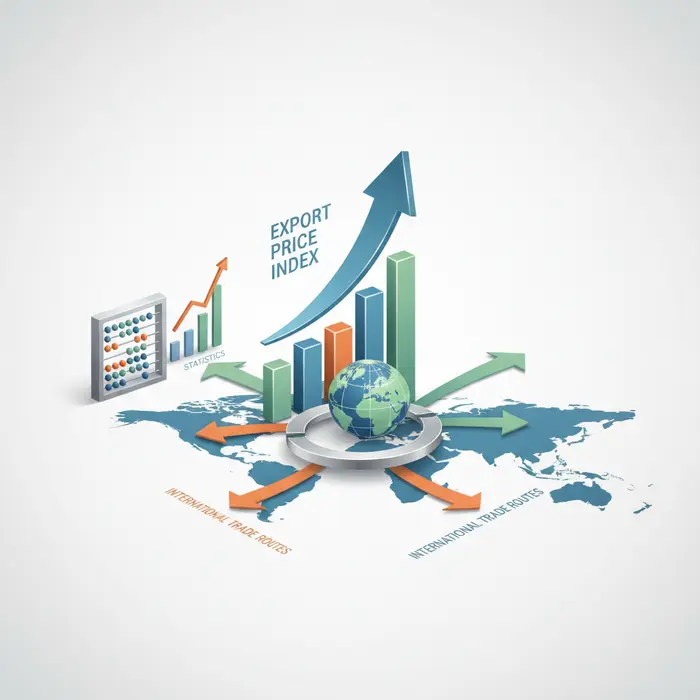
Understanding the intricate dynamics of global trade requires a meticulous examination of the commodity price trends that shape economies worldwide. A critical tool in this analysis is the regional export price index, which provides granular insights into the value fluctuations of goods traded across borders. By meticulously tracking these indices alongside broader international trade statistics, businesses and policymakers can gain invaluable global market intelligence, allowing for more accurate forecasts of the commodity market outlook and strategic planning in an ever-evolving global landscape.
1. North America & Europe: Price Benchmarks and Trade Flows
North America and Europe represent mature, highly developed markets that often serve as crucial price benchmarks for many global commodities. The export price index in these regions reflects not only domestic supply and demand but also their significant influence on global pricing mechanisms, particularly for energy, financial, and high-value manufactured goods. For instance, the European Union’s export price index for manufactured goods provides an indicator of industrial health and competitiveness, while North American data, especially concerning oil and gas, directly impacts international commodity price trends. Analyzing bilateral and multilateral trade flows within these blocs, alongside their trade with other regions, offers vital clues about shifts in global demand and supply chains. Factors such as monetary policy, geopolitical stability, and technological advancements in these regions frequently dictate the pace and direction of commodity market outlooks worldwide. Robust international trade statistics from these economic powerhouses are essential for discerning underlying market sentiments and future export price index movements.
2. Asia-Pacific & Emerging Markets: Growth Drivers and Challenges
The Asia-Pacific region, encompassing economic giants like China and India, along with dynamic ASEAN nations, is undeniably a primary engine for global growth and a massive consumer of raw materials. The export price index in these emerging markets often showcases the ripple effects of rapid industrialization and urbanization on commodity price trends. Surges in infrastructure development, manufacturing output, and consumer demand in Asia-Pacific countries directly translate into heightened demand for metals, energy, and agricultural products, profoundly influencing the global commodity market outlook. However, these regions also face unique challenges, including volatile currency markets, infrastructure bottlenecks, and increasing environmental regulations, which can introduce significant volatility into their export price index. Interpreting international trade statistics from these diverse economies requires careful consideration of their varying stages of development, trade agreements, and susceptibility to global economic shocks. Understanding these drivers and challenges is key to accurate global market intelligence, especially when forecasting future commodity demands and price stability.
3. Interpreting Global Data for Predictive Commodity Market Outlook
To truly harness the power of an export price index and international trade statistics, a holistic, cross-regional interpretation is essential for developing a reliable predictive commodity market outlook. By comparing and contrasting regional export price indices – for example, manufacturing output indices from Europe against raw material demand indices from Asia-Pacific – analysts can identify arbitrage opportunities, anticipate supply chain disruptions, and forecast shifts in global demand. This nuanced approach to global market intelligence allows for the identification of emerging commodity price trends before they become widespread. Furthermore, integrating geopolitical analyses, technological advancements (e.g., green energy transitions impacting fossil fuel prices), and demographic shifts into the interpretation of international trade statistics enhances the predictive accuracy. For instance, a declining export price index for a specific commodity in one region might signal oversupply, while surging demand in another could indicate an impending price rebound. Effective synthesis of this data empowers businesses to make proactive decisions, from sourcing strategies to investment allocations, ensuring they remain competitive and resilient in the face of evolving global economic conditions.
Key Commodity Group Analysis: A 2025 Outlook
The year 2025 is anticipated to bring continued dynamism and complexity to global commodity markets. Businesses engaged in international trade, manufacturing, and logistics must keenly monitor commodity price trends to navigate potential opportunities and risks effectively. This detailed commodity market outlook across major categories will explore specific forecasts and key drivers for energy, metals, and agricultural products, offering essential global market intelligence for strategic planning.
1. Energy Commodities: Oil, Gas, and Renewables
The energy sector in 2025 will remain a fulcrum of geopolitical and economic shifts. Crude oil prices, the bellwether for global energy, are expected to be influenced by a confluence of factors. On the demand side, a gradual recovery in global economic activity, particularly from emerging markets, could bolster consumption. However, persistent inflationary pressures and tighter monetary policies in developed economies might temper this growth. Supply dynamics will hinge on OPEC+ decisions regarding production quotas, the stability of non-OPEC supply (especially from the US shale sector), and geopolitical tensions in key producing regions. Any significant disruption could quickly impact the detailed commodity market outlook and push oil prices upward, affecting the export price index for many nations.
Natural gas markets are poised for another volatile year, particularly with the ongoing energy transition and geopolitical realignments. European demand for Liquefied Natural Gas (LNG) is likely to remain robust as the continent continues to diversify away from pipeline gas, keeping spot prices elevated, especially during peak winter demand. Asian demand, driven by industrial growth and power generation, will also play a crucial role. US natural gas prices, while often more insulated, will still be influenced by LNG export capacity and domestic production levels. The push towards renewables continues unabated, with significant investment in solar, wind, and battery storage technologies. While not direct price commodities in the same vein as oil or gas, the accelerating deployment of renewables will increasingly influence overall energy demand and the long-term price trajectory of fossil fuels, albeit with a more pronounced impact beyond 2025.
2. Industrial Metals, Precious Metals & Agricultural Goods
Industrial metals are highly sensitive to global manufacturing activity and infrastructure spending. Copper, often seen as an economic barometer, is projected to benefit from the burgeoning electric vehicle (EV) sector, renewable energy infrastructure development, and continued urbanization in Asia. However, new mining projects and recycling efforts will be critical in balancing supply. Iron ore prices will be largely dictated by China’s steel production and construction sector health, while aluminum demand will track broader industrial output and the automotive industry. Supply chain resilience, labor availability, and energy costs will remain critical determinants for the commodity price trends of these essential materials. Analyzing international trade statistics for these metals will be key to understanding regional demand-supply imbalances.
Precious metals, particularly gold, are expected to maintain their role as safe-haven assets. Concerns over persistent inflation, potential economic slowdowns, and geopolitical uncertainties will likely provide underlying support for gold prices. Central bank policies, specifically interest rate trajectories in major economies, will also heavily influence investment demand for gold and silver. A more dovish stance could boost appeal, while aggressive rate hikes might temper it.
Agricultural goods face a complex interplay of climatic, geopolitical, and economic factors in 2025. Grain markets (wheat, corn, rice) will be heavily influenced by weather patterns, with the potential re-emergence of El Niño or La Niña phenomena capable of impacting harvest yields in major producing regions. Geopolitical conflicts, particularly those affecting key agricultural export hubs like the Black Sea region, could disrupt supply chains and elevate prices. Global food security concerns will keep demand robust, especially from rapidly growing populations and increasing livestock feed requirements. Furthermore, fluctuating fertilizer costs and energy prices will directly impact production costs, thereby influencing the export price index for agricultural commodities. Comprehensive global market intelligence, including real-time weather data and international trade statistics, will be indispensable for anticipating market movements in this highly sensitive sector.
In summary, 2025 promises a commodity landscape characterized by continued volatility and the interplay of macroeconomic forces, geopolitical events, and climate-related challenges. Businesses must leverage robust global market intelligence and analytical tools to stay ahead of evolving commodity price trends and secure their supply chains amidst this dynamic environment.
Strategic Implications & Future Commodity Market Outlook
The dynamic nature of global markets, continuously reshaped by geopolitical shifts, rapid technological advancements, and the escalating impacts of climate change, makes a profound understanding of future commodity price trends absolutely paramount for businesses, investors, and policymakers alike. This section offers actionable insights and forward-looking perspectives, designed to empower stakeholders to effectively prepare for impending commodity market shifts and proactively mitigate associated risks. Navigating this intricate landscape demands not only robust global market intelligence but also an astute analysis of international trade statistics to discern underlying patterns, anticipate disruptions, and formulate an accurate commodity market outlook.

1. Risk Management & Hedging Strategies for Businesses
Businesses heavily reliant on raw materials or actively involved in commodity trading are inherently exposed to significant price volatility. Proactive and sophisticated risk management is, therefore, not merely beneficial but essential for long-term sustainability. Key strategies include the judicious use of financial instruments such as futures, options, and swap contracts to effectively hedge against adverse commodity price trends. For instance, a manufacturing company can stabilize its production costs by locking in future input prices through purchasing futures contracts, thereby insulating itself from sudden market spikes. Beyond financial hedging, diversification of supply sources, maintaining strategic inventory levels, and implementing dynamic pricing models are vital operational tactics. Close monitoring of the export price index for critical raw materials provides early warnings of potential supply chain disruptions or cost escalations, enabling timely adjustments to procurement and production strategies. Accessing timely global market intelligence, such as reports from authoritative bodies, is crucial for informing these complex hedging decisions, offering a comprehensive view of global supply-demand dynamics and their potential impact across various sectors. A deep understanding of the evolving commodity market outlook is fundamental to constructing a truly resilient and effective risk management framework.
2. Long-Term Investment Opportunities & Sectoral Shifts
While short-term volatility in commodity price trends can deter some investors, it often simultaneously creates significant long-term investment opportunities, driven by fundamental shifts in global demand patterns and groundbreaking technological innovation. The global transition towards a green economy, for example, is fueling an unprecedented demand for critical minerals like copper, lithium, cobalt, and rare earths – all indispensable components for electric vehicles, battery storage solutions, and renewable energy infrastructure. Investments in sustainable agriculture practices, advanced water management technologies, and diverse alternative energy sources present compelling growth prospects. Furthermore, the pervasive impact of digital transformation is reshaping traditional commodity sectors, with innovations in precision agriculture, autonomous mining operations, and advanced supply chain digitalization enhancing efficiency, transparency, and potentially altering future commodity market outlooks. Investors should meticulously analyze international trade statistics to pinpoint emerging markets exhibiting robust demand for specific commodities and to thoroughly assess their long-term supply potential, carefully considering factors such as geopolitical stability, regulatory environments, and environmental sustainability.
3. Geopolitical Influences & Supply Chain Resilience
Geopolitical events frequently exert a profound, and often unpredictable, influence on commodity price trends. International conflicts, escalating trade disputes, and sudden policy shifts by major economic powers can severely disrupt supply routes, impose punitive sanctions, and drastically alter the export price index for critical goods, leading to abrupt price spikes or collapses. Recent geopolitical tensions, for instance, have starkly highlighted the inherent fragility of global energy and food supply chains. Consequently, building robust supply chain resilience is no longer a strategic option but an absolute necessity for businesses. This imperative involves multifaceted approaches: diversifying sourcing geographically to reduce reliance on single regions, investing in advanced and redundant logistics networks, and fostering strong, collaborative relationships with a diverse set of suppliers. Leveraging sophisticated global market intelligence tools to continuously monitor geopolitical risks and their potential impact on specific commodity markets enables businesses to anticipate disruptions, pivot quickly, and adapt their strategies proactively. Moreover, comprehensive scenario planning, based on various potential geopolitical outcomes, is crucial for preparing for future uncertainties, ensuring continuity of operations, and mitigating financial exposure to volatile commodity price trends. A truly comprehensive commodity market outlook must integrate a thorough geopolitical risk assessment to provide a realistic and actionable forward-looking perspective.
Partner with Vietnam’s Leading Suppliers
Looking for reliable suppliers in Vietnam? Contact VietnamSuppliers.com today to connect with verified manufacturers and exporters across all industries.
—————————————
References
– World Bank Commodity Markets Research: https://www.worldbank.org/en/research/commodity-markets
– World Bank Global Economic Prospects: https://www.worldbank.org/en/publication/global-economic-prospects
– Global Economic Outlook from IMF: https://www.imf.org/en/Publications/WEO
– World Bank Commodity Markets Research: https://www.worldbank.org/en/research/commodity-markets
– World Bank Commodity Markets Outlook: https://www.worldbank.org/en/research/commodity-markets