The Commodity Paradox: Why Branding Matters for B2B
In the vast world of B2B commerce, commodities are often perceived as interchangeable, their value solely dictated by price, quality specifications, and market supply and demand. From raw materials like steel and agricultural produce to energy sources and basic chemicals, the underlying assumption is that one supplier’s offering is much like another’s. This perception, however, belies a significant paradox: even in the most commoditized markets, strategic branding isn’t just beneficial; it’s essential for building lasting value beyond mere price competition. A robust B2B commodity branding strategy can transform an undifferentiated product into a preferred partner, securing higher margins and fostering long-term relationships.
1. Beyond Price: Value Proposition in Commodities
While the core product of a commodity supplier might indeed be fundamentally similar to competitors, the total value proposition extends far beyond the physical good itself. Savvy B2B buyers look past the per-unit cost to consider the comprehensive package of benefits. This is where branding carves out a unique space. A strong brand communicates consistency in quality, reliability of supply, efficiency in logistics, technical support, sustainable sourcing practices, and even ethical considerations. For instance, in the realm of agricultural commodities, certain coffee or cocoa bean producers build reputations not just on the quality of their harvest but on their commitment to fair trade or specific processing methods. These intangible elements translate into tangible benefits for the buyer, such as reduced operational risks, streamlined supply chains, and enhanced brand image for their own end-products.
These differentiated offerings allow suppliers to implement a premium commodity export strategy, moving away from a race to the bottom on price. By consistently delivering on these non-product attributes, companies can command higher prices and significantly increase export margins commodity. Consider specialty chemicals or rare earth minerals: while the product itself is a commodity, suppliers who offer unparalleled purity, precise customization, or exceptional post-sale service can create powerful commodity product branding examples that justify a premium.
2. Building Trust and Reliability in B2B Partnerships
B2B relationships are inherently long-term and built on a foundation of trust. When purchasing commodities, businesses aren’t merely buying a product; they’re investing in a supplier’s ability to consistently meet demand, adhere to specifications, and navigate unforeseen challenges. A robust brand acts as a powerful signal of this reliability and trustworthiness. It signifies a company’s commitment to quality control, adherence to delivery schedules, and responsive customer service. In a market where supply chain disruptions can have cascading effects on production and profitability, choosing a branded commodity supplier means choosing peace of mind. Businesses are more willing to pay a slight premium for the assurance that their operations won’t be jeopardized by inconsistent quality or untimely deliveries.
Furthermore, an established brand provides a sense of accountability. Buyers know that a reputable supplier has a vested interest in maintaining their brand image, making them more likely to uphold agreements and resolve issues promptly. This reputation for unwavering reliability is a critical factor in differentiating commodity products international trade, where geographic distance and cultural differences can amplify perceived risks. A strong brand bridges these gaps, fostering confidence and cementing enduring B2B partnerships.
3. Combating Commoditization Through Strategic Perception
The threat of commoditization looms large for many B2B commodity suppliers, where products risk becoming indistinguishable from one another. Branding is the most potent weapon against this erosion of value. It’s not about physically altering the product as much as it is about strategically shaping its perception in the marketplace. Through targeted messaging, consistent visual identity, certifications, and storytelling, a brand can imbue a seemingly generic product with unique qualities and a distinct identity.
This strategic perception can highlight the origin of a material, its unique processing methods, the sustainability credentials of its production, or the innovative applications it enables. For instance, a timber supplier might brand its wood not just as a construction material but as sustainably harvested, conflict-free, and traceable to its forest of origin, appealing to environmentally conscious buyers. By doing so, the brand elevates the product from a mere input to a component that contributes to the buyer’s own brand value. This proactive approach to building a unique identity and value proposition ensures that a company’s offerings are not just seen as another generic option but as a preferred choice, fostering loyalty and safeguarding against relentless price pressures inherent in commodity markets. Ultimately, a well-executed B2B commodity branding strategy transforms a product from a cost to a strategic asset for the buyer, unlocking higher value and sustainable growth.
In the competitive realm of B2B commerce, commodity products often find themselves trapped in a race to the bottom, where price becomes the sole differentiator. However, this perspective overlooks a significant opportunity: the power of a B2B commodity branding strategy. Far from being an oxymoron, effective branding for commodities adds tangible and intangible value that transcends mere cost, enabling businesses to command better prices, build stronger relationships, and secure sustainable growth. This section details the fundamental components and steps involved in developing a robust and effective branding strategy specifically tailored for B2B commodity products, transforming them from generic goods into preferred choices.
1. Identifying Your Unique Selling Proposition (USP)
At the heart of any successful branding effort lies a clear Unique Selling Proposition (USP). For B2B commodity products, identifying a USP requires looking beyond the inherent nature of the product itself and focusing on what makes your specific offering, or its delivery, distinctively valuable to buyers. A USP isn’t just about being different; it’s about being better or uniquely suited to a particular need in a way competitors struggle to replicate. Consider your commodity’s source and origin – perhaps it hails from a region renowned for quality, or its production adheres to strict ethical and sustainable practices. The processing or production method can also be a powerful differentiator; are you employing advanced, eco-friendly technologies, or is your product certified to a higher standard? Consistency and reliability are paramount for B2B buyers who depend on predictable inputs, making a proven track record a strong USP. Furthermore, examine your logistics and supply chain efficiency – perhaps your delivery speed, reliability, or cost-effectiveness outshines competitors. Value-added services such as technical support, custom blending, or just-in-time delivery can also elevate your commodity. To uncover these potential USPs, conduct thorough market research, gather customer feedback, and perform detailed competitor analysis. As outlined by Harvard Business Review on B2B differentiation, distinguishing your offering requires a deep understanding of customer needs and competitive alternatives. Articulating these unique advantages lays the groundwork for a compelling brand narrative that moves beyond price alone.
2. Target Audience Segmentation & Market Positioning
Just as with consumer goods, B2B commodity buyers are not a monolithic entity. Effective branding necessitates precise target audience segmentation and strategic market positioning. This involves breaking down your potential market into distinct groups based on shared characteristics and needs. For B2B commodities, segmentation criteria might include industry (e.g., food & beverage, automotive, construction), geographic location (crucial for “differentiating commodity products international trade”), company size, and specific procurement needs or pain points (e.g., a focus on sustainability, a requirement for ultra-high purity, or consistent, large-volume supply). Understanding these segments allows you to tailor your messaging and product offering. Once segments are identified, market positioning becomes critical. This defines how your commodity brand is perceived in the minds of your target customers relative to competitors. For instance, if your USP is superior consistency and reliable delivery, you might position your brand as “The Unwavering Source.” If ethically sourced and environmentally friendly, your positioning could be “The Sustainable Choice.” This strategic positioning is vital for businesses looking to “increase export margins commodity” and pursue a “premium commodity export strategy.” By clearly communicating your value proposition to the right audience, you can avoid direct price competition and justify a higher value proposition, fostering long-term partnerships rather than transactional relationships. Your brand positioning should resonate with the specific needs and values of your chosen segments, making your commodity the obvious solution.
3. Storytelling: The Narrative of Your Commodity’s Journey
The human element of storytelling might seem counterintuitive for “commodity product branding examples,” yet it is one of the most powerful tools for “differentiating commodity products international trade.” Every commodity has a journey, from its origin to its application, and crafting a compelling narrative around this journey can imbue an otherwise generic product with meaning, trust, and emotional resonance. Start with the origin: Where does your commodity truly come from? Is it the rich soil of a particular region, pristine waters, or a cutting-edge laboratory? Highlight the people involved – the dedicated farmers, skilled miners, innovative researchers, or meticulous processing plant workers whose expertise ensures quality. Describe the process: How is your commodity cultivated, extracted, processed, or refined? Emphasize unique methods, rigorous quality control measures, or sustainable practices that set you apart. For instance, a coffee bean might be a commodity, but a story about its fair-trade cultivation by a specific cooperative in Ethiopia, using traditional methods and benefiting local communities, transforms it into a premium product. Connect the commodity to its purpose and impact: How does it contribute to your buyer’s final product, or ultimately, to the end-user’s experience? By sharing these stories, you elevate your commodity from a mere ingredient to a component with integrity, value, and a positive contribution. This narrative approach helps build a brand identity that transcends technical specifications, fosters loyalty, and can significantly “increase export margins commodity” by creating an emotional connection and a perception of premium value.
Ultimately, a comprehensive B2B commodity branding strategy is about demonstrating value beyond price. By meticulously identifying your USP, segmenting your audience and positioning effectively, and crafting a compelling narrative, you can transform your commodity from a fungible good into a sought-after brand. This strategic shift allows businesses to move from competing on cost to excelling on value, fostering resilience and long-term success in the global B2B marketplace.
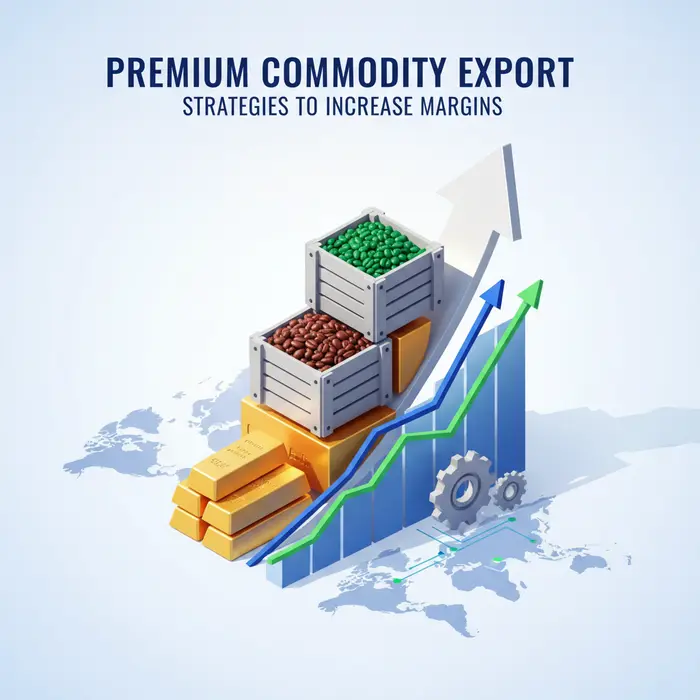
Premium Commodity Export: Strategies to Increase Margins
For businesses engaged in international trade, the journey from merely exporting raw commodities to commanding higher prices and substantially increasing export margins requires a strategic pivot. This section focuses on actionable strategies and a premium approach designed to elevate the status of commodity products, enabling companies to differentiate themselves and capture greater value in competitive global markets. By implementing a robust B2B commodity branding strategy, exporters can transform generic goods into coveted premium offerings.
1. Quality Certification and Adherence to Global Standards
One of the most foundational strategies to enhance a commodity’s market standing and ultimately increase export margins is through rigorous quality assurance and adherence to international standards. Obtaining respected certifications such as ISO (International Organization for Standardization), HACCP (Hazard Analysis and Critical Control Points) for food products, organic certifications, or Fair Trade labels instantly signals a commitment to excellence and reliability. These certifications are not merely badges; they are a powerful means of differentiating commodity products in international trade, building buyer trust, and mitigating perceived risks. For example, a coffee exporter with a recognized organic certification can access niche markets willing to pay a premium, rather than competing solely on price in the conventional market. By clearly communicating these quality credentials, businesses establish a `premium commodity export strategy` that resonates with discerning international buyers. It assures them that the product consistently meets or exceeds global benchmarks, thereby justifying a higher price point and providing tangible `commodity product branding examples` for quality.
2. Value-Added Processing and Customization Services
Moving beyond the export of raw materials into value-added processing offers a significant opportunity to `increase export margins commodity`. Instead of exporting unprocessed agricultural goods, consider processing them into semi-finished or finished products. For instance, raw timber can be processed into finished lumber, furniture components, or even bespoke wooden crafts. Green coffee beans can be roasted, ground, and packaged under a specific brand. This transformation reduces bulk, enhances functionality, and opens doors to higher-value segments of the supply chain. Furthermore, offering customization services – such as private labeling, bespoke packaging, specific cuts or blends, or tailored ingredient formulations – allows exporters to cater to the unique needs of B2B clients. These services effectively turn a generic commodity into a specialized, proprietary solution. By providing distinct `commodity product branding examples` through unique processing and customization, businesses can carve out a competitive advantage, create strong customer loyalty, and demand superior prices, thereby strengthening their `premium commodity export strategy` and making a clear case for `differentiating commodity products international trade`.
3. Supply Chain Transparency and Ethical Sourcing Narratives
In today’s global market, buyers are increasingly conscious of where products come from and how they are produced. Embracing supply chain transparency and weaving compelling ethical sourcing narratives can significantly elevate a commodity’s value and appeal, making it a powerful component of a `premium commodity export strategy`. Documenting and sharing the journey of a product – from its origin farm or mine, through processing, to the port of export – provides immense value. This includes details about sustainable practices, fair labor conditions, community development initiatives, and environmental stewardship. For example, a mineral exporter that can verifiably demonstrate conflict-free sourcing and responsible environmental practices will stand out against competitors who cannot. These narratives build trust, foster emotional connections with buyers, and appeal to corporate social responsibility mandates of international purchasers. By highlighting stories of impact and integrity, exporters are not just selling a commodity; they are selling a responsibly produced, ethically sourced product with a meaningful backstory. This powerful form of `B2B commodity branding strategy` serves as a potent tool for `differentiating commodity products international trade`, justifying premium pricing, and directly contributing to efforts to `increase export margins commodity`.
Differentiating Commodity Products in International Trade
The global marketplace for commodity products is intensely competitive, often characterized by price wars that erode profit margins. For businesses operating in international trade, simply offering a product at the lowest price is an unsustainable strategy. To thrive and build lasting value, exporters must adopt sophisticated tactics for differentiating commodity products international trade. This goes beyond the raw product itself, encompassing everything from its origin story to its delivery, turning an undifferentiated good into a sought-after brand. Developing a robust B2B commodity branding strategy is paramount for increasing export margins and establishing a premium position.
1. Geographic Origin and Terroir Branding
Geographic Origin and Terroir Branding leverage the unique characteristics inherent to a product’s place of growth or production. This strategy transforms a generic commodity into a specialized item with a distinct identity and perceived higher value. Think of how “Colombian Coffee” or “Champagne” instantly conjures images of quality and specific characteristics that go beyond merely “coffee” or “sparkling wine.” This isn’t just about labeling; it’s about authenticating a connection to a specific region, soil type, climate, or traditional production method that impacts the product’s flavor, texture, or composition.
For agricultural commodities, this could involve certifications like Protected Designation of Origin (PDO) or Protected Geographical Indication (PGI), which legally safeguard products linked to specific regions and quality standards. For minerals or processed goods, it might highlight the unique geological features of a mine or the artisanal craft perfected over generations in a particular locale. By emphasizing a product’s unique terroir, exporters can cultivate a narrative that justifies a higher price point, appealing to buyers who value authenticity, heritage, and unique sensory profiles. This premium commodity export strategy builds a compelling story around the product, making it difficult for competitors to replicate solely on price. It’s about selling the story of the land and its people, not just the product.
2. Sustainable and Environmentally Responsible Practices
In today’s global economy, Sustainable and Environmentally Responsible Practices are no longer just a niche consideration but a critical differentiator and a growing expectation across B2B supply chains. Buyers, from large corporations to smaller distributors, are increasingly scrutinized for their own environmental and social impact, driving demand for ethically sourced and sustainably produced commodities. Implementing and transparently communicating sustainable practices, such as responsible resource management, reduced carbon footprints, fair labor practices, and biodiversity protection, can significantly enhance a commodity’s appeal and command better prices.
This includes adopting certifications like Fair Trade, Rainforest Alliance, organic certifications, or ISO 14001 for environmental management systems. Such accreditations provide tangible proof of commitment, building trust and credibility with international buyers. For example, a timber exporter demonstrating sustainable forestry practices or a textile producer using recycled materials can appeal to a segment of the market willing to pay a premium for ethical sourcing. Beyond ethical considerations, these practices often lead to operational efficiencies, waste reduction, and better long-term resource security, further justifying the investment. Highlighting these commitments through transparent reporting and engaging marketing materials can significantly increase export margins commodity by attracting socially conscious buyers and differentiating the product from purely price-driven competitors. According to the International Trade Centre (ITC), integrating sustainability into supply chains offers significant competitive advantages and market access opportunities, especially for SMEs in developing countries. This approach transforms a commodity into a product aligned with global values, appealing to a broader, more discerning market segment.
3. Innovative Packaging and Advanced Logistics Solutions
While often overlooked for commodities, Innovative Packaging and Advanced Logistics Solutions play a pivotal role in distinguishing products and ensuring their quality upon arrival. For B2B transactions, packaging is not just about aesthetics; it’s a functional extension of the product itself, designed to protect, preserve, and communicate. Innovative packaging might involve materials that extend shelf life, reduce waste, are eco-friendly, or offer enhanced durability for long-distance shipping. Smart packaging, incorporating QR codes or RFID tags, can provide traceability information, detailing origin, production batch, and sustainability credentials, adding a layer of transparency and trust. These commodity product branding examples move beyond simple bags or boxes, reflecting a commitment to quality and innovation.
Advanced logistics solutions further augment this differentiation. This includes optimizing shipping routes for speed and efficiency, implementing cold chain management for perishable goods, or offering just-in-time delivery capabilities. Real-time tracking, predictive analytics for supply chain disruptions, and efficient customs clearance processes contribute to a reliable and seamless delivery experience. For many international buyers, reliability and consistency of supply are as crucial as the product’s quality. A supplier that can guarantee on-time delivery, minimize transit damage, and provide complete traceability through advanced logistics offers substantial value. This integrated approach, where cutting-edge packaging and a robust supply chain are part of the value proposition, can significantly differentiate a commodity. To explore comprehensive strategies for improving your position in the global market, considering a holistic approach to your B2B commodity branding strategy can provide a competitive edge. It’s about delivering not just a product, but a complete, reliable, and high-quality service experience.
By embracing these strategies – from cultivating a unique origin story and upholding sustainable practices to delivering with innovative packaging and advanced logistics – commodity exporters can transcend traditional price competition. This allows them to build stronger brand equity, secure higher margins, and forge lasting relationships in the dynamic landscape of international trade.
Real-World Commodity Product Branding Examples & Lessons
In the competitive landscape of international trade, where products often appear interchangeable, the power of a robust B2B commodity branding strategy cannot be overstated. Far from being relegated to consumer goods, effective branding for commodity products transforms undifferentiated bulk items into high-value offerings, unlocking increased export margins and fostering lasting relationships. This section delves into illustrative case studies, showcasing how companies across diverse sectors have successfully applied branding principles to commodity products, offering vital lessons for differentiation and market leadership in international trade. These commodity product branding examples highlight best practices for increasing export margins for commodities and building a premium commodity export strategy, even in seemingly undifferentiated markets.

1. Agricultural Products: From Bulk to Boutique
Agricultural products, often perceived as the quintessential commodities, offer fertile ground for branding innovation. The transformation from bulk raw material to a branded, premium product hinges on highlighting specific attributes, origins, or processing methods.
Example: Specialty Coffee Beans. While coffee is a global commodity, brands like Starbucks Reserve or numerous direct-trade artisanal roasters exemplify how to create a “boutique” experience. They differentiate by emphasizing origin (e.g., Ethiopian Yirgacheffe), sustainable farming practices, unique processing methods (washed vs. natural), and even the farmer’s story. This approach allows them to command significantly higher prices than generic coffee beans. The lesson here is that even with a seemingly undifferentiated product, focusing on provenance, ethical sourcing, and specific quality metrics can elevate perception and justify a premium. For businesses looking to increase export margins for commodity agricultural goods, investing in certifications (organic, fair trade), geographical indications (e.g., Parmigiano Reggiano, Champagne), and transparent storytelling about cultivation can be a powerful premium commodity export strategy. This differentiates their offerings in international trade, moving beyond simple price competition.
2. Industrial Minerals: Performance and Reliability Branding
Industrial minerals, such as specialty clays, industrial sands, or advanced metal alloys, are often sold based on specifications. However, smart branding can elevate certain suppliers above the competition by focusing on performance, consistency, and reliability. This approach is crucial for differentiating commodity products in international trade, particularly for B2B transactions where precision and trust are paramount.
Example: High-Purity Quartz Sand. Used in critical applications like semiconductors, optics, and solar panels, the purity and consistency of quartz sand are non-negotiable. Suppliers like Sibelco or The Quartz Corporation don’t just sell “sand”; they sell “high-purity quartz” with guaranteed specifications, backed by rigorous quality control and technical support. Their branding focuses on consistent performance, ultra-low impurity levels, and reliable supply chains, which are critical differentiators for industrial clients. They often highlight their R&D capabilities and tailored solutions for specific industrial needs. This isn’t just about the product itself but the entire value proposition: guaranteed performance, reduced risk for the buyer, and often, technical expertise. For a B2B commodity branding strategy in this sector, certifications, consistent quality assurance, strong logistics, and dedicated customer support are key to building a reputable brand that justifies higher prices and secures long-term contracts. According to an article by the Harvard Business Review, distinguishing a commodity through services and reliability is a critical differentiator in mature markets.
3. Energy Commodities: Green Credentials and Future Vision
Even traditional energy commodities like natural gas, coal, or crude oil are subject to branding pressures, especially concerning sustainability and environmental impact. The shift towards renewable energy further amplifies the need for branding based on green credentials and a future-oriented vision.
Example: “Green” Natural Gas or Renewable Energy Certificates (RECs). Companies are increasingly offering “carbon-neutral” natural gas, achieved through offsetting emissions, or selling renewable energy directly sourced from wind or solar farms. Utilities and energy providers brand their “green energy” plans, allowing businesses and consumers to purchase electricity guaranteed to come from renewable sources. BP’s historical “Beyond Petroleum” campaign, despite its challenges, illustrated an early attempt to brand a traditional energy giant with a future-forward, sustainable vision. Today, companies like Ørsted (formerly DONG Energy) have successfully transitioned from an oil and gas company to a global leader in offshore wind power, branding themselves as a pure-play renewable energy company. Their branding emphasizes a commitment to a sustainable future, technological leadership in renewables, and contributing to global climate goals. This focus on environmental responsibility and innovation allows them to differentiate in a highly commoditized energy market. For any business involved in energy, adopting a premium commodity export strategy that highlights sustainability, ethical sourcing, and technological advancements is essential for future growth and attracting environmentally conscious buyers. This extends to transparency in carbon footprints and investment in clean technologies, transforming perception and increasing export margins commodity products within the energy sector.
These examples underscore a crucial lesson: successful commodity branding is not about changing the product’s inherent nature, but about enhancing its perceived value through storytelling, guaranteed quality, ethical practices, and a clear vision. By focusing on these elements, businesses can transform bulk commodities into desirable, differentiated products on the global stage.
Partner with Vietnam’s Leading Suppliers
Looking for reliable suppliers in Vietnam? Contact VietnamSuppliers.com today to connect with verified manufacturers and exporters across all industries.
—————————————
References
– Why Branding Is Still Crucial for B2B Companies: https://hbr.org/2013/03/why-branding-is-still-crucial-for-b2b-companies
– Harvard Business Review on B2B differentiation: https://hbr.org/2021/01/how-to-differentiate-your-b2b-offering
– Quality is the gateway to export success: https://www.intracen.org/news/Quality-is-the-gateway-to-export-success/
– International Trade Centre (ITC) – Sustainable Trade: https://intracen.org/what-we-do/sustainable-trade/
– Branding Commodities: https://hbr.org/2012/03/branding-commodities