The Escalating Landscape of Global Illicit Trade
The global economy, increasingly interconnected and reliant on complex supply chains, finds itself under relentless assault from a burgeoning and sophisticated adversary: illicit trade. Far from a peripheral issue, this shadow economy has grown into a multi-trillion-dollar enterprise, corrupting legitimate markets, endangering consumers, and funding organized crime on an unprecedented scale. This section provides a comprehensive overview of the current state, dynamic growth, and profound economic implications of illicit trade worldwide, setting a critical stage for a deeper Global Illicit Trade Impact Analysis.
Global statistics and key affected sectors (2023-2024)
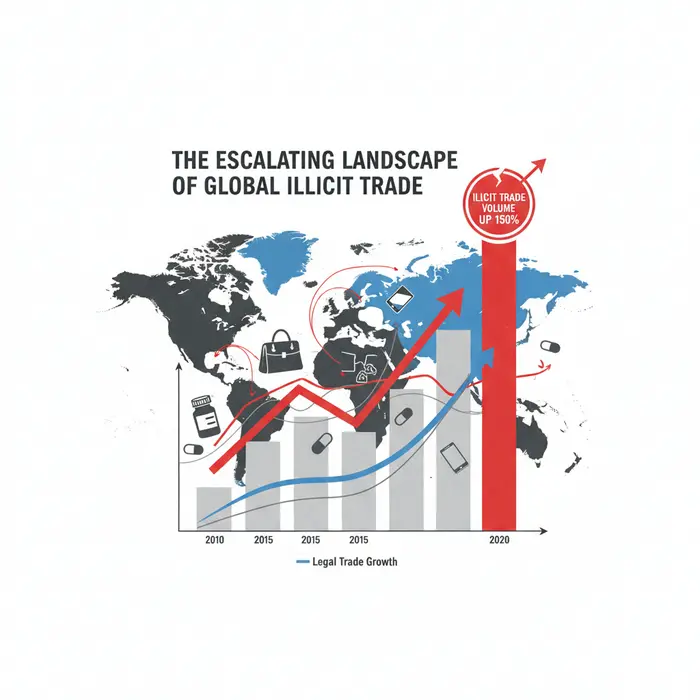
The scale of illicit trade continues to astound. While precise figures are challenging to ascertain due to its clandestine nature, estimates place its annual value in the trillions of U.S. dollars. For instance, the trade in counterfeit and pirated goods alone represented up to 3.3% of world trade, or over half a trillion U.S. dollars, according to an OECD/EUIPO report: Global Trade in Fakes. This figure has likely grown further in 2023-2024, exacerbated by global disruptions and economic pressures. Key sectors bearing the brunt of this illicit activity include pharmaceuticals, where fake medications pose severe health risks; luxury goods, undermined by high-quality counterfeits; and tobacco and alcohol, which suffer massive tax revenue losses. Electronics, automotive parts, agricultural products, and even critical industrial components are increasingly targeted, demonstrating a pervasive reach that impacts virtually every facet of global commerce. Addressing these challenges requires a keen understanding of evolving International trade compliance trends and robust enforcement mechanisms.
Emerging threats and criminal methodologies
The landscape of illicit trade is constantly evolving, driven by the ingenuity and adaptability of criminal networks. The proliferation of e-commerce platforms, including social media marketplaces and the dark web, has provided criminals with new, anonymized channels for distribution, making detection and interdiction significantly harder. Advanced logistics and shipping methods, often exploiting legitimate supply chains, are utilized to move illicit goods across borders with increasing efficiency. Furthermore, the sophistication of counterfeit manufacturing has reached unprecedented levels, with some fake products almost indistinguishable from genuine articles, challenging even expert scrutiny. The use of cryptocurrencies facilitates anonymous financial transactions, while sophisticated digital tools are employed for phishing, intellectual property theft, and evading customs. Countering these threats necessitates innovative Counterfeit goods detection technology and dynamic Customs fraud prevention solutions that can adapt faster than criminal methodologies.
Economic and social costs of illicit trade
The ramifications of illicit trade extend far beyond mere financial losses, inflicting deep wounds on economies and societies worldwide. Economically, it leads to colossal losses in tax revenue for governments, siphoning funds that could otherwise be invested in public services. Legitimate businesses suffer from unfair competition, job displacement, and diminished profits, stifling innovation and discouraging investment. The erosion of brand reputation and consumer trust can have long-lasting effects. Socially, the costs are equally dire. Counterfeit goods, especially in pharmaceuticals and food, pose severe health and safety risks, sometimes with fatal consequences. Illicit trade often directly funds organized crime, terrorism, and human trafficking, destabilizing regions and undermining the rule of law. Environmental damage from unregulated production and disposal of illicit goods also adds to the burden. Effectively mitigating these multifaceted impacts requires comprehensive Supply chain risk mitigation strategies and a concerted global effort to protect both economic integrity and public welfare. The journey to understanding and combating this global menace begins with a thorough Global Illicit Trade Impact Analysis and collaborative action.
Fortifying Supply Chains: Risk Mitigation Strategies
The intricate web of modern global supply chains, while driving unprecedented economic growth, also presents fertile ground for illicit trade. From counterfeit goods to smuggled contraband and diverted legitimate products, illicit activities exploit vulnerabilities at every node, posing significant threats to businesses, consumers, and national security. This section examines how global illicit trade exploits these complex networks and outlines effective supply chain risk mitigation strategies to build resilience, safeguard brand integrity, and ensure compliance. A thorough Global Illicit Trade Impact Analysis is crucial for understanding these threats and developing robust defense mechanisms.
1. Identifying critical risk points in global logistics networks
Effective supply chain risk mitigation strategies begin with a comprehensive understanding of where vulnerabilities lie. Illicit actors often target points of least resistance, which can include poorly regulated border crossings, transit zones with limited oversight, and warehousing facilities with lax security. Key risk points extend beyond physical locations to encompass digital infrastructures, where cyber vulnerabilities can lead to data breaches, diversion of shipments, or fraudulent documentation. Specific exploitation methods include the commingling of legitimate and illicit goods, misdeclaration of cargo, and the manipulation of customs data, highlighting the urgent need for enhanced Customs fraud prevention solutions. The sheer volume and speed of international trade make it challenging to scrutinize every shipment, creating windows of opportunity for sophisticated criminal networks to infiltrate logistics networks. Identifying these critical points requires sophisticated data analytics, real-time tracking capabilities, and intelligence gathering on emerging threat patterns.
2. Implementing robust supply chain risk mitigation strategies
Once vulnerabilities are identified, the implementation of proactive and comprehensive supply chain risk mitigation strategies becomes paramount. This involves a multi-faceted approach combining technological advancements, process improvements, and strategic partnerships. Modern solutions leverage advanced analytics, artificial intelligence, and blockchain technology for enhanced traceability and transparency throughout the supply chain. For instance, counterfeit goods detection technology, including forensic marking and serialization, enables quick verification of product authenticity, while AI-powered systems can flag suspicious shipping patterns or customs declarations indicative of fraud. Beyond technology, organizations must enforce stringent security protocols, conduct thorough vetting of all logistics partners, and establish real-time monitoring systems. Furthermore, staying abreast of international trade compliance trends and fostering collaborative relationships with customs authorities, law enforcement agencies, and industry peers are vital. Such public-private partnerships facilitate information sharing and coordinated responses to complex threats. According to the OECD’s efforts to combat illicit trade, a holistic approach involving all stakeholders is essential to building truly resilient global supply chains.
3. The role of ethical sourcing and due diligence in prevention
Preventing illicit trade also requires a deep commitment to ethical sourcing and robust due diligence practices at the very start of the supply chain. Companies must go beyond basic compliance to scrutinize the ethical conduct, labor practices, and environmental impact of their suppliers, sub-suppliers, and raw material providers. This involves conducting regular audits, demanding transparency, and ensuring adherence to international standards and regulations. By rigorously vetting partners and embedding strong ethical guidelines throughout the procurement process, businesses can significantly reduce the risk of inadvertently supporting or becoming entangled in illicit activities, such as forced labor, environmental crimes, or the trade of conflict resources. Comprehensive due diligence acts as an early warning system, identifying potential red flags before they escalate into significant risks. It ensures that products are sourced from legitimate and responsible channels, thereby closing avenues that illicit actors might otherwise exploit. This proactive stance, coupled with a continuous Global Illicit Trade Impact Analysis, reinforces the overall integrity of the supply chain and enhances brand reputation, demonstrating a commitment to responsible global commerce.
Navigating International Trade Compliance Trends
The global trade landscape is undergoing rapid transformation, driven by geopolitical shifts, technological advancements, and a heightened focus on ethical sourcing and security. This evolving regulatory environment necessitates an unwavering commitment to international trade compliance trends to effectively combat illicit activities. Businesses must proactively adapt to new rules and best practices, not only to ensure legal adherence but also to protect their supply chains and brand reputation from the significant repercussions highlighted in any Global Illicit Trade Impact Analysis.
Latest International trade compliance trends and regulations (2025 focus)
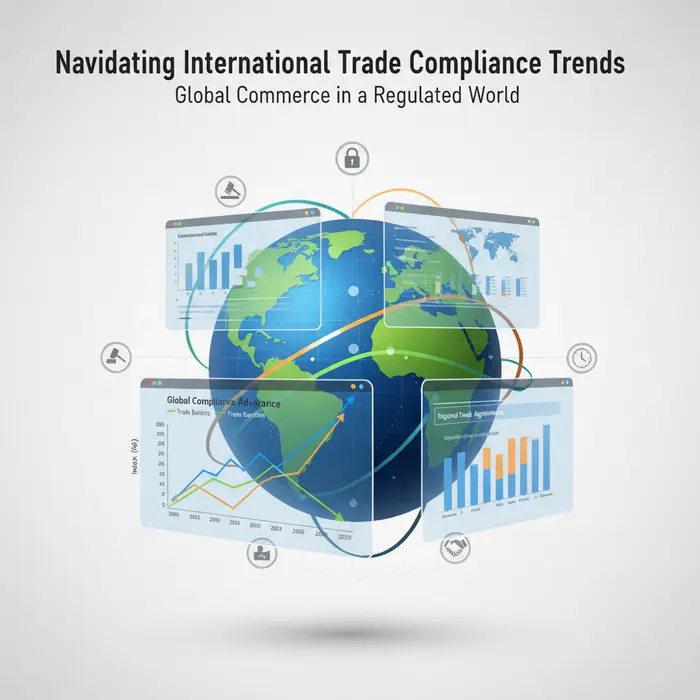
As we approach 2025, several critical international trade compliance trends are shaping the future of cross-border commerce. Businesses must prepare for an intensified focus on digitalization, with more countries implementing advanced electronic reporting systems and data analytics for customs processes. Environmental, Social, and Governance (ESG) compliance is no longer a niche concern but a mainstream imperative, demanding transparency across the supply chain, particularly regarding forced labor and sustainable practices. Regulations akin to the U.S. Uyghur Forced Labor Prevention Act (UFLPA) are expected to proliferate, requiring rigorous due diligence on sourcing and manufacturing origins. Furthermore, the increasing integration of artificial intelligence (AI) and machine learning (ML) in customs risk assessment means companies will need to ensure their data is clean, accurate, and readily auditable. Cybersecurity and data privacy will also remain paramount, as the exchange of sensitive trade data becomes more frequent and complex. Staying ahead requires continuous monitoring of international agreements, national legislation, and evolving enforcement priorities, especially in high-risk sectors.
Best practices for cross-border operations and reporting
Effective supply chain risk mitigation strategies are paramount for navigating the complexities of international trade. Businesses should adopt a multi-faceted approach, starting with robust due diligence on all trading partners to pre-emptively identify and mitigate risks related to fraud, sanctions, or illicit trade. Implementing cutting-edge customs fraud prevention solutions, such as AI-powered anomaly detection and blockchain for enhanced traceability, can significantly bolster security. Standardized, accurate documentation and meticulous record-keeping are foundational, ensuring compliance with diverse national and international regulations. Regular training for all personnel involved in cross-border operations is essential to keep teams updated on the latest compliance requirements and internal protocols. Companies should also consider engaging with compliance technology platforms that automate reporting, screen transactions against watchlists, and provide real-time regulatory updates. Establishing a clear internal compliance program with designated responsibilities and a culture of accountability will foster proactive adherence and swift response to any potential issues.
Penalties and reputation risks of non-compliance
The consequences of non-compliance in international trade extend far beyond mere financial penalties, posing significant threats to a company’s longevity and public image. Financial repercussions can be severe, including hefty fines, confiscation of goods, and even criminal charges for individuals involved. Operational disruptions are common, with shipments detained or rejected, leading to costly delays and broken supply chain commitments. Beyond the tangible, the reputation risks are profound. A company found in violation of trade regulations, especially those related to human rights, environmental standards, or the trafficking of counterfeit goods, faces severe brand damage. This can lead to a loss of consumer trust, investor confidence, and market share. Such reputational harm often necessitates extensive and expensive public relations efforts to repair. In an increasingly interconnected and transparent world, where information spreads rapidly, a single instance of non-compliance can reverberate globally, impacting partnerships, access to financing, and ultimately, long-term business viability. Proactive investment in compliance is, therefore, an investment in sustained business success.
Advancements in Counterfeit Goods Detection Technology
The global illicit trade, a shadow economy worth trillions annually, poses a severe threat to legitimate businesses, consumer safety, and national economies. Its pervasive component, the rampant circulation of counterfeit goods, erodes brand value, intellectual property, and exposes consumers to dangerous products. Addressing this complex challenge necessitates cutting-edge tools. This section explores significant strides in Global Illicit Trade Impact Analysis and highlights innovations in counterfeit goods detection technology designed to identify and intercept these illicit products more effectively.
The imperative for robust supply chain risk mitigation strategies has never been greater, pushing the boundaries of technological innovation. From sophisticated sensor arrays to predictive analytics driven by artificial intelligence, the anti-counterfeiting landscape is rapidly evolving, offering new hope in the ongoing battle against fraud.
1. Innovations in Counterfeit goods detection technology (e.g., AI, IoT)
The integration of Artificial Intelligence (AI) and the Internet of Things (IoT) is revolutionizing counterfeit goods detection technology. AI-powered visual inspection systems analyze product features, packaging, and labels with unprecedented speed and accuracy, identifying minute discrepancies. Machine vision algorithms, trained on vast datasets of genuine and fake products, spot anomalies like misaligned logos or incorrect fonts. Spectral analysis combined with AI can detect variations in material composition, making replication harder.
IoT devices, embedded within products or packaging, offer real-time traceability and authentication. Smart labels with NFC or RFID tags store unique identifiers that consumers and supply chain partners can scan for instant verification of authenticity and origin. IoT sensors can also monitor environmental conditions during transit, flagging suspicious tampering. This symbiotic relationship between AI and IoT provides a powerful, multi-layered defense against illicit products, significantly enhancing supply chain risk mitigation strategies.
2. Leveraging data analytics and machine learning for fraud analysis
Beyond individual product inspection, advanced data analytics and machine learning (ML) are indispensable for comprehensive fraud analysis. Organizations collect vast amounts of data across global supply chains, including shipping manifests, transaction records, and customs declarations. ML algorithms process this data to identify patterns, anomalies, and potential fraud hotspots, impossible for manual review.
Predictive analytics, powered by ML, forecasts the likelihood of counterfeiting attempts in specific regions or product categories based on historical data and emerging international trade compliance trends. This enables proactive resource deployment to high-risk areas. Anomaly detection flags suspicious shipments or unusual purchasing behaviors indicative of counterfeit operations. For customs agencies, this translates into more efficient, targeted inspections, transforming traditional Customs fraud prevention solutions. By uncovering intricate networks and methodologies, data analytics provides a strategic advantage, enabling intelligence-driven approaches to combating illicit trade.
3. Blockchain and digital ledger technologies for traceability and authenticity
Blockchain and other digital ledger technologies (DLT) offer unparalleled transparency and immutability, ideal for enhancing product traceability and authenticity throughout the supply chain. Each step of a product’s journey—from raw material sourcing to manufacturing, distribution, and retail—is recorded as an immutable transaction on a decentralized ledger, creating a secure, verifiable, and tamper-proof digital history for every item.
Consumers can scan a QR code or NFC tag to access its blockchain record, instantly verifying origin, authenticity, and journey. This transparency builds trust and empowers informed purchasing decisions. For businesses, blockchain acts as a robust mechanism for supply chain risk mitigation strategies, allowing rapid pinpointing of counterfeit incidents and addressing vulnerabilities. By providing irrefutable proof of provenance, blockchain significantly curtails opportunities for counterfeiters to infiltrate legitimate distribution channels, thereby strengthening the global fight against fake goods and ensuring product integrity.
In conclusion, the convergence of AI, IoT, data analytics, and blockchain technology creates a formidable arsenal against counterfeit goods. These advancements are not merely incremental improvements but represent a paradigm shift in how illicit products are detected, intercepted, and prevented. By integrating these sophisticated counterfeit goods detection technology solutions, businesses and regulatory bodies can develop more resilient supply chain risk mitigation strategies, uphold international trade compliance trends, and ultimately safeguard consumers and the integrity of the Global Illicit Trade Impact Analysis market from the pervasive threat of counterfeiting.
Strategic Solutions for Customs Fraud Prevention
Customs fraud, ranging from misdeclaration and undervaluation to the smuggling of prohibited goods, poses a significant threat to national economies, public safety, and legitimate trade. Its pervasive nature necessitates robust and proactive countermeasures. This section delves into specific actions, policies, and collaborations necessary to enhance customs fraud prevention solutions and secure international borders. A thorough Global Illicit Trade Impact Analysis underscores the urgency of these efforts, highlighting how sophisticated criminal networks exploit vulnerabilities in the global supply chain, causing substantial revenue losses and funding further illicit activities.
1. Enhancing customs fraud prevention solutions and border control measures
Effective customs fraud prevention begins with a multi-layered approach to border control, integrating cutting-edge technology with skilled human intelligence. Modernization of customs procedures is paramount, leveraging advanced analytics, artificial intelligence (AI), and blockchain technology to identify high-risk shipments. AI-powered algorithms can analyze vast datasets of trade information, identifying anomalies, patterns of suspicious behavior, and potential fraud indicators far more efficiently than manual processes. For instance, sophisticated counterfeit goods detection technology, including spectral analysis and RFID tracking, can help customs officials swiftly identify fake products attempting to enter the legitimate supply chain. Blockchain, with its immutable ledger, offers unprecedented transparency in tracking goods from origin to destination, significantly reducing opportunities for document forgery and diversion.
Beyond technology, strengthening human capital is crucial. Regular training programs for customs officers on emerging fraud techniques, new technologies, and international best practices are essential. This includes developing expertise in risk assessment, intelligence gathering, and investigative techniques. Cross-border information sharing agreements between national customs agencies are vital for identifying and disrupting transnational criminal organizations. By pooling data and intelligence, countries can develop more comprehensive supply chain risk mitigation strategies, addressing vulnerabilities across the entire trade ecosystem. Furthermore, investing in state-of-the-art scanning equipment and K9 units for narcotics and explosives detection significantly enhances physical border security. Ultimately, the goal is to create a seamless yet secure flow of legitimate trade while effectively intercepting illicit goods and fraudulent transactions, minimizing the negative impact on global economies as highlighted by any comprehensive Global Illicit Trade Impact Analysis.
2. The importance of public-private partnerships against illicit trade
Combating customs fraud and illicit trade cannot be achieved by government agencies alone. The sheer scale and complexity of global supply chains necessitate strong public-private partnerships (PPPs). Businesses, as direct participants in international trade, possess invaluable insights into supply chain dynamics, operational vulnerabilities, and emerging fraud trends. Collaboration allows for the sharing of intelligence, best practices, and resources, creating a more resilient and transparent trading environment. Industry associations, freight forwarders, manufacturers, and e-commerce platforms can work closely with customs authorities to develop and implement voluntary compliance programs, enhancing data quality and facilitating risk profiling.
These partnerships can take various forms, from joint task forces and information-sharing platforms to capacity-building initiatives. For example, programs like the World Customs Organization’s (WCO) Private Sector Consultative Group provide a formal platform for dialogue and cooperation between customs administrations and the private sector. Such collaboration is instrumental in understanding evolving International trade compliance trends and developing targeted countermeasures against illicit flows. Companies that invest in robust internal compliance programs, conduct thorough due diligence on their partners, and report suspicious activities contribute significantly to collective security. In return, compliant businesses can benefit from expedited customs clearance and reduced scrutiny, fostering a win-win scenario. An effective PPP framework is a cornerstone of any successful strategy aiming to mitigate the adverse effects revealed by a Global Illicit Trade Impact Analysis, ensuring both security and efficiency in global commerce.
3. Future outlook and policy recommendations for global action
Looking ahead, the fight against customs fraud will demand continuous adaptation and innovation. Criminal organizations are constantly evolving their tactics, exploiting technological advancements and geopolitical shifts. Therefore, policy recommendations for global action must focus on harmonizing international customs laws and procedures, fostering greater interoperability between national systems, and investing in continuous research and development of new counterfeit goods detection technology. Establishing common standards for data exchange and digital identity verification for traders would significantly streamline cross-border transactions while simultaneously enhancing security.
Furthermore, international agreements should prioritize mechanisms for rapid intelligence sharing and coordinated enforcement actions against transnational criminal networks. Governments must allocate sufficient resources to customs agencies, recognizing their pivotal role in national security and economic stability. Promoting a culture of integrity within customs administrations through strong anti-corruption measures and ethical training is also non-negotiable. Finally, a holistic approach that integrates customs fraud prevention with broader efforts to combat money laundering, cybercrime, and terrorism financing is essential. By embracing these policy recommendations, the global community can build a more resilient and secure trading environment, significantly reducing the detrimental impacts identified in a comprehensive Global Illicit Trade Impact Analysis and safeguarding the integrity of international commerce.
Partner with Vietnam’s Leading Suppliers
Looking for reliable suppliers in Vietnam? Contact VietnamSuppliers.com today to connect with verified manufacturers and exporters across all industries.
—————————————
References
– OECD/EUIPO Report: Global Trade in Fakes: https://www.oecd-ilibrary.org/trade/global-trade-in-fakes_414a1a70-en
– OECD’s efforts to combat illicit trade: https://www.oecd.org/governance/illicit-trade/
– WTO Trade Facilitation Agreement: https://www.wto.org/english/tratop_e/tradfa_e/tradfa_e.htm
– How to stop the fake goods trade – with the help of tech: https://www.weforum.org/agenda/2023/10/fake-goods-trade-technology-ai-blockchain/
– International trade compliance trends: https://www.wcoomd.org/en/topics/enforcement-and-compliance/instruments-and-tools/wco_ilicit_trade_report.aspx