Why Material Cost Reduction Matters for B2B in 2025
As 2025 unfolds, B2B businesses find themselves at a critical juncture, navigating a complex economic landscape characterized by persistent inflation, volatile energy prices, geopolitical uncertainties, and lingering supply chain disruptions. These formidable challenges exert immense pressure on operational costs, making the optimization of material expenses not just a desirable goal but an existential imperative. In an environment where every percentage point of margin is fiercely contested, mastering Material Cost Reduction Strategies B2B is paramount for maintaining profitability, enhancing competitiveness, and ensuring long-term resilience.

1. Navigating Economic Headwinds and Supply Chain Volatility
The global economy continues to grapple with a myriad of disruptive forces. Geopolitical tensions have intensified, leading to trade route reconfigurations and heightened risks for international sourcing. Raw material markets remain susceptible to sudden price spikes and scarcity, often triggered by unforeseen events or policy shifts. Logistics bottlenecks, labor shortages, and rising freight costs further complicate the picture, creating an environment where the cost of acquiring and transporting essential materials is consistently unpredictable. This pervasive volatility directly translates into increased material costs for B2B enterprises, impacting everything from manufacturing components to packaging supplies. Businesses that fail to proactively address these challenges risk eroding their profit margins and falling behind more agile competitors. Effective strategies like diversifying supply chains and enhancing resilience are no longer options but necessities for navigating these turbulent waters, demanding a sharp focus on Cost-Effective Raw Material Sourcing.
2. Impact of Material Costs on Profit Margins and Competitiveness
For B2B companies, material costs typically represent a significant portion of their overall operating expenses. When these costs rise unchecked, the direct consequence is a squeeze on profit margins. This reduction in profitability can severely limit a company’s ability to invest in R&D, innovation, marketing, or talent acquisition – crucial elements for sustained growth and market leadership. Moreover, inflated material costs often force businesses to either absorb the higher expenses, thereby sacrificing margins, or pass them on to customers through price increases. The latter can erode competitive advantage, especially in price-sensitive markets, potentially leading to lost sales and market share. In today’s competitive landscape, superior B2B Procurement Optimization Materials and the implementation of Supplier Value Engineering initiatives become critical differentiators. By strategically managing material inputs, businesses can protect their financial health, maintain competitive pricing, and secure their position as reliable partners in the supply chain.
3. Implementing Strategic Material Cost Reduction for Sustainable Growth
Beyond simply cutting corners, strategic material cost reduction is about fundamentally rethinking procurement, design, and manufacturing processes to achieve sustainable long-term savings and enhance overall business value. This involves a multi-faceted approach. One key area is Smart Material Substitution Benefits, where businesses explore alternative, less expensive materials that meet performance requirements without compromising quality or functionality. This could involve exploring advanced composites, recycled content, or regionally available alternatives to mitigate dependency on volatile global markets. Another crucial strategy is strengthening supplier relationships through collaboration and negotiation, fostering long-term partnerships that yield better pricing, volume discounts, and improved terms. Investing in robust data analytics for procurement can also uncover hidden inefficiencies and opportunities for cost savings. Furthermore, embracing lean manufacturing principles and optimizing inventory management reduces waste and carrying costs associated with materials. By integrating these Material Cost Reduction Strategies B2B, companies can not only safeguard their bottom line but also build greater resilience, foster innovation, and lay a strong foundation for sustainable growth in the challenging economic environment of 2025 and beyond.
Unlocking Value with Smart Material Substitution Benefits
Explores how strategic material alternatives can drive significant cost savings without compromising quality or performance.
In today’s competitive B2B landscape, manufacturers are constantly seeking innovative approaches to optimize their operations and enhance profitability. One of the most impactful yet often overlooked strategies is smart material substitution. By meticulously evaluating and implementing alternative materials, companies can achieve substantial Material Cost Reduction Strategies B2B without sacrificing product integrity or market appeal. This approach not only boosts the bottom line but also opens avenues for improved performance, sustainability, and supply chain resilience, positioning businesses for long-term success.
1. Identifying Suitable Alternative Materials and Technologies
The journey to unlocking Smart Material Substitution Benefits begins with a thorough and systematic identification process. This involves a deep dive into current material specifications, performance requirements, and cost structures. Engineers and procurement teams must collaborate to explore a spectrum of alternatives, from advanced composites and polymers to sustainable bio-materials and recycled content. Key considerations include material properties (strength, durability, weight, thermal resistance), manufacturing process compatibility, regulatory compliance, and long-term availability. Effective Cost-Effective Raw Material Sourcing also demands evaluating new technologies and suppliers that can offer innovative solutions or more efficient production methods for these alternative materials. Leveraging data analytics and material simulation tools can significantly streamline this identification phase, allowing for predictive analysis of how new materials will perform under various conditions and how they will impact overall product cost and quality.
2. Case Studies: Successful Material Swaps and Their ROI
The real power of strategic material substitution is best illustrated through successful implementations that demonstrate a clear return on investment (ROI). Consider the automotive industry’s shift from traditional steel components to lightweight aluminum alloys and carbon fiber reinforced plastics. This Supplier Value Engineering initiative, driven by fuel efficiency mandates and performance demands, has led to significant weight reductions, improving vehicle performance and reducing emissions. For instance, substituting heavy steel parts with lighter alternatives can reduce vehicle mass by 10-25%, leading to noticeable fuel savings over the vehicle’s lifetime. Similarly, in consumer electronics, replacing certain metal housings with durable, high-performance plastics has not only cut material costs but also allowed for more complex designs and improved wireless signal transmission. Another example is the packaging industry, where companies have moved from virgin plastics to recycled content (rPET) or bio-based polymers, achieving both cost savings and significant environmental benefits, often enhancing brand image. These examples underscore how material swaps, when executed strategically, can yield substantial economic, environmental, and performance advantages. For more insights on maximizing value through engineering, explore resources like Deloitte’s perspectives on Value Engineering for Manufacturers.
3. Overcoming Challenges in Material Adoption
While the benefits of material substitution are clear, adoption is not without its hurdles. Common challenges include initial research and development costs, the need for extensive testing and validation, potential resistance from internal stakeholders (e.g., design, production), and ensuring consistent quality from new suppliers. Furthermore, adapting manufacturing processes to accommodate new materials can require significant capital investment and retooling. To navigate these obstacles, a structured approach is crucial. This includes investing in rigorous testing protocols to validate material performance and reliability, engaging suppliers early in the process for B2B Procurement Optimization Materials to leverage their expertise, and implementing pilot programs to test new materials on a smaller scale before full production rollout. Transparent communication, comprehensive training for production teams, and a clear articulation of the long-term benefits can help overcome internal resistance. Establishing robust quality control mechanisms and fostering strong, collaborative relationships with new material suppliers are also paramount to ensuring a smooth transition and sustained success.
Strategic material substitution is more than just a cost-cutting measure; it’s a dynamic approach to innovation and competitive advantage. By embracing a systematic process for identifying, implementing, and managing alternative materials, businesses can unlock substantial value, reduce environmental impact, and build more resilient and agile supply chains, positioning themselves for long-term success in an ever-evolving market.
Cost-Effective Raw Material Sourcing & Supplier Value Engineering
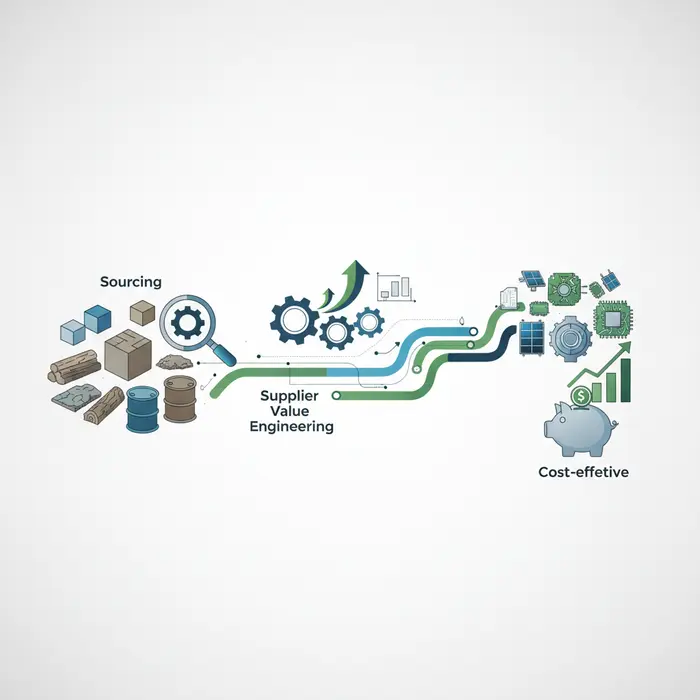
In today’s competitive B2B landscape, achieving sustainable profitability hinges significantly on mastering Material Cost Reduction Strategies B2B. Beyond merely cutting corners, this involves a sophisticated approach to Cost-Effective Raw Material Sourcing and deeply engaging in Supplier Value Engineering. Companies that prioritize these areas not only enhance their bottom line but also build more resilient and innovative supply chains. This section delves into proactive strategies designed to optimize procurement processes, negotiate superior deals, and foster mutually beneficial collaborations with suppliers, ultimately leading to significant B2B Procurement Optimization Materials and unveiling Smart Material Substitution Benefits.
1. Strategic Sourcing: Beyond Price Negotiations
True Material Cost Reduction Strategies B2B extend far beyond merely demanding lower prices. Strategic sourcing is a holistic approach that evaluates the total cost of ownership (TCO), encompassing not just the unit price, but also quality, delivery, lead times, inventory costs, and even the environmental and social impact of the materials. It involves a systematic process of analyzing an organization’s spend, understanding market dynamics, and identifying potential supply base opportunities. By segmenting spend categories and developing tailored sourcing strategies for each, businesses can move from transactional purchasing to building long-term, value-driven supplier relationships. This shift enables companies to mitigate risks, ensure supply continuity, and secure materials that align with their product specifications and operational efficiencies, thereby achieving sustainable B2B Procurement Optimization Materials rather than short-term gains.
2. Leveraging Global Networks for Diversified Sourcing
The modern supply chain is inherently global, and astute organizations recognize the immense potential in leveraging diverse international networks for Cost-Effective Raw Material Sourcing. Diversifying the supply base across different geographical regions is a crucial strategy for mitigating risks associated with geopolitical instabilities, natural disasters, and localized supply disruptions. Moreover, global sourcing opens doors to a wider array of suppliers, often leading to more competitive pricing due to varying labor costs, production efficiencies, and material availability in different markets. Companies can gain access to cutting-edge technologies, specialized materials, and unique manufacturing processes that might not be available domestically. However, successful global sourcing requires meticulous planning, including understanding international trade regulations, logistics, currency fluctuations, and quality control. Implementing robust supplier qualification processes and clear communication channels are paramount to harnessing the full benefits of a globally diversified supply chain, ensuring both resilience and cost efficiency.
3. Collaborative Supplier Value Engineering Initiatives
One of the most powerful yet often underutilized avenues for Material Cost Reduction Strategies B2B is Supplier Value Engineering. This proactive approach involves working hand-in-hand with key suppliers to identify and implement innovations that enhance product value while simultaneously reducing costs. Instead of a purely adversarial negotiation, value engineering fosters a partnership where suppliers, with their intimate knowledge of materials and manufacturing processes, contribute ideas for design improvements, process optimization, or even Smart Material Substitution Benefits. For instance, a supplier might propose a less expensive, yet equally effective, alternative material that meets performance specifications, or suggest a minor design tweak that simplifies manufacturing, leading to significant cost savings without compromising quality. These collaborations can also lead to joint research and development, shared intellectual property, and improved product functionality. Embracing Supplier Value Engineering transforms the supplier relationship from a transactional interaction into a strategic partnership, driving continuous improvement, fostering innovation, and delivering substantial long-term value for both parties. This collaborative ethos is fundamental to advanced B2B Procurement Optimization Materials.
B2B Procurement Optimization for Materials with Technology
In the competitive landscape of modern business, optimizing the procurement of materials is paramount for achieving sustainable growth and profitability. For B2B enterprises, inefficient material acquisition processes can lead to inflated costs, delays, and wasted resources. This section delves into cutting-edge strategies, emphasizing internal process improvements, digital tools, and data analytics to significantly enhance efficiency and realize substantial Material Cost Reduction Strategies B2B. By leveraging technology, companies can streamline operations, minimize waste, and secure a competitive advantage through smarter sourcing and management of raw materials.
1. Implementing Advanced Procurement Software and AI
The journey towards B2B procurement optimization for materials begins with the adoption of advanced procurement software solutions integrated with Artificial Intelligence (AI). These sophisticated platforms move beyond basic e-procurement systems, offering comprehensive Purchase-to-Pay (P2P) functionalities, e-sourcing, contract management, and supplier relationship management (SRM) capabilities. AI-powered tools bring a revolutionary dimension by automating routine tasks, such as requisition processing, invoice matching, and even low-value order placement, thereby freeing up procurement professionals to focus on strategic initiatives. Predictive analytics, driven by AI, can forecast material demand with higher accuracy, anticipate potential supply chain disruptions, and identify optimal times for bulk purchases based on market trends and historical data. Furthermore, AI algorithms can analyze vast datasets to identify new, reliable suppliers, evaluate their performance metrics, and even assist in complex negotiation strategies. This not only significantly reduces manual errors and processing times but also facilitates B2B Procurement Optimization Materials by ensuring that the right materials are sourced at the right price, from the right supplier, precisely when needed. The integration of such software enhances transparency across the procurement lifecycle, leading to more informed decision-making and better compliance.
2. Improving Inventory Management to Minimize Waste and Holding Costs
Effective inventory management is a critical component of successful material procurement optimization. Poor inventory practices directly contribute to increased holding costs, obsolescence, and material waste, undermining overall material cost reduction efforts. Technology offers powerful solutions to overcome these challenges. Advanced Inventory Management Systems (IMS), often integrated with Enterprise Resource Planning (ERP) platforms, provide real-time visibility into stock levels, consumption rates, and demand forecasts. Techniques such as Just-In-Time (JIT) inventory, Vendor-Managed Inventory (VMI), and Consignment Inventory become more feasible and efficient with the support of technology. IoT sensors and RFID tags can track materials throughout the supply chain, from warehouse entry to production line, offering precise data on movement and usage. This granular visibility helps prevent overstocking or understocking, ensuring that capital is not tied up unnecessarily in excess inventory. By accurately forecasting demand and optimizing order quantities, businesses can drastically reduce storage costs, minimize the risk of material spoilage, and lessen the environmental impact associated with waste, thus contributing significantly to Cost-Effective Raw Material Sourcing. This proactive approach to inventory not only lowers operational expenses but also enhances operational agility and responsiveness to market changes.
3. Data Analytics for Informed Material Procurement Decisions
The true power of technology in material procurement optimization is unleashed through robust data analytics. By collecting and analyzing data from various sources—including supplier performance, historical spend, market prices, contract terms, and internal consumption patterns—businesses can gain unparalleled data-driven insights to make superior procurement decisions. Spend analysis, for instance, helps identify areas of overspending, opportunities for consolidation, and potential leverage points for negotiation with suppliers. Supplier performance analytics evaluates factors like delivery reliability, quality, and compliance, enabling strategic partnerships with high-performing vendors and facilitating Supplier Value Engineering. Market intelligence, powered by external data feeds and predictive analytics, allows procurement teams to anticipate price fluctuations for raw materials, currency risks, and geopolitical impacts on supply chains. Furthermore, advanced analytics can uncover opportunities for Smart Material Substitution Benefits, identifying alternative materials that offer similar or superior properties at a lower cost or with a more sustainable footprint. The ability to model different scenarios and assess potential risks and rewards empowers procurement professionals to move from reactive purchasing to proactive, strategic sourcing, driving significant value and sustained cost reductions across the organization. This analytical capability transforms procurement into a strategic function that actively contributes to the bottom line.
Future-Proofing Your Material Costs: Trends & Best Practices
In the dynamic landscape of global commerce, managing material costs is no longer just about seeking the lowest price; it’s about strategic foresight and resilience. Businesses are increasingly recognizing that effective Material Cost Reduction Strategies B2B are crucial for long-term profitability and competitive advantage. This section delves into emerging trends in material science and supply chain management, offering actionable steps for businesses to implement robust strategies that future-proof their operations against volatility and unforeseen disruptions. From embracing sustainable practices to leveraging technological advancements, proactive measures are key to optimizing B2B procurement and ensuring cost-effectiveness.

1. Embracing Circular Economy Principles for Sustainable Savings
The shift towards a circular economy is more than an environmental imperative; it’s a powerful framework for achieving significant, sustainable material cost reductions. By moving away from the traditional linear ‘take-make-dispose’ model, businesses can unlock value through resource efficiency, waste reduction, and innovative material use. One key area is embracing Smart Material Substitution Benefits. This involves exploring alternative materials that are recycled, renewable, or have longer lifecycles, often leading to reduced raw material consumption and disposal costs. For instance, manufacturers are increasingly using bio-based plastics, recycled metals, or composites that offer comparable performance at a potentially lower lifecycle cost. Implementing circular principles also fosters deeper collaboration with suppliers and customers, creating closed-loop systems for materials. Adopting these practices not only enhances a company’s environmental footprint but also provides a strategic advantage by mitigating risks associated with volatile raw material markets and tightening environmental regulations. A comprehensive understanding of the circular economy’s actionable agenda for business can guide firms in identifying opportunities for substantial savings and innovation.
2. Building Resilience into Your Material Supply Chain
Recent global events have underscored the critical importance of a resilient material supply chain. Dependency on single-source suppliers or geographically concentrated regions can expose businesses to significant risks, leading to costly delays and production halts. To mitigate these vulnerabilities, companies must prioritize Cost-Effective Raw Material Sourcing strategies that emphasize diversification. This includes identifying multiple qualified suppliers across different regions, exploring localized sourcing options, and establishing robust contingency plans. Implementing advanced analytics and real-time visibility tools can help monitor supplier performance and anticipate potential disruptions. Furthermore, fostering strong, collaborative relationships with key suppliers is vital. Engaging in Supplier Value Engineering allows businesses to work alongside their vendors to identify opportunities for material optimization, process improvements, and cost reduction without compromising quality. This collaborative approach can lead to mutual benefits, including improved efficiency, shared innovation, and a more robust supply chain capable of withstanding unforeseen challenges. Such strategies are fundamental for effective Material Cost Reduction Strategies B2B.
3. Developing a Comprehensive Cost Reduction Action Plan
To effectively manage and reduce material costs, a systematic and comprehensive action plan is indispensable. This plan should begin with a thorough analysis of current procurement processes, spending patterns, and material usage across all operations. Identifying high-cost materials and high-volume components provides clear targets for optimization. Leveraging technology, such as AI-powered procurement platforms and predictive analytics, can significantly enhance B2B Procurement Optimization Materials by offering insights into market trends, supplier performance, and potential cost savings. Cross-functional teams, involving procurement, engineering, manufacturing, and finance, should collaborate to identify and implement cost-saving initiatives. This includes rigorous contract negotiations, exploring bulk purchasing options, and continuously evaluating alternative material specifications. Additionally, implementing lean manufacturing principles can reduce waste and optimize material flow, contributing to overall cost efficiency. A well-defined action plan for Material Cost Reduction Strategies B2B should also include performance metrics and regular reviews to ensure continuous improvement and adaptation to evolving market conditions. By integrating these practices, businesses can achieve sustained cost reductions and strengthen their financial position, ensuring long-term competitiveness. For ongoing success, consistent evaluation and refinement of your Material Cost Reduction Strategies B2B are essential.
Partner with Vietnam’s Leading Suppliers
Looking for reliable suppliers in Vietnam? Contact VietnamSuppliers.com today to connect with verified manufacturers and exporters across all industries.
—————————————
References
– Deloitte Global Supply Chain Trends Report: https://www2.deloitte.com/us/en/insights/topics/supply-chain/global-supply-chain-trends.html
– Deloitte: Value Engineering for Manufacturers: https://www2.deloitte.com/us/en/pages/manufacturing/articles/value-engineering-for-manufacturers.html
– Strategic Sourcing Transformation: https://www.mckinsey.com/capabilities/operations/our-insights/strategic-sourcing-transformation-next-generation-sourcing-for-a-changing-world
– Procurement Analytics: Driving Value Through Insight: https://www2.deloitte.com/us/en/pages/operations/articles/procurement-analytics.html
– The circular economy: An actionable agenda for business: https://www.mckinsey.com/capabilities/operations/our-insights/the-circular-economy-an-actionable-agenda-for-business