
The Rise of Sustainable Trade Finance
In an era defined by increasing environmental consciousness and social responsibility, the global financial landscape is undergoing a profound transformation. At the forefront of this evolution is the burgeoning field of Sustainable Trade Finance. This crucial shift reflects a growing recognition among businesses, investors, and policymakers that economic prosperity must go hand-in-hand with ecological stewardship and equitable social practices. Far from being a niche concern, sustainable trade finance is rapidly becoming a cornerstone of international commerce, driven by a complex interplay of consumer demands, stringent regulatory frameworks, and the urgent need to address global challenges like climate change and social inequality. This overview delves into the increasing importance and core drivers behind this monumental global shift towards more responsible and resilient trade finance practices.

1. Defining Sustainable Trade: Beyond Greenwashing
At its core, sustainable trade finance extends beyond merely funding transactions; it integrates environmental, social, and governance (ESG) factors into every stage of the trade lifecycle. This means assessing the ecological footprint of goods, evaluating labor practices within supply chains, and ensuring transparent governance. True sustainability demands a departure from “greenwashing,” where companies superficially market eco-friendly practices without substantive change. Instead, it calls for measurable impact, verifiable data, and a genuine commitment to responsible conduct. For instance, an exporter of agricultural products might secure ESG Export Finance by demonstrating sustainable farming methods, fair wages for workers, and transparent supply chain reporting. The goal is to create a financial ecosystem that rewards and incentivizes genuinely sustainable business models, driving real-world positive change rather than just public relations.
2. Market Drivers: Consumer, Investor, and Regulatory Pressure
The acceleration towards sustainable trade finance is not accidental; it’s a response to powerful market forces. Consumers, particularly younger generations, are increasingly scrutinizing the origins and ethical production of goods, favoring brands that demonstrate clear commitments to sustainability. This growing demand translates into market opportunities for businesses that adopt sustainable practices and risks for those that don’t. Concurrently, institutional investors are integrating ESG criteria into their investment decisions, recognizing that companies with strong ESG performance often exhibit greater resilience, lower risk profiles, and better long-term returns. This investor pressure is steering capital towards sustainable ventures and away from environmentally or socially detrimental ones. Furthermore, governments and international bodies are enacting new regulations and policies, such as carbon border adjustment mechanisms and mandatory human rights due diligence, which compel businesses to integrate sustainability into their operations. These International Trade Policy Updates are creating a legal and financial imperative for businesses to adopt sustainable practices, making it not just a choice, but a necessity for market access and competitiveness.
3. Integrating ESG into Global Supply Chain Finance
Perhaps one of the most impactful areas for sustainable trade finance is within Global Supply Chain Finance. Supply chains are inherently complex, often spanning multiple countries and involving numerous intermediaries, making them fertile ground for both environmental and social risks. Integrating ESG principles here means extending sustainability assessments beyond immediate trading partners to encompass the entire chain, from raw material extraction to final delivery. Financial institutions are leveraging innovative Digital Trade Finance Solutions, such as blockchain and AI-powered platforms, to enhance transparency and traceability within these intricate networks. These technologies can verify certifications, monitor compliance with labor standards, and track carbon emissions across different tiers of suppliers. By offering preferential financing terms, lower interest rates, or extended payment periods to suppliers who meet specific sustainability benchmarks, banks and corporations can incentivize greener and more ethical practices throughout the supply chain. This approach not only mitigates risks associated with reputational damage and regulatory non-compliance but also fosters more resilient, efficient, and ethical global trade ecosystems, positioning businesses for long-term success in a world that increasingly values responsibility.
Digital Transformation in Trade Finance Solutions
The global trade landscape is undergoing a profound transformation, driven by an accelerating wave of technological innovation. This evolution is particularly vital in trade finance, where traditional, paper-intensive processes are being replaced by Digital Trade Finance Solutions designed to revolutionize efficiency, enhance transparency, and significantly improve the sustainable impact of operations. As businesses strive for greater resilience and ethical conduct, the integration of advanced technologies like blockchain, artificial intelligence, and predictive analytics is not merely an upgrade; it’s a fundamental shift towards more Sustainable Trade Finance practices, fostering robust Global Supply Chain Finance and compliance with evolving International Trade Policy Updates.
1. Blockchain and AI for Enhanced Traceability
Blockchain technology, with its immutable and distributed ledger capabilities, is proving to be a cornerstone for achieving unparalleled traceability in trade finance. By recording every transaction and movement of goods on an unchangeable ledger, blockchain provides a single source of truth, drastically reducing fraud and increasing trust among trading partners. This transparency is crucial for ESG Export Finance, enabling lenders and investors to verify the ethical sourcing, environmental footprint, and social compliance of products throughout the supply chain. Artificial Intelligence (AI) complements blockchain by analyzing vast datasets to detect anomalies, predict potential risks, and streamline due diligence processes. AI-powered analytics can quickly assess the sustainability credentials of suppliers, ensuring adherence to environmental, social, and governance (ESG) standards, thereby making Sustainable Trade Finance not just an aspiration but an actionable reality.
2. Paperless Trade: Streamlining Operations & Reducing Footprint
The shift towards paperless trade represents one of the most immediate and impactful aspects of digital transformation. Traditionally, international trade has relied heavily on physical documents such such as bills of lading, letters of credit, and customs declarations, leading to delays, high administrative costs, and significant environmental waste. Digital Trade Finance Solutions are now enabling the creation, exchange, and management of electronic trade documents, often secured by blockchain. This move not only accelerates transaction times and reduces operational expenses but also substantially minimizes the carbon footprint associated with printing, courier services, and physical storage. For more insights into sustainable trade practices, visit Sustainable Trade Finance. The widespread adoption of electronic transferable records is also being championed by international bodies, pushing for harmonized legal frameworks to support fully digital trade flows, enhancing overall efficiency and resilience across Global Supply Chain Finance.
3. Predictive Analytics for Risk Management & ESG Compliance
Leveraging big data and AI, predictive analytics tools are transforming risk management in trade finance. Instead of reacting to issues, financial institutions can now anticipate potential risks related to credit defaults, geopolitical instability, and supply chain disruptions. These advanced analytical models process real-time and historical data from diverse sources, including news feeds, weather patterns, economic indicators, and regulatory changes, to provide early warnings and actionable insights. Furthermore, predictive analytics plays a critical role in enhancing ESG Export Finance compliance. By monitoring suppliers’ environmental performance, labor practices, and governance structures, these tools help identify and mitigate reputational and regulatory risks, ensuring that trade finance operations align with evolving International Trade Policy Updates and corporate sustainability goals. This proactive approach reinforces the commitment to Sustainable Trade Finance.
4. API Integration and Platform Ecosystems
The future of trade finance lies in interconnected ecosystems facilitated by Application Programming Interface (API) integration. APIs enable seamless, real-time data exchange between various stakeholders – banks, corporates, logistics providers, insurers, and regulatory bodies – breaking down traditional silos. This interoperability fosters the development of multi-bank platforms and digital trade finance marketplaces, where participants can access a broader range of services, streamline onboarding, and execute transactions with greater speed and transparency. These integrated platforms are central to modern Digital Trade Finance Solutions, allowing for automated processing, improved reconciliation, and enhanced visibility across the entire trade lifecycle. By creating a collaborative digital environment, API integration strengthens Global Supply Chain Finance, driving efficiency and significantly contributing to the overall objectives of Sustainable Trade Finance, as highlighted by initiatives like the ICC Global Roadmap for Digital Trade, which aims to accelerate the adoption of digital trade standards globally.
ESG Integration in Export Finance
The global commercial landscape is rapidly evolving, with Environmental, Social, and Governance (ESG) factors now mainstream imperatives. This shift is particularly pronounced in export finance, where lenders, insurers, and governments increasingly scrutinize the sustainability credentials of trade transactions. ESG integration transcends mere risk mitigation; it fosters resilient supply chains, meets stakeholder demands, and unlocks new opportunities in a world acutely aware of its environmental and social responsibilities. As businesses navigate complex international markets, embedding ESG criteria into their export strategies is no longer optional but critical for successful and future-proof Sustainable Trade Finance. This section explores the growing role of ESG criteria in export financing decisions and outcomes, reshaping international trade policies and practices.
1. Measuring ESG Impact: Metrics and Reporting
Effective ESG integration in export finance hinges on accurately measuring and reporting its impact. Without robust metrics, “greenwashing” becomes a risk, and genuine progress remains elusive. Export finance institutions develop sophisticated frameworks to assess the ESG performance of projects and companies. Key metrics include carbon footprint reduction, water usage efficiency, adherence to labor standards, supply chain transparency, and ethical governance structures.
Reporting frameworks like the Task Force on Climate-related Financial Disclosures (TCFD) and the Sustainability Accounting Standards Board (SASB) provide standardized methodologies for disclosing material ESG risks and opportunities. For ESG Export Finance, this entails detailed due diligence encompassing environmental, social, and governance audits. Companies must demonstrate compliance with regulations and a proactive commitment to sustainable practices. Transparent reporting, backed by verifiable data, builds trust with financiers, influencing credit ratings, insurance premiums, and access to capital. Institutions like the World Bank Group actively promote these standards globally.
2. Incentives and Challenges for Green Exports
The drive towards Sustainable Trade Finance presents both significant incentives and considerable challenges. Incentives include preferential financing terms for projects with strong ESG credentials, such as lower interest rates and longer repayment periods. A growing number of importers prioritize suppliers with verifiable sustainable practices, creating new market access for green exporters. Adherence to higher ESG standards also enhances brand reputation, attracts socially conscious investors, and improves operational efficiency. Government policies and International Trade Policy Updates further push for greener trade, with mechanisms like carbon border adjustments becoming common.
However, the path to green exports presents hurdles. Primary challenges include the initial cost of transitioning to sustainable production, requiring investments in new technologies. Data collection and reporting can be complex, especially for SMEs. Ensuring ESG compliance across fragmented Global Supply Chain Finance networks also poses logistical and oversight challenges. Varying ESG standards and regulatory landscapes across countries add complexity. Despite these, the long-term benefits of enhanced competitiveness, reduced regulatory risks, and increased access to capital compel businesses to embrace the green export agenda.
3. The Role of Digital Trade Finance Solutions
ESG integration in export finance is significantly bolstered by Digital Trade Finance Solutions. Technology offers powerful tools to overcome complexities in ESG measurement, reporting, and compliance across intricate global supply chains. Blockchain, for instance, provides an immutable, transparent ledger for tracking goods’ provenance, verifying sustainability certifications, and monitoring environmental and labor practices, enhancing trust and reducing fraud.
Artificial intelligence (AI) and machine learning (ML) can analyze vast datasets to identify ESG risks, assess supplier performance, and predict compliance issues, offering proactive insights. Digital platforms streamline ESG data collection and aggregation, simplifying reporting and helping businesses demonstrate sustainability commitments. E-documentation, digital identity verification, and automated compliance checks accelerate transactions and integrate ESG due diligence seamlessly. As demand for transparency in ESG Export Finance intensifies, these digital tools become indispensable, facilitating more efficient, secure, and truly sustainable international trade. They empower financiers and exporters to prove green credentials, fostering responsible global commerce.
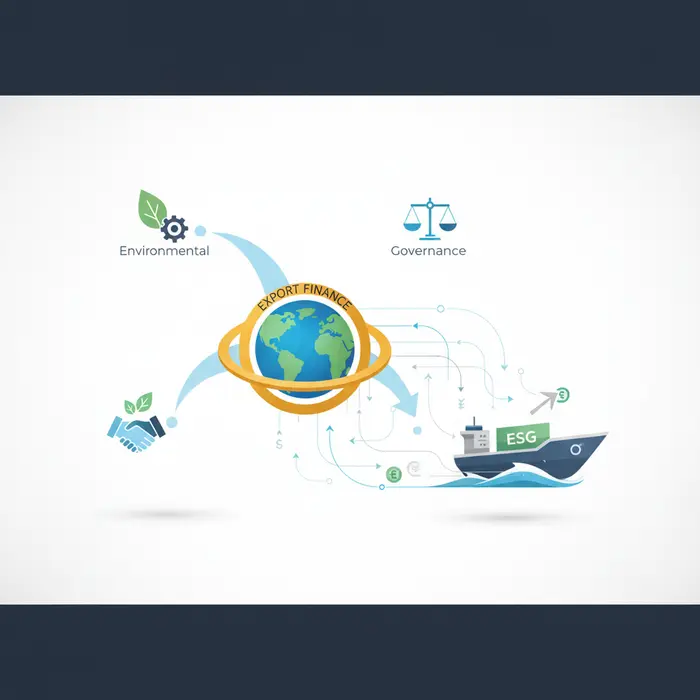
The transition towards a more sustainable global economy irrevocably shapes export finance. By embracing robust ESG metrics, navigating incentives and challenges, and leveraging cutting-edge Sustainable Trade Finance solutions, businesses and financial institutions can collectively build a more resilient, equitable, and environmentally conscious international trading system. This paradigm shift not only mitigates risks but also unlocks significant opportunities for growth and innovation.
Securing Global Supply Chain Finance
In an era defined by increasing environmental consciousness, social responsibility, and complex geopolitical dynamics, the imperative for resilient, ethical, and transparent global supply chains has never been greater. Sustainable Trade Finance emerges as a critical enabler, reorienting traditional financial flows to support practices that not only ensure business continuity but also foster positive environmental, social, and governance (ESG) outcomes across the entire value chain. By integrating sustainability criteria into financing decisions, businesses can build stronger, more adaptable supply networks capable of navigating future disruptions while upholding their commitments to ethical conduct and environmental stewardship. This paradigm shift moves beyond mere compliance, positioning sustainable finance as a strategic tool for long-term value creation and competitive advantage in a rapidly evolving global marketplace.
1. Supplier Finance and Ethical Sourcing
The foundation of a sustainable supply chain rests heavily on the practices of its suppliers. Traditional supplier finance models often prioritize cost-efficiency and speed, sometimes inadvertently overlooking critical ethical and environmental considerations. Sustainable Trade Finance, conversely, incentivizes and facilitates ethical sourcing by linking financing terms directly to a supplier’s ESG performance. This can manifest as preferential interest rates, extended payment terms, or increased access to capital for suppliers who demonstrate strong adherence to labor rights, environmental protection, and anti-corruption standards. For instance, ESG Export Finance initiatives are increasingly common, encouraging exporters in developing nations to adopt sustainable practices, thereby elevating global standards. By empowering suppliers to invest in better working conditions, greener manufacturing processes, and responsible resource management, companies not only mitigate reputational risks but also cultivate a more dependable and ethically sound supply base. This approach transforms the financial relationship into a partnership for shared sustainability goals, ensuring that growth is inclusive and responsible across the entire global supply chain finance ecosystem.
2. Risk Mitigation in a Volatile Global Economy
The past few years have underscored the inherent vulnerabilities of global supply chains to a myriad of risks, from pandemics and geopolitical conflicts to climate change impacts and economic volatility. Sustainable Trade Finance plays a pivotal role in bolstering resilience by encouraging practices that inherently reduce these risks. Financing for diversified sourcing strategies, localized production, and robust climate adaptation measures helps companies future-proof their operations. For example, investments in renewable energy for manufacturing sites or water conservation technologies supported by sustainable finance reduce operational costs and exposure to resource scarcity. Furthermore, adhering to evolving International Trade Policy Updates regarding environmental standards and human rights due diligence is crucial. Financing mechanisms that support compliance with these policies not only ensure market access but also preempt potential legal and regulatory hurdles. By embedding sustainability into risk management frameworks, businesses can leverage global supply chain finance to build more robust and agile networks, capable of absorbing shocks and maintaining continuity even amidst the most challenging global economic conditions. This proactive approach to risk mitigation becomes a cornerstone of long-term business viability and stability.
3. Digital Transformation and Transparency in Trade Finance
Achieving genuine sustainability and resilience in global supply chains requires unprecedented levels of transparency and traceability. This is where Digital Trade Finance Solutions become indispensable. Technologies such as blockchain, artificial intelligence (AI), and the Internet of Things (IoT) are revolutionizing how supply chains operate, providing granular visibility from the origin of raw materials to the final consumer. Blockchain, for example, can create immutable records of transactions, certifications, and compliance checks, ensuring the authenticity of sustainability claims and verifying ethical sourcing practices. AI-driven analytics can identify patterns and flag potential risks or non-compliance within the supply chain, enabling swift corrective actions. IoT devices can track environmental parameters, product journey, and even labor conditions in real-time. These digital tools significantly enhance the auditability and accountability of ESG commitments, making it easier for financial institutions to assess and deploy ESG Export Finance effectively. By embracing digital transformation, businesses can achieve a level of transparency that not only satisfies regulatory demands and consumer expectations but also fortifies the integrity and sustainability of their entire global supply chain finance operations, fostering trust and reducing instances of greenwashing.
Navigating International Trade Policy Updates
The global trade landscape is in a constant state of flux, shaped by evolving environmental concerns, geopolitical realignments, and rapid technological advancements. Analyzing recent and upcoming policy changes, regulations, and geopolitical shifts is crucial for businesses aiming to thrive in a world increasingly focused on Sustainable Trade Finance. These updates not only dictate market access and operational costs but also redefine the parameters for responsible and ethical commerce worldwide, profoundly impacting how companies approach their international transactions and investments.

1. Carbon Border Adjustment Mechanisms (CBAM) and Beyond
One of the most significant recent developments in international trade policy is the emergence of Carbon Border Adjustment Mechanisms (CBAM). Designed to prevent ‘carbon leakage’ – where companies relocate carbon-intensive production to countries with less stringent climate policies – CBAMs levy a charge on the carbon emissions embedded in certain imported goods. The European Union’s Carbon Border Adjustment Mechanism (CBAM), currently in its transitional phase, mandates importers to report embedded emissions for goods like cement, iron, steel, aluminum, fertilizers, electricity, and hydrogen. This mechanism will eventually require the purchase of CBAM certificates, effectively putting a carbon price on imports.
The implications of CBAM are far-reaching. Exporters to the EU must now meticulously track and report their carbon footprints, necessitating significant investments in data collection, verification, and potentially in decarbonization technologies. This shift directly influences Sustainable Trade Finance by creating a demand for financing solutions that support green transitions, carbon accounting software, and supply chain decarbonization efforts. Beyond the EU, other nations are exploring similar mechanisms, signaling a global trend towards incorporating environmental costs into trade, thus accelerating the demand for ESG-compliant operations and ESG Export Finance.
2. Geopolitical Influences on Trade Regulations
Geopolitical shifts continue to be a dominant force shaping international trade regulations. The rise of protectionism, trade disputes, sanctions regimes, and efforts towards economic decoupling or ‘de-risking’ have led to increased complexity and uncertainty. Countries are increasingly prioritizing supply chain resilience and national security, leading to policies that encourage reshoring, friend-shoring, or diversifying critical supply chains away from perceived high-risk regions. For instance, restrictions on technology exports, particularly in semiconductors and AI, or import tariffs on strategic goods, are becoming more common.
These geopolitical dynamics directly impact Global Supply Chain Finance, as businesses must navigate fragmented markets, higher logistics costs, and increased political risk. Regulatory divergence means that what is permissible in one market may be restricted in another, requiring companies to develop agile and adaptable trade strategies. The emphasis on ethical sourcing and human rights due diligence also gains prominence, intertwining geopolitical considerations with ESG criteria, and further reinforcing the need for transparent and responsible trade practices aligned with Sustainable Trade Finance principles.
3. Digitalization and the Future of Trade Policy
The digitalization of trade is rapidly transforming both the practicalities and policies governing international commerce. Governments worldwide are recognizing the inefficiencies of paper-based processes and are actively pursuing digital trade agreements and frameworks to facilitate electronic transactions, digital customs procedures, and the use of technologies like blockchain for secure data exchange. Initiatives like the UNCITRAL Model Law on Electronic Transferable Records (MLETR) are paving the way for legally recognized digital bills of lading and other trade documents, streamlining operations and reducing fraud.
This drive towards digitalization has profound implications for trade policy updates. It necessitates harmonized legal frameworks, robust cybersecurity measures, and interoperable digital platforms across borders. For Digital Trade Finance Solutions, this means faster processing times, enhanced transparency, and greater accessibility, particularly for SMEs. Furthermore, digital technologies can significantly improve the tracking and verification of ESG compliance within supply chains, supporting carbon footprint reporting for mechanisms like CBAM, and enabling more effective ESG Export Finance. The ongoing dialogue around data governance and cross-border data flows will heavily influence future trade agreements, underscoring digitalization as a cornerstone for efficient and sustainable global trade.
Partner with Vietnam’s Leading Suppliers
Looking for reliable suppliers in Vietnam? Contact VietnamSuppliers.com today to connect with verified manufacturers and exporters across all industries.
—————————————
References
– Sustainable Trade Finance: A Practical Guide: https://www.iccwbo.org/publication/sustainable-trade-finance-a-practical-guide/
– ICC Launches Global Roadmap for Digital Trade: https://iccwbo.org/news-publications/news/icc-launches-global-roadmap-for-digital-trade/
– World Bank Group Environment Topic: https://www.worldbank.org/en/topic/environment
– Sustainable Trade Finance Guidelines by ICC: https://iccwbo.org/trade-finance/sustainable-trade-finance/
– Carbon Border Adjustment Mechanism (CBAM): https://taxation-customs.ec.europa.eu/green-taxation-0/carbon-border-adjustment-mechanism_en

