
What is an International Commercial Invoice?
The International Commercial Invoice stands as the undisputed backbone of global trade, serving as a legally binding document that details the transaction between an exporter and an importer. Far more than just a bill for goods, it is a comprehensive record that articulates the terms of sale, identifies the parties involved, describes the merchandise, and ultimately facilitates customs clearance and payment processing across borders. Without an accurately completed commercial invoice, goods cannot legally leave the country of origin or enter the destination country, making its proper execution absolutely crucial for seamless international supply chains and compliance with global trade regulations. Understanding the multifaceted purpose of commercial invoice is vital for any business engaged in cross-border transactions.
Defining the Commercial Invoice in Global Trade
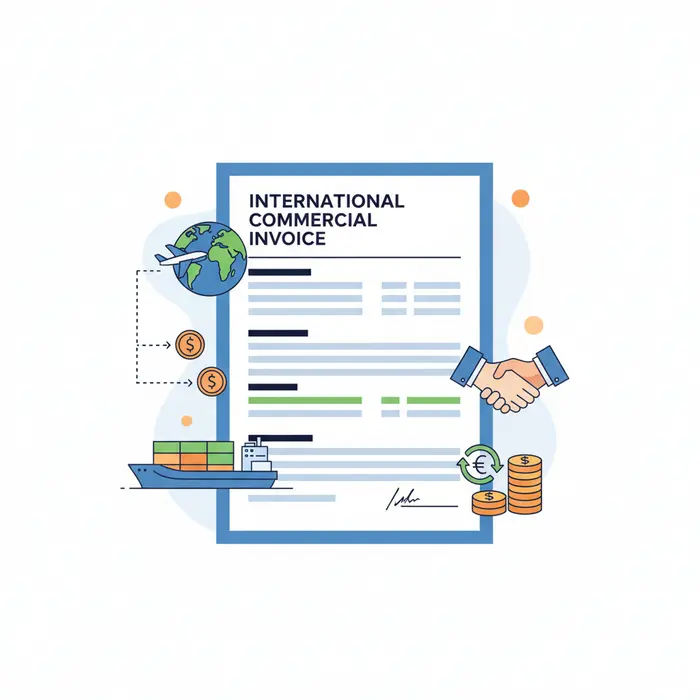
An International Commercial Invoice is a vital shipping document issued by the seller (exporter) to the buyer (importer) when goods are shipped internationally. It provides a detailed account of the transaction, acting as a declaration of the goods being sold and their value. Unlike a domestic sales invoice, its purpose extends far beyond simple billing; it’s a critical tool for customs authorities, banks, and other regulatory bodies worldwide. Key information typically found on a robust commercial invoice template export includes:
- Seller and Buyer Information: Full names, addresses, and contact details of both parties.
- Invoice Number and Date: Unique identifier and date of issue.
- Description of Goods: A clear, detailed, and accurate description of each item, including material, use, and model numbers.
- Harmonized System (HS) Codes: International codes used by customs to classify products and assess duties.
- Quantity and Unit Value: The number of units for each item and their price per unit.
- Total Value: The total monetary value of the goods, often broken down by currency.
- Incoterms: International Commercial Terms that define the responsibilities of buyers and sellers for the delivery of goods under sales contracts (e.g., FOB, CIF, EXW).
- Country of Origin: The country where the goods were manufactured or produced.
- Reason for Export: Whether it’s a sale, gift, sample, repair, etc.
- Payment Terms: How the buyer will pay the seller.
- Shipping Information: Carrier name, tracking number, and port of loading/unloading.
This comprehensive detailing ensures transparency and compliance throughout the shipping process.
Legal Significance and Role in Customs Clearance
The legal standing of an International Commercial Invoice is profound. It serves as a binding contract between the exporter and importer, outlining the terms of their agreement and the specific goods involved. More importantly, it is the primary document used by customs authorities globally to assess duties and taxes, enforce trade regulations, and gather statistics. Customs officials rely heavily on the information provided to:
- Determine Dutiable Value: The value declared on the invoice is fundamental for calculating customs duties, tariffs, and other import taxes.
- Classify Goods: Accurate HS codes linked to detailed product descriptions enable customs to classify goods correctly and apply the appropriate import regulations.
- Ensure Compliance: The invoice helps verify that the goods comply with import restrictions, licensing requirements, and trade agreements. It is crucial for adhering to customs commercial invoice requirements.
- Combat Illegal Trade: By providing a clear record of the transaction, it aids in preventing smuggling, misdeclaration, and other illicit activities.
Failure to provide an accurate and complete commercial invoice can lead to significant delays, fines, seizure of goods, or even legal penalties. Therefore, meticulous attention to detail is paramount. For businesses navigating the complexities of international trade documentation, understanding the nuances of the International Commercial Invoice is non-negotiable. Further guidance on official customs procedures can often be found on government websites, such as the U.S. Customs and Border Protection (CBP) site, which provides essential information for importers and exporters.
Key Differences from a Standard Sales Invoice
While both a commercial invoice and a standard sales invoice (for domestic transactions) document a sale, their scope and requirements differ significantly due to the complexities of cross-border trade. A standard sales invoice primarily serves as a request for payment and a record for accounting purposes, focusing on basic transaction details.
An International Commercial Invoice, however, incorporates additional critical information necessitated by international shipping and customs regulations. Beyond the basic sales details, it explicitly includes elements such as:
- HS Codes: Absolutely essential for customs classification, irrelevant for domestic sales.
- Country of Origin: Required for tariffs, trade agreements, and import restrictions.
- Incoterms: Specifies who is responsible for shipping costs, insurance, and risk at various stages.
- Reason for Export: Clearly states if the shipment is a sale, sample, gift, return, etc., influencing customs treatment.
Furthermore, it’s important to distinguish between a commercial invoice vs proforma invoice. A proforma invoice is a preliminary bill of sale provided in advance of a shipment, often serving as a quote or declaration of intent. The commercial invoice, conversely, is the final, definitive document that accompanies the actual goods and represents the concluded sale and shipment. This distinction is crucial for accurate trade records and smooth customs processing.
The Purpose and Importance of a Commercial Invoice
In the intricate ecosystem of global trade, an International Commercial Invoice stands as far more than just a simple bill. It is arguably the single most critical document facilitating the seamless movement of goods across borders. Serving as a legally binding record of a sale between an exporter and an importer, this document is indispensable for ensuring compliance, streamlining customs processes, and safeguarding financial transactions. Understanding the comprehensive purpose of a commercial invoice is crucial for any business engaged in international commerce, as its absence or inaccuracy can lead to severe delays, penalties, and financial losses.
1. Facilitating Customs Declarations and Duties Calculation
The primary function of a commercial invoice is to provide customs authorities with all the necessary information to clear goods for import and export. Without a properly executed commercial invoice, shipments can be held indefinitely at borders, accruing storage fees and disrupting supply chains. This document acts as a declaration to customs, detailing precisely what is being shipped, who is sending it, and to whom it is being sent. Key details meticulously outlined include the seller’s and buyer’s contact information, a comprehensive description of the goods (including quantity, unit price, and total value), the country of origin, and the Harmonized System (HS) code. The HS code, a globally standardized system of names and numbers for classifying traded products, is particularly vital as it dictates the applicable duties, taxes, and any specific import restrictions or regulations. Customs officials rely on this information to accurately calculate import duties, taxes (such as VAT or GST), and to enforce compliance with trade agreements, import quotas, and prohibited goods lists. Adhering to specific international trade documentation standards and customs commercial invoice requirements is paramount to avoid complications and ensure a smooth clearance process. Many businesses utilize a robust commercial invoice template export solution to ensure all necessary fields are completed accurately and consistently.
2. Proof of Sale and Essential Payment Terms
Beyond its role in customs, the commercial invoice serves as a fundamental financial and legal document. It provides irrefutable proof of the sale between the exporter and importer, solidifying the terms of the transaction. Unlike a proforma invoice, which is an estimated bill issued before shipment to provide a quote, the commercial invoice is the final statement of sale, issued once the goods have been shipped. This distinction is critical: while a commercial invoice vs proforma invoice comparison highlights their different stages in the sales cycle, only the commercial invoice confirms the actual details post-shipment. It clearly specifies the agreed-upon payment terms, such as payment in advance, cash on delivery, letter of credit, or open account, along with the currency and the total amount due. For the exporter, it is the primary document used to demand payment from the buyer, often forming the basis for bank transfers, letters of credit, and other financing mechanisms. For the importer, it acts as a record of purchase, essential for their internal accounting, auditing, and reconciliation processes. It legally obligates the buyer to pay for the goods received as per the agreed terms, thereby protecting both parties in the event of disputes over pricing or quantity.
3. Critical for Shipping Logistics and Internal Record Keeping
The commercial invoice’s utility extends significantly into the realm of shipping logistics and internal company operations. Freight forwarders and shipping carriers rely on the information contained within to manage the physical movement of goods. Details such as package dimensions, weight, number of units, and Incoterms (International Commercial Terms) guide them in selecting appropriate transportation methods, calculating freight charges, and ensuring proper handling and storage. For instance, the Incoterm specified on the invoice determines who is responsible for insurance, freight, and other costs, as well as when the risk of loss transfers from seller to buyer. Internally, for both the exporter and importer, the commercial invoice is a cornerstone of their record-keeping systems. It feeds into inventory management, sales tracking, accounts receivable/payable, and general ledger entries. This meticulous documentation is vital for financial audits, tax compliance, and strategic planning. Should a product recall, warranty claim, or customs audit occur, a precise and easily accessible International Commercial Invoice can be invaluable for tracing transactions and demonstrating due diligence. Its systematic use contributes to greater transparency, efficiency, and accountability across the entire supply chain, making it an indispensable tool for successful international trade.
Commercial Invoice Requirements for Exports (Customs)
Navigating international trade efficiently hinges on meticulous documentation. Among the most critical documents for cross-border shipments is the International Commercial Invoice. This document is crucial, serving as a contract between seller and buyer, providing customs authorities worldwide with essential information to assess duties, taxes, and ensure compliance. Understanding the mandatory fields and detailed information for a compliant International Commercial Invoice is paramount to prevent costly delays, fines, and seizure of goods, ensuring smooth cross-border shipments.
Mandatory Data Fields: Buyer, Seller, and Goods Description
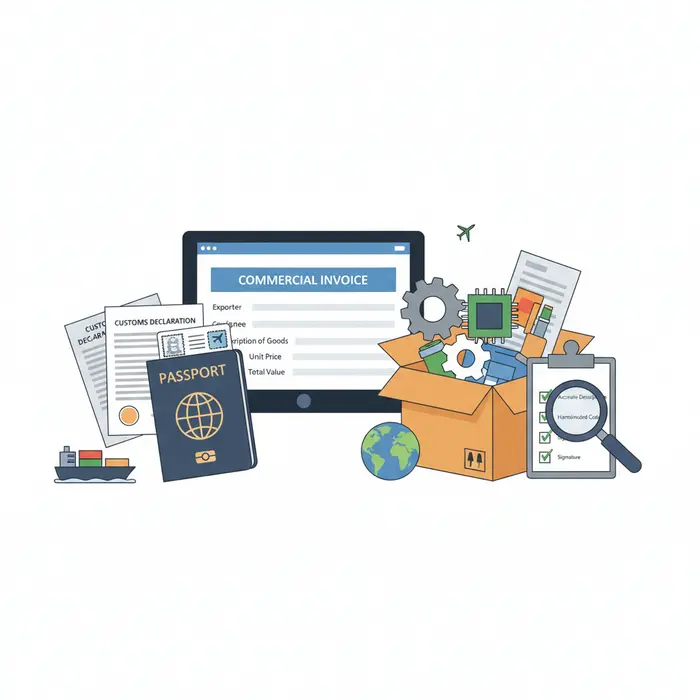
A comprehensive International Commercial Invoice must accurately identify all parties involved and the goods being shipped. At its core, the invoice requires the full legal names, addresses, and contact information for both the exporter (seller) and the importer (buyer), including their respective tax identification numbers and any relevant customs registration numbers. Without these details, customs officials cannot properly identify parties, leading to red flags.
Equally crucial is a precise and detailed description of the goods. For each item, the description should include:
- Common & Technical Name: What the item is called, plus specific details (e.g., material, model, intended use).
- Quantity: Number of units, weight, and dimensions.
- Unit & Total Value: The price per unit and total declared value for each line item and the entire shipment, stating the currency.
- Country of Origin: The country where the goods were manufactured.
An accurate goods description is essential for classification and risk assessment by customs. Vague descriptions like “parts” or “merchandise” are common commercial invoice template export mistakes and almost guarantee delays. The purpose of commercial invoice is to leave no room for ambiguity, allowing customs to verify goods.
Incoterms, Valuation, and Harmonized System (HS) Codes
Beyond basic identifying information, the International Commercial Invoice must clearly define the terms of sale, the value of the goods, and their classification. Incoterms (International Commercial Terms), created by the International Chamber of Commerce (ICC), are globally recognized rules that clarify the responsibilities of buyers and sellers for the delivery of goods. Stating the correct Incoterm (e.g., EXW, FOB, CIF, DDP) on the invoice is critical as it dictates who is responsible for insurance, freight costs, and where the risk transfers. This impacts dutiable value and logistics.
Accurate valuation is another cornerstone of customs compliance. The declared value must reflect the true transaction value, including any royalties, assists, or other payments made as a condition of sale. Misrepresenting the value can lead to severe penalties, as customs use it to calculate duties and taxes, making precision non-negotiable.
Finally, the Harmonized System (HS) code is a globally standardized numerical classification system for traded products. Every item shipped internationally requires an HS code (typically 6-10 digits). This code determines the applicable tariff rates, import restrictions, and eligibility for free trade agreements. Using the correct HS code is paramount; an incorrect code can result in incorrect duties, fines, and delays.
Common Pitfalls and How to Avoid Customs Delays
Even with a solid understanding of customs commercial invoice requirements, common pitfalls can lead to delays. A frequent error is inconsistency between the commercial invoice vs proforma invoice. While a proforma invoice is a preliminary quote, the commercial invoice is the final record, and discrepancies cause confusion. Ensure all details, especially valuation and quantity, match across all shipping documents.
Another common mistake is insufficient detail in the goods description or incorrect HS codes. Ambiguity forces customs to investigate, slowing the process. Always provide a clear, concise, and specific description, supported by the correct HS code for each line item. Overlooking Country of Origin marking is also a significant issue for trade policy.
To avoid customs delays, consider these best practices:
- Thorough Review: Meticulously review every field on your commercial invoice template export for accuracy and completeness.
- Digital Integration: Utilize shipping software to minimize entry errors.
- Stay Updated: Customs regulations can change frequently. Regularly check official customs websites of both countries.
- Communicate: Maintain open communication with your freight forwarder or customs broker for expert guidance and proactive issue flagging.
Ultimately, a well-prepared International Commercial Invoice is your most powerful tool for ensuring a seamless export experience. Adhering to these requirements demonstrates compliance and builds trust with international partners and customs.
Commercial Invoice vs. Proforma Invoice: What’s the Difference?
In the intricate world of international trade, precise documentation is paramount. Among the most crucial documents are the proforma invoice and the commercial invoice. While both provide details about goods and pricing, their purposes, timing, and legal implications differ significantly. Understanding these distinctions is vital for smooth customs clearance, accurate payment processing, and efficient global commerce. This guide clearly differentiates between these two critical trade documents, explaining their distinct purposes and when each should be used in international transactions.
1. Proforma Invoice: A Quote, Not a Demand for Payment
A proforma invoice is essentially a preliminary bill of sale sent to a buyer in advance of a shipment or delivery of goods. Think of it as a detailed quote or an agreement to provide goods or services at a specified price. Its primary purpose is to inform the buyer of the exact details of the upcoming sale, including the description of goods, quantity, price, shipping costs, and terms of sale. It’s often used for international transactions to declare the value of goods for customs purposes, allowing the buyer to apply for import licenses, arrange financing, or estimate customs duties and taxes before the actual shipment.
Crucially, a proforma invoice is non-binding and does not demand payment. It serves as a good faith offer, allowing both parties to agree upon the terms before the official transaction takes place. It’s an excellent tool for clarifying expectations and securing upfront payment or a letter of credit, especially when dealing with new customers or in complex trade scenarios. While it includes most of the information found on a commercial invoice, its pre-shipment timing and non-binding nature are key differentiators.
2. Commercial Invoice: The Binding Document for Shipment
The International Commercial Invoice, in contrast, is a legally binding document that accompanies an international shipment. It is issued by the seller to the buyer after the goods have been shipped, or are ready for shipment, and serves as a demand for payment. This document is indispensable for customs clearance, as it provides customs authorities with the definitive record of the transaction. Without a properly completed commercial invoice, goods can be held indefinitely at customs, leading to delays and additional costs.
The purpose of commercial invoice extends beyond just payment. It acts as proof of sale, details the value of the goods for duty assessment, and facilitates compliance with customs commercial invoice requirements. Key elements typically found on a commercial invoice include: seller and buyer information, invoice number and date, detailed description of goods, quantity, unit price, total value, currency, Incoterms, country of origin, and sometimes a declaration of dangerous goods. Companies often use a commercial invoice template export to ensure all necessary fields are completed accurately for various destinations.
3. When to Use Each: Pre-Shipment vs. Post-Shipment Stages
The timing of when to use a proforma invoice versus a commercial invoice is perhaps their most defining difference, directly correlating with their distinct purposes. The proforma invoice is strictly a pre-shipment document.
- Proforma Invoice Usage: Use a proforma invoice when:
- Providing a detailed quote to a potential buyer.
- Obtaining an import license or securing pre-shipment financing.
- Estimating customs duties, taxes, and other import charges.
- Requesting an upfront payment or establishing a Letter of Credit.
- Confirming order details before formal production or dispatch.
- Commercial Invoice Usage: Use a commercial invoice when:
- The goods are officially being shipped or have already been dispatched.
- Demanding final payment from the buyer.
- Presenting a legal document for customs clearance at both export and import ends.
- Providing definitive proof of sale for accounting and audit purposes.
- Facilitating the transfer of ownership of the goods.
In essence, the proforma invoice sets the stage for a potential sale, outlining the terms and conditions. The commercial invoice, on the other hand, is the official record of the actual sale and shipment, critical for logistics, payment, and regulatory compliance. Recognizing this fundamental distinction is key to navigating the complexities of international trade effectively and ensuring smooth transactions.
Creating Your Commercial Invoice: Templates & Best Practices
An International Commercial Invoice is more than just a bill; it’s a critical document for global trade, acting as a declaration to customs authorities in both the exporting and importing countries. It details the goods being sold, their value, and the terms of sale, serving as the primary document for customs clearance and duty assessment. Without an accurate and complete commercial invoice, your shipments can face significant delays, fines, or even rejection at the border. This section offers practical advice on generating an effective commercial invoice, including accessible template options and strategies for accuracy and efficiency, ensuring your goods move smoothly across international borders.

1. Utilizing a Commercial Invoice Template for Export Success
One of the most effective ways to ensure compliance and consistency in your export documentation is to use a reliable commercial invoice template. A well-designed template pre-structures all the necessary fields, reducing the risk of oversight and accelerating the documentation process. When choosing a commercial invoice template export, look for options that include:
- Seller & Buyer Information: Full names, addresses, and contact details.
- Invoice Number & Date: Unique identifier and date of issuance.
- Shipment Details: Air waybill or bill of lading number, export date, and mode of transport.
- Goods Description: Detailed description, Harmonized System (HS) codes, quantity, unit value, and total value.
- Incoterms: Clearly state the Incoterm (e.g., FOB, CIF) to define responsibilities and costs.
- Origin & Destination: Country of origin for each item and final destination.
- Currency: The currency of the transaction.
- Payment Terms: How and when payment is expected.
- Reason for Export: Sale, sample, gift, repair, etc.
Many freight forwarders, customs brokers, and international trade organizations offer free downloadable templates that can be customized to your specific needs. Utilizing such a template standardizes your documentation, making it easier for customs officials to process and reducing potential complications.
2. Digital vs. Paper Invoices: What’s Acceptable Globally?
The landscape of trade documentation is rapidly evolving, with a growing shift towards digital solutions. Many countries now readily accept digital commercial invoices, often transmitted electronically through secure platforms or as PDF attachments. Digital invoices offer benefits such as faster transmission, reduced paper waste, and easier archiving. However, it’s crucial to understand that not all countries have fully embraced digital-only documentation. Some still require physical, wet-ink signed paper copies, especially for specific types of goods or high-value shipments.
Before every shipment, verify the specific customs commercial invoice requirements of the importing country. This can often be found on the country’s customs website or by consulting with your freight forwarder or customs broker. Always be prepared to provide a paper copy if requested, even if you primarily use digital means. For critical shipments, carrying a physical backup is a wise precaution. The ultimate decision rests with the destination country’s customs authority, making adaptability a key trait for international traders.
3. Tips for Accuracy and Efficiency in Invoice Generation
Accuracy and efficiency are paramount when generating your commercial invoice to avoid customs delays and ensure smooth international transactions. Here are some best practices:
- Double-Check Everything: Ensure all information, especially quantities, values, HS codes, and Incoterms, matches other shipping documents (e.g., packing list, bill of lading). Discrepancies are a major cause of delays.
- Provide Detailed Descriptions: Generic descriptions like "parts" or "electronics" are insufficient. Be specific: "Lithium-ion batteries, 2000mAh, Model XYZ." This clarity aids customs in proper classification.
- Use Correct HS Codes: Harmonized System (HS) codes are globally standardized numbers that classify products. Incorrect HS codes can lead to wrong duties, fines, or customs holds. Verify codes using official government resources or specialized software. U.S. Customs and Border Protection provides comprehensive guidelines on tariff classification, which helps in understanding the purpose of commercial invoice requirements.
- State the Correct Value: Declare the true commercial value of the goods, even for samples or warranty replacements. Undervaluing goods is a serious offense that can lead to severe penalties. Remember, a commercial invoice differs significantly from a proforma invoice, which is merely a preliminary quote; the commercial invoice reflects the actual sale.
- Integrate with ERP/Accounting Systems: For high-volume exporters, integrating invoice generation with your Enterprise Resource Planning (ERP) or accounting software can automate data entry, reduce manual errors, and boost efficiency significantly.
- Sign and Date: Always ensure the invoice is signed by an authorized person and dated.
By adhering to these best practices and utilizing available templates, you can streamline your commercial invoice process, minimize risks, and facilitate faster, more reliable international shipping.
Partner with Vietnam’s Leading Suppliers
Looking for reliable suppliers in Vietnam? Contact VietnamSuppliers.com today to connect with verified manufacturers and exporters across all industries.
—————————————
References
– U.S. Customs and Border Protection Commercial Invoice Guidance: https://www.cbp.gov/trade/basic-import-export/commercial-invoice
– Step-by-step guide to trade documentation | International Trade Centre: https://www.intracen.org/news/Step-by-step-guide-to-trade-documentation/
– U.S. Customs and Border Protection Commercial Invoice Guidance: https://www.cbp.gov/trade/basic-import-export/forms/commercial-invoice
– customs duties and taxes: https://www.cbp.gov/trade/basic-import-export/commercial-invoice
– U.S. Customs and Border Protection provides comprehensive guidelines: https://www.cbp.gov/trade/nafta/tarriff-classification