
Understanding CE Marking: What It Is & Why It Matters
The CE Mark is more than just a symbol; it’s a critical declaration of a product’s compliance with EU health, safety, and environmental protection standards. For manufacturers aiming to access the vast European Union (EU) and European Economic Area (EEA) markets, understanding CE Marking requirements is not optional—it’s imperative. This section delves into the origins, purpose, and profound significance of CE marking, revealing why it’s a cornerstone of market access and a testament to product integrity.
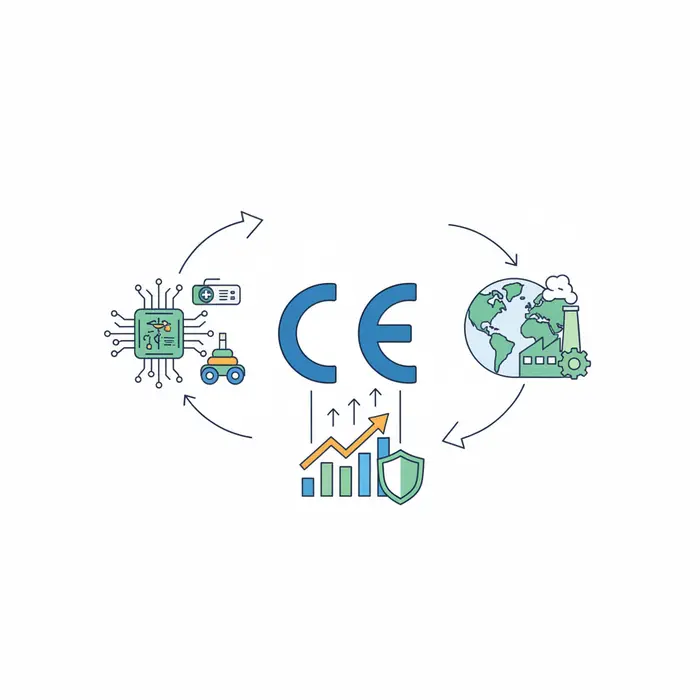
1. Defining CE Marking: A Symbol of Conformity
The initials “CE” stand for “Conformité Européenne,” meaning “European Conformity.” When a product bears the CE Mark, it signifies that the manufacturer has declared its adherence to all applicable health, safety, and environmental protection legislations within the EU. It’s not a quality mark in the traditional sense, nor is it a certification of origin. Instead, it’s a mandatory self-declaration by the manufacturer (or an authorized representative) that the product meets the essential requirements of all relevant CE marking directives. These directives, which cover a wide range of product categories from machinery and electronics to toys and medical devices, lay down the fundamental requirements that products must satisfy before being placed on the market. The process involves identifying applicable directives, carrying out conformity assessment procedures (which might include testing, risk assessment, and technical file compilation), and finally, drafting a Declaration of Conformity CE marking. This declaration is a legal statement affirming that the product complies with all requirements.
2. The Mandate for Market Access in the EU/EEA
For millions of products, CE marking is a legal obligation to be sold within the 27 member states of the EU, as well as Iceland, Liechtenstein, and Norway (the EEA). Without the CE Mark, products cannot legally enter or circulate within these lucrative markets. This mandate ensures a harmonized level of safety and environmental protection across the bloc, preventing member states from imposing their own, potentially conflicting, national standards. The single market concept relies heavily on this common framework, facilitating the free movement of goods. Manufacturers must navigate the intricate CE marking certification process, which can vary significantly depending on the product type and its associated risk level. For high-risk products, the involvement of a third-party conformity assessment body (known as a Notified Body) is mandatory to verify compliance. This rigorous process underscores the EU’s commitment to consumer safety and environmental stewardship. Ignoring CE marking requirements can lead to severe consequences, including product recalls, substantial fines, and barriers to market entry.
3. Beyond Compliance: The Benefits for Manufacturers
While primarily a legal requirement, obtaining CE marking offers numerous tangible benefits for manufacturers. Firstly, it provides unrestricted access to the EU and EEA markets, representing hundreds of millions of consumers. This expanded market reach can significantly boost sales and revenue. Secondly, the CE Mark acts as a recognized symbol of safety and reliability, enhancing consumer confidence in the product. This can translate into a competitive advantage, as consumers are more likely to trust products that meet recognized safety standards. Thirdly, the structured approach required for the CE marking certification process often leads to improved product design and manufacturing processes. By systematically identifying and mitigating risks early on, companies can reduce warranty claims, product liability issues, and overall operational costs. Furthermore, demonstrating compliance with CE marking directives can simplify entry into other global markets that often reference or align with EU standards. For companies looking at products requiring CE marking, early integration of these requirements into the design and development phases is crucial for a smooth and efficient market launch. Ultimately, for any manufacturer with aspirations to compete in the global marketplace, especially within Europe, mastering CE marking is not just about avoiding penalties; it’s about unlocking growth opportunities and building a reputation for excellence.
Identifying Products Requiring CE Marking
The CE marking is a mandatory conformity mark for certain products placed on the single market in the European Economic Area (EEA), indicating that a product complies with EU health, safety, and environmental protection legislation. For manufacturers, importers, and distributors, accurately identifying products requiring CE marking is the crucial first step in ensuring compliance and market access. Navigating the complex landscape of EU directives can be challenging, but understanding the core CE Marking requirements is fundamental to avoiding legal penalties, product recalls, and reputational damage. This section provides a comprehensive guide to understanding which products fall under CE marking legislation and offers clarity on applicable directives.
1. Specific Products Requiring CE Marking Categories
CE marking is not universally applied to all products sold within the EEA. Instead, it is mandated for specific product categories that fall under one or more of approximately 25 New Approach Directives. Each directive specifies the health, safety, and environmental requirements that products within its scope must meet. Key categories of products requiring CE marking include:
- Machinery: Encompasses a vast array of machines, interchangeable equipment, safety components, lifting accessories, and more, as defined by the Machinery Directive (2006/42/EC).
- Electrical and Electronic Equipment: Products operating at voltages between 50 and 1000 V AC or 75 and 1500 V DC are covered by the Low Voltage Directive (2014/35/EU), while the Electromagnetic Compatibility (EMC) Directive (2014/30/EU) applies to equipment susceptible to, or emitting, electromagnetic interference.
- Toys: The Toy Safety Directive (2009/48/EC) ensures toys meet specific safety standards for children.
- Medical Devices: A wide range of devices, from simple bandages to complex implantable devices, are regulated by the Medical Devices Regulation (EU) 2017/745 (MDR) and In Vitro Diagnostic Medical Devices Regulation (EU) 2017/746 (IVDR).
- Construction Products: The Construction Products Regulation (EU) 305/2011 covers products intended to be incorporated in a permanent manner into construction works, such as cement, insulation, and doors.
- Personal Protective Equipment (PPE): Products designed to protect against health and safety hazards, like safety helmets, high-visibility clothing, and fall protection, fall under Regulation (EU) 2016/425.
- Pressure Equipment: The Pressure Equipment Directive (2014/68/EU) applies to the design, manufacture, and conformity assessment of pressure equipment and assemblies with a maximum allowable pressure greater than 0.5 bar.
Understanding which of these CE marking directives apply to your product is the first critical step in the CE marking certification process. For detailed and up-to-date information on the full scope of products requiring CE marking and their corresponding directives, manufacturers should always refer to the official EU guidance on CE marking directives.
2. Common Misconceptions About Product Scope
Despite its widespread application, several common misconceptions surround the scope of CE marking, often leading to confusion and potential non-compliance. One prevalent myth is that CE marking is a quality mark, akin to ISO certification. In reality, CE marking is not a quality assurance label but rather a declaration by the manufacturer that the product meets essential health, safety, and environmental protection requirements set out in relevant EU legislation. It signifies compliance with minimum legal requirements, not necessarily superior quality.
Another misconception is that all products sold in the EU must bear the CE mark. As discussed, only products covered by specific New Approach Directives are required to have it. For instance, food products, cosmetics, pharmaceuticals, and chemicals do not typically require CE marking, though they are subject to other stringent EU regulations. Similarly, services are entirely outside the scope of CE marking. Manufacturers sometimes mistakenly believe that only high-risk products need CE marking, but numerous low-risk items, such as toys and simple electronic devices, are also covered. Thoroughly researching the applicable directives is crucial to avoid these pitfalls and correctly determine your product’s obligations during the CE marking certification process.
3. Exemptions and Non-Applicable Products
While the list of products requiring CE marking is extensive, it’s equally important to understand what falls outside its scope. Products not covered by any specific CE marking directive are not permitted to bear the CE mark, and placing it on such products can lead to penalties for misleading consumers.
Categories of products that are generally exempt from CE marking include:
- Food and Agricultural Products: These are governed by specific food safety regulations (e.g., EFSA) rather than CE directives.
- Cosmetics and Pharmaceuticals: These sectors have their own comprehensive regulatory frameworks (e.g., Cosmetics Regulation (EC) No 1223/2009, various pharmaceutical directives).
- Chemicals: Regulated primarily by REACH (Registration, Evaluation, Authorisation and Restriction of Chemicals) and CLP (Classification, Labelling and Packaging) regulations.
- Most Services: CE marking applies exclusively to products, not services.
- Custom-made medical devices (under certain conditions, though subject to MDR/IVDR requirements, the CE mark application might differ or be indirect).
- Certain military equipment and equipment specifically designed for law enforcement purposes are often exempt or subject to different national regulations.
It’s vital for manufacturers to determine if their product genuinely falls under a CE marking directive. If a product does not fit within the scope of any of the directives, it should not be CE marked. Attempting to apply a CE mark where it’s not applicable can be just as problematic as failing to apply one where it is required. For businesses looking to navigate these complexities and ensure full compliance, understanding the nuances of the CE Marking requirements is paramount. Comprehensive guidance can help streamline your compliance efforts and ensure you correctly prepare your Declaration of Conformity CE marking, minimizing risks and facilitating smooth market entry. You can find more information on streamlining your compliance journey by exploring comprehensive CE Marking requirements guidance.
Navigating the CE Marking Certification Process
The CE marking is a mandatory conformity marking for many products placed on the single market in the European Economic Area (EEA). It signifies that a product meets the essential health, safety, and environmental protection requirements of relevant EU directives. For manufacturers, understanding the CE Marking requirements and the entire CE marking certification process is crucial for legal market access and avoiding costly penalties. This comprehensive guide breaks down the steps involved, from initial assessment to final documentation, ensuring your products comply.

1. Overview of the CE Marking Certification Process Steps
The CE marking certification process involves a series of structured steps designed to ensure product conformity with EU legislation. While the specifics can vary depending on the product and applicable directives, the general pathway includes:
- Identify Applicable Directives: The first critical step is to determine which CE marking directives apply to your product. Different products fall under different directives (e.g., Machinery Directive, Low Voltage Directive, EMC Directive, Toy Safety Directive). You must identify all relevant legislative acts and harmonized standards.
- Determine Conformity Assessment Procedure: Based on the directives, you’ll ascertain if your product requires self-certification or if involvement from a Notified Body is mandatory due to higher inherent risks.
- Conduct Conformity Assessment: This involves carrying out all necessary tests, calculations, and risk analyses to verify that your product meets the essential requirements of the identified directives. This might include electrical safety tests, electromagnetic compatibility (EMC) tests, or structural integrity assessments.
- Prepare Technical Documentation: Compile a comprehensive technical file containing all information demonstrating your product’s conformity. This is a vital part of the process and will be detailed further below.
- Draft the Declaration of Conformity (DoC): As the manufacturer, you must issue a Declaration of Conformity CE marking, explicitly stating that your product meets all applicable requirements. This is a legal declaration of responsibility.
- Affix the CE Mark: Once all previous steps are completed and conformity is assured, the CE mark must be affixed visibly, legibly, and indelibly to the product, its packaging, or accompanying documentation.
2. Self-Certification vs. Notified Body Assessment
A crucial decision early in the CE marking certification process is determining whether your product can be self-certified or if it requires assessment by a Notified Body. This depends primarily on the product’s risk level and the specific requirements of the applicable CE marking directives.
- Self-Certification (Module A): Many low-risk products fall under Module A, allowing manufacturers to self-certify. In this scenario, the manufacturer takes full responsibility for ensuring the product’s conformity. This involves carrying out all necessary tests and assessments internally or with independent labs, compiling the technical documentation, and issuing the Declaration of Conformity. This route is often more cost-effective and faster but places the entire burden of proof and liability on the manufacturer. Examples often include simple electronic devices or general machinery.
- Notified Body Assessment: For higher-risk products, or when stipulated by specific CE marking directives (e.g., medical devices, certain pressure equipment, complex machinery), the involvement of a Notified Body is mandatory. A Notified Body is an organization designated by an EU country to assess the conformity of certain products before they are placed on the market. Their role can include performing type examinations, conducting production quality assessments, or verifying design dossiers. Their involvement provides an independent verification of conformity, adding a layer of assurance. Manufacturers must choose a Notified Body that is accredited for the specific directives applicable to their product.
Understanding which route applies to your product is paramount, as incorrectly choosing self-certification for a product that requires Notified Body involvement can lead to severe legal and commercial consequences.
3. Preparing Your Technical Documentation
The technical documentation, often referred to as the technical file, is the backbone of the CE marking certification process. It serves as proof that your product complies with all applicable CE Marking requirements and directives. This comprehensive dossier must be available to market surveillance authorities for at least 10 years after the last unit of the product has been placed on the market.
Key components of a robust technical file include:
- General Product Description: Detailed information about the product, its intended use, and any variants.
- Design and Manufacturing Drawings: Schematics, component lists, and explanations necessary for understanding the product’s design and operation.
- Risk Assessment: A thorough analysis of potential hazards associated with the product and the measures taken to mitigate them.
- Applied Harmonized Standards: A list of the European harmonized standards whose references have been applied in full or in part, demonstrating conformity.
- Test Reports and Calculations: Results from all tests conducted (e.g., electrical, mechanical, environmental) and any relevant calculations supporting conformity.
- Instructions for Use: Clear and comprehensive user manuals, safety instructions, and installation guides in the relevant languages.
- Declaration of Conformity (DoC): The legally binding document signed by the manufacturer, declaring that the product meets all applicable directives.
- Internal Control of Production: Description of the quality system and procedures in place to ensure ongoing conformity.
Meticulously preparing and maintaining this documentation is not just a regulatory obligation; it’s a critical aspect of product liability and a safeguard for your business. It demonstrates due diligence and provides a clear audit trail of your product’s compliance journey with CE marking directives.
Key CE Marking Directives & Standards
The CE Mark is a mandatory conformity marking for many products requiring CE marking sold within the European Economic Area (EEA), signifying compliance with essential EU health, safety, and environmental protection requirements. Navigating the diverse landscape of these directives is fundamental to the CE marking certification process. This section explores common CE marking directives, their specific scopes, and the indispensable role of harmonized standards in demonstrating compliance.
1. Understanding Relevant CE Marking Directives (e.g., LVD, EMC, RED, MDD/MDR)
The initial and often most critical step in achieving CE marking is to accurately identify which specific CE marking directives apply to your product. A product may fall under the scope of one or multiple directives, each addressing different aspects of safety and performance. Here are some frequently encountered CE marking directives:
- Low Voltage Directive (LVD) 2014/35/EU: Ensures electrical equipment (50-1000V AC and 75-1500V DC) provides a high level of protection. It covers all health and safety risks, including electrical, mechanical, and chemical hazards, noise, vibration, and ergonomic aspects.
- Electromagnetic Compatibility (EMC) Directive 2014/30/EU: Aims to ensure electrical and electronic equipment does not generate or is not affected by electromagnetic disturbance. It guarantees proper functioning by ensuring electromagnetic immunity and limiting emissions.
- Radio Equipment Directive (RED) 2014/53/EU: Applies to all radio equipment (e.g., Wi-Fi, Bluetooth, cellular phones). It covers radio spectrum efficiency, as well as health, safety, and EMC aspects, consolidating requirements previously found in other directives.
- Medical Devices Directive (MDD) 93/42/EEC / Medical Device Regulation (MDR) 2017/745: The transition from MDD to the more stringent MDR signifies enhanced patient safety. The MDR introduces stricter requirements for clinical evidence, post-market surveillance, and traceability for medical devices ranging from bandages to pacemakers.
Accurately identifying the correct CE marking directives is paramount, as it dictates the subsequent assessment procedures and technical documentation required for successful compliance.
2. The Importance of Harmonized Standards
Once applicable CE marking directives are identified, demonstrating conformity with their essential requirements is crucial. Harmonized standards, developed by recognized European Standardization Organizations (CEN, CENELEC, ETSI), provide detailed technical specifications to meet these requirements. The key benefit of using harmonized standards is the “presumption of conformity.” This means that if a product complies with the relevant harmonized standards, it is presumed to meet the corresponding essential requirements of the applicable CE marking directives. This significantly simplifies the CE marking certification process, reducing the need for extensive alternative justifications. While not strictly mandatory, they are the most straightforward and preferred route to demonstrate compliance. These standards are regularly published in the Official Journal of the European Union (OJEU).
3. Staying Updated with Directive Revisions
The regulatory landscape for CE marking is dynamic, evolving with technological advancements, scientific evidence, and public safety expectations. Directives and harmonized standards are regularly reviewed and updated to address emerging hazards and improve safety. Examples include the transition from MDD to MDR or R&TTE to RED, which introduced stricter requirements and expanded scopes.
For manufacturers, staying updated with these revisions is essential for maintaining market access and ensuring ongoing compliance with CE Marking requirements. Failure to adapt can lead to market withdrawal, fines, legal liabilities, and reputational damage. Manufacturers must regularly monitor the Official Journal of the European Union, consult with Notified Bodies, and engage with industry associations to track changes. Regularly reviewing and updating technical documentation, conducting necessary re-testing, and revising the Declaration of Conformity CE marking are crucial steps to ensure products remain compliant throughout their lifecycle. Proactive management of these updates is a cornerstone of responsible product stewardship and sustained market presence within the EEA.
The Declaration of Conformity & Post-Market Responsibilities
Achieving CE Marking for a product signifies its compliance with European Union (EU) health, safety, and environmental protection legislation. However, this critical mark is not merely a sticker; it’s a profound commitment underpinned by the Declaration of Conformity (DoC) and sustained through diligent post-market responsibilities. For manufacturers aiming to access the vast European Economic Area (EEA) market, understanding the intricacies of the DoC and the ongoing CE Marking requirements is paramount. This section delves into the final, yet continuous, stages of the CE marking certification process: composing the DoC, detailing its essential components, and navigating the crucial post-market surveillance duties that ensure continued compliance and product safety.

1. Composing Your Declaration of Conformity CE Marking
The Declaration of Conformity (DoC) stands as the manufacturer’s formal written statement, unequivocally declaring that a product complies with the applicable CE marking directives. It is the legal cornerstone upon which the CE mark is affixed. Without a valid and correctly drafted DoC, the CE mark on a product is legally unfounded. The process of drafting the DoC typically occurs after a manufacturer has completed all necessary conformity assessment procedures, including risk assessments, technical documentation compilation, and, where required, engagement with a Notified Body. It is the manufacturer’s self-declaration, taking full responsibility for the product’s compliance. This document confirms that the product meets all relevant essential requirements specified by the pertinent EU legislation, often referred to as CE marking directives. It’s a critical component of the overall technical file and must be available for inspection by market surveillance authorities upon request. The act of issuing the Declaration of Conformity CE marking signifies the manufacturer’s absolute confidence and legal accountability for the product’s safety and performance in line with European standards.
2. Essential Information for the DoC
A robust and legally sound Declaration of Conformity must contain specific, clearly identifiable information to validate its authenticity and scope. While the exact content can vary slightly depending on the specific CE marking directives applicable to a product, several key elements are universally required. These include:
- Manufacturer’s Identification: Full name and address of the manufacturer (or authorized representative within the EEA).
- Product Identification: Clear and unambiguous identification of the product, including its name, type, model number, serial number, and any other relevant distinguishing features.
- Declaration Statement: A clear statement from the manufacturer taking full responsibility for the conformity of the product.
- Relevant Directives/Regulations: A comprehensive list of all EU directives and regulations that the product complies with (e.g., Machinery Directive, Low Voltage Directive, EMC Directive). This is crucial for products requiring CE marking.
- Harmonized Standards: Reference to the harmonized standards (or other technical specifications) that have been applied or referenced to demonstrate conformity.
- Notified Body Information (if applicable): If a Notified Body was involved in the conformity assessment procedures (e.g., for certain high-risk products), their name, identification number, and the certificate number must be included.
- Place and Date of Issue: The location where the DoC was issued and the date of its issuance.
- Signature: The name, function, and signature of the person authorized to draw up the declaration on behalf of the manufacturer.
Ensuring all these details are accurate and current is vital, as the DoC serves as the primary evidence of compliance for market surveillance authorities.
3. Maintaining Compliance: Surveillance and Record-Keeping
The issuance of the Declaration of Conformity and the affixation of the CE mark are not the final steps in a manufacturer’s journey; rather, they mark the beginning of ongoing post-market responsibilities. Maintaining compliance with CE Marking requirements is a continuous obligation. Manufacturers must implement robust post-market surveillance systems to monitor their products once they are on the market. This includes tracking customer complaints, incident reports, non-conformities, and any changes in relevant standards or legislation. Should an issue arise or a non-conformity be identified, the manufacturer is legally obliged to take corrective action, which may include recalling products, issuing warnings, or updating product documentation.
Furthermore, meticulous record-keeping is absolutely essential. The entire technical documentation, including the Declaration of Conformity, test reports, risk assessments, design specifications, and internal control procedures, must be kept for a period typically of at least 10 years after the last product has been placed on the market. This documentation must be readily available to national market surveillance authorities upon request. Any modifications to the product that could affect its conformity require re-evaluation and, potentially, an update to the technical file and the DoC. Neglecting these post-market duties can lead to severe consequences, including market withdrawal, fines, and reputational damage. Ultimately, sustained adherence to CE Marking requirements through active surveillance and diligent record-keeping ensures the integrity of the CE mark and the safety of consumers across the EEA.
Partner with Vietnam’s Leading Suppliers
Looking for reliable suppliers in Vietnam? Contact VietnamSuppliers.com today to connect with verified manufacturers and exporters across all industries.
—————————————
References
– European Commission CE Marking Guide: https://single-market-economy.ec.europa.eu/single-market/goods/new-legislative-framework-for-products/ce-marking_en
– official EU guidance on CE marking directives: https://ec.europa.eu/growth/single-market/ce-marking_en
– CE marking – European Commission: https://single-market-economy.ec.europa.eu/single-market/ce-marking_en
– medical devices ranging from bandages to pacemakers: https://ec.europa.eu/growth/sectors/medical-devices/new-regulations_en
– CE marking directives: https://ec.europa.eu/growth/single-market/ce-marking/directives-harmonised-standards_en

