
Introduction to Global Supplier Compliance
Global supply chains are the backbone of modern commerce, offering immense opportunities yet coupled with significant complexities and risks, particularly concerning compliance. Navigating the intricate web of international regulations, ethical standards, and legal requirements demands a robust approach to Global Supplier Compliance. This critical framework is indispensable for companies aiming to mitigate risks, ensure operational continuity, and uphold ethical and legal integrity across their international networks. A proactive stance not only protects a business from potential liabilities but also fortifies its reputation and fosters sustainable growth in a highly interconnected global economy.
1. What is Global Supplier Compliance?
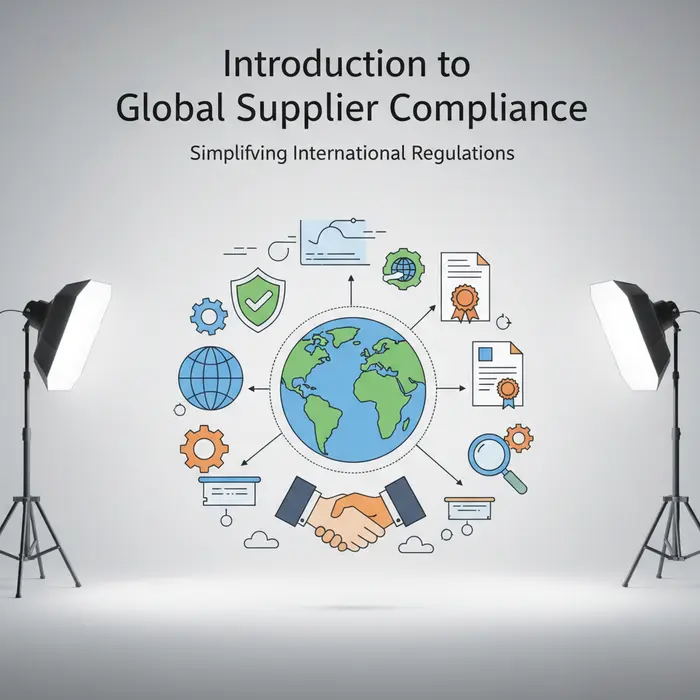
Global Supplier Compliance refers to the comprehensive process of ensuring that all suppliers, irrespective of their geographical location, adhere to a stringent set of legal, ethical, environmental, and social standards defined by the buyer and the laws of both the exporting and importing countries. It encompasses a broad spectrum of requirements, ranging from international labor laws and environmental regulations to anti-bribery policies, data privacy standards, and trade sanctions. Essentially, it establishes a framework to verify that every entity within a company’s global supply chain operates responsibly and lawfully.
This critical undertaking involves diligent vendor due diligence global trade practices, where potential and existing suppliers are thoroughly vetted. It’s not just about financial stability or product quality, but delves deep into operational practices, ethical conduct, and legal standing. An effective International trade compliance checklist often includes verifying export control classifications, understanding country-specific import/export restrictions, checking for denied party screening, and ensuring proper documentation for customs clearance. By defining clear expectations and regularly monitoring performance, businesses proactively manage risks inherent in diverse international procurement landscapes.
2. Why is it Crucial for Businesses?
The imperative for robust Global Supplier Compliance extends far beyond mere regulatory adherence; it’s a fundamental pillar for sustainable business success. Firstly, it serves as a powerful risk mitigation tool. Non-compliant suppliers can expose a business to severe financial penalties, legal liabilities, and irreparable reputational damage from issues like forced labor, environmental violations, or breaches of export controls. Proactive compliance, therefore, acts as a protective shield.
Secondly, strong compliance fosters greater operational resilience and efficiency. A well-vetted, compliant supplier base minimizes disruptions caused by regulatory enforcement actions, product seizures, or ethical controversies, ensuring smoother customs processes and predictable supply chain flows. Furthermore, in an era of heightened consumer awareness, ethical sourcing and transparency are paramount. Companies with verifiable Global Supplier Compliance demonstrate a commitment to responsible business practices, enhancing brand trust and consumer loyalty. This commitment also provides a significant competitive advantage. For more insights on building a resilient and compliant supply chain, visit our resources on Global Supplier Compliance. Implementing a rigorous supplier audit process international allows companies to consistently verify these standards, ensuring ongoing adherence.
3. The Risks of Non-Compliance in Global Trade
The consequences of failing to implement adequate Global Supplier Compliance can be severe and far-reaching, impacting a company’s financial health, legal standing, and public image. One of the most immediate risks is the imposition of substantial fines and penalties by regulatory bodies. Breaches of export compliance requirements for suppliers, for instance, can lead to millions in fines, loss of export privileges, and even criminal charges. Similarly, violations of anti-bribery laws or sanctions can result in punitive measures.
Beyond monetary penalties, non-compliance can cause significant supply chain disruptions. Goods may be detained or seized at borders due to improper documentation, classification errors, or violations of import/export controls, leading to costly delays, inventory shortages, and missed delivery deadlines. The long-term damage to a company’s reputation can be even more devastating. Allegations of unethical labor practices, environmental harm, or complicity in illegal activities can erode consumer trust, alienate investors, and severely impact market share. The intricate web of global regulations demands constant vigilance. For comprehensive information on various trade regulations and their implications, refer to resources like the Bureau of Industry and Security (BIS) which provides guidance on export administration regulations. Ultimately, a lax approach to compliance transforms potential opportunities into significant liabilities, undermining global operations.
In conclusion, Global Supplier Compliance is a strategic imperative for any business in the global marketplace. It represents a commitment to ethical conduct, legal adherence, and sustainable practices, protecting companies from risks while simultaneously building trust and fostering long-term resilience. By proactively defining, monitoring, and enforcing compliance standards across their international supply chains, businesses can navigate global trade with confidence, ensuring integrity and securing a competitive edge for the future.
Building Your International Trade Compliance Checklist
Navigating the complexities of international trade requires a meticulous approach to compliance. For businesses engaged in global commerce, particularly those sourcing from or supplying to international markets, developing a robust Global Supplier Compliance checklist isn’t just a best practice—it’s a fundamental necessity. An effective international trade compliance checklist acts as your compass, guiding you through the intricate web of regulations, mitigating risks, and ensuring seamless operations. This section will delve into the critical components and actionable steps for constructing a comprehensive framework that covers all essential compliance areas, fostering effective vendor due diligence global trade.
1. Key Regulatory Bodies and Frameworks (e.g., OFAC, ITAR, EAR)
A foundational understanding of the primary regulatory bodies and their frameworks is paramount to any effective international trade compliance checklist. These regulations dictate what can be exported or imported, to whom, and under what conditions, directly impacting your export compliance requirements for suppliers and overall global supplier compliance strategy.
- Office of Foreign Assets Control (OFAC): Part of the U.S. Department of the Treasury, OFAC administers and enforces economic and trade sanctions based on U.S. foreign policy and national security goals against targeted foreign countries and regimes, terrorists, international narcotics traffickers, those engaged in activities related to the proliferation of weapons of mass destruction, and other threats to the national security, foreign policy or economy of the United States. Screening against OFAC’s Specially Designated Nationals (SDN) list and other restricted parties lists is non-negotiable.
- International Traffic in Arms Regulations (ITAR): Administered by the U.S. Department of State, ITAR controls the export and import of defense-related articles and services. If your products or components are on the U.S. Munitions List (USML), strict licensing, documentation, and end-use controls apply, necessitating thorough supplier audit processes international to ensure all parties adhere to these stringent requirements.
- Export Administration Regulations (EAR): Overseen by the U.S. Department of Commerce’s Bureau of Industry and Security (BIS), the Export Administration Regulations (EAR) govern dual-use items—goods, software, and technology that have both commercial and military applications. Understanding ECCNs (Export Control Classification Numbers) and applicable license exceptions is crucial for virtually any company involved in international trade, making it a cornerstone for assessing global supplier compliance.
2. Essential Elements of a Compliance Checklist
Once the regulatory landscape is clear, the next step is to populate your checklist with practical elements that address the day-to-day operations and risks. A robust international trade compliance checklist should cover a spectrum of activities, ensuring comprehensive vendor due diligence global trade.
- Restricted Party Screening (RPS): Implement a rigorous process for screening all parties involved in a transaction—customers, suppliers, freight forwarders, and end-users—against various government denied party lists (e.g., OFAC SDN, BIS Entity List, EU Consolidated List).
- Product Classification: Accurately classify all goods and technology. This involves assigning Harmonized System (HS) codes for customs duties and trade statistics, Export Control Classification Numbers (ECCNs) for EAR-controlled items, and USML categories for ITAR-controlled items. Incorrect classification can lead to significant penalties, delays, or even export violations.
- Country of Origin Determination: Properly determine the country of origin for all products. This affects tariffs, trade agreements, and labeling requirements.
- Documentation Requirements: Ensure all necessary shipping documents are correctly prepared and maintained. This includes commercial invoices, packing lists, bills of lading/air waybills, Electronic Export Information (EEI) filings, customs declarations, and certificates of origin.
- Record-Keeping Policies: Establish clear policies for retaining all trade-related documents for the legally mandated period (often five years or more), demonstrating compliance during audits.
- Training and Internal Audit Procedures: Regular training for employees involved in international trade is vital. Supplement this with periodic internal audits to identify gaps, ensure adherence to policies, and continuously improve your supplier audit process international.
3. Customizing Your Checklist for Specific Markets/Products
While a general framework is important, a truly effective international trade compliance checklist is dynamic and adaptable. Customizing your checklist based on specific markets, products, and operational nuances is essential for effective global supplier compliance.
- Market-Specific Regulations: Different countries have unique import regulations, licensing requirements, and customs procedures. For instance, specific health and safety certifications might be mandatory for certain products entering the EU, or pre-shipment inspections required for imports into particular African nations. Your checklist must account for these variations based on your target markets.
- Product-Specific Considerations: The nature of your product significantly influences compliance. Foods, pharmaceuticals, chemicals, electronics, and defense articles each carry distinct regulatory burdens. A checklist for a food exporter will look vastly different from one for an aerospace parts manufacturer. Detail specific labeling, packaging, shelf-life, or technical documentation required for your product category.
- Incoterms Selection: The chosen Incoterms impact responsibilities for costs, risks, and customs formalities. Ensure your checklist prompts for verification that all parties understand their obligations under the agreed Incoterms.
- Industry Standards: Certain industries have their own compliance standards (e.g., aerospace AS9100, medical ISO 13485). Incorporate these into your due diligence process where relevant.
Building a comprehensive international trade compliance checklist is an ongoing process, not a one-time task. It requires continuous monitoring of regulatory changes, regular updates, and a proactive approach to risk management. By meticulously developing and maintaining this framework, businesses can confidently navigate the complexities of global trade, secure their supply chains, and foster robust Global Supplier Compliance.
The Global Supplier Audit Process & Due Diligence
The globalized marketplace offers unprecedented opportunities for businesses, yet it also presents a complex web of risks, particularly when sourcing internationally. Navigating this landscape demands robust strategies for evaluating and managing suppliers. The Global Supplier Audit Process and Due Diligence are not merely bureaucratic hurdles; they are critical pillars for ensuring business continuity, protecting brand reputation, and achieving comprehensive Global Supplier Compliance. For companies engaged in vendor due diligence global trade, understanding the intricacies of international evaluations is paramount to minimizing exposure to financial instability, ethical breaches, and supply chain disruptions. This section will delve into best practices for conducting thorough supplier assessments, equipping businesses with the knowledge to make informed decisions and foster secure, compliant supply chains.
1. Steps for a Comprehensive International Supplier Audit
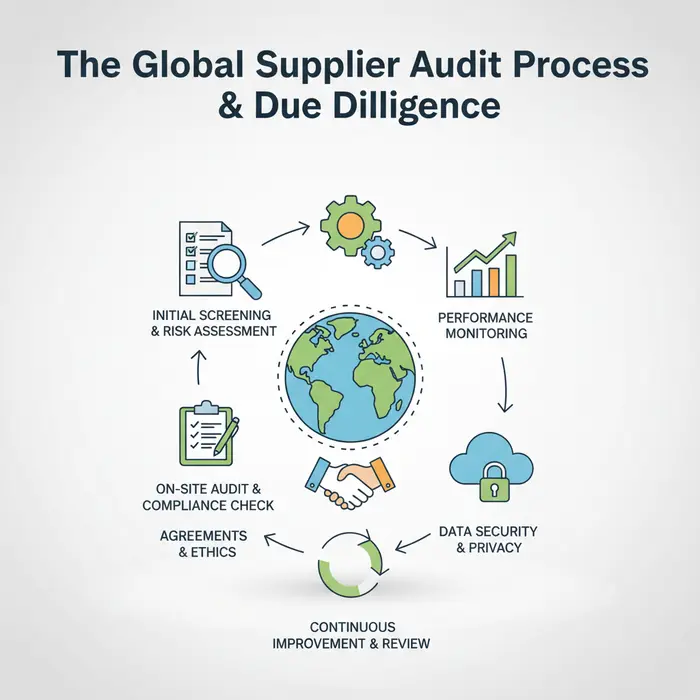
A systematic approach is essential for any supplier audit process international. The process typically begins with a thorough planning phase, defining the audit’s scope, objectives, and criteria. This involves identifying key risk areas based on the supplier’s location, industry, and the nature of goods or services provided.
- Pre-Audit Assessment: Before any on-site visit, a preliminary assessment gathers crucial information. This often involves detailed questionnaires covering aspects like quality management systems, certifications, financial stability, and adherence to an International trade compliance checklist. Reviewing existing documentation, such as certifications (ISO, specific industry standards), financial statements, and previous audit reports, provides an initial risk profile.
- On-site Audit Execution: For critical suppliers, an on-site audit offers invaluable insights that desk reviews cannot provide. This stage involves interviews with management and staff, observation of operational processes, and verification of documentation. Auditors assess facilities, production lines, quality control measures, and environmental practices. Effective communication and a clear agenda are vital for a productive visit.
- Report Generation and Corrective Action Plan (CAP): Following the audit, a comprehensive report is generated, detailing findings, identified non-conformities, and observations. Crucially, this report must be followed by a Corrective Action Plan (CAP), developed collaboratively with the supplier. The CAP outlines specific actions, responsibilities, and timelines for addressing deficiencies.
- Follow-up and Verification: The audit process doesn’t conclude with the report. Regular follow-ups are necessary to ensure the CAP is implemented effectively. This might involve submitting evidence of corrective actions, further documentation review, or even re-audits for significant issues. Continuous monitoring is key to sustaining improvements and maintaining Global Supplier Compliance.
2. Key Areas of Focus: Financial, Ethical, Environmental
When conducting a supplier audit process international, several critical areas demand rigorous scrutiny beyond just quality and operational capabilities:
- Financial Stability: Assessing a supplier’s financial health is crucial to prevent disruptions caused by insolvency. This involves reviewing financial statements, credit ratings, and cash flow projections. A stable financial foundation ensures the supplier’s ability to invest in necessary upgrades, maintain operational capacity, and honor contractual obligations.
- Ethical Compliance: This encompasses labor practices, anti-bribery, and anti-corruption measures. Auditors must verify adherence to international labor laws, including fair wages, working hours, and the absence of forced or child labor. Anti-bribery and corruption policies, along with their implementation, are vital for maintaining integrity in the supply chain. Ensuring suppliers meet these standards helps protect your company’s reputation and avoid legal repercussions.
- Environmental Responsibility: With increasing global emphasis on sustainability, evaluating a supplier’s environmental impact is paramount. This includes assessing waste management practices, energy consumption, emissions control, and adherence to local and international environmental regulations. Suppliers demonstrating strong environmental stewardship contribute to a more sustainable supply chain and mitigate regulatory risks.
- Legal & Regulatory Adherence: Beyond general ethical and environmental standards, specific legal and regulatory frameworks must be considered. This includes ensuring compliance with trade regulations, sanctions lists, data privacy laws (e.g., GDPR, CCPA), and sector-specific requirements. Particular attention should be paid to export compliance requirements for suppliers, ensuring they understand and adhere to all relevant export control laws, licensing, and documentation. Resources like the Bureau of Industry and Security (BIS) provide crucial guidance on these complex regulations.
3. Implementing Vendor Due Diligence for Global Trade Operations
While a supplier audit often provides a snapshot in time, vendor due diligence global trade is a more continuous, proactive process. It involves a holistic and ongoing evaluation of potential and existing partners to understand and mitigate a broader spectrum of risks. Due diligence isn’t just about finding problems; it’s about understanding the supplier’s overall landscape and their long-term viability as a partner.
- Broader Scope: Due diligence extends beyond operational audits to include a deeper dive into corporate governance, intellectual property rights, cybersecurity posture, and geopolitical risks associated with the supplier’s location. It assesses the supplier’s risk management frameworks and their ability to adapt to changing market conditions or regulatory landscapes.
- Continuous Monitoring: Effective due diligence requires establishing mechanisms for continuous monitoring of supplier performance, news mentions, financial health, and compliance records. Utilizing risk intelligence platforms and regular communication channels helps identify emerging risks before they escalate into major issues.
- Integration with Risk Management: Vendor due diligence should be seamlessly integrated into a company’s broader risk management strategy. This includes categorizing suppliers based on their risk profile and implementing tiered due diligence processes accordingly. High-risk suppliers will naturally require more intensive and frequent scrutiny.
- Strategic Partnership Development: Ultimately, comprehensive due diligence fosters trust and transparency, laying the groundwork for stronger, more resilient supply chain partnerships. By proactively addressing potential vulnerabilities, businesses can ensure sustained Global Supplier Compliance and operational excellence. Implementing these rigorous processes helps protect businesses from reputational damage, financial losses, and legal penalties, securing their position in the competitive international market.
Export Compliance Requirements for Suppliers
In today’s interconnected global economy, international trade presents immense opportunities but also significant complexities, particularly concerning export compliance. For suppliers operating across borders, understanding and meticulously adhering to export compliance requirements is not merely a best practice; it is a legal imperative. Non-compliance can lead to severe penalties, including hefty fines, trade restrictions, and irreparable damage to reputation. This section delves into critical regulations and best practices necessary to establish a robust Global Supplier Compliance framework, ensuring smooth, legal, and efficient international shipments.
1. Understanding Export Control Regulations (e.g., Wassenaar Arrangement)
Export control regulations are laws designed to restrict or control the export of certain goods, software, and technology for reasons of national security, foreign policy, and non-proliferation. These regulations vary significantly by country, though many are influenced by multilateral export control regimes. A prime example is the Wassenaar Arrangement, a voluntary regime promoting transparency and responsibility in transfers of conventional arms and dual-use goods and technologies. Dual-use items are those with both civilian and military applications, making their control crucial.
Key national regulations include the U.S. Export Administration Regulations (EAR), governing most commercial items, and the International Traffic in Arms Regulations (ITAR), controlling defense articles and services. Similarly, the European Union has its own comprehensive Export Control Regulation. For suppliers, accurate classification of goods, software, and technology is the first step. This involves assigning appropriate Export Control Classification Numbers (ECCNs) for dual-use items or determining if an item is ITAR-controlled. Misclassification can lead to delays or penalties, underscoring the importance of expert knowledge.
2. Licensing and Documentation for International Shipments
Once items are classified, suppliers must determine if an export license is required. Not all international shipments require a license; many proceed under license exceptions or “No License Required” (NLR) designations. However, for controlled items, specific destinations, or transactions involving restricted parties, an export license from the relevant government authority is mandatory. The type of license needed can vary from individual licenses for a single transaction to global licenses covering multiple shipments. Understanding these nuances is a critical component of any international trade compliance checklist.
Beyond licensing, proper documentation is paramount. Suppliers must prepare and maintain a comprehensive set of documents for each international shipment. This typically includes, but is not limited to, the commercial invoice, packing list, bill of lading or airway bill, export declaration, certificates of origin, and any specific end-use or end-user statements. The accuracy, completeness, and consistency of these documents are crucial for customs clearance, demonstrating compliance, and facilitating a smooth customs audit process international. Inaccurate or missing documentation can cause significant delays, fines, or even seizure, highlighting the need for meticulous record-keeping.
3. Restricted Parties Screening and Sanctions Compliance
One of the most critical aspects of export compliance for suppliers is conducting thorough restricted parties screening and adhering to sanctions compliance programs. Restricted parties are individuals, entities, or countries with whom trade is prohibited or severely restricted due to national security or foreign policy. Governments maintain various “blacklists,” such as the U.S. Department of Commerce’s Denied Persons List and Entity List, the U.S. Treasury Department’s Specially Designated Nationals (SDN) List, and various UN and EU sanctions lists. Engaging in transactions with any listed party, directly or indirectly, can result in severe legal and financial repercussions.
Effective vendor due diligence global trade processes require suppliers to implement a robust screening program that checks all involved parties in a transaction—including customers, end-users, intermediaries, and freight forwarders—against these consolidated screening lists. This screening should occur at multiple stages of the sales and shipping process, from initial inquiry to final shipment. Furthermore, suppliers must be aware of and comply with country-specific sanctions programs (e.g., those administered by the U.S. Office of Foreign Assets Control, OFAC), which may prohibit all trade with certain nations or impose specific restrictions. A continuous and proactive approach to screening is essential to mitigate risks and ensure ongoing compliance.
In conclusion, navigating the complex world of export compliance is non-negotiable for suppliers engaged in international trade. By thoroughly understanding export control regulations, diligently managing licensing and documentation, and rigorously screening for restricted parties and sanctions, suppliers can safeguard their operations, avoid costly penalties, and contribute to a secure and legitimate global supply chain. Embracing these requirements is a strategic investment in long-term business sustainability and success.
Strategies for Continuous Compliance Monitoring & Improvement
Maintaining Global Supplier Compliance is not a one-time task but an ongoing commitment that demands vigilance and adaptability. As international trade regulations evolve, geopolitical landscapes shift, and supply chain complexities increase, organizations must adopt proactive strategies for continuous monitoring and improvement. This final section outlines the essential frameworks and methodologies required to ensure long-term adherence to compliance standards, mitigate risks, and adapt swiftly to evolving regulatory environments, safeguarding your supply chain’s integrity, operational continuity, and brand reputation.
1. Establishing a Compliance Management System
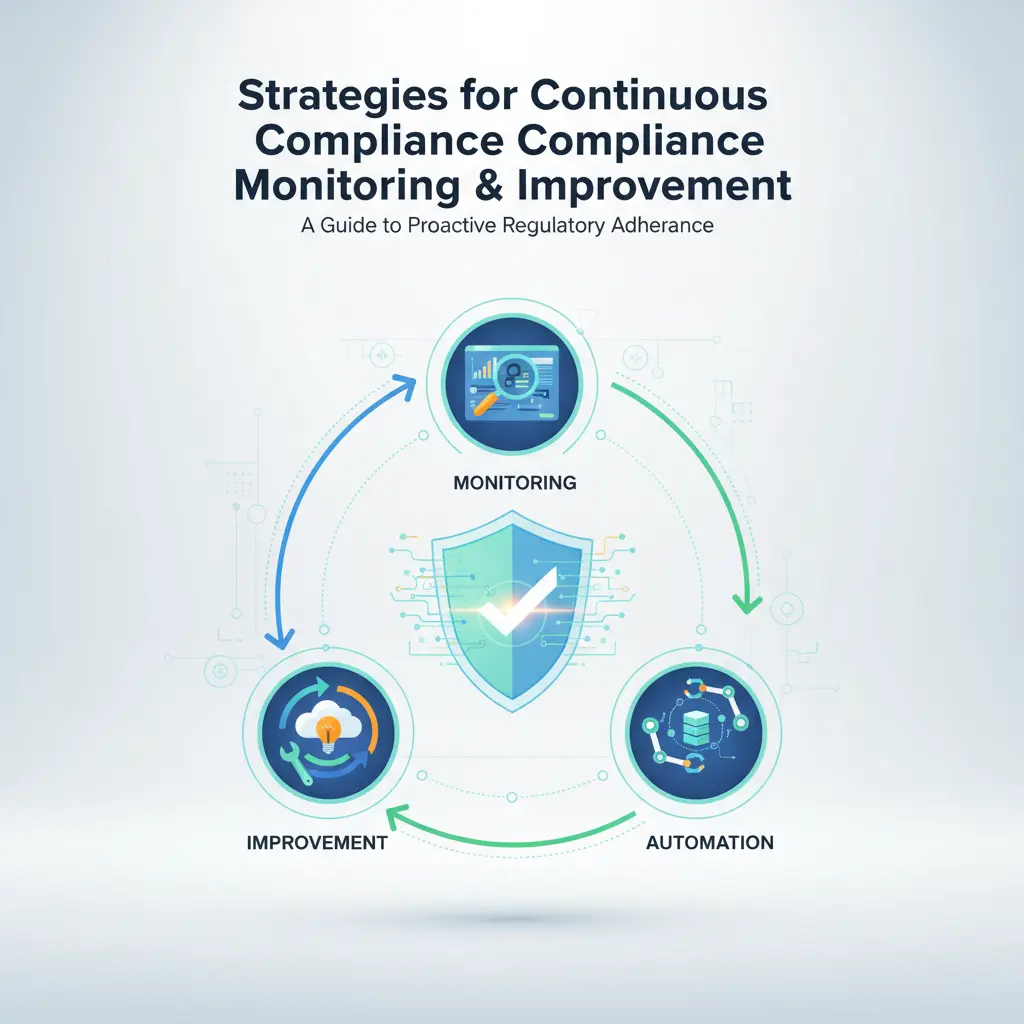
A robust Compliance Management System (CMS) forms the bedrock of sustainable global supplier compliance. This comprehensive framework integrates policies, procedures, and controls specifically designed to identify, assess, manage, and continuously monitor compliance risks across the entire supply chain lifecycle. Key components of an effective CMS include clearly defined roles and responsibilities, a documented code of conduct extending to all suppliers, and regular, dynamic risk assessments tailored to specific trade lanes and product categories. Establishing a rigorous vendor due diligence global trade protocol is paramount, ensuring potential suppliers are thoroughly screened for adherence to ethical practices, anti-corruption laws, and all applicable trade regulations before engagement. Furthermore, the CMS must incorporate robust internal audit mechanisms to routinely evaluate its own effectiveness, identifying areas for improvement, rectifying non-compliance issues promptly, and ensuring continuous alignment with international best practices and regulatory mandates. Regular reviews and updates of the CMS are critical to maintaining its relevance and efficacy.
2. Leveraging Technology for Monitoring and Reporting
In today’s interconnected global marketplace, relying solely on manual compliance monitoring is often insufficient, time-consuming, and highly prone to human error. Leveraging cutting-edge technology is thus crucial for achieving unparalleled efficiency, accuracy, and real-time visibility in supplier audit process international and overall global supplier compliance efforts. Advanced Governance, Risk, and Compliance (GRC) software solutions, supply chain management (SCM) platforms with integrated compliance modules, and artificial intelligence (AI)-driven analytics can profoundly transform how compliance is managed. These powerful tools automate data collection, instantly flag potential violations, and streamline complex reporting processes. They can continuously screen suppliers against global sanctions lists, monitor real-time changes in export compliance requirements for suppliers, track shipment data for anomalies, and analyze transactional data for red flags. Automated systems also generate immutable audit trails, facilitate comprehensive due diligence checks, and provide interactive dashboards for senior management, offering actionable insights into compliance performance and emerging risks. This proactive, technology-driven approach significantly minimizes reactive firefighting and enhances the overall resilience and transparency of the supply chain against potential compliance breaches. For guidance on creating such systems, resources like the U.S. International Trade Administration’s Export Compliance Program Guide offer valuable frameworks.
3. Training and Education for Supply Chain Teams
Even the most sophisticated systems and robust compliance frameworks are only as effective as the people operating them. Therefore, continuous training and education for all supply chain stakeholders—from procurement specialists to logistics managers—are absolutely paramount for fostering an ingrained culture of compliance. Comprehensive training programs should meticulously cover critical topics such as evolving international trade regulations, global sanctions policies, anti-bribery laws, and specific requirements outlined in an international trade compliance checklist relevant to the organization’s unique operations. Regular workshops, webinars, and refresher courses are essential to ensure that teams stay updated on the latest legal landscapes, internal compliance protocols, and emerging risk areas. Beyond formal training, fostering open communication channels where employees feel safe to ask questions and report potential issues is vital. Emphasizing the significance of ethical conduct and clearly communicating the potential repercussions of non-compliance—both legal penalties and severe reputational damage—empowers employees to make informed, compliant decisions. A well-trained, engaged, and ethically aware team is ultimately the first and most crucial line of defense against compliance breaches, capable of identifying red flags, escalating concerns proactively, and contributing significantly to maintaining robust global supplier compliance across all facets of operations.
Partner with Vietnam’s Leading Suppliers
Looking for reliable suppliers in Vietnam? Contact VietnamSuppliers.com today to connect with verified manufacturers and exporters across all industries.
—————————————
References
– Bureau of Industry and Security (BIS): https://www.bis.doc.gov/
– Export Administration Regulations (EAR): https://www.bis.doc.gov/index.php/regulations/export-administration-regulations-ear
– Bureau of Industry and Security (BIS): https://www.bis.doc.gov/index.php/documents/regulations-docs/2347-export-administration-regulations-ear-overview/file
– Wassenaar Arrangement: https://www.wassenaar.org/
– Trade.gov Export Compliance Program Guide: https://www.trade.gov/compliance-program-guide

