
Understanding the Root Causes of Color Variation
In the competitive landscape of modern manufacturing, consistent product color is not merely an aesthetic preference; it’s a critical indicator of quality, precision, and brand integrity. Inconsistent color can lead to product rejections, costly rework, diminished customer satisfaction, and ultimately, a tarnished brand reputation. Addressing color variation effectively requires a deep understanding of its multifaceted origins. From the initial raw materials to the final storage conditions, numerous factors can subtly or drastically alter a product’s intended hue. This section delves into the common factors leading to inconsistent color in manufacturing, highlighting their profound impact on product quality and brand perception, and underscoring the necessity for robust supplier solutions for production color variations.
1. Material Inconsistencies & Pigment Challenges
The journey to color consistency often begins and ends with the raw materials. Even slight variations in incoming materials can propagate through the entire manufacturing process, leading to noticeable color shifts. Pigments, the very heart of color, present their own set of challenges. Their quality, concentration, and dispersion within a base material are paramount. Different batches of the same pigment, even from the same supplier, can exhibit minor differences in particle size, purity, or chemical composition. Poor dispersion, where pigments are not evenly distributed, can result in streaking, mottling, or a duller appearance, compromising overall manufacturing quality control color efforts. Moreover, interactions between pigments and the base polymer or substrate can affect color stability over time. For instance, some pigments might react with additives in plastics, causing a color shift during processing or aging. Identifying and mitigating these material-level inconsistencies is a foundational step in preventing color defects in production, necessitating rigorous incoming material inspection and clear specifications.
2. Process Variables: Temperature, Pressure, and Speed
Beyond raw materials, the manufacturing process itself is a major contributor to color variation. Critical process parameters like temperature, pressure, and speed must be meticulously controlled. Slight deviations can significantly impact how pigments behave and how the final product cures or forms. For example, in injection molding, inconsistent melt temperature can degrade certain pigments or alter the crystalline structure of the polymer, both of which affect color. Similarly, fluctuating pressure can lead to variations in material density, which changes how light reflects off the surface, creating perceived color differences. In coating and painting applications, drying temperatures and application speed directly influence film thickness and pigment orientation, which are crucial for achieving the desired color and finish. Even cooling rates can affect color, especially in materials where molecular structure influences optical properties. Implementing stringent B2B supplier color matching standards across all stages of production is essential, ensuring that machinery calibration and operational parameters are consistently maintained. Advanced spectrophotometric tools are often employed to monitor color during and after production, allowing for real-time adjustments and minimizing defects. To learn more about precision color measurement, you can refer to resources from industry leaders like X-Rite, a global authority in color science and technology.
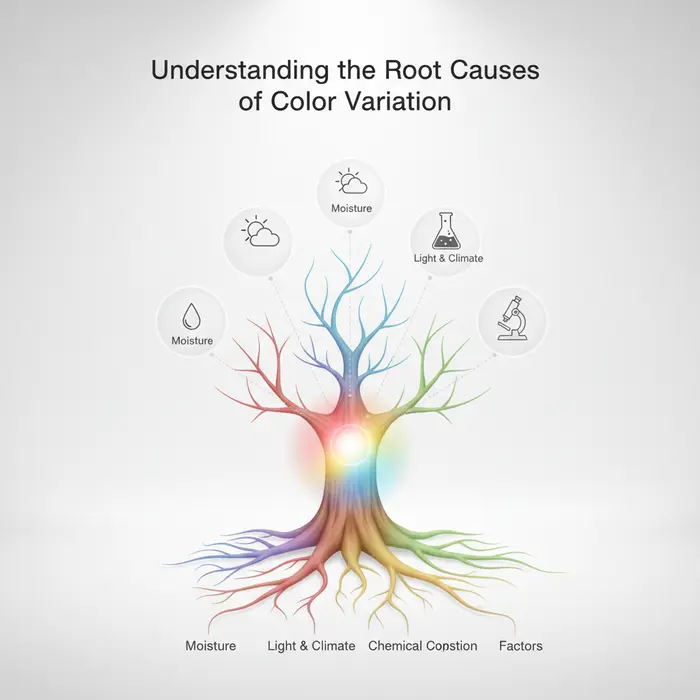
3. Environmental Factors & Storage Conditions
Even after a product leaves the production line with perfect color, external environmental factors and improper storage can introduce variations. Exposure to ultraviolet (UV) light, common in sunlight and certain artificial lighting, is a notorious culprit for color fading and yellowing, especially in plastics and textiles. Humidity and temperature fluctuations during storage and transit can also trigger chemical reactions within materials or affect pigment stability, leading to discoloration or blotchiness. For products destined for international markets, the varying climatic conditions encountered during shipping – from hot, humid ports to dry, cold warehouses – pose significant risks to color integrity. Proper packaging, designed to protect products from light, moisture, and extreme temperatures, becomes vital. Furthermore, ensuring that storage areas are controlled environments, free from excessive heat, cold, or direct sunlight, is critical. Adhering to robust export quality assurance best practices, which include meticulous climate control during shipping and appropriate material handling, is indispensable for maintaining color consistency from factory floor to end-user. This holistic approach, from material sourcing to final delivery, underscores the complexity of managing color and the importance of comprehensive strategies to prevent variation.
In conclusion, achieving and maintaining color consistency in manufacturing is a complex challenge influenced by a triumvirate of material properties, process controls, and environmental conditions. Overlooking any of these root causes can lead to significant quality issues, impacting customer perception and brand value. Implementing rigorous manufacturing quality control color protocols, establishing clear B2B supplier color matching standards, and adopting comprehensive export quality assurance best practices are essential. Ultimately, effective supplier solutions for production color variations require a proactive, integrated strategy that addresses these variables at every stage of the product lifecycle.
Implementing Robust B2B Supplier Color Matching Standards
In the intricate world of global manufacturing and supply chains, maintaining consistent brand identity and product quality hinges significantly on accurate color reproduction. From textiles and plastics to paints and packaging, color variations can lead to costly reworks, dissatisfied customers, and damaged brand reputation. Establishing robust supplier solutions for production color variations is not merely a best practice; it is a fundamental requirement for operational excellence and market competitiveness. This section delves into the critical role of standardized color communication protocols and agreements between businesses and their suppliers, outlining strategies to achieve impeccable color accuracy throughout the production process, thereby preventing color defects in production and enhancing overall manufacturing quality control color.
1. Defining Color Specifications: Pantone, RAL, and Digital Standards
The foundation of effective B2B supplier color matching standards lies in unambiguous color specification. Relying solely on subjective visual assessment is a recipe for inconsistency. Instead, businesses must adopt universally recognized color reference systems. Pantone (PMS) is a global standard, particularly prevalent in graphic design, printing, and textiles, offering thousands of proprietary color swatches. RAL is another widely used system, especially in industrial coatings, paints, and plastics in Europe. Beyond physical swatches, digital standards like sRGB, Adobe RGB, and Lab color spaces provide precise numerical definitions crucial for digital design and pre-press stages. Implementing these standards ensures that both buyer and supplier are literally “speaking the same color language,” significantly reducing misinterpretations and laying the groundwork for export quality assurance best practices.
2. Establishing Color Measurement & Instrumentation Protocols
Once colors are defined, their accurate measurement is paramount. This requires establishing strict protocols for instrumentation and methodology. Spectrophotometers are the industry standard tools, capable of measuring color across the visible spectrum and providing objective, quantitative data (e.g., L*a*b*, L*C*h* values). Colorimeters, while less sophisticated, can also be used for certain applications. Crucially, both buyer and supplier must use calibrated instruments, maintained according to manufacturer guidelines, and operate under controlled lighting conditions (e.g., D65 illuminant in a standardized light booth). Furthermore, setting precise Delta E (ΔE) tolerance levels – the numerical representation of color difference – is vital. A common standard, such as understanding Delta E values and their implications for color accuracy, helps define an acceptable range of variation, transforming subjective visual checks into objective, measurable quality control points. This rigorous approach is central to manufacturing quality control color and preventing color defects in production.
3. Supplier Audits & Performance Metrics for Color Accuracy
Even with clear specifications and measurement tools, consistent color accuracy requires ongoing vigilance. Regular supplier audits are indispensable for verifying compliance with established B2B supplier color matching standards. These audits should not only assess instrumentation and processes but also review operator training, quality documentation, and historical performance data. Developing clear performance metrics for color accuracy, such as average Delta E values per batch, rework rates due to color issues, and on-time delivery percentages, provides actionable insights. Suppliers who consistently meet or exceed these metrics can be recognized and preferred, while those falling short can be provided with targeted training or corrective action plans. Implementing statistical process control (SPC) for color data can proactively identify trends and potential issues before they escalate. This systematic approach forms the backbone of export quality assurance best practices, ensuring that products consistently meet global standards and maintain brand integrity across all markets.
By meticulously defining color specifications, implementing robust measurement protocols, and continuously monitoring supplier performance, businesses can significantly mitigate the risks associated with color variation. These proactive measures not only safeguard product quality and brand reputation but also foster stronger, more reliable relationships with suppliers, leading to greater efficiency and profitability in the long run.
Advanced Manufacturing Quality Control for Color Consistency
Achieving absolute color consistency is a paramount challenge in modern manufacturing, particularly for B2B suppliers dealing with intricate product specifications and global markets. From textiles and plastics to paints and packaging, even slight color discrepancies can lead to costly rejections, brand damage, and supply chain disruptions. Therefore, implementing supplier solutions for production color variations is not just an advantage but a necessity. Advanced manufacturing quality control for color consistency involves a blend of innovative technologies and meticulous processes designed to monitor, measure, and maintain color accuracy throughout the entire production lifecycle, ensuring products meet stringent B2B supplier color matching standards and adhere to export quality assurance best practices.

Inline Color Monitoring Systems
One of the most significant advancements in preventing color defects in production is the integration of inline color monitoring systems. These cutting-edge systems provide real-time, continuous color measurement directly on the production line, eliminating the delays associated with off-line sampling. Utilizing high-speed, non-contact advanced spectrophotometers and colorimeters, these devices capture precise color data from products as they move through various stages of manufacturing. The data is instantly compared against predefined color targets and tolerances. If a deviation occurs, the system can trigger immediate alerts, halt the production line, or even initiate automated adjustments to process parameters, thereby minimizing waste and ensuring consistent manufacturing quality control color. This proactive approach is crucial for maintaining tight color specifications in high-volume production environments, guaranteeing that every item leaving the factory meets the exact B2B supplier color matching standards.
Statistical Process Control (SPC) for Color Data
Beyond simply measuring color, modern quality control employs Statistical Process Control (SPC) to analyze color data systematically. SPC involves using statistical methods to monitor, control, and improve a process. For color consistency, this means collecting vast amounts of color measurement data over time and applying statistical tools like control charts (e.g., X-bar and R charts for color difference values like dE*, dL*, da*, db*). By plotting color values and their variations, manufacturers can identify trends, shifts, and out-of-control conditions before they result in actual defects. SPC for color enables suppliers to understand the inherent variability of their processes, set realistic control limits, and implement proactive measures to stabilize production. This data-driven approach is fundamental for continuous improvement in manufacturing quality control color, allowing teams to predict potential issues, fine-tune equipment, and optimize material inputs to maintain optimal color accuracy consistently.
Pre-production Proofing & Pilot Runs
Even with sophisticated inline systems, the foundational step of pre-production proofing and pilot runs remains indispensable for preventing color defects in production. Before committing to full-scale manufacturing, suppliers conduct rigorous validation processes. This includes creating digital color proofs that accurately simulate the final product’s appearance under various lighting conditions, followed by the production of physical prototypes or small-batch pilot runs. These initial samples are meticulously checked against the client’s approved masters and B2B supplier color matching standards using calibrated light booths (e.g., D65 illumination) and visual assessment by trained color experts, alongside instrumental measurements. Pilot runs help identify any potential color shifts that might occur due to material interactions, curing processes, or machine settings on a smaller, controllable scale. This comprehensive pre-production validation ensures that all parameters are optimized, and the chosen materials and processes will consistently achieve the desired color, significantly mitigating risks and upholding export quality assurance best practices when moving to mass production.
By integrating these advanced techniques—from real-time inline monitoring and data-driven SPC to meticulous pre-production validation—suppliers can offer unparalleled reliability in color consistency. These robust quality control measures not only ensure products meet exacting client specifications but also build trust, reduce waste, and enhance a supplier’s reputation in the competitive global marketplace.
Strategies for Preventing Color Defects in Production
In the competitive global market, consistent color accuracy is not just a desirable trait but a critical requirement for B2B suppliers. Color variations in manufactured goods can lead to significant issues, including product rejection, costly reworks, damaged brand reputation, and strained client relationships. Proactive measures are essential for any supplier aiming to provide top-tier quality. This section outlines comprehensive supplier solutions for production color variations, focusing on best practices that can drastically minimize the occurrence of color-related defects. By implementing robust strategies from raw material sourcing to final product inspection, manufacturers can achieve superior manufacturing quality control color and ensure their products consistently meet stringent client specifications and B2B supplier color matching standards.
1. Training & Skill Development for Production Teams
Human expertise and diligence are foundational to preventing color defects in production. Even with advanced machinery, a lack of understanding or improper handling by personnel can introduce significant color inconsistencies. Therefore, investing in comprehensive and ongoing training for all production teams is paramount. This training should cover fundamental color theory, teaching employees about hue, saturation, and lightness, and how these attributes manifest in different materials and lighting conditions. Practical training on the proper use of color measurement instruments, such as spectrophotometers and colorimeters, is crucial, ensuring that readings are taken correctly and consistently across shifts and operators. Furthermore, teams must be educated on standard operating procedures (SOPs) for color verification at various stages of production, from initial material inspection to final product assembly. Regular workshops focusing on identifying common color defects, troubleshooting potential issues, and understanding the impact of environmental factors (like ambient light) on perceived color can empower employees to become vigilant guardians of color quality. Fostering a culture of continuous learning and accountability ensures that the human element acts as a safeguard, not a vulnerability, in the pursuit of perfect color matching.
2. Maintenance & Calibration of Equipment
Precision equipment plays an indispensable role in achieving and maintaining color consistency. Any deviation in the performance of machinery, from mixing tanks to dyeing machines, or measuring instruments, can lead to costly color defects. Implementing a rigorous schedule for preventive maintenance and calibration is non-negotiable for superior manufacturing quality control color. Color measurement devices, such as spectrophotometers and colorimeters, must undergo daily or weekly calibration using certified reference standards to ensure their accuracy. Without proper calibration, these instruments can provide misleading data, leading to incorrect color adjustments and subsequent production errors. Similarly, all production machinery involved in color application—be it injection molding machines, textile dyeing equipment, or printing presses—requires regular maintenance to ensure consistent operation, temperature control, and material distribution. Worn parts, clogged nozzles, or inconsistent heating elements can all contribute to color variations. Establishing detailed maintenance logs, assigning dedicated personnel for equipment checks, and adhering to manufacturer-recommended service schedules are critical components of an effective program. Furthermore, ensuring a controlled environment for color assessment, using standardized lighting booths that conform to industry standards like D65, helps eliminate discrepancies caused by varying light sources. Adherence to these practices significantly bolsters B2B supplier color matching standards and overall product quality.
3. Raw Material Vetting & Traceability
The journey to impeccable color consistency begins long before manufacturing, specifically with the careful selection and management of raw materials. Even the most sophisticated production processes cannot rectify inherent color inconsistencies in substandard input materials. Suppliers must establish a stringent raw material vetting process, which includes qualifying material suppliers based on their proven ability to provide consistent quality and color. This involves requesting and scrutinizing Certificates of Analysis (CoAs) for every batch, verifying color specifications against established master standards. Upon arrival, all incoming raw materials—whether pigments, dyes, resins, or fabrics—should undergo thorough inspection. This inspection typically includes visual checks under controlled lighting, as well as instrumental color measurements using calibrated equipment to ensure they match approved samples or digital color data. Any discrepancies must result in immediate rejection or re-evaluation. Beyond initial vetting, implementing a robust traceability system is crucial. This system should allow for tracking each batch of raw material from its arrival, through every stage of production, to the final product. Should a color defect emerge, traceability enables quick identification of the problematic batch, root cause analysis, and isolation of affected products, minimizing waste and preventing widespread issues. This systematic approach to raw material management is a cornerstone of export quality assurance best practices and plays a vital role in preventing color defects in production from the very outset. For more insights into establishing robust color quality processes, consider exploring foundational resources on color theory and measurement fundamentals from industry authorities.
Ensuring Export Quality Assurance & Global Compliance
For products destined for international markets, maintaining unwavering color consistency is not merely a preference; it’s a critical requirement that directly impacts brand reputation, customer satisfaction, and market access. The complexities of global supply chains, diverse manufacturing processes, and varying environmental conditions amplify the challenges in achieving and sustaining precise color matching across different production batches and export shipments. From textiles and plastics to paints and printed materials, any noticeable deviation in hue, saturation, or brightness can lead to rejections, costly reworks, and damaged business relationships. Therefore, robust supplier solutions for production color variations are indispensable for manufacturers aiming to succeed in the global arena. This section delves into the specific requirements and best practices for guaranteeing export quality color assurance and navigating the intricate landscape of global compliance.

1. International Color Standards & Regulations (e.g., ISO, ASTM)
Adherence to universally recognized international color standards is the cornerstone of export quality assurance. Unlike domestic markets where local norms might suffice, global trade demands compliance with established frameworks such as those set by the International Organization for Standardization (ISO) and ASTM International. These standards provide precise methodologies for color measurement, specification, and tolerance, ensuring that color data is communicated accurately and consistently across different countries and manufacturing facilities. For instance, standards like ASTM D2244 define methods for calculating color differences from instrumentally measured color coordinates, crucial for effective manufacturing quality control color. Implementing these standards requires specialized equipment, skilled personnel, and rigorous process controls. Suppliers must invest in spectrophotometers, colorimeters, and other advanced tools to objectively measure and verify color against specified standards. Furthermore, understanding regional regulations, such as those governing product safety and environmental impact, can also indirectly influence acceptable colorants and finishes, adding another layer of compliance. Establishing clear, B2B supplier color matching standards based on these international benchmarks minimizes subjective interpretations and paves the way for seamless international trade. For more detailed information, exploring specific ASTM color measurement standards can provide valuable insights into industry best practices.
2. Packaging & Logistics Impact on Color Stability
The journey from the production line to the international customer’s doorstep can be long and arduous, exposing products to a range of environmental stressors that can compromise color stability. Factors such as temperature fluctuations, humidity, UV light exposure, and even vibration during transit can lead to fading, yellowing, or other forms of color degradation. Therefore, effective export quality assurance must extend beyond the factory floor to encompass packaging and logistics strategies. Implementing proactive measures for preventing color defects in production also means considering post-production handling. Choosing appropriate packaging materials that offer UV protection, moisture barriers, and thermal insulation is paramount. For sensitive products, controlled atmosphere shipping or refrigerated containers might be necessary to maintain optimal conditions. Clear labeling with handling instructions, including temperature ranges and light exposure warnings, further contributes to preserving color integrity. Suppliers should also conduct simulated transport tests to assess the impact of typical shipping conditions on product color, adjusting packaging or logistical routes as needed. These export quality assurance best practices are vital for ensuring that the product’s color remains consistent with the agreed-upon specifications upon arrival, regardless of the global destination.
3. Customer Acceptance Criteria & Dispute Resolution
Even with rigorous quality control, color perception can be subjective, making clear customer acceptance criteria essential for international trade. Before shipment, it is crucial to establish and mutually agree upon precise color tolerances with the international buyer. This often involves providing physical samples (golden samples), digital color data (e.g., L*a*b* values), and agreeing on specific Delta E (ΔE) values for acceptable color variation. Pre-shipment inspections by independent third parties or buyer representatives play a critical role in verifying color consistency against these agreed standards. In the event of a color discrepancy or dispute, having a predefined resolution mechanism is vital. This includes clear procedures for re-inspection, re-measurement, and potential remedies such as partial refunds, replacements, or reworks. Transparent communication, detailed documentation of all color measurements, and a proactive approach to addressing concerns are hallmarks of reliable B2B supplier color matching standards. By establishing clear expectations and robust dispute resolution processes, manufacturers can build trust, mitigate risks, and maintain long-term relationships with their international clientele, reinforcing their commitment to global compliance and high-quality exports.
Partner with Vietnam’s Leading Suppliers
Looking for reliable suppliers in Vietnam? Contact VietnamSuppliers.com today to connect with verified manufacturers and exporters across all industries.
—————————————
References
– X-Rite, a global authority in color science and technology: https://www.xrite.com/service-support/education-and-events/color-education
– Understanding Delta E values and their implications for color accuracy: https://www.xrite.com/service-support/whats-a-good-delta-e-value
– :
– X-Rite Color Theory and Measurement Fundamentals: https://www.xrite.com/service-support/learning-resources/basics-of-color/color-theory-and-measurement
– :