
The Foundation of Trust: Why Supplier Verification Matters
In the intricate world of international trade, where opportunities for growth are vast, so too are the potential pitfalls. Navigating this landscape successfully hinges on one critical element: trust. This isn’t merely about good faith; it’s about establishing verifiable confidence in your supply chain. Rigorous Trusted International Suppliers verification in international trade isn’t just a best practice; it’s a fundamental necessity to mitigate risks, ensure product quality, and cultivate enduring business relationships. For export buyers, especially those engaging in first-time export transactions, the confidence derived from a thoroughly vetted supplier can be the deciding factor in forging a partnership. It’s the cornerstone of effective B2B export reliability strategies, turning potential vulnerabilities into secure global sourcing partners.
The global marketplace, while offering unprecedented access to diverse products and competitive pricing, also presents inherent challenges. Distances are vast, legal frameworks differ, and communication can be complex. Without a robust verification process, businesses expose themselves to a spectrum of risks that can derail operations, tarnish reputations, and lead to significant financial losses. Therefore, understanding and implementing comprehensive supplier due diligence is paramount for anyone serious about sustainable global trade.

1. Mitigating Risks: Fraud, Quality, and Delays
The primary driver behind robust supplier verification international trade is risk mitigation. Unscrupulous entities exist, and without proper checks, businesses can fall victim to fraud, ranging from misrepresentation of goods and services to outright financial scams. Verification processes help confirm the legitimacy of a supplier’s business registration, operational history, and ownership, significantly reducing the likelihood of fraudulent encounters. Beyond fraud, quality control is a perpetual concern. Substandard products not only harm the end-consumer but also damage the buyer’s brand reputation and can incur costly recalls or returns. Verification includes assessing a supplier’s quality management systems, production capabilities, and adherence to international standards, ensuring that the goods meet specified requirements. Finally, delays in production or shipping can have a cascading effect, impacting delivery schedules, customer satisfaction, and overall project timelines. Comprehensive verification involves examining a supplier’s production capacity, logistical infrastructure, and track record for on-time delivery, providing first-time export buyer confidence that goods will arrive as expected. By meticulously addressing these areas, companies can transform potential pitfalls into secure global sourcing partners.
2. Building Long-Term B2B Export Reliability
Supplier verification isn’t just a defensive strategy; it’s a proactive investment in establishing long-term B2B export reliability. When a buyer rigorously vets a supplier, it lays the groundwork for a relationship built on transparency and mutual understanding. This process communicates to the supplier that the buyer is serious about quality and commitment, often leading to more dedicated and responsive partnership. For buyers, the confidence gained from a verified supplier translates into predictable supply chains, consistent product quality, and the ability to plan future orders with certainty. This stability fosters repeat business and enables both parties to invest in process improvements, product innovation, and market expansion. Ultimately, these Trusted International Suppliers become extensions of your own business, contributing to your brand’s reputation for reliability and excellence in the global market. Such robust B2B export reliability strategies are vital for sustainable growth and competitive advantage.
3. Legal & Compliance Checks for Global Sourcing
In an era of increased global scrutiny, legal and compliance checks are non-negotiable aspects of supplier verification. International trade is governed by a complex web of laws and regulations, including trade sanctions, anti-bribery statutes, labor laws, and environmental standards. Failing to ensure a supplier’s compliance with these regulations can lead to severe penalties, reputational damage, and even blacklisting. Effective due diligence involves verifying a supplier’s adherence to relevant international and local laws, ethical sourcing practices, and industry-specific certifications. This includes checks against watchlists, confirmation of fair labor practices, and assessment of environmental impact. Comprehensive due diligence ensures that all aspects of your supply chain operate within legal and ethical boundaries, protecting your business from unforeseen liabilities and upholding your corporate social responsibility. These legal and compliance checks for global sourcing are crucial for any business aspiring to be a responsible and successful player on the international stage.
Navigating the Global Marketplace: Finding Your Ideal Partner
Venturing into international trade presents immense opportunities, but success hinges on identifying and partnering with Trusted International Suppliers. This guide explores essential strategies and tools for pinpointing reliable partners and establishing robust initial vetting processes. For first-time export buyers, building confidence in your chosen suppliers is paramount, ensuring a smooth supply chain and safeguarding your brand’s reputation. Mastering supplier verification in international trade is not merely a formality; it’s a strategic imperative for building secure global sourcing partners and implementing effective B2B export reliability strategies from the outset.
1. Leveraging B2B Platforms and Trade Fairs
The initial phase of identifying potential Trusted International Suppliers often begins with broad-reach discovery tools. Business-to-business (B2B) platforms like Alibaba, Global Sources, and Thomasnet serve as digital marketplaces where a vast array of manufacturers and distributors showcase their products and capabilities. These platforms allow you to filter by product type, region, certifications, and minimum order quantities, providing a convenient starting point for preliminary screening. While useful for discovery, remember that these platforms are aggregators; further due diligence is always required.
Complementing online searches, physical trade fairs and exhibitions remain invaluable. Events such as the Canton Fair, Ambiente, or specialized industry shows in key manufacturing hubs offer a unique opportunity to meet potential partners face-to-face. Engaging directly allows for immediate assessment of their professionalism, product quality (through samples), and overall company culture. It fosters personal connections, which can be crucial for long-term relationships and building first-time export buyer confidence. These events are also excellent for networking, gathering insights into market trends, and observing competitive landscapes, all contributing to a more comprehensive understanding of your potential secure global sourcing partners.
2. Due Diligence: Background Checks and References
Once you’ve identified a shortlist of potential partners, rigorous due diligence becomes critical for supplier verification in international trade. This involves a multi-faceted approach to ascertain their legitimacy, financial stability, and operational integrity. Start by verifying their legal registration, business licenses, and tax compliance in their home country. Websites of government trade agencies or specialized databases can assist here. Financial health checks, often conducted by third-party credit agencies, are vital to ensure the supplier has the capacity to fulfill orders and withstand market fluctuations, underpinning B2B export reliability strategies.
Beyond official documents, reputation is key. Request and meticulously check references from their existing or past clients, preferably those in countries or industries similar to yours. Pay attention to feedback regarding product quality, delivery times, responsiveness, and problem-solving capabilities. Consider engaging third-party inspection and audit firms, which can provide an unbiased assessment of the supplier’s operations and compliance with international standards. Understanding Incoterms and international trade regulations is also crucial at this stage to clearly define responsibilities and risks, further solidifying first-time export buyer confidence and paving the way for truly Trusted International Suppliers. This thorough background check is foundational for any successful secure global sourcing partnership.
3. Assessing Production Capacity and Quality Standards
A supplier’s ability to consistently meet your demands in terms of volume and quality is non-negotiable. Begin by requesting detailed information on their production capacity, including equipment lists, production lines, and current utilization rates. A site visit, either in person or via a reputable third-party auditor, is highly recommended to physically assess their manufacturing facilities, workflow efficiency, and adherence to safety protocols. This direct observation significantly bolsters first-time export buyer confidence.
Quality control is another cornerstone of Trusted International Suppliers. Inquire about their quality management systems (QMS), certifications such as ISO 9001, and their internal quality assurance (QA) and quality control (QC) procedures. Request samples of their products and, if feasible, conduct independent laboratory testing to verify specifications. Understand their defect rate policies, return procedures, and how they handle non-conforming products. Proactive engagement in these areas demonstrates a commitment to B2B export reliability strategies and builds trust. By diligently evaluating both production capacity and quality standards, you lay the groundwork for a secure global sourcing partnership that can reliably support your business growth in the long term, making supplier verification in international trade a cornerstone of your success.
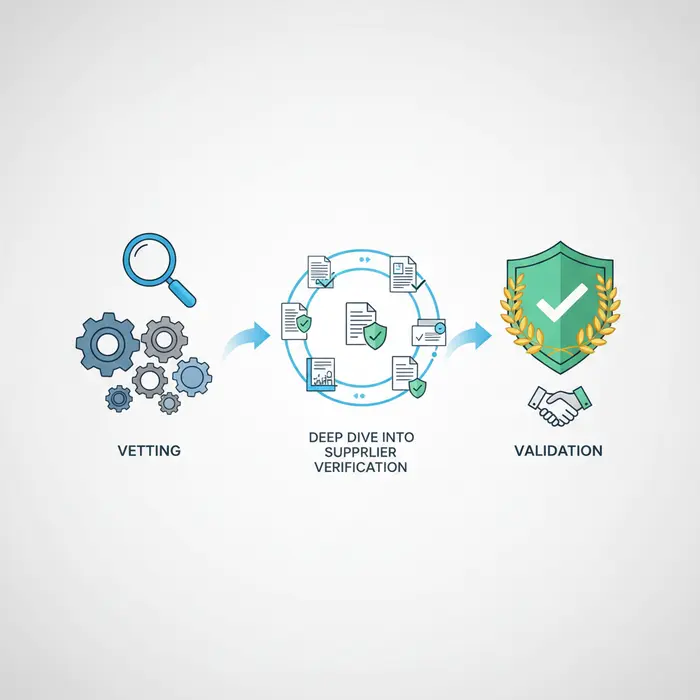
From Vetting to Validation: Deep Dive into Supplier Verification
Detailed steps and methods for comprehensive supplier verification, ensuring first-time export buyer confidence.
For businesses venturing into international trade, securing Trusted International Suppliers is not just an advantage—it’s a fundamental requirement. The global marketplace, while offering immense opportunities, also presents inherent risks, especially for first-time export buyers. Ensuring the reliability and capability of your suppliers is paramount to mitigating these risks and fostering lasting success. Comprehensive supplier verification international trade processes are the bedrock of building first-time export buyer confidence and establishing robust B2B export reliability strategies. This deep dive will explore the critical steps involved in vetting potential partners, transforming initial vetting into concrete validation, and ultimately identifying secure global sourcing partners.
1. On-site Audits and Factory Inspections
The most direct and often indispensable method of supplier verification involves on-site audits and factory inspections. This crucial step goes beyond paper qualifications, providing a firsthand look at a potential supplier’s operational reality. An on-site audit allows buyers to assess production capabilities, quality control systems, labor practices, and overall factory conditions. For a first-time export buyer confidence is significantly bolstered by knowing that a supplier’s advertised capabilities match their actual operational footprint. Inspectors can evaluate equipment maintenance, production line efficiency, storage facilities, and adherence to safety standards. Different types of audits exist, including:
- Pre-Production Audits: Verifying a factory’s readiness before production begins.
- During Production Inspections: Monitoring quality and progress throughout the manufacturing process.
- Pre-Shipment Inspections: Ensuring the final products meet specifications before dispatch.
These inspections are vital for identifying potential bottlenecks, quality inconsistencies, or non-compliance issues early on, thereby safeguarding your investment and product integrity. Engaging third-party inspection agencies, often specialized in supplier verification international trade, can provide an unbiased and expert assessment, adding another layer of security to your B2B export reliability strategies.
2. Financial Health and Business Stability Analysis
Beyond operational capabilities, understanding a supplier’s financial standing is critical for long-term partnership viability. Financial health and business stability analysis helps assess the risk of a supplier defaulting on contracts, experiencing production delays due to cash flow issues, or even going out of business. For secure global sourcing partners, financial stability translates directly into supply chain stability. Key aspects to scrutinize include:
- Credit Reports: Providing insights into a company’s payment history and creditworthiness.
- Financial Statements: Reviewing balance sheets, income statements, and cash flow statements to understand profitability, liquidity, and solvency over several years.
- Bank References: Confirming a supplier’s banking relationships and credit lines.
- Legal Standing: Checking for any ongoing lawsuits, bankruptcies, or significant liens against the company.
A thorough financial analysis helps first-time export buyer confidence by ensuring that the chosen supplier has the economic resilience to fulfill orders consistently, withstand market fluctuations, and invest in necessary upgrades or expansions. This proactive approach is a cornerstone of effective B2B export reliability strategies.
3. Certifications and Compliance (ISO, CE, etc.)
In the global trade arena, adherence to international standards and regulations is a non-negotiable aspect of supplier verification international trade. Certifications and compliance, such as those from ISO (International Organization for Standardization) or CE (Conformité Européenne), provide objective proof that a supplier meets specific industry benchmarks for quality, safety, and environmental management. For example:
- ISO 9001: Demonstrates a robust quality management system, assuring consistent product quality.
- ISO 14001: Indicates adherence to environmental management standards.
- CE Marking: Essential for products entering the European Economic Area, signifying compliance with health, safety, and environmental protection standards.
Verifying these certifications involves not just checking for their existence but also confirming their validity, scope, and the issuing body. Checking the authenticity and relevance of ISO standards is crucial. These certifications streamline market access, reduce the risk of product recalls, and significantly enhance first-time export buyer confidence by providing an external, recognized validation of a supplier’s capabilities and commitment to best practices. They are indispensable tools for identifying truly Trusted International Suppliers and building solid secure global sourcing partners.
Thorough supplier verification is a multi-faceted process that moves beyond superficial checks to deep validation. By meticulously executing on-site audits, analyzing financial health, and confirming certifications and compliance, businesses can confidently navigate the complexities of international sourcing. These rigorous steps not only safeguard investments but also lay the groundwork for strong, reliable, and enduring partnerships, ultimately elevating first-time export buyer confidence and fostering sustainable success in the global market.
Building Secure Global Sourcing Partnerships: Beyond the First Order
In the intricate world of global trade, securing reliable international suppliers is paramount for sustainable business growth. Moving beyond initial transactional exchanges, the goal is to cultivate deep, strategic partnerships that foster ongoing reliability and mutual trust. This transformation from a simple buyer-seller dynamic to a collaborative alliance is crucial for mitigating risks, enhancing efficiency, and ensuring a resilient supply chain. For companies seeking Trusted International Suppliers, establishing robust frameworks for collaboration and trust is not just an advantage—it’s a necessity.
1. Effective Communication and Cultural Understanding
The bedrock of any successful long-term partnership, especially across borders, is clear and consistent communication. Misunderstandings arising from language barriers or differing cultural norms can quickly erode trust and derail projects. Proactive strategies include establishing preferred communication channels and frequencies, utilizing translation services where necessary, and confirming comprehension regularly. Beyond mere language, cultural intelligence is vital. Understanding the nuances of business etiquette, negotiation styles, and decision-making processes in your partner’s region can significantly enhance B2B export reliability strategies. Investing time in cultural training for your team and demonstrating respect for your supplier’s traditions can transform a distant business relationship into a close, cooperative bond. Regular face-to-face meetings, whether in person or via video conferencing, can also help bridge geographical and cultural gaps, fostering a sense of shared purpose and building first-time export buyer confidence for future collaborations.
2. Contractual Agreements and Payment Security
While trust is built over time, robust legal and financial frameworks provide essential protection and clarity, particularly for secure global sourcing partners. Comprehensive contractual agreements must meticulously outline all aspects of the partnership, including product specifications, quality standards, delivery schedules, intellectual property rights, dispute resolution mechanisms, and exit clauses. Clarity on internationally recognized trade terms, such as the ICC Incoterms® Rules, is crucial for defining responsibilities, costs, and risks associated with the delivery of goods. Equally important is establishing secure payment protocols. Methods like Letters of Credit (L/C), escrow services, or structured payment plans contingent on specific milestones, can significantly de-risk transactions for both parties, fostering confidence. Thorough supplier verification international trade processes, including due diligence on financial stability and ethical practices, should precede any contractual agreement to ensure a solid foundation.
3. Performance Monitoring and Continuous Improvement
A strategic partnership thrives on mutual growth and adaptability. Implementing a robust system for performance monitoring is critical for tracking key performance indicators (KPIs) such as on-time delivery, product quality, responsiveness, and adherence to agreed-upon standards. Regular performance reviews, joint audits, and open feedback sessions create opportunities for both parties to identify areas for improvement and celebrate successes. This continuous dialogue should extend beyond problem-solving to proactive discussions about market trends, technological advancements, and shared innovation opportunities. Encourage your suppliers to provide feedback on your processes as well, fostering a truly reciprocal relationship. By consistently working together to enhance operational efficiency and product quality, both you and your global partners can achieve sustained competitive advantages, solidifying the transition from a transactional arrangement to a long-term strategic alliance.
Building secure global sourcing partnerships requires a holistic approach that extends far beyond the initial procurement phase. By prioritizing effective communication and cultural understanding, safeguarding transactions with comprehensive contractual agreements and payment security, and committing to continuous performance monitoring and improvement, businesses can transform fleeting transactional relationships into enduring strategic alliances. This commitment not only secures your supply chain but also unlocks new opportunities for innovation, efficiency, and mutual prosperity in the global marketplace.
Overcoming Challenges: Common Pitfalls and Solutions in Global Sourcing
Navigating the complexities of global sourcing is critical for businesses aiming to expand their reach and optimize supply chains. While the benefits of international trade are undeniable, a myriad of challenges can emerge, jeopardizing B2B export reliability and buyer confidence. Successfully overcoming these obstacles requires foresight, strategic planning, and a commitment to fostering strong relationships with Trusted International Suppliers. This section addresses common pitfalls in international trade and provides practical solutions to maintain seamless and reliable export operations.

1. Dealing with Language Barriers and Time Zones
Effective communication is the cornerstone of any successful business relationship, and its absence can be a significant pitfall in global sourcing. Language differences can lead to misunderstandings in specifications, delivery terms, and contractual agreements, while vast time zone disparities can hinder real-time problem-solving and slow down critical decision-making processes. These issues can erode first-time export buyer confidence and impact project timelines.
Solutions: Implement clear communication protocols from the outset. Utilize professional translation services for critical documents and consider hiring bilingual staff or dedicated liaisons who understand both cultures. For time zone challenges, establish mutually convenient communication windows, leverage asynchronous communication tools (email, project management platforms), and ensure all parties understand response expectations. Regular check-ins, even if brief, can bridge gaps and foster a sense of continuous engagement.
2. Managing Logistics and Supply Chain Disruptions
The global supply chain is a complex web, susceptible to various disruptions ranging from natural disasters and geopolitical events to customs delays and shipping bottlenecks. Unexpected logistical hurdles can lead to costly delays, increased freight charges, and damage to goods, severely impacting B2B export reliability strategies. Without robust contingency planning, these disruptions can quickly escalate into significant financial losses and reputational damage.
Solutions: Develop a resilient supply chain strategy that includes diversified sourcing options and robust supplier verification in international trade processes. This involves thorough vetting of potential partners and understanding their logistical capabilities. Implement real-time tracking and monitoring systems for shipments. Build strong relationships with reliable freight forwarders and customs brokers who are adept at navigating complex international trade regulations. Crucially, establish comprehensive contingency plans, including alternative shipping routes or backup suppliers, to mitigate the impact of unforeseen events.
3. Resolving Disputes and Maintaining Trust
Even with the most meticulous planning, disagreements can arise. Contractual disputes, quality issues, or payment discrepancies can damage relationships and create significant operational headaches. Without an effective mechanism for resolution, these conflicts can escalate, leading to costly legal battles and a complete breakdown of trust, making it difficult to find secure global sourcing partners in the future.
Solutions: Proactive measures are key. Ensure all contracts are meticulously drafted, clearly outlining terms, quality standards, dispute resolution mechanisms (e.g., arbitration or mediation clauses), and penalty clauses. Foster open and transparent communication channels from the beginning, encouraging partners to voice concerns early. When disputes occur, prioritize amicable resolution through negotiation. If direct negotiation fails, consider mediation or arbitration as less adversarial and often more cost-effective alternatives to litigation. Consistently honoring commitments and demonstrating integrity builds long-term trust, which is invaluable for sustainable global sourcing relationships.
Ultimately, successful global sourcing hinges on anticipating challenges and implementing proactive, strategic solutions. By addressing language barriers, managing logistical complexities, and building frameworks for trust and dispute resolution, businesses can enhance their B2B export reliability, foster stronger relationships with international suppliers, and confidently navigate the global marketplace.
Partner with Vietnam’s Leading Suppliers
Looking for reliable suppliers in Vietnam? Contact VietnamSuppliers.com today to connect with verified manufacturers and exporters across all industries.
—————————————
References
– due diligence: https://www.trade.gov/conducting-due-diligence-your-foreign-partner
– Incoterms rules for international trade: https://www.iccwbo.org/resources-for-business/incoterms-rules/
– ISO Standards Official Website: https://www.iso.org/standards.html
– ICC Incoterms® Rules: https://iccwbo.org/resources-for-business/incoterms-rules/
– international trade regulations: https://www.wto.org/

