
Introduction & Overview of 2025 Commodity Markets
The year 2025 is poised to present a complex and dynamic landscape for global commodity markets, shaped by an intricate web of macroeconomic shifts, geopolitical tensions, and evolving supply-demand fundamentals. As businesses and investors strategize for the year ahead, understanding the Global Commodity Price Trends 2024 and their carry-over effects is paramount. We anticipate a period defined by continued volatility but also by strategic opportunities, as various sectors navigate the transition towards sustainable practices while grappling with immediate economic realities. This overview will set the stage, identifying the critical forces that will drive commodity prices across energy, metals, and agricultural sectors.
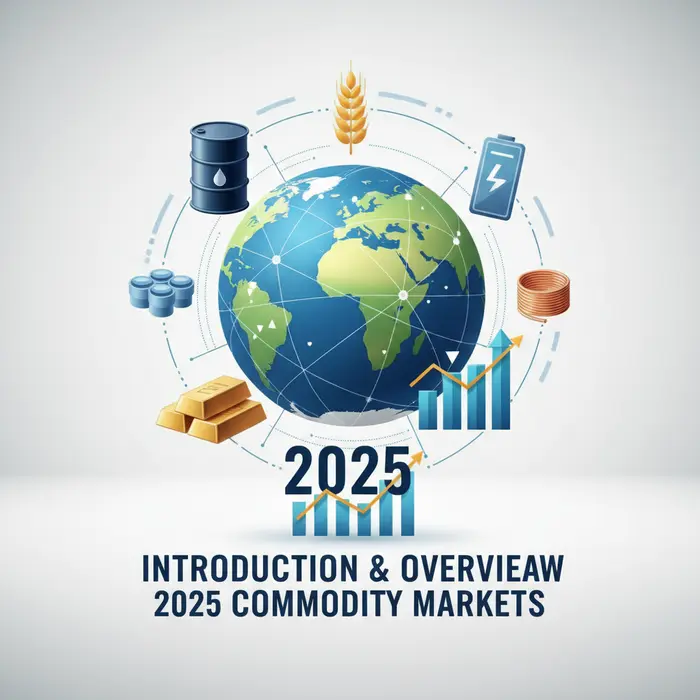
1. Defining Major Commodity Categories (Energy, Metals, Agriculture)
Commodities are fundamental raw materials, often fungible, traded in bulk, and essential inputs for industrial production and daily life. For 2025, their trajectory will largely depend on the specific dynamics of three primary categories:
- Energy: Encompassing crude oil, natural gas, coal, and increasingly, components for renewable energy. Oil prices will remain sensitive to OPEC+ decisions, geopolitical stability in major producing regions, and global economic growth affecting demand for transportation and industrial activity. Natural gas markets, particularly in Europe and Asia, will continue to be influenced by supply security concerns and weather patterns, following the energy crisis of previous years. The push for decarbonization will also create nuanced demand patterns for both traditional and transition energy sources.
- Metals: Divided into industrial metals (like copper, aluminum, iron ore, nickel) and precious metals (gold, silver, platinum). Industrial metals are direct beneficiaries or casualties of global manufacturing activity, infrastructure spending, and the accelerating electric vehicle (EV) transition. Copper, for instance, is often seen as an economic bellwether due to its widespread use in construction and electronics. Precious metals typically act as safe havens during economic uncertainty or hedges against inflation, with gold expected to maintain its allure amidst persistent global risks. Understanding specific B2B commodity pricing trends for these categories is crucial for procurement and supply chain managers.
- Agriculture: Includes staple grains (wheat, corn, rice), soft commodities (sugar, coffee, cocoa), and livestock. Agricultural prices are highly susceptible to weather events (droughts, floods), disease outbreaks, government trade policies, and global stock levels. Food security concerns, particularly in developing nations, and the impact of climate change on growing seasons will continue to be significant drivers.
2. Key Macroeconomic Influences on 2025 Trends
The overarching macroeconomic environment will be the single most potent determinant of commodity price movements in 2025. Several factors demand close attention:
- Global Economic Growth: A resilient global economy, particularly strong growth in major industrial powerhouses like China and the US, would underpin demand for energy and industrial metals. Conversely, a significant slowdown or recession would exert downward pressure across most commodity classes. Insights from the World Bank’s latest Commodity Markets Outlook will be critical in assessing this outlook.
- Inflation and Interest Rates: Central banks worldwide continue to grapple with sticky inflation. While many expect interest rates to stabilize or even see modest cuts in some economies, the cost of capital heavily influences investment in new commodity production capacity and inventory holding costs. Persistent inflation could also push investors towards commodities as a hedge.
- Geopolitical Tensions: Ongoing conflicts (e.g., Ukraine, Middle East) and escalating trade disputes pose significant risks to supply chains, particularly for energy and agricultural commodities. Sanctions, disruptions to shipping routes, and heightened political uncertainty can trigger rapid price spikes and contribute to heightened global supply chain cost analysis.
- Currency Fluctuations: The strength of the US dollar often has an inverse relationship with commodity prices, as most are priced in dollars. A weaker dollar typically makes commodities cheaper for buyers using other currencies, boosting demand.
- Energy Transition and Climate Policy: Long-term structural demand shifts driven by climate policies will impact fossil fuels and boost demand for critical minerals essential for renewable energy technologies and battery storage.
3. Recap of 2024’s Lingering Effects
The landscape of 2025 cannot be fully understood without acknowledging the significant influences of 2024. The past year saw commodity markets navigating persistent inflation, aggressive interest rate hikes from central banks, and the ongoing ramifications of geopolitical conflicts. These factors led to considerable price volatility across sectors. For instance, energy markets remained on edge due to supply uncertainties, while industrial metals experienced demand fluctuations tied to global manufacturing performance. Agricultural commodities, though often influenced by localized weather, also felt the broader impact of elevated input costs and supply chain bottlenecks.
The challenges of 2024 underscored the importance of robust international trade pricing strategies and a deep understanding of market fundamentals. Lessons learned from assessing export price competitiveness reports in the previous year will be invaluable for businesses adapting to 2025’s environment. The continued re-routing of trade flows, the resilience (or fragility) of specific supply chains, and the ongoing debate around decarbonization investment all set the stage for 2025, suggesting that agility and proactive risk management will be critical for success in the evolving global commodity arena.
Drivers Behind Global Commodity Price Fluctuations
The global economy’s intricate web of trade, geopolitics, and environmental shifts consistently molds commodity valuations. Understanding these underlying forces is crucial for businesses, investors, and policymakers analyzing Global Commodity Price Trends 2024. From raw materials to foodstuffs, market volatility profoundly impacts profitability, consumer prices, and national stability. This section explores the core economic, geopolitical, and environmental factors causing shifts in commodity valuations worldwide, providing insight into dynamics influencing export price competitiveness reports and B2B commodity pricing trends.
1. Geopolitical Tensions and Trade Policies
Geopolitical tensions represent a significant and often unpredictable catalyst for commodity price fluctuations. Conflicts, such as the situation in Ukraine, directly disrupt established supply routes, leading to physical shortages and increased shipping costs. The Black Sea grain corridor, for instance, illustrated how regional conflicts have global repercussions on food commodity prices. Sanctions imposed by major economic powers can also isolate key producers or consumers, altering the global balance for critical resources like oil, gas, and rare earth minerals, forcing countries to re-evaluate international trade pricing strategies and seek alternative supply sources.
Protectionist trade policies, including tariffs and quotas, further impact markets. When nations impose import duties, it can distort market prices, favoring domestic producers but raising costs for international buyers. This directly impacts the export price competitiveness report for affected goods. The ripple effect extends through global supply chain cost analysis, as businesses grapple with higher input costs and optimize sourcing in a fragmented trade environment. Monitoring these geopolitical flashpoints and policy shifts is paramount for anticipating market volatility.
2. Demand-Supply Dynamics Across Key Regions
At the heart of any market lies the fundamental interplay of demand and supply. Global economic growth is a primary driver of demand; robust industrial output in emerging economies typically translates into higher consumption of industrial metals, energy products, and construction materials. Conversely, economic slowdowns lead to decreased demand, putting downward pressure on prices. Population growth, urbanization, and evolving consumer preferences also influence demand for agricultural commodities.
On the supply side, factors range from production capacity and technological advancements to inventory levels and infrastructure bottlenecks. New discoveries can boost supply, while production cuts by cartels like OPEC+ can artificially restrict it. Investment in renewable energy infrastructure, for example, is creating surging demand for minerals like copper and lithium, directly impacting B2B commodity pricing trends in these critical sectors. Regional dynamics are important; logistical challenges, port congestion, or labor disputes can exacerbate supply shortfalls. These intricate factors continually shape the supply-demand balance and global commodity valuations. Businesses must remain agile and informed. To stay updated, refer to current commodity market reports such as those found through a search for Global Commodity Price Trends 2024.
3. Impact of Climate Change and ESG Factors
Climate change is a tangible force actively reshaping commodity markets. Extreme weather events – including prolonged droughts, intense floods, and devastating storms – directly impact agricultural yields, leading to crop failures and spikes in food prices. These events also disrupt energy infrastructure, affecting production and distribution. Beyond immediate disruptions, long-term shifts necessitate adaptation measures, such as investing in drought-resistant crops, which can increase production costs. The increasing frequency of such events makes it crucial for global supply chain cost analysis to factor in climate-related risks.
Furthermore, Environmental, Social, and Governance (ESG) factors are gaining considerable traction, influencing commodity production and trade. Investor pressure and regulatory mandates push companies towards more sustainable and ethically sound sourcing practices, including reducing carbon footprints and ensuring fair labor. While beneficial, transitioning to greener methods often involves higher initial costs, which can be passed on to commodity prices. Demand for “green steel,” for instance, can command a premium. The shift towards renewable energy also drives demand for specific critical minerals, creating new supply-demand dynamics. Understanding the interplay between environmental risks, sustainability initiatives, and market valuations is essential for navigating the future of Global Commodity Price Trends 2024. For a deeper dive into the broader economic outlook, the World Bank’s detailed analysis provides valuable insights into Commodity Markets Outlook.
Conclusion
The fluctuations in global commodity prices are a multifaceted phenomenon, driven by geopolitical events, fundamental supply and demand dynamics, and the accelerating impact of climate change and ESG considerations. For businesses engaged in international trade and procurement, a comprehensive understanding of these drivers is paramount. Navigating volatility requires strategic foresight, robust risk management, and continuous monitoring of these powerful forces that shape the global economic landscape. Staying abreast of these trends is crucial for anticipating market shifts, optimizing supply chains, and maintaining competitiveness.
B2B Commodity Pricing & Export Competitiveness
In the intricate world of international commerce, understanding Global Commodity Price Trends 2024 is not merely an academic exercise but a critical necessity for businesses operating within the B2B sphere. These trends directly dictate the cost structures for raw materials, intermediate goods, and energy, thereby profoundly influencing business-to-business transactions worldwide. For nations heavily reliant on exports, the ability to compete effectively in international markets hinges on a nuanced comprehension of these price dynamics. A nation’s export price competitiveness report is often a direct reflection of how well its industries can adapt to and leverage fluctuating global prices, ensuring their offerings remain attractive despite the ever-shifting landscape of supply and demand. This section delves into the mechanisms through which global price movements shape B2B commodity pricing and ultimately determine a country’s standing in the global export arena.

1. Analyzing Sector-Specific B2B Pricing Models
This segment explores how various industries adopt and adapt different B2B pricing models in response to global commodity price fluctuations. B2B commodity pricing trends are rarely uniform across all sectors. For instance, manufacturers in the automotive or electronics industries, heavily dependent on metals and rare earth elements, might employ long-term supply contracts with price adjustment clauses tied to benchmark indices like the London Metal Exchange. Conversely, agricultural commodity traders might utilize spot pricing or futures contracts, reflecting highly volatile market conditions. Effective global supply chain cost analysis becomes paramount, enabling businesses to forecast costs accurately and implement dynamic pricing strategies. Firms must continuously evaluate whether a cost-plus, value-based, or competitive pricing model best suits their specific commodities and market conditions, especially when dealing with rapidly changing input costs. Understanding these nuanced B2B commodity pricing trends allows businesses to maintain profit margins while remaining competitive, by optimizing procurement and sales strategies.
2. Measuring Export Price Competitiveness
Understanding a nation’s export price competitiveness is crucial for its economic health and market share in international trade. This section focuses on the methodologies and factors involved in assessing this competitiveness. An export price competitiveness report typically evaluates a country’s ability to offer goods and services at prices equal to or lower than its international rivals, while still achieving desired profit margins. Key determinants include domestic production costs (labor, energy, raw materials), technological efficiency, government policies (subsidies, taxes), and the efficiency of logistical networks. When Global Commodity Price Trends 2024 show significant upward movements, nations with efficient production methods and diversified supply chains are better positioned to absorb these increases without drastically raising export prices, thus preserving their competitive edge. Conversely, countries heavily reliant on imported raw materials face greater challenges in maintaining price stability. Strategic international trade pricing strategies must therefore balance cost recovery with market penetration goals, often requiring sophisticated analyses of competitor pricing and market demand elasticity.
3. Currency Exchange Rates and Their Role
This final section illuminates the significant, often overlooked, impact of currency exchange rates on both B2B commodity pricing and overall export competitiveness. Fluctuations in a country’s currency value can dramatically alter the real cost of imports and the revenue generated from exports. A strengthening domestic currency makes a nation’s exports more expensive for international buyers, potentially eroding price competitiveness, even if underlying commodity costs remain stable. Conversely, a weakening currency can make exports cheaper and more attractive, boosting demand. For businesses involved in B2B transactions, currency volatility introduces an additional layer of risk and complexity into pricing models. Companies engaged in international trade pricing strategies must therefore incorporate robust hedging strategies or employ specific payment terms to mitigate adverse currency movements. For instance, an exporter selling commodities priced in USD but incurring production costs in a rapidly appreciating local currency could see their profit margins squeezed considerably. Monitoring global exchange rate forecasts alongside Global Commodity Price Trends 2024 is essential for crafting resilient pricing strategies and ensuring sustained profitability in the volatile landscape of international trade.
Global Supply Chain Cost Analysis in a Volatile Market
In today’s interconnected yet unpredictable global economy, understanding and managing supply chain costs is paramount. The year 2024 presents a dynamic landscape shaped by significant Global Commodity Price Trends 2024, geopolitical shifts, and environmental challenges. For businesses in international markets, effective global supply chain cost analysis is no longer an option but a necessity. This section details multifaceted supply chain cost components susceptible to market volatility, offering insights into navigating complexities.
1. Raw Material Costs vs. Logistical Expenses
This crucial component involves discerning direct costs of acquiring raw materials against expenditures incurred in moving them and finished goods. Fluctuations in Global Commodity Price Trends 2024, driven by supply-demand imbalances, directly impact raw material procurement. For instance, a sudden surge in metal prices alters production costs. Logistical expenses, encompassing freight, warehousing, and customs, represent a significant portion. While raw material costs are commodity-tied, logistical expenses are influenced by fuel, labor, and infrastructure. Effective analysis requires tracking both closely, understanding their independent movements and interdependencies. Opting for cheaper raw materials from a distant source might increase transportation costs. Businesses must conduct detailed cost-benefit analyses, leveraging an export price competitiveness report to benchmark procurement and shipping strategies. Monitoring B2B commodity pricing trends provides foresight into potential cost shifts, allowing proactive adjustments in sourcing and international trade pricing strategies. This integrated approach ensures decisions optimize one cost component without escalating another, maintaining overall supply chain efficiency.
2. Energy Prices and Transportation Impacts
Energy is the lifeblood of global logistics, making prices a critical determinant of supply chain expenses. Volatility in global energy markets, often mirroring broader Global Commodity Price Trends 2024, profoundly influences transportation costs across all modes. Crude oil prices directly dictate fuel costs for maritime shipping, air cargo, and road freight. Any upward swing immediately translates into higher bunker surcharges and increased fuel surcharges. This domino effect amplifies goods movement costs internationally, directly impacting a company’s international trade pricing strategies and export price competitiveness report. Beyond direct fuel, energy prices also influence electricity costs for warehouses and port operations, indirectly adding to logistical expenses. Businesses must integrate sophisticated forecasting models to predict energy price movements and their ripple effects. Strategies such as optimizing shipping routes, consolidating cargo, investing in fuel-efficient fleets, and exploring alternative energy sources become vital in mitigation. Forming long-term contracts with logistics providers including transparent fuel adjustment clauses can help manage budget predictability. Understanding these dynamics is essential for developing resilient supply chains capable of absorbing shocks, safeguarding profit margins.
3. Inventory Management and Holding Costs
Effective inventory management is a cornerstone of supply chain efficiency, yet it becomes challenging amidst fluctuating Global Commodity Price Trends 2024. This segment explores how market volatility directly impacts inventory levels and holding costs. When commodity prices are unpredictable, businesses face a dilemma: stock up to hedge against future price increases (speculative buying) or maintain lean inventories to minimize holding costs and obsolescence risk. Both strategies carry significant financial implications. Higher raw material costs, driven by B2B commodity pricing trends, translate directly into a higher inventory value, which inflates holding costs such as storage, insurance, and capital. Conversely, understocking leads to production delays, missed sales, and reputational damage. Robust global supply chain cost analysis must include a dynamic inventory optimization strategy. This involves real-time data analytics to forecast demand and supply more accurately, leveraging technology like AI to predict price movements, and implementing just-in-time (JIT) or just-in-case (JIC) strategies judiciously based on specific commodity risk profiles. Collaborative inventory planning and flexible warehousing solutions can further reduce carrying costs. The goal is to balance stock to meet demand while minimizing the financial burden of excessive inventory, especially with an uncertain outlook on international trade pricing strategies.
Mastering global supply chain cost analysis in a volatile market demands a holistic and dynamic approach. By dissecting raw material versus logistical expenses, understanding energy prices’ profound impact, and optimizing inventory management, businesses can build resilient supply chains. This proactive stance, informed by continuous monitoring of Global Commodity Price Trends 2024 and strategic adjustments, is key to maintaining competitiveness and ensuring long-term success.
Strategic Responses & Outlook for International Trade
Navigating the turbulent waters of global commodity markets has become a defining challenge for international trade in recent years. As businesses grapple with unprecedented Global Commodity Price Trends 2024, strategic responses are no longer optional but essential for survival and growth. This section provides actionable international trade pricing strategies and forecasts the future landscape for businesses aiming to maintain profitability and competitiveness amidst persistent commodity price volatility and evolving global supply chain dynamics.
1. Hedging Strategies and Price Risk Management
One of the most immediate and effective strategic responses to mitigate the impact of unpredictable Global Commodity Price Trends 2024 is the implementation of robust hedging strategies. Hedging involves taking an offsetting position in a financial market to protect against adverse price movements in the physical commodity market. For businesses engaged in international trade, this means locking in future purchase or sale prices for raw materials or finished goods, thereby reducing exposure to market fluctuations. Common hedging instruments include futures contracts, options, and forward contracts. Futures and options, traded on exchanges, offer standardized terms and liquidity, while over-the-counter (OTC) forward contracts can be customized to specific needs. Effective price risk management goes beyond mere instrument selection; it requires a comprehensive framework encompassing market analysis, risk tolerance assessment, clear policies, and continuous monitoring. Companies must understand their exposure, define acceptable levels of risk, and integrate hedging into their overall financial strategy to stabilize costs, protect margins, and enhance predictability in their export price competitiveness report.
2. Diversification of Sourcing and Supply Chains
Reliance on single suppliers or concentrated geographical regions for critical commodities magnifies vulnerability to price shocks, geopolitical instability, and logistical disruptions. A crucial long-term strategy is the diversification of sourcing and supply chains. This involves deliberately seeking out multiple suppliers from different regions, even for the same commodity or component. By spreading procurement across various geographies, businesses can insulate themselves from localized price spikes, natural disasters, or trade restrictions affecting a single source. Furthermore, diversifying enables access to different commodity markets, potentially offering more competitive pricing or greater availability during times of scarcity. The trend towards “near-shoring” or “friend-shoring” is gaining momentum, as companies prioritize supply chain resilience over purely cost-driven decisions. This strategic shift in global supply chain cost analysis aims to reduce lead times, transportation costs, and geopolitical risks, making supply chains more agile and less susceptible to the widespread impacts of future global economic volatility. Building a resilient network requires continuous evaluation of supplier performance, geographical risk assessments, and investing in robust supplier relationship management systems.
3. Dynamic Pricing Models and Contract Adjustments
In an environment characterized by persistent B2B commodity pricing trends volatility, static pricing models become a significant liability. Businesses engaged in international trade must adopt more flexible and dynamic pricing strategies that allow for rapid adjustments in response to market changes. Dynamic pricing models can include cost-plus formulas with built-in escalation and de-escalation clauses, indexed pricing tied to publicly traded commodity benchmarks (e.g., Brent crude, LME copper), or regular price reviews based on pre-defined triggers. This approach ensures that selling prices reflect the true cost of goods, protecting profit margins during periods of rising input costs while also allowing businesses to remain competitive when commodity prices fall. Revisiting and renegotiating long-term contracts to incorporate these flexible clauses is paramount. Clear communication with customers about the rationale behind these adjustments is also vital for maintaining strong business relationships. Implementing sophisticated analytics to monitor market conditions and predict future international trade pricing strategies allows companies to react proactively rather than reactively, turning potential threats into opportunities for competitive advantage in their export markets.
The outlook for international trade in the face of evolving Global Commodity Price Trends 2024 demands a multi-faceted and adaptive approach. By strategically employing hedging, diversifying supply chains, and adopting dynamic pricing models, businesses can build resilience, mitigate risks, and position themselves for sustained success in a highly uncertain global economic landscape. Agility, foresight, and continuous adaptation will be the hallmarks of thriving enterprises.
Partner with Vietnam’s Leading Suppliers
Looking for reliable suppliers in Vietnam? Contact VietnamSuppliers.com today to connect with verified manufacturers and exporters across all industries.
—————————————
References
– World Bank’s latest Commodity Markets Outlook: https://www.worldbank.org/en/research/commodity-markets
– Commodity Markets Outlook: https://www.worldbank.org/en/research/commodity-markets
– :
– World Bank Commodity Markets Outlook: https://www.worldbank.org/en/research/commodity-markets
– World Economic Outlook April 2024: https://www.imf.org/en/Publications/WEO/Issues/2024/04/16/world-economic-outlook-april-2024

