
Understanding the Electronic Bill of Lading (eB/L)
In the intricate world of international trade, the Bill of Lading (B/L) has long stood as a foundational document, serving multiple critical roles. However, the advent of digital technologies has ushered in a transformative evolution: the Electronic Bill of Lading (eB/L). This digital counterpart is not merely a scanned image of its paper predecessor; it represents a fundamental shift in how goods are transported, tracked, and transferred across global supply chains. By moving beyond cumbersome paper processes, the eB/L promises enhanced efficiency, security, and sustainability, fundamentally improving upon traditional methods in international trade.
1. What is an Electronic Bill of Lading?
An Electronic Bill of Lading (eB/L) is the digital equivalent of a traditional paper Bill of Lading. At its core, it fulfills the same tripartite functions: it acts as a contract of carriage between the shipper and the carrier, a receipt for the goods issued by the carrier, and critically, a document of title that grants ownership of the goods to the lawful holder. The key distinction lies in its format and operational mechanism. Instead of physical paper, an eB/L exists as structured electronic data, secured and managed through specialized digital platforms, often leveraging technologies like blockchain or distributed ledger technology (DLT).
Unlike a simple PDF, an eB/L is dynamic and interactive. It enables the secure transfer of title electronically, ensuring that the integrity and uniqueness of the document are maintained throughout its lifecycle, mirroring the physical handover of a paper B/L. This capability is particularly vital for a negotiable Bill of Lading, where the ability to transfer ownership is paramount. The eB/L leverages electronic signatures and robust security protocols to authenticate parties and transactions, making it a legally binding and verifiable document that simplifies the often complex Bill of Lading process.

2. Evolution from Paper to Digital Documentation
For centuries, the paper Bill of Lading has been an indispensable yet often problematic cornerstone of global commerce. Its physical nature presented numerous challenges: susceptibility to loss or damage, the high cost of printing and courier services, and the significant delays inherent in physically transporting documents across continents. Furthermore, paper documents are vulnerable to fraud, and their physical handling adds layers of administrative burden and environmental impact.
The transition to digital documentation, specifically the eB/L, is a direct response to these inefficiencies. Driven by the need for greater speed, accuracy, security, and cost-effectiveness, the shipping industry has embraced digital transformation. The eB/L streamlines the entire Bill of Lading process by eliminating the need for physical couriers, drastically reducing transit times for documents, and enabling real-time tracking of both the goods and their associated documentation. This shift not only accelerates trade but also enhances transparency and reduces the carbon footprint associated with paper-based logistics. Various initiatives and platforms now offer standardized Bill of Lading template solutions in digital format, further facilitating this evolution.
3. Key Features and Components of an eB/L
The efficacy and security of an eB/L stem from several critical features and underlying technologies:
- Data Integrity and Security: eB/Ls are typically protected by advanced encryption and immutable ledger technologies like blockchain or DLT. These technologies ensure that once an eB/L is issued, its data cannot be altered without detection, preventing fraud and enhancing trust among all parties.
- Legal Recognition: A crucial aspect of eB/Ls is their legal enforceability. Many jurisdictions and international bodies, such as the United Nations Commission on International Trade Law (UNCITRAL), have developed frameworks like the Model Law on Electronic Transferable Records to provide legal equivalence for electronic documents, ensuring that eB/Ls hold the same legal weight as their paper counterparts.
- Transferability and Negotiability: Modern eB/L platforms are designed to securely manage the transfer of title. This involves specific protocols for endorsing and transferring the eB/L from one party to another, typically through a secure digital environment that logs every change of ownership, thereby maintaining the integrity of the chain of title for negotiable Bill of Lading.
- Auditability and Traceability: Every action and transaction related to an eB/L, from its issuance to its surrender, is recorded on the digital ledger. This provides an irrefutable audit trail, offering unprecedented transparency and traceability for all stakeholders.
- Interoperability and Integration: eB/Ls are often designed to integrate seamlessly with other trade and logistics systems, such as Enterprise Resource Planning (ERP), Transport Management Systems (TMS), and customs platforms. This integration further automates processes, reduces manual data entry, and enhances overall supply chain efficiency.
These features collectively underscore how the eB/L is revolutionizing global trade, offering a secure, efficient, and legally robust alternative to traditional paper documentation for all Types of Bill of Lading.
Types of Bill of Lading and the Rise of eB/L
The Bill of Lading (B/L) is a cornerstone document in international trade, fulfilling three crucial roles: a receipt for goods, a contract of carriage, and a document of title. Traditionally paper-based, the industry is now witnessing a significant shift towards the Electronic Bill of Lading (eB/L). Understanding the various types of Bill of Lading and how eB/L integrates into these established classifications, especially concerning negotiable instruments, is vital for modern supply chain efficiency.
1. Common Types of Bill of Lading (e.g., Straight, Seaway, Order)
Traditional Bills of Lading typically fall into these main categories:
- Straight Bill of Lading: This is a non-negotiable document consigning goods directly to a named consignee. Only this specified consignee can claim the goods, often without needing the original B/L. It’s used when goods are pre-paid or trust is high, streamlining the Bill of Lading process by reducing original document handling.
- Seaway Bill: Also a non-negotiable instrument, the Seaway Bill functions as a receipt and contract of carriage. Its primary benefit is speed, allowing goods to be released to the named consignee without presenting an original document, ideal for high-trust relationships or intra-company transfers.
- Order Bill of Lading: This is the most crucial type for international trade finance due to its negotiable nature. Consigning goods “to the order” of a party (e.g., shipper or bank), it acts as a true document of title. The holder of the original endorsed Order B/L has the right to claim the goods, and it can be traded while goods are in transit, facilitating financing and security.
2. Negotiable Bill of Lading vs. Non-Negotiable Instruments
The distinction between negotiable and non-negotiable instruments is fundamental to the financial and legal aspects of a Bill of Lading.
- Negotiable Bill of Lading: An Order Bill of Lading is a prime example of a negotiable Bill of Lading. It’s a document of title that can be transferred by endorsement and physical delivery, enabling the goods it represents to be bought, sold, or collateralized while in transit. This characteristic is vital for trade finance, allowing banks to extend credit (e.g., under a Letter of Credit) by taking control of the goods until payment. Only the rightful holder of the original negotiable B/L can take possession of the goods at their destination, providing robust security for transactions across long distances.
- Non-Negotiable Instruments: Straight Bills of Lading and Seaway Bills fall into this category. They are not documents of title in the same way and cannot be transferred to convey ownership of the goods. Their role is primarily as a receipt and proof of carriage contract. Goods are released to the named consignee upon identification, simplifying logistics for trusted arrangements but offering no flexibility for trading goods in transit or securing finance against them.
3. How eB/L Integrates with Existing Classification Systems
The Electronic Bill of Lading (eB/L) represents the digital evolution of traditional B/Ls, maintaining their legal functions while leveraging technological advantages. An eB/L can replicate any traditional type, functioning as a digital “Straight eB/L” or, more significantly, as a fully negotiable “Order eB/L.”
eB/Ls seamlessly integrate and enhance existing classification systems:
- Digital Equivalence: An eB/L is legally equivalent to its paper counterpart. A digital “Order eB/L” maintains full negotiability, acting as a secure, transferable electronic document of title.
- Accelerated Negotiability: For negotiable Bill of Lading transactions, eB/L offers instant transfer of title across global networks. This eliminates the delays, costs, and risks (like loss or fraud) associated with courier services for physical documents, which often cause goods to arrive before their paper B/L. Digital platforms utilize secure technologies, including blockchain, to ensure the authenticity, uniqueness, and immutability of the eB/L.
- Streamlined Operations: The digital format streamlines the entire Bill of Lading template management and process. Amendments, endorsements, and transfers are performed electronically with verifiable audit trails, enhancing efficiency and transparency.
- Broader Advantages: Beyond classification, eB/L offers increased security through cryptographic measures, reduced administrative and environmental costs, and improved real-time tracking. Supported by frameworks like the UNCITRAL Model Law on Electronic Transferable Records (MLETR), eB/L is poised to transform global trade into a faster, more secure, and sustainable ecosystem, especially for efficiently managing negotiable instruments.
The Electronic Bill of Lading Process Demystified
The advent of digital technologies has profoundly revolutionized global trade, particularly with the introduction of the Electronic Bill of Lading (eB/L). Far from being a mere digital copy, the eB/L reimagines the entire workflow, from issuance to cargo release, eliminating the cumbersome aspects of paper documentation. This section aims to demystify the complete eB/L process, providing a step-by-step breakdown that clarifies its operational flow and highlights its significant advantages. Understanding the eB/L process is crucial for businesses engaged in international shipping, looking to leverage modern tools for a streamlined supply chain.
1. Issuance and Authentication Procedures for eB/L
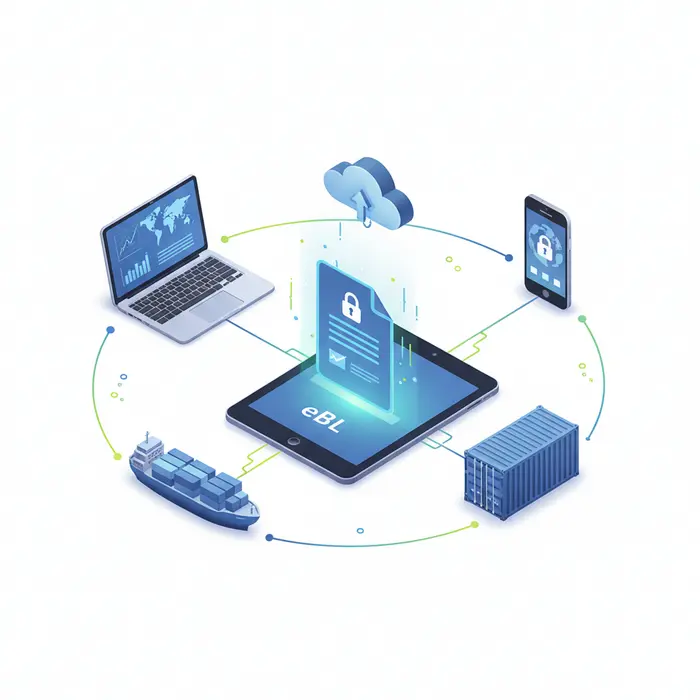
The “Issuance and Authentication Procedures for eB/L” refer to the initial creation and verification steps that bring an electronic Bill of Lading into existence. Unlike its paper equivalent, an eB/L is generated and secured within a digital ecosystem, typically via a trusted platform or blockchain network. The process begins when the carrier or their agent collects all necessary shipment details to populate an electronic Bill of Lading template. This digital document then undergoes a rigorous authentication process. This often involves robust cryptographic methods, including digital signatures and timestamps, to guarantee its originality, integrity, and non-repudiation. Each eB/L is uniquely identified and its metadata securely recorded, preventing unauthorized alterations. Platforms adhering to international standards, like the UNCITRAL Model Law on Electronic Transferable Records (MLETR), ensure its legal equivalence and admissibility. This foundational step establishes the eB/L as a legally binding and secure digital asset, ready for the next stages of the shipping journey.
2. Transferring Ownership and Endorsements in the Digital Realm
“Transferring Ownership and Endorsements in the Digital Realm” describes the digital equivalent of transferring title to goods by endorsing and handing over a physical Bill of Lading. This is where the true power of a negotiable Bill of Lading shines in its electronic form. In the traditional paper process, the consignee or owner would physically endorse the B/L and hand it over. With an eB/L, this transfer happens seamlessly and instantaneously on the digital platform. The current lawful holder initiates a transfer request, designating the new holder. The platform then records this transfer, updating the ownership ledger securely and immutably, often leveraging blockchain technology. Digital endorsements are executed using secure digital signatures or platform-specific authentication, ensuring only the rightful owner can transfer the title. This digital capability dramatically reduces transit times for documents, eliminates the risk of loss or fraud associated with physical documents, and accelerates trade finance processes, allowing for faster transactions and more efficient supply chain management. The integrity of the transfer mechanism is paramount, ensuring a clear, undisputed record of title.
3. Presentation and Delivery: Completing the eB/L Journey
“Presentation and Delivery: Completing the eB/L Journey” refers to the final critical stage where the electronic Bill of Lading is presented to the carrier at the destination port to claim the cargo. Once the vessel arrives and the cargo is ready for discharge, the ultimate lawful holder of the eB/L electronically presents it to the carrier. The carrier then verifies the authenticity and ownership of the presented eB/L through the secure platform. This verification process is typically swift and automatic, confirming the presenter is the rightful owner and that no previous claims or discrepancies exist. Upon successful verification, the carrier authorizes the release of the cargo. This digital hand-off eliminates the delays inherent in waiting for physical documents, which can often lead to demurrage charges or logistical bottlenecks. The clarity and speed of this process significantly enhance operational efficiency, reduce administrative burdens, and mitigate the risk of fraud where counterfeit paper documents might be used. The journey culminates in the secure and efficient release of goods, marking a complete transition from a traditional paper-based, time-consuming Bill of Lading process to a streamlined, modern digital workflow.
In summary, the Electronic Bill of Lading process is a robust, secure, and highly efficient evolution of a centuries-old trade document. By demystifying its issuance, ownership transfer, and final presentation, businesses can fully appreciate the immense benefits it offers. From improved security and reduced processing times to minimized risks of fraud and enhanced traceability, the eB/L is not just a digital replica but a transformative tool. As more industries adopt digital trade practices, understanding and implementing the eB/L becomes essential for maintaining competitive advantage and fostering a more resilient and responsive global supply chain. Its continued adoption promises to redefine the standards of efficiency and trust in international shipping.
Benefits, Challenges, and Future of eB/L Adoption
The global trade landscape is undergoing a profound digital transformation, with the Electronic Bill of Lading (eB/L) emerging as a cornerstone of this evolution. Traditionally a paper-intensive document, the Bill of Lading serves as a contract of carriage, a receipt for goods, and a document of title. The shift to an electronic format promises to revolutionize efficiency, security, and cost-effectiveness across the supply chain. However, this journey is not without its hurdles, from complex regulatory frameworks to the inherent resistance to change. Understanding these dynamics is crucial for businesses aiming to capitalize on the digital future of trade documentation.
1. Efficiency, Cost Savings, and Enhanced Security Advantages
The adoption of an Electronic Bill of Lading offers a compelling array of advantages over its traditional paper counterpart. Foremost among these is unparalleled efficiency. The digital nature of an eB/L eliminates the need for physical printing, mailing, and manual handling, drastically reducing the time it takes for documents to travel between parties—often from days or weeks to mere seconds. This acceleration speeds up customs clearance, cargo release, and overall trade cycles, preventing costly demurrage and detention charges. Furthermore, an eB/L significantly reduces administrative burdens, allowing businesses to streamline their “Bill of Lading process” and reallocate resources.
Cost savings are another major driver for eB/L adoption. Beyond eliminating printing and courier fees, the reduction in errors associated with manual data entry and handling translates into fewer disputes and rework. The secure digital transmission of an eB/L also minimizes the risk of loss, damage, or fraudulent alteration, which are significant concerns with paper documents. Each “Bill of Lading template” used digitally can incorporate advanced security features like encryption, digital signatures, and audit trails, offering a much higher level of protection against tampering and unauthorized access. This enhanced security is particularly vital for safeguarding the integrity of the negotiable Bill of Lading, ensuring that ownership transfer is transparent and verifiable, aligned with principles established by the ICC Digital Rules for Digital Trade (DSI).
2. Regulatory Hurdles and Adoption Challenges in Global Trade
Despite the undeniable benefits, the path to widespread eB/L adoption is fraught with challenges, primarily stemming from the fragmented and complex regulatory landscape of global trade. A significant hurdle is the lack of universal legal recognition for electronic documents across all jurisdictions. While international conventions and national laws are evolving, inconsistencies remain. Some countries still require physical paper documents for certain customs procedures or for the legal transfer of title, creating a ‘paper-out’ scenario that undermines the full digital promise of the eB/L.
Interoperability is another critical concern. For an eB/L system to be truly effective, it must seamlessly integrate with various platforms used by shippers, carriers, banks, and customs authorities worldwide. The existence of multiple proprietary eB/L solutions, each with its own standards and protocols, complicates widespread adoption and creates silos. Smaller businesses, in particular, may face difficulties in investing in or adapting to new digital systems, and there’s often a general reluctance to abandon familiar, albeit inefficient, “Types of Bill of Lading” and processes that have been in place for decades. Educating stakeholders and fostering a collaborative environment to develop universally accepted standards and legal frameworks are essential for overcoming these inhibitors and accelerating the digital transformation of trade documentation.
3. Blockchain Technology and the Future of Electronic Documentation
Looking ahead, blockchain technology is poised to play a transformative role in the future of electronic documentation, particularly for the Electronic Bill of Lading. Blockchain’s inherent characteristics—decentralization, immutability, and transparency—address many of the current challenges associated with digital trade documents. By providing a secure, tamper-proof ledger for all transactions, blockchain can create a single source of truth for the entire supply chain. This eliminates the need for trusted intermediaries to verify the authenticity and ownership of an eB/L, significantly enhancing trust and reducing the potential for fraud.
For the “negotiable Bill of Lading”, blockchain offers a revolutionary approach to title transfer. Instead of relying on proprietary systems or traditional banking channels, the transfer of an eB/L on a blockchain can be executed instantly and securely, with every change of ownership recorded permanently and transparently. This vastly simplifies trade finance processes, making them faster, more efficient, and less prone to disputes. Several initiatives, such as TradeLens and CargoX, are already leveraging blockchain to facilitate the secure exchange of eB/Ls and other trade documents, demonstrating the technology’s practical applicability. As these platforms mature and gain wider acceptance, blockchain will not only streamline the entire “Bill of Lading process” but also foster greater collaboration and efficiency across the global trade ecosystem, paving the way for truly paperless and frictionless international commerce.
Implementing eB/L: Templates and Best Practices
The digital transformation of global trade is accelerating, with the Electronic Bill of Lading (eB/L) at its forefront. Moving away from traditional paper documents offers unparalleled benefits in terms of efficiency, security, and cost reduction. For businesses looking to transition to or improve their use of eB/Ls, a strategic approach is crucial. This guide provides actionable advice on finding suitable templates, choosing robust platforms, and ensuring legal compliance in the digital age of shipping.
1. Finding a Reliable Bill of Lading Template (Digital & Traditional)
Whether you’re new to eB/Ls or refining existing processes, starting with a reliable template is fundamental. A well-structured Bill of Lading template ensures all necessary information is captured, preventing disputes and delays. For traditional, paper-based operations, templates can often be sourced from reputable freight forwarders, shipping lines, or legal stationery suppliers. These often adhere to standard industry formats, though they lack the dynamic capabilities of their digital counterparts.
When moving to digital, the landscape changes significantly. Electronic templates are often integrated within eB/L platforms or provided by industry bodies. Look for templates that align with international standards such set by UN/CEFACT or those promoted by industry consortia like the DCSA (Digital Container Shipping Association). These ensure interoperability and compliance across various stakeholders. Key elements to look for in any template, digital or traditional, include shipper and consignee details, cargo description, port of loading and discharge, and clauses for liability and jurisdiction. Understanding the distinct Types of Bill of Lading – such as straight (non-negotiable), bearer, or order (negotiable) – is essential for selecting or customizing the appropriate digital template to match the specific trade scenario. Many eB/L platforms offer customizable templates, allowing businesses to adapt them to their unique operational needs while maintaining a core structure that meets legal and industry requirements.
2. Choosing the Right eB/L Platform and Service Provider
The success of your eB/L implementation heavily relies on selecting an appropriate platform and service provider. This choice impacts everything from workflow efficiency to data security. When evaluating options, consider the following critical factors:
- Security and Data Integrity: Ensure the platform employs robust encryption, multi-factor authentication, and tamper-proof audit trails. The integrity of your digital documents is paramount.
- Interoperability and Integration: Can the platform seamlessly integrate with your existing Enterprise Resource Planning (ERP) or Transport Management System (TMS)? Good interoperability reduces manual data entry and streamlines the entire Bill of Lading process.
- Ease of Use: A user-friendly interface minimizes the learning curve and encourages adoption across your organization and among your trading partners.
- Legal Compliance: The platform should be designed to issue eB/Ls that are legally recognized in relevant jurisdictions.
- Network and Ecosystem: Consider platforms with a wide network of existing users (shippers, carriers, banks) as this facilitates broader adoption and smoother transactions.
- Cost and Scalability: Evaluate the pricing model and ensure the platform can scale with your business growth.
- Customer Support: Reliable technical support is crucial for addressing any issues promptly.
Some platforms leverage blockchain technology to enhance transparency and security, creating an immutable record of the eB/L’s lifecycle. While innovative, ensure such solutions are mature and widely accepted within your trade lanes. Thorough due diligence, including pilot programs and reference checks, is highly recommended before committing to a provider.
3. Legal Considerations and Compliance Tips for Digital Trade
The legal validity of an Electronic Bill of Lading is a cornerstone of its utility. Historically, paper documents held legal primacy, but this is rapidly changing. Key international frameworks, such as the UNCITRAL Model Law on Electronic Commerce, provide foundational principles for the legal recognition of electronic records and signatures. Many countries have adopted similar legislation, like the U.S. E-SIGN Act, to give electronic documents the same legal weight as their paper counterparts.
A significant recent development is the Electronic Trade Documents Act 2023 (ETDA) in the UK, which explicitly provides for the legal recognition and transfer of possession of electronic trade documents, including eB/Ls. This landmark legislation, by establishing a clear legal framework, aims to unlock substantial economic benefits and foster greater adoption of digital trade. Businesses should closely monitor such legislative changes in all relevant jurisdictions to ensure compliance.
Beyond general recognition, specific considerations apply to handling a negotiable Bill of Lading electronically. The transfer of possession and endorsement of an eB/L must be demonstrably secure and unique, preventing multiple claims to the cargo. This typically involves advanced cryptographic techniques and robust platform mechanisms to ensure that there is only one authoritative electronic original at any given time. Digital signatures play a critical role in authenticating documents and parties involved. Companies must ensure their chosen eB/L solution adheres to these stringent requirements and provides comprehensive audit trails for legal certainty. Staying informed about evolving international conventions and national laws is crucial for mitigating risks and fully leveraging the benefits of digital trade.
By carefully addressing templates, platforms, and legal compliance, businesses can confidently navigate the transition to eB/Ls, unlocking new levels of efficiency and security in their global supply chains.
Partner with Vietnam’s Leading Suppliers
Looking for reliable suppliers in Vietnam? Contact VietnamSuppliers.com today to connect with verified manufacturers and exporters across all industries.
—————————————
References
– UNCITRAL Model Law on Electronic Transferable Records: https://uncitral.un.org/en/texts/ecommerce/modellew/electronic_transferable_records
– BIMCO Bill of Lading Clauses: https://www.bimco.org/contracts-and-clauses/bimco-forms/bill-of-lading-clauses
– electronic Bill of Lading template: https://www.bimco.org/contracts-and-clauses/bimco-electronic-bill-of-lading
– ICC Digital Rules for Digital Trade (DSI): https://www.icc-ccs.org/news/icc-digital-rules-for-digital-trade-dsi-launched
– Electronic Trade Documents Act 2023: https://www.legislation.gov.uk/ukpga/2023/46/contents/enacted

