
Introduction to DDP Incoterms 2020
Understanding international shipping terms is crucial. Delivered Duty Paid (DDP) Incoterms 2020 represents the highest level of seller responsibility. This rule mandates that the seller bears almost all risks and costs to deliver goods to the buyer’s named destination, including all duties, taxes, and other charges. DDP is a strategic choice influencing logistics, pricing, and customer satisfaction, especially for e-commerce and buyers seeking hassle-free delivery.
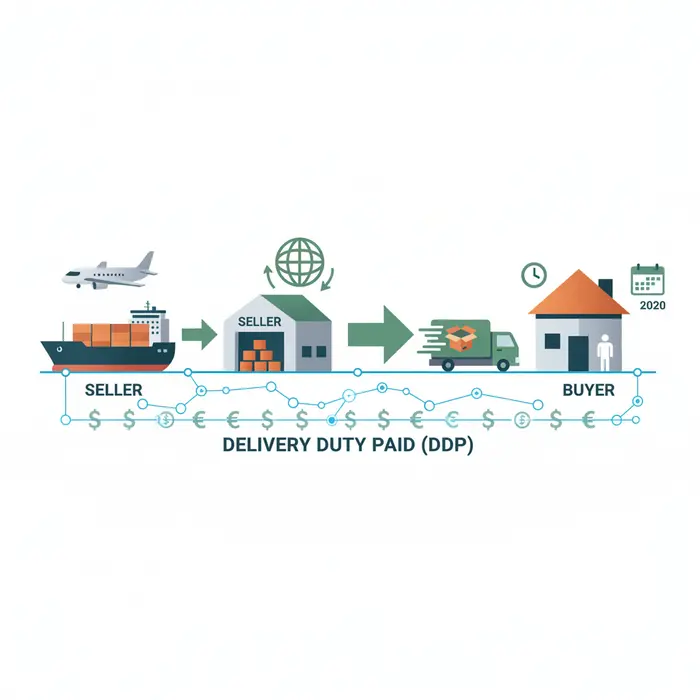
1. What is DDP Incoterms?
Delivered Duty Paid (DDP), under the International Chamber of Commerce’s Incoterms 2020 rules, signifies maximum obligation for the seller. The seller is responsible for delivering goods to the named destination in the buyer’s country, cleared for import, and ready for unloading. This includes all costs and risks: transportation, export clearance, import clearance, and payment of all applicable duties, taxes, and other official charges. Risk transfers only when goods are available at the destination, cleared for import, and ready for unloading—providing a complete “door-to-door” service. This term encapsulates comprehensive DDP customs clearance solutions managed entirely by the seller.
2. Buyer and Seller Responsibilities Under DDP
Under DDP Incoterms, responsibilities are clearly defined, heavily favoring the buyer:
Seller’s Responsibilities:
- Packaging & Export: Proper packaging, labeling, and all export formalities (licensing, customs, security).
- Transportation & Insurance: Arranging and paying for main carriage, domestic delivery, and comprehensive insurance due to extensive risk.
- Import Formalities & Duties: Handling all import customs clearance, including paying all import duties, taxes, VAT, and other government charges. Often requires specialized DDP freight forwarder services.
- Delivery & Risk Transfer: Delivering goods to the specified final destination, ready for unloading. Seller bears all risks until this point.
Buyer’s Responsibilities:
- Payment: Paying the agreed-upon price for the goods.
- Unloading: Responsible for unloading goods once they arrive at the named destination, cleared for import.
- Minimal Risk: Assumes virtually no risk or responsibility until goods are safely delivered. This contrasts with DDP vs DAP comparison, where DAP shifts import duties and risks to the buyer.
3. Why DDP is Crucial for International Trade Success
DDP Incoterms streamlines global trade, offering distinct advantages:
- Buyer Confidence & Predictability: Offers unparalleled cost predictability. Buyers know the exact landed cost upfront, eliminating hidden fees and complex import procedures. Ideal for new importers or e-commerce customers expecting “delivered to my door” service.
- Operational Efficiency for Buyers: Offloading all logistical complexities, including DDP customs clearance solutions, allows buyers to focus on core business. Valuable in markets with challenging import regulations.
- Seller’s Competitive Edge: Offering DDP can be a significant differentiator, attracting a broader international customer base. Sellers mastering DDP shipping cost calculation present an all-inclusive price, enhancing market appeal.
- Reduced Disputes: Clear responsibilities minimize misunderstandings regarding shipping, customs, and delivery. Seller’s full control ensures compliance and timely delivery.
While advantageous, sellers must meticulously perform DDP shipping cost calculation, accurately factoring in all duties, taxes, and logistical expenses to avoid losses. Experienced DDP freight forwarder services are essential for navigating diverse import regulations. Properly executed, DDP Incoterms 2020 fosters trust and efficiency in global supply chains, empowering businesses to expand with confidence.
DDP Freight Forwarder Services Explained
In the complex landscape of international trade, navigating customs, duties, and logistics can be a significant challenge for businesses. This is where DDP Incoterms 2020 freight forwarders play a pivotal role. Delivered Duty Paid (DDP) is an Incoterm where the seller takes maximum responsibility for the entire shipment process, from origin to the buyer’s designated destination, including all transportation costs, export and import customs clearance, and payment of duties and taxes. Exploring the comprehensive DDP freight forwarder services unveils how these specialists streamline international shipments, offering invaluable support from meticulous logistics management to critical documentation and compliance assurance.
The Role of a DDP Freight Forwarder
A DDP freight forwarder is a specialized logistics provider that undertakes the immense responsibility associated with DDP shipments on behalf of the seller. This means they are not merely coordinating transport; they are accountable for every single step and cost involved in delivering goods directly to the buyer’s doorstep, fully cleared for import. This includes arranging freight, handling all export and import customs formalities, paying all applicable duties, taxes, and other charges, and ensuring the goods are delivered as agreed. The essence of their role lies in transforming a potentially overwhelming international shipping process into a seamless, predictable operation for the seller. By taking on the maximum liability under DDP Incoterms 2020, the freight forwarder enables the seller to offer an all-inclusive price to their buyer, eliminating any surprises or hidden costs upon arrival. This contrasts sharply with terms like DAP (Delivered At Place), where the buyer assumes responsibility for import customs clearance and duties. A DDP freight forwarder, therefore, acts as an extension of the seller’s logistics department, mitigating risks and ensuring compliance across various international borders.
Key Services: Logistics, Documentation, and Compliance
The suite of DDP freight forwarder services is extensive and multifaceted, designed to cover every aspect of the shipping journey. Firstly, **Logistics Management** is paramount. This encompasses everything from selecting the most efficient mode of transport (sea, air, road, rail), negotiating competitive freight rates, booking cargo space, warehousing, cargo consolidation, and providing end-to-end tracking visibility. They manage the physical movement of goods, ensuring timely and safe delivery. Secondly, **Documentation Handling** is a critical, often complex, component. DDP forwarders meticulously prepare and manage all necessary paperwork, including commercial invoices, packing lists, bills of lading or air waybills, certificates of origin, import licenses, and permits. Accurate documentation is vital for smooth transit and avoiding delays. Thirdly, **DDP Customs Clearance Solutions** are at the heart of their offering. This involves navigating the intricate customs regulations of both the export and import countries. The forwarder manages the entire DDP customs clearance process, correctly classifying goods, calculating and remitting all import duties, value-added taxes (VAT), and other government charges on behalf of the seller. This ensures compliance and prevents the shipment from being held up at the border. Finally, **Compliance Assurance** spans adherence to a myriad of international trade laws, product-specific regulations, safety standards, and sanctions. Furthermore, DDP forwarders are adept at accurate **DDP shipping cost calculation**, providing sellers with transparent, all-inclusive quotes that cover every expense from pick-up to final delivery, thereby eliminating any unexpected charges.
Choosing the Right DDP Forwarder for Your Business
Selecting the appropriate DDP freight forwarder is a strategic decision that can significantly impact a business’s international trade operations and profitability. The right partner should possess deep expertise in DDP Incoterms 2020 and a proven track record in your specific trade lanes or target markets. Consider their global network and local partnerships, which are crucial for effective ground handling and customs clearance in destination countries. Look for a forwarder that offers robust technological capabilities, including advanced tracking systems and transparent communication platforms, enabling you to monitor your shipments in real-time. Transparency in DDP shipping cost calculation is non-negotiable; ensure they provide clear, itemized quotes to avoid any hidden fees. Evaluate their reputation through client testimonials and industry standing, focusing on their reliability, problem-solving skills, and responsiveness. Ultimately, the best DDP forwarder will act as a trusted extension of your business, simplifying complex international logistics, ensuring compliance, and delivering cost-effective, predictable shipping solutions. By entrusting your DDP shipments to an experienced and reliable forwarder, businesses can confidently expand into global markets, knowing that their goods will arrive at their destination fully compliant and without additional burden to the buyer.
DDP vs. DAP: A Detailed Comparison
Navigating international trade efficiently hinges on a clear understanding of Incoterms. Among the most pivotal for global logistics are Delivered Duty Paid (DDP) and Delivered At Place (DAP). These Incoterms 2020 define crucial responsibilities, impacting risk allocation, cost responsibility, and strategic choices for both sellers and buyers. This section details their differences, guiding businesses in selecting the optimal term for their cross-border transactions.
1.
Understanding the Core Differences Between DDP and DAP
While both DDP and DAP involve the seller delivering goods to a specified destination, their fundamental distinction lies in the seller’s depth of responsibility, particularly concerning import formalities and taxes.
- Delivered Duty Paid (DDP) Incoterms 2020: Under DDP Incoterms 2020, the seller assumes maximum obligation. They are responsible for delivering goods to the named destination, cleared for import, with all duties and taxes paid. This means the seller bears all risks and costs from origin to the final destination, including export/import customs, duties, taxes, and all transportation. For buyers, DDP offers a hassle-free experience, as goods arrive with no further financial or administrative burdens.
- Delivered At Place (DAP): With DAP, the seller delivers goods to the named destination, ready for unloading by the buyer, but not cleared for import and not unloaded. The buyer is solely responsible for import customs clearance, payment of import duties, taxes, and other official charges, as well as the costs and risks of unloading. The seller covers main carriage to the destination, but import bureaucracy and financial obligations fall on the buyer.
The primary differentiator in this DDP vs DAP comparison is who handles import duties, taxes, and customs clearance. This choice significantly impacts pricing strategies, supply chain management, and customer satisfaction.

2.
Risk and Responsibility Allocation: DDP vs. DAP
The transfer of risk and cost forms the backbone of the DDP-DAP distinction:
- DDP: Seller’s Maximum Burden
Under DDP, the seller takes on virtually all risks and costs until goods are delivered to the buyer’s final destination, fully cleared for import. This includes risk of loss/damage during transit, all transportation costs, export/import customs clearance, and payment of all duties and taxes. This extensive responsibility mandates the seller to possess comprehensive knowledge of the destination country’s import regulations and often requires robust DDP freight forwarder services to manage logistics and compliance. Effective DDP customs clearance solutions are crucial here, as missteps can lead to costly delays. - DAP: Shared Responsibility
With DAP, the seller bears the risk and cost of transport to the named destination. Risk of loss or damage transfers from seller to buyer once goods are available at the destination point, before unloading or import clearance. The buyer then assumes responsibility for unloading, import customs, and all associated duties and taxes. This term grants the buyer more control over the import process and related costs, but also places a greater administrative burden on them.
Strategically, DDP offers a simplified buying process and a transparent, all-inclusive price, ideal for enhancing customer experience, especially in e-commerce. However, it exposes the seller to higher costs and potential risks from unforeseen import issues. DAP, conversely, shifts these risks and responsibilities to the buyer, potentially offering a lower initial price from the seller but demanding a more engaged and capable buyer.
3.
When to Choose DDP Over DAP (and Vice Versa)
The optimal choice between DDP and DAP hinges on various factors, including goods, buyer experience, seller capabilities, and desired customer experience.
- Choose DDP when:
- You aim to offer a “landed cost” experience, common in B2C e-commerce, where customers expect an all-inclusive price.
- The buyer is inexperienced with importing and requires a simplified, hassle-free process.
- You have strong DDP freight forwarder services and DDP customs clearance solutions, enabling efficient management of import formalities and duty payments.
- Precise DDP shipping cost calculation is achievable, ensuring profitability and transparency.
- You prioritize maximum customer satisfaction and wish to maintain full control over the delivery journey.
- Choose DAP when:
- The buyer is experienced with international importing and prefers to manage customs, duties, and local logistics themselves.
- You seek to limit seller’s liability and costs, as DAP removes the burden of import duties and local clearance from the seller.
- Import regulations in the destination country are complex or volatile, making it risky for the seller to absorb all related uncertainties.
- The buyer has established relationships with local customs brokers or can leverage specific import schemes more effectively.
In essence, DDP is a seller’s commitment to a seamless, buyer-friendly delivery experience, often preferred for market expansion or direct-to-consumer models. DAP, however, fosters a more balanced approach, distributing responsibilities and suiting established B2B relationships where both parties are adept at managing their respective roles.
Navigating DDP Customs Clearance Solutions
In the intricate world of international trade, Incoterms 2020 rules provide clarity on the responsibilities of buyers and sellers. Among them, DDP (Delivered Duty Paid) places the most significant burden on the seller, who is responsible for virtually all costs and risks until the goods are delivered to the buyer’s specified destination, cleared for import. This includes managing all aspects of customs clearance, paying import duties, taxes, and even import VAT. While highly attractive to buyers who receive goods without any hidden charges or logistical headaches, DDP necessitates a robust and knowledgeable approach from sellers to ensure compliance, avoid delays, and accurately calculate DDP shipping cost calculation.
1. Seller’s Obligation for Customs Clearance and Duties
Under the DDP Incoterms 2020, the seller’s obligations extend far beyond simply arranging transportation. The seller acts as the importer of record, taking on the full legal and financial responsibility for clearing goods through customs in the destination country. This involves a meticulous process that begins long before the shipment leaves the origin country. Key responsibilities include:
- Documentation Preparation: Ensuring all necessary documents, such as commercial invoices, packing lists, certificates of origin, and permits, are accurately completed and submitted. Any discrepancy can lead to significant delays or penalties.
- Customs Classification: Correctly classifying goods using the Harmonized System (HS) codes. Incorrect classification can result in wrong duty assessments, fines, or even seizure of goods.
- Import Declarations: Filing precise and timely import declarations with the customs authorities of the destination country.
- Compliance with Regulations: Adhering to all import regulations, standards, and licensing requirements specific to the destination market, which can vary wildly between countries.
The seller bears all risks and costs associated with these procedures. This complete responsibility underscores why many sellers opt for specialized DDP freight forwarder services. These experts possess the local knowledge and infrastructure to navigate complex customs landscapes, minimizing the seller’s exposure to compliance risks and unforeseen expenses.
2. Managing Import Duties, Taxes, and VAT Under DDP
One of the most critical and often underestimated aspects of DDP is the management and payment of import duties, taxes, and Value Added Tax (VAT) or Goods and Services Tax (GST) in the destination country. Unlike terms like DAP (Delivered At Place), where the buyer handles these charges, under DDP, they are entirely the seller’s financial burden.
- Import Duties and Tariffs: These are taxes levied on imported goods. The amount depends on the product’s HS code, its declared value, and the specific trade agreements or tariffs between the origin and destination countries. Accurate DDP shipping cost calculation must factor in these varying rates.
- Consumption Taxes: Many countries impose additional consumption taxes (like excise duties on specific goods) that must be paid at the point of import.
- Import VAT/GST: This is particularly challenging. In many regions, particularly the EU, import VAT is a significant cost. The seller must typically register for VAT in the destination country, pay the import VAT, and then potentially reclaim it later, depending on their business structure and sales model. This process requires careful planning and often local fiscal representation.
Failing to account for these costs accurately can severely erode profit margins. Therefore, a comprehensive understanding of each destination country’s tax regime is paramount for any seller operating under DDP. Leveraging expert DDP freight forwarder services can be invaluable here, as they often have systems in place to calculate these charges and manage the payment and reclamation processes efficiently.
3. Common Challenges and Solutions in DDP Customs
Despite its clear benefits for buyers, DDP customs clearance solutions present several common challenges for sellers. Recognizing these and implementing proactive solutions is key to successful international trade.
Common Challenges:
- Unexpected Costs: Unforeseen duties, taxes, or storage fees due to miscalculations, changes in regulations, or customs delays can significantly inflate DDP shipping cost calculation.
- Customs Delays: Improper documentation, incorrect HS codes, or insufficient information can lead to goods being held at customs, causing delivery delays and potentially storage charges.
- Compliance Risks: Varying and often complex import regulations across different countries increase the risk of non-compliance, leading to fines, penalties, or even confiscation of goods.
- VAT Complexity: Managing import VAT and its reclaim process in multiple jurisdictions can be an administrative nightmare for sellers without a local presence or expert support.
- Lack of Local Knowledge: Sellers often lack specific knowledge of local customs procedures, language barriers, and cultural nuances, which can complicate the clearance process.
Solutions:
- Partner with Expert DDP Freight Forwarders: This is arguably the most effective solution. Reputable DDP freight forwarders specialize in DDP customs clearance, possessing the necessary expertise, licenses, and global networks to handle all aspects from documentation to duty/tax payment. They can provide accurate quotes and navigate complex regulations.
- Thorough Research and Due Diligence: Before committing to DDP, conduct extensive research into the destination country’s import regulations, tariffs, and tax structures. This is crucial for accurate DDP shipping cost calculation and risk assessment.
- Invest in Technology: Utilize customs management software or platforms that help with HS code classification, duty calculation, and document preparation, reducing human error.
- Build a Buffer: Incorporate a contingency buffer into your DDP pricing to account for unforeseen costs or minor fluctuations in duties and taxes.
- Consider DDP vs DAP comparison: While DDP offers convenience to buyers, sellers should always evaluate if DAP (Delivered At Place) might be a more suitable option for certain markets or products, shifting the duty and tax responsibility to the buyer if they are equipped to handle it.
Navigating DDP customs clearance requires meticulous planning, an in-depth understanding of international trade regulations, and often, the strategic partnership with experienced logistics providers. By addressing these challenges head-on with robust DDP customs clearance solutions, sellers can confidently leverage the benefits of DDP to expand their global reach and provide a superior customer experience.
Calculating DDP Shipping Costs Accurately
Guide businesses through the process of accurately estimating and managing all costs associated with DDP shipments, including freight, insurance, duties, taxes, and potential hidden fees, to ensure transparent pricing.

Understanding and accurately calculating DDP shipping costs is paramount for businesses engaged in international trade. Under DDP Incoterms 2020 (Delivered Duty Paid), the seller bears almost all risks and costs associated with delivering goods to the named place of destination, cleared for import, and ready for unloading. This comprehensive responsibility includes everything from origin pickup to final destination delivery, encompassing freight, insurance, duties, and taxes. Without meticulous planning, a seemingly straightforward international shipment can quickly become a financial quagmire due to unforeseen expenses. Transparent pricing, a hallmark of reliable supply chains, hinges on a seller’s ability to precisely estimate these multifaceted costs. This guide delves into the essential components of DDP pricing, offers strategies for accurate estimation, and provides insights into minimizing unexpected charges, ensuring profitability and customer satisfaction.
1. Components of DDP Cost: Freight, Insurance, Duties, Taxes
The complexity of DDP shipping cost calculation stems from its all-inclusive nature. Each major component requires careful consideration:
- Freight Charges: Often the largest single cost, this covers transporting goods from the seller’s premises to the buyer’s specified destination. It includes pre-carriage, main carriage (ocean or air freight), and on-carriage. Factors influencing freight include cargo volume/weight, chosen transport mode, fuel surcharges, and market rates. Partnering with a reliable DDP freight forwarder services provider is crucial.
- Insurance: DDP places risk on the seller until delivery, making comprehensive cargo insurance a non-negotiable safeguard against loss or damage. Cost depends on goods value, route, and coverage.
- Duties (Customs Duties/Tariffs): These taxes are levied on imported goods by the importing country’s customs authority. Duty rates vary based on the Harmonized System (HS) code, country of origin, and trade agreements. Accurate HS classification is critical.
- Taxes (Import VAT/GST and other local taxes): Most countries impose VAT or GST on imports, typically calculated on the CIF (Cost, Insurance, Freight) value plus customs duty. Other local levies might apply.
- Customs Clearance Fees: Charges by customs brokers for documentation, clearance facilitation, and compliance. Efficient DDP customs clearance solutions are vital to avoid delays and demurrage.
- Other Potential Charges: Include storage, demurrage/detention, port handling, documentation, and inspection fees.
2. Tools and Strategies for DDP Cost Estimation
Accurate estimation requires a proactive approach and reliable data sources.
- Leverage Freight Forwarders and Customs Brokers: Reputable DDP freight forwarder services and brokers offer invaluable knowledge of rates, regulations, tariffs, and taxes. Always request detailed, itemized DDP quotes. Many also provide tools for DDP vs DAP comparison.
- Utilize HS Code Look-up Tools: Precisely classifying your product with the correct HS code is fundamental for accurate duty and tax calculation. Online databases and government customs websites offer HS code search functionalities, with the World Customs Organization (WCO) providing a global framework.
- Consult Official Government Resources: Importing country customs websites provide official duty rates, tax information (VAT/GST), and import regulations, ensuring reliance on authoritative data. For Incoterms information, the International Chamber of Commerce (ICC) is the definitive source.
- Historical Data Analysis: Analyze past DDP shipments for cost patterns, unexpected charges, and transit times to inform future estimates.
- Build a Detailed Cost Spreadsheet: Create a comprehensive spreadsheet to track and compare every possible cost component across different quotes and scenarios.
3. Minimizing Unexpected DDP Shipping Expenses
While DDP aims for predictability, unexpected costs can still arise. Proactive measures can mitigate these risks.
- Clear Communication with All Parties: Ensure absolute clarity with both buyer and logistics partners regarding the “named place of destination” and service requirements to avoid additional local delivery charges.
- Thorough Documentation and Compliance: Incomplete or inaccurate documentation is a primary cause of customs delays and associated penalties. Meticulously prepare all commercial invoices, packing lists, and other required permits. Strict adherence to Incoterms 2020 guidelines is crucial.
- Contingency Planning: Always factor in a buffer for unforeseen circumstances like currency fluctuations or port congestion. A 5-10% contingency fund is a prudent practice.
- Regular Review of Logistics Agreements: Periodically review contracts with freight forwarders and customs brokers. Market rates change, and regular negotiations can secure more favorable terms.
- Understand DDP vs. DAP: For some businesses, a DDP vs DAP comparison might reveal that Delivered At Place (DAP) is more suitable. DAP shifts responsibility for import clearance and duties to the buyer, simplifying the seller’s cost structure.
By diligently addressing each cost component, leveraging expert tools, and adopting strategic planning, businesses can master the art of DDP shipping cost calculation. This not only ensures transparent pricing for customers but also safeguards profit margins and fosters long-term success in the global marketplace.
Partner with Vietnam’s Leading Suppliers
Looking for reliable suppliers in Vietnam? Contact VietnamSuppliers.com today to connect with verified manufacturers and exporters across all industries.
—————————————
References
– International Chamber of Commerce’s Incoterms 2020 rules: https://www.iccwbo.org/resources-for-business/incoterms-rules/incoterms-2020/
– DDP Incoterms 2020: https://iccwbo.org/resources-for-business/incoterms-rules/incoterms-2020/
– DDP freight forwarder services: https://iccwbo.org/resources-for-business/incoterms-rules/
– Incoterms 2020 rules: https://iccwbo.org/resources-for-business/incoterms-rules/
– ICC Incoterms 2020 Rules: https://www.iccwbo.org/resources-for-business/incoterms-rules/

