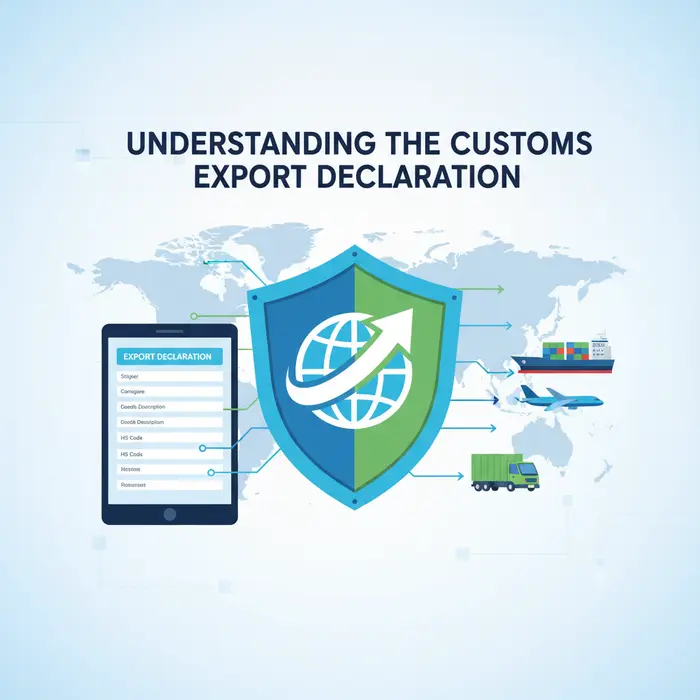
Understanding the Customs Export Declaration
In the complex world of international trade, navigating customs procedures is paramount for businesses looking to expand their reach across borders. A critical component of this process is the Customs Export Declaration (CED). This foundational document serves as more than just paperwork; it is a vital tool for ensuring compliance with global trade regulations, facilitating smooth logistics, and preventing significant legal and financial repercussions. Understanding the nuances of the CED, its purpose, and its indispensability is key to mastering the Customs clearance export process and upholding robust international shipping compliance, thereby safeguarding your operations from potential pitfalls.
1. What is a Customs Export Declaration?
A Customs Export Declaration is an official statement submitted to the customs authorities of the exporting country, providing detailed information about goods being shipped out of its territory. This mandatory document, often referred to as an export declaration form, contains crucial data points that allow governments to monitor trade, enforce laws, and compile economic statistics. Typically, a CED includes particulars such as the exporter’s and consignee’s details, a comprehensive description of the goods (including harmonized system codes), quantities, values, origin, destination, and the mode of transport. In many countries, this declaration is filed electronically, for instance, through systems like the Automated Export System (AES) in the United States, replacing traditional paper forms. It acts as a legal record, confirming that the exporter has complied with all national export controls, licensing requirements, and trade restrictions before the goods depart.
2. Why is the CED Essential for Global Trade?
The significance of the Customs Export Declaration extends far beyond mere administrative formality. Firstly, it plays a pivotal role in national security and economic data collection. Governments rely on the information provided in CEDs to track the flow of goods, identify potential threats, and generate accurate trade statistics, which are vital for economic policy-making and international agreements. Secondly, the CED is crucial for enforcing export controls and sanctions. It ensures that prohibited items or goods destined for embargoed countries do not leave the nation’s borders, thus preventing illicit trade and upholding international obligations. For the exporter, a correctly filed CED facilitates the Customs clearance export process, allowing shipments to move smoothly through customs. Without it, goods can be delayed, detained, or even seized. Furthermore, in some cases, the CED might be necessary for claiming VAT refunds or other export incentives offered by the exporting country. It forms a key part of the overall export documentation checklist, ensuring all parties involved in the logistics chain have the necessary information for a compliant and efficient shipment.
3. Legal Implications of Non-Compliance
Failure to accurately complete and submit a Customs Export Declaration carries severe legal and financial ramifications for businesses. Non-compliance can result from various errors, including misclassifying goods, undervaluation, incomplete information, or simply failing to file the declaration. The consequences can range from hefty fines and penalties, which can quickly erode profit margins, to significant shipment delays that disrupt supply chains and damage customer relationships. In more serious cases, such as deliberate misrepresentation or export of restricted items, goods may be seized by customs authorities, and the exporter could face criminal charges, loss of export privileges, and extensive legal battles. Beyond financial penalties, non-compliance can severely damage a company’s reputation, making it difficult to engage in future international trade. Therefore, meticulous attention to detail and adherence to all requirements are not just best practices but essential safeguards against a cascade of potential legal issues. Companies must ensure their teams are well-versed in the latest export regulations and maintain a rigorous export documentation checklist to mitigate these risks effectively.
In conclusion, the Customs Export Declaration is an indispensable instrument in global commerce. Far from being a bureaucratic hurdle, it is a cornerstone of legal compliance, trade facilitation, and national security. Businesses engaged in international trade must prioritize understanding and accurately fulfilling their CED obligations to ensure seamless operations, avoid legal entanglements, and contribute to the integrity of the global supply chain. Proactive compliance is not merely an option but a strategic imperative for sustainable international growth.
The Export Documentation Checklist
Navigating the complexities of international trade requires meticulous preparation, especially when it comes to the Customs Export Declaration process. A comprehensive export documentation checklist is not merely a formality; it’s the cornerstone of efficient customs clearance export process, preventing costly delays, penalties, and even shipment rejections. Properly prepared documents ensure that goods move seamlessly across borders, complying with both the exporting and importing countries’ regulations. This guide details the essential paperwork for a complete export declaration, ensuring your international shipments comply with all requirements and maintain smooth logistics.
1. Key Documents for Export
At the heart of every successful export lies a set of fundamental documents that provide a clear picture of the transaction and the goods being shipped. Ensuring each is accurate and complete is paramount for the entire Customs Export Declaration process.
- Commercial Invoice: This is arguably the most critical document. It serves as a bill for the goods from the seller to the buyer. It must contain precise details such as the seller and buyer information, description of goods, Harmonized System (HS) codes, quantity, unit price, total value, currency, payment terms, and Incoterms. Customs authorities use this invoice to determine the declared value for duty assessment.
- Packing List: Complementary to the commercial invoice, the packing list provides detailed information about the contents of each package within a shipment. It specifies the type of package (carton, crate, pallet), net and gross weights, dimensions, and marks and numbers. This document is crucial for customs inspections, cargo handling, and verifying the contents against the commercial invoice.
- Bill of Lading (B/L) or Air Waybill (AWB): These are contracts of carriage between the shipper and the carrier, acting as receipts for the goods and documents of title (for B/L). A Bill of Lading is used for ocean freight, while an Air Waybill is for air cargo. They contain details about the shipper, consignee, notify party, carrier, origin and destination ports, vessel/flight details, and a description of the goods.
- Export Declaration Form: Depending on the exporting country, a specific export declaration form is required. For instance, in the United States, exporters typically file the Electronic Export Information (EEI) through the Automated Export System (AES). This form provides the government with export statistics and is used for export control purposes. These export declaration forms are vital for maintaining international shipping compliance.
- Certificate of Origin (COO): This document certifies the country where the goods were produced or manufactured. It’s often required by importing countries to determine tariffs, establish trade agreements eligibility, or track country-specific import quotas. There are various types, such as a General Certificate of Origin or specific free trade agreement certificates (e.g., ASEAN Form D).
2. Required Permits, Licenses, and Certificates
Beyond the standard trade documents, certain goods or destinations necessitate additional permits, licenses, and certificates to ensure international shipping compliance and adherence to specific regulations. Overlooking these can lead to significant delays or even confiscation.
- Export Licenses: Some products, particularly those with dual-use capabilities (civilian and military applications), high-technology items, or certain controlled substances, require specific export licenses issued by government agencies. These licenses ensure that goods are not diverted to prohibited end-users or for unauthorized purposes.
- Health and Phytosanitary Certificates: For agricultural products, live animals, plants, and food items, health certificates (for animal products) and phytosanitary certificates (for plants and plant products) are often mandatory. Issued by relevant agricultural or health authorities, these certify that the goods meet the importing country’s health and safety standards and are free from pests or diseases.
- Certificates of Analysis (COA): Common for chemicals, pharmaceuticals, and certain food products, a COA verifies that a product conforms to a specific set of specifications and standards. It details the composition, quality, and purity of the goods.
- Fumigation Certificates: If wooden packaging materials (e.g., pallets, crates) are used, a fumigation certificate may be required to confirm that they have been treated to prevent the spread of pests, typically in accordance with ISPM 15 standards.
3. Importance of Data Accuracy: Preventing Delays
The cornerstone of a seamless Customs Export Declaration and customs clearance export process is absolute data accuracy and consistency across all documents. Any discrepancy, no matter how minor, between the commercial invoice, packing list, bill of lading, or export declaration form can trigger red flags for customs authorities. This meticulous attention to detail is paramount for international shipping compliance.
Incorrect HS codes can lead to incorrect duty assessments or misclassification, while mismatched weights or quantities can prompt physical inspections and hold-ups. Even a simple typo in a consignee’s address or a misspelled product description can cause significant delays, potentially incurring demurrage or storage charges, and impacting delivery schedules.
To prevent these issues, implement robust internal review processes. Utilize digital platforms for data entry to minimize human error and ensure data synchronization across all required export declaration forms. Cross-referencing details, double-checking calculations, and verifying compliance with the latest regulations for both the exporting and importing countries will streamline your Customs Export Declaration and expedite the entire customs clearance export process. Investing time in meticulous preparation upfront is far more cost-effective than dealing with the repercussions of an inaccurate declaration.
Navigating the Customs Clearance Export Process
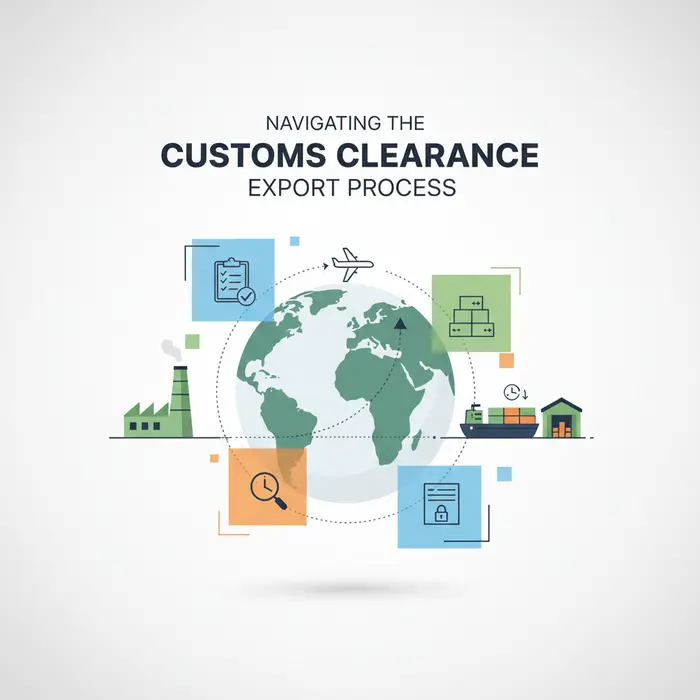
Exporting goods across international borders is a cornerstone of global commerce, yet it comes with intricate regulatory hurdles. The customs clearance export process, in particular, can be a complex labyrinth for businesses, demanding meticulous attention to detail and stringent adherence to various national and international trade laws. Successfully navigating this process is crucial not only for compliance but also for ensuring timely delivery, avoiding costly delays, and maintaining a positive reputation in the global marketplace. This guide outlines the step-by-step journey of getting goods through customs for export, from initial submission to final approval and release, with a keen focus on the pivotal role of the Customs Export Declaration.
1. Pre-Declaration Steps and Preparation
The foundation of a smooth customs clearance export process is laid long before any documents are officially submitted. This initial phase, often overlooked, involves comprehensive preparation and the compilation of a robust export documentation checklist. Exporters must first classify their goods using the Harmonized System (HS) code, which dictates applicable duties, taxes, and regulations in the destination country. Accurate classification is paramount to avoid penalties and delays. Following this, gathering all necessary supporting documents is critical. This typically includes the commercial invoice, packing list, bill of lading or air waybill, certificate of origin, export licenses, permits for restricted goods (e.g., dual-use items, controlled substances), and any other specific certifications required by the importing country or for the nature of the product.
Furthermore, understanding the Incoterms (International Commercial Terms) agreed upon with the buyer is vital as they define the responsibilities for cost and risk at various stages of the shipment. Exporters should also verify that all parties involved – exporter, importer, and carrier – are compliant with international trade regulations and not on any denied party lists. This proactive approach minimizes the risk of issues during the actual submission and review phases, adhering to international customs standards.
2. Submission and Review by Customs Authorities
Once all preparatory steps are complete and the documentation is meticulously assembled, the next critical phase involves the formal submission of the Customs Export Declaration to the relevant authorities. This declaration, often submitted electronically through a dedicated customs system (such as the Automated Export System (AES) in the U.S. or similar platforms globally), provides customs officials with all the necessary information about the goods being exported. It includes details like the exporter and consignee information, description of goods, quantity, value, HS codes, country of origin, and destination.
Many businesses opt to work with experienced customs brokers at this stage. These professionals specialize in navigating the complexities of customs regulations, ensuring that all export declaration forms are correctly filled out, submitted on time, and comply with all legal requirements. Upon submission, customs authorities will review the declaration and accompanying documents to verify accuracy, completeness, and compliance with national and international trade laws. They check for discrepancies, potential errors, and ensure that no restricted or prohibited goods are being exported without proper authorization. This review process is a critical checkpoint to identify and resolve any issues before the goods physically leave the country.
3. Customs Inspection and Release Procedures
Following the initial review, customs authorities may decide to conduct a physical inspection of the goods. This step is not always mandatory and often occurs based on risk assessment criteria, intelligence, or random selection. Inspections can range from a quick visual check to a thorough examination of the cargo to ensure that the actual contents match the description provided in the Customs Export Declaration and other shipping documents. If discrepancies are found during an inspection, it can lead to delays, penalties, or even seizure of the goods, underscoring the importance of accuracy in all prior steps.
Once customs are satisfied that all regulations have been met, and any applicable export duties, taxes, or fees (which are less common for exports than imports but can exist for certain products or destinations) have been paid, they issue an export release. This official clearance signifies that the goods are approved to leave the country. The final stage involves the loading of the cleared cargo onto the vessel, aircraft, or truck for international transit. Maintaining strict International shipping compliance throughout this entire customs clearance export process is essential for hassle-free trade, mitigating risks, and ensuring that goods reach their international destinations smoothly and legally.
Essential Export Declaration Forms & Systems
Navigating the complexities of international trade demands a meticulous approach to export declarations. These crucial documents and the electronic systems used to submit them are the backbone of customs clearance, ensuring compliance, tracking goods, and preventing illicit trade. Understanding the various forms and platforms, coupled with country-specific requirements, is vital for any exporter aiming to master the customs clearance export process and ensure international shipping compliance.
1. Common Declaration Forms (e.g., EEI, SAD)
At the heart of the export declaration process are foundational forms that capture essential information about goods being shipped. Two prominent examples include the Electronic Export Information (EEI) for U.S. exports and the Single Administrative Document (SAD) widely used in the European Union.
The Electronic Export Information (EEI), formerly the Shipper’s Export Declaration (SED), is a mandatory filing for most U.S. exports. It provides the U.S. Census Bureau with trade statistics and helps ensure national security. An EEI is generally required for shipments valued over $2,500 per Schedule B commodity or for any licensed or controlled items, regardless of value, to most foreign destinations. It details the exporter, consignee, destination, value, Schedule B number, and license information. Accurate completion is critical to avoid delays and penalties.
The Single Administrative Document (SAD), or Form C88, serves as a comprehensive customs declaration for trade with non-EU countries. While modern electronic systems now handle much of the data, the SAD principles underpin many EU declarations. It covers various customs procedures including export, import, and transit, requiring detailed information about the goods, their origin, destination, value, and any applicable duties. Its purpose is to standardize customs procedures across the EU, simplifying trade. Beyond these, commercial invoices and packing lists are also part of the essential export documentation checklist.
2. Electronic Filing Systems (e.g., AES, ICS)
The shift from paper to electronic filing has significantly streamlined the customs export declaration process, enhancing efficiency, accuracy, and real-time data exchange. These systems are critical for modern international shipping compliance.
The Automated Export System (AES) is the primary electronic portal through which U.S. exporters submit their EEI to the U.S. Census Bureau. As part of U.S. Customs and Border Protection’s (CBP) ACE system, AES allows exporters or their authorized agents to electronically transmit export data directly to the government. This system provides a quicker, more efficient way to file export information, reducing processing times and helping exporters meet regulatory requirements. It also offers real-time compliance alerts, preventing potential errors before shipment. For comprehensive details on AES, exporters can refer to resources provided by the U.S. Census Bureau.
In the European Union, member states utilize their own advanced electronic customs systems, operating under the Union Customs Code (UCC) framework. These national systems (e.g., Germany’s ATLAS, France’s Delta G) facilitate electronic submission of customs declarations for both exports and imports. They integrate with other EU-wide systems as needed, for example, for transit movements (NCTS). The goal is to digitize the entire customs process, making it faster, more transparent, and compliant with EU regulations.
3. Country-Specific Form Requirements and Platforms
While common forms and electronic systems provide a general framework, global trade involves diverse country-specific requirements demanding careful attention. Ignoring these unique demands can lead to significant delays and fines.
Each country has its own regulatory bodies and digital platforms for Customs Export Declaration. For instance, countries in Southeast Asia, like Vietnam, operate sophisticated electronic customs systems, often requiring specific data elements unique to their national regulations. These platforms might mandate specific permits or certificates depending on the goods or their intended use. Exporters to Vietnam, for example, interact with the VNACCS/VCIS system for their customs declarations. Understanding these nuances is crucial for smooth international shipping compliance. For more information on navigating the “Customs Export Declaration” process in such regions, resources like vietnamsuppliers.com can provide valuable insights.
To ensure compliance, exporters must conduct thorough research into the destination country’s customs regulations well in advance. This involves consulting the official customs authority website, engaging a reputable customs broker, or utilizing trade advisory services. Key considerations include:
- Required Documentation: Beyond commercial invoices and packing lists, some countries demand certificates of origin, phytosanitary certificates, or specific permits.
- Language Requirements: Certain countries may require declarations or supporting documents to be translated into the local language.
- Filing Deadlines: Electronic declaration systems often have strict cut-off times prior to shipment departure.
- Specific Tariffs and Taxes: Understanding applicable duties, VAT, or GST in the destination country is part of a complete export documentation checklist.
Proactive preparation and attention to detail are paramount to successfully navigate the global landscape of customs export declaration forms and systems.
Ensuring International Shipping Compliance
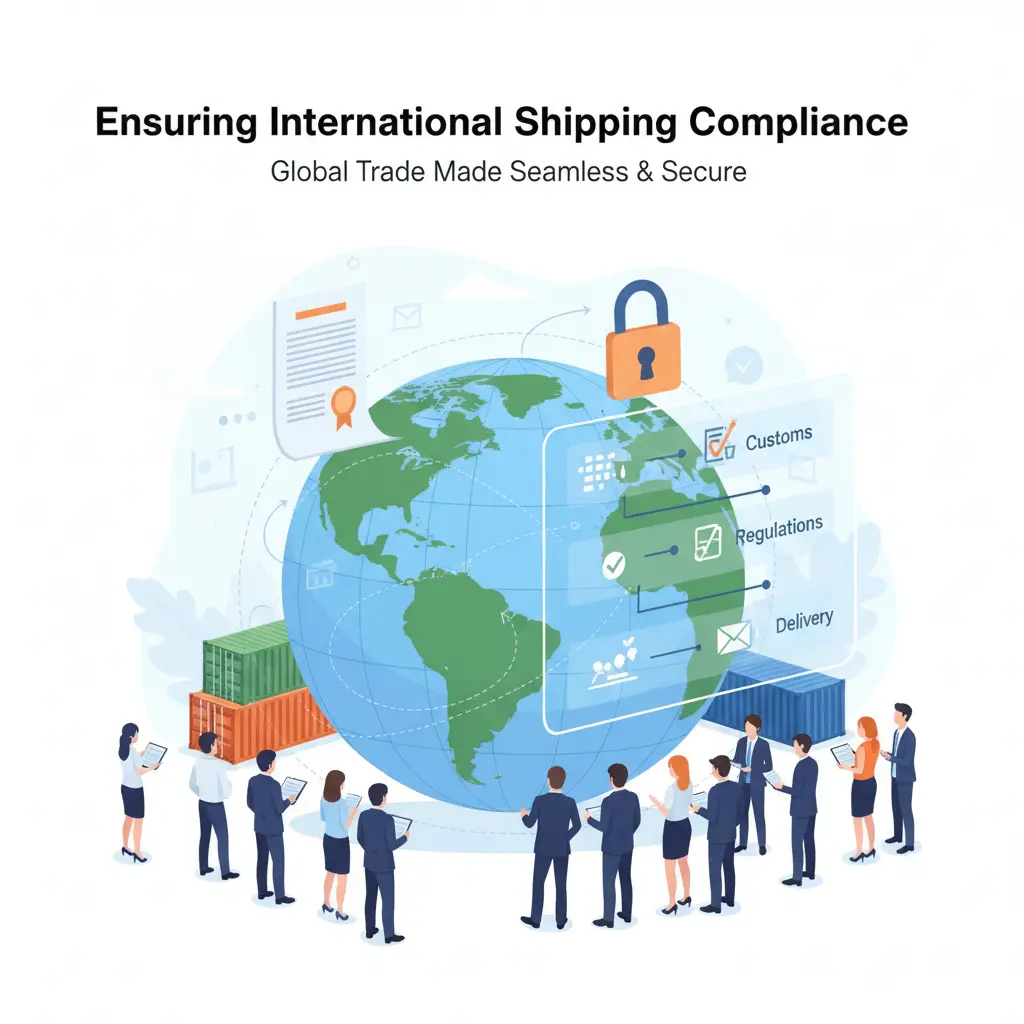
Navigating the complexities of international shipping extends far beyond simply completing a Customs Export Declaration. For businesses to succeed in global trade, a profound understanding and diligent adherence to a myriad of international trade regulations, economic sanctions, and specific country import/export requirements are paramount. Non-compliance can lead to severe penalties, including hefty fines, shipment delays, goods confiscation, and even the loss of export privileges. This section delves into the broader aspects of ensuring robust international shipping compliance, highlighting critical areas that demand meticulous attention from exporters.
1. Trade Regulations and Sanctioned Countries
Understanding and adhering to trade regulations and avoiding transactions with sanctioned countries is the bedrock of international shipping compliance. This involves a comprehensive grasp of export control laws, which dictate what goods, software, and technology can be exported to specific destinations or end-users. Regulatory bodies worldwide, such as the U.S. Department of Commerce’s Bureau of Industry and Security (BIS) or the European Union’s Directorate-General for Trade, establish these controls to protect national security, foreign policy interests, and prevent the proliferation of weapons.
Crucially, businesses must conduct thorough due diligence to screen all parties involved in an export transaction—including the consignee, ultimate consignee, intermediate consignee, and freight forwarder—against various government-issued denied parties lists and sanctions lists. These include lists from the Office of Foreign Assets Control (OFAC) in the U.S., the UN Security Council, and the EU. Engaging in trade with sanctioned countries or individuals carries significant legal and financial risks. An effective export documentation checklist is vital here, ensuring all necessary screenings and compliance checks are performed before goods leave the origin country.
2. Incoterms and Their Impact on Compliance
Incoterms, or International Commercial Terms, are a set of globally recognized rules published by the International Chamber of Commerce (ICC) that clarify the responsibilities of buyers and sellers for the delivery of goods under sales contracts. While primarily dealing with cost and risk transfer, Incoterms significantly impact international shipping compliance by defining who is responsible for various aspects of the customs clearance export process, including the submission of the Export Declaration Forms.
For example, under EXW (Ex Works) terms, the seller’s responsibility is minimal, typically ending when the goods are made available at their premises. The buyer then assumes almost all responsibilities, including export customs clearance and freight. Conversely, under DDP (Delivered Duty Paid) terms, the seller bears maximum responsibility, handling all costs and risks until the goods are delivered to the buyer’s designated location, including import duties and taxes. A clear understanding of the chosen Incoterm is critical for both parties to correctly allocate responsibilities for paperwork, permits, licenses, and the actual customs clearance export process, thus avoiding compliance pitfalls and unexpected costs.
3. Staying Updated on Changing Export Laws and Tariffs
The landscape of global trade is in constant flux, with export laws, tariffs, and trade agreements evolving rapidly due to geopolitical shifts, economic policies, and new bilateral or multilateral accords. What was compliant yesterday might not be today. Therefore, continuous monitoring and adaptation are indispensable for maintaining international shipping compliance.
Exporters must establish robust internal processes for tracking changes to Harmonized System (HS) codes, tariff rates, country-specific import restrictions, and updates to export control regulations. Reliable sources for this information include government customs websites, official trade publications, and professional trade associations. Engaging with experienced customs brokers, trade consultants, or utilizing specialized compliance software can also provide invaluable assistance in navigating this dynamic environment. Proactive engagement with these updates not only prevents potential penalties and delays but can also help identify new market opportunities or optimize existing supply chains by leveraging favorable trade agreements. Neglecting this crucial aspect can quickly expose businesses to significant risks and disrupt their international trade operations.
Partner with Vietnam’s Leading Suppliers
Looking for reliable suppliers in Vietnam? Contact VietnamSuppliers.com today to connect with verified manufacturers and exporters across all industries.
—————————————
References
– Foreign Trade Regulations (FTR): https://www.census.gov/foreign-trade/regulations/index.html
– U.S. Census Bureau – Automated Export System (AESDirect): https://www.census.gov/foreign-trade/aes/aesdirect/index.html
– World Customs Organization: https://www.wcoomd.org/
– U.S. Census Bureau: https://www.census.gov/foreign-trade/aes/index.html
– Export Administration Regulations (EAR) – Bureau of Industry and Security: https://www.bis.doc.gov/index.php/regulations/export-administration-regulations-ear