
The Evolving Landscape of B2B Cross-Border Payment Security
The global business arena is more interconnected than ever, driving a significant surge in B2B cross-border transactions. While this interconnectedness fosters unprecedented opportunities for growth and collaboration, it simultaneously introduces a complex web of security challenges. As businesses increasingly rely on digital channels for international payments, the sophistication of cyber threats continues to escalate, making B2B Cross-Border Payment Security a paramount concern for organizations worldwide. Navigating this intricate landscape requires a deep understanding of current trends, emerging threats, and the impact of digital transformation on security protocols.

1. Current Trends in Global B2B Payments
The traditional model of international payments, characterized by lengthy processing times, high fees, and limited transparency, is rapidly giving way to more efficient and streamlined digital solutions. Businesses are demanding faster, cheaper, and more transparent ways to conduct global transactions. This shift is fueled by the rise of fintech innovations, open banking APIs, and real-time payment infrastructures. Automated clearing houses (ACH), wire transfers, and SWIFT transactions remain foundational, but their digital counterparts are gaining traction. The push towards instant payments across borders, often facilitated by distributed ledger technologies and cloud-based platforms, aims to reduce working capital cycles and improve cash flow management for businesses. As transaction volumes swell, effective International payment fraud prevention measures become crucial, necessitating robust authentication and verification processes to secure the increasing flow of digital funds.
2. Emerging Threats to Cross-Border Transactions
The digital evolution of B2B payments has, unfortunately, coincided with a dramatic rise in the complexity and frequency of cyberattacks. Malicious actors constantly adapt their tactics, posing significant threats to cross-border transactions. Business Email Compromise (BEC) remains one of the most devastating forms of fraud, where fraudsters impersonate executives or trusted suppliers to trick employees into initiating fraudulent wire transfers. According to the FBI’s Internet Crime Report, BEC schemes resulted in billions of dollars in losses annually. Phishing attacks, malware, ransomware, and sophisticated data breaches targeting financial institutions or corporate payment systems also represent significant risks. These threats not only lead to substantial financial losses but can also damage a company’s reputation and erode trust with international partners. Effective Trade finance risk management is no longer just about commodity or currency fluctuations; it now heavily involves mitigating cyber risks across the entire supply chain and payment lifecycle.
3. Impact of Digital Transformation on Security
Digital transformation, while offering immense benefits in speed and efficiency, inherently expands the attack surface for cybercriminals. The integration of various payment systems, third-party providers, and cloud-based platforms creates more entry points for potential breaches. However, this transformation also empowers businesses with advanced tools for security. Technologies like Artificial Intelligence (AI) and Machine Learning (ML) are increasingly being deployed for real-time fraud detection, anomaly identification, and behavioral analytics, significantly enhancing Secure B2B payment solutions. Blockchain technology offers immutable ledgers and enhanced transparency, potentially revolutionizing how cross-border transactions are verified and settled. Furthermore, stronger encryption standards, multi-factor authentication (MFA), and tokenization are becoming standard practices. The challenge lies in implementing these technologies effectively and maintaining a proactive stance. Organizations must continuously update their Cross-border transaction security best practices, including regular employee training, robust vendor risk management, and continuous monitoring, to stay ahead of evolving threats and ensure the integrity of their international financial operations.
Key Risks in International B2B Payments and How to Identify Them
International B2B payments, while facilitating global trade, inherently carry a higher degree of financial and security risk compared to domestic transactions. The complexity of multiple jurisdictions, varied regulatory landscapes, and sophisticated fraudulent schemes demands robust B2B Cross-Border Payment Security strategies. Businesses engaged in cross-border trade must proactively identify and mitigate these risks to protect their assets, maintain compliance, and ensure seamless operations. This section will detail common types of international payment fraud and financial risks specific to cross-border trade, including regulatory and geopolitical factors, providing insights into identifying vulnerabilities.
1. Types of International Payment Fraud
International B2B transactions are prime targets for fraudsters due to their high value and intricate nature. Understanding the common types of fraud is the first step in International payment fraud prevention.
- Business Email Compromise (BEC): This sophisticated scam involves fraudsters impersonating a senior executive, a trusted supplier, or even a customer via email to trick employees into initiating fraudulent wire transfers or divulging sensitive information. In a cross-border context, BEC often leverages the perceived urgency of international transactions or language barriers to pressure targets. The FBI reported significant losses from BEC, highlighting its pervasive threat.
- Invoice Fraud: This can take several forms. Fraudsters might intercept and alter legitimate invoices with new bank details (often for an overseas account), submit entirely fake invoices for services never rendered, or pose as a new supplier. For businesses dealing with numerous international suppliers, verifying every invoice and change in payment details can be challenging, making them susceptible.
- Payment Diversion Fraud: Similar to invoice fraud, this involves tricking a payer into sending funds to an incorrect account. It often occurs through social engineering, where fraudsters gain access to communication channels or impersonate legitimate entities to provide altered payment instructions.
- Identity Theft and Phishing: While common, these risks are amplified internationally. Phishing attempts targeting employees involved in finance or procurement can lead to credentials being stolen, which are then used to initiate fraudulent international payments. Identity theft can involve creating fake business entities to siphon off funds or exploit trade finance mechanisms.
2. Geopolitical and Regulatory Risk Factors
Beyond direct fraud, international B2B payments are significantly influenced by broader external factors, impacting Trade finance risk management.
- Geopolitical Instability and Sanctions: Political instability in a trading partner’s country can disrupt payment routes, lead to currency volatility, or even result in the imposition of economic sanctions. Organizations like the Office of Foreign Assets Control (OFAC) regularly update sanctions lists, and non-compliance can lead to severe penalties, including hefty fines and reputational damage. Businesses must continuously screen their transaction parties against these lists to avoid inadvertently violating sanctions. Trade wars or diplomatic disputes can also introduce tariffs or restrictions, altering the economic viability of cross-border trade.
- Regulatory Compliance: The global regulatory landscape for financial transactions is fragmented and constantly evolving. Businesses must navigate Anti-Money Laundering (AML) and Know Your Customer (KYC) regulations from various jurisdictions, data privacy laws (e.g., GDPR, CCPA), and specific foreign exchange controls. Failure to comply with these diverse requirements can lead to delayed payments, frozen funds, fines, and legal repercussions. The Financial Action Task Force (FATF) sets international standards for combating money laundering and terrorist financing, which many countries integrate into their national laws.
- Currency Fluctuations: While not directly a fraud, significant and sudden currency fluctuations due to geopolitical events, economic crises, or central bank policies can drastically impact the value of international payments, affecting profitability and cash flow. Hedging strategies become crucial in managing this risk.
3. Identifying Vulnerabilities in Your Payment Flow
Proactively identifying weaknesses in your payment processes is critical for Secure B2B payment solutions and overall Cross-border transaction security best practices.
- Weak Internal Controls: A lack of robust internal controls is a primary vulnerability. This includes insufficient segregation of duties (e.g., the same person initiating, approving, and reconciling payments), single-person authorization for high-value transactions, and outdated vendor onboarding processes that don’t verify payment details rigorously. Employees not trained in International payment fraud prevention best practices are also significant weak links.
- Inadequate Technology and Security Measures: Outdated payment systems, lack of multi-factor authentication (MFA) for accessing financial platforms, unencrypted communication channels, and insufficient cybersecurity defenses expose businesses to hacking, data breaches, and impersonation. Secure B2B payment solutions often incorporate advanced encryption and real-time fraud detection.
- Insufficient Due Diligence and Verification: Failing to conduct thorough due diligence on new international suppliers or customers, or not verifying changes in existing supplier bank details through multiple, independent channels (e.g., a direct phone call to a known contact, not just email), leaves companies open to invoice and payment diversion fraud. Companies should establish strict protocols for confirming payment instruction changes.
- Lack of Continuous Monitoring and Auditing: A “set it and forget it” approach to payment security is dangerous. Regular internal and external audits of payment processes, continuous monitoring of transaction anomalies, and periodic reviews of compliance with sanctions lists and regulatory changes are essential. Any deviation from established protocols, unusual transaction patterns, or requests for urgent, off-process payments should immediately trigger suspicion. Implementing robust internal controls, investing in secure payment technologies, and fostering a culture of vigilance are paramount for safeguarding against the evolving landscape of international payment risks. More information on comprehensive strategies for enhancing your overall B2B Cross-Border Payment Security can be found here.
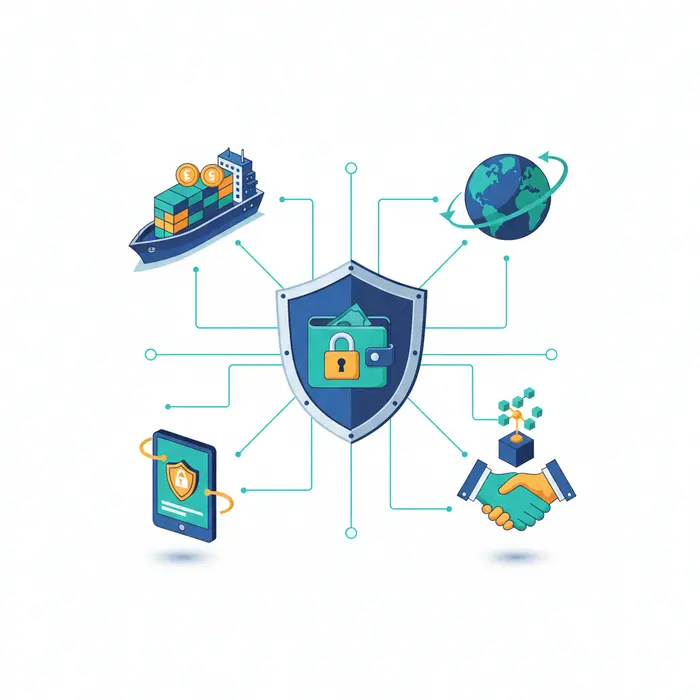
In the dynamic landscape of global commerce, businesses increasingly rely on efficient and secure cross-border transactions. However, this expansion also brings heightened exposure to sophisticated threats, making B2B Cross-Border Payment Security a paramount concern. Companies engaged in international trade face the constant challenge of mitigating financial risks, combating international payment fraud prevention, and ensuring the integrity of their trade finance risk management strategies. The need for robust, secure B2B payment solutions that instill confidence and streamline operations is more critical than ever. As digital transformation accelerates, adopting advanced security protocols and innovative technologies becomes essential for safeguarding assets and maintaining trust across borders.
The complexities of global supply chains and multi-party transactions demand not just speed and efficiency, but also impenetrable defenses against cyber threats and financial crimes. Businesses must prioritize cross-border transaction security best practices to protect sensitive financial data, prevent unauthorized access, and ensure regulatory compliance. This section explores cutting-edge technologies and platforms specifically designed to enhance security for cross-border transactions, focusing intently on fraud prevention and establishing truly secure global payment ecosystems.
1. Blockchain and Distributed Ledger Technology (DLT)
Blockchain and Distributed Ledger Technology (DLT) offer a transformative approach to enhancing B2B Cross-Border Payment Security. At its core, DLT is a decentralized database managed by multiple participants, where transactions are recorded across a network of computers. This creates an immutable, transparent, and verifiable ledger that significantly reduces the risk of fraud and manipulation. For cross-border payments, DLT platforms can facilitate near real-time settlements, bypassing traditional intermediaries and thereby reducing transaction costs and settlement times. The inherent security features of blockchain, such as cryptographic hashing and consensus mechanisms, make it extremely difficult for unauthorized parties to alter transaction records.
Beyond basic payments, DLT’s application extends deeply into trade finance risk management. Smart contracts, self-executing contracts with the terms of the agreement directly written into code, can automate payment releases, customs documentation, and logistics tracking upon the fulfillment of predefined conditions. This automation not only accelerates processes but also minimizes human error and intervention points, which are often susceptible to fraud. By providing an end-to-end audit trail for goods and funds, blockchain significantly bolsters international payment fraud prevention, offering unparalleled transparency and accountability across complex global supply chains.
2. Advanced Encryption and Tokenization
Protecting sensitive payment data is fundamental to achieving robust B2B Cross-Border Payment Security. Advanced encryption and tokenization serve as critical pillars in this defense strategy. Encryption involves converting information into a coded format, known as ciphertext, which can only be deciphered by authorized parties possessing the correct cryptographic key. This ensures that even if data is intercepted during transmission or stolen from storage, it remains unreadable and unusable to unauthorized individuals. Modern encryption standards, such as AES-256, provide extremely strong protection for financial transactions and personal identifiable information.
Tokenization further enhances security by replacing sensitive payment data, such as bank account numbers or credit card details, with a unique, non-sensitive equivalent called a “token.” This token holds no intrinsic value and cannot be reverse-engineered to reveal the original data. When a transaction occurs, the token is transmitted through the payment network, while the actual sensitive data is securely stored in a separate, highly protected vault. If a tokenized transaction record is compromised, the exposed token is useless to fraudsters, effectively neutralizing the threat of data breaches. This dual approach of encryption for data in transit and tokenization for data at rest significantly fortifies international payment fraud prevention and establishes secure B2B payment solutions that comply with stringent data security standards like the SWIFT Customer Security Programme (CSP), crucial for cross-border transaction security best practices.
3. AI-Powered Fraud Detection Systems
The sheer volume and complexity of cross-border B2B transactions make manual fraud detection increasingly impractical. AI-powered fraud detection systems offer a sophisticated and dynamic solution to this challenge, revolutionizing international payment fraud prevention. These systems leverage machine learning algorithms to analyze vast datasets of transaction histories, user behaviors, network patterns, and geo-location data in real-time. By continuously learning from new data, AI can identify subtle anomalies and suspicious patterns that human analysts or traditional rule-based systems might miss.
AI models can detect various types of fraudulent activities, from account takeovers and phishing scams to money laundering attempts, often before they can cause significant damage. For instance, an AI system might flag an unusually large payment to a new beneficiary in a high-risk country, or a series of rapid small transactions followed by a major one. The predictive capabilities of AI enable it to adapt to evolving fraud tactics, providing an agile defense mechanism against emerging threats. Implementing AI-driven platforms is a cornerstone of modern cross-border transaction security best practices, delivering highly accurate and proactive secure B2B payment solutions that significantly enhance overall B2B Cross-Border Payment Security and mitigate trade finance risk management challenges effectively.
In conclusion, the future of global trade hinges on the adoption of sophisticated and multi-layered security measures for B2B payments. By embracing innovations like Blockchain and DLT for transparent and immutable transaction records, implementing advanced encryption and tokenization for data protection, and deploying AI-powered systems for real-time fraud detection, businesses can build a resilient defense against the ever-evolving landscape of cyber threats. These secure B2B payment solutions are not merely protective barriers but foundational enablers for efficient, trustworthy, and sustainable international commerce, ensuring that global trade can flourish securely.
Cross-Border Transaction Security Best Practices for Businesses
In an increasingly interconnected global economy, B2B cross-border transactions are a cornerstone of international trade. However, the benefits of global reach come with heightened risks, making B2B Cross-Border Payment Security a paramount concern for businesses. Companies must adopt comprehensive strategies and operational guidelines to minimize risk and ensure secure international dealings. From sophisticated cyber attacks to evolving fraud schemes, protecting financial assets and sensitive data requires a multi-layered approach. Below, we outline actionable best practices designed to fortify your cross-border transactions against potential threats.
1. Robust Vendor Vetting and Due Diligence
The foundation of secure cross-border transactions begins with an exhaustive understanding of your trading partners. Robust vendor vetting and due diligence are critical to mitigate risks such as fraud, sanctions violations, and financial instability. Before initiating any payment or contractual agreement, businesses should conduct thorough background checks that extend beyond mere legal registration. This includes assessing the vendor’s financial health, checking their reputation through independent sources, and screening against international sanctions lists like OFAC, UN, and EU. Independent verification of bank account details and contact information through channels separate from the vendor’s direct communication is crucial to prevent common invoice fraud and business email compromise (BEC) scams. Furthermore, evaluating a vendor’s own cybersecurity posture and data protection policies ensures that sensitive information shared during transactions is adequately secured. Implementing continuous monitoring throughout the business relationship, rather than just a one-off check, is also vital for proactive international payment fraud prevention and sound trade finance risk management.
2. Multi-Factor Authentication (MFA) and Access Controls
Technological safeguards are indispensable in the fight against cyber fraud. Multi-Factor Authentication (MFA) and stringent access controls are non-negotiable components of any secure B2B payment solution. MFA requires users to provide two or more verification factors to gain access to an application, account, or system, significantly reducing the risk of unauthorized access even if passwords are compromised. Businesses should enforce MFA across all critical systems involved in cross-border transactions, including banking portals, enterprise resource planning (ERP) systems, payment platforms, and email accounts. Complementing MFA, the principle of least privilege (PoLP) should dictate access controls, ensuring employees only have access to the data and systems absolutely necessary for their job functions. Role-based access controls (RBAC) further streamline this by assigning permissions based on predefined roles. Regular reviews of access rights and robust audit trails for all system access and transaction approvals provide a comprehensive oversight, making it easier to detect and investigate suspicious activities and upholding cross-border transaction security best practices.
3. Employee Training and Awareness Programs
Even the most advanced security technologies can be circumvented by human error or lack of awareness. Therefore, comprehensive employee training and awareness programs are a fundamental pillar of international payment fraud prevention. Regular training sessions should educate employees on the latest fraud schemes, such as phishing, whaling, and Business Email Compromise (BEC), which frequently target cross-border payments. Staff involved in finance, procurement, and international trade must be drilled on strict protocols for verifying payment requests, especially those involving changes to vendor bank details. This often includes requiring verbal confirmation via a pre-verified phone number, not one provided in an email. Training should also cover the importance of strong, unique passwords, the mandatory use of MFA, and clear procedures for reporting any suspicious emails, calls, or system anomalies. Cultivating a security-conscious culture where employees understand their role in maintaining secure B2B payment solutions can significantly reduce the organization’s vulnerability to social engineering attacks and human-centric risks, reinforcing overall cross-border transaction security best practices.
Navigating Trade Finance Risk Management in a Secure Environment
The global trade landscape, increasingly digitized and interconnected, presents unparalleled opportunities alongside complex challenges. Central among these is the imperative of ensuring robust B2B Cross-Border Payment Security. As transactions become faster and more voluminous, the integration of payment security within broader trade finance risk management frameworks is no longer optional but a critical pillar for future readiness and compliance. Businesses engaging in international trade must adopt proactive strategies to safeguard their financial flows against evolving threats, from sophisticated cyber fraud to non-compliance penalties. This section explores how companies can fortify their defenses, ensuring secure and compliant operations in a volatile global economy.

1. Integrating Payment Security with Overall Risk Strategy
Effective risk management in trade finance necessitates a holistic approach where payment security is not an isolated concern but deeply embedded within an organization’s overarching risk strategy. This involves recognizing that vulnerabilities in payment processes can cascade into significant financial losses, reputational damage, and operational disruptions. Companies must move beyond siloed security measures and develop an integrated framework that encompasses all aspects of international payment fraud prevention. This includes deploying advanced technologies like Artificial Intelligence (AI) and Machine Learning (ML) for real-time transaction monitoring, anomaly detection, and predictive analytics. By centralizing risk intelligence and fostering cross-departmental collaboration (finance, IT, compliance), businesses can build more resilient systems. Implementing robust authentication protocols, encryption standards, and secure communication channels are fundamental components of this strategy, ensuring that every touchpoint in the payment lifecycle is protected. A well-integrated payment security strategy is vital for maintaining trust and operational integrity in B2B cross-border transactions.
2. Leveraging Insurance and Guarantees for Cross-Border Trade
Beyond technological safeguards, traditional financial instruments continue to play a crucial role in mitigating risks associated with trade finance risk management, particularly concerning payment defaults and non-performance. Trade credit insurance, for instance, protects sellers against the risk of non-payment by buyers due to commercial or political events, offering a crucial safety net for businesses expanding into new or volatile markets. Similarly, instruments like letters of credit (LCs) and bank guarantees provide assurances to both buyers and sellers, facilitating trust where direct relationships might be nascent or where significant capital is involved. An LC, issued by a bank, guarantees payment to the seller provided certain conditions are met, shifting the payment risk from the buyer to the issuing bank. Bank guarantees offer similar protection, assuring a beneficiary that a bank will honor a debtor’s obligations if they fail to do so. Integrating these financial tools into a company’s overall risk management framework provides an additional layer of security, complementing technological solutions and fostering a more secure environment for secure B2B payment solutions globally.
3. Staying Compliant with Evolving Regulations (e.g., AML, KYC)
The regulatory landscape governing cross-border payments is in constant flux, driven by global efforts to combat financial crime, terrorism financing, and illicit trade. Adherence to Anti-Money Laundering (AML) and Know Your Customer (KYC) regulations is paramount, requiring businesses to conduct thorough due diligence on their counterparties and monitor transactions for suspicious activities. Non-compliance can lead to severe penalties, including hefty fines, sanctions, and irreparable damage to reputation. Staying abreast of these evolving regulations, such as those stipulated by the Financial Action Task Force (FATF) on AML regulations, is critical. Companies must invest in robust compliance programs, leveraging RegTech (Regulatory Technology) solutions that automate compliance checks, streamline reporting, and provide an auditable trail of due diligence efforts. Implementing cross-border transaction security best practices also extends to data privacy regulations (e.g., GDPR), ensuring that sensitive payment information is handled with the utmost care. Proactive engagement with regulatory updates and continuous training for staff are essential to build a resilient and compliant trade finance operation.
Partner with Vietnam’s Leading Suppliers
Looking for reliable suppliers in Vietnam? Contact VietnamSuppliers.com today to connect with verified manufacturers and exporters across all industries.
—————————————
References
– FBI’s Internet Crime Report: https://www.ic3.gov/Media/PDF/AnnualReport/2023_IC3Report.pdf
– FBI Internet Crime Report 2022: https://www.ic3.gov/Media/AnnualReport/2022_IC3Report.pdf
– SWIFT Customer Security Programme (CSP): https://www.swift.com/our-solutions/compliance-and-shared-services/customer-security-programme-csp
– Business Email Compromise | FBI: https://www.fbi.gov/scams-and-safety/common-scams-and-crimes/business-email-compromise
– AML regulations: https://www.fatf-gafi.org/en/topics/money-laundering.html