
The Imperative of Supply Chain Diversification
In an increasingly interconnected yet volatile global economy, Supply Chain Diversification Strategy is no longer merely a strategic advantage but a critical necessity. Modern businesses face an unprecedented array of global uncertainties, from geopolitical tensions and trade disputes to natural disasters and public health crises. Relying on a single geographical region or a limited set of suppliers leaves companies acutely vulnerable to disruptions that can halt production, inflate costs, and erode market share. Proactive diversification builds resilience, ensures continuity, and ultimately underpins long-term competitiveness, transforming a reactive approach into a robust, future-proof operational model.

1. Lessons from recent global disruptions
The past few years have served as a stark and costly masterclass in the vulnerabilities of concentrated supply chains. The COVID-19 pandemic brought global logistics to a near standstill, exposing the fragility of just-in-time inventory systems heavily reliant on single-source suppliers in regions like China. Industries ranging from automotive to electronics experienced severe component shortages, leading to production delays and significant revenue losses. Beyond the pandemic, incidents like the Suez Canal blockage underscored the physical choke points in global trade. More recently, fluctuating US-China trade policy updates have compelled businesses to re-evaluate their sourcing strategies, seeking alternatives to mitigate tariffs and reduce political exposure. These disruptions unequivocally demonstrated that a lean, optimized-for-cost supply chain without diversification is inherently brittle, proving that the pursuit of efficiency must be balanced with robust resilience planning.
2. Risk mitigation beyond single-source reliance
True global supply chain resilience stems from a comprehensive approach to risk mitigation that extends far beyond simply adding a second supplier. It involves building a geographically diverse network of production facilities, raw material sources, and logistics partners. This strategy insulates businesses from localized issues such as natural disasters, labor disputes, or political instability in any single region. Companies are increasingly weighing nearshoring vs offshoring trends, exploring options to bring production closer to end markets. Nearshoring reduces lead times, transportation costs, and carbon footprints, while also offering greater visibility and control. Multi-sourcing from different countries and even continents creates a robust safety net, ensuring that if one part of the network falters, other segments can quickly step up to maintain output. This distributed approach significantly reduces the impact of unforeseen events, preventing complete operational shutdown and maintaining consistent product availability.
3. Economic advantages of a diversified network
While often perceived as a cost, a well-executed Supply Chain Diversification Strategy offers substantial economic advantages beyond mere risk reduction. By sourcing from multiple regions, companies can tap into diverse labor markets, potentially optimizing costs and accessing specialized skills. For instance, a Vietnam sourcing strategy can provide cost-effective manufacturing alternatives to traditional hubs, leveraging competitive labor rates and an increasingly sophisticated industrial base. Furthermore, a diversified network can enhance negotiation power with suppliers, fostering healthy competition and preventing over-reliance on any single vendor. It also opens doors to new markets, allowing companies to tailor products to regional preferences and capitalize on emerging economic opportunities. Ultimately, the long-term cost of not diversifying – encompassing lost sales, reputational damage, and recovery expenses from major disruptions – far outweighs the strategic investment required to build a resilient, multi-faceted supply chain. Embracing diversification is an investment in stability, growth, and sustained competitive advantage in a volatile world.
Navigating US-China Trade Policy Updates
The intricate and often volatile trade relationship between the United States and China continues to be a defining factor in global economics. For businesses worldwide, understanding the nuances of current US-China trade policy updates is not merely an academic exercise but a critical imperative for maintaining competitive advantage and ensuring operational continuity. This evolving dynamic directly impacts global supply chains, compelling companies to rethink traditional sourcing decisions and prioritize adaptability. The shift is prompting a fundamental re-evaluation, pushing toward more resilient and diversified supply chain models, with a particular emphasis on strategies like Supply Chain Diversification Strategy to mitigate risks and capitalize on emerging opportunities.
1. Impact of tariffs and trade agreements on sourcing
Since 2018, the imposition of Section 301 tariffs by the U.S. on a wide array of Chinese goods has fundamentally altered the cost structure for many importers. These tariffs, aimed at addressing perceived unfair trade practices, significantly increased the landed cost of products sourced from China, forcing companies to absorb higher expenses or pass them on to consumers. This economic pressure has spurred a pronounced exodus of manufacturing and sourcing activities from China, as businesses seek more cost-effective and tariff-free alternatives. Destinations like Vietnam, Mexico, and India have emerged as prime beneficiaries of this re-routing, with a robust Vietnam sourcing strategy becoming particularly attractive for sectors ranging from electronics to apparel. Beyond tariffs, the absence or presence of bilateral trade agreements also shapes market access and competitive landscapes, further influencing where companies choose to invest and produce. The pursuit of optimal sourcing now involves a complex calculus of tariffs, trade preferences, and geopolitical stability, making proactive adaptation essential.
2. Geopolitical tensions and their economic ripple effects
Beyond explicit tariffs, the broader geopolitical tensions between the US and China cast a long shadow over global commerce, creating ripple effects that extend far into economic decisions. Issues such as technology restrictions, data security concerns, and human rights considerations have moved beyond rhetoric to become tangible factors in business strategy. The U.S. has increasingly employed export controls and investment restrictions, particularly in sensitive sectors like semiconductors and advanced computing, aiming to limit China’s technological advancement. This environment of strategic competition introduces significant uncertainty and operational risks for businesses with extensive exposure to either market. Companies must contend with potential disruptions, compliance complexities, and the risk of being caught in the crossfire of policy disputes. Such an unpredictable landscape underscores the vital need for Global supply chain resilience, pushing companies to adopt multifaceted approaches. As noted by the Congressional Research Service, these trade policy tools reflect broader U.S. concerns about China’s economic practices and national security implications. Consequently, Nearshoring vs offshoring trends are accelerating, as companies weigh the benefits of geographical proximity and reduced lead times against traditional cost savings from distant production hubs.
3. Future outlook for bilateral trade relations
Predicting the future trajectory of US-China trade relations is challenging, given the multitude of domestic and international factors at play. While there may be periods of de-escalation or tactical cooperation on specific issues, the underlying strategic competition is likely to persist. Both nations continue to pursue policies aimed at bolstering their own economic security and technological sovereignty, suggesting that trade friction will remain a fixture in the foreseeable future. Businesses should anticipate a continued emphasis on supply chain security, calls for increased domestic production, and the potential for new regulatory hurdles. For companies navigating this intricate environment, the imperative to develop robust Supply Chain Diversification Strategy becomes even more critical. This includes not only diversifying manufacturing locations but also re-evaluating sourcing relationships, building redundancy into logistics, and investing in advanced analytics to predict and respond to future disruptions. The goal is to build agility and robustness into operations, ensuring that businesses can thrive amidst ongoing geopolitical shifts and evolving trade policies, regardless of the specific twists and turns in the US-China relationship.
Vietnam Sourcing Strategy: A Key Diversification Hub
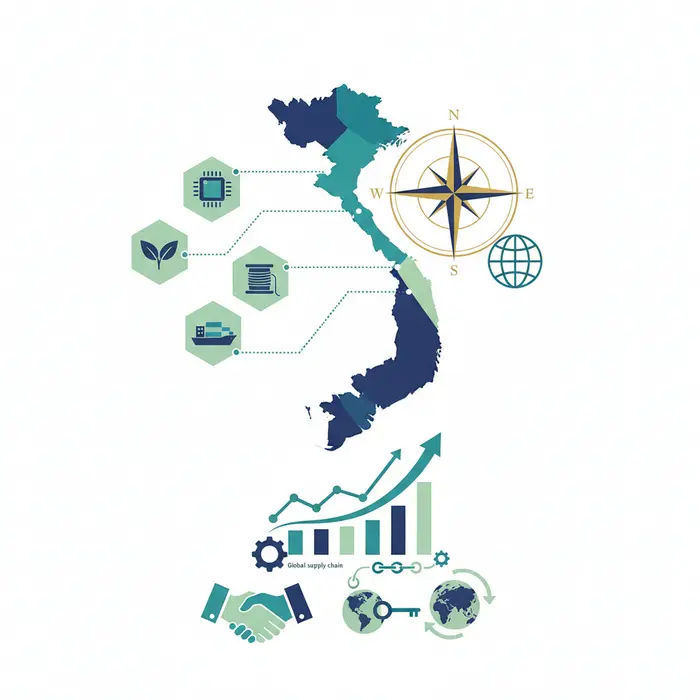
In an era defined by geopolitical shifts, evolving US-China trade policy updates, and an urgent need for enhanced global supply chain resilience, Vietnam has emerged as a cornerstone of any robust Supply Chain Diversification Strategy. As businesses worldwide recalibrate their manufacturing footprints, spurred by factors like Nearshoring vs offshoring trends, the Southeast Asian nation offers a compelling alternative. This section delves into Vietnam’s growing role as a premier sourcing and manufacturing destination, highlighting its strategic advantages and the considerations necessary for a successful transition.
1. Advantages of manufacturing in Vietnam
Vietnam’s appeal as a manufacturing hub is multi-faceted, built upon a foundation of competitive costs, advantageous trade agreements, and a burgeoning workforce. The country offers significantly lower labor costs compared to established manufacturing giants like China, making it an attractive destination for cost-sensitive industries. Beyond mere wages, the overall operating expenses, including utilities and land leases, remain highly competitive, contributing to a favorable bottom line for manufacturers.
A significant draw for a robust Supply Chain Diversification Strategy is Vietnam’s extensive network of free trade agreements. These include membership in the Comprehensive and Progressive Agreement for Trans-Pacific Partnership (CPTPP), the EU-Vietnam Free Trade Agreement (EVFTA), and the Regional Comprehensive Economic Partnership (RCEP). These agreements provide preferential access to major global markets, reducing tariffs and streamlining customs procedures for goods manufactured in Vietnam. This strategic access mitigates risks associated with volatile trade relations elsewhere and strengthens global supply chain resilience.
Furthermore, Vietnam boasts a young, adaptable, and increasingly skilled workforce. The government has heavily invested in education and vocational training programs, producing a talent pool ready for advanced manufacturing processes. This demographic dividend, coupled with a proactive government keen on attracting foreign direct investment (FDI) through various incentives, cements Vietnam’s position as a dynamic and reliable manufacturing base.
2. Challenges and strategic considerations for shifting production
While the advantages are clear, a successful shift to a Vietnam sourcing strategy requires careful planning and an understanding of potential challenges. Infrastructure, though rapidly improving, can still vary in maturity compared to more developed industrial zones. Businesses must assess the logistical capabilities, including port capacities and internal transportation networks, to ensure efficient movement of goods. Managing local bureaucracy and navigating regulatory frameworks can also be complex for new entrants, often requiring local expertise or partnerships to smooth the process.
The depth of Vietnam’s local supply chain also warrants consideration. While strong in sectors like textiles, footwear, and some electronics, the availability of specialized raw materials or high-tech components might not yet match the breadth found in more mature manufacturing ecosystems. Companies considering a move must conduct thorough due diligence to evaluate the local supplier base for their specific needs, potentially necessitating continued reliance on imported components for certain parts of their production process initially.
Moreover, establishing robust quality control measures and understanding cultural nuances in business dealings are paramount. Effective communication strategies and a willingness to adapt to local business practices are crucial for building strong relationships with local partners and ensuring product consistency. Companies must be prepared to invest in these areas to fully realize the benefits of their Vietnam sourcing strategy.
3. Case studies of successful Vietnam pivots
Numerous multinational corporations across various industries have successfully integrated Vietnam into their global Supply Chain Diversification Strategy. High-profile electronics manufacturers, apparel and footwear brands, and furniture producers, for instance, have significantly expanded their operations in Vietnam. These companies have leveraged Vietnam’s cost advantages, favorable trade policies, and developing industrial infrastructure to enhance their competitiveness and bolster global supply chain resilience.
Success stories often hinge on several key factors: meticulous site selection, strategic investment in local training and technology transfer, and strong collaboration with local government and industrial park authorities. Companies that have thrived typically adopted a long-term perspective, investing not just in factories but also in developing local talent and fostering robust supplier relationships. This approach has allowed them to mitigate risks stemming from evolving trade dynamics and navigate the complexities of international trade, securing a more stable and diverse manufacturing base. The lessons learned from these successful pivots underscore the importance of a comprehensive and adaptive strategy when embracing Vietnam as a key sourcing hub.
In conclusion, Vietnam stands as an indispensable element in the pursuit of enhanced Global supply chain resilience. Its unique combination of economic advantages, strategic geographical location, and proactive government policies makes it a compelling choice for businesses looking to diversify their manufacturing operations and secure a sustainable future in the global marketplace.
Nearshoring vs. Offshoring Trends in 2025
The global supply chain landscape is undergoing a profound transformation, driven by geopolitical shifts, technological advancements, and the lingering lessons from recent disruptions. As businesses strategize for 2025 and beyond, the perennial debate of nearshoring versus traditional offshoring is reaching a critical inflection point. Companies are no longer solely fixated on the lowest manufacturing cost but are increasingly prioritizing resilience, agility, and risk mitigation. This section will delve into the evolving preferences, evaluating the distinct benefits and drawbacks of each approach within the current economic climate, highlighting key nearshoring vs offshoring trends.
1. Benefits of Nearshoring (Proximity, Lead Times, Control)
Nearshoring, the practice of relocating production or services to closer geographical locations, offers a compelling suite of advantages that align perfectly with the modern business imperative for supply chain resilience. Foremost among these is proximity. By situating manufacturing or service centers closer to consumer markets or headquarters, companies significantly reduce transportation costs and, critically, shorten lead times. This accelerated time-to-market is invaluable in fast-paced industries, allowing for quicker response to demand fluctuations and changing consumer preferences. Beyond logistical efficiencies, nearshoring enhances operational control. Geographical and cultural proximity often translates into smoother communication, easier oversight of production processes, and simplified quality control. Companies can conduct more frequent site visits, fostering stronger relationships with their partners and ensuring higher adherence to standards. This increased control not only mitigates risks associated with quality and compliance but also allows for greater flexibility and customization in production. Furthermore, nearshoring reduces exposure to the extended, complex logistics chains that were heavily impacted during global crises, contributing significantly to global supply chain resilience.
2. Re-evaluating Traditional Offshoring Models Post-Pandemic
For decades, traditional offshoring, particularly to distant low-cost regions, was the undisputed champion for cost reduction. However, the paradigm shifted dramatically following the COVID-19 pandemic and escalating geopolitical tensions. The widespread supply chain disruptions experienced during the pandemic—from factory shutdowns and port congestions to labor shortages—exposed the inherent vulnerabilities of highly centralized and geographically extended supply networks. Businesses suddenly faced unprecedented delays, stockouts, and soaring freight costs, often eroding the very cost savings that made offshoring attractive. Adding to this complexity are evolving trade policies and geopolitical frictions, notably US-China trade policy updates, which introduce significant uncertainty and risk premiums to global operations. The rising labor costs in many traditional offshoring hubs, coupled with increasing environmental and ethical sourcing pressures, have further prompted a fundamental re-evaluation. The emphasis has irrevocably shifted from pure cost minimization to a more holistic approach that balances cost with risk, resilience, and sustainability, forcing companies to reconsider their reliance on single-point-of-failure strategies.
3. Hybrid Models and Regionalization Strategies for Optimal Balance
The future of supply chain management is unlikely to be a wholesale abandonment of offshoring, but rather a strategic evolution towards more diversified and agile frameworks. Hybrid models, which blend elements of both nearshoring and offshoring, are emerging as a pragmatic solution for optimal balance. These models often involve segmenting the supply chain: high-value, complex, or rapidly changing components might be nearshored for greater control and speed, while standardized, high-volume products continue to be offshored to leverage cost efficiencies. A core component of this strategy is regionalization—establishing production hubs closer to key end markets or within specific geopolitical blocs. This approach creates regionalized supply chains that are less susceptible to global shocks and trade barriers, while still allowing for the benefits of localized expertise and infrastructure. For instance, a robust Vietnam sourcing strategy can be a vital part of a broader Asian regional manufacturing base, complementing production in other Southeast Asian nations or even Mexico for the North American market. Ultimately, developing a comprehensive Supply Chain Diversification Strategy is paramount, ensuring that businesses are not over-reliant on any single region or production model but instead build resilient, adaptable networks capable of weathering future disruptions and capitalizing on new opportunities in 2025 and beyond.
Building Global Supply Chain Resilience for the Future
The past few years have undeniably underscored the critical need for robust and adaptable supply chains. From geopolitical tensions and natural disasters to pandemics and rapid shifts in consumer demand, businesses worldwide have faced unprecedented disruptions. Establishing a proactive Supply Chain Diversification Strategy is no longer a luxury but a fundamental imperative for survival and sustained growth. This comprehensive approach is essential for building a future-proof framework capable of withstanding future shocks and ensuring continuity in an increasingly volatile global economy. By embracing strategic planning and innovative solutions, companies can transform vulnerabilities into sources of competitive advantage, securing their operations against unforeseen challenges and fostering lasting global supply chain resilience.

The evolving landscape, particularly marked by US-China trade policy updates and the dynamic interplay of nearshoring vs offshoring trends, demands a re-evaluation of traditional sourcing models. Companies are increasingly looking beyond single-source dependencies, exploring new markets and manufacturing hubs. A proactive Vietnam sourcing strategy, for instance, has emerged as a compelling option for many seeking to mitigate risks associated with geographical concentration and geopolitical instability. This strategic shift is part of a broader movement towards creating more distributed and flexible supply networks, embodying a robust Supply Chain Diversification Strategy. According to a recent report by McKinsey & Company, enhancing supply chain resilience requires a systemic approach that goes beyond mere cost-cutting, focusing instead on agility, redundancy, and collaboration. Read more about building supply chain resilience in a new normal here.
1. Technology’s Role in Enhanced Visibility and Agility
In the quest for global supply chain resilience, technology stands as a cornerstone. Advanced analytics, Artificial Intelligence (AI), machine learning, and the Internet of Things (IoT) provide unparalleled real-time visibility into every node of the supply chain, from raw material sourcing to final delivery. This heightened transparency allows businesses to identify potential bottlenecks, predict disruptions, and react swiftly to unforeseen events. Blockchain technology offers immutable records for enhanced traceability and trust, particularly crucial in complex multi-tier supply networks. Furthermore, automation, robotics, and predictive maintenance solutions streamline operations, reduce human error, and accelerate decision-making, thereby significantly boosting agility. Implementing robust digital platforms that integrate disparate data sources is vital for creating a truly responsive and intelligent supply chain that can pivot quickly when necessary.
2. Multi-modal Transportation and Logistics Optimization
Reliance on a single mode of transportation or a few specific shipping lanes introduces significant vulnerability. A comprehensive Supply Chain Diversification Strategy includes optimizing multi-modal transportation options. This involves leveraging a mix of sea, air, rail, and road freight to ensure flexibility and reduce dependence on any one route or carrier. Diversifying logistics partners and developing backup transportation plans are equally crucial. Moreover, strategic inventory management, including maintaining safety stock levels at key points and utilizing distributed warehousing, can buffer against transit delays or production shortfalls. The principle here is redundancy – having alternative pathways and resources ready to deploy, minimizing the impact of disruptions on product flow and delivery schedules. Effective logistics optimization not only enhances resilience but can also lead to cost efficiencies over the long term by identifying the most efficient routes and modes for different scenarios.
3. Strategic Partnerships and Collaborative Ecosystems for Stability
No single company can achieve ultimate supply chain resilience in isolation. Building strong, collaborative relationships with suppliers, distributors, and even competitors forms the bedrock of a stable future. Strategic partnerships involve sharing information, jointly investing in risk mitigation strategies, and fostering mutual transparency. Establishing collaborative ecosystems, where stakeholders work together to anticipate and respond to challenges, can create a powerful network effect. This might include joint ventures in manufacturing, shared warehousing facilities, or collective efforts in supplier development. For instance, fostering robust relationships with manufacturers as part of a Vietnam sourcing strategy can significantly enhance flexibility and reliability. These partnerships move beyond transactional interactions to become strategic alliances, building trust and shared commitment to navigate disruptions together. This collective approach distributes risk and amplifies the capacity for innovation and rapid problem-solving.
In conclusion, building global supply chain resilience for the future requires a holistic and proactive approach. It encompasses leveraging technology for visibility, optimizing multi-modal transportation, and fostering strategic partnerships. By prioritizing a well-executed Supply Chain Diversification Strategy, companies can not only mitigate risks from current geopolitical shifts and economic uncertainties but also lay the groundwork for sustained success in an ever-evolving global marketplace. The aim is to create supply chains that are not just robust but inherently adaptable, capable of sensing changes, learning from experiences, and evolving dynamically to meet the demands of tomorrow.
Partner with Vietnam’s Leading Suppliers
Looking for reliable suppliers in Vietnam? Contact VietnamSuppliers.com today to connect with verified manufacturers and exporters across all industries.
—————————————
References
– Risk, resilience, and rebalancing in global supply chains | McKinsey: https://www.mckinsey.com/capabilities/operations/our-insights/risk-resilience-and-rebalancing-in-global-supply-chains
– U.S. Trade Policy and the U.S.-China Trade Relationship: Key Issues: https://crsreports.congress.gov/product/pdf/IF/IF10612
– US-China trade policy updates: https://www.worldbank.org/en/country/vietnam/overview
– McKinsey & Company: The future of supply chains: Regionalization and resilience: https://www.mckinsey.com/capabilities/operations/our-insights/the-future-of-supply-chains-regionalization-and-resilience
– Building Supply Chain Resilience in a New Normal – McKinsey: https://www.mckinsey.com/capabilities/operations/our-insights/supply-chain-resilience-in-a-new-normal

