Overview of Vietnam’s Economic Landscape 2024-2025
Vietnam has firmly established itself as a dynamic force in the global economy, consistently ranking among the fastest-growing nations in Asia. As we navigate 2024 and look towards 2025, the country’s economic landscape is characterized by robust resilience, strategic integration into global trade, and an adaptive approach to international dynamics. Positioned at a critical juncture, Vietnam’s strategic importance in global supply chains continues to amplify, attracting significant foreign direct investment (FDI) and bolstering its manufacturing capabilities. This section will delve into the current economic performance, significant growth drivers, and the evolving strategic importance of Vietnam in the broader context of global trade, with a particular focus on how the latest Vietnam Trade Policy Updates 2024 are shaping its trajectory. The nation’s ability to maintain impressive Vietnam export trends 2024 and facilitate continuous Vietnam supply chain diversification underscores its commitment to sustainable economic development and its growing influence on the world stage.

1. Key Economic Indicators & Growth Projections
Vietnam’s economy demonstrates remarkable stability and growth potential. In 2023, despite global headwinds, the country achieved an estimated GDP growth of over 5%, a testament to its strong fundamentals and proactive economic policies. For 2024 and 2025, projections remain optimistic. Institutions like the World Bank forecast Vietnam’s GDP growth to hover around 5.5-6.0%, driven by sustained manufacturing output, increasing domestic consumption, and a recovering tourism sector. Inflation, while a global concern, has remained largely manageable in Vietnam, thanks to prudent monetary policies. Foreign Direct Investment (FDI) continues to be a cornerstone of Vietnam’s economic success. In the first half of 2024, FDI inflows showed a healthy increase, with significant investments directed towards high-tech manufacturing, renewable energy, and infrastructure development, highlighting investor confidence in the nation’s long-term prospects. This strong influx of capital is critical for further enhancing the Vietnam manufacturing outlook and driving innovation across various sectors. The government’s commitment to improving the business environment, streamlining administrative procedures, and investing in human capital further solidifies these positive growth projections. According to the Asian Development Bank (ADB), Vietnam is expected to remain one of the fastest-growing economies in Southeast Asia, leveraging its young workforce and open trade policies.
2. Vietnam’s Role in Regional & Global Supply Chains
Vietnam’s strategic geographical location, coupled with its extensive network of free trade agreements (FTAs), has transformed it into a pivotal hub in regional and global supply chains. The drive for Vietnam supply chain diversification by multinational corporations, particularly in the wake of recent global disruptions, has significantly benefited Vietnam. Companies are increasingly looking to “China Plus One” strategies, with Vietnam often being the primary beneficiary due to its competitive labor costs, supportive government policies, and expanding industrial infrastructure. The Vietnam manufacturing outlook remains exceptionally strong, with electronics, textiles, footwear, and furniture continuing to be major export drivers. Data indicates robust Vietnam export trends 2024, with significant growth in key markets such as the US, EU, and ASEAN. The country’s integration into global value chains is further deepened by its participation in comprehensive agreements like the CPTPP and EVFTA, which provide preferential access to major markets. This strategic integration not only boosts trade volumes but also encourages technology transfer and higher value-added production. The government is also actively modernizing its ports, logistics networks, and digital infrastructure to further enhance its appeal as a global manufacturing and logistics base, addressing evolving Vietnam import export regulations to facilitate smoother trade.
3. Impact of Geopolitical Shifts on Vietnam’s Economy
The global geopolitical landscape is in constant flux, and these shifts inevitably impact Vietnam’s open economy. Rising trade tensions between major economic powers, shifts in global alliance structures, and regional security concerns all present both challenges and opportunities. Vietnam has adeptly navigated these complexities by maintaining a diversified foreign policy and strengthening multilateral ties. The country’s commitment to multilateralism, evident in its active participation in ASEAN and other international forums, helps mitigate risks associated with over-reliance on any single market or partner. While global economic slowdowns or protectionist measures in key export markets could pose challenges to Vietnam export trends 2024, the ongoing push for Vietnam supply chain diversification acts as a significant buffer. Furthermore, the country’s proactive stance on updating its Vietnam Trade Policy Updates 2024 ensures that it remains competitive and compliant with evolving international trade standards and import export regulations. The government is continuously refining its legal framework to attract quality investment, protect intellectual property, and ensure fair competition, thus solidifying its position as a reliable and stable trading partner amidst geopolitical uncertainties. This strategic agility is crucial for Vietnam to continue its impressive economic ascent in the coming years.
Major Vietnam Trade Policy Updates 2024-2025
Vietnam continues to solidify its position as a dynamic hub in global trade and manufacturing. As 2024 unfolds and we look towards 2025, the nation is proactively adapting its trade framework to foster sustainable growth, attract high-quality investment, and enhance its competitiveness. These significant changes are crucial for businesses operating within or looking to enter the Vietnamese market, particularly concerning Vietnam Trade Policy Updates 2024.
1. Updates to Free Trade Agreements (FTAs) & Bilateral Deals
Vietnam’s strategic embrace of Free Trade Agreements remains a cornerstone of its economic diplomacy. In 2024-2025, the emphasis will largely be on the effective implementation and optimization of existing FTAs, which include the Comprehensive and Progressive Agreement for Trans-Pacific Partnership (CPTPP), the EU-Vietnam Free Trade Agreement (EVFTA), and the Regional Comprehensive Economic Partnership (RCEP). These agreements provide preferential market access for Vietnamese goods, contributing significantly to Vietnam export trends 2024.
The government is focused on guiding domestic businesses to fully leverage these agreements, ensuring they understand and meet the rules of origin and technical standards required to benefit from reduced tariffs. Furthermore, Vietnam continues to engage in discussions for potential new bilateral trade deals, particularly with emerging markets and strategic partners, aimed at diversifying its export base and reducing reliance on traditional markets. This ongoing commitment to FTAs not only boosts trade volumes but also integrates Vietnam deeper into global value chains, making its products more competitive internationally.
2. New Tariffs & Customs Procedures
In line with its commitments under various FTAs and its own economic development goals, Vietnam is continually reviewing and adjusting its tariff structures. While the general trend is towards tariff reduction, especially for goods covered by FTAs, specific sectors might see adjustments to protect nascent domestic industries or to align with environmental and social objectives. Businesses should closely monitor the Ministry of Finance’s circulars and decrees for specific tariff rate changes that could impact their import and export costs.
Beyond tariffs, significant emphasis is being placed on streamlining and modernizing customs procedures. The Vietnamese General Department of Customs is pushing for greater digitalization and automation of processes, aiming to reduce lead times and administrative burdens. This includes enhancements to the National Single Window system, facilitating electronic submission of documents, and improving risk management systems for faster clearance. These updates to Vietnam import export regulations are designed to enhance trade facilitation, making it easier and more predictable for businesses to move goods across borders.
3. Investment Incentives & Regulatory Environment Shifts
Attracting high-quality foreign direct investment (FDI) remains a top priority for Vietnam, especially in sectors that bring advanced technology, create high-value jobs, and support green growth. The government is actively refining its investment incentives, focusing on areas such as high-tech manufacturing, renewable energy, digital economy, and specialized industrial zones. These incentives often include corporate income tax exemptions or reductions, land rental exemptions, and support for R&D activities.
Regulatory environment shifts are also underway to improve the ease of doing business. Efforts include further simplifying administrative procedures, enhancing transparency, and strengthening legal frameworks to protect investors’ rights. This proactive approach aims to encourage greater Vietnam supply chain diversification and bolster the overall Vietnam manufacturing outlook. As global companies seek more resilient supply chains, Vietnam is positioning itself as an attractive alternative, offering political stability, a competitive labor force, and a supportive regulatory regime. Upcoming revisions to investment laws and sector-specific decrees are expected to further clarify and enhance these investment conditions, ensuring Vietnam remains a magnet for global capital.
In summary, Vietnam’s trade policy updates for 2024-2025 reflect a continuous commitment to openness, integration, and sustainable economic development. Businesses that stay abreast of these changes and adapt their strategies accordingly will be best positioned to capitalize on the opportunities presented by Vietnam’s evolving trade landscape.
Vietnam Export Trends & Market Diversification 2024
Vietnam’s export economy continues its remarkable ascent in 2024, demonstrating resilience amidst global economic fluctuations and a strategic pivot towards deeper market diversification. Building on its reputation as a global manufacturing hub, the nation is actively refining its Vietnam Trade Policy Updates 2024 to foster sustainable growth, enhance competitiveness, and explore new avenues for international trade. This involves a dual strategy: strengthening existing export pillars while simultaneously nurturing emerging sectors and exploring untapped markets. The ongoing focus on Vietnam export trends 2024 highlights a dynamic landscape shaped by evolving global demand, technological advancements, and a proactive government approach to investment and trade agreements. Furthermore, efforts in Vietnam supply chain diversification are crucial, aiming to build more robust and resilient trade networks, which directly impacts the positive Vietnam manufacturing outlook.
1. Performance of Key Export Sectors
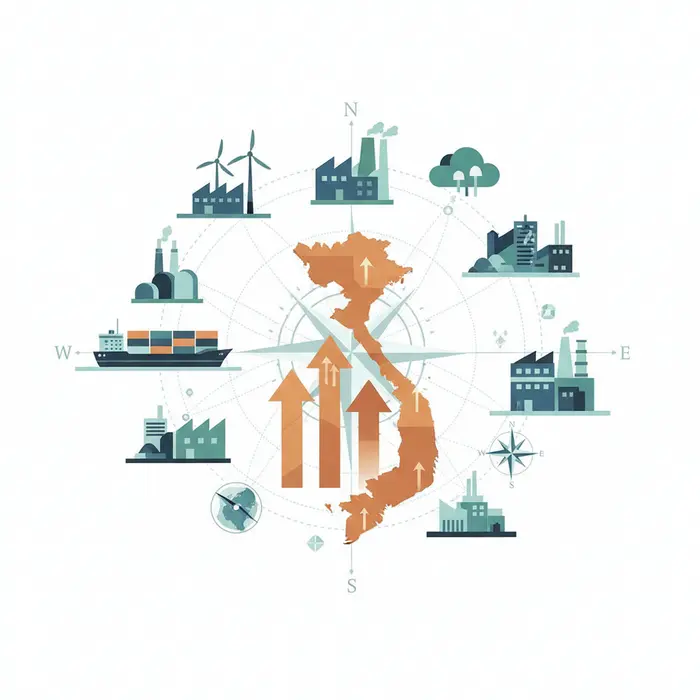
Vietnam’s traditional export powerhouses, namely electronics, textiles, and agriculture, are displaying varied but generally positive trajectories in 2024. The electronics sector, particularly mobile phones, computers, and components, remains a dominant force, driven by significant foreign direct investment (FDI) and its integral role in global technology supply chains. While global tech demand saw some moderation, Vietnam’s facilities continue to attract major players, ensuring steady output and export value. The textiles and garments industry, though facing increased competition and evolving consumer preferences, is adapting by focusing on higher-value products, sustainable manufacturing practices, and quick response times. Vietnam’s export performance in 2024, as indicated by recent reports, shows a rebound in overall export figures despite some ongoing struggles in manufacturing, suggesting a resilient and adaptive economy. Meanwhile, the agricultural sector continues its robust expansion, with exports of coffee, rice, seafood, and tropical fruits experiencing strong demand. Strategic investments in processing technology and quality control are further enhancing the value and marketability of Vietnamese agricultural produce globally.
2. Shifting Export Destinations & Market Access Initiatives
A cornerstone of Vietnam’s 2024 export strategy is the deliberate shift towards broader market diversification. While the United States, European Union, and China remain significant partners, Vietnam is actively cultivating new relationships and deepening existing ones with emerging economies. This includes accelerated engagement with ASEAN member states, India, South Korea, Japan, and increasingly, markets in the Middle East and Africa. Crucially, Vietnam leverages its extensive network of Free Trade Agreements (FTAs) – including the Comprehensive and Progressive Agreement for Trans-Pacific Partnership (CPTPP), the EU-Vietnam Free Trade Agreement (EVFTA), and the Regional Comprehensive Economic Partnership (RCEP) – to secure preferential access and reduce trade barriers. These agreements are vital in supporting Vietnam supply chain diversification, enabling exporters to explore new routes and reduce reliance on any single market. The government’s proactive diplomacy and trade promotion initiatives are instrumental in opening doors for Vietnamese products in these nascent but rapidly growing markets.
3. Promoting Value-Added Exports & Domestic Production
Beyond increasing export volumes, Vietnam is committed to elevating the value proposition of its exports. This involves a concerted effort to transition from basic manufacturing and raw material exports to more sophisticated, value-added products and services. Key initiatives include promoting research and development, fostering innovation in high-tech industries, and encouraging local enterprises to move up the global value chain. The government is implementing policies to support domestic production, enhance product quality, and strengthen local brands, aiming to reduce reliance on imported components and boost indigenous capabilities. Revisions to Vietnam import export regulations are also playing a part, streamlining procedures for advanced manufacturing equipment and incentivizing local content development. The focus is on developing sectors like high-tech electronics assembly, automotive components, pharmaceuticals, and sophisticated agricultural processing. This strategic shift not only promises higher export revenues but also contributes significantly to job creation, technology transfer, and overall economic development, ensuring a more sustainable and resilient future for Vietnam’s trade.
Vietnam’s strategic location, competitive labor costs, and proactive government policies have positioned it as a global manufacturing hub. In 2024, the nation is intensifying its efforts to not only bolster existing manufacturing capabilities but also to significantly enhance the resilience and diversification of its supply chains. This commitment is underpinned by a broader vision to move up the value chain, attract high-quality foreign investment, and establish Vietnam as a stable and reliable partner in the international trade landscape. Amidst evolving global economic conditions, understanding Vietnam’s proactive approach to manufacturing and trade is crucial for businesses looking to navigate Vietnam Trade Policy Updates 2024 and capitalize on emerging opportunities.
1. Foreign Direct Investment (FDI) Trends in Manufacturing
Foreign Direct Investment (FDI) remains a cornerstone of Vietnam’s economic development, particularly in the manufacturing sector. The nation continues to attract substantial FDI inflows, driven by global companies seeking to diversify production bases and leverage Vietnam’s favorable investment climate. In recent years, there has been a notable shift towards higher-value manufacturing, including electronics, high-tech components, and renewable energy equipment, signaling a positive evolution in the overall Vietnam manufacturing outlook. The government has implemented various incentives, such as tax breaks, streamlined licensing procedures, and improved infrastructure, to make Vietnam an even more attractive destination for foreign investors. Special economic zones and industrial parks equipped with modern facilities further facilitate FDI absorption. These efforts are also coupled with continuous refinements to Vietnam import export regulations, aiming to create a predictable and transparent business environment. The goal is not just to attract capital but also to foster technology transfer, create skilled jobs, and integrate Vietnamese enterprises into global supply chains.
2. Strategies for Supply Chain Localization & Resilience
The global disruptions witnessed in recent years have underscored the critical need for robust and diversified supply chains. Vietnam is actively pursuing strategies to enhance its Vietnam supply chain diversification and resilience, moving beyond its traditional role as an assembly point. A key focus is on localization, encouraging foreign investors to source more components and raw materials from domestic suppliers. This not only reduces reliance on external markets but also strengthens local industries and creates a more integrated manufacturing ecosystem. Programs are in place to support small and medium-sized enterprises (SMEs) in improving their production capabilities, quality standards, and compliance with international certifications, enabling them to become reliable partners for multinational corporations. Furthermore, the government is investing in logistics infrastructure, including ports, airports, and road networks, to improve connectivity and efficiency. These initiatives are designed to ensure that even amidst global volatility, Vietnam can maintain stable production and meet demand, positively influencing Vietnam export trends 2024 as the country solidifies its position as a stable global supplier.
3. Technological Upgrades & Industry 4.0 Adoption in Manufacturing
To sustain its competitive edge and achieve higher value-added production, Vietnam is aggressively promoting technological upgrades and the adoption of Industry 4.0 technologies within its manufacturing sector. This includes encouraging automation, smart factory solutions, artificial intelligence (AI), and the Internet of Things (IoT) across various industries. The government provides support for research and development (R&D), digital transformation initiatives, and vocational training programs aimed at upskilling the workforce to meet the demands of advanced manufacturing. Investments are being channeled into developing high-tech industrial parks and innovation centers that serve as incubators for new technologies and foster collaboration between academia and industry. By embracing these advancements, Vietnam aims to enhance productivity, improve product quality, and create more sophisticated manufacturing processes, moving away from labor-intensive production towards knowledge-based and technology-driven manufacturing. This strategic shift is vital for Vietnam to remain an attractive destination for high-tech investment and secure its long-term economic growth.
In conclusion, Vietnam’s concerted efforts to strengthen its manufacturing base and supply chain resilience reflect a forward-looking economic strategy. By attracting targeted FDI, fostering localization, and embracing technological innovation, Vietnam is not only safeguarding its economic stability but also positioning itself as a dynamic and indispensable player in the global manufacturing arena. These ongoing developments underscore Vietnam’s commitment to continuous improvement and adaptation in a rapidly changing world.
Navigating Vietnam’s Import-Export Regulations & Compliance
Vietnam has firmly established itself as a global manufacturing hub and a crucial link in diversified supply chains, attracting significant foreign investment and fostering robust trade relationships. For businesses looking to leverage Vietnam’s dynamic market, a comprehensive understanding of its import-export regulations and compliance requirements is paramount. The landscape is continually evolving, driven by global trade agreements, domestic economic goals, and efforts towards greater trade facilitation. Staying abreast of Vietnam Trade Policy Updates 2024 is not just beneficial, but essential for seamless operations and avoiding costly penalties.
As Vietnam continues to integrate deeper into the global economy, highlighted by impressive Vietnam export trends 2024, its regulatory framework is being refined to enhance transparency and efficiency. This section provides practical insights into the current regulatory landscape, offering guidance on navigating the complexities of importing into and exporting from Vietnam, ensuring businesses remain compliant and competitive.

1. Updated Customs Clearance Procedures & Documentation
Efficient customs clearance is the cornerstone of successful import-export operations in Vietnam. Businesses must be acutely aware of the latest procedures and documentation requirements to prevent delays and optimize their supply chains. The General Department of Vietnam Customs (GDVC) has been progressively digitizing its services, notably through the Vietnam Automated Cargo Clearance System (VNACCS/VCIS), which aims to streamline declaration and clearance processes. Key documents typically required for both import and export include:
- Commercial Invoice: Detailing the transaction between the buyer and seller.
- Packing List: Providing information on the contents and packaging of the shipment.
- Bill of Lading (for sea freight) or Air Waybill (for air freight): As a contract of carriage and title to the goods.
- Certificate of Origin (C/O): Essential for claiming preferential tariffs under Vietnam’s various Free Trade Agreements (FTAs). Understanding the specific FTA requirements (e.g., ASEAN Trade in Goods Agreement – ATIGA, EVFTA, CPTPP) is crucial for tariff optimization.
- Customs Declaration Form: Submitted electronically via VNACCS/VCIS.
- Import/Export License (if applicable): For controlled goods.
- Other supporting documents: Such as technical specifications, health certificates, or phytosanitary certificates for specific product types.
Recent updates often focus on risk management, post-clearance audits, and the encouragement of digital submissions. Businesses should ensure accurate HS code classification, as misclassification is a common cause of disputes and delays, potentially leading to additional duties or penalties. Engaging with licensed customs brokers in Vietnam can significantly ease the burden of navigating these intricate procedures and ensure compliance with the latest Vietnam import export regulations.
2. Product Standards, Certifications & Quality Control
To protect consumers and the environment, Vietnam enforces specific product standards and mandates certifications for various goods. Compliance with these technical regulations is non-negotiable for market entry. Imported goods, particularly those in sectors like food and beverages, pharmaceuticals, cosmetics, electronics, and construction materials, are subject to stringent quality control measures by relevant ministries and agencies. Businesses need to:
- Identify Applicable Standards: Understand the specific national technical regulations (QCVN) and national standards (TCVN) that apply to their products. For instance, certain electronic products require a CR (Conformity Regulation) Mark, while food products must comply with Ministry of Health regulations.
- Obtain Necessary Certifications: This may involve product testing by accredited laboratories in Vietnam or abroad, and subsequent certification by Vietnamese authorities. Some products require pre-market registration or permits before they can be imported or sold.
- Implement Robust Quality Control: Beyond initial certification, continuous quality control throughout the supply chain is vital. This includes factory audits, pre-shipment inspections, and adherence to good manufacturing practices (GMP) or similar international standards where applicable.
The emphasis on quality control and product standards reflects Vietnam’s commitment to developing a sustainable Vietnam manufacturing outlook and a reputable trade environment. Businesses should factor in the time and cost associated with obtaining these certifications when planning their operations.
3. Common Pitfalls & Best Practices for Trade Compliance
Despite Vietnam’s efforts to simplify trade, businesses can still encounter various challenges. Understanding these common pitfalls and adopting best practices can significantly mitigate risks and ensure smooth operations.
Common Pitfalls:
- Incorrect HS Code Classification: Leads to wrong duty calculations, delays, and potential fines.
- Incomplete or Inaccurate Documentation: Any discrepancy, however minor, can cause clearance issues.
- Non-Compliance with Product Standards: Products failing to meet Vietnamese technical regulations can be denied entry, recalled, or destroyed.
- Misunderstanding FTAs: Failing to correctly apply rules of origin or submitting incorrect C/O forms can result in loss of preferential tariff treatment.
- Lack of Awareness of Changing Regulations: The regulatory environment is dynamic; outdated information can lead to non-compliance.
Best Practices:
- Due Diligence: Thoroughly research all applicable regulations for your specific products and industry before initiating trade.
- Utilize Local Expertise: Engage with experienced customs brokers, trade consultants, or legal advisors in Vietnam. Their on-the-ground knowledge is invaluable for navigating complexities and staying informed about Vietnam Trade Policy Updates 2024.
- Invest in Training: Ensure your internal teams are well-versed in Vietnamese customs procedures, documentation, and product standards.
- Digital Readiness: Embrace electronic submission systems and maintain digital records for efficient processing and auditing.
- Stay Updated: Regularly monitor announcements from the GDVC, Ministry of Industry and Trade (MOIT), and other relevant authorities. Reliable sources like the World Bank’s overview of Vietnam often provide broader economic and policy context relevant to trade.
- Proactive Compliance Audits: Periodically review your trade processes and documentation to identify and rectify potential non-compliance issues before they become problems.
By adopting a proactive and informed approach to compliance, businesses can confidently leverage Vietnam’s position as a hub for Vietnam supply chain diversification and contribute to its vibrant import-export economy.
Partner with Vietnam’s Leading Suppliers
Looking for reliable suppliers in Vietnam? Contact VietnamSuppliers.com today to connect with verified manufacturers and exporters across all industries.
—————————————
References
– Asian Development Bank (ADB) – Vietnam Economy: https://www.adb.org/countries/viet-nam/economy
– World Bank Data: Foreign Direct Investment in Vietnam: https://data.worldbank.org/indicator/BX.KLT.DINV.CD.WD?locations=VN
– Vietnam’s exports rise in May, manufacturing still struggling: https://www.reuters.com/markets/asia/vietnams-exports-rise-may-manufacturing-still-struggling-2024-05-29/
– FDI into Vietnam hits new high in 2023 with strong manufacturing growth: https://e.vnexpress.net/news/business/economy/fdi-into-vietnam-hits-new-high-in-2023-with-strong-manufacturing-growth-4694488.html
– :