The Imperative of Export Compliance in Global B2B Trade
Understand why robust export compliance strategies are non-negotiable for B2B businesses operating in the international arena, laying the groundwork for upcoming best practices.
Global business-to-business (B2B) trade offers immense opportunities, but it’s equally fraught with complex international laws and sanctions. For any B2B entity engaged in cross-border transactions, from manufacturing specialized components to delivering advanced software, robust export compliance strategies are not just legal necessities but fundamental pillars of sustainable growth and risk mitigation. Neglecting these critical frameworks can lead to severe penalties, reputational damage, and operational disruptions. This section will explore why proactive compliance is imperative in today’s interconnected global economy, outlining its far-reaching impact and the undeniable competitive advantage it offers.

1. Defining Export Compliance and Its Global Impact
Export compliance refers to adherence to national and international laws governing the movement of goods, software, technology, and services across borders. These regulations control what can be exported, to whom, where, and for what purpose, encompassing everything from dual-use items to controlled technologies and sanctions programs. For B2B businesses, this means meticulously scrutinizing every aspect of their supply chain and sales process to avoid inadvertent violations.
The global impact is profound. At a macro level, it safeguards national security and enforces foreign policy. For individual B2B companies, non-compliance can result in exorbitant fines, imprisonment, loss of export privileges, and severe brand damage, disrupting crucial B2B market entry strategy regulations. Conversely, a strong commitment to compliance builds trust with partners and governments, streamlining customs clearance challenges solutions and enabling smoother international operations.
2. Key Regulatory Bodies and Frameworks (e.g., ITAR, EAR, OFAC)
Navigating international trade compliance demands understanding key regulatory bodies. In the U.S., these primarily include:
- International Traffic in Arms Regulations (ITAR): Administered by the Department of State’s DDTC, ITAR governs defense articles and services on the U.S. Munitions List (USML), requiring strict registration and licensing.
- Export Administration Regulations (EAR): Managed by the Department of Commerce’s BIS, EAR controls “dual-use” items – commercial products, software, and technology with potential military applications. Most commercial items fall under EAR, categorized by the Commerce Control List (CCL), often requiring licenses based on item characteristics and destination. More information on these complex regulations can be found on the official Bureau of Industry and Security website.
- Office of Foreign Assets Control (OFAC): Part of the U.S. Department of the Treasury, OFAC enforces economic and trade sanctions based on U.S. foreign policy. Compliance involves rigorous screening of customers, partners, and transactions against various sanctions lists.
Beyond these, businesses must also navigate other nations’ export control laws and multilateral agreements. Integrating these diverse legal frameworks into a cohesive export risk management high regulation strategy is vital for seamless global operations.
3. The Competitive Advantage of Proactive Compliance
Robust export compliance is a powerful competitive differentiator, transforming it from a burden into a strategic asset. Proactive adherence to international trade compliance best practices offers several advantages:
Firstly, it builds trust and enhances reputation. Companies with effective compliance programs are perceived as lower-risk partners, leading to stronger business relationships, easier financing, and a preference over less compliant competitors.
Secondly, proactive compliance streamlines operations and reduces long-term costs. Embedding compliance checks into core processes minimizes delays, avoids costly rework, and reduces the likelihood of shipments being detained. This foresight offers more efficient customs clearance challenges solutions, accelerating time-to-market and improving customer satisfaction. It also aids in predictable B2B market entry strategy regulations, allowing accurate forecasting for new market penetration.
Finally, effective export compliance strategies mitigate significant financial and legal risks. The penalties for non-compliance are severe, often far outweighing the investment in a robust program. By investing in training, technology, and internal controls, businesses protect their assets and future viability. Embracing compliance not only protects against legal repercussions but also positions a company as a responsible global player, unlocking new opportunities. For further insights and resources on strengthening your compliance framework, visit vietnamsuppliers.com.
Developing Robust International Trade Compliance Best Practices
Navigating the complexities of international trade requires more than just identifying promising markets; it demands an unwavering commitment to compliance. For businesses engaged in global commerce, establishing effective export compliance strategies is paramount. This section delves into the essential components and actionable steps for creating an internal compliance program that not only meets regulatory requirements but also fosters sustainable growth, mitigating potential penalties and reputational damage. Adhering to international trade compliance best practices is not merely a legal obligation; it’s a strategic imperative for any company looking to thrive in the global B2B landscape.
1. Building a Comprehensive Internal Compliance Program (ICP)
The foundation of any successful international trade operation is a robust Internal Compliance Program (ICP). An ICP provides a structured framework for managing the multifaceted aspects of export and import regulations, safeguarding against violations. Key elements include:
- Risk Assessment: Proactively identify and evaluate potential export risk management high regulation areas, such as product classification, sanctioned party screening, end-use, and country-specific restrictions. Understanding your risk profile is the first step in developing targeted controls.
- Policy and Procedures: Document clear, concise policies and procedures covering every stage of the export process, from order intake to post-shipment recordkeeping. These documents should be accessible, regularly reviewed, and updated to reflect changes in global trade regulations.
- Management Commitment: Strong leadership buy-in is critical. Senior management must visibly support the ICP, allocating necessary resources and emphasizing the importance of compliance throughout the organization.
- Designated Compliance Officer: Appoint a knowledgeable individual or team responsible for overseeing the ICP, conducting internal audits, and acting as a central point of contact for compliance-related inquiries.
- Recordkeeping: Implement meticulous recordkeeping practices. Most jurisdictions require trade-related documents (e.g., licenses, shipping manifests, screening results) to be retained for several years. Accurate records are essential for demonstrating due diligence during audits or investigations.
An effective ICP is dynamic, designed to adapt to evolving geopolitical landscapes and regulatory changes, ensuring your B2B market entry strategy regulations remain compliant and competitive.
2. Leveraging Technology for Compliance Management and Automation
In today’s fast-paced global marketplace, manual compliance processes are often inefficient and prone to human error, particularly for businesses dealing with high volumes of international transactions. Embracing technology is no longer optional but a necessity for streamlining operations and enhancing accuracy. Specialized Global Trade Management (GTM) software and Enterprise Resource Planning (ERP) systems with integrated compliance modules can:
- Automate Sanctioned Party Screening: Instantly screen customers, vendors, and other third parties against various government denied party lists (e.g., OFAC, EU, UN) to prevent transactions with prohibited entities.
- Streamline Export Classification: Assist in accurately classifying products with Harmonized System (HS) codes and Export Control Classification Numbers (ECCNs), reducing the likelihood of misclassification and associated penalties.
- Manage Export Licenses: Track license requirements, expiration dates, and utilization, ensuring that all controlled exports are properly authorized before shipment.
- Generate Accurate Documentation: Automate the creation of critical export documents, such as commercial invoices, packing lists, and certificates of origin, minimizing customs clearance challenges solutions related to documentation errors.
- Provide Audit Trails: Maintain comprehensive digital records of all compliance activities, offering an invaluable audit trail for internal reviews and external investigations.
By automating routine compliance tasks, companies can free up their export teams to focus on more complex, strategic compliance issues, enhancing overall efficiency and reducing export control regulations risks.
3. Continuous Training and Awareness for Your Export Team
Even the most sophisticated ICP and advanced technology are only as effective as the people operating them. Human error remains a leading cause of compliance breaches. Therefore, ongoing training and awareness programs are indispensable for cultivating a strong compliance culture within your organization.
- Regular Training Sessions: Conduct mandatory training sessions for all personnel involved in international trade activities, from sales and logistics to engineering and senior management. Training should cover company policies, relevant national and international regulations, red flag indicators, and the consequences of non-compliance.
- Role-Specific Education: Tailor training content to specific roles and responsibilities. For instance, procurement teams need to understand vendor screening, while shipping personnel require in-depth knowledge of documentation and declaration requirements.
- Updates on Regulatory Changes: The landscape of international trade is constantly evolving. Provide regular updates on new sanctions, changes in classification rules, or amendments to specific country regulations. Newsletters, internal memos, and dedicated workshops can facilitate this.
- Promote a Culture of Openness: Encourage employees to ask questions, report potential issues, and voice concerns without fear of reprisal. Establish clear channels for reporting non-compliance or suspicious activities.
- Performance Reinforcement: Integrate compliance performance into employee reviews and recognition programs. This reinforces the message that compliance is a shared responsibility and a core business value.
Investing in your team’s knowledge and fostering a proactive approach to compliance ensures that your export compliance strategies remain robust and adaptable to the dynamic global trade environment. Ultimately, adherence to international trade compliance best practices is about protecting your business, facilitating smooth trade, and building a reputation as a reliable and responsible global partner.
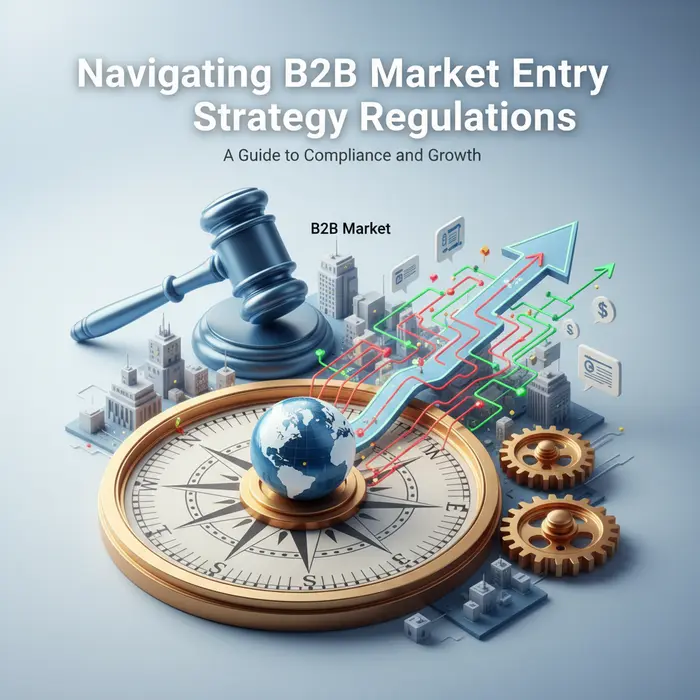
Navigating B2B Market Entry Strategy Regulations
Executing a B2B market entry strategy into new international markets presents significant opportunities for growth, but it also introduces a labyrinth of regulatory hurdles and compliance requirements. Ensuring legal and smooth access demands a proactive and meticulous approach to export compliance strategies. Businesses must navigate a complex landscape of international trade laws, local regulations, and geopolitical considerations to avoid costly penalties, reputational damage, and operational delays. This section delves into the critical regulatory aspects that businesses must address when expanding their global footprint, emphasizing best practices for managing export risk in highly regulated environments and overcoming customs clearance challenges.
1. Due Diligence for New Markets and International Partners
Before committing resources to a new market, rigorous due diligence is paramount. This process extends beyond financial viability to encompass a comprehensive assessment of legal, ethical, and regulatory environments. For B2B market entry, due diligence involves scrutinizing potential partners, distributors, agents, and even end-users. It’s about understanding their track record, adherence to local laws, and their capacity to comply with international standards such as anti-bribery and corruption (ABC) regulations (e.g., the U.S. Foreign Corrupt Practices Act or the UK Bribery Act). Furthermore, businesses must conduct thorough sanctions screening to ensure that no potential partner or entity on either side of a transaction is listed on restricted parties lists maintained by bodies like the U.S. Treasury Department’s Office of Foreign Assets Control (OFAC) or the UN Security Council. Failing to perform this vital step can lead to severe fines, imprisonment, and exclusion from international trade. Proactive due diligence forms the bedrock of effective international trade compliance and is crucial for robust export risk management in high-regulation sectors.
2. Understanding Country-Specific Import and Export Licensing
Each country has its unique set of import and export licensing requirements, which can significantly impact the feasibility and timeline of a B2B market entry. Ignorance of these rules is not an excuse and can result in seized goods, penalties, and even criminal charges. Businesses must identify whether their products, technologies, or services require specific export licenses from their home country and import licenses from the target country. This is particularly critical for controlled goods, dual-use items (products with both civilian and military applications), and emerging technologies. Understanding end-use and end-user restrictions is also essential; even if a product isn’t generally controlled, its final application or destination may trigger specific licensing needs. Developing a comprehensive matrix of required licenses, tariffs, quotas, and non-tariff barriers for each target market is an integral part of export compliance strategies. This proactive approach helps in managing lead times, forecasting costs, and mitigating the significant customs clearance challenges that often arise from non-compliance.
3. Compliance Considerations for Global Supply Chains
As B2B operations scale internationally, managing a global supply chain introduces layers of complexity regarding compliance. Companies are not only responsible for their direct exports but also for ensuring compliance throughout their extended supply chain. Key areas include customs valuation, rules of origin, preferential trade agreements, and anti-dumping or countervailing duties. Accurate product classification (e.g., Harmonized System codes) is fundamental, as it determines applicable duties, taxes, and regulatory requirements. Businesses must implement robust systems for tracking and documenting the origin of components and finished goods to leverage free trade agreements and avoid unexpected tariffs. Moreover, understanding Incoterms (International Commercial Terms) is crucial for defining responsibilities and liabilities between buyers and sellers regarding shipping costs, insurance, and customs duties. Adopting international trade compliance best practices, such as utilizing advanced trade management software and conducting regular internal audits, is vital for maintaining visibility and control over complex global supply chains. This helps in proactively identifying and addressing potential vulnerabilities, ensuring seamless operations and minimizing export risk management high regulation scenarios.
Successfully navigating B2B market entry strategy regulations requires a deep understanding of the global regulatory landscape, meticulous planning, and continuous monitoring. By prioritizing due diligence, mastering country-specific licensing, and fortifying global supply chain compliance, businesses can ensure legal, ethical, and sustainable access to new international markets, turning regulatory hurdles into strategic advantages.
Advanced Export Risk Management in High-Regulation Environments
In today’s intricate global trade landscape, where geopolitical shifts and technological advancements continually reshape market dynamics, advanced export risk management is no longer merely a best practice—it’s an imperative. High-regulation environments, characterized by stringent export controls, evolving sanctions lists, and complex licensing requirements, present significant hurdles for businesses engaged in international trade. Navigating these complexities demands sophisticated techniques for identifying, assessing, and mitigating risks to ensure compliance, protect reputation, and maintain market access. Effective export compliance strategies are paramount for sustained success in B2B market entry strategies, safeguarding against potentially crippling penalties and supply chain disruptions. This section delves into critical facets of managing export risks within such demanding frameworks.
1. Identifying and Classifying High-Risk Goods, Technologies, and Destinations
The cornerstone of robust export risk management in high-regulation environments is a meticulous process for identifying and accurately classifying goods, technologies, and potential destinations that carry elevated risk. High-risk items often include “dual-use” goods (those with both civilian and military applications), emerging and foundational technologies, defense articles, and items subject to nuclear or missile technology controls. Destinations deemed high-risk are typically those under economic sanctions, arms embargoes, or heightened scrutiny due to political instability or proliferation concerns.
Effective identification begins with a comprehensive product classification system. This involves assigning correct Harmonized System (HS) codes for customs purposes and, crucially, Export Control Classification Numbers (ECCNs) as determined by applicable export control regulations (e.g., the U.S. Export Administration Regulations or EU Dual-Use Regulation). Misclassification can lead to significant customs clearance challenges and potential legal repercussions. Beyond the item itself, understanding the “four W’s” – Who is the ultimate end-user, What is the end-use, Where is the final destination, and When is the transaction occurring – is vital. Companies must implement continuous training programs for their classification teams, leverage trade data intelligence, and regularly review product portfolios against updated control lists to ensure ongoing adherence and mitigate export risk management high regulation. Proactive internal audits and technology solutions can streamline this complex process, transforming potential customs clearance challenges solutions into manageable tasks.
2. Strategies for Managing Dual-Use Items and Restricted Parties
Managing dual-use items and screening against restricted party lists are two of the most critical components of international trade compliance best practices. Dual-use items, by their nature, require heightened scrutiny. Companies must establish clear internal policies and procedures for handling such goods and technologies, encompassing robust licensing determination processes. This includes understanding when a license is required, documenting the rationale for any license exception or exemption utilized, and meticulously tracking technology transfers, including intangible transfers through emails, cloud storage, or even oral communications. Due diligence must extend beyond the physical product to the associated technology, software, and even services.
Equally vital is the rigorous screening against restricted parties. This involves continuously checking all parties involved in a transaction—exporters, importers, intermediaries, ultimate consignees, and even financial institutions—against various national and international denied persons, sanctioned entity, and embargoed lists (e.g., OFAC Specially Designated Nationals, EU Consolidated List, UN Security Council Sanctions List). Automated screening tools that integrate with enterprise resource planning (ERP) or customer relationship management (CRM) systems are indispensable for efficiency and accuracy, helping to identify potential red flags and minimize manual errors. A robust compliance program will also consider “red flag” indicators that might suggest a diversion or prohibited end-use, even if the parties aren’t explicitly listed. Adhering to these stringent requirements is a cornerstone of modern export controls framework, ensuring compliance and ethical trade.
3. Responding to Audits and Investigations: Best Practices
Despite the most diligent efforts, businesses operating in high-regulation environments may face audits or investigations from regulatory authorities. A well-prepared and strategically executed response is crucial to managing potential exposure and protecting the company’s integrity and future market access. Proactive preparation is the first and most critical step. This involves conducting regular internal audits, maintaining meticulous and easily retrievable records of all export transactions, licensing determinations, screening results, and compliance training. Developing a comprehensive audit response plan, including designating a primary point person and a legal counsel team, is essential.
When an audit or investigation commences, transparency and cooperation are key, but always within the bounds of legal counsel’s advice. All communications, data requests, and responses should be meticulously documented. Control over information flow is paramount; only designated personnel should interact directly with investigators. Post-audit, it is imperative to promptly address any identified deficiencies, implementing corrective actions to strengthen the compliance program. This may include revising internal procedures, enhancing training, or upgrading technology solutions. In some instances, considering a voluntary self-disclosure to the relevant regulatory authority may be appropriate, often leading to reduced penalties. Navigating these scenarios effectively is vital for businesses seeking to maintain their global standing and manage the regulatory landscape associated with B2B market entry strategy regulations. Continuous improvement and a culture of compliance are the ultimate safeguards.
Overcoming Customs Clearance Challenges and Finding Solutions
Navigating the complex landscape of international trade presents numerous hurdles, with customs clearance often standing out as a significant bottleneck. Efficient and timely delivery of goods across borders hinges on a robust understanding of regulations and proactive problem-solving. This section offers practical advice and proven solutions to ensure your goods move smoothly, minimizing delays and unexpected costs.

1. Common Customs Obstacles and Proactive Preparation
Exporters frequently encounter a range of customs obstacles, from minor discrepancies to major compliance issues. These can include incorrect documentation, misclassification of goods, unexpected duties and taxes, shipment delays due to incomplete information, and rapid changes in regulatory frameworks. Without proper export compliance strategies, businesses risk financial penalties, seized goods, and damage to their supply chain reputation. Proactive preparation is paramount.
To mitigate these risks, implement robust internal processes. This involves establishing a dedicated compliance team or assigning clear responsibilities, conducting continuous training for staff involved in export operations, and staying informed about the import regulations of destination countries. Thoroughly researching market entry requirements and potential trade barriers before initiating shipments can prevent costly surprises. Develop a checklist for every shipment, ensuring all required documents are accurate and complete. Investing in compliance software can also streamline the process, automate checks, and provide real-time updates on regulatory changes, significantly reducing the margin for human error.
2. The Critical Role of Harmonized System (HS) Codes and Documentation
The accuracy of Harmonized System (HS) codes is the cornerstone of efficient customs clearance. These international codes classify products and determine applicable duties, taxes, and regulations. Incorrect HS classification can lead to overpayment or underpayment of duties, delays, and severe penalties. Ensuring precision here is a fundamental international trade compliance best practices. Companies must invest time and expertise in correctly identifying the HS code for each product, often requiring detailed knowledge of the product’s composition, function, and intended use.
Beyond HS codes, a comprehensive and accurate documentation package is indispensable. Essential documents typically include the commercial invoice, packing list, bill of lading or air waybill, certificate of origin, and any required permits or licenses (e.g., for restricted goods, dual-use items, or agricultural products). Discrepancies, omissions, or errors in any of these documents can trigger extensive customs inspections, leading to significant delays and storage fees. For high-regulation environments, meticulous documentation is crucial for effective export risk management. Regularly review and update document templates to reflect current regulatory requirements and ensure all stakeholders understand their role in document preparation and verification.
3. Partnering with Customs Brokers and Freight Forwarders for Efficiency
For businesses navigating the complexities of global trade, especially those entering new markets, partnering with experienced customs brokers and freight forwarders is not just a convenience, but a strategic imperative. Customs brokers are experts in navigating the intricate web of customs laws, tariff classifications, and import/export regulations for specific countries. They can correctly classify goods, calculate duties and taxes, prepare and submit documentation, and act as your liaison with customs authorities. Their expertise is invaluable for complying with B2B market entry strategy regulations and reducing the likelihood of customs-related issues.
Freight forwarders, on the other hand, manage the logistics of transporting goods from origin to destination. They leverage their vast networks of carriers, handle warehousing, consolidate shipments, and provide end-to-end visibility of your supply chain. When integrated, a customs broker and freight forwarder can offer a seamless solution, coordinating every aspect of your shipment from factory floor to customer door. This partnership minimizes administrative burdens, accelerates clearance processes, and ultimately provides effective customs clearance challenges solutions. For deeper insights into international trade regulations and best practices, resources from authoritative bodies like the World Customs Organization offer comprehensive guidance.
Partner with Vietnam’s Leading Suppliers
Looking for reliable suppliers in Vietnam? Contact VietnamSuppliers.com today to connect with verified manufacturers and exporters across all industries.
—————————————
References
– Bureau of Industry and Security website: https://www.bis.doc.gov/
– Bureau of Industry and Security (BIS): https://www.bis.doc.gov/
– WTO Trade Facilitation Agreement: https://www.wto.org/english/tratop_e/tradfa_e/tradfa_e.htm
– U.S. Bureau of Industry and Security Export Control Basics: https://www.bis.doc.gov/index.php/policy-guidance/export-basics
– World Customs Organization: https://www.wcoomd.org/