
Introduction to Country of Origin Labeling (COO)
In the intricate landscape of global commerce, understanding where a product comes from is more than just a matter of curiosity; it’s a critical piece of information with far-reaching implications for consumers, businesses, and international trade policies. Country of Origin Labeling Requirements (COO) serve as a fundamental pillar, providing transparency and facilitating informed decisions across the supply chain. This section delves into the essence of COO labeling, highlighting its significance and outlining the legal frameworks that govern its application worldwide.
1. What is Country of Origin (COO)?
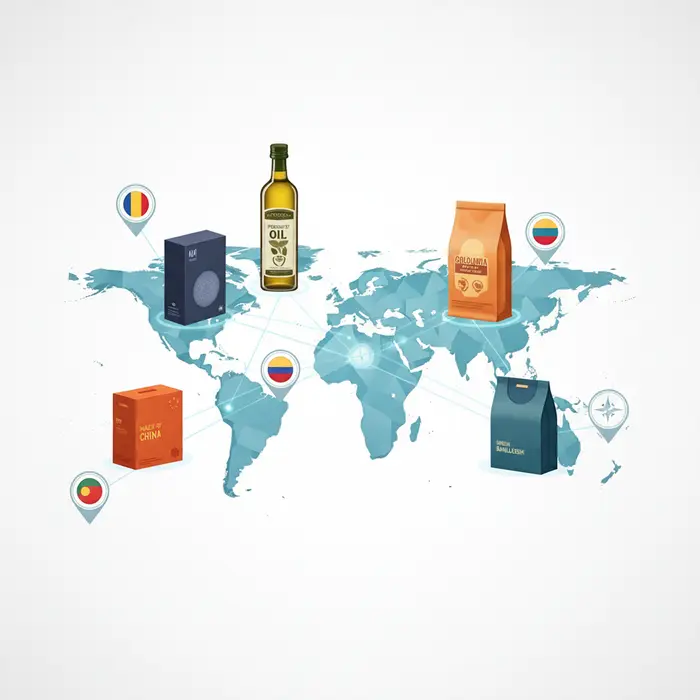
At its core, Country of Origin (COO) refers to the country where a product was manufactured, produced, grown, or processed. It answers the fundamental question: “Where does this product originate?” While seemingly straightforward, determining the COO can be complex, especially in a globalized economy where components might come from multiple nations and assembly occurs elsewhere. Generally, the COO is the country where the last substantial transformation of the product took place – the point at which it underwent a significant change in form, character, or use.
Labels like “Made in,” “Product of,” or “Assembled in” all relate to COO, but carry distinct meanings based on specific Made in Labeling Guidelines. For instance, “Made in [Country X]” typically implies that the product was wholly obtained or underwent its last substantial transformation in Country X. “Product of [Country Y]” is often used for agricultural products, indicating where they were grown or harvested. “Assembled in [Country Z]” suggests that components from various countries were put together in Country Z, without necessarily implying substantial transformation there. The precise definitions are often dictated by national COO Labeling Regulations and international trade agreements.
2. Importance of COO Labeling for Consumers and Businesses
The significance of COO labeling extends across various stakeholders, influencing purchasing decisions, business strategies, and international relations.
- For Consumers: COO information empowers consumers to make informed choices. It allows them to support local industries, factor in ethical sourcing concerns, assess potential quality perceptions associated with certain countries, or adhere to personal preferences related to a product’s origin. For items like food or pharmaceuticals, COO can also be crucial for health and safety, enabling traceability and transparency regarding production standards. Brand perception and trust are often linked to a product’s origin, influencing consumer confidence.
- For Businesses: For companies, adherence to Country of Origin Labeling Requirements is paramount for market access and compliance. Failing to meet these regulations can result in penalties, delayed shipments, or even market exclusion. COO is also a strategic tool for marketing and brand differentiation, with businesses often leveraging positive associations with their country of origin. Furthermore, COO determines eligibility for preferential tariffs under free trade agreements, directly impacting import duties and costs. It’s vital for supply chain management, enabling better traceability, quality control, and risk management in the event of recalls or trade disputes.
3. Legal Basis and International Frameworks for COO Requirements
The legal underpinning of COO labeling is multifaceted, rooted in both national laws and international agreements. Most countries have their own COO Labeling Regulations governing the import and sometimes export of goods, often enforced by customs authorities. These regulations specify how origin should be determined and what information must be displayed on products.
Internationally, the World Trade Organization (WTO) Agreement on Rules of Origin is a cornerstone, aiming to harmonize non-preferential Rules of Origin International Trade. The WTO distinguishes between two main types of rules:
- Non-Preferential Rules of Origin: These are applied for general trade policy measures, such as quotas, anti-dumping duties, and trade statistics. They determine the ‘economic nationality’ of products and are crucial for the application of most-favored-nation (MFN) tariffs.
- Preferential Rules of Origin: These are more specific and are applied to determine whether goods qualify for preferential tariff treatment under free trade agreements (FTAs), customs unions, or other preferential trade arrangements. These Preferential Rules of Origin often involve criteria like ‘wholly obtained’ (for products entirely sourced from one country) or ‘substantial transformation,’ which can be measured by a change in tariff classification, a percentage of value added, or specific manufacturing processes.
These frameworks ensure that origin claims are consistent, verifiable, and fair, fostering a predictable environment for global trade while protecting consumer interests and national industries. Understanding these complex rules is crucial for any business engaged in international commerce, impacting everything from compliance to competitive advantage.
Understanding Rules of Origin in International Trade
In the intricate world of global commerce, determining a product’s true “nationality” is far more complex than it might initially appear. Rules of Origin International Trade serve as a critical mechanism, acting as the foundation for how goods are classified, taxed, and regulated as they move across borders. This section aims to dive deep into these mechanisms, clarifying the crucial distinction between non-preferential and preferential rules of origin, which are indispensable for businesses navigating tariffs, quotas, and the myriad of international trade agreements. Understanding these COO Labeling Regulations and Made in Labeling Guidelines is paramount for compliance and competitive advantage, directly impacting Country of Origin Labeling Requirements worldwide.
1. Non-Preferential Rules of Origin (NPRoO) for General Trade
Non-Preferential Rules of Origin (NPRoO) are applied generally to all imported goods, regardless of whether they benefit from preferential treatment. Their primary purpose is to determine a product’s economic nationality for various policy objectives that do not involve granting preferential tariff treatment. These rules are vital for implementing a range of trade policy instruments such as quantitative restrictions (quotas), anti-dumping duties, safeguard measures, and the compilation of trade statistics. Furthermore, NPRoO dictate a nation’s Made in Labeling Guidelines, informing consumers about where a product originates and fulfilling specific COO Labeling Regulations. For instance, if a product is subject to an anti-dumping duty from Country A, its origin must be unequivocally established to apply the correct duty. These rules prevent trade deflection and ensure that general trade measures are applied effectively and fairly across the board, impacting general Country of Origin Labeling Requirements.
2. Preferential Rules of Origin (PRoO) for Free Trade Agreements
In stark contrast, Preferential Rules of Origin (PRoO) are specifically designed to determine whether goods qualify for reduced or zero tariffs under a specific free trade agreement (FTA), customs union, or other preferential trade arrangements. These rules are at the heart of any FTA, enabling member countries to extend tariff preferences to each other’s products while maintaining their individual tariff schedules for goods from non-member countries. The application of Preferential Rules of Origin is crucial for businesses looking to leverage the benefits of trade agreements, as failing to meet these specific criteria means the product will be subject to the higher Most Favoured Nation (MFN) tariff rates. PRoO are typically more stringent and detailed than NPRoO, as they aim to prevent “tariff hopping,” where goods from outside the preferential zone are simply transshipped through a member country to avoid duties. Navigating these rules requires meticulous documentation and a thorough understanding of the specific agreement in question, directly influencing strategic sourcing and supply chain decisions within Rules of Origin International Trade.
3. Key Criteria: Wholly Obtained vs. Substantial Transformation
At the core of both non-preferential and preferential rules of origin lies the challenge of defining “origin,” especially for products that incorporate materials or processing from multiple countries. Two primary criteria are used to address this: “wholly obtained” and “substantial transformation.”
- Wholly Obtained Products: This is the simplest criterion, applying to goods entirely produced within a single country without incorporating any non-originating materials. Examples include minerals extracted from the soil, agricultural products harvested, animals born and raised, or fish caught within a country’s territorial waters. These products are unequivocally considered to originate from that country.
- Substantial Transformation: For goods incorporating materials from more than one country, the concept of “substantial transformation” comes into play. This principle dictates that a product’s origin changes if it has undergone significant processing or manufacturing operations in a particular country, fundamentally altering its character, nature, or use. There are generally three main tests to determine substantial transformation:
- Change in Tariff Classification (CTC): This is the most common and often the simplest test. It requires that the non-originating materials used in the production process undergo a change in their Harmonized System (HS) tariff classification (e.g., at the chapter, heading, or subheading level) when they become the finished product. For instance, if raw textile yarn (HS Chapter 52) is imported and transformed into a finished garment (HS Chapter 61) in another country, it might qualify as substantially transformed.
- Value-Added Percentage (VA): Also known as the “ad valorem” rule, this test requires that a certain percentage of the product’s value (e.g., 35% or 40%) must be added within the originating country through manufacturing operations, labor, and domestic materials.
- Specific Processing Operations: Certain products have specific manufacturing processes defined as conferring origin, regardless of CTC or VA. For example, the chemical reaction of certain compounds or the assembly of specific electronic components might be deemed sufficient.
The complexity in applying these criteria, especially “substantial transformation,” means that precise documentation and understanding of specific COO Labeling Regulations and trade agreements are vital for businesses involved in international trade. Organizations like the World Customs Organization (WCO) play a significant role in harmonizing these rules and providing guidance.
In conclusion, a clear grasp of both non-preferential and preferential rules of origin is not merely a bureaucratic formality but a strategic imperative. It directly influences market access, tariff costs, and ultimately, a company’s competitiveness. Adhering to specific Country of Origin Labeling Requirements ensures compliance and facilitates smoother customs procedures, making these rules an indispensable component of successful global supply chain management.
Navigating COO Labeling Regulations and ‘Made In’ Guidelines
The global marketplace demands meticulous adherence to Country of Origin (COO) labeling. Accurate COO labeling isn’t just a legal obligation; it’s fundamental for consumer trust, fair competition, and international trade compliance. Misleading labels can trigger severe penalties, reputational damage, and trade disruptions. This section explores the practical aspects of labeling, focusing on specific regulations and common ‘Made In’ guidelines, offering insights into compliance best practices and common pitfalls. Adhering to these Country of Origin Labeling Requirements is crucial for seamless market entry and sustained success.

1. General Principles for ‘Made In’ Labeling Accuracy
Determining a product’s precise origin is complex, especially with globalized supply chains. The core principle for Made in Labeling Guidelines revolves around “substantial transformation”—the country where the article underwent its last significant change in form, use, or name. Minor assembly or packaging typically doesn’t confer origin.
Key considerations include:
- Substantial Transformation: The identity, character, or use of a product must significantly change. For example, raw materials manufactured into a finished product through significant processing acquire the origin of the manufacturing country.
- Customs Tariff Classification: A change in tariff classification often signals a substantial transformation, a common criterion in Rules of Origin International Trade and trade agreements.
- Value-Added Criterion: Some regulations consider the percentage of value added to a product. This is particularly relevant for Preferential Rules of Origin to qualify for tariff benefits.
- Clear and Conspicuous Marking: Labels must be legible, durable, and prominently displayed on the product or packaging for easy consumer identification.
- Consistency Across Documentation: COO declarations on labels must align with all accompanying documents (invoices, customs declarations) to prevent discrepancies. Businesses should regularly review their processes to ensure accurate COO declarations as supply chains evolve. For more detailed insights on Country of Origin Labeling Requirements, consult specialized resources.
2. Specific Regulations by Major Markets (e.g., US, EU, Canada)
Market-specific COO Labeling Regulations are critical, as interpretation of “substantial transformation” and supplementary rules vary significantly.
- United States: U.S. Customs and Border Protection (CBP) enforces COO labeling, requiring legible, permanently affixed English markings. “U.S. Customs Service Regulations Part 134” guides this. While imported goods follow substantial transformation, “Made in USA” claims for domestically sold products often require an “all or virtually all” standard by the Federal Trade Commission (FTC).
- European Union: The EU’s non-preferential rules of origin also prioritize the “last substantial transformation,” defined by a change in tariff heading or specific processing. Origin for agricultural products is where they were harvested. The EU also has specific labeling rules for food (Regulation No 1169/2011) and textiles. The European Commission offers comprehensive guides on Rules of Origin International Trade application. Further official guidelines are available on the European Commission’s trade website.
- Canada: Enforced by the Canada Border Services Agency (CBSA) and Competition Bureau, Canadian regulations also hinge on substantial transformation. For goods under free trade agreements like CUSMA, specific Preferential Rules of Origin determine eligibility for duty benefits. Canadian labeling laws for consumer products mandate clear origin identification, often requiring both foreign origin and Canadian processor details.
3. Prohibited Labeling Practices and Penalties
Misleading consumers about a product’s origin carries severe repercussions. Regulatory bodies worldwide strictly prohibit false or deceptive Made in Labeling Guidelines.
- False or Misleading Claims: Directly misrepresenting “Made in X” when the true origin is Y is a clear violation. This includes implied origins through symbols, flags, or geographical terms that don’t match the actual source, unless explicitly clarified.
- Concealment or Obscurity: Hiding or obscuring the origin label (e.g., tiny fonts, hidden placement) is considered deceptive and prohibited. Labels must be conspicuous.
- Incorrect Preferential Origin Declarations: Falsely claiming preferential origin under a Free Trade Agreement to gain lower tariffs results in duties, fines, retrospective payments, and increased customs scrutiny.
- Penalties: Vary by jurisdiction but can include:
- Seizure and Forfeiture: Goods with incorrect COO labeling may be seized.
- Fines and Penalties: Substantial monetary fines (e.g., U.S. 19 U.S.C. § 1304 violations).
- Stop Orders and Import Bans: Repeated offenses can lead to border holds or import bans.
- Reputational Damage: Beyond legal and financial costs, false labeling erodes consumer trust and damages brand reputation.
- Consumer Litigation: Legal action by consumers or advocacy groups is possible in some markets.
To mitigate these risks, businesses must implement robust internal controls, conduct regular supply chain audits, and stay updated on evolving Country of Origin Labeling Requirements and trade agreements. Proactive compliance is essential for navigating global trade complexities.
The Impact of Free Trade Agreements on Preferential Origin
Free Trade Agreements (FTAs) are powerful instruments designed to foster economic cooperation between countries by reducing or eliminating trade barriers. While often associated with tariff reductions, a crucial, yet sometimes overlooked, aspect of these agreements is their profound influence on Country of Origin Labeling Requirements and the determination of “preferential origin.” Unlike non-preferential origin, which is used for general trade statistics and applying non-preferential measures like anti-dumping duties, preferential origin allows goods to qualify for reduced or zero tariffs when traded between FTA member countries. This section delves into how various FTAs shape origin determination, highlighting the tangible benefits of preferential rules and outlining the essential documentation required to claim these advantageous duty rates.
1. How FTAs Lower Tariffs and Increase Market Access
Free Trade Agreements fundamentally alter the landscape of international commerce by dismantling traditional trade barriers, most notably tariffs. By reducing or completely eliminating import duties on eligible goods, FTAs make products more competitive in foreign markets, directly translating into lower costs for importers and consumers alike. This tariff liberalization is not universally applied; it is contingent upon goods meeting specific “rules of origin.” These rules are the bedrock of any FTA, designed to ensure that only products genuinely originating from a member country benefit from the preferential treatment, preventing third-country goods from simply transshipping through an FTA member to gain undue advantages.
The core benefit lies in increased market access. For businesses, this means new opportunities to export their products at a competitive price, expanding their customer base and potentially boosting production. For economies, it stimulates trade, encourages foreign direct investment, and fosters economic growth. Understanding and complying with these preferential rules of origin is therefore paramount for any business seeking to leverage the full benefits of FTAs, transforming theoretical market access into tangible sales and profitability. Without proper origin determination, goods face standard Most Favored Nation (MFN) tariffs, negating the very purpose of the agreement.
2. Specific Examples of Preferential Rules in Major FTAs (e.g., USMCA, CPTPP)
The application of preferential rules of origin varies significantly across different FTAs, reflecting the specific economic interests and industrial capacities of member countries. These rules are detailed and often product-specific, ensuring precision in origin determination. Common methodologies for establishing preferential origin include:
- Change in Tariff Classification (CTC): This rule requires that non-originating materials used in the production of a good undergo a sufficient transformation such that their Harmonized System (HS) tariff classification changes to a different chapter, heading, or subheading. For example, a shirt made from imported fabric might qualify if the fabric (e.g., HS Chapter 52) becomes a garment (e.g., HS Chapter 62).
- Regional Value Content (RVC): This rule specifies a minimum percentage of the product’s value that must originate within the free trade area. For instance, the Rules of Origin International Trade are critical for agreements like the USMCA (United States-Mexico-Canada Agreement). USMCA, replacing NAFTA, famously introduced stringent RVC requirements, particularly in the automotive sector, demanding higher North American content (e.g., 75% for passenger vehicles by 2020) and a new labor value content requirement to qualify for duty-free treatment. This encourages regional sourcing and manufacturing.
- Specific Process Rules: Certain products may qualify based on undergoing specific manufacturing or processing operations within the FTA territory, regardless of the origin of raw materials.
The Comprehensive and Progressive Agreement for Trans-Pacific Partnership (CPTPP) offers another excellent example of sophisticated Preferential Rules of Origin. CPTPP often employs a combination of CTC and RVC, alongside provisions like “cumulation,” which allows materials from one member country to be considered originating in another member country when incorporated into a final product. This flexibility is particularly beneficial for complex supply chains involving multiple CPTPP nations. Each FTA mandates its own detailed product-specific rules, which businesses must meticulously review to ensure compliance and unlock tariff benefits. Adherence to these “Made in Labeling Guidelines” is not merely a formality but a strategic imperative for global trade.
3. Certificates of Origin and Essential Documentation
Claiming preferential tariff treatment under an FTA is not automatic; it requires robust documentation to substantiate the origin claim. The primary document is typically a Certificate of Origin (COO) or an origin declaration. Historically, COOs were often issued by chambers of commerce or government bodies. However, many modern FTAs, including USMCA and CPTPP, have moved towards self-certification, where the exporter, producer, or even the importer (in some cases) can declare the originating status of the goods.
Regardless of who issues it, the COO or declaration serves as a formal statement confirming that the goods meet the specific rules of origin of the relevant FTA. It typically includes:
- Identification of the exporter and importer.
- A description of the goods.
- The applicable rule of origin used (e.g., RVC, CTC).
- A statement of origin.
- The date and signature of the certifier.
Beyond the COO, businesses must maintain a comprehensive paper trail to support their origin claims. This supporting documentation is critical during potential audits by customs authorities and includes: production records, bills of materials, supplier declarations for inputs, cost calculations (especially for RVC rules), invoices, and shipping documents. Accurate and readily accessible documentation is paramount. Incorrect or insufficient documentation can lead to denial of preferential treatment, retroactive payment of duties, and even significant penalties. Therefore, understanding COO Labeling Regulations and establishing robust record-keeping systems are essential components of successful international trade compliance strategy, ensuring that the benefits of FTAs are fully realized and potential pitfalls avoided.
Future Trends and Staying Compliant with COO Requirements in 2025
The global trade landscape is a dynamic ecosystem, constantly reshaped by technological innovation, evolving consumer expectations, and shifting regulatory frameworks. For businesses engaged in international commerce, understanding and adhering to Country of Origin Labeling Requirements (COO) is not just a legal obligation but a strategic imperative. As we approach 2025, the complexities of COO compliance are set to intensify, demanding proactive measures and a keen eye on emerging trends. This section explores the evolving landscape, highlights technological solutions, and offers actionable advice for maintaining compliance in the years to come.

1. Evolving Global Trade Landscape and Digitalization
The bedrock of international trade, the `Rules of Origin International Trade` framework, is continually influenced by a multitude of factors. The proliferation of Free Trade Agreements (FTAs) means that businesses must navigate a complex web of specific origin criteria to qualify for preferential tariffs. Each FTA introduces its own nuances regarding what constitutes “wholly obtained” or “sufficiently transformed” goods, making it challenging to standardize Country of Origin Labeling Requirements across diverse markets.
Beyond FTAs, geopolitical shifts, trade disputes, and environmental considerations are increasingly impacting origin declarations. Consumers, too, are driving demand for greater transparency, wanting to know not just the “Made In” country, but also the ethical and environmental footprint of products. This heightened scrutiny, coupled with the rapid growth of e-commerce, where goods traverse borders with unprecedented speed and volume, necessitates more robust and verifiable origin data. The digital transformation of customs processes, with many countries moving towards paperless systems and advanced data analytics, underscores the need for businesses to digitalize their own origin documentation and management systems to avoid bottlenecks and ensure seamless flow of goods. Future success will depend on how effectively companies can integrate digital solutions to manage the intricate details of global supply chains and meet increasingly stringent `COO Labeling Regulations`.
2. Technological Solutions for Origin Tracking and Documentation
The good news is that technology offers powerful tools to meet these escalating demands for accurate origin tracking and documentation. Blockchain technology, for instance, is emerging as a game-changer. Its decentralized, immutable ledger system can create an unalterable record of a product’s journey from raw material to finished good, documenting every stage of production and transportation. This provides unparalleled transparency and verification for COO Labeling Regulations, making it significantly harder for fraudulent origin claims to pass undetected.
Artificial Intelligence (AI) and Machine Learning (ML) are also proving invaluable. These technologies can analyze vast datasets from supply chains, identifying patterns, predicting potential compliance issues, and automating the classification of goods based on complex `Made in Labeling Guidelines`. This drastically reduces human error and speeds up the laborious process of origin determination. Furthermore, the Internet of Things (IoT) can provide real-time data on goods in transit, confirming their location and potentially environmental conditions, adding another layer of verifiable information to origin declarations. Companies that invest in these technological solutions will gain a significant competitive advantage, ensuring not only compliance but also operational efficiency and enhanced trust from both regulators and consumers. Keeping abreast of these innovations will be crucial for navigating the evolving landscape of origin compliance. The World Trade Organization (WTO) provides comprehensive information on the complexities of origin rules and their impact on international trade, highlighting the continuous need for robust tracking and documentation processes (WTO | Rules of origin).
3. Preparing for Regulatory Updates and Changes in 2025
Staying compliant in 2025 and beyond requires a proactive and continuous approach to monitoring regulatory changes. Businesses must dedicate resources to track updates from customs authorities, trade organizations, and governmental bodies worldwide. This includes keeping a close watch on new FTAs being negotiated or existing ones being amended, as these often introduce revised `Preferential Rules of Origin` that can significantly impact a product’s duty status.
Regular internal audits are essential to ensure that current practices align with the latest `Made in Labeling Guidelines` and Country of Origin Labeling Requirements. These audits should cover everything from documentation accuracy to production processes, ensuring that all components and manufacturing steps are correctly attributed to their respective countries of origin. Furthermore, investing in ongoing staff training is paramount. Customs compliance teams, logistics personnel, and even sales and marketing staff who communicate product origin to consumers need to be fully aware of the latest requirements and potential pitfalls. Embracing a culture of continuous learning and adaptation will empower businesses to swiftly implement necessary changes, mitigate risks, and maintain unwavering compliance with COO requirements.
Conclusion:
The future of COO compliance is characterized by increased scrutiny, technological integration, and dynamic regulatory environments. By embracing digitalization, leveraging advanced tracking technologies, and committing to continuous regulatory monitoring and staff training, businesses can not only navigate these challenges but also transform compliance into a strategic advantage, building trust and ensuring smooth access to global markets.
Partner with Vietnam’s Leading Suppliers
Looking for reliable suppliers in Vietnam? Contact VietnamSuppliers.com today to connect with verified manufacturers and exporters across all industries.
—————————————
References
– :
– World Customs Organization (WCO): https://www.wcoomd.org/en/topics/origin/overview.aspx
– Rules of Origin: https://trade.ec.europa.eu/access-to-markets/en/content/rules-origin
– Rules of Origin International Trade: https://www.wto.org/english/tratop_e/roi_e/roi_e.htm
– WTO | Rules of origin: https://www.wto.org/english/tratop_e/roi_e/roi_e.htm

